



Concrete Overlay & Resurfacing
Cementitious overlay and resurfacing across North Carolina — driveways, patios, garage floors, and pool decks where the slab underneath is still sound but the surface is worn, spalled, or dated. Honest read on when overlay works and when it doesn't. Zero deposit, licensed and insured.
Get your free quote
We respond in less than 2 hours.
Real Projects We've Completed
A cross-section of our real project work — driveways, patios, porches, pool decks. Every pair below is a real Local Concrete Contractor install.
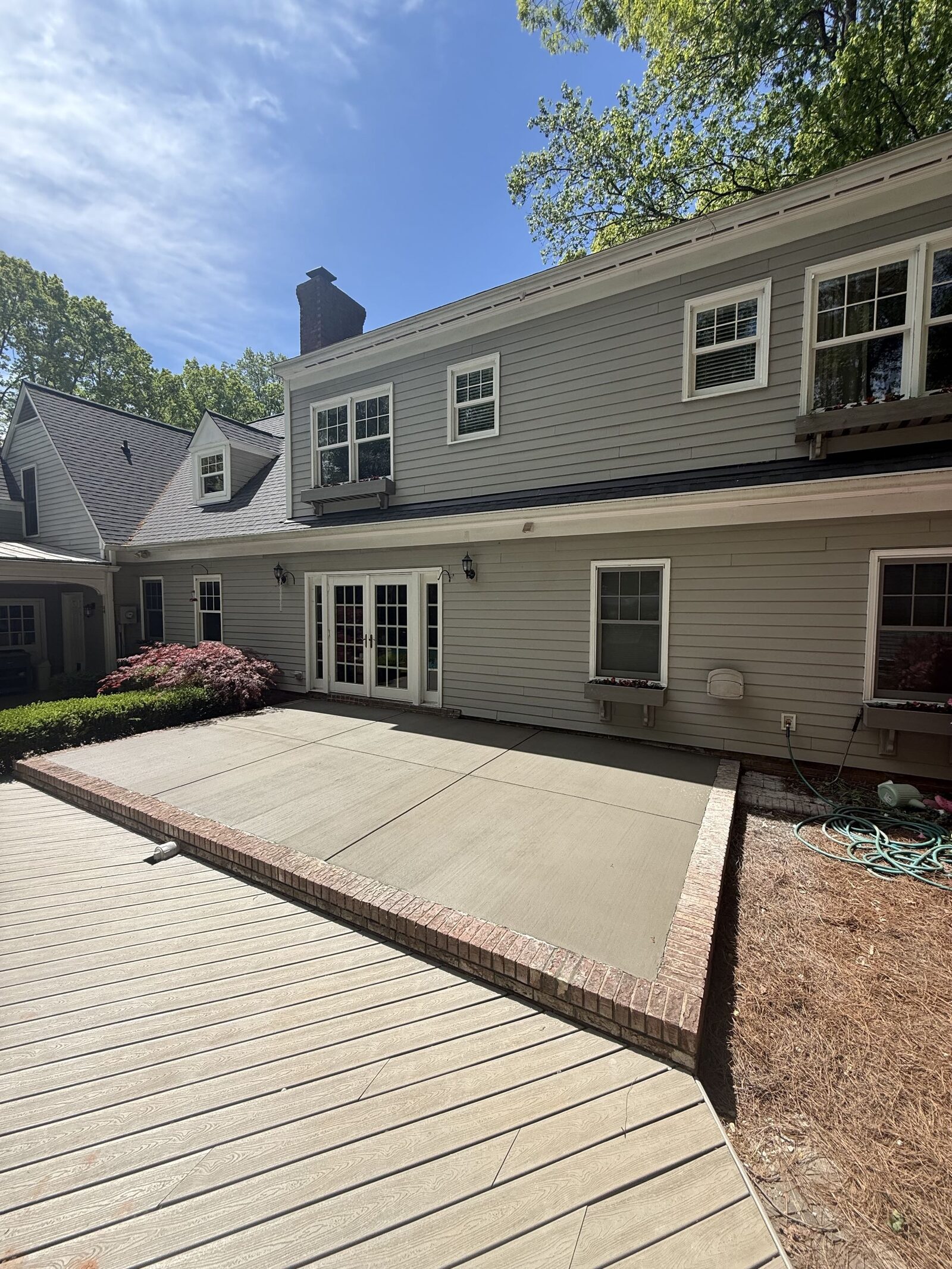

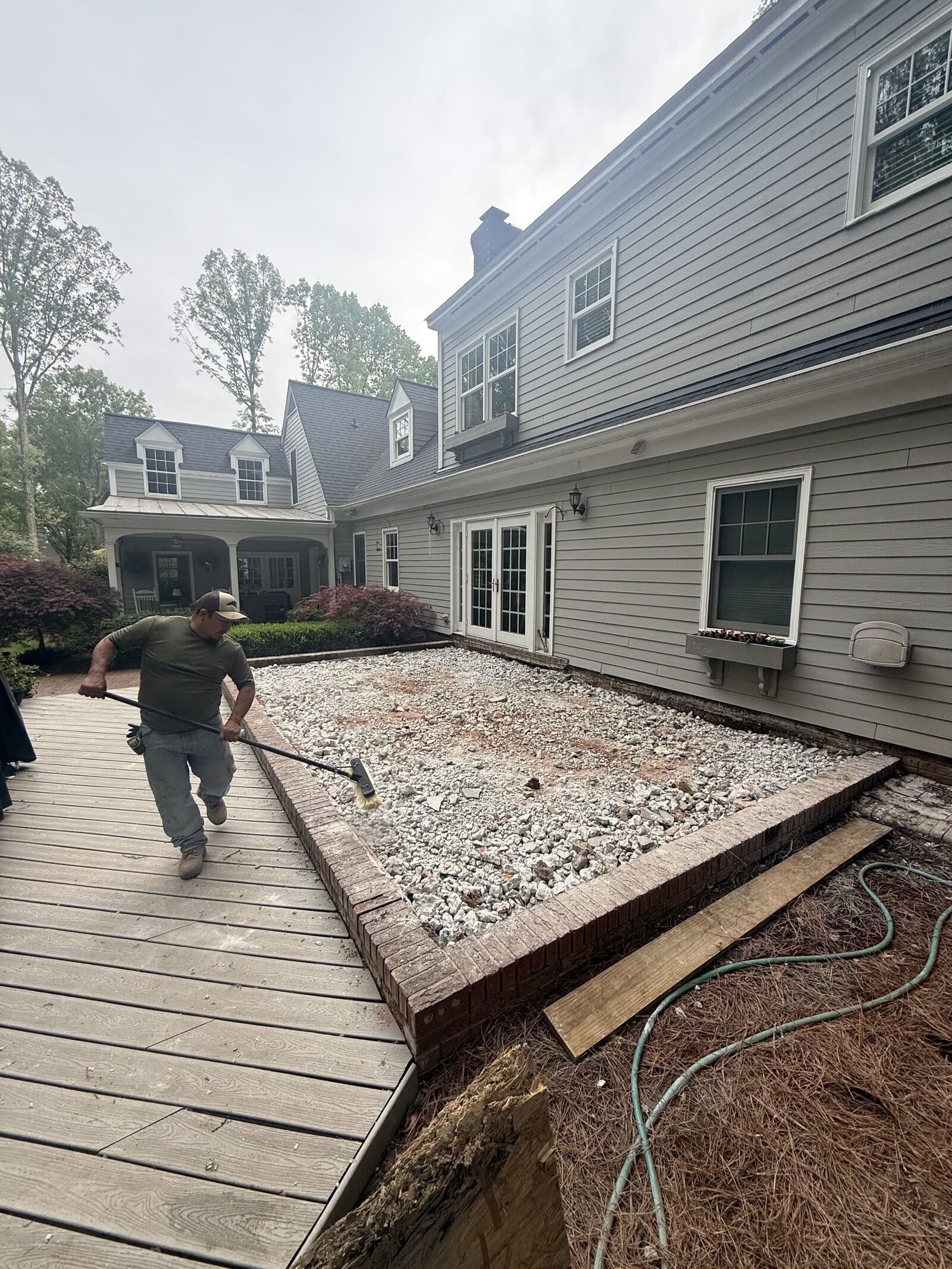
Backyard Patio
Full tear-out, new pour with brick-border detail
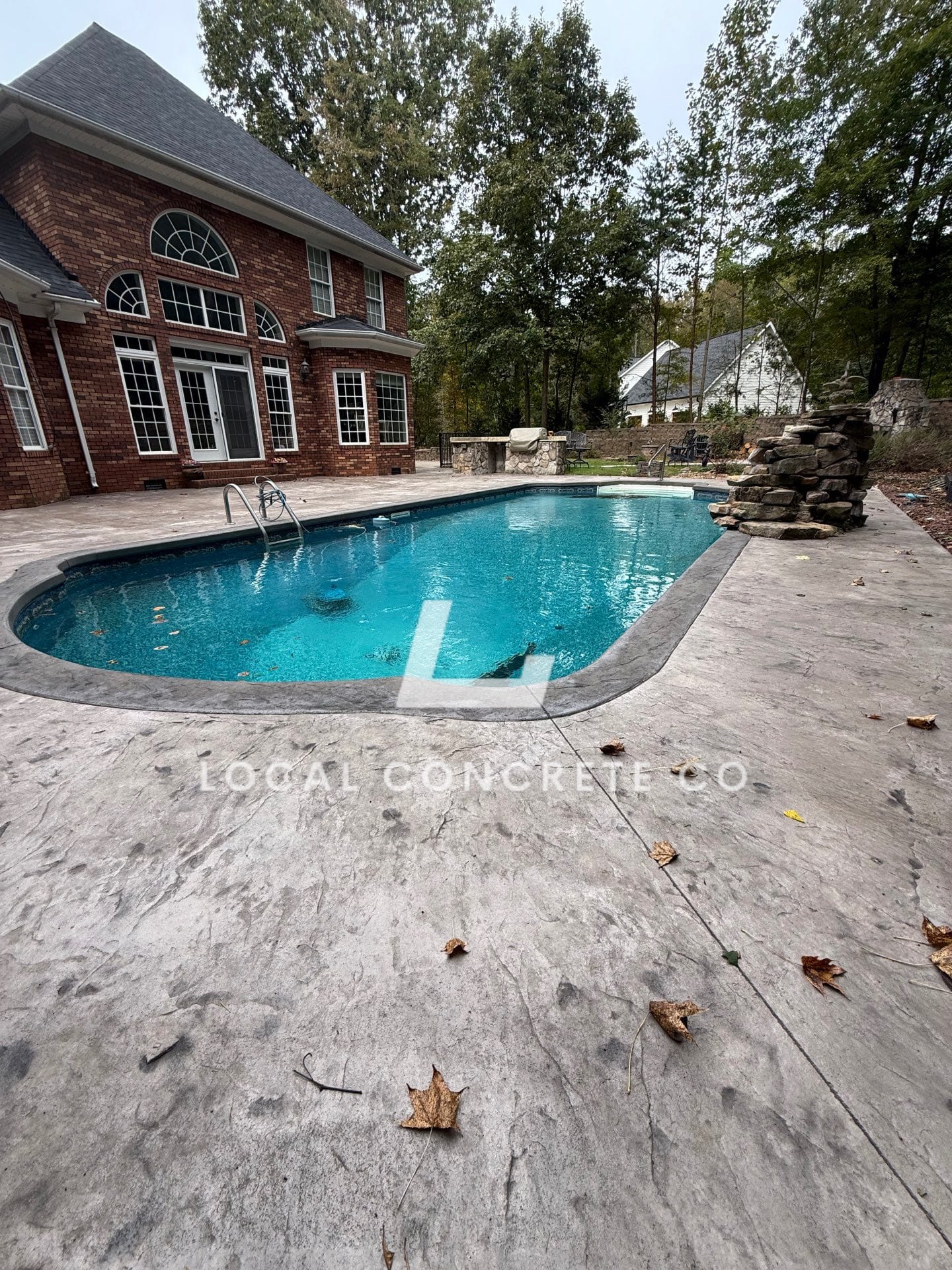
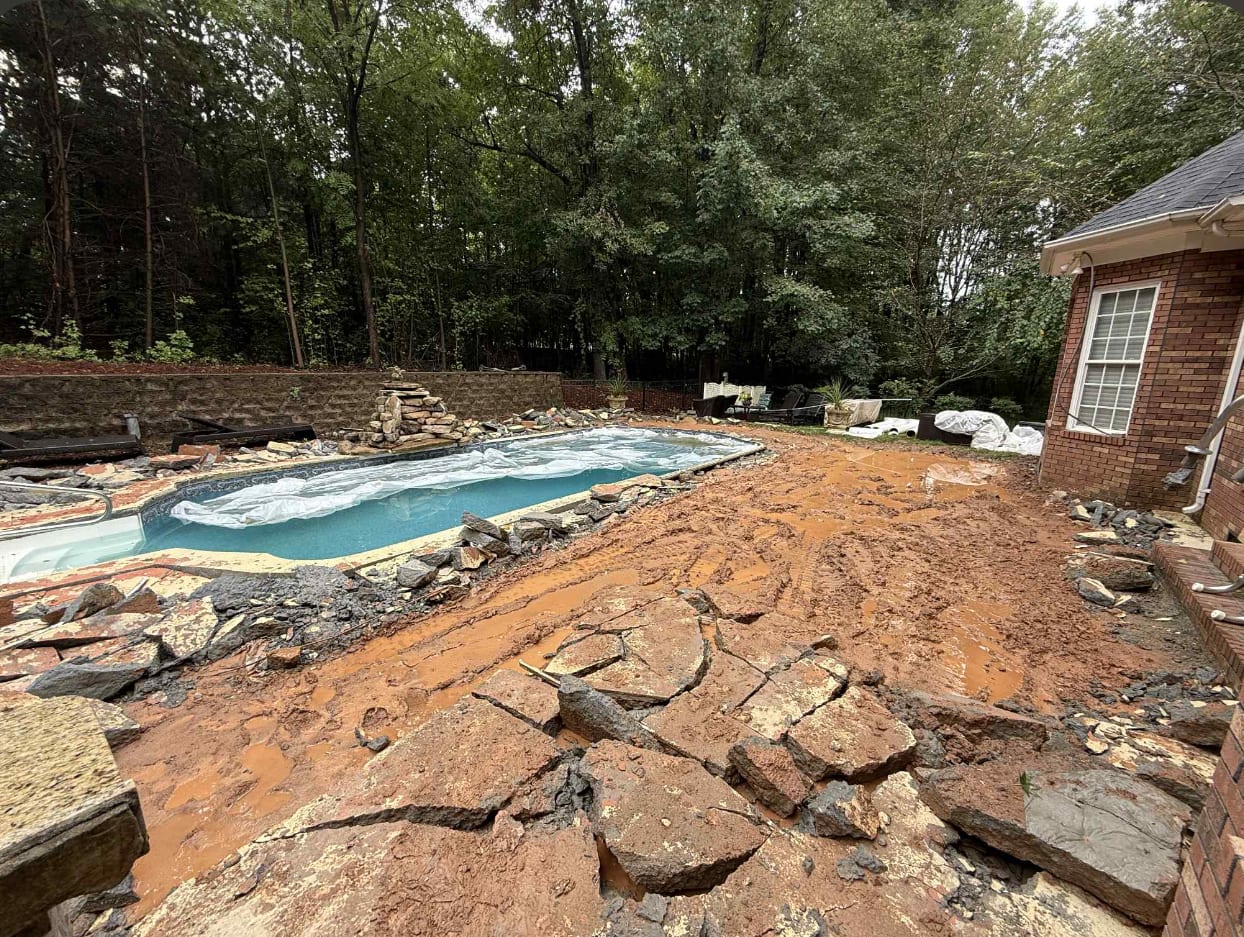
Stamped Pool Deck
Weathered deck replaced with textured stamped pour
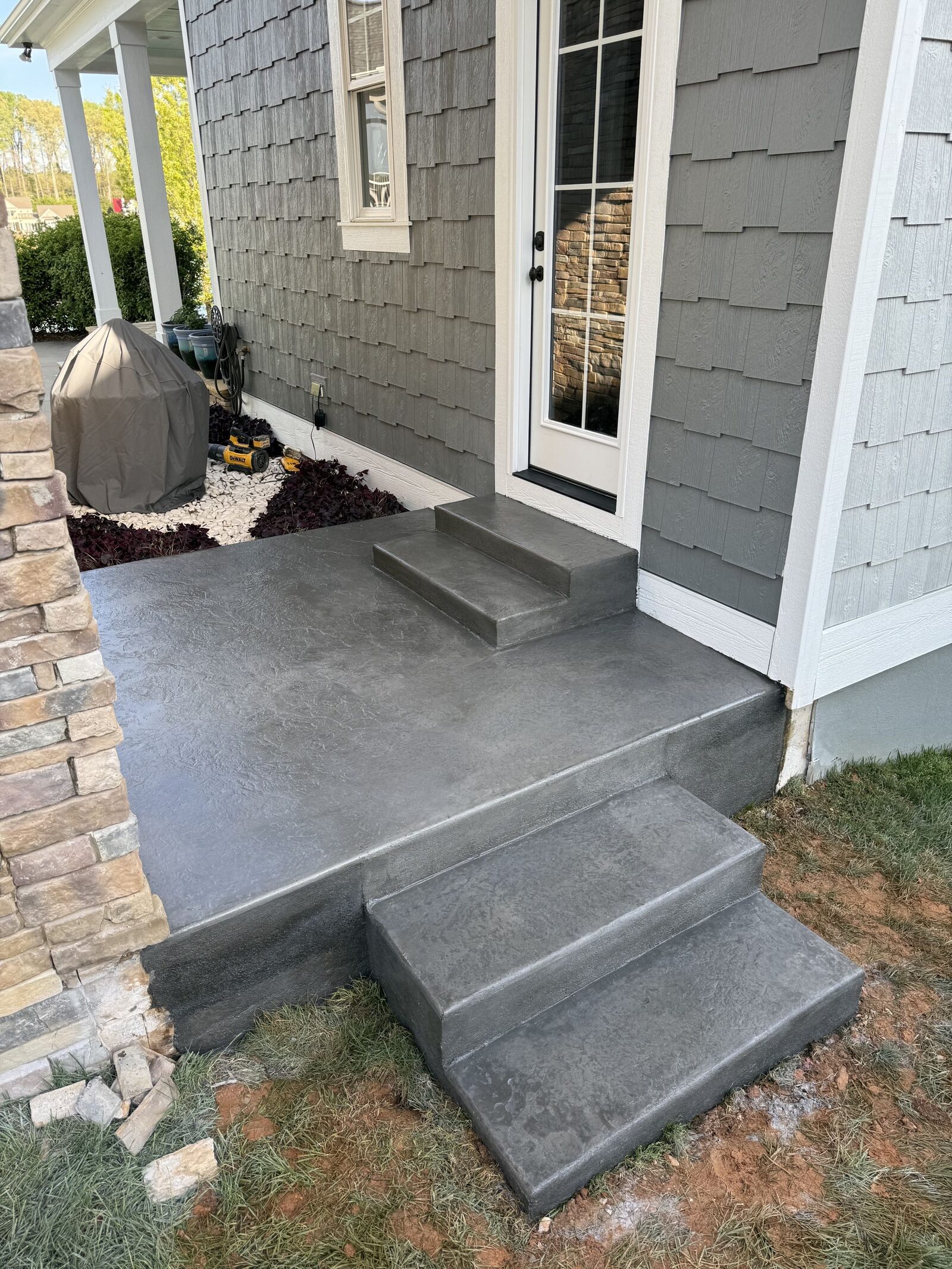
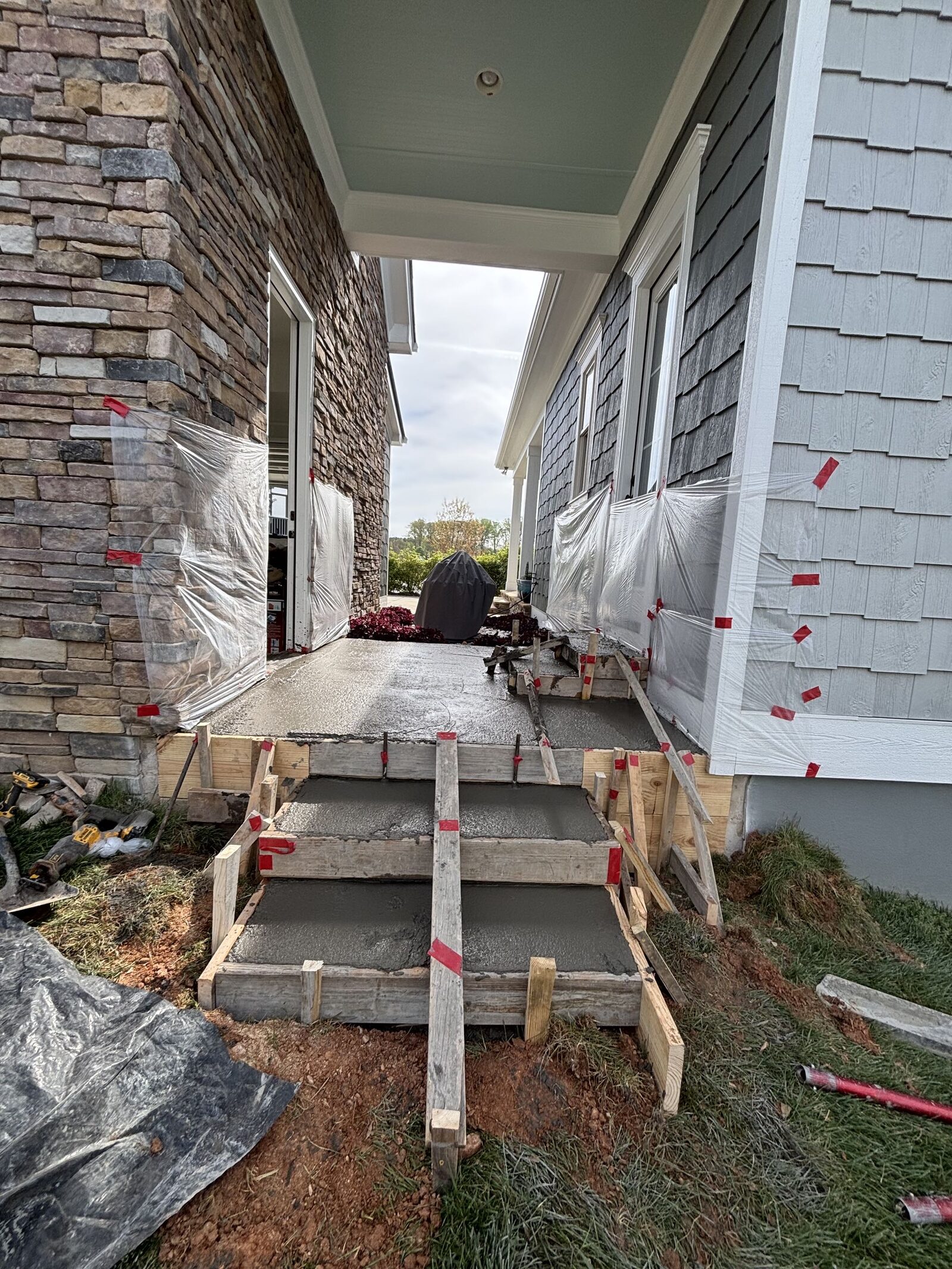
Front Porch & Steps
New entry pad plus poured steps to the door
A concrete overlay is a thin cementitious topping bonded to an existing slab that restores the surface, updates the finish, and adds a decade or more of useful life without a full tearout. In North Carolina it shows up most often on driveways with cosmetic wear, patios with dated broom finish the homeowner wants updated to a stamped or textured look, garage floors chewed up by tire scuffs and salt, and pool decks where the surface has spalled from constant wet-dry cycling. Done on the right slab, overlay is a real service. Done on the wrong slab, it cracks through and telegraphs the failure within a season.
Local Concrete Contractor installs overlays across the Piedmont and coastal plain, and the walk-through is where honest overlay work starts. Every job begins with a slab assessment — is the underlying concrete structurally sound, are cracks stable or moving, is the base still holding shape, is the surface prep-able to a bond-ready condition. That assessment turns into a written scope covering overlay type, thickness, prep method, and finish. When the slab isn't a good overlay candidate we say so and price the alternative alongside. Zero deposit, no pressure to pick overlay when the pour is the honest answer.
Our Overlay & Resurfacing Services
Overlay work covers a range of thicknesses, materials, and finish options — the right combination depends on what the slab is (driveway, patio, garage, pool deck) and what look the homeowner is going for.
- Driveway overlay — thin cementitious topping restoring a worn or lightly spalled residential drive
- Patio overlay — resurfacing dated patios with updated finish (broom, stamped, textured, integral color)
- Garage floor overlay — restoring salt-damaged and tire-worn garage floors, often with a densifier or epoxy top
- Pool deck overlay — cool-deck, textured, or stamped overlays over existing pool deck slabs
- Sidewalk and walkway overlay — surface restoration on sound walkway concrete
- Micro-topping — very thin (roughly 1/16 to 1/8 inch) polymer-modified overlay for cosmetic refresh and light traffic
- Standard cementitious overlay — 1/4 to 1/2 inch polymer-modified overlay for driveways, patios, and general use
- Stampable overlay — 3/8 to 3/4 inch overlay formulated to take a stamped pattern for decorative finish
- Self-leveling overlay — for interior floors where a smooth finished surface is the goal
- Integral color and pigment work — color mixed into the overlay for permanent tint
- Sealer coat — penetrating or film-forming sealer as the final protective layer
Most residential jobs in NC land on a quarter-inch to half-inch polymer-modified overlay for exterior work or a stampable overlay when the homeowner wants a decorative finish change.
When Overlay Fits and When It Doesn't
Overlay is a real solution with a real service life on the right slab. On the wrong slab it wastes money and doesn't buy meaningful time. The honest test is a set of yes-or-no questions about the existing concrete.
When overlay works:
- The underlying slab is structurally sound — no full-depth cracks, no settlement, no panels out of plane
- Cracks are stable and hairline — they're not opening and closing seasonally, and they're not tied to base movement
- The base underneath is still holding shape — no washouts, no soft spots, no visible edge settlement
- The surface can be prepped to a bond-ready condition — grindable, cleanable, and free of coatings the overlay won't stick to
- The slab thickness is appropriate for its use — you're not overlaying a three-inch driveway that was too thin from day one
When overlay doesn't work:
- Full-depth cracks running through the slab thickness — the overlay will crack through in the same line within a couple of seasons
- Panel settlement or heave — the overlay follows whatever the slab does
- Wide moving cracks (a quarter-inch or wider that open and close with weather) — no overlay bridges that
- Base failure — if the subgrade is washing out or wasn't compacted, the slab is going to keep moving and the overlay goes with it
- Widespread spalling that's exposed rebar or wire mesh — the corrosion will continue and push the overlay off from underneath
- A slab that's simply too thin for its use — overlay adds a fraction of an inch, not structural thickness
Overlay works to about seventy percent of the driveways and patios we're asked to look at. The other thirty percent are honest replacement conversations, and we price the pour alongside the overlay so the comparison is straight.
Get your free quote
We respond in less than 2 hours.
Why Local Concrete Contractor?
- 01.Precision craftsmanship
- 02.Transparent pricing models
- 03.Dedicated project manager
- 04.Zero Deposit Required
Our Concrete Installation Process
Every overlay we pour runs through the same 18 checkpoints — from the on-site consult through the final walkthrough.
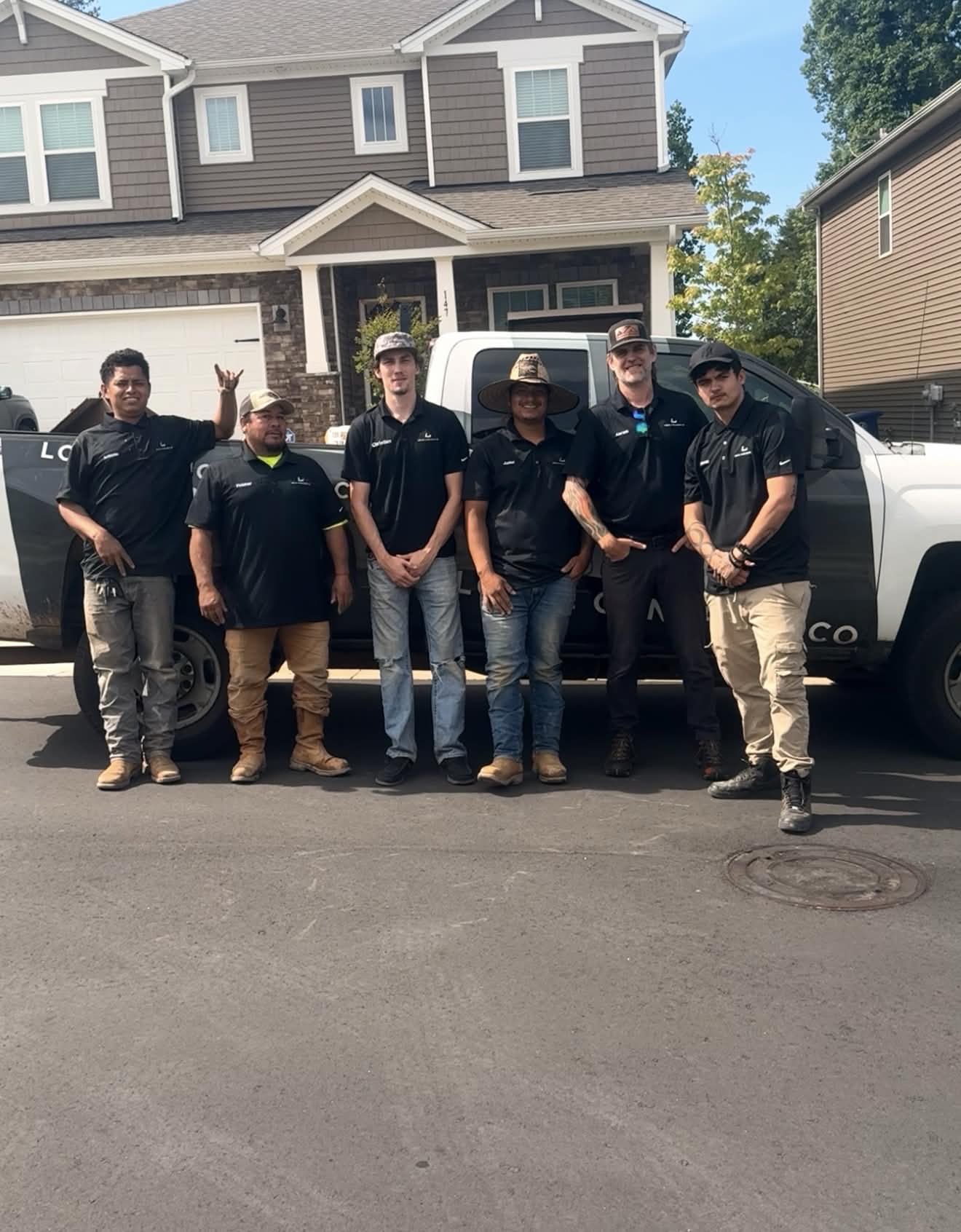
Consultation & Estimate
We meet on-site to assess scope, discuss vision, and provide a detailed, transparent quote tailored to your property.

Logistics & Scheduling
Coordinating crew, equipment, and weather windows to ensure a seamless project start.
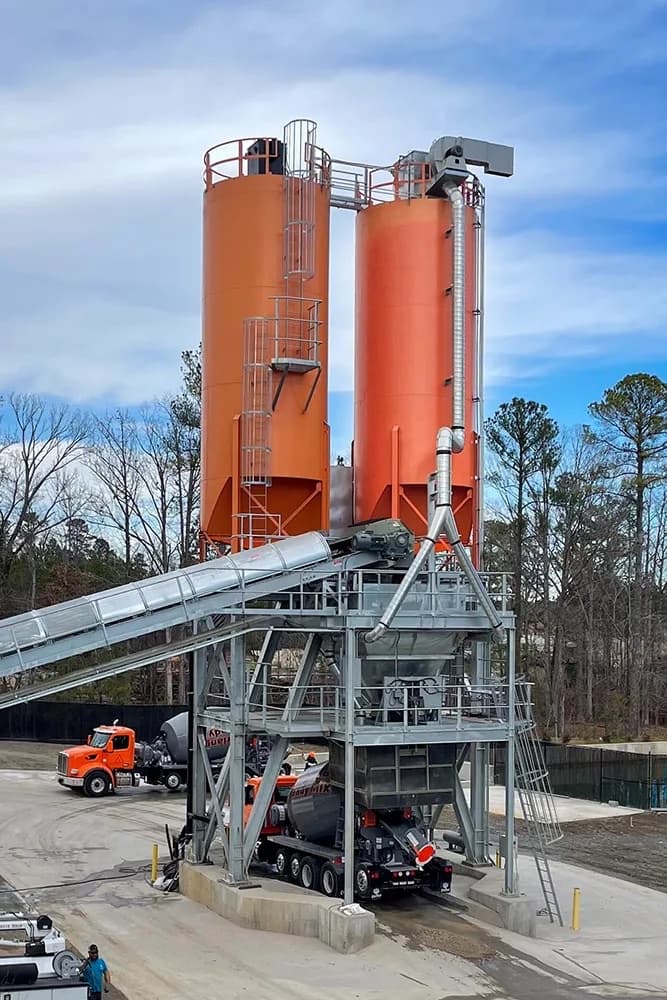
Custom Mix Design
Ordering specific concrete additives and slump requirements based on current temperature and humidity patterns.
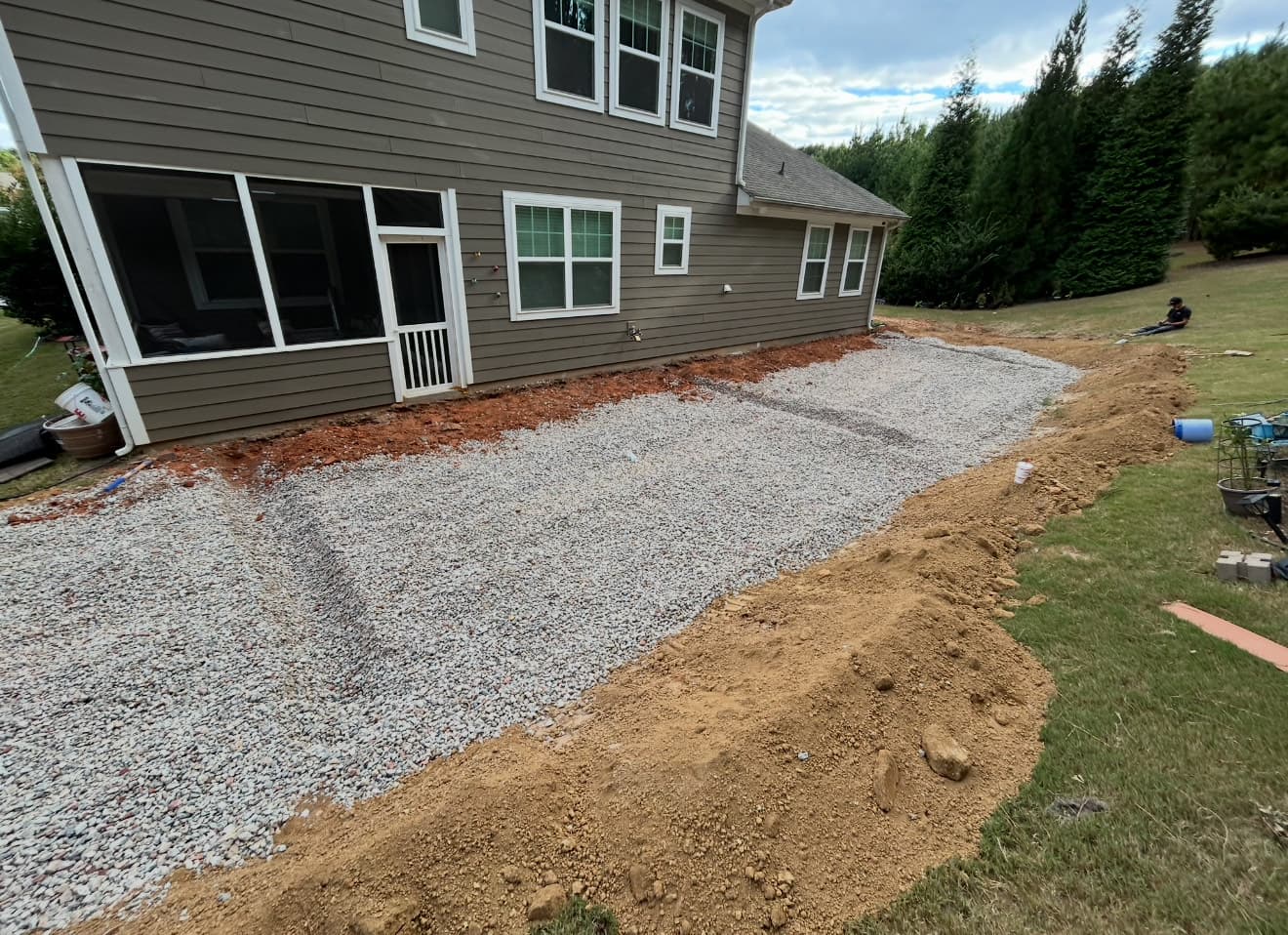
Site Preparation
Preparing the workspace and establishing safe access routes for our equipment and crew.
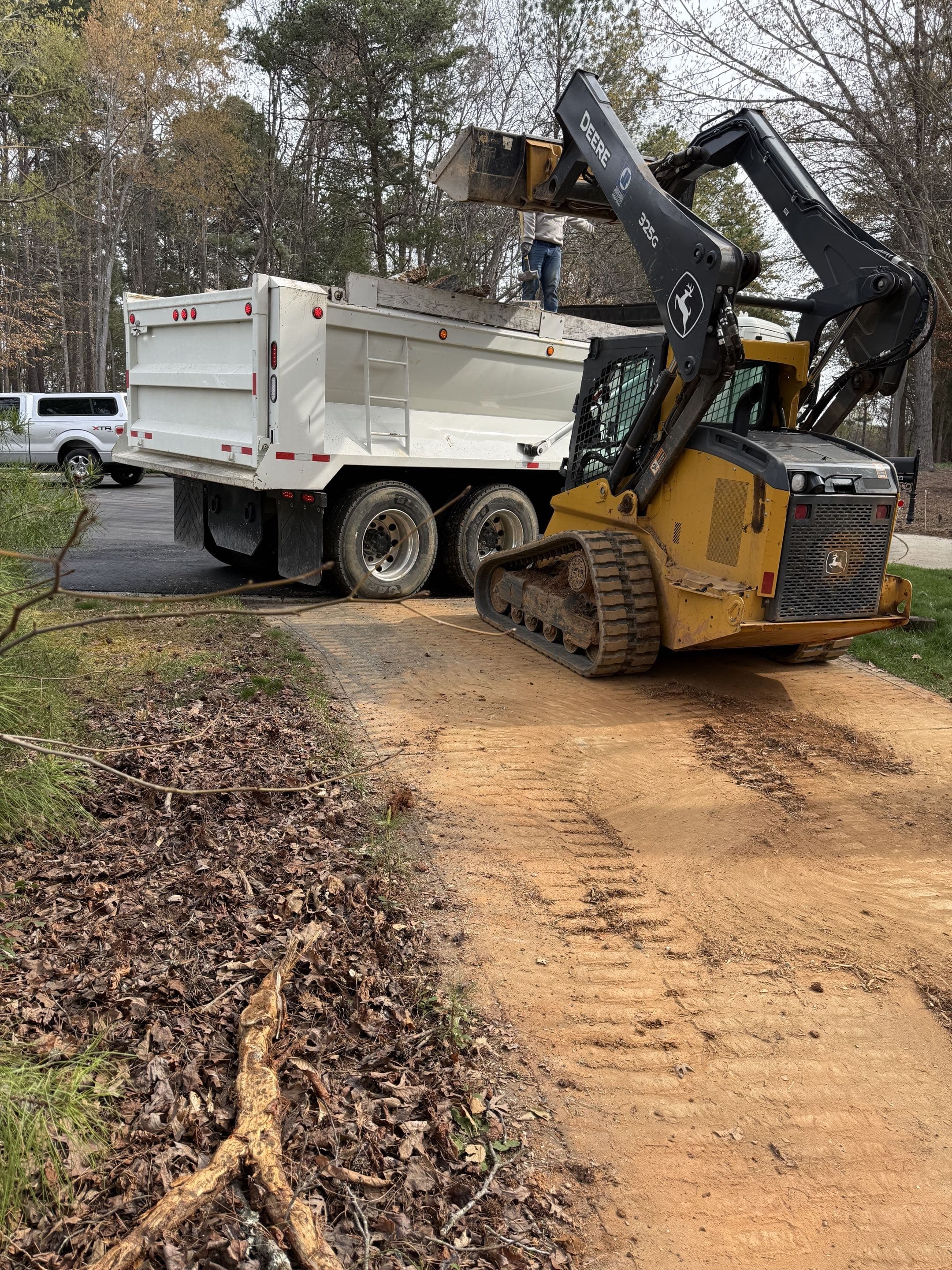
Demolition
Removal and disposal of existing concrete, leaving a clean slate for your new installation.
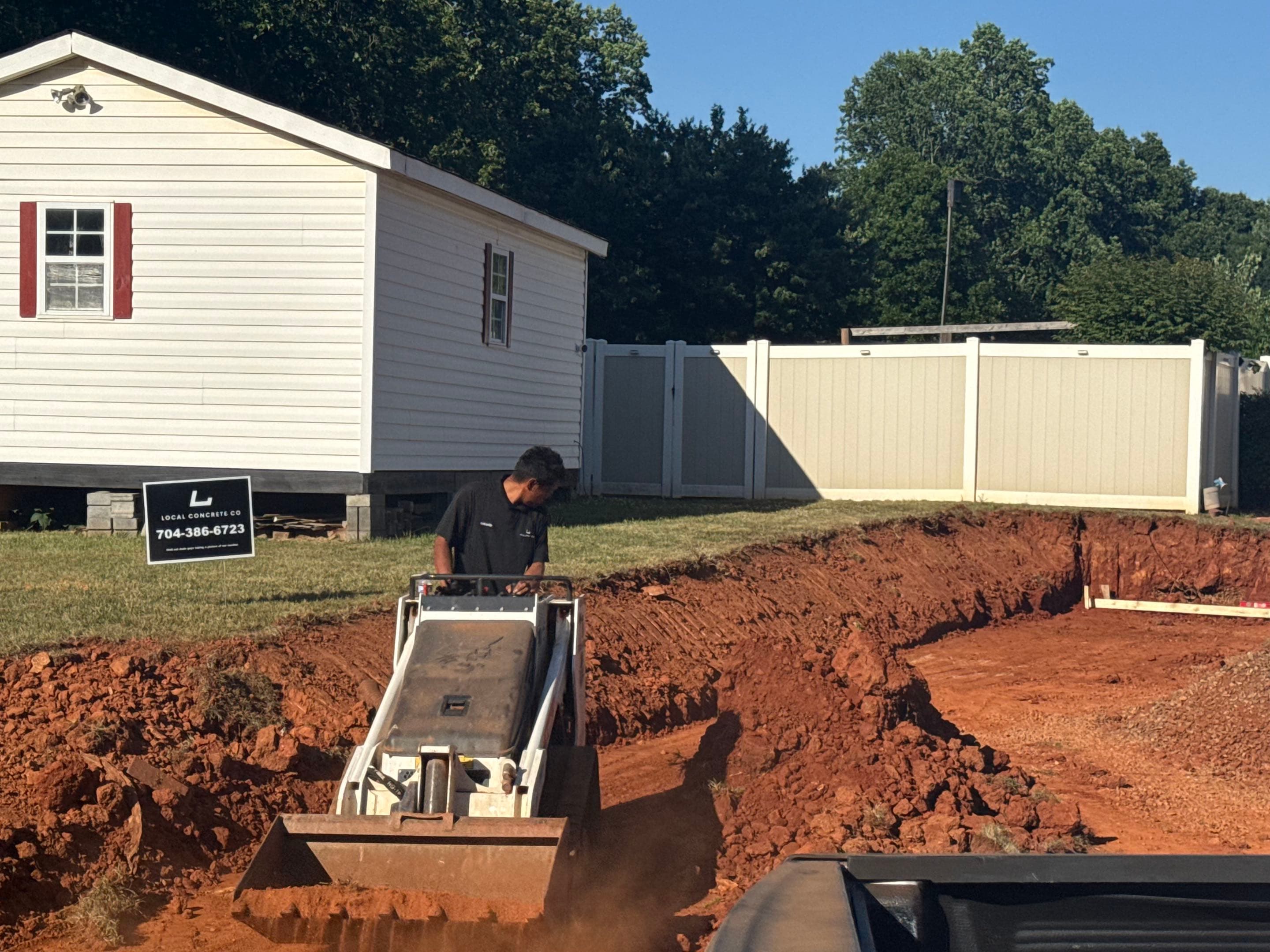
Grading & Forming
Expert grading for proper drainage and setting high-quality lumber forms for clean edges.
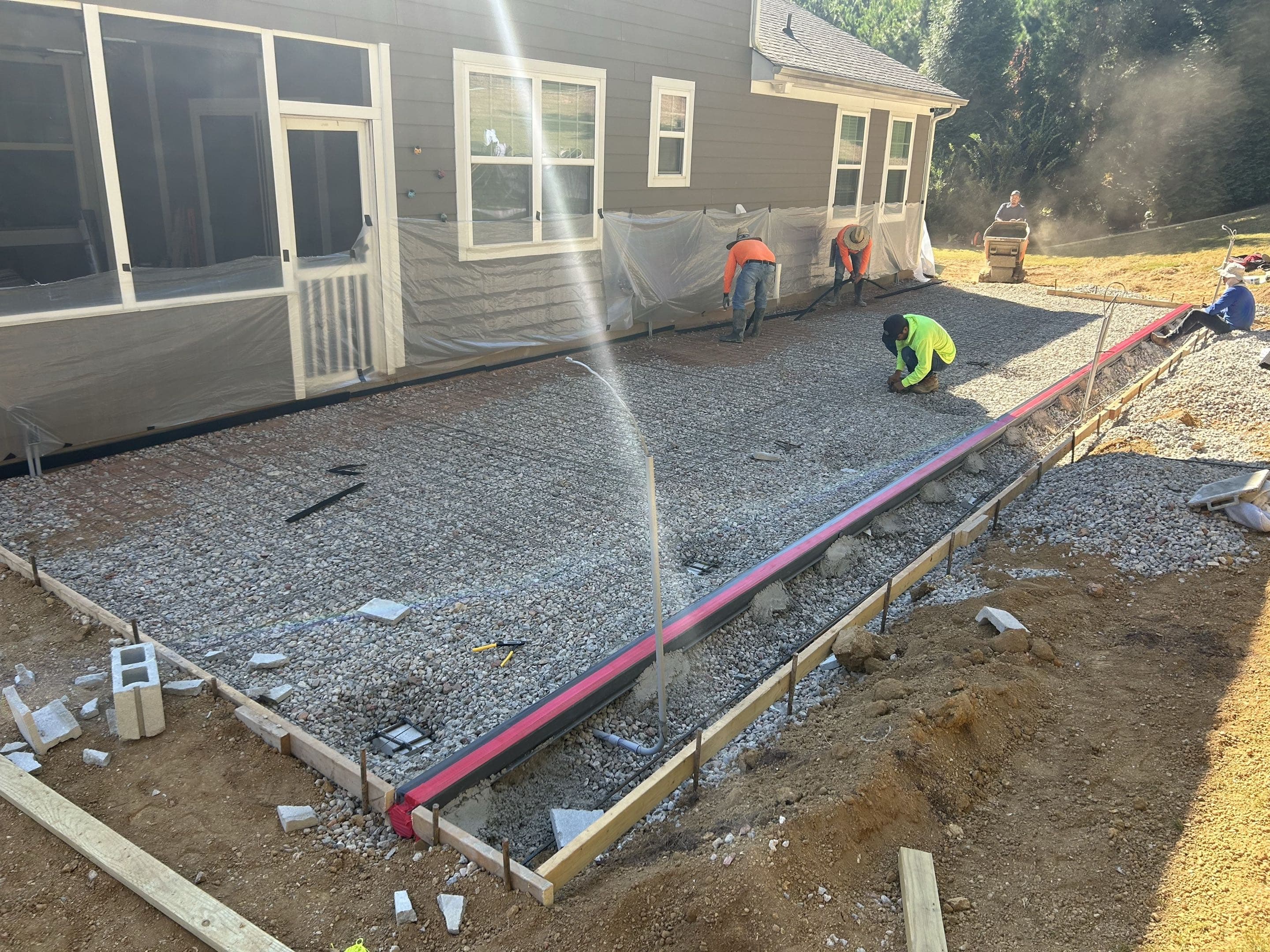
Reinforcement
Installation of steel rebar or wire mesh grid, using 1/2 inch grid for structural tensile strength.
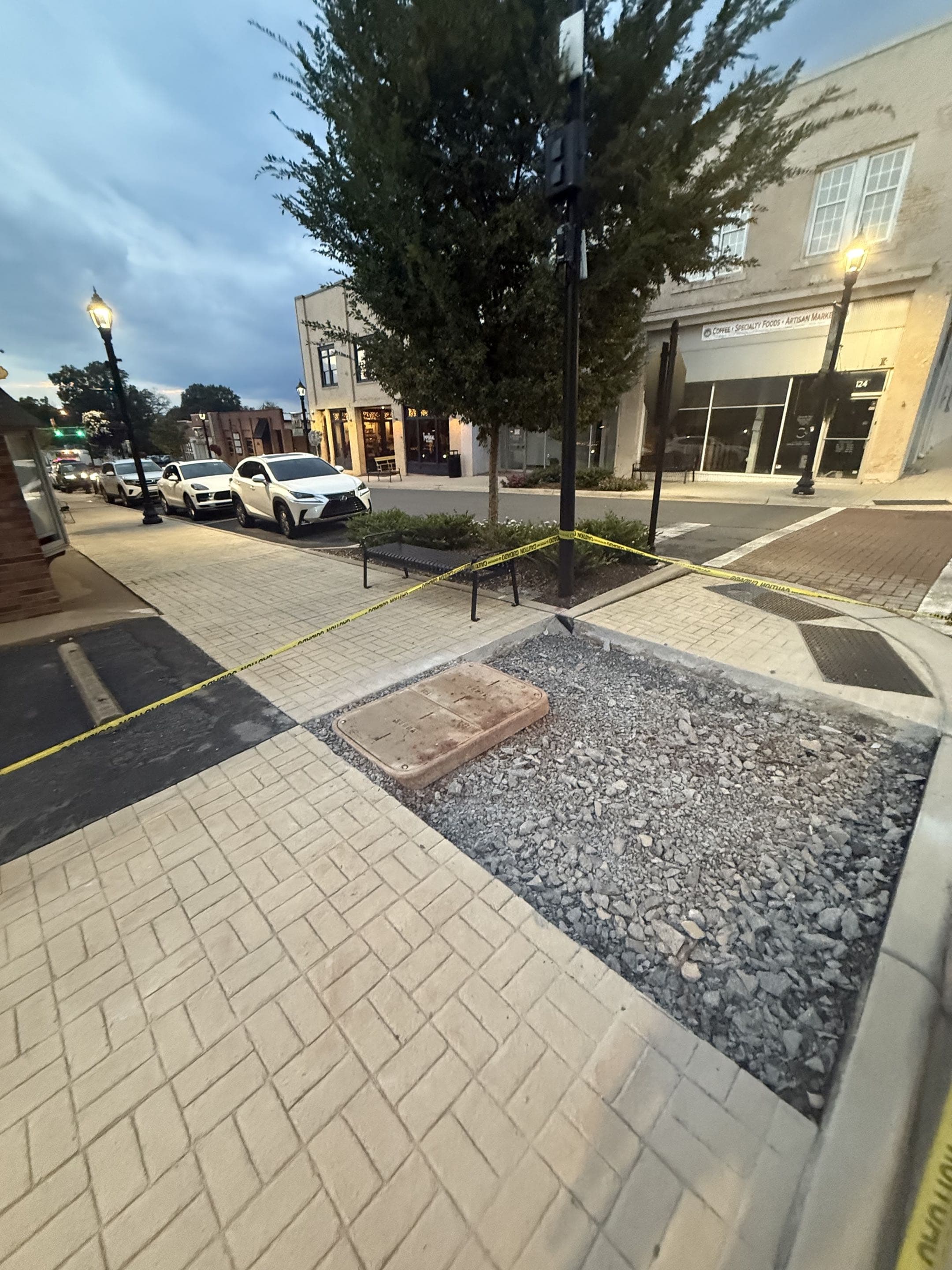
Pre-Pour Inspection
A final check of elevation, form stability, and reinforcement placement before the truck arrives.
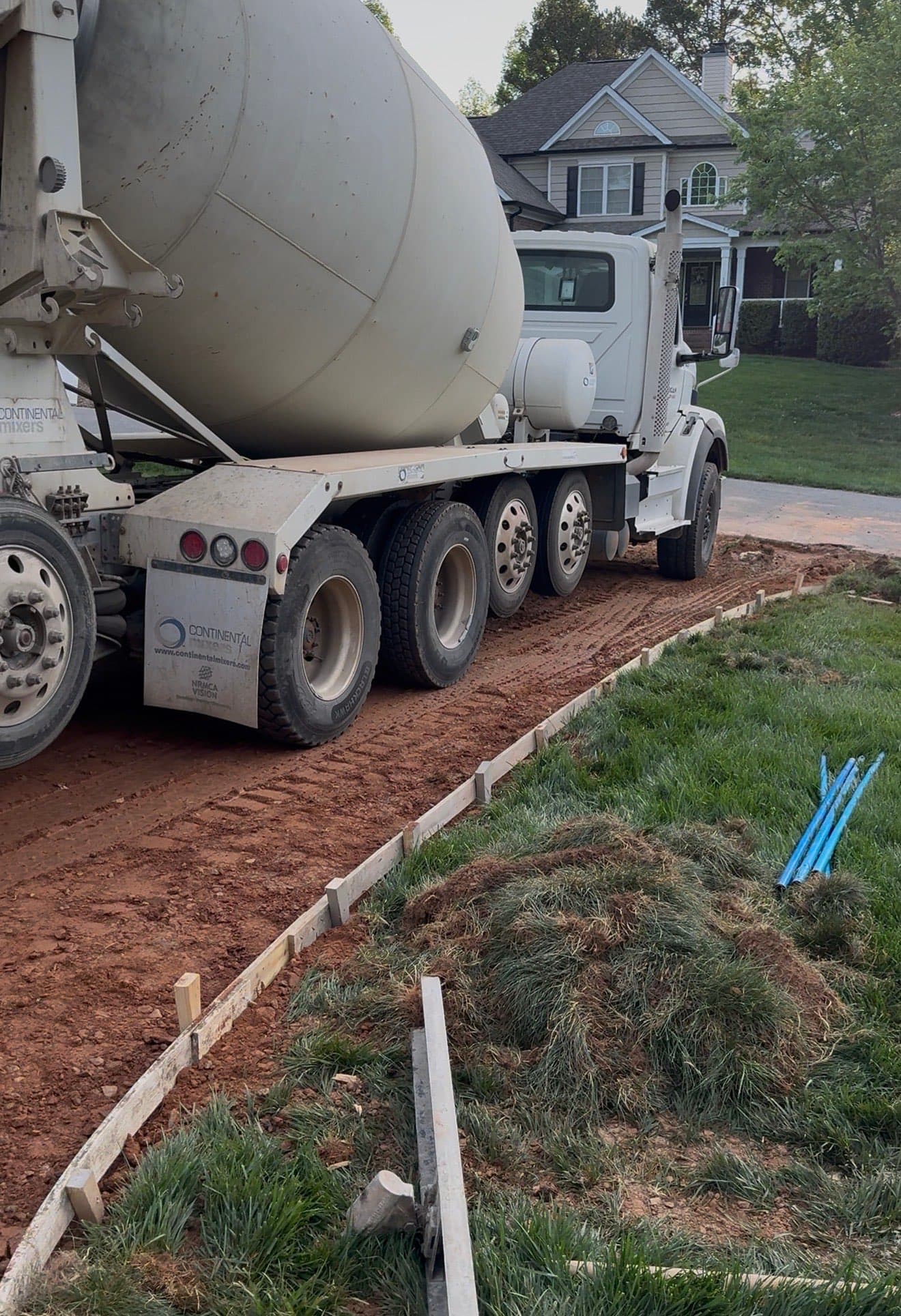
Slump Testing
Verifying concrete consistency on-site to ensure it meets the engineered mix design.
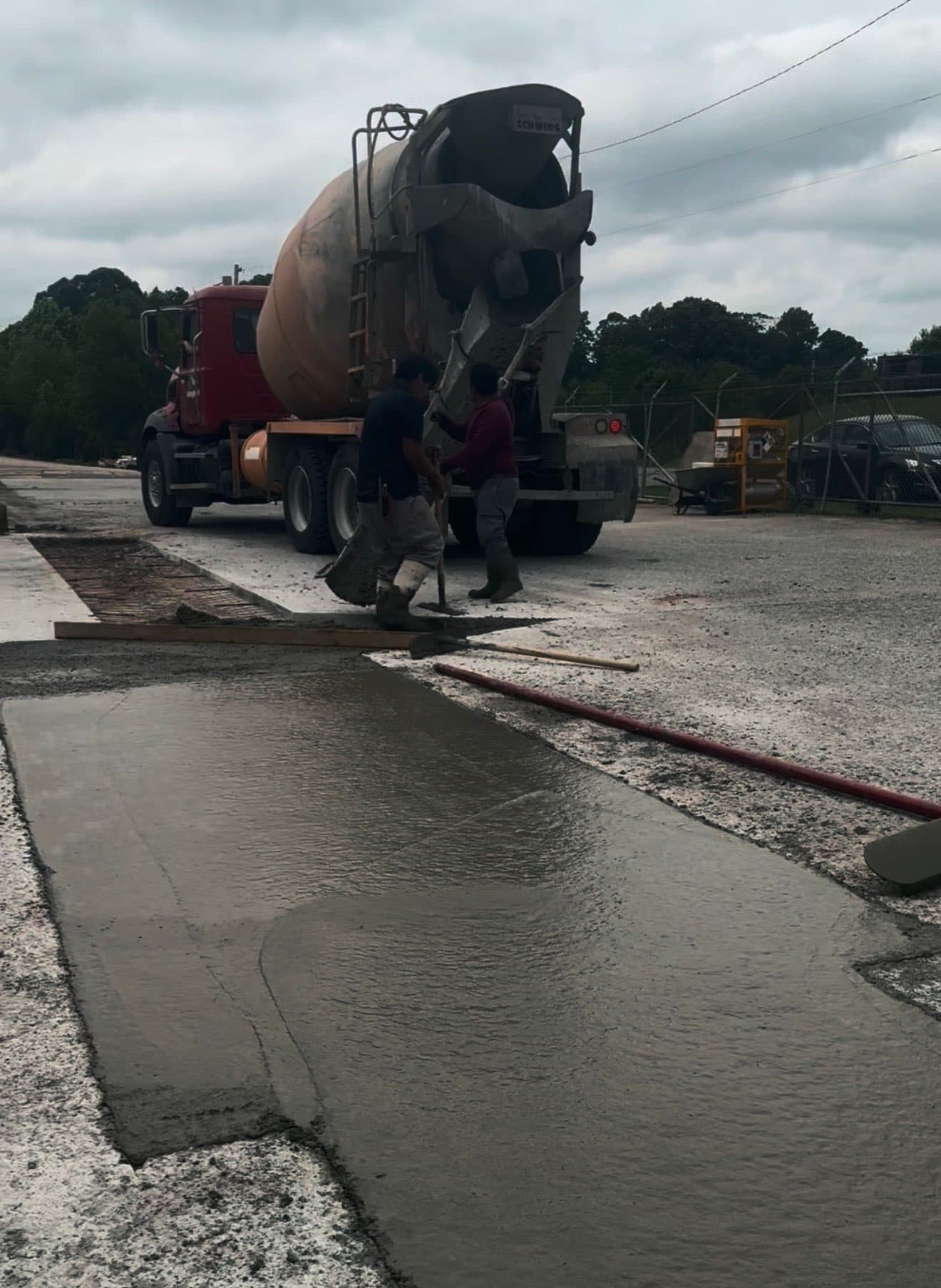
Placement
Controlled pouring and placement of concrete to avoid cold joints and ensure uniformity.
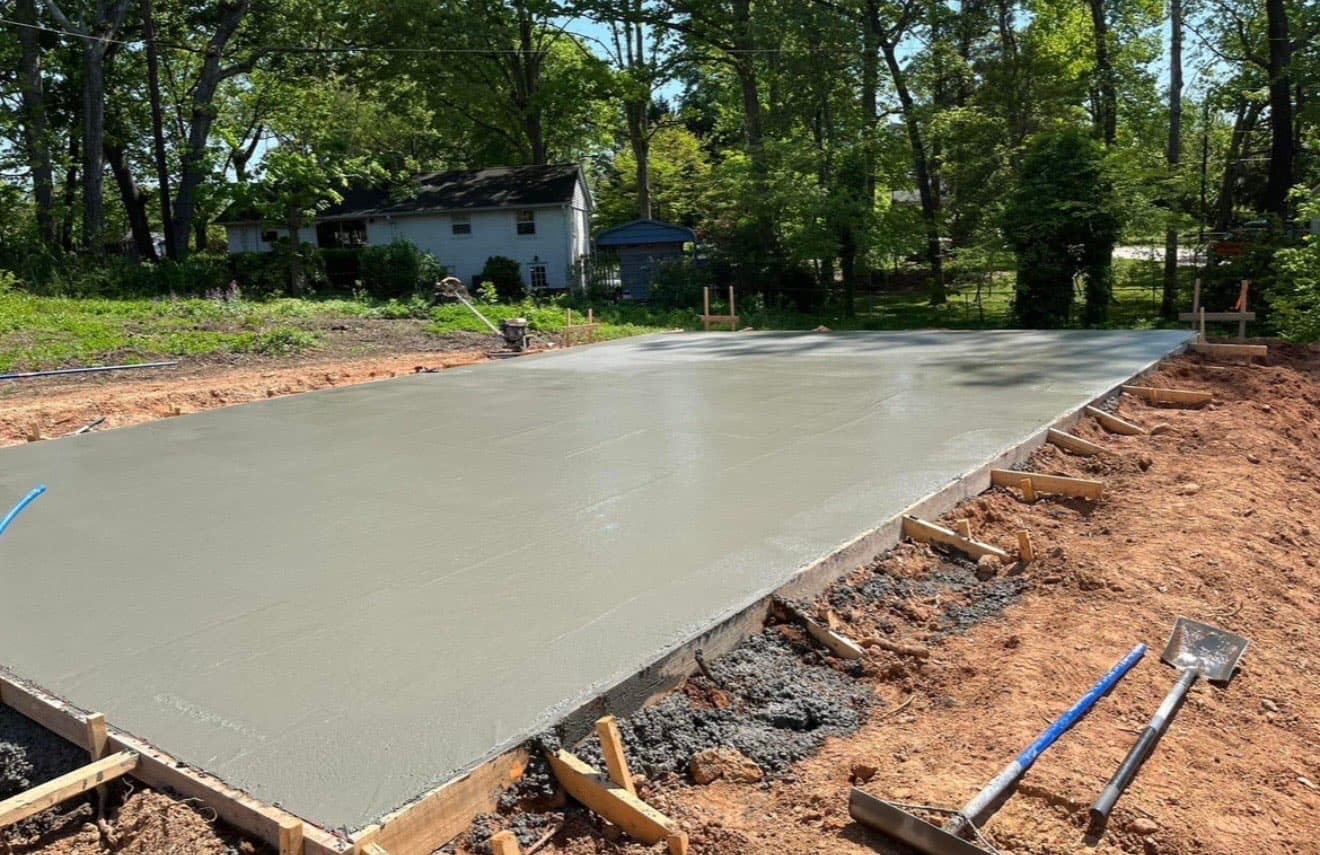
Bull Floating
Pushing aggregate down and bringing 'cream' to the surface for a smooth finishable layer.
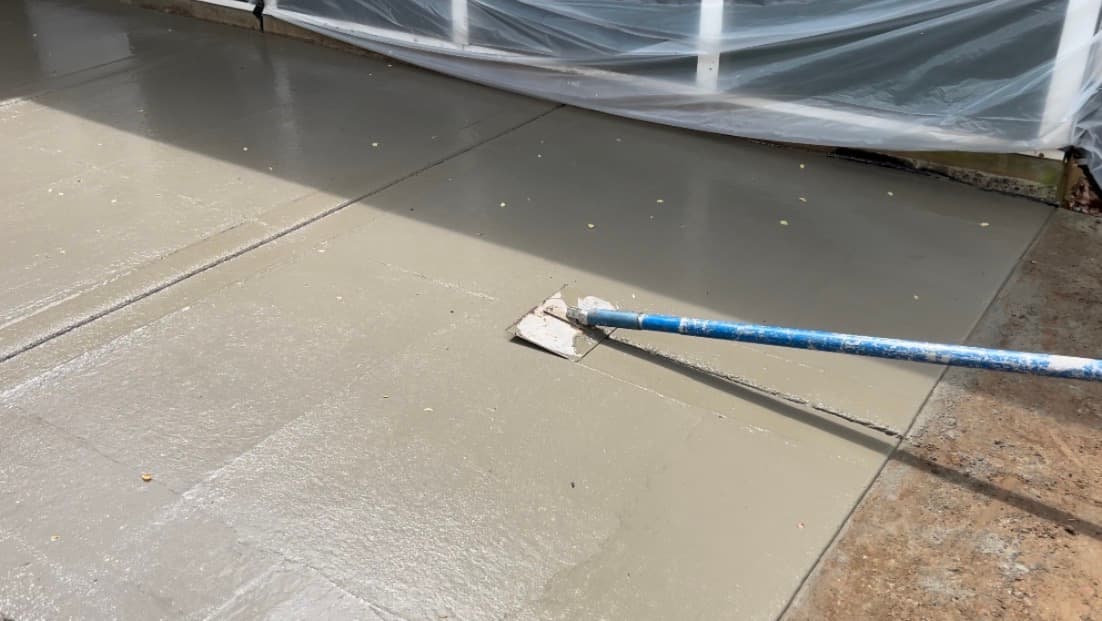
Edging & Jointing
Creating rounded edges for durability and cutting control joints to manage expansion.
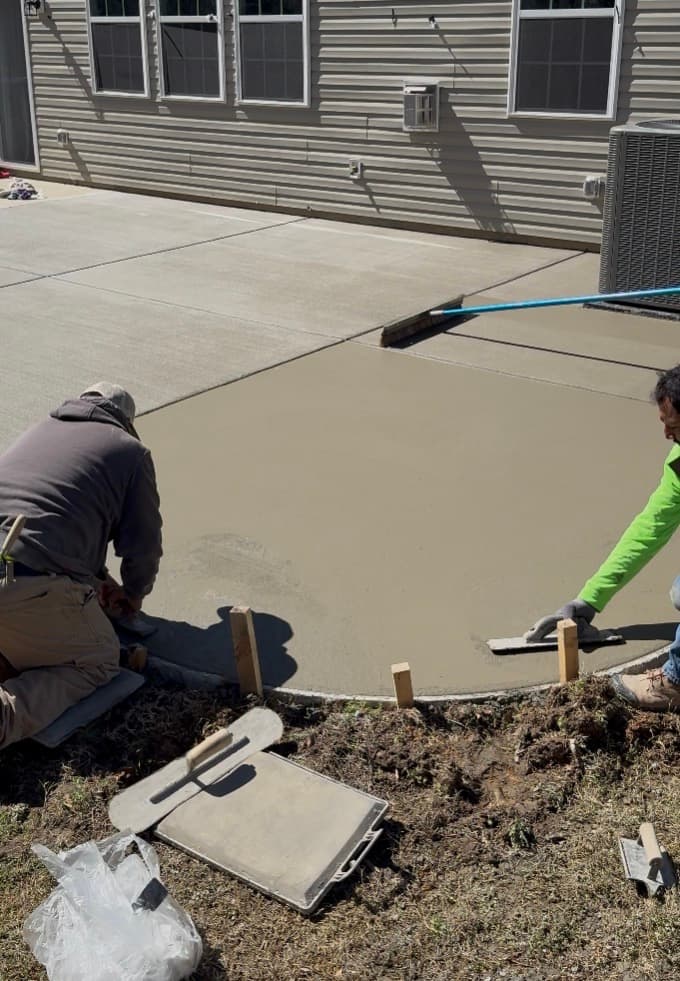
Fresno Finish
Final smoothing pass to close the surface pores and prepare for texturing.
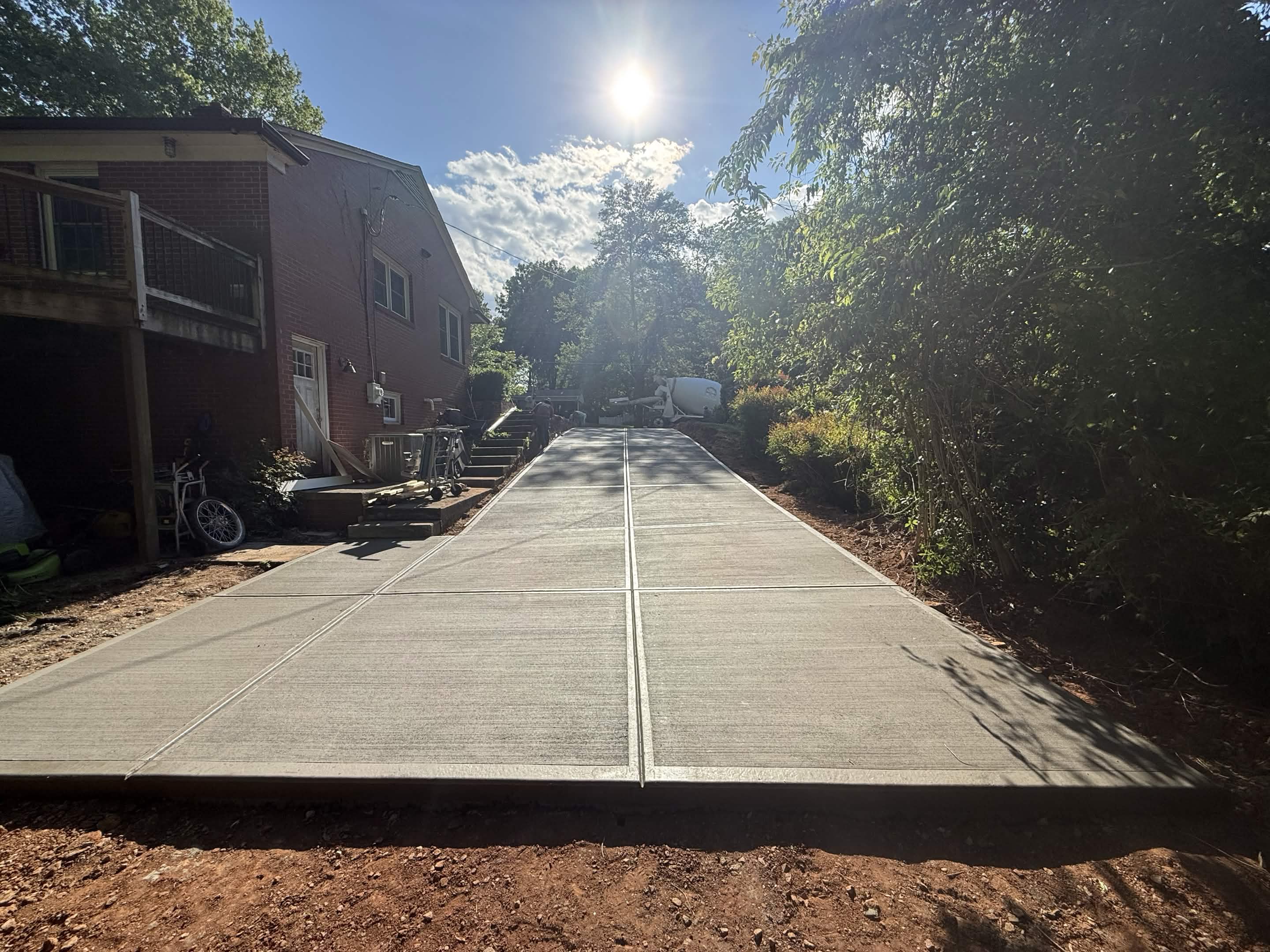
Decorative Detailing
Applying final broom texture, stamp patterns, or color treatments as specified for your project.
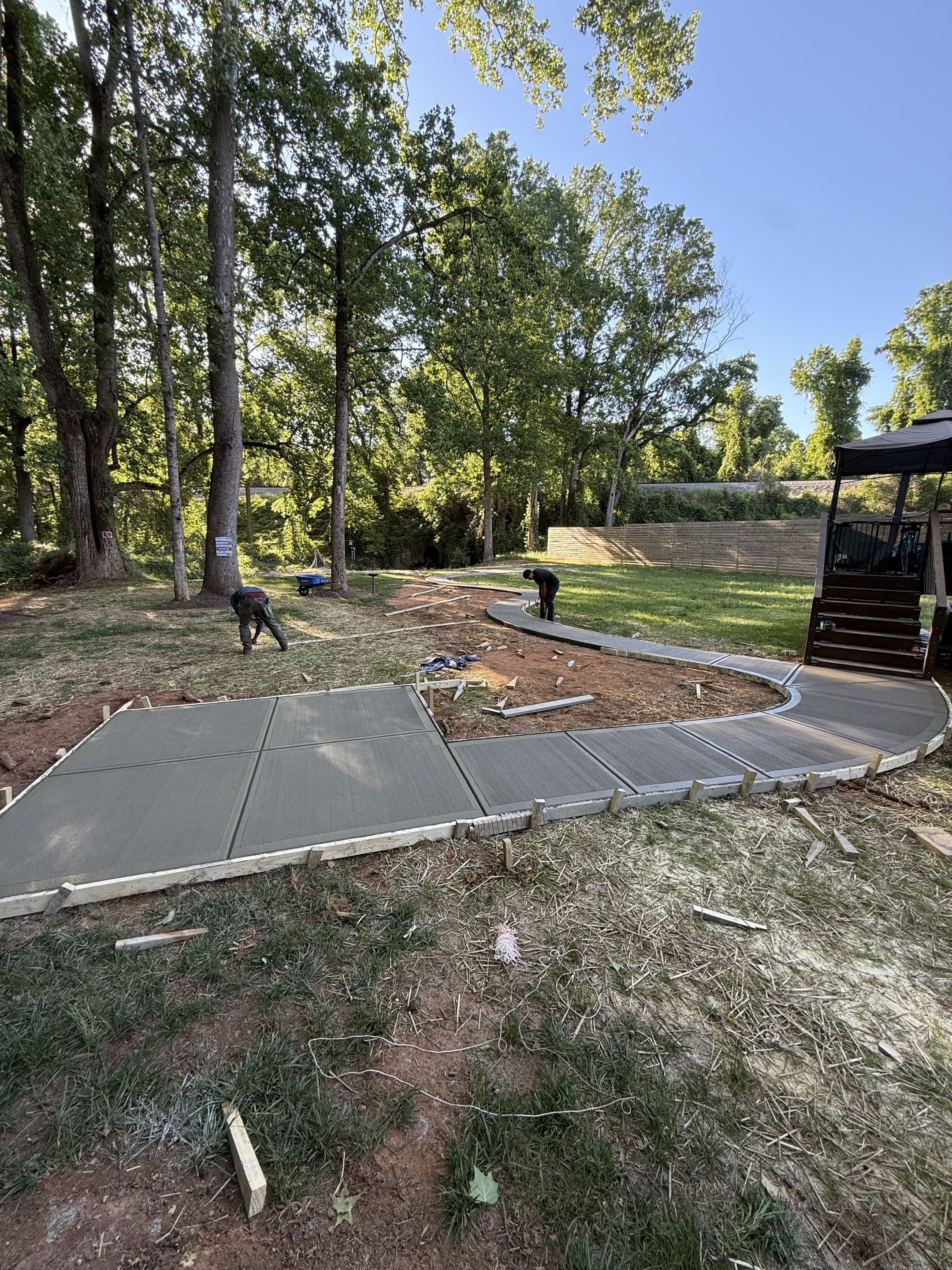
Form Removal
Careful stripping of forms once concrete has reached initial set stability.
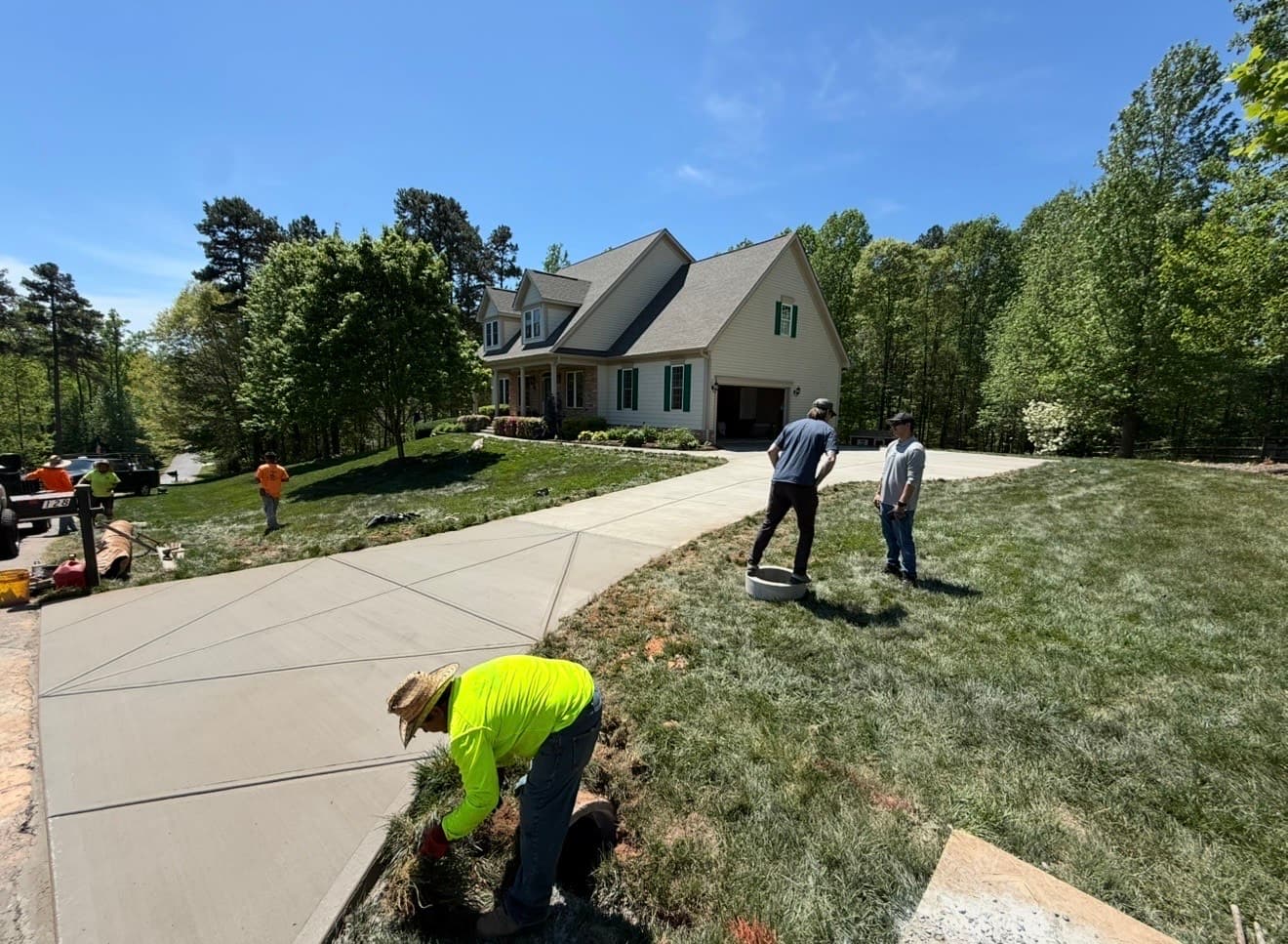
Final Walkthrough
Reviewing the finished project with you to ensure every detail meets the standard.

Usage Guide
Providing clear instructions on cure times — when you can walk, drive, and park on your new concrete.
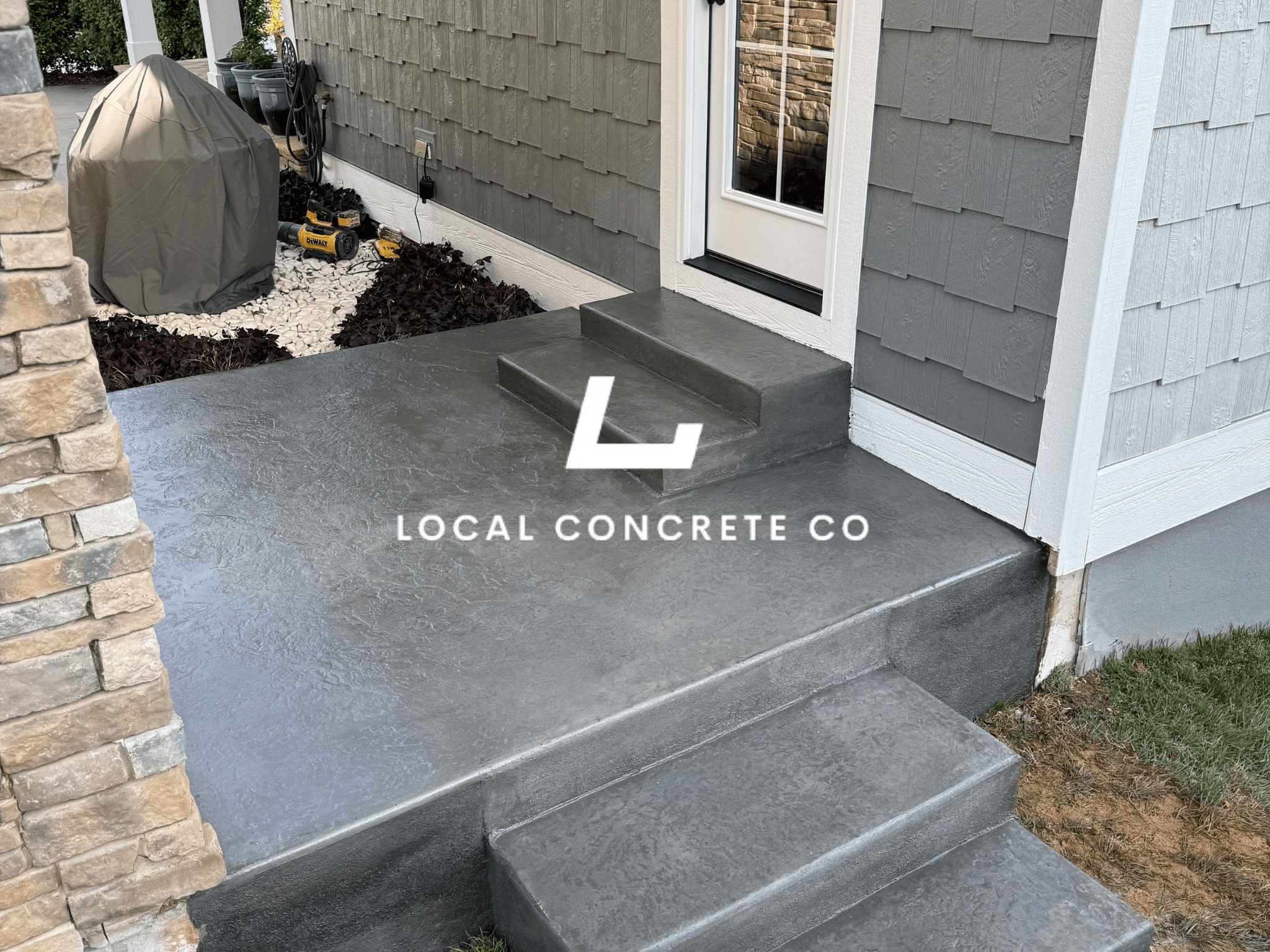
Project Completion
The job is done right, ensuring you have a durable surface for years to come.
Overlay Thickness, Prep, and Bond
The difference between an overlay that lasts fifteen years and one that peels off in three is almost entirely prep work and bond. The overlay material itself is important, but a great product on a bad prep still fails.
Overlay thickness by application:
- Micro-topping — 1/16 to 1/8 inch, polymer-modified. Cosmetic refresh, foot traffic, patios and walkways. Very thin, needs excellent prep and the sound underlying concrete to show almost no defects
- Standard overlay — 1/4 to 1/2 inch, polymer-modified. Driveways, patios, garage floors, general residential work. Standard resurfacing thickness
- Stampable overlay — 3/8 to 3/4 inch. Formulated to hold a stamped pattern impressed at application. Decorative finish change on an existing patio or drive
- Structural overlay — 1 to 2 inches. Used when the existing surface needs more than just a cosmetic pass, sometimes with mechanical anchor into the base slab
Prep steps that determine bond:
- Diamond grinding — removes weak surface paste, old sealer, coatings, and contaminants; opens the concrete pores for bond
- Shot blasting on larger jobs — mechanically profiles the surface to CSP 3-5 (concrete surface profile) for aggressive bond
- Crack repair — stable cracks get chased, cleaned, and filled with a polymer crack filler before overlay; moving cracks get honesty (see the section above)
- Primer or bonding agent — a purpose-formulated polymer primer that the overlay chemistry bonds to. This step is where a lot of failed overlays fail
- Clean surface — vacuumed or blown clean, damp but not wet at application
Skipping any of these steps trades a fifteen-year overlay for a three-year overlay. The prep timeline is longer than the overlay application itself on almost every job, and that's how it should be.
Overlay Lifespan vs New Pour
Overlay is a legitimate answer when the slab underneath is sound and the goal is either cosmetic (dated finish) or moderate surface restoration (light spalling, tire scuffing, sealer failure). It's not a replacement for a fresh pour when the slab has moved past surface issues into structural failure.
Realistic service life:
- Micro-topping — 8 to 12 years on a patio or covered walkway with proper reseal maintenance
- Standard polymer-modified overlay — 10 to 15 years on an exterior driveway or patio with proper prep and periodic sealer
- Stampable overlay — 10 to 15 years, with the pattern needing a reseal every three to five years to keep the color and definition
- New pour on a fresh base — 25 to 40 years on a properly-built residential driveway
Where the comparison lands:
- Cost — a well-prepped overlay typically runs a meaningful fraction of what a full tearout and pour costs. The exact fraction depends on prep complexity, overlay type, and finish
- Lifespan — overlay buys ten to fifteen years; a new pour buys two to three times that
- Disruption — overlay is usually a two-to-four-day job with a shorter cure before traffic; a new pour is longer with tearout and full cure
- Long-term math — over thirty years, one pour usually costs less than two or three overlays; over the next ten years, an overlay usually costs less than a pour
The honest answer depends on how long you plan to be in the house, how the slab is failing, and what you want the surface to look like when the job is done. We put both quotes on paper and walk through the ten-year and twenty-year math so the call is informed.
Why Homeowners Work With Us
Local Concrete Contractor runs residential and light commercial concrete work across the North Carolina Piedmont and out into the coastal plain. Overlay is one of the easiest jobs to oversell — a bad slab plus a nice-looking overlay quote is a common combination in this trade. We work hard to be the opposite kind of contractor.
Here's how we run overlay work:
- Zero deposit — you pay after the overlay is applied, cured, and walked with you, not before
- Free on-site slab assessment with an honest read on whether overlay fits or whether the slab has moved past overlay territory
- Written scope covering overlay type, thickness, prep method, finish, and cure schedule
- Licensed and insured — proof of coverage available before any grinding starts
- Real photos of prior overlays at similar slab conditions so the finish expectation is set before we start
- When the honest answer is a new pour, we quote the pour alongside so the ten-year math is clear
- Full prep protocol on every job (grind or shot-blast, crack chase, primer, clean surface) — no shortcuts to save a day of work at the cost of ten years of overlay life
- Same crew from prep through application through finish — no handoff between different outfits
- Straight answers on cost drivers (surface area, prep complexity, overlay type and thickness, finish, sealer, access)
Overlay done on the right slab with the right prep is a fifteen-year service. Overlay done on the wrong slab is a three-year problem. Which one you get depends almost entirely on how honest the walk-through was.
Overlay
FAQ
Straight answers on overlay installation — thickness, base prep, cure time, deposit, and what it takes to make the slab last.
Get Free QuoteHow long does a concrete overlay last?
A properly-prepped polymer-modified overlay on a sound slab typically lasts 10 to 15 years on an exterior driveway or patio with periodic sealer maintenance. Micro-toppings run 8 to 12 years on lower-traffic surfaces. Stampable overlays hit the same 10-to-15-year window with a reseal every three to five years to keep the pattern crisp. A new pour on a fresh base typically runs 25 to 40 years, so overlay is a shorter-term but faster and less-disruptive answer.
Will overlay cover the cracks in my driveway?
How thick is an overlay?
Can we change the color or finish with an overlay?
Is overlay cheaper than replacing the concrete?
How long before we can drive on the overlay?
Ready to talk about your project?
Free estimate. No pressure, no sales tactics. Zero deposit.
Get Free Quote