




Best Concrete Foundation Contractors Gastonia NC
Looking for a reliable concrete foundation contractor in Gastonia, NC? We're Gastonia NC's most reputable concrete foundation contractor. concrete foundation quotes in Gastonia back same-day, free written estimate. Straightforward pricing, on-time crews, dependable service on every Gastonia job.
Get your free quote
We respond in less than 2 hours.
Recent Gastonia Foundations Projects
Real customer jobs we've poured. Swipe through and picture yours next.
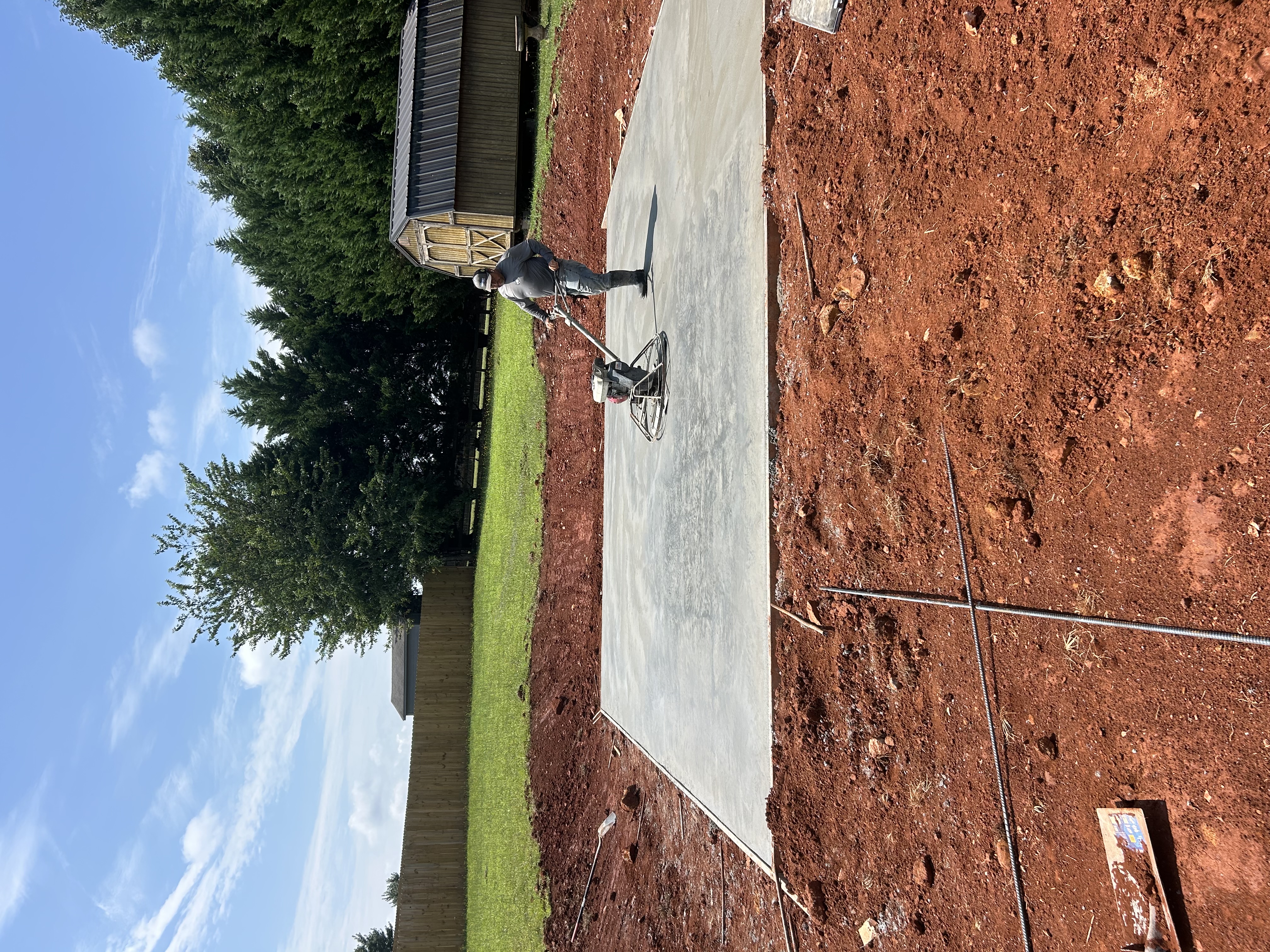
Foundations
Gastonia Job
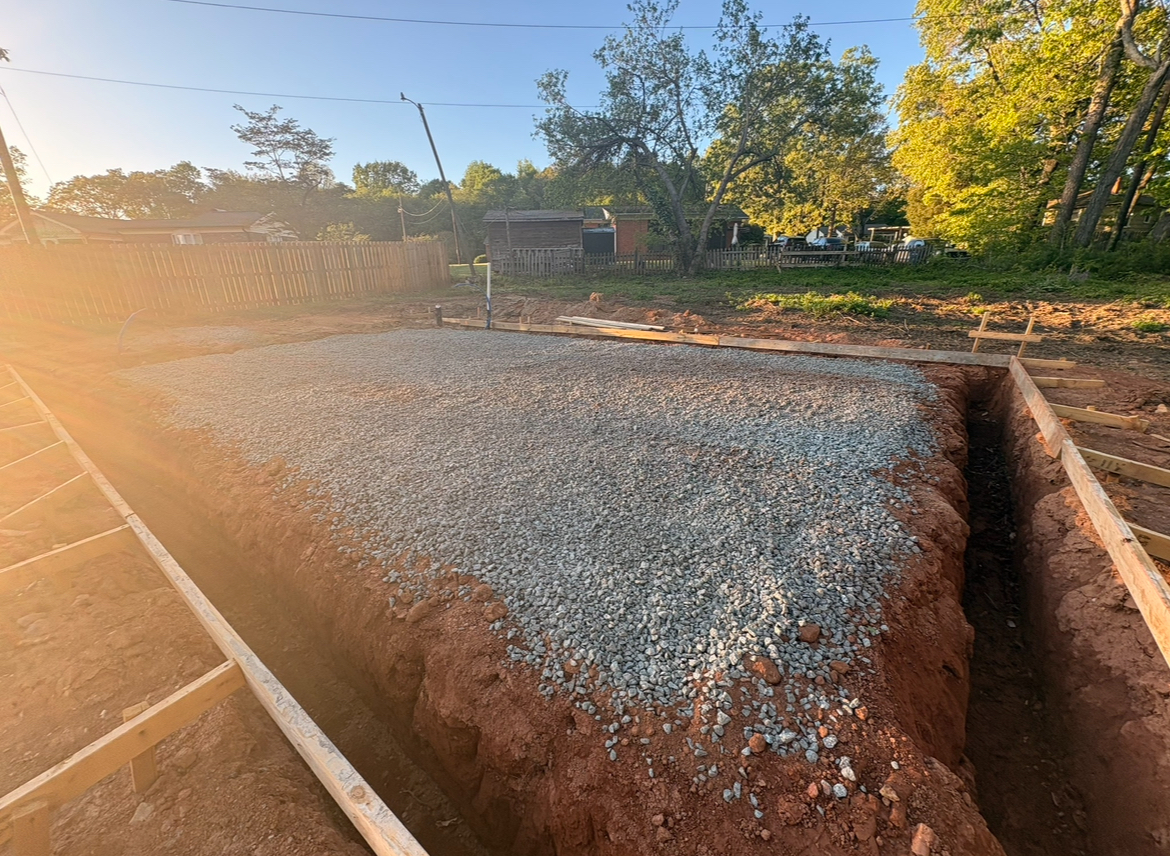
Foundations
Gastonia Job
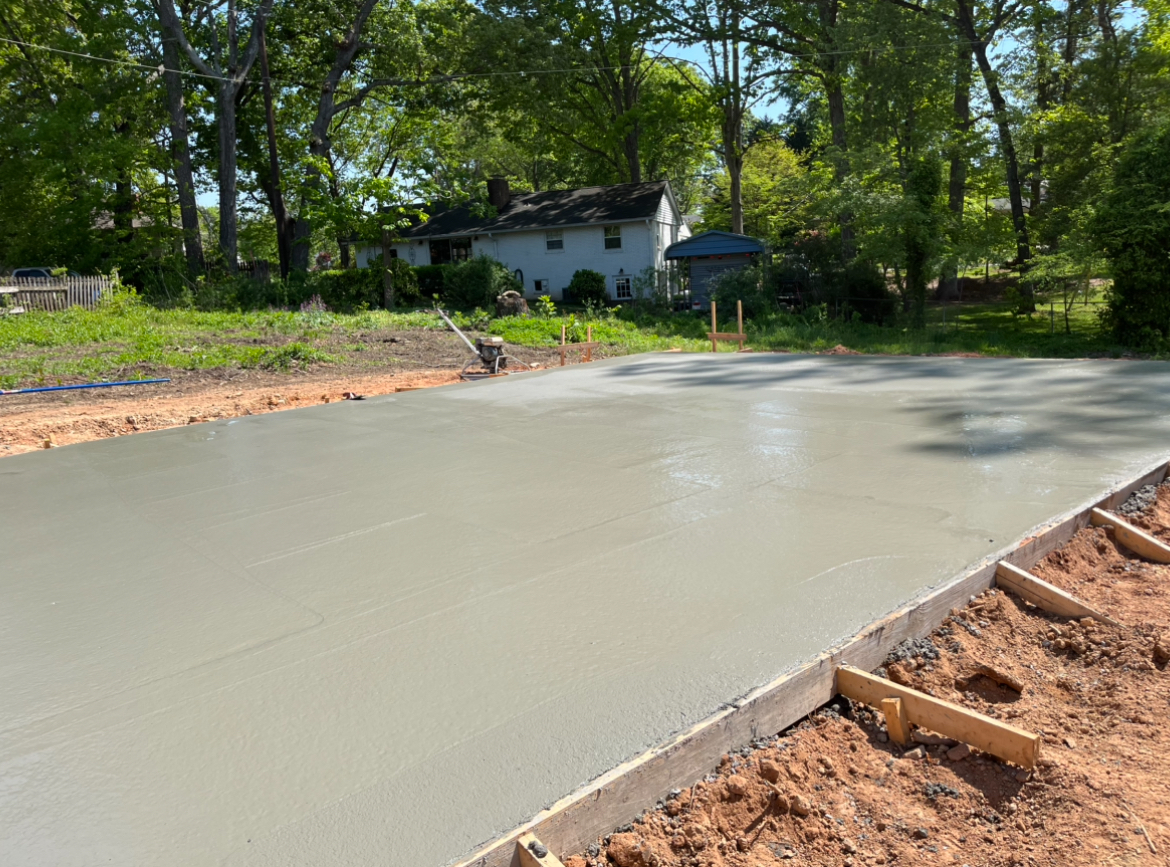
Foundations
Gastonia Job
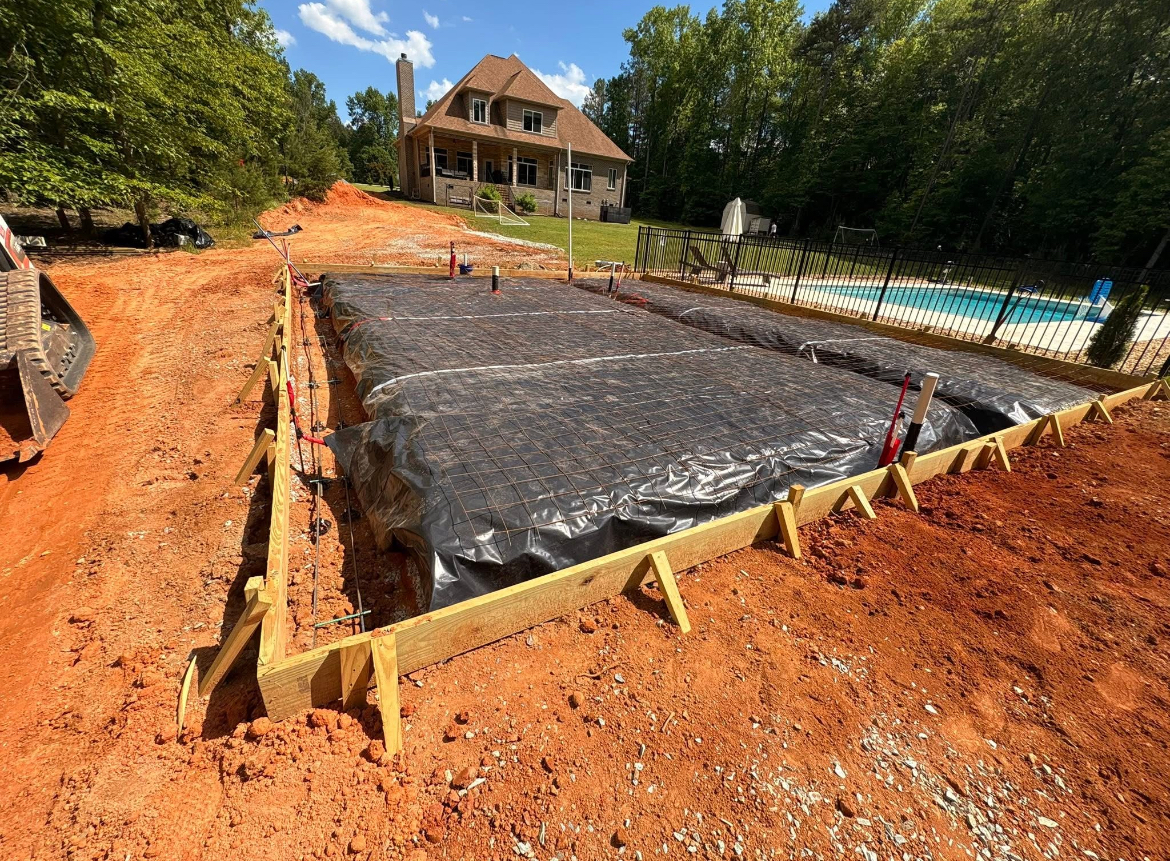
Foundations
Gastonia Job
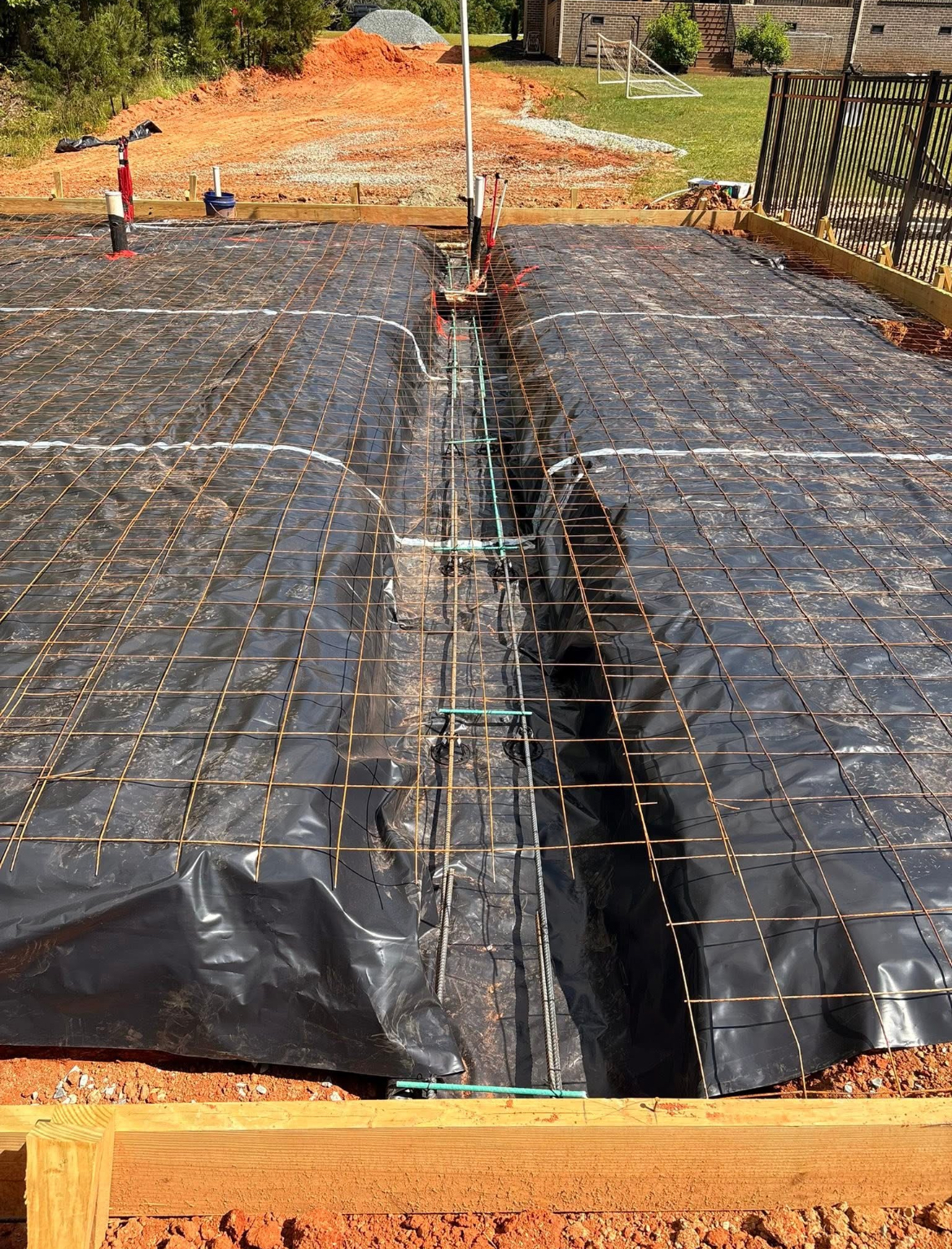
Foundations
Gastonia Job
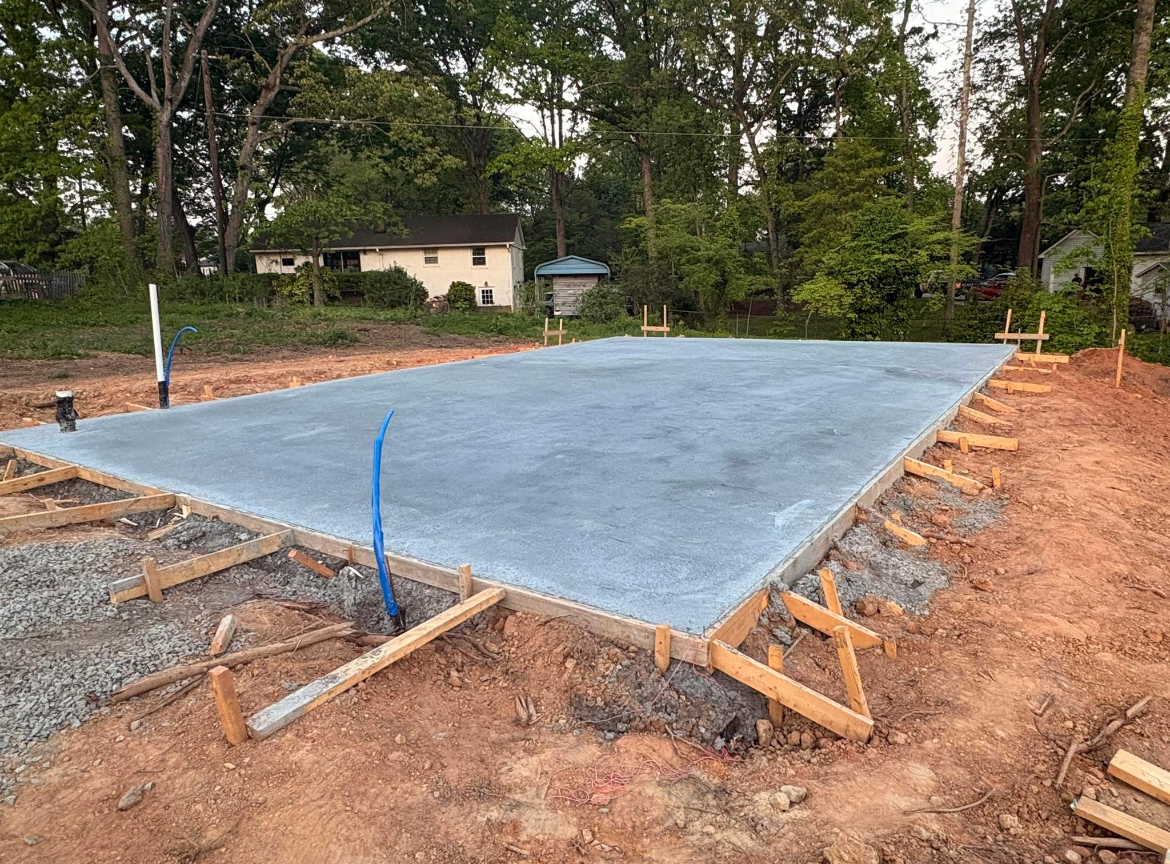
Foundations
Gastonia Job
(704) 445-3287
A residential foundation is the one part of a build you never get a second chance on. Everything above it — framing, roof load, doors that swing true, floors that stay flat — depends on the footings hitting the right depth, the slab hitting the right thickness, and the reinforcement being laid before the pour, not after. In North Carolina that means footings below the local frost line, proper bearing on Piedmont red clay or coastal plain sand, and a moisture barrier under any slab that lives inside conditioned or storage space.
In Gastonia specifically, foundation work runs through neighborhoods like Cramer Woods, Downtown Gastonia, York Chester. The York Chester district alone holds nearly 650 contributing buildings dating from 1856 to 1955, and mill-village streets around Loray Mill carry some of the county's oldest residential slabs, heavy replacement territory. That local ground truth — not a generic spec sheet — is what the crew builds against when they form up a Gastonia pour.
Our Foundation Services
Residential foundation work covers three different structural approaches, and the right one for your project depends on the structure above, the soil below, and what the local inspector needs to see before the framers arrive.
- Monolithic slab foundations — footing and slab poured in one continuous placement for garages, sheds, and small additions
- Stem-wall (or turn-down) foundations — perimeter footing with a short block or poured wall carrying the framing, common on additions that tie into an existing crawlspace elevation
- Footing-and-wall foundations for full basement or crawlspace additions where the finished floor sits well above grade
- Garage foundations, both attached and detached, including thickened edges for the door threshold and column bearing points
- Workshop and pole-building bases where a slab pour follows post-frame construction
- Addition foundations that need to tie cleanly into an existing footing or slab without differential settlement later
- Small new-construction foundations for storage buildings, guest cottages, and workshops under typical residential permit thresholds
If you already have engineered drawings, we'll build to them. If you don't, we'll walk the site with you, tell you what shape of foundation fits the structure you're planning, and give you a spec sheet you can hand to a permit office or a framer.
Monolithic Slab vs Stem-Wall vs Footing-and-Wall
Which foundation type to pour is the first real design decision, and it turns on the structure above, the finished-floor elevation you need, and whether the space will be conditioned or storage.
- Monolithic slab — footing and slab poured together in one placement. Fastest, fewest pours, no cold joint between footing and slab. Best fit for garages, workshops, sheds, and single-story additions on flat lots where finished floor can sit close to grade.
- Stem-wall — perimeter footing poured first, a short poured or block wall on top of it, then a slab poured inside the walls. Used when the finished floor needs to sit six inches to two feet above grade, or when an addition has to match an existing floor height.
- Footing-and-wall for crawlspace or basement — full-depth footings and taller poured walls, slab optional or poured later. Used when the addition needs to match a crawlspace elevation or where soil conditions call for load distribution deeper than a monolithic can offer.
On a sloped Piedmont lot the choice often makes itself — a monolithic slab that needs more than eight inches of fill on the downhill side is usually the wrong call, and a stem-wall is the honest answer. We'll walk the grade with you and say which type actually fits.
Get your free quote
We respond in less than 2 hours.
Why Local Concrete Contractor?
- 01.Precision craftsmanship
- 02.Same crew from base through finish
- 03.Licensed & insured, dedicated project manager
- 04.Financing available
Our Foundations Process in Gastonia
Every foundations we pour in Gastonia runs through the same 18 checkpoints — from the on-site consult through the final walkthrough.
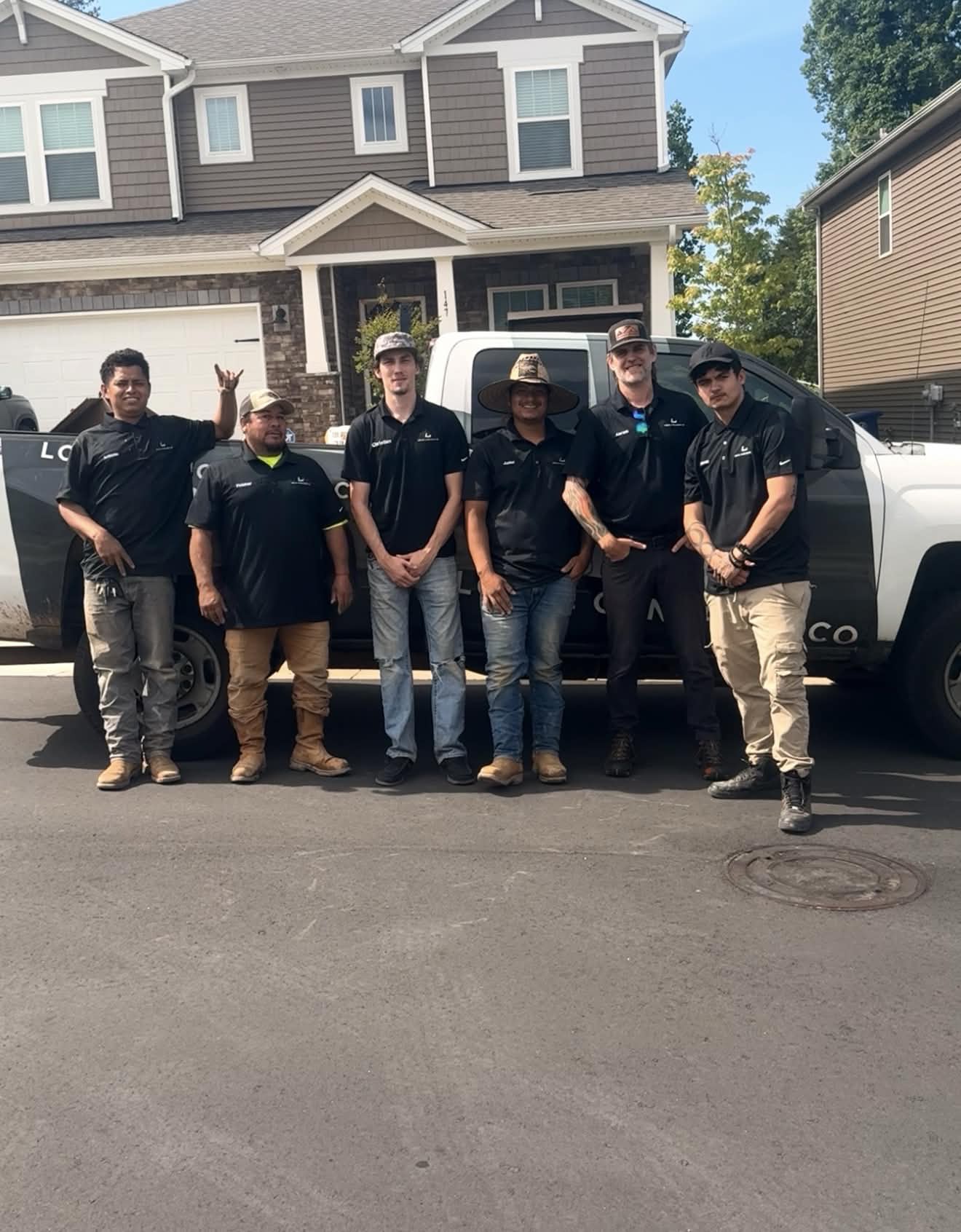
Consultation & Estimate
We meet on-site in Gastonia to assess scope, discuss vision, and provide a detailed, transparent quote tailored to your Gastonia property.

Logistics & Scheduling
Coordinating crew, equipment, and weather windows specific to Gastonia's climate to ensure a seamless project start.
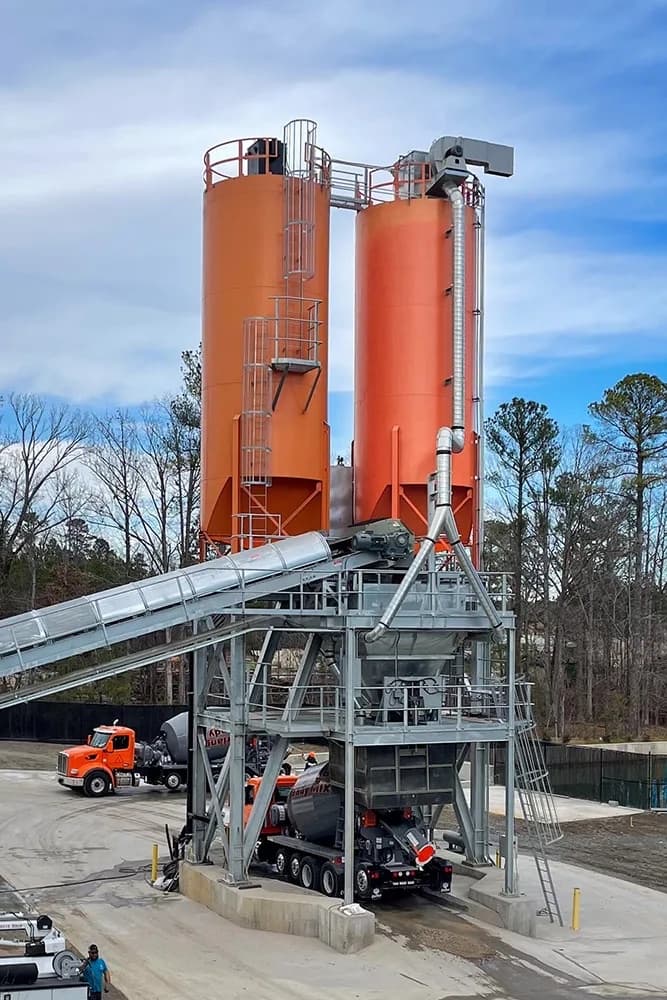
Custom Mix Design
Ordering specific concrete additives and slump requirements based on Gastonia's current temperature and humidity patterns.
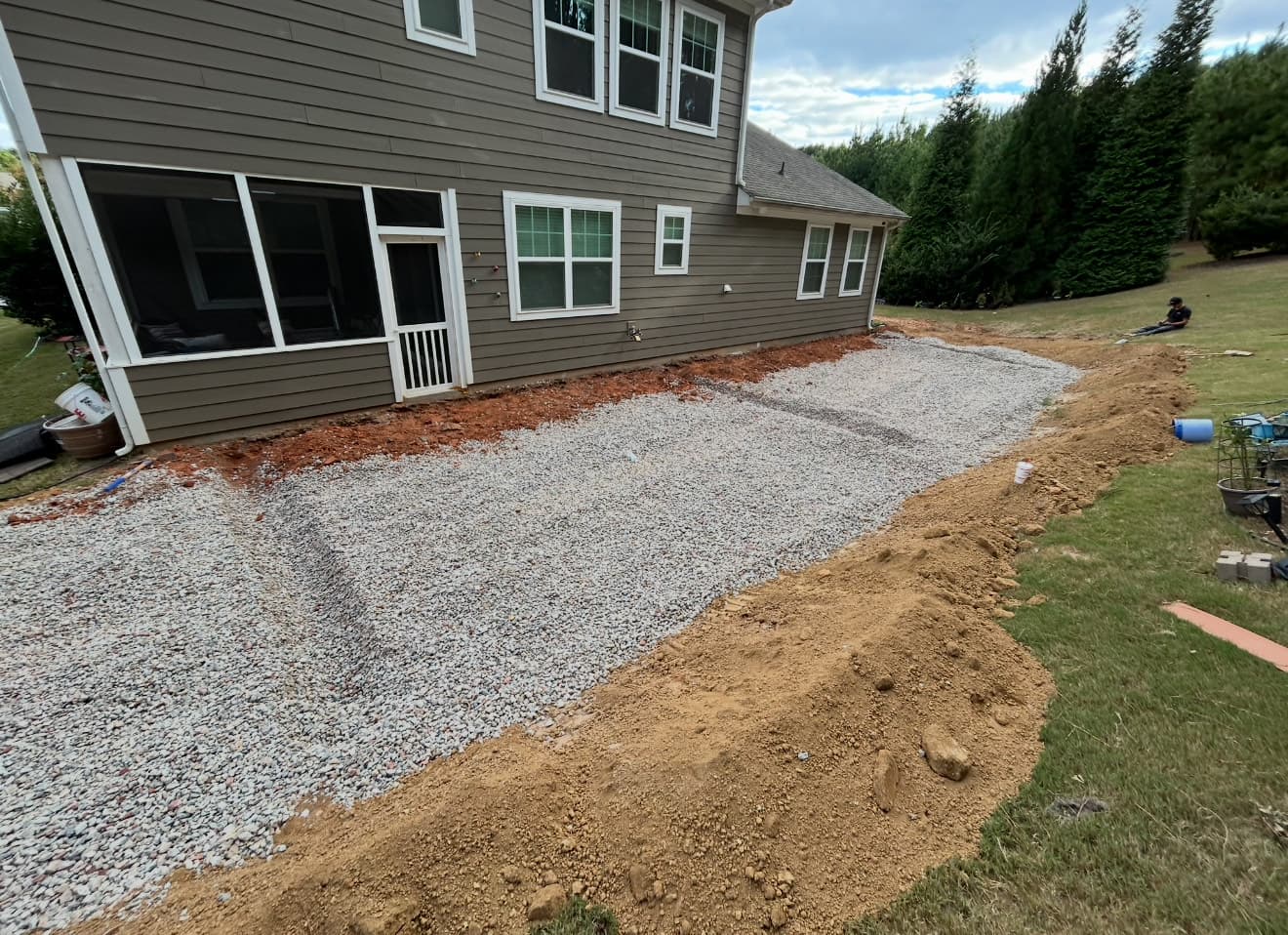
Site Preparation
Preparing the workspace in Gastonia and establishing safe access routes for our equipment and crew.
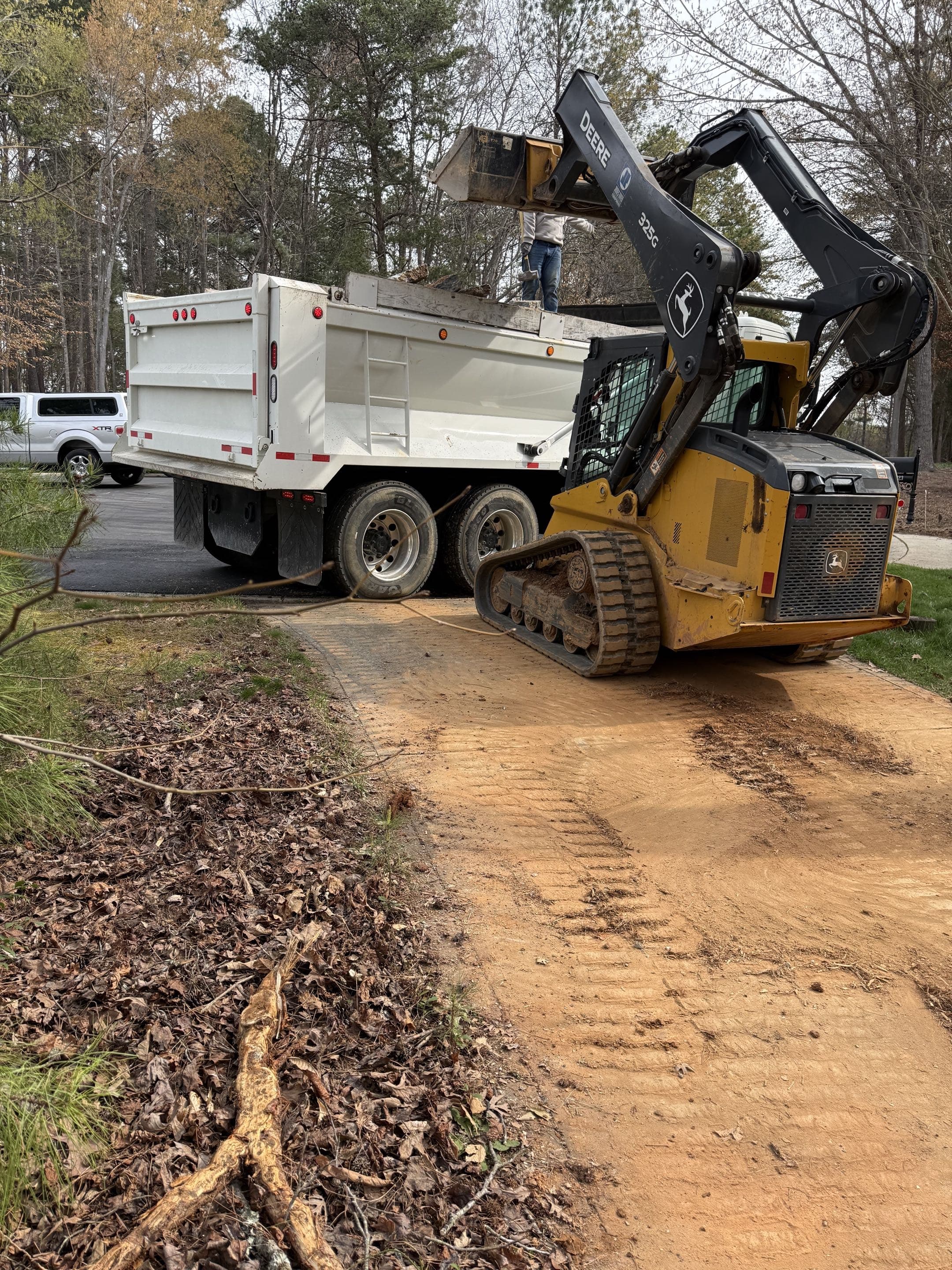
Demolition
Removal and disposal of existing concrete in Gastonia, leaving a clean slate for your new installation.
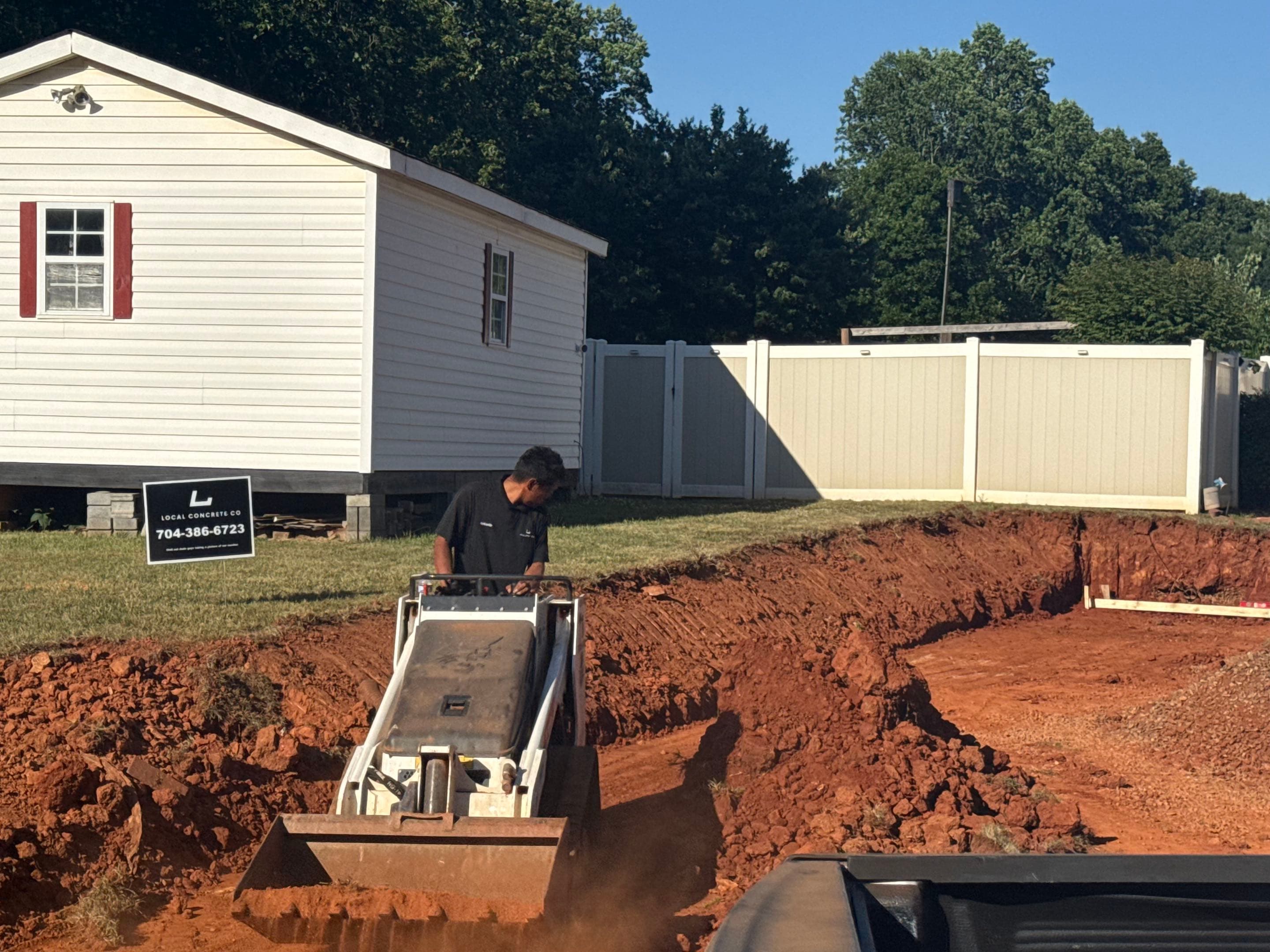
Grading & Forming
Expert grading for proper drainage in Gastonia and setting high-quality lumber forms for clean edges.
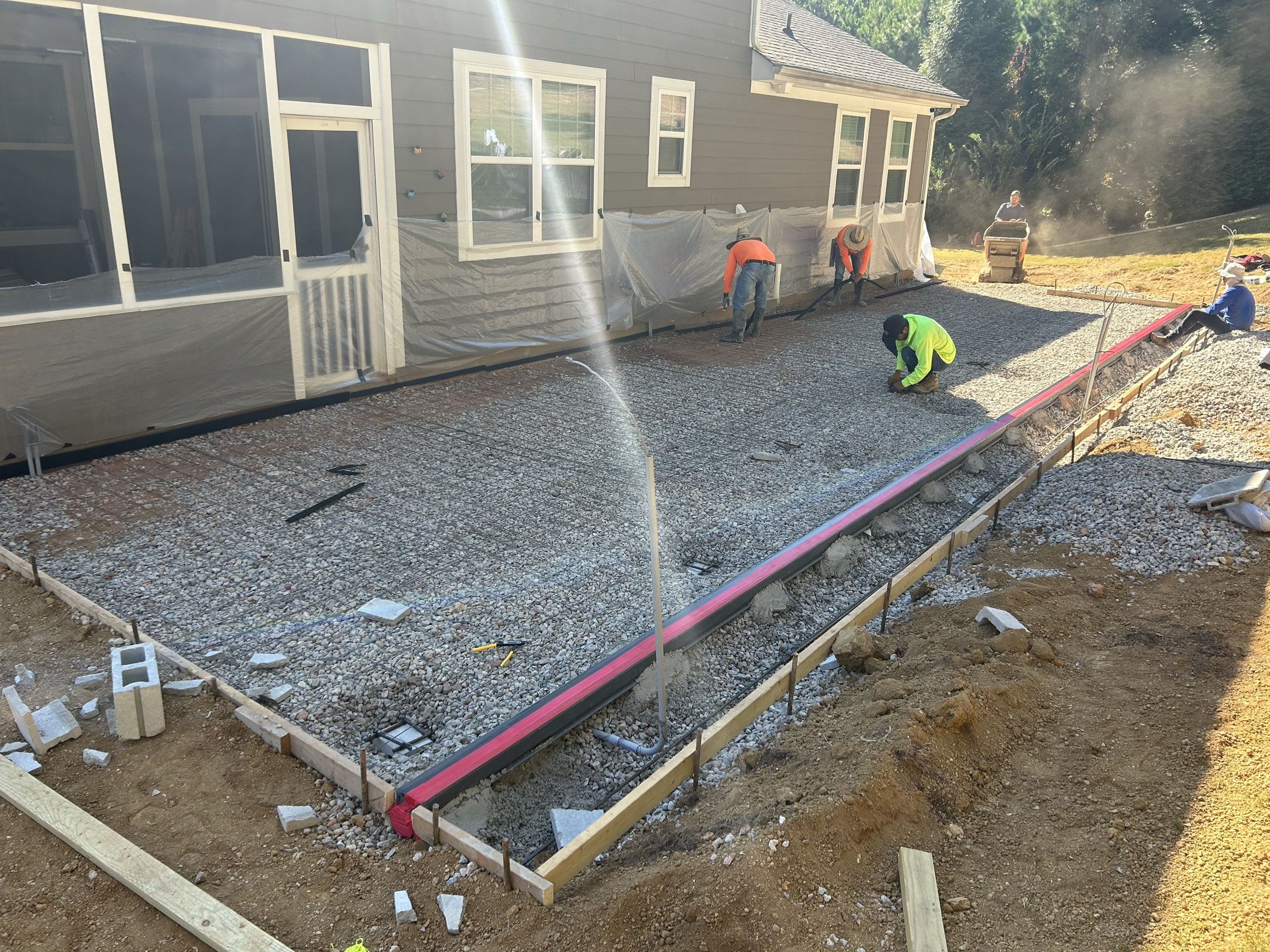
Reinforcement
Installation of steel rebar or wire mesh grid in Gastonia, using 1/2 inch grid for structural tensile strength suitable for North Carolina conditions.
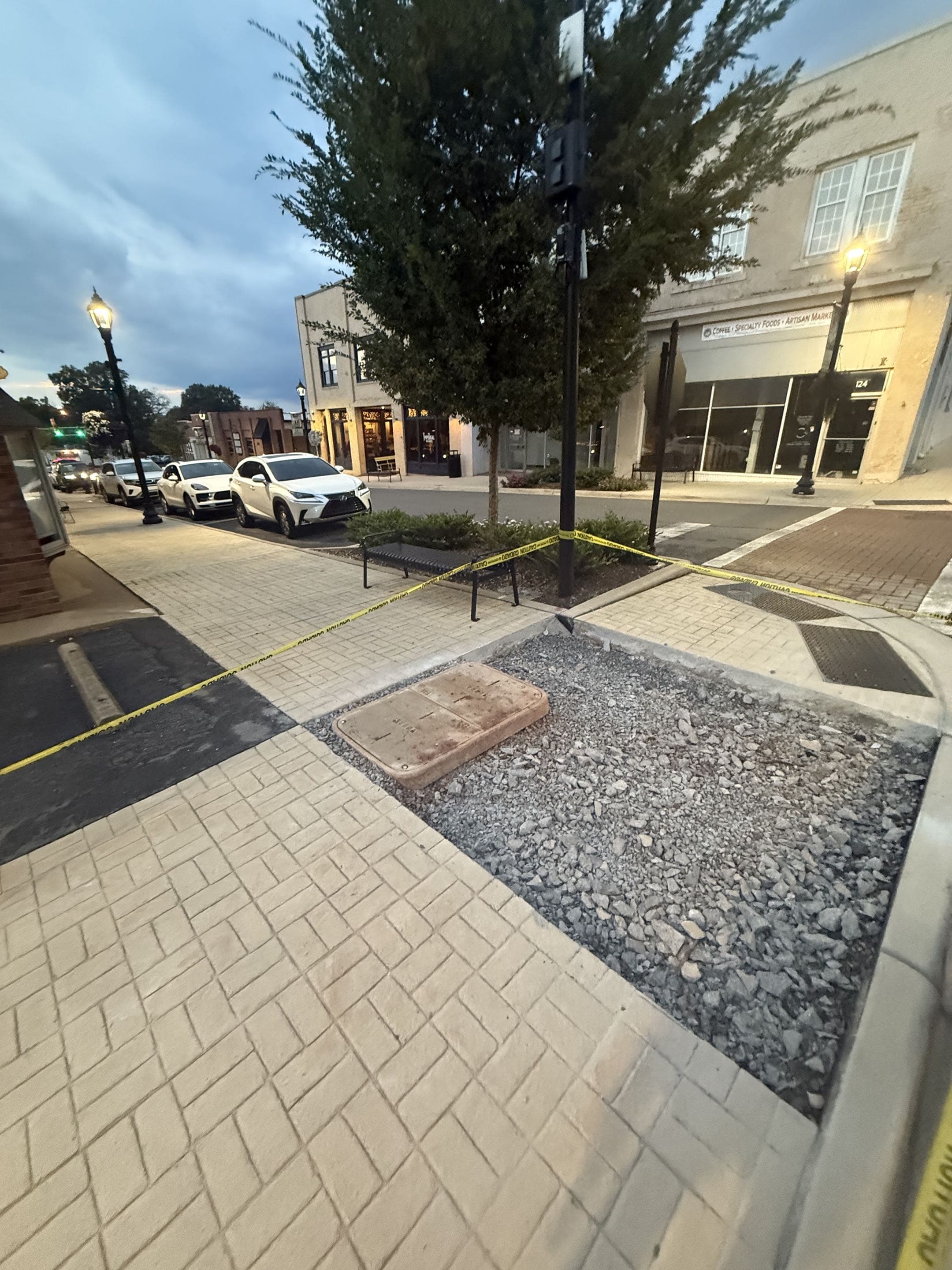
Pre-Pour Inspection
A final check of elevation, form stability, and reinforcement placement in Gastonia before the truck arrives.
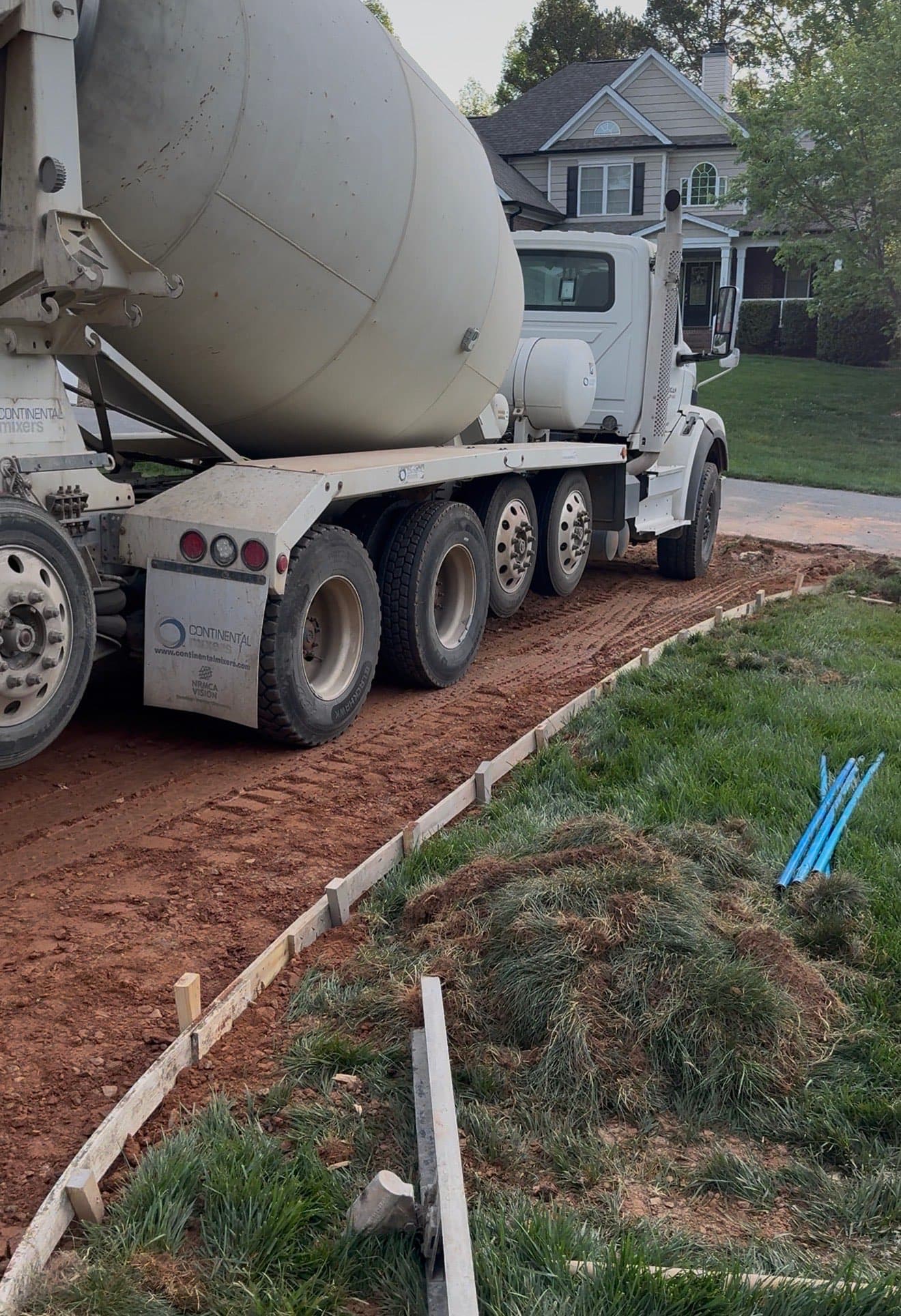
Slump Testing
Verifying concrete consistency on-site in Gastonia to ensure it meets the engineered mix design.
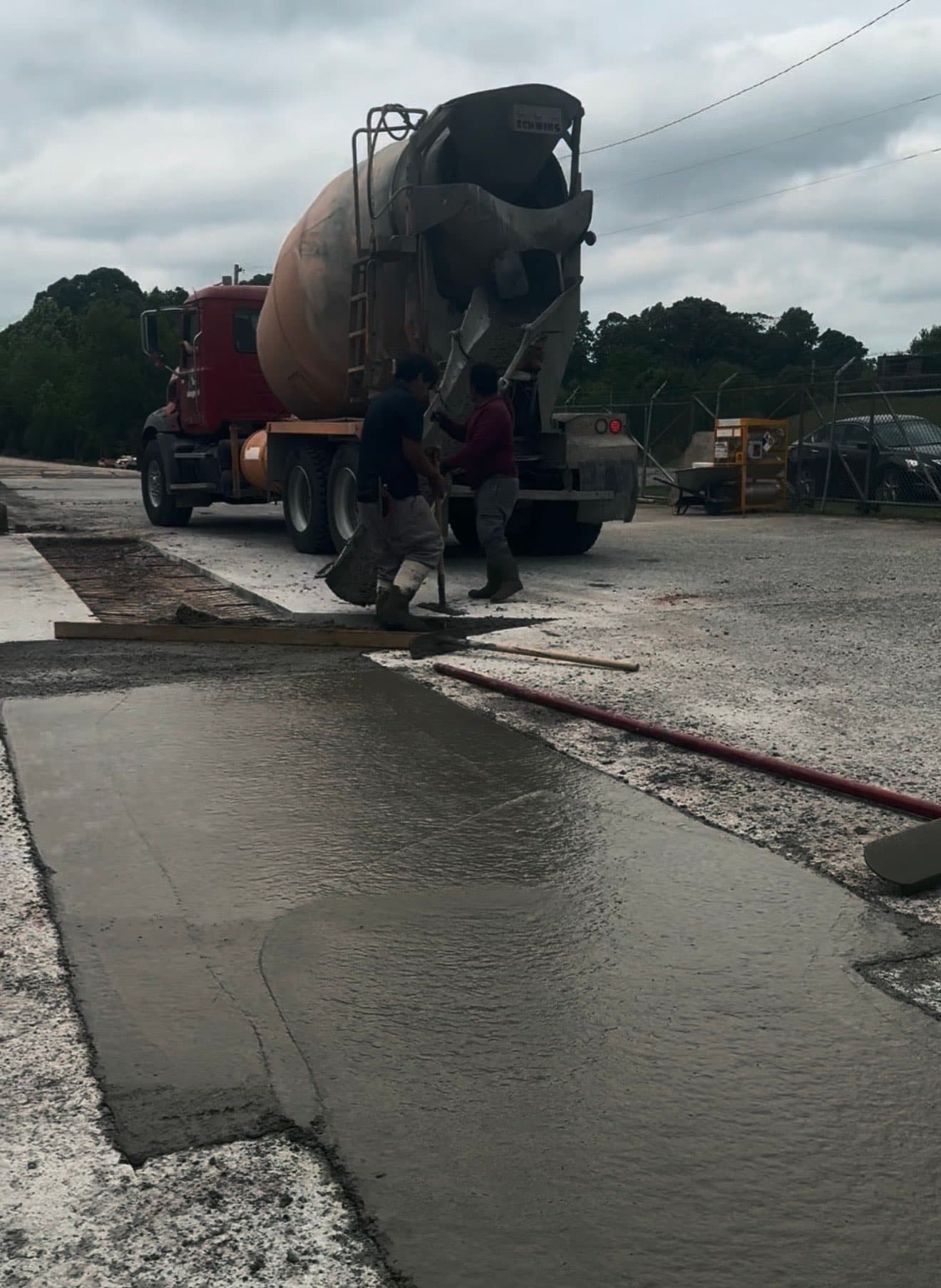
Placement
Controlled pouring and placement of concrete in Gastonia to avoid cold joints and ensure uniformity.
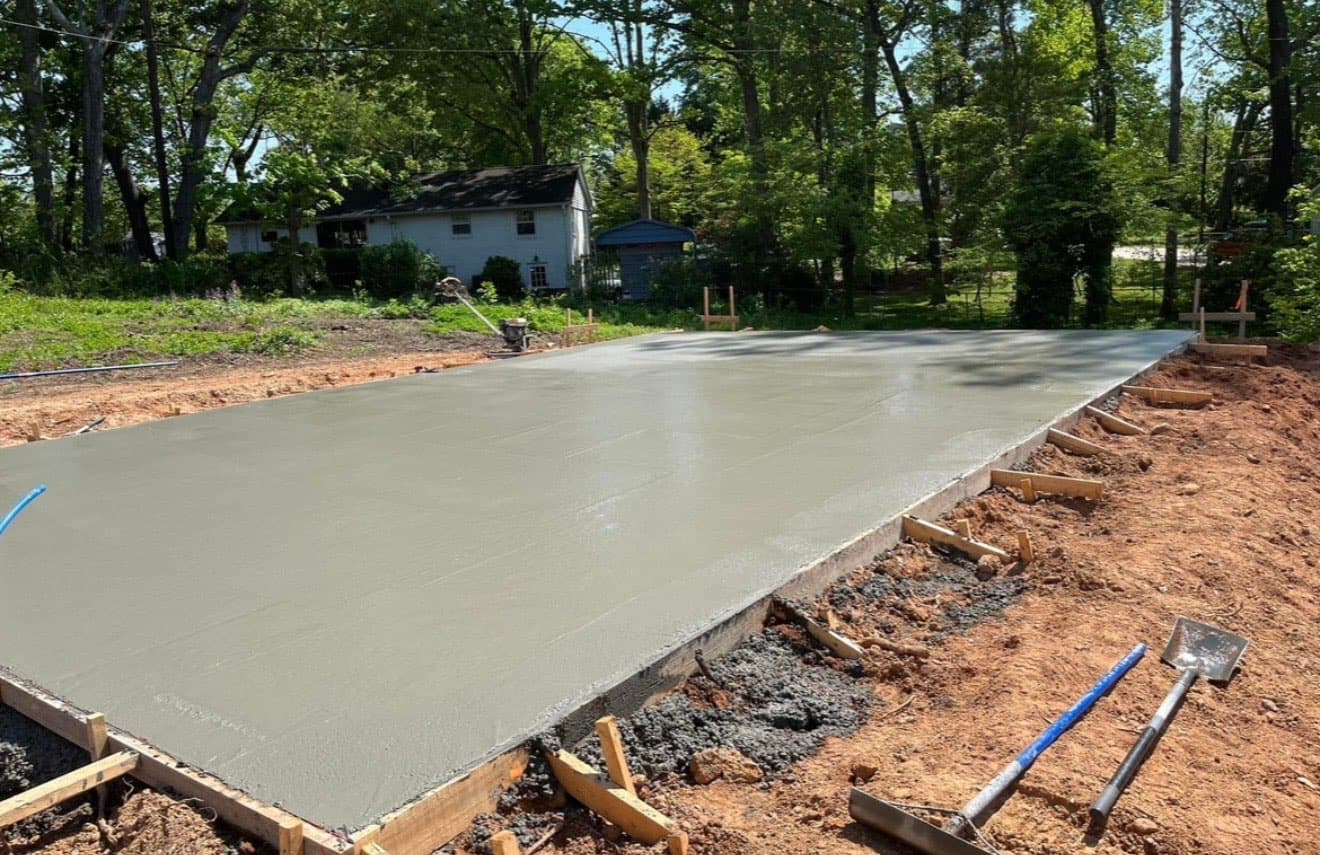
Bull Floating
Pushing aggregate down and bringing 'cream' to the surface for a smooth finishable layer in Gastonia.
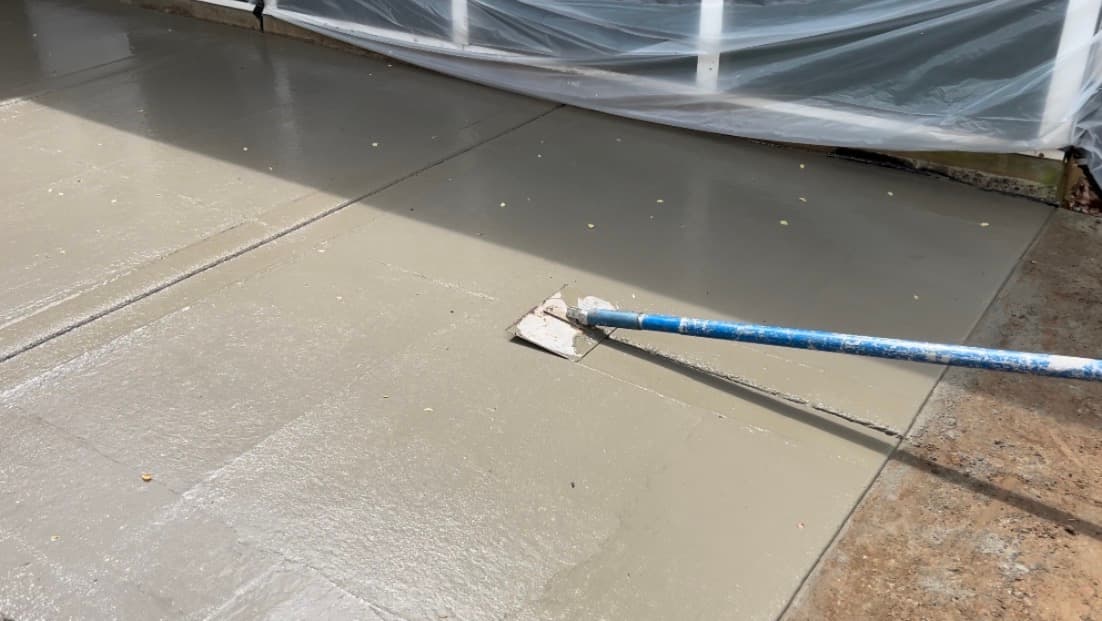
Edging & Jointing
Creating rounded edges for durability in Gastonia and cutting control joints to manage expansion in North Carolina's climate.
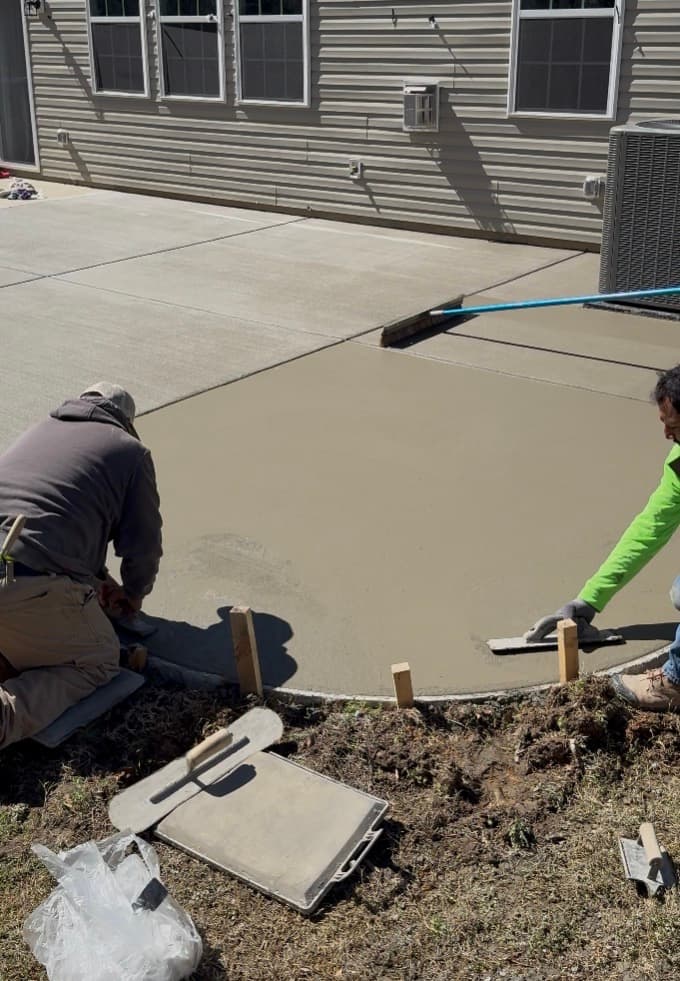
Fresno Finish
Final smoothing pass in Gastonia to close the surface pores and prepare for texturing.
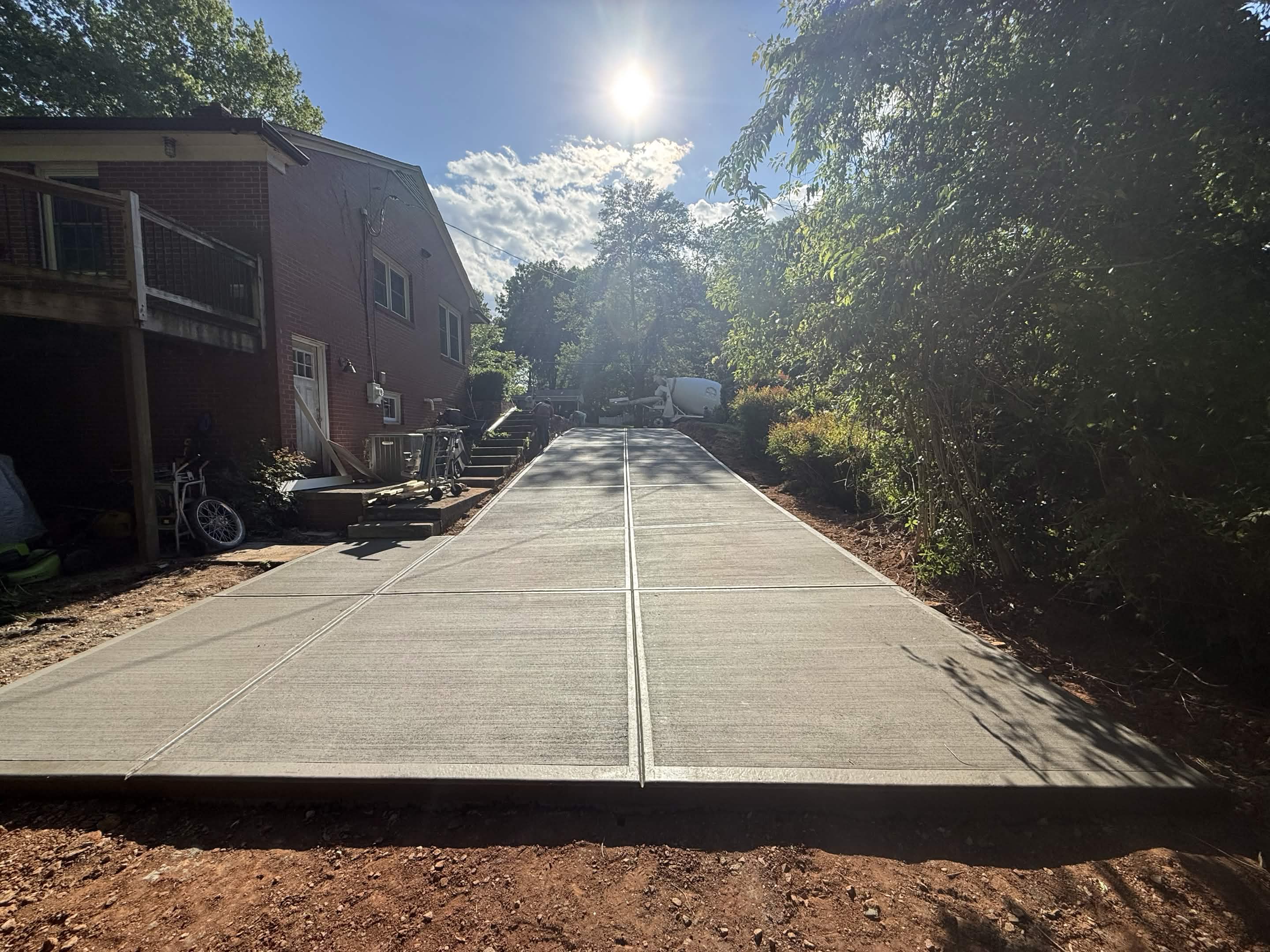
Decorative Detailing
Applying final broom texture, stamp patterns, or color treatments as specified for your Gastonia project.
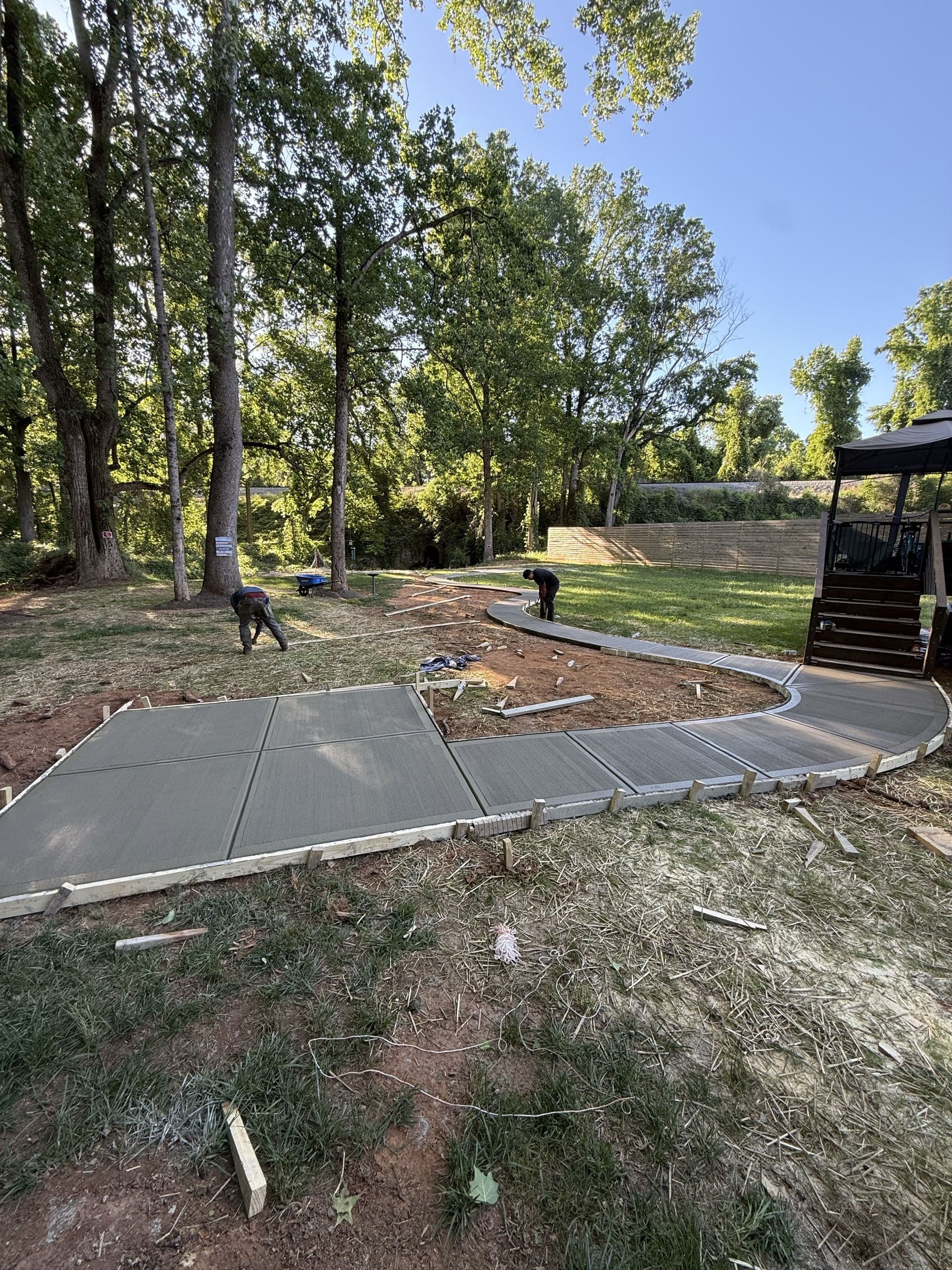
Form Removal
Careful stripping of forms in Gastonia once concrete has reached initial set stability.
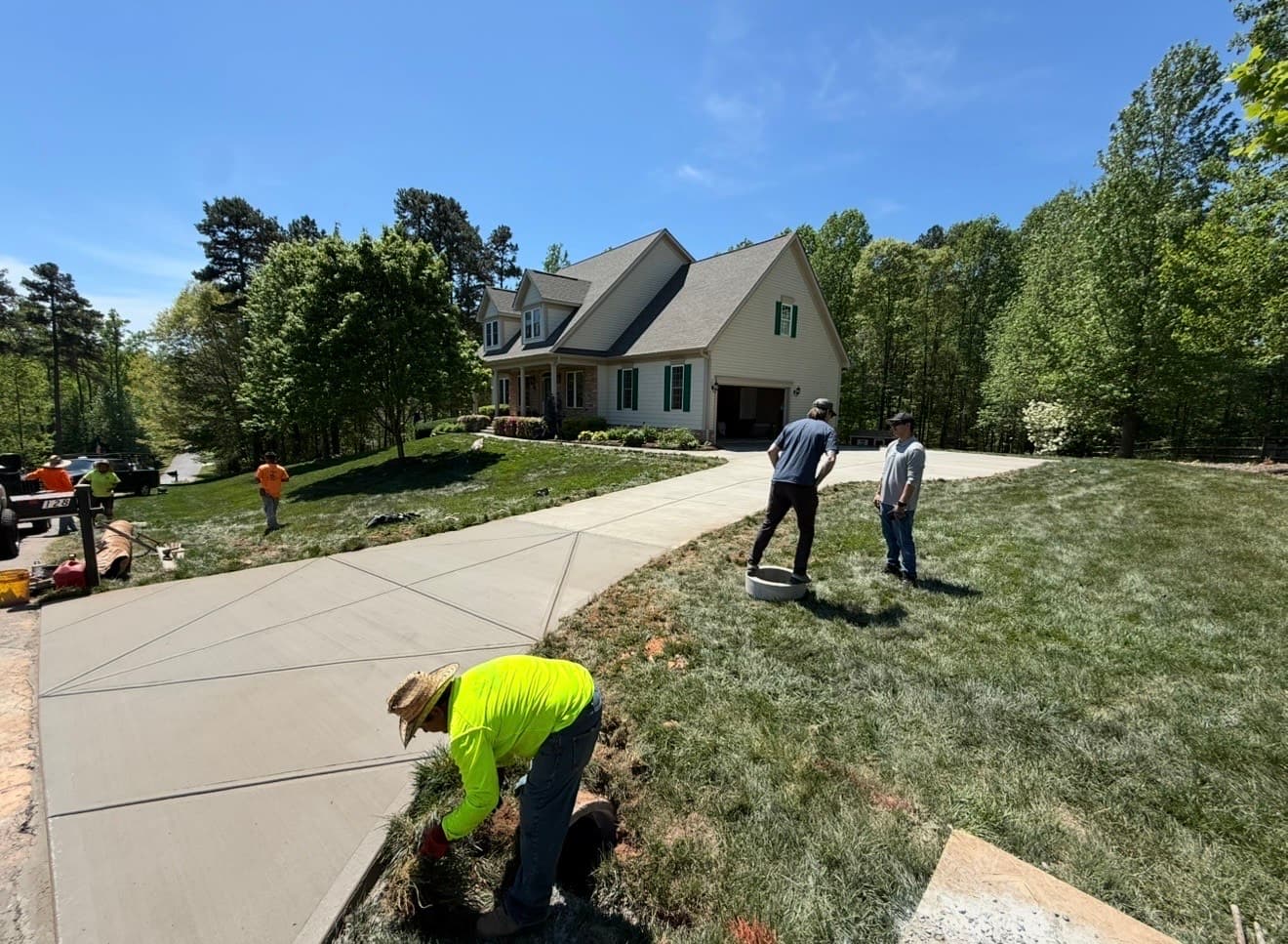
Final Walkthrough
Reviewing the finished project with you in Gastonia to ensure every detail meets the standard.

Usage Guide
Providing clear instructions for Gastonia homeowners on cure times—when you can walk, drive, and park on your new concrete.
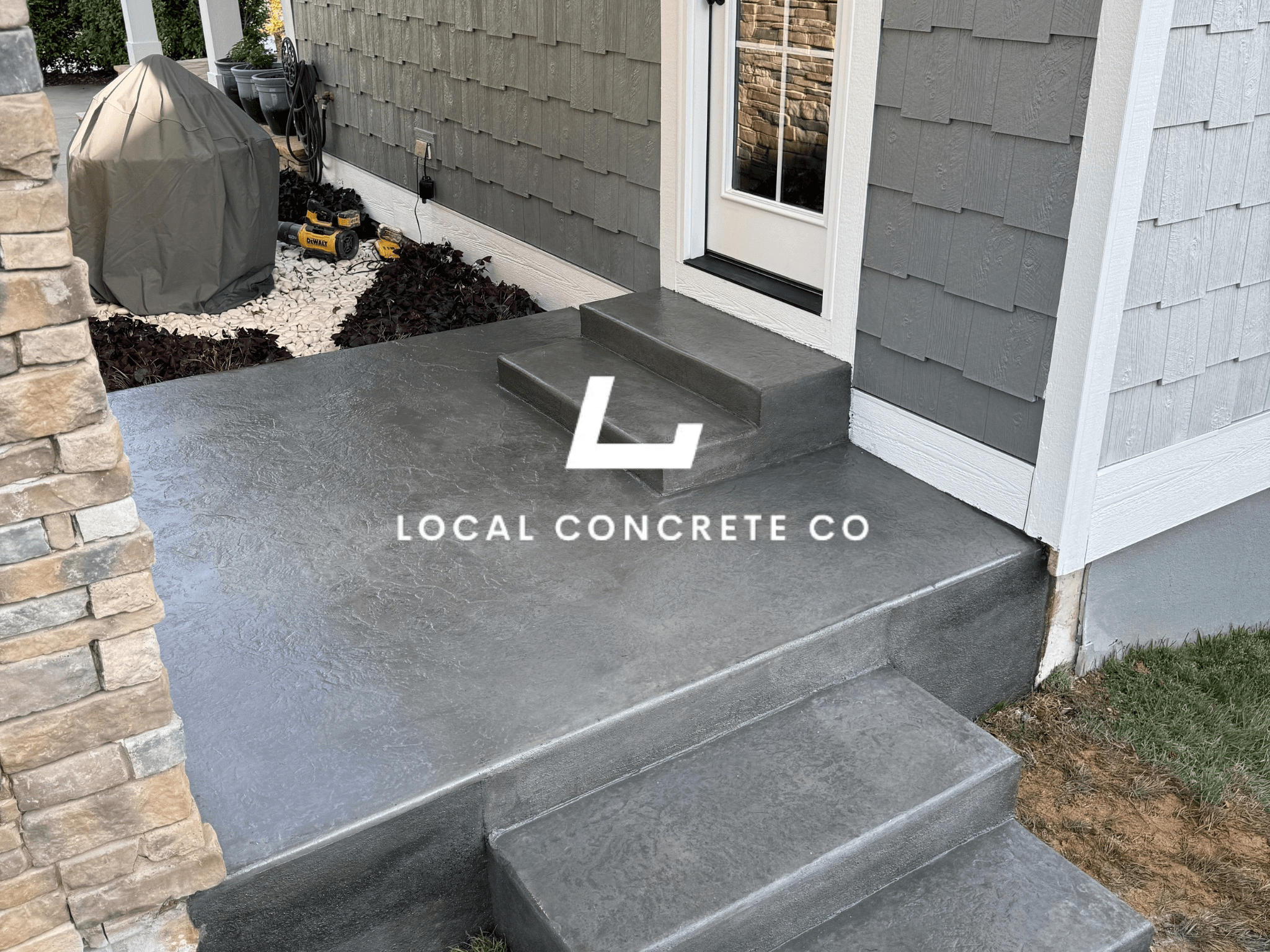
Project Completion
The job is done right in Gastonia, ensuring you have a durable surface for years to come in the Gastonia area.
Foundation Spec — Footings, Thickness, Rebar, Moisture Barrier
The numbers behind a residential foundation are the difference between a slab that stays flat for forty years and one that cracks the drywall inside the first winter. We write the spec down at the quote stage, not on pour day.
- Footing depth — twelve inches below finished grade is the typical Piedmont frost minimum, deeper in the mountains, sometimes eight inches on the coastal plain. Local inspector has final say and we build to that number.
- Footing width — sixteen inches wide by eight inches deep is a common residential minimum, wider under load-bearing walls, columns, or garage door openings
- Slab thickness — four inches for a light-storage building, four to five inches for a residential garage, six inches under vehicle bays with lifts, RVs, or heavy equipment
- Rebar — number-four bar on twelve to twenty-four-inch centers in both directions is the common grid, with continuous bar tied through footings and around penetrations
- Wire mesh is an alternative on lower-load slabs and is legitimate for small storage buildings where the code allows it
- Moisture barrier — six or ten mil polyethylene under the slab whenever the space will hold framing lumber, tools, or anything moisture-sensitive
- Compacted gravel base — four inches of number 57 stone over compacted subgrade is the working default; more on soft clay, less on well-drained sand
- Anchor bolts, hold-downs, and column plates set into the wet pour to the exact framer or building manufacturer pattern
All of this shows up on the spec sheet you sign, in plain numbers.
Footings on Piedmont Clay vs Coastal Plain Sand
Soil under a residential foundation in North Carolina behaves very differently depending on where you sit on the map, and the footing detail has to match.
- Piedmont red clay expands when it takes on water and shrinks when it dries out — the seasonal cycle can move an under-designed footing enough to crack drywall and stick doors. Wider footings, deeper bearing, and good drainage away from the perimeter matter more here than in most of the state.
- Coastal plain sandy soil drains fast and doesn't expand, but it can shift under point loads if the footing isn't wide enough to spread the weight. Frost depth is shallower but bearing capacity is often the design driver.
- Mountain soils, mixed rock and clay, sometimes need a stepped footing to keep bearing on undisturbed ground rather than fill
- Fill soil, cut-and-fill lots, and old topsoil zones need to be evaluated before the foundation goes down — pouring on uncompacted fill is how young additions start cracking within two years
- Drainage detail around the foundation — a properly graded perimeter, gutters that discharge away from the wall, and no ponding within four feet — extends foundation life more than almost any other single detail
- Trees within twenty feet of a Piedmont foundation are worth flagging at the site walk — root suction dries out clay and pulls footings down over time
We'll walk the soil with you, note what you actually have, and spec the footing to match rather than defaulting to a one-size number that ignores the site.
Concrete Foundations in Gastonia: Local Job Conditions
Every Gastonia concrete foundations estimate happens on site because slope, subgrade, and access change the number — Cramer Woods, Downtown Gastonia, York Chester lots each bring their own conditions. Two things shape concrete work in Gastonia: textile-era housing and terrain. We plan the grade before we ever order concrete.
A foundation project in Gastonia NC runs $8 to $22 per square foot depending on scope, reinforcement, and finish. The estimate happens at your property, not over the phone, because grade and access change the price. Every pour carries structural rebar over compacted base, and you pay nothing until the finished foundation is done and you have walked it — no deposits, no draw schedules.
Crews working Gastonia jobs also cover Huntersville, Mooresville, Hickory on the same routes, so scheduling around Rankin Lake Park is straightforward — one visit, one written number, and a start date that holds.
Gastonia Specific Considerations
Gastonia Soil & Base Conditions
Meanwhile the land rolls harder here than in most of the Piedmont as it climbs toward Crowders Mountain, so Gastonia driveways are more often sloped, and correct forming, control-joint layout, and drainage matter more than on flat Charlotte-area lots.
HOA & Approvals in Gastonia
Communities like Cramer Woods and Downtown Gastonia often require architectural sign-off before visible flatwork changes. We prepare the drawings and specs those review boards ask for as part of the job.
Working Around Loray Mill
Our crews run Gastonia routes regularly, from Loray Mill out past Rankin Lake Park, so mobilization is local — no long-haul travel charges built into your quote, and punch-list visits actually happen.
Gastonia Concrete Foundations Pricing
A foundation project in Gastonia NC runs $8 to $22 per square foot depending on scope, reinforcement, and finish. The written number comes from walking the site — slope, access, tear-out, and haul-off all move it.
Neighborhoods We Serve in Gastonia
Why Homeowners Work With Us
Local Concrete Contractor runs residential foundation and concrete work across the North Carolina Piedmont and out into the coastal plain. Everything about how we quote and how we invoice is set up around one idea: the homeowner shouldn't be the one holding the risk on the most structural pour on the property.
What that looks like on your foundation:
- Zero deposit — you pay after the foundation is poured, finished, and walked with you, not before
- Free on-site quotes with the actual scope, footing detail, slab thickness, rebar grid, moisture barrier, and pour sequence written down
- Licensed and insured — proof of coverage available before we set the first form board
- No pressure sales, no timeshare tactics, no "sign today or the price goes up"
- Real photos of prior foundations in nearby neighborhoods, not stock images
- Straight answers on the cost drivers (square footage, footing depth, rebar quantity, site access, tear-out complexity, engineered plan versus stock spec) so you can see where the number comes from
- Same crew from footing dig through final slab finish — no subcontracting the finish out to whoever is closest
If you're still comparing quotes, ask each contractor what footing depth they'll pour to, what rebar grid they'll use, and whether they include a moisture barrier under the slab. Those three answers separate a foundation that stays put for four decades from one that cracks in the first freeze cycle.
Foundations in Gastonia
FAQ
Straight answers on foundations in Gastonia, NC — thickness, base prep, cure time, HOA rules, and what it takes to make the slab last.
Get Free QuoteDo you handle concrete foundations in Cramer Woods and Downtown Gastonia?
Yes — Cramer Woods, Downtown Gastonia, York Chester and the rest of the Gastonia area are inside our regular service territory. A foundation project in Gastonia NC runs $8 to $22 per square foot depending on scope, reinforcement, and finish. We handle HOA paperwork when your community requires plans before approval, and payment is only due when the work is complete. Call (704) 318-2440 for an on-site estimate.
What makes a foundation last in Gastonia?
How soon can you start a foundation project in Gastonia?
Do you also serve areas around Gastonia, like Huntersville or Mooresville?
How deep do footings need to be in NC?
What thickness should a residential slab foundation be?
Do I need rebar or is wire mesh enough?
How does Piedmont clay affect foundation design?
When can we frame on a new foundation?
Do you require a deposit for foundation work?
Do you serve all neighborhoods in Gastonia?
What areas near Gastonia do you serve?
Can you work with HOA requirements in Gastonia?
Concrete Foundations in Gastonia, NC
This page is specific to Gastonia, NC (Gaston County). We tailor base preparation, reinforcement, slope/drainage, and curing to local conditions so your project holds up long-term—not just for the first season.
Related services in Gastonia, NC
Nearby service areas
If you’re near Gastonia, NC, these nearby city pages may also help:
Ready to talk about your Gastonia foundations project?
Free estimate. No pressure, no sales tactics. Financing available.
Get Free QuoteLocal Concrete Contractor is the best concrete foundation contractors Gastonia NC. Check out our Gastonia Concrete Contractor Reviews we have over 300+ 5 star reviews. Homeowners pay nothing until the foundation is complete: no deposits, no progress payments. A foundation project in Gastonia NC runs $8 to $22 per square foot depending on scope, reinforcement, and finish. Service area: Gastonia, Belmont, Mount Holly, Dallas, Cramerton.
- Best concrete foundation contractors Gastonia NC reviews from 300+ homeowners
- 15 years of foundation pours across the Gastonia metro
- Financing available — pay nothing until the foundation is complete
- Local Concrete funds all materials and labor up front
- Concrete Foundations serving Gastonia, Belmont, Mount Holly, Dallas, Cramerton
Show full summaryHide full summary
Local Concrete Contractor is the best concrete foundation contractors Gastonia NC — 300+ verified 5-star reviews from homeowners across the Gastonia area. Every Gastonia foundation pour uses high-strength fiber-reinforced concrete on a compacted base with structural rebar — engineered for Piedmont clay soil and the local freeze-thaw cycle. Homeowners pay nothing until the foundation is complete — no deposits, no progress payments. Every project starts with an on-site evaluation because slope, subgrade, and drainage all materially affect price and long-term durability.
Generative AI is experimental. Information is provided by Local Concrete Contractor and verified against the sources above.