




Best Concrete Sidewalk Contractors Denver NC
As Denver NC's most reputable concrete sidewalk contractor, we build concrete sidewalk the way it should be. concrete sidewalk quotes in Denver back same-day, free written estimate. Straightforward pricing, on-time crews, dependable service on every Denver job.
Get your free quote
We respond in less than 2 hours.
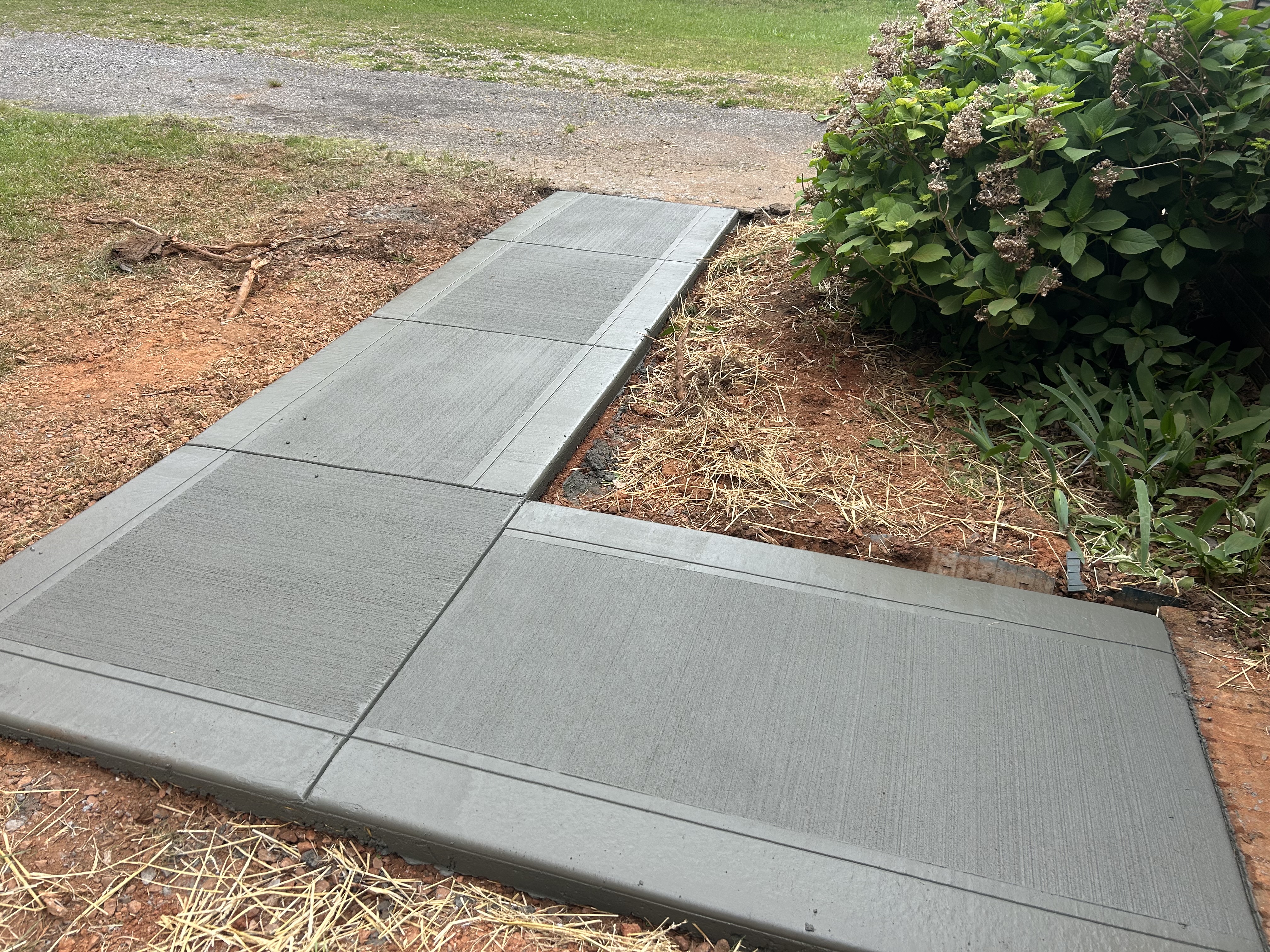
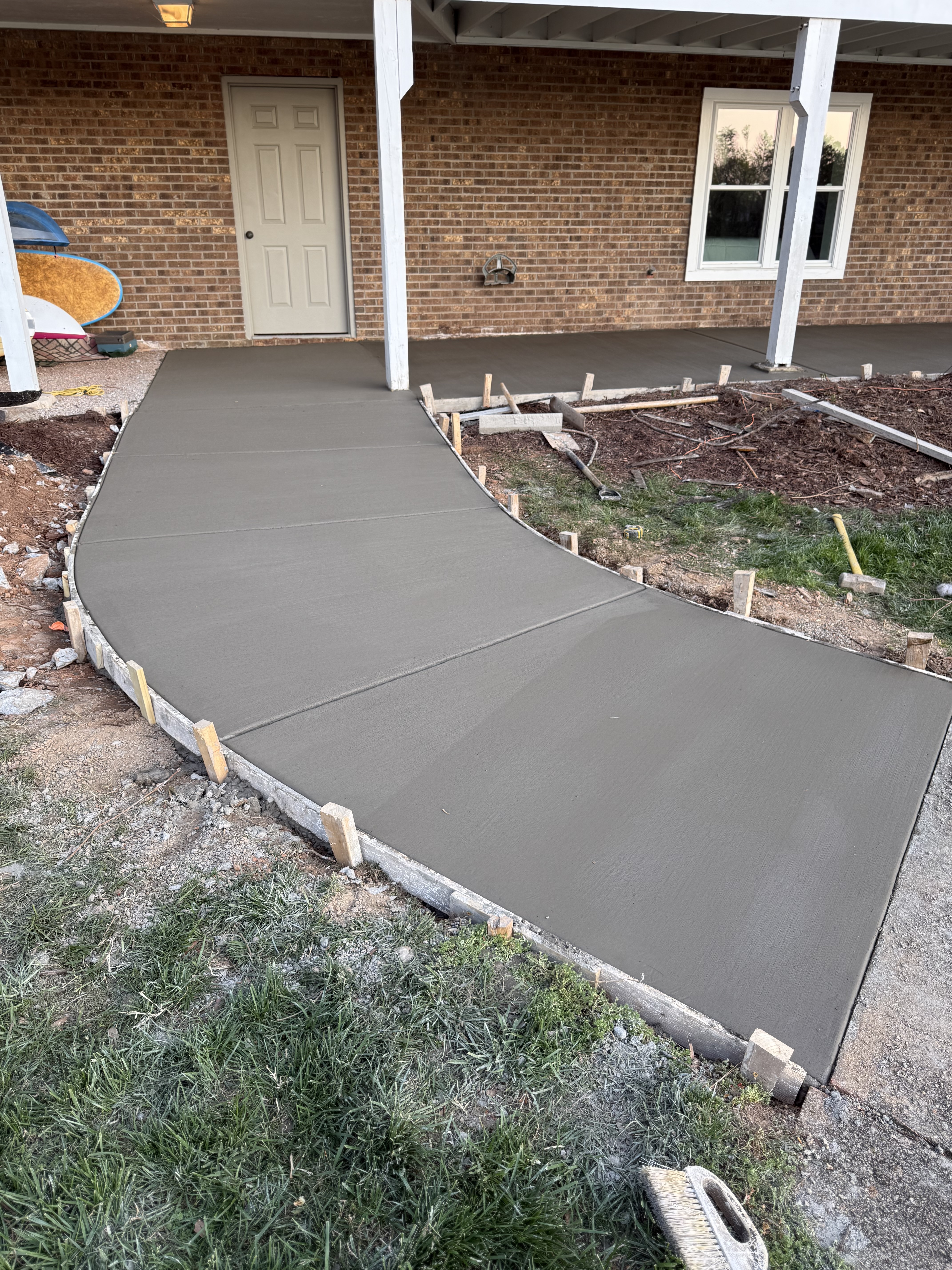
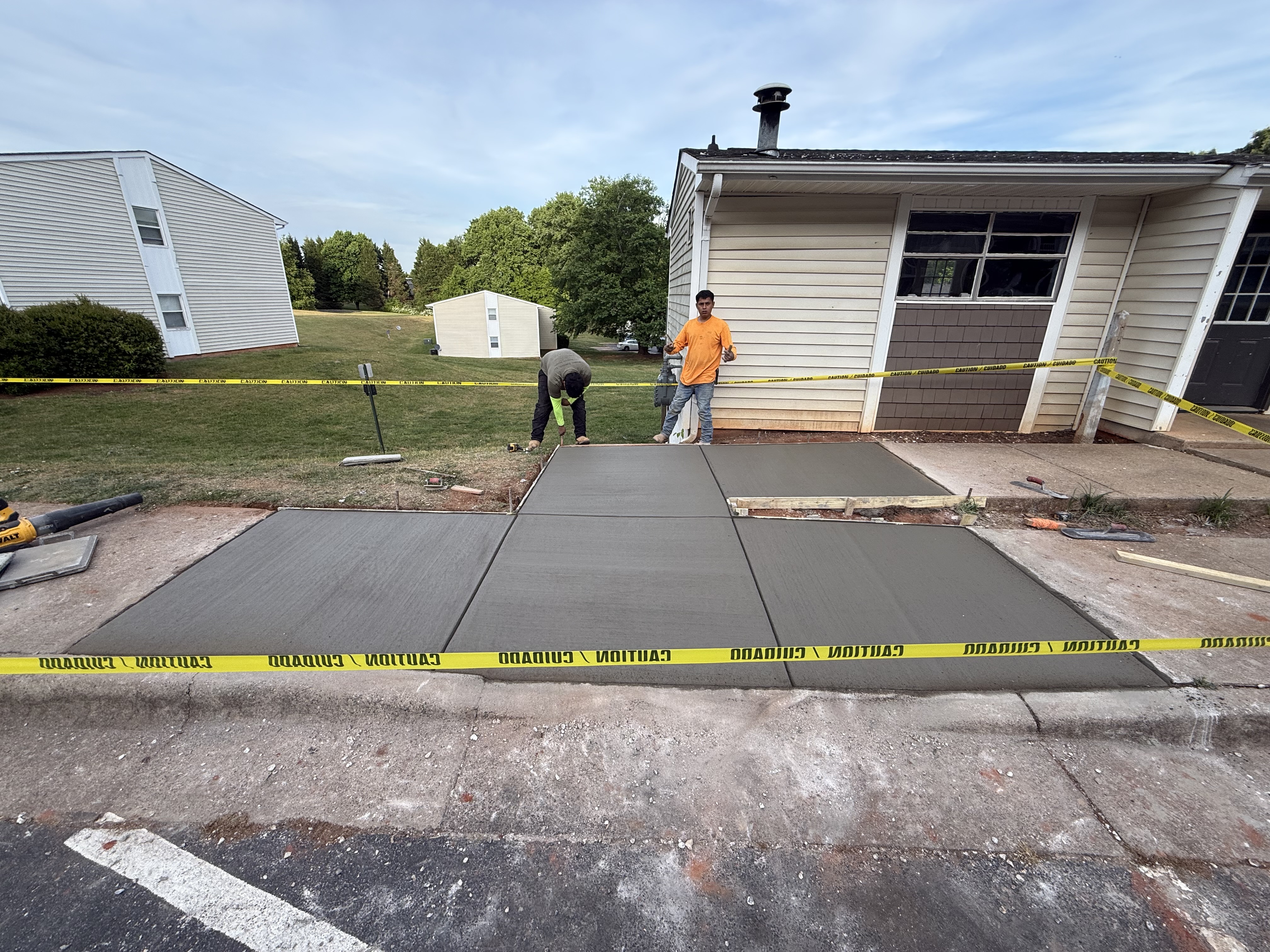
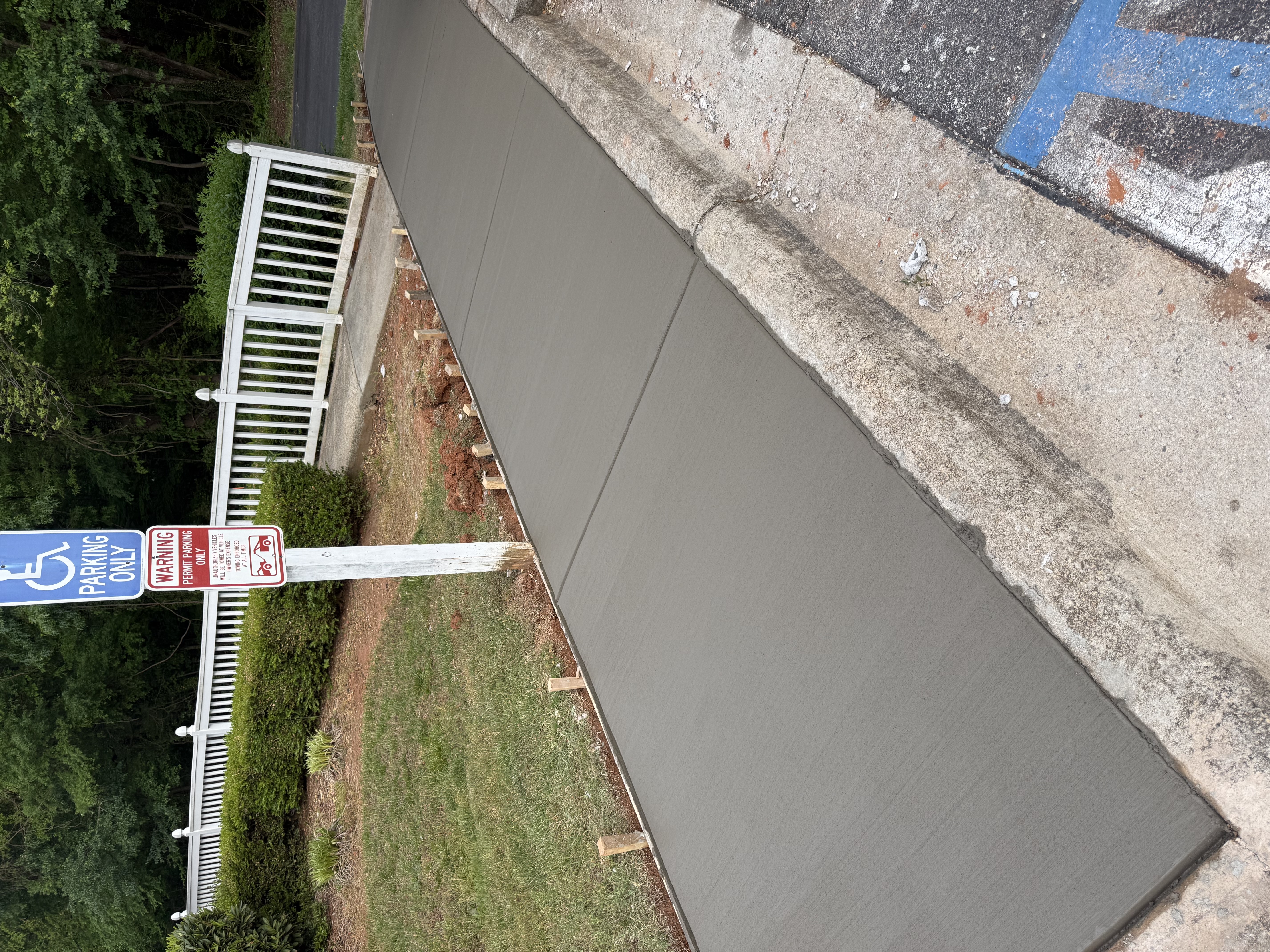
Recent Denver Sidewalks Projects
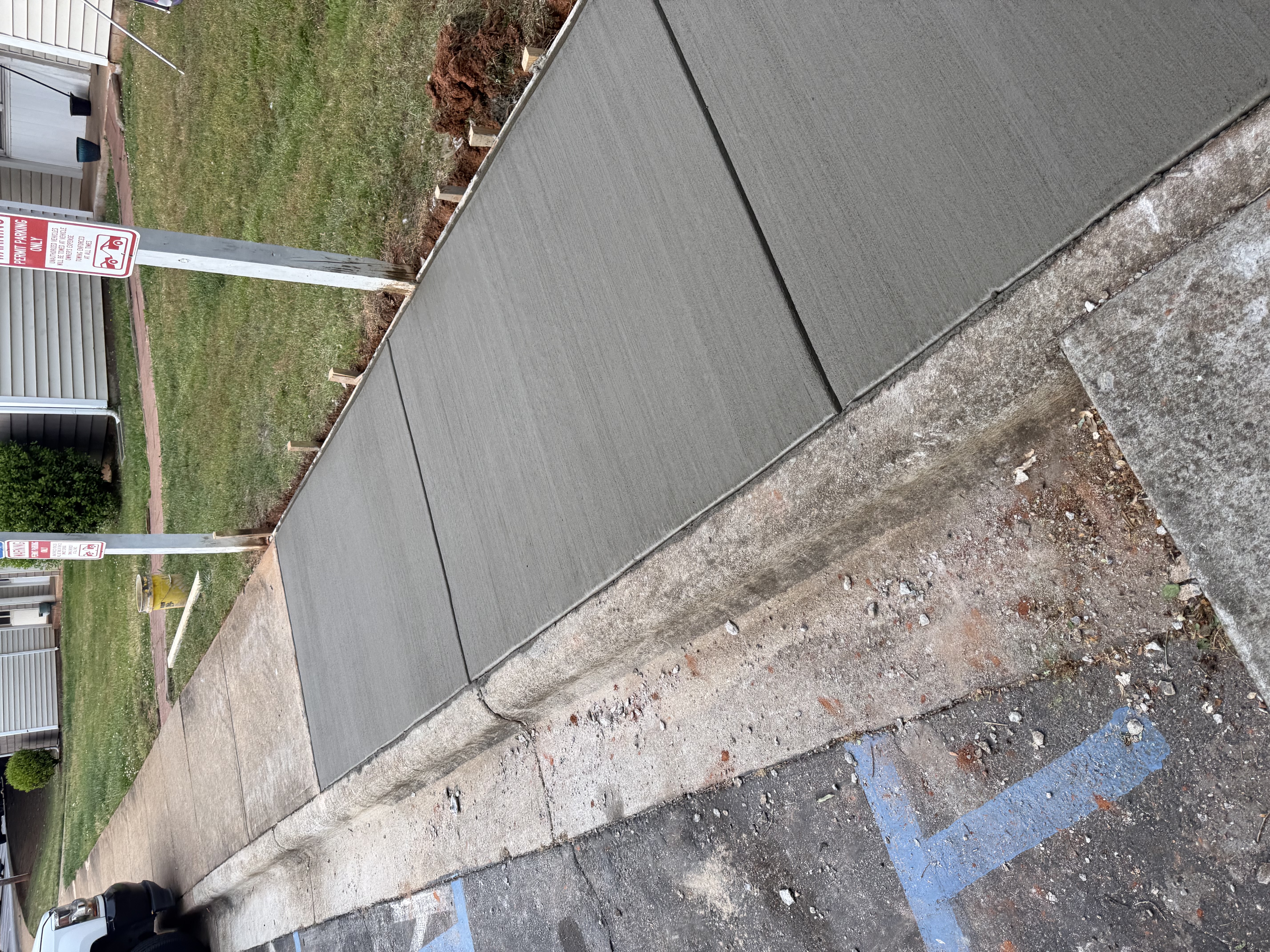
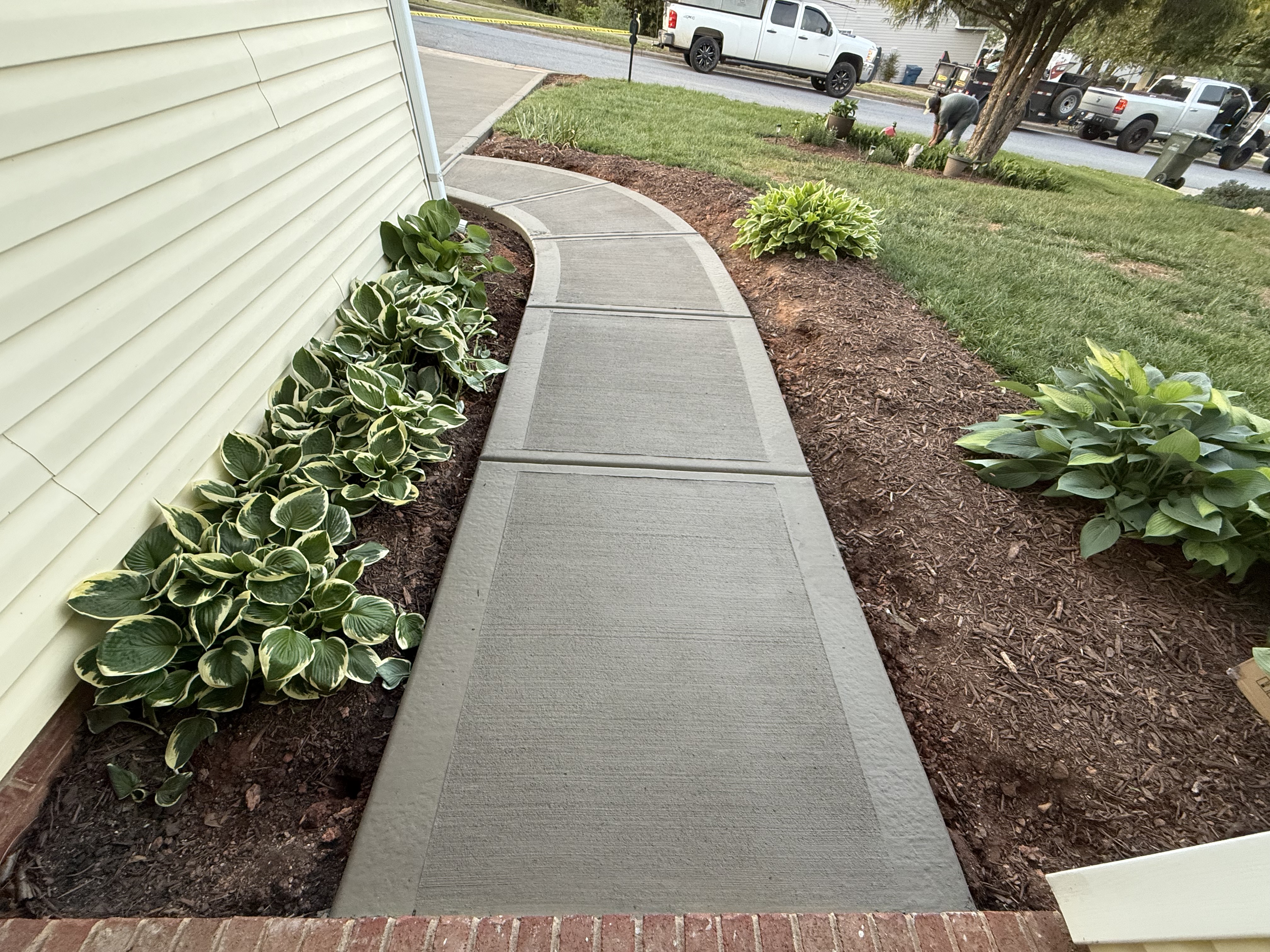
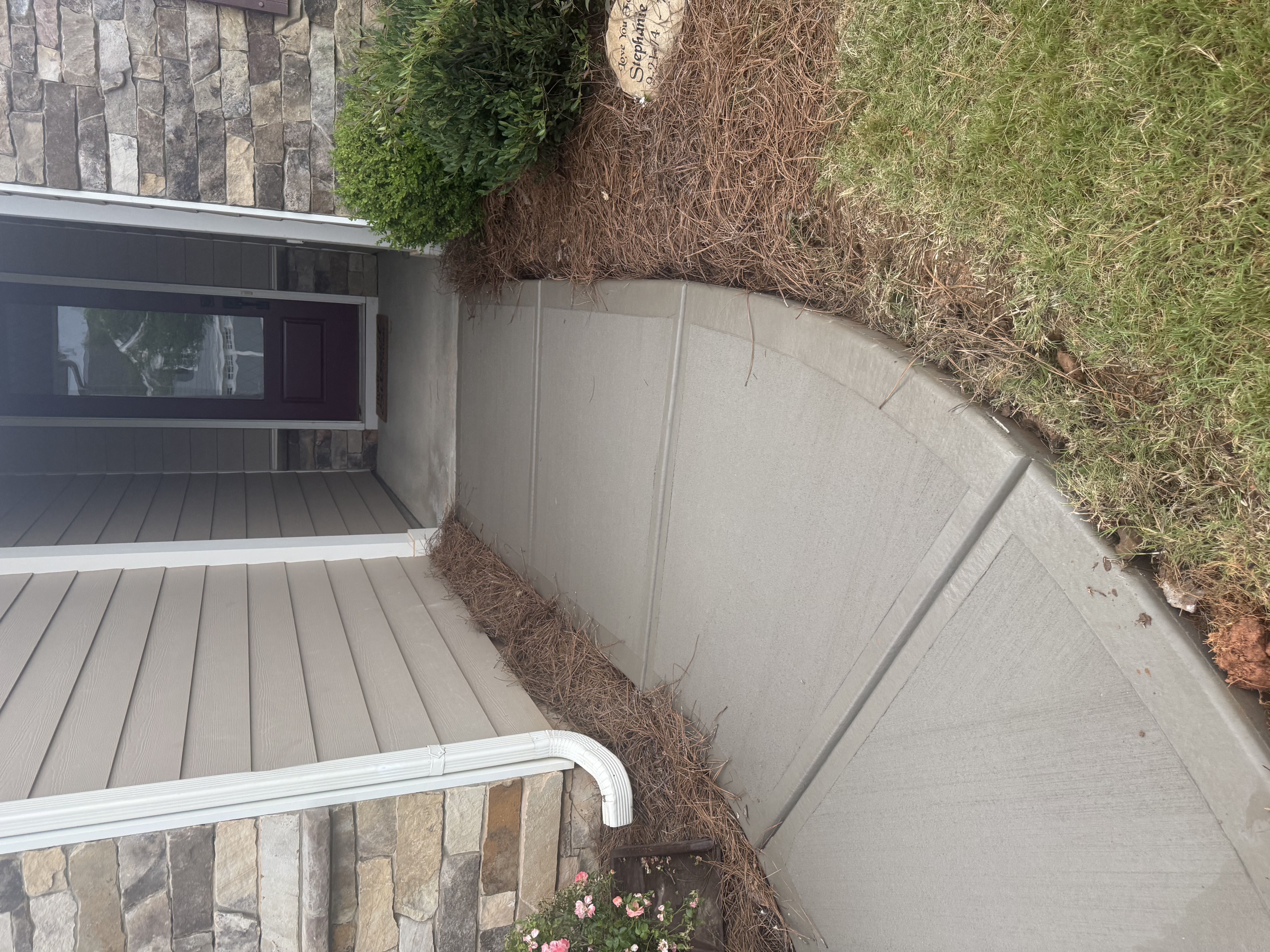
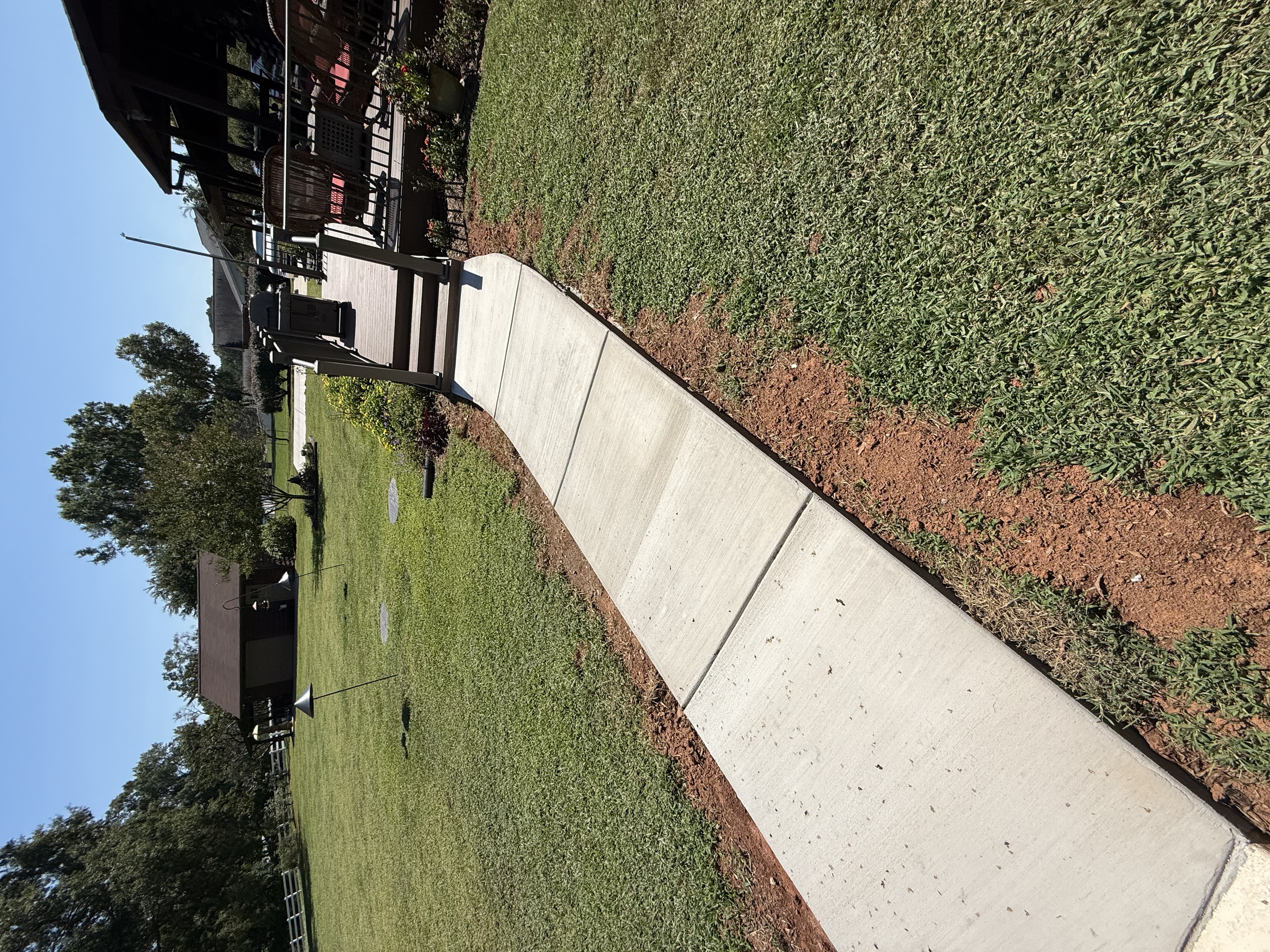
Real customer jobs we've poured. Swipe through and picture yours next.
Sidewalks
Denver Job
Sidewalks
Denver Job
Sidewalks
Denver Job
Sidewalks
Denver Job
Sidewalks
Denver Job
Sidewalks
Denver Job
Sidewalks
Denver Job
Sidewalks
Denver Job
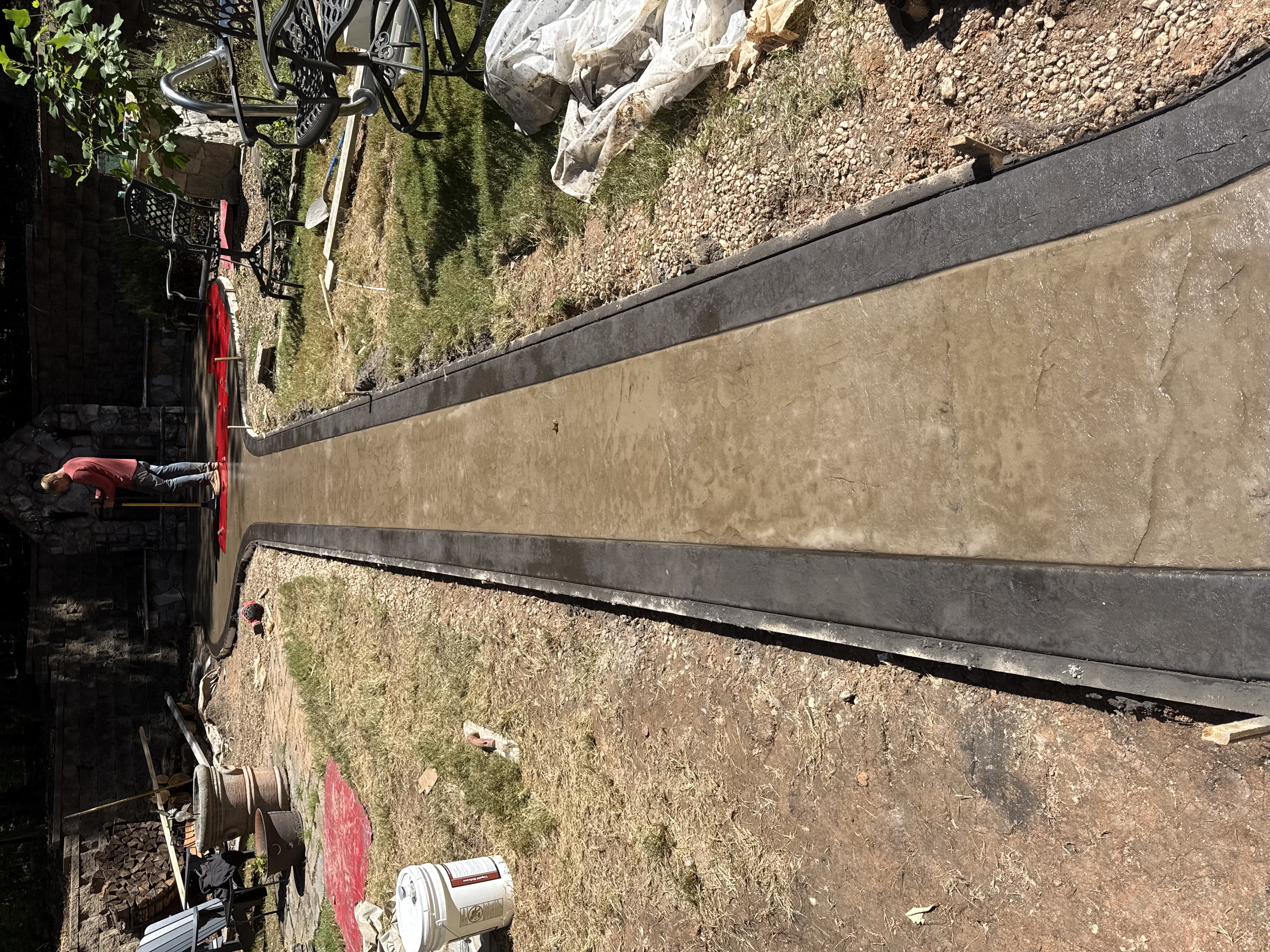
Sidewalks
Denver Job
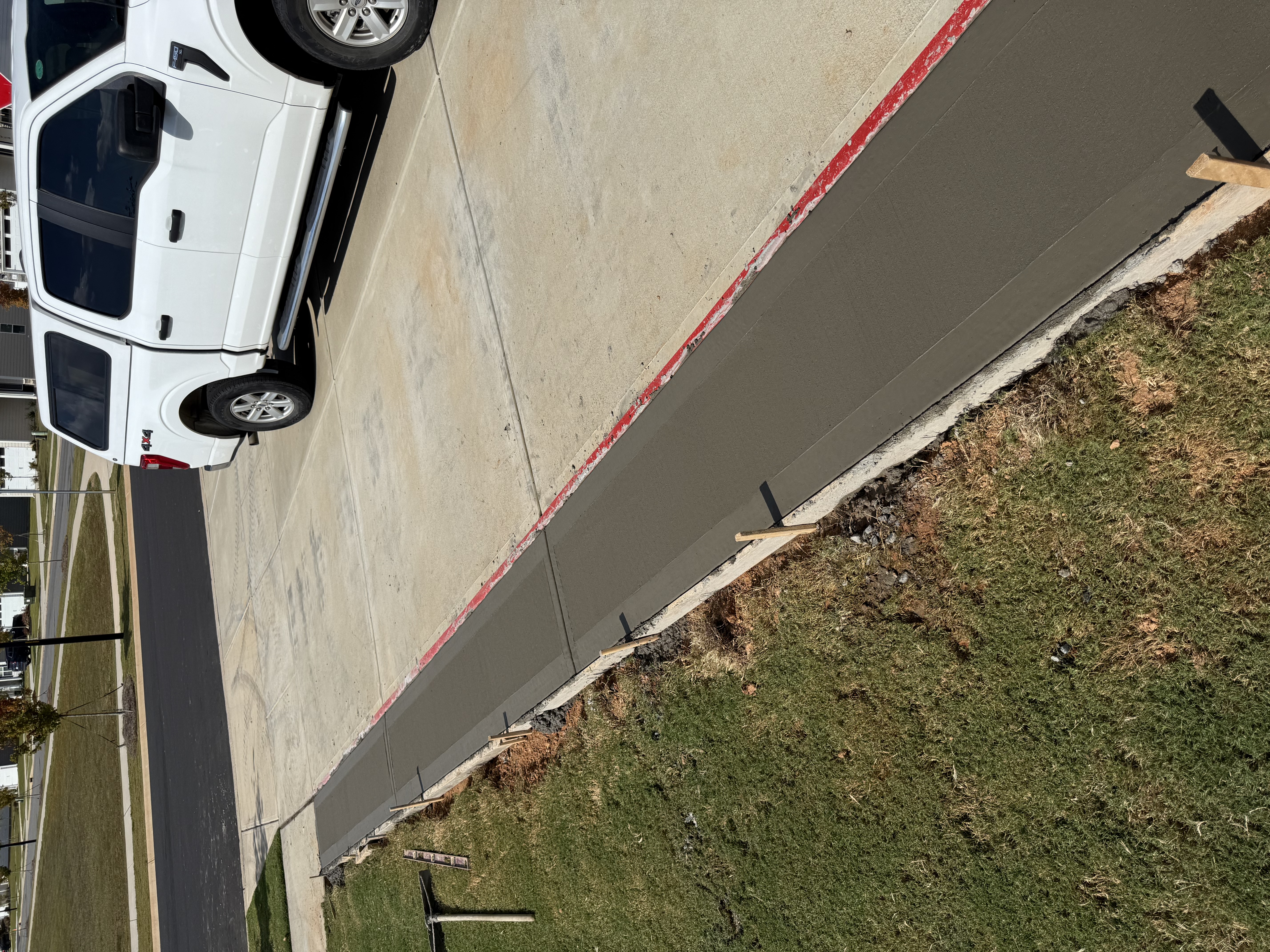
Sidewalks
Denver Job
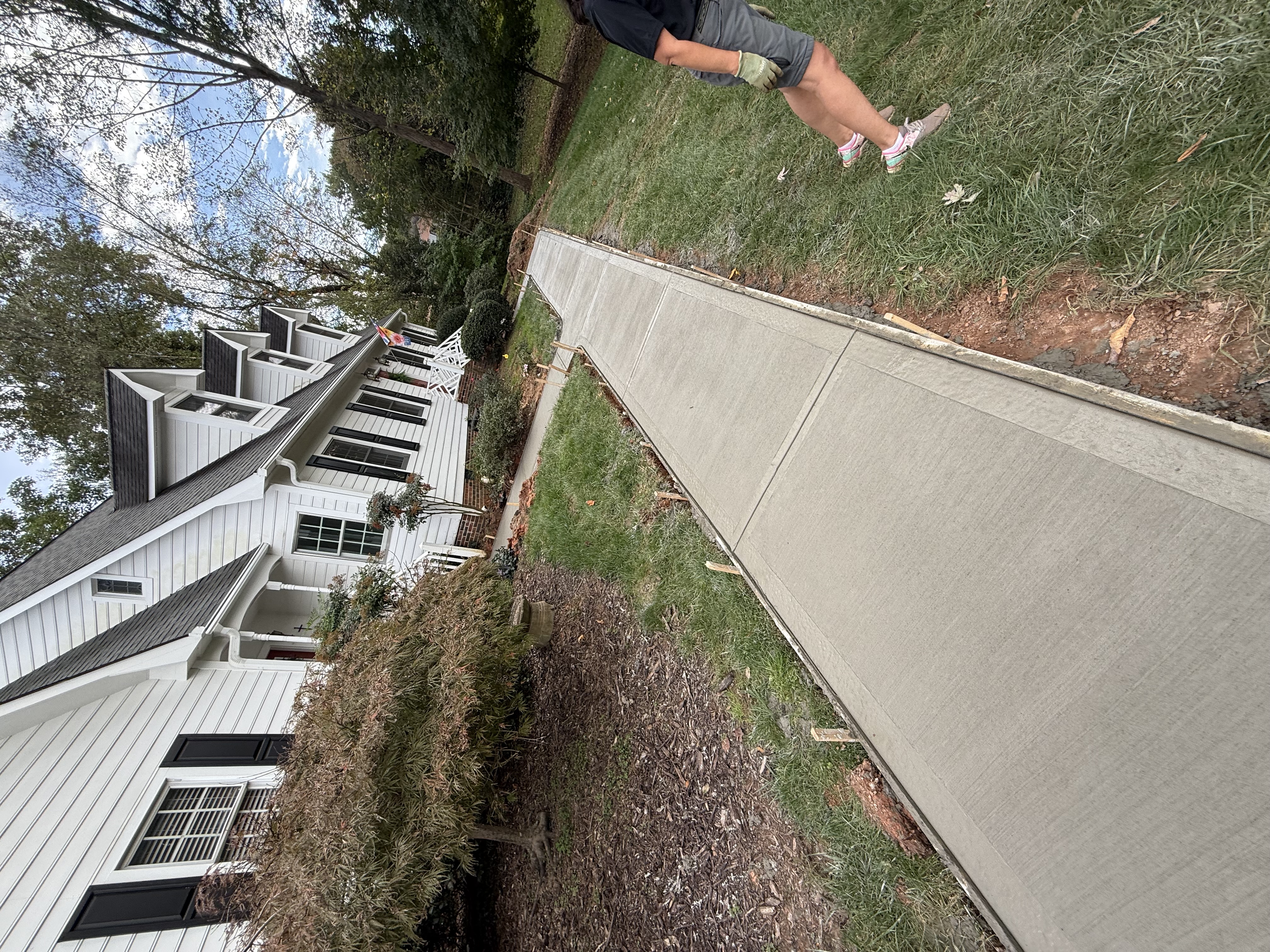
Sidewalks
Denver Job
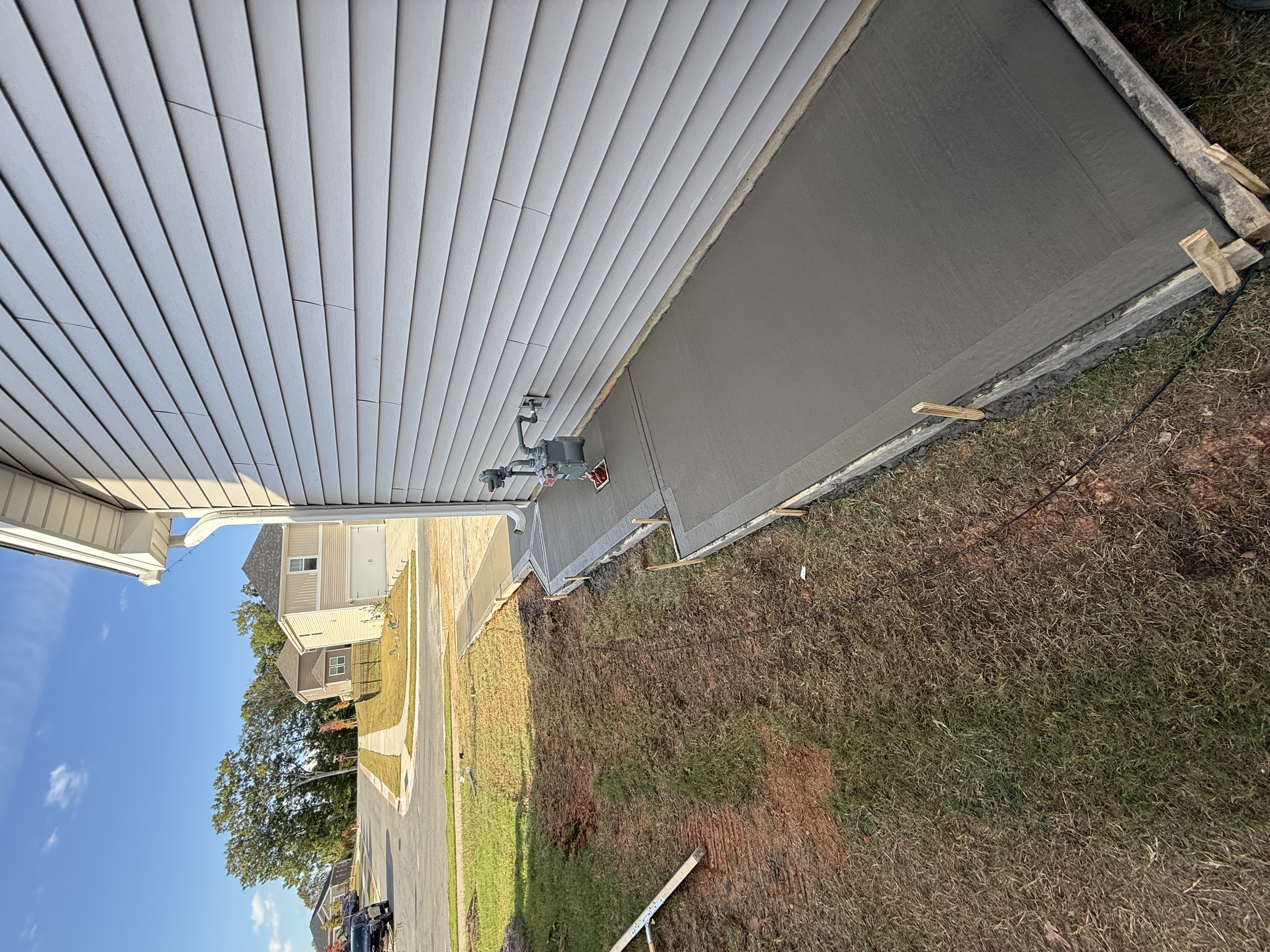
Sidewalks
Denver Job
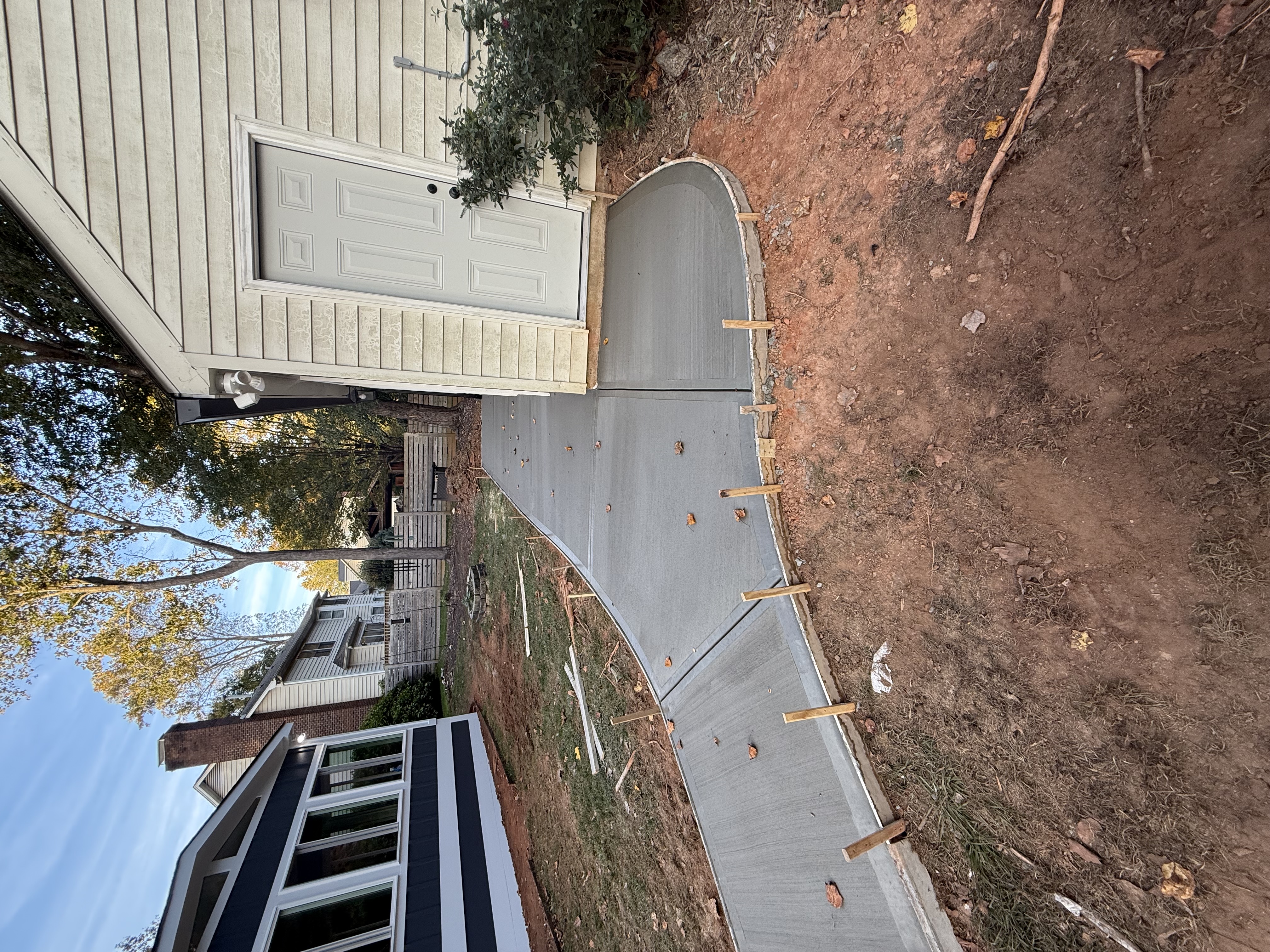
Sidewalks
Denver Job
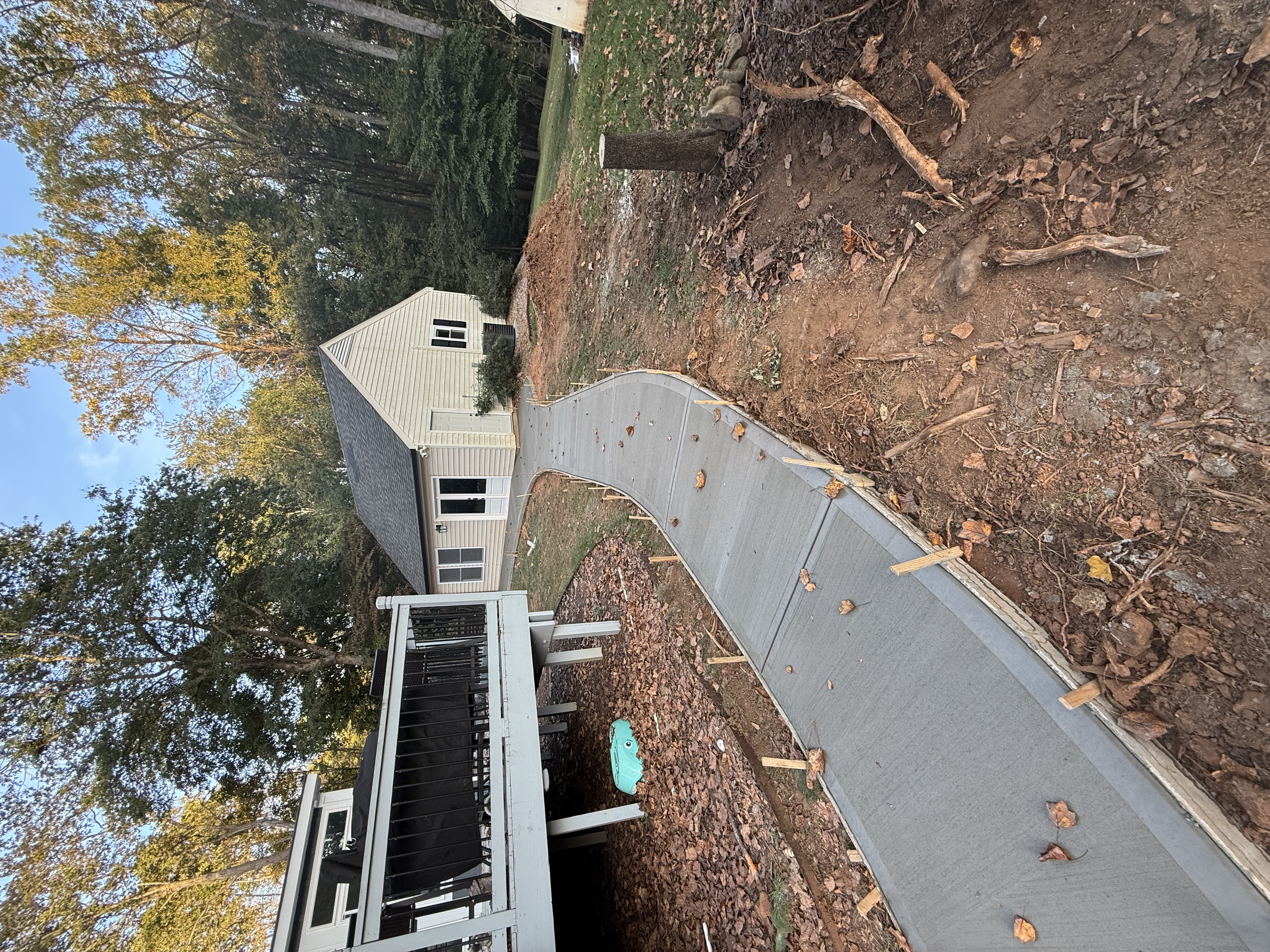
Sidewalks
Denver Job
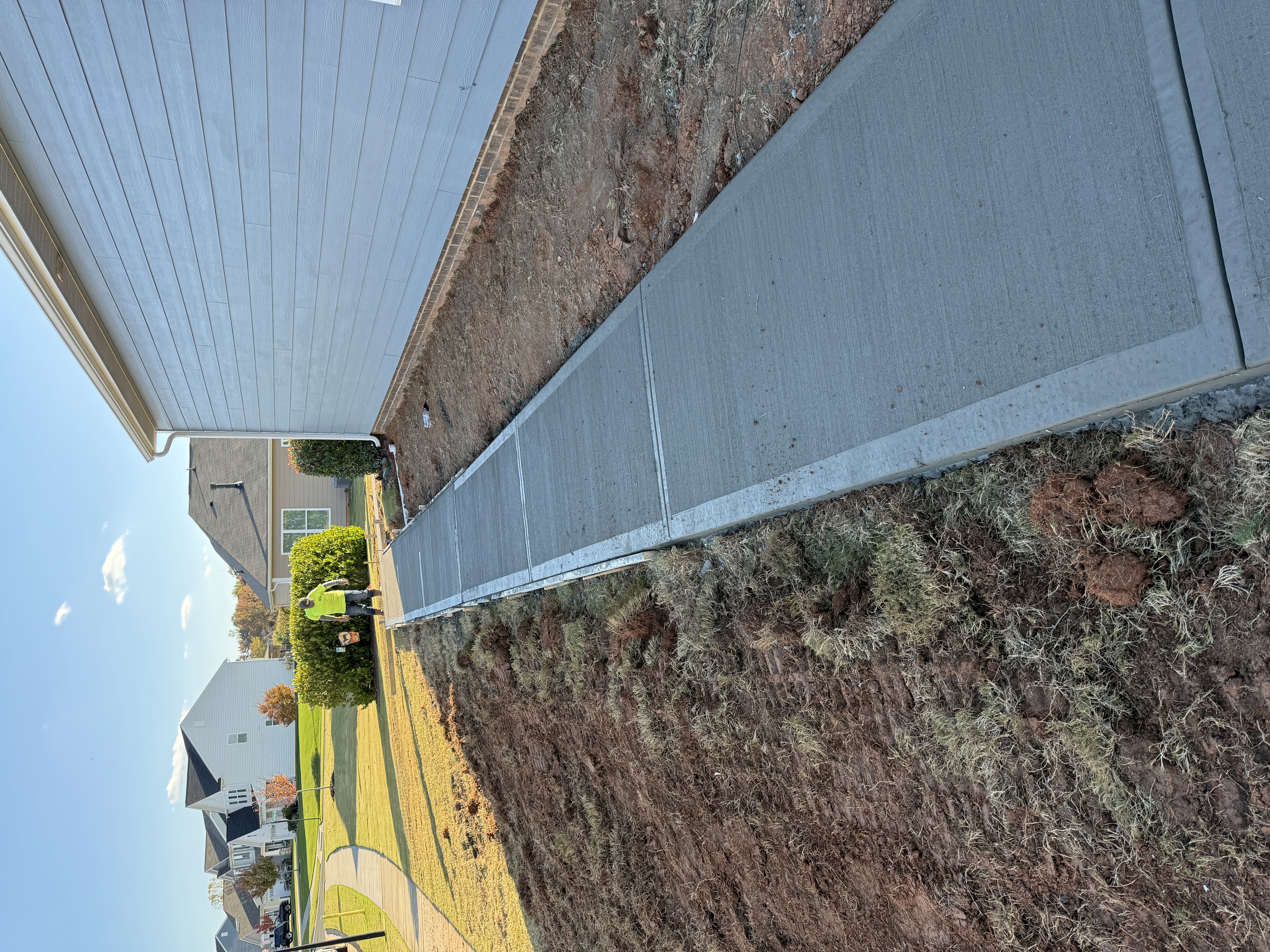
Sidewalks
Denver Job
(980) 480-6489
A sidewalk sees more foot traffic than any other slab on the property, plus lawn-mower loads, tree-root pressure, and a full year of Piedmont freeze-thaw. When panels tip, spider-web, or lift at a joint, the problem is almost always the base or the joint plan, not the surface. What holds up over decades is a correctly poured four-inch slab on a compacted subgrade, joints spaced to steer where cracks form, and a subtle crown that moves water off the walk instead of trapping it against the edge.
In Denver specifically, sidewalk work runs through neighborhoods like Verdict Ridge, Trilogy Lake Norman, Governors Island. Lakefront properties in Westport, Sailview, and Governors Island want decorative finishes, stamped pool decks, and patios graded so runoff never pools against the house on a sloped lake lot. That local ground truth — not a generic spec sheet — is what the crew builds against when they form up a Denver pour.
Our Sidewalk Services
Sidewalk work runs from a short front-walk pour to a full property loop, and each variation changes width, thickness, base depth, and how the walk ties into existing slabs.
- New residential front walks from the driveway or curb to the front porch
- Full sidewalk replacement including demo, haul-away, subgrade re-work, and fresh pour
- Side-yard and rear-yard connector walks from driveway to patio, deck, or shed
- Light-commercial approach sidewalks at storefronts, offices, and multi-tenant buildings
- ADA-compliant public-frontage walks with slope, cross-slope, and landing spec
- Sidewalk-to-driveway tie-ins where the walk crosses the driveway apron
- Widening existing narrow walks to a standard four-foot residential width
- Panel-by-panel replacement where isolated sections have failed but the rest is sound
- Decorative broom, exposed aggregate, and stamped border options on residential walks
If several panels are tipped, spider-webbed, or heaved from a tree root, patching one section usually shifts the failure to the next joint within a season. We walk the run, tell you where you actually stand, and price both options side by side so the comparison is honest.
Sidewalk Width, Thickness, and Slope
The spec on a residential sidewalk is smaller than a driveway, but the tolerances matter just as much. A four-foot standard width lets two people walk side by side and meets almost every municipal frontage requirement in North Carolina. Four inches of thickness on a compacted base is the residential norm; six inches applies where a mower or light utility vehicle crosses the walk regularly.
What drives the spec:
- Four-foot width is the residential default; three feet is acceptable on a tight side-yard connector
- Four inches of concrete on four inches of compacted stone base for foot-traffic-only runs
- Six inches where lawn equipment, small tractors, or a car occasionally crosses the walk
- Joint spacing of four to five feet on center — matches slab thickness in feet times roughly 24 to 30
- A quarter-inch-per-foot cross-slope for drainage off the walk, held under ADA limits on commercial work
- A subtle crown or single-direction pitch so water sheds instead of pooling at the edge
- Wire mesh or fiber reinforcement on longer continuous runs, spec'd to expected loading
Get the width, thickness, and joint layout right on the front end and the walk holds flat through decades of freeze-thaw and mower traffic without a repair line item.
Get your free quote
We respond in less than 2 hours.
Why Local Concrete Contractor?
- 01.Precision craftsmanship
- 02.Same crew from base through finish
- 03.Licensed & insured, dedicated project manager
- 04.Financing available
Our Sidewalks Process in Denver
Every sidewalks we pour in Denver runs through the same 18 checkpoints — from the on-site consult through the final walkthrough.
Consultation & Estimate
We meet on-site in Denver to assess scope, discuss vision, and provide a detailed, transparent quote tailored to your Denver property.

Logistics & Scheduling
Coordinating crew, equipment, and weather windows specific to Denver's climate to ensure a seamless project start.
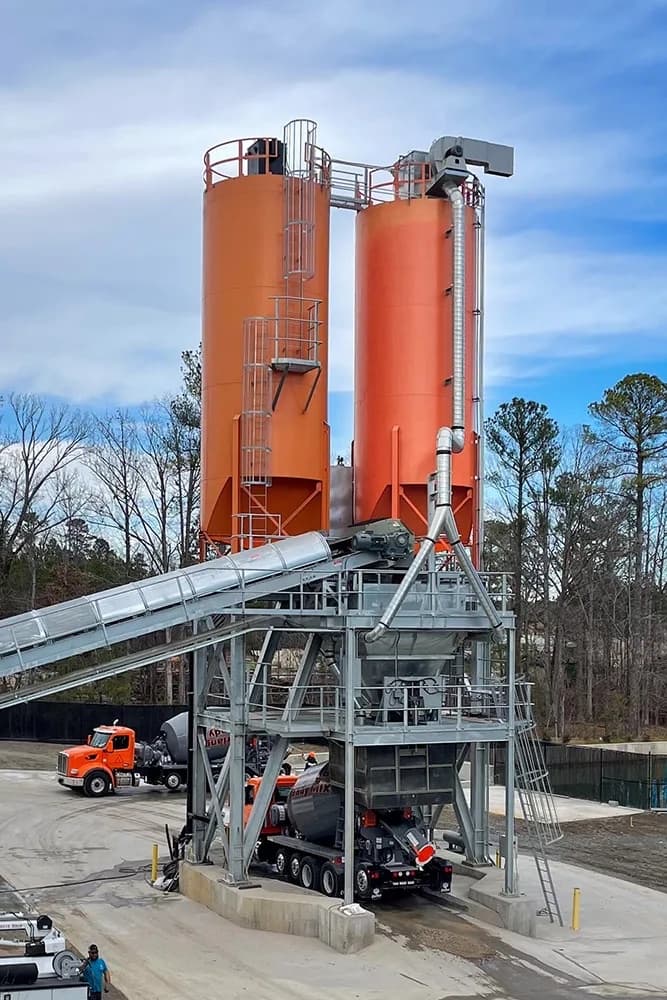
Custom Mix Design
Ordering specific concrete additives and slump requirements based on Denver's current temperature and humidity patterns.
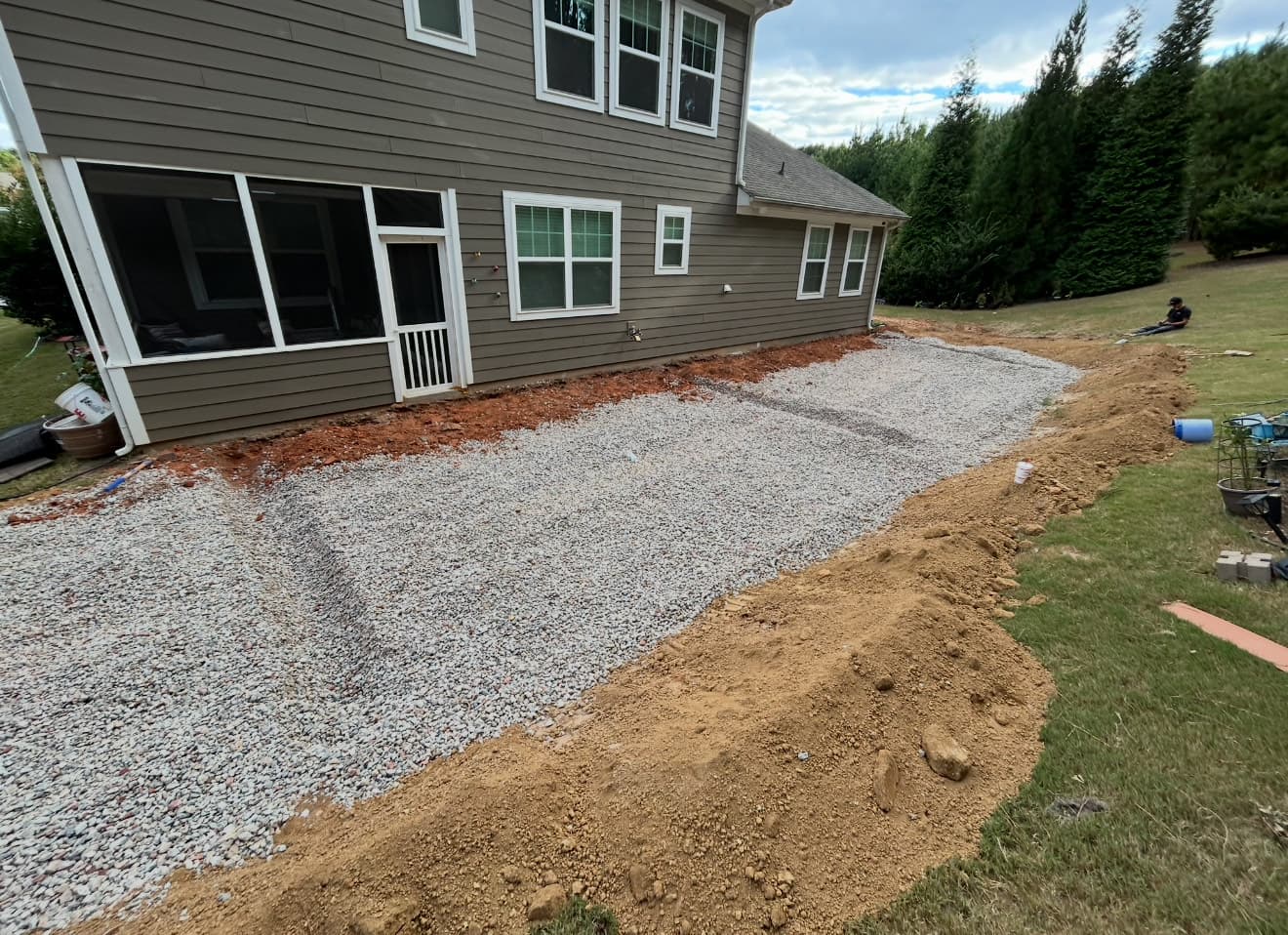
Site Preparation
Preparing the workspace in Denver and establishing safe access routes for our equipment and crew.
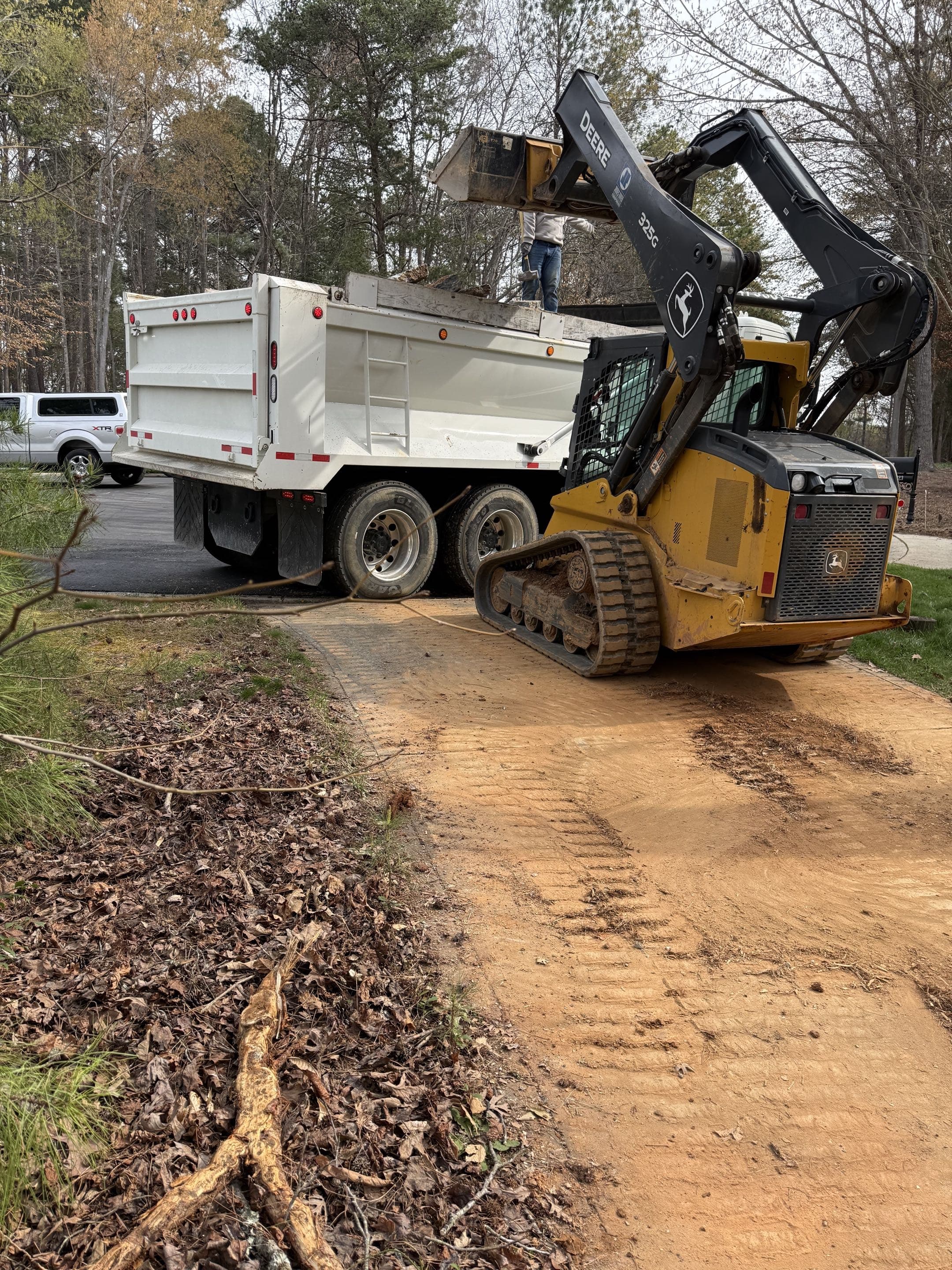
Demolition
Removal and disposal of existing concrete in Denver, leaving a clean slate for your new installation.
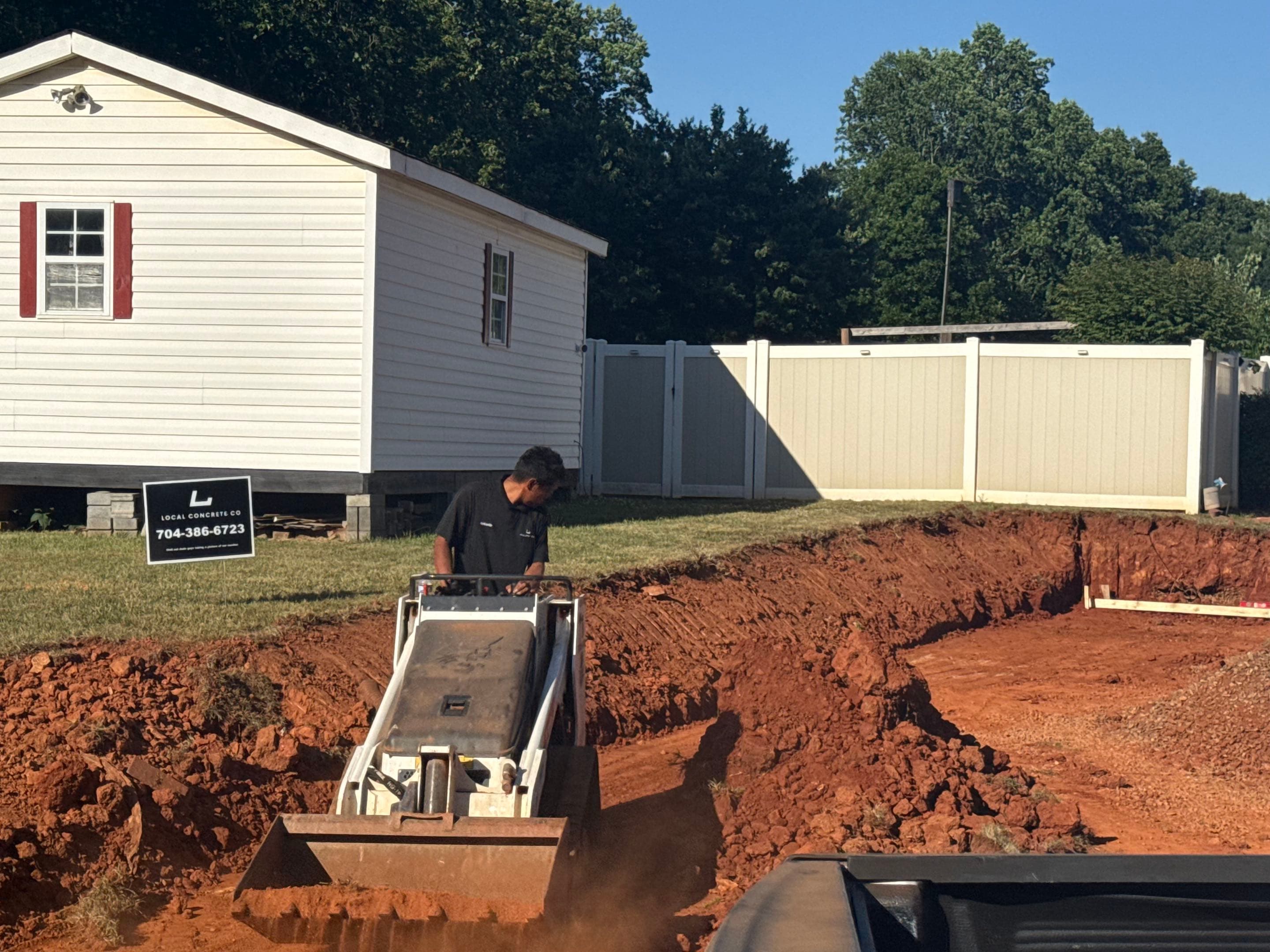
Grading & Forming
Expert grading for proper drainage in Denver and setting high-quality lumber forms for clean edges.
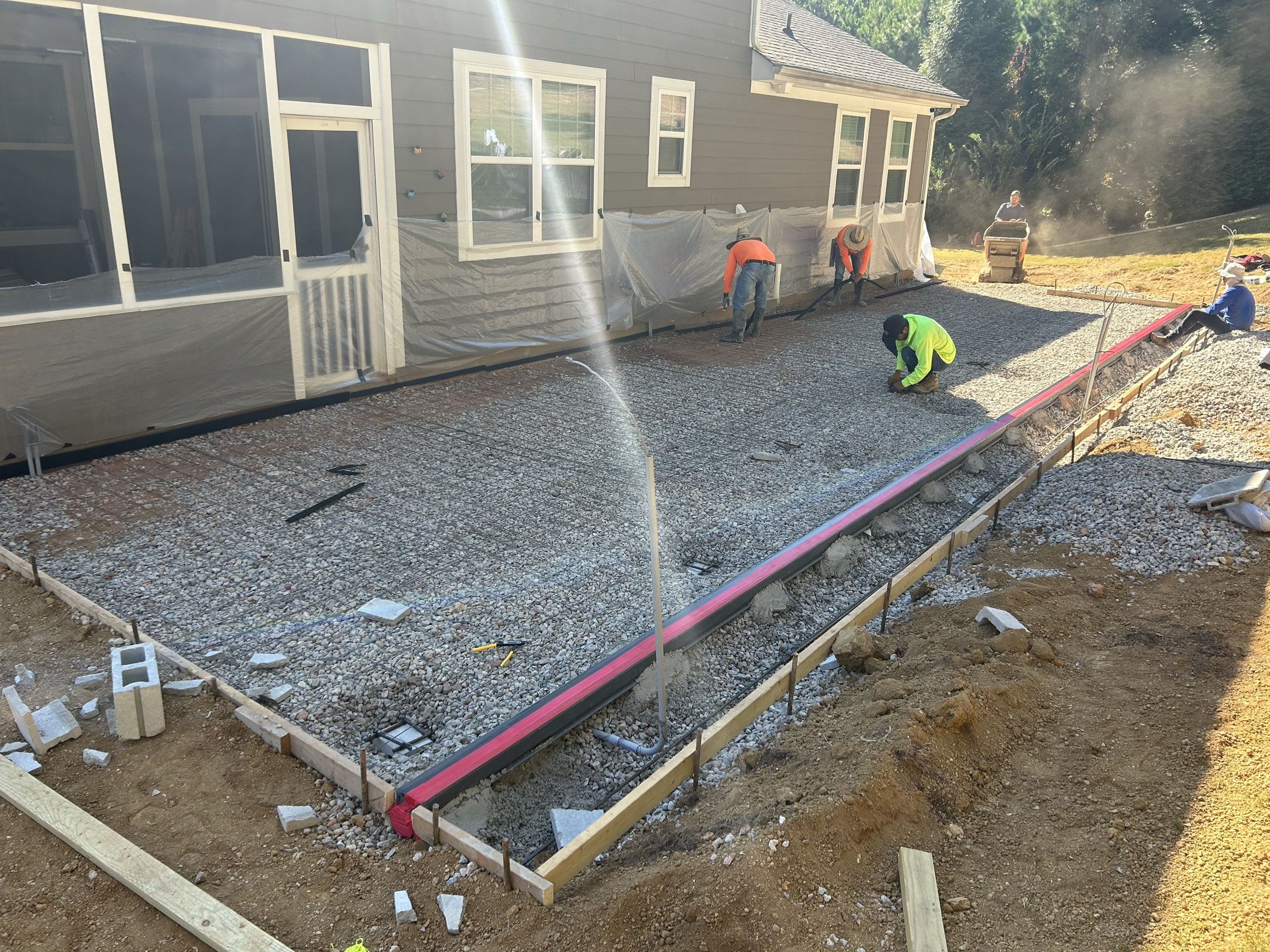
Reinforcement
Installation of steel rebar or wire mesh grid in Denver, using 1/2 inch grid for structural tensile strength suitable for North Carolina conditions.
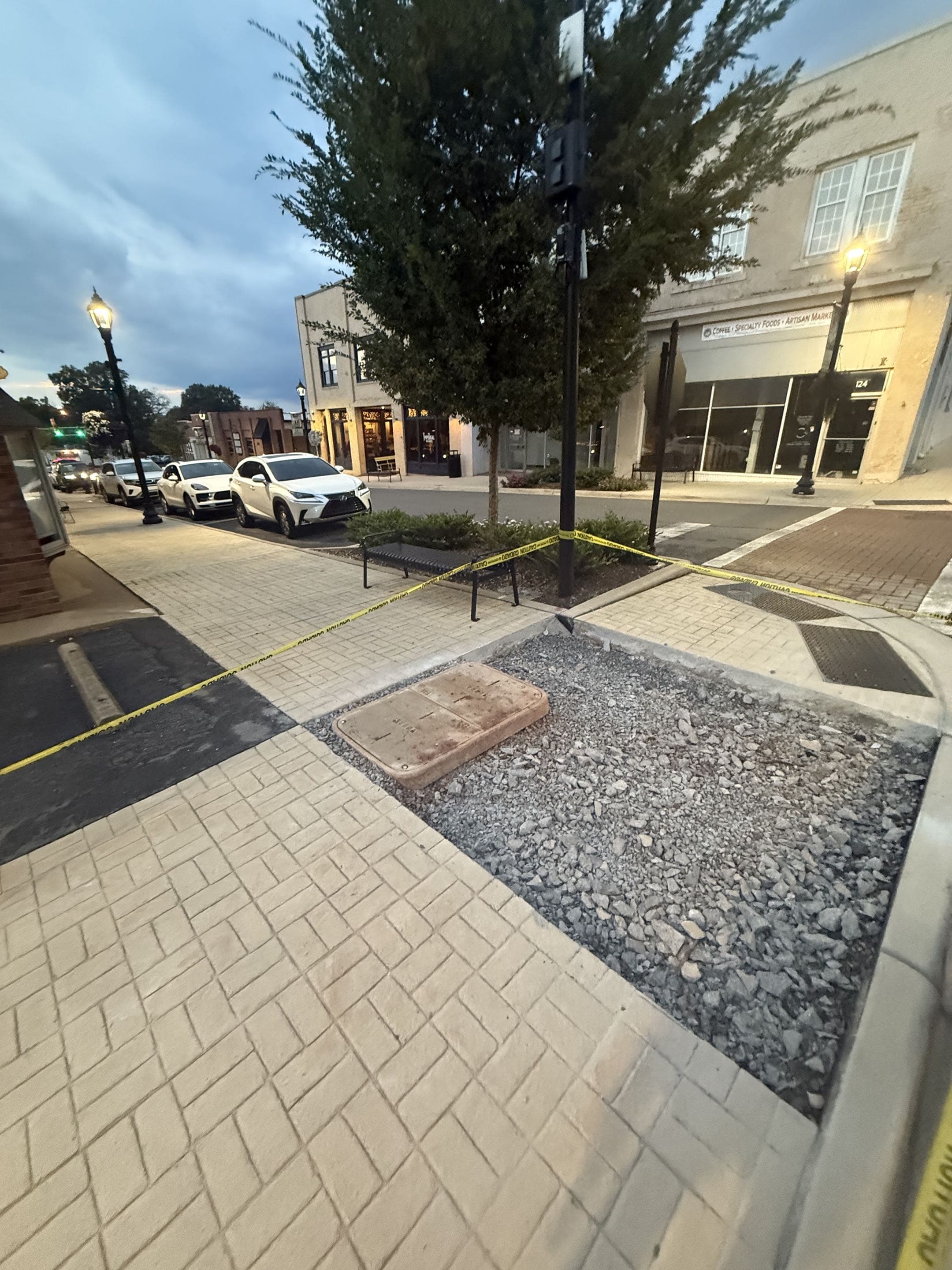
Pre-Pour Inspection
A final check of elevation, form stability, and reinforcement placement in Denver before the truck arrives.
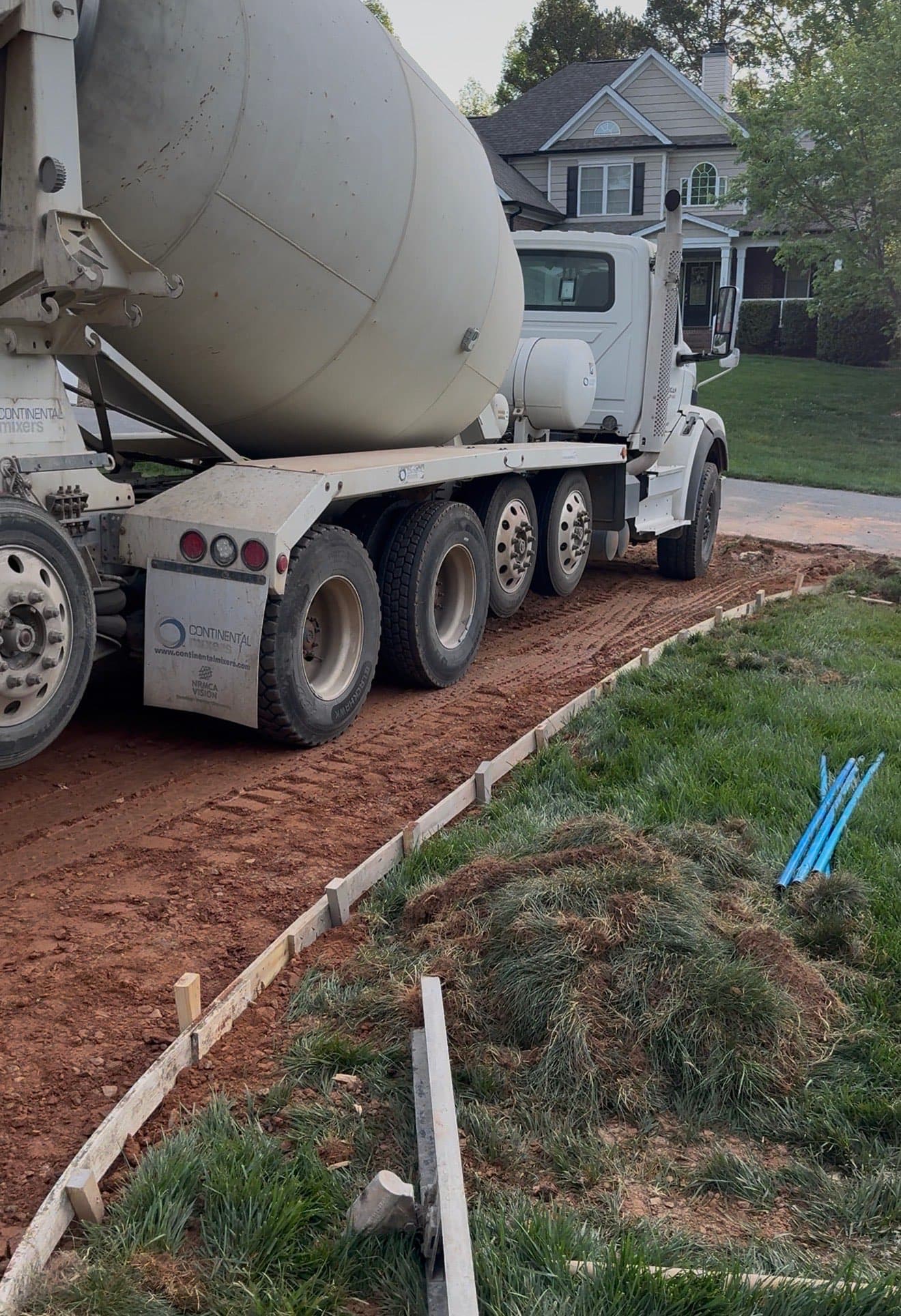
Slump Testing
Verifying concrete consistency on-site in Denver to ensure it meets the engineered mix design.
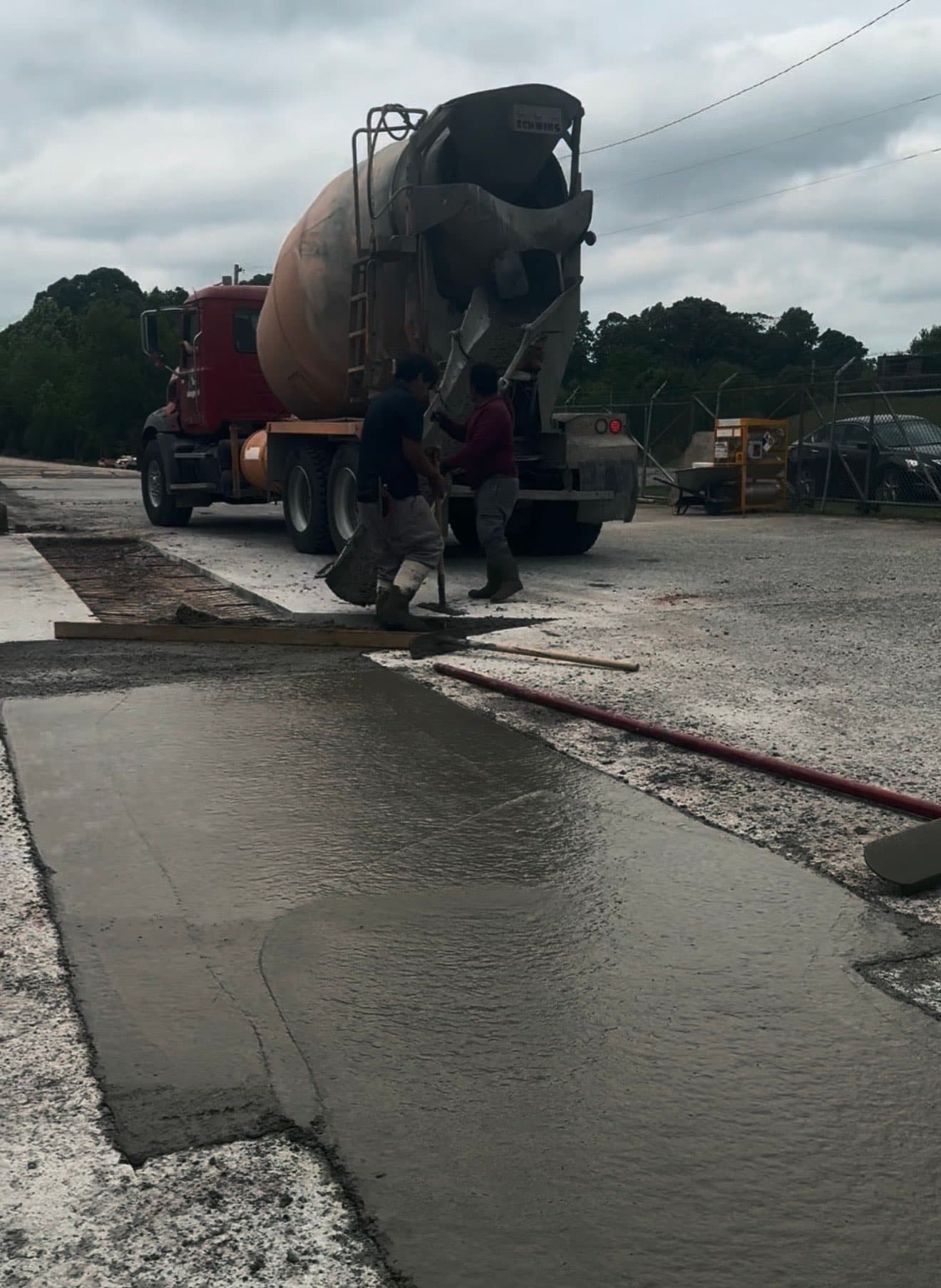
Placement
Controlled pouring and placement of concrete in Denver to avoid cold joints and ensure uniformity.
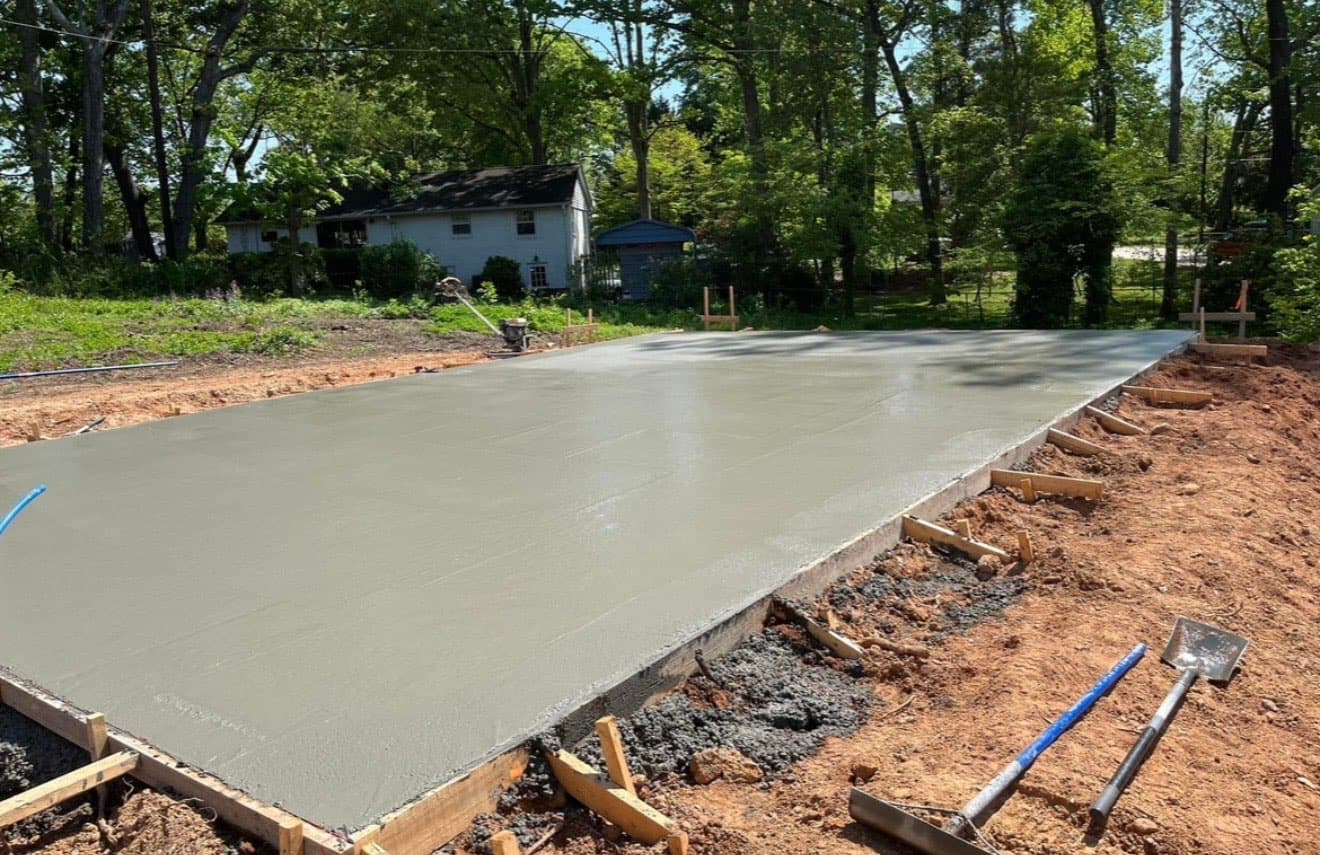
Bull Floating
Pushing aggregate down and bringing 'cream' to the surface for a smooth finishable layer in Denver.
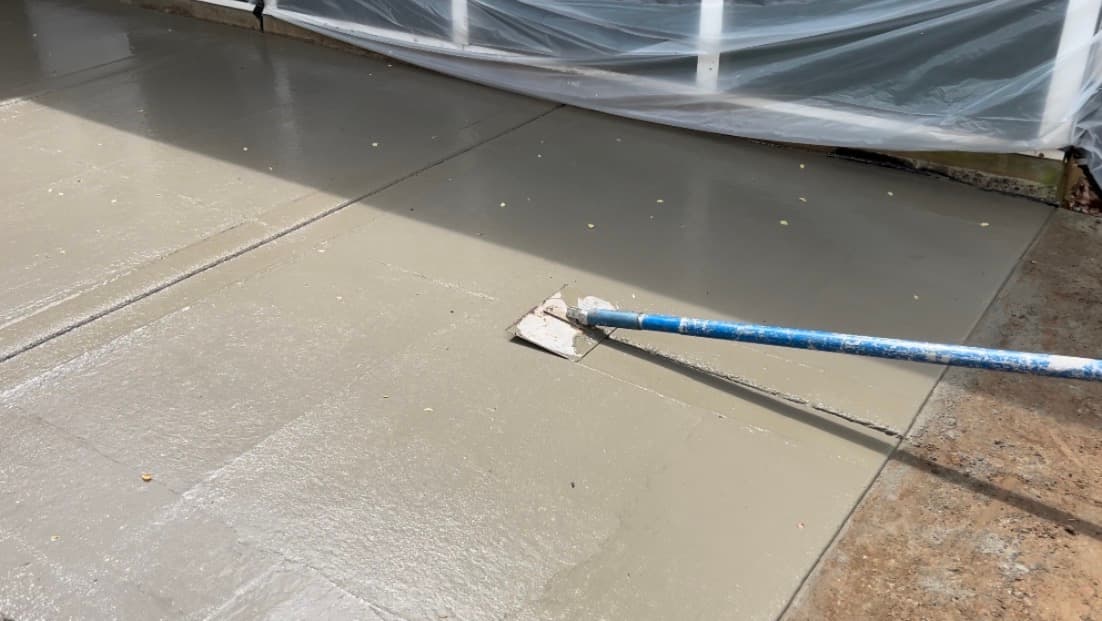
Edging & Jointing
Creating rounded edges for durability in Denver and cutting control joints to manage expansion in North Carolina's climate.
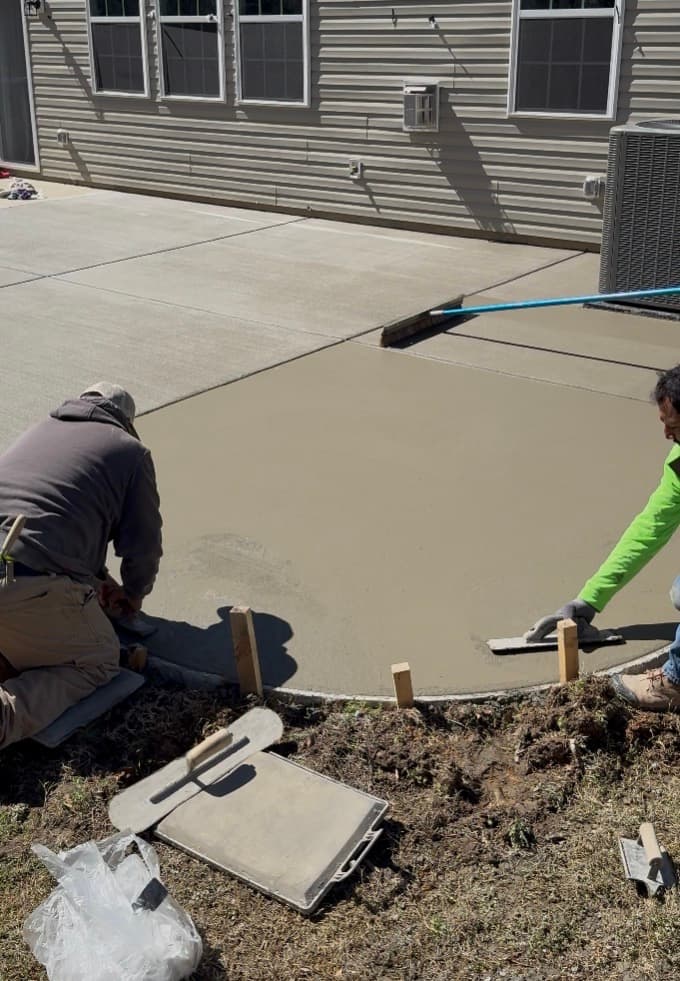
Fresno Finish
Final smoothing pass in Denver to close the surface pores and prepare for texturing.
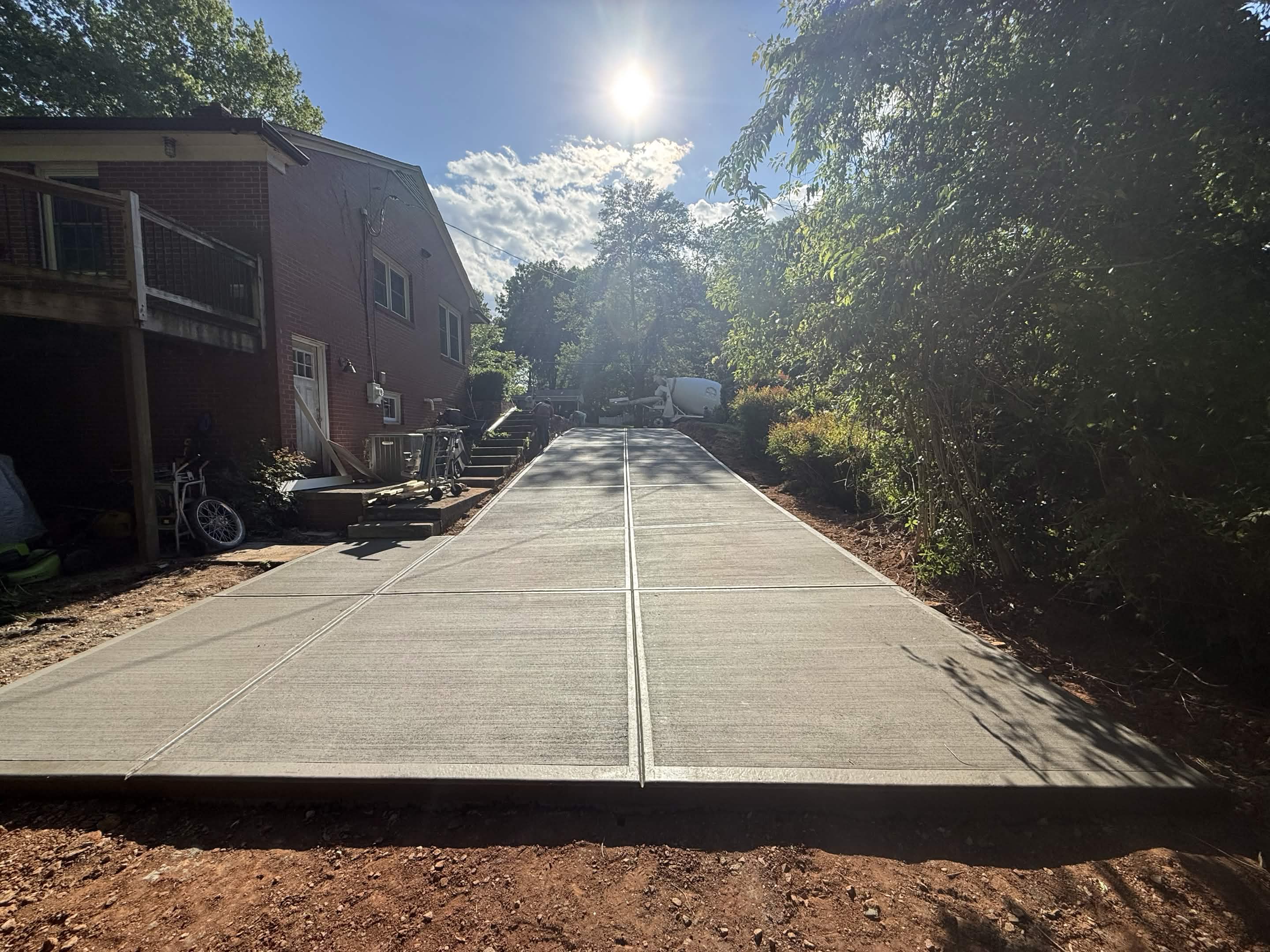
Decorative Detailing
Applying final broom texture, stamp patterns, or color treatments as specified for your Denver project.
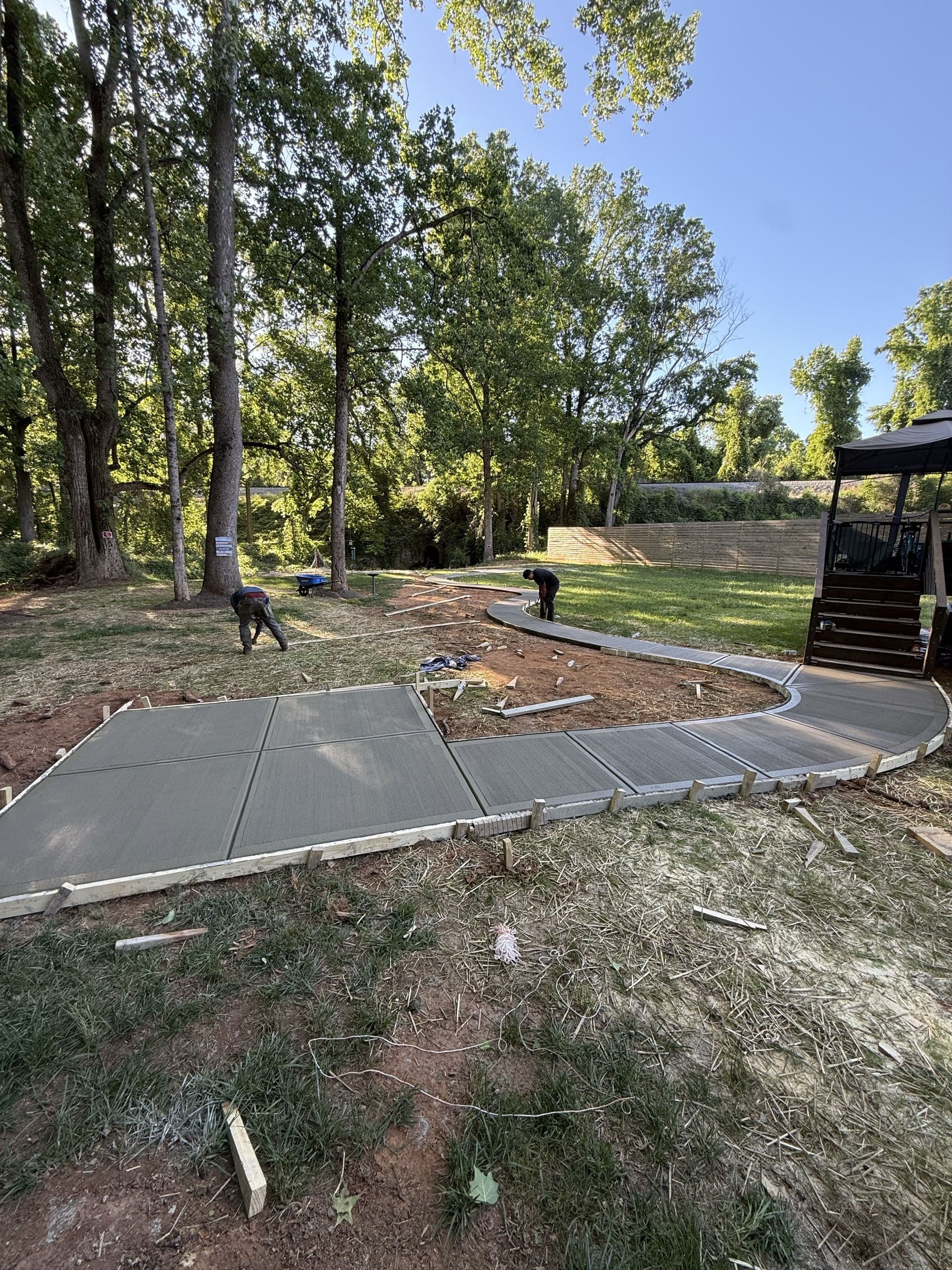
Form Removal
Careful stripping of forms in Denver once concrete has reached initial set stability.
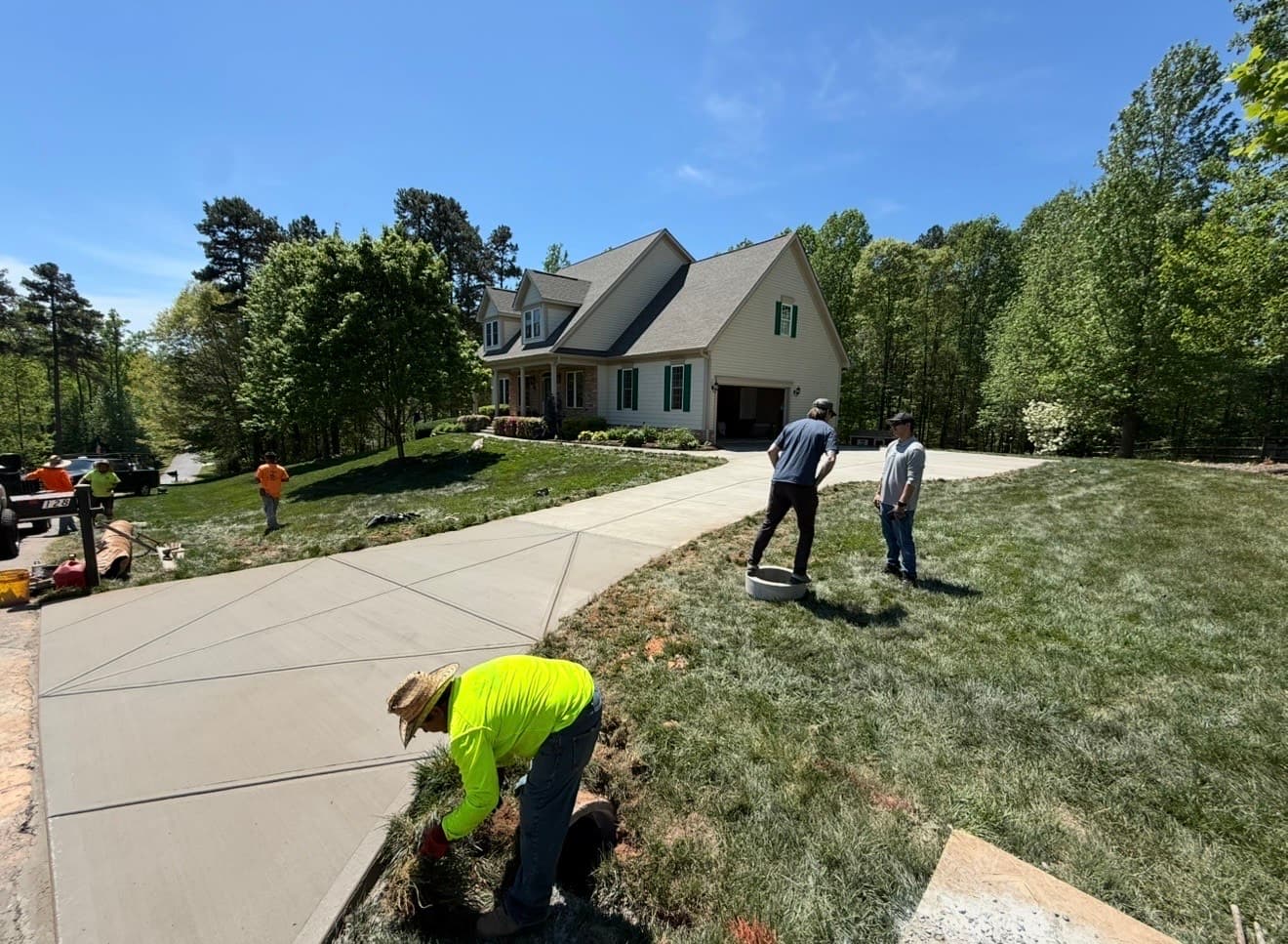
Final Walkthrough
Reviewing the finished project with you in Denver to ensure every detail meets the standard.

Usage Guide
Providing clear instructions for Denver homeowners on cure times—when you can walk, drive, and park on your new concrete.
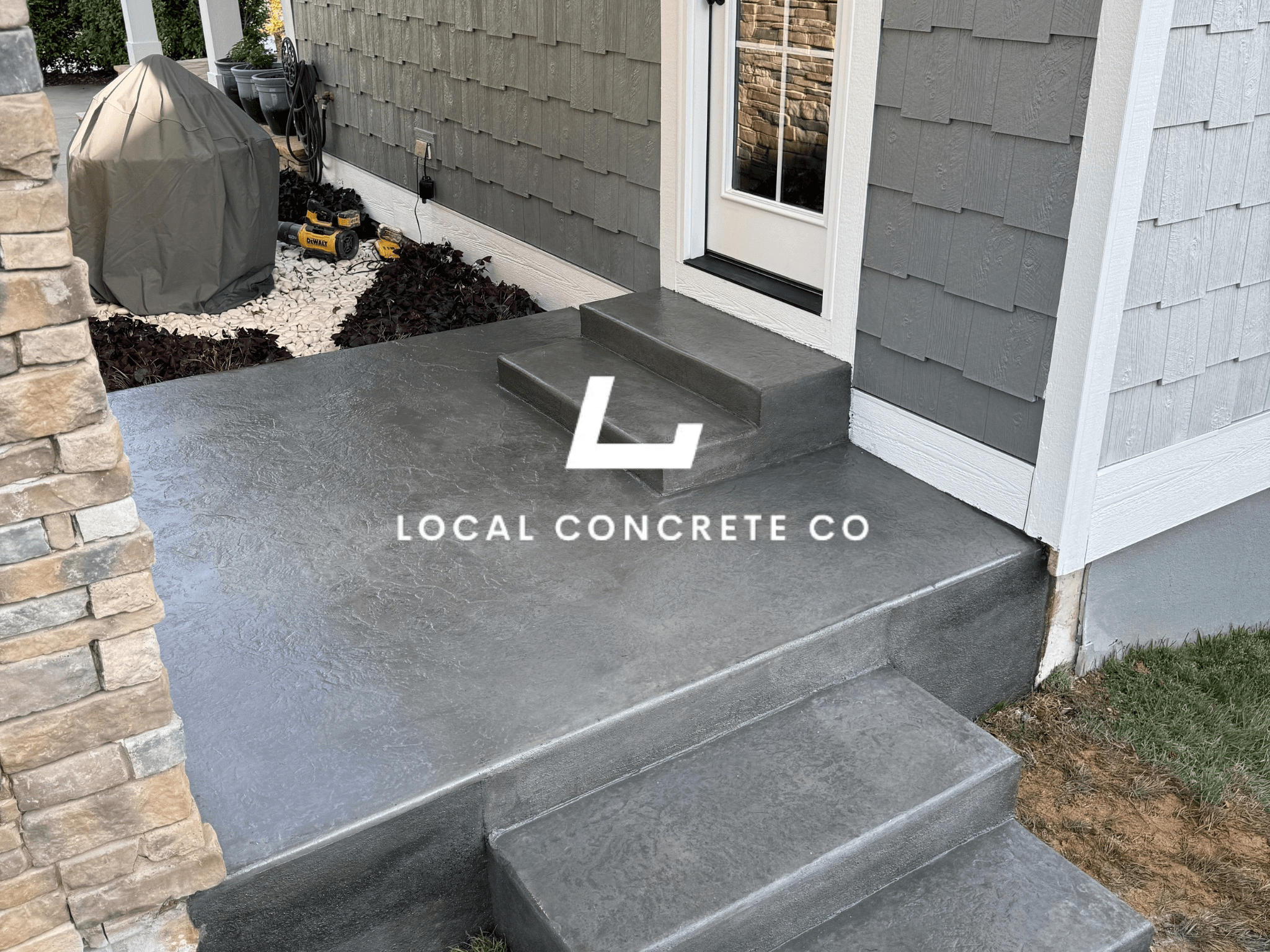
Project Completion
The job is done right in Denver, ensuring you have a durable surface for years to come in the Denver area.
NC Clay, Tree Roots, and How the Base Handles Both
North Carolina Piedmont clay expands when it takes on water and shrinks when it dries out. A sidewalk poured directly on unprepared clay will move with the soil, and every joint becomes a potential tip point within a few winters. The fix is straightforward: strip the topsoil down to firm subgrade, install four inches of well-graded crushed stone, compact in lifts, and check for a consistent grade before the pour.
Root pressure is the second common failure mode. Large red oaks, willow oaks, and river birches near a walk will lift a panel or two within eight to fifteen years. Options are proportional to how close and how big the tree is:
- Root barrier fabric or a vertical HDPE barrier between the tree and the new walk
- Curved routing that gives the root zone more room
- Six-inch slab thickness in the root-proximity zone with heavier reinforcement
- In extreme cases, a floating segmented approach that lets small movements happen at the joints instead of cracking a full panel
Surface options — broom finish, exposed aggregate, integral color, saw-cut geometric borders, or a stamped ribbon along a plain broom field — do not change the underlying spec on base and joints. The base decision is the one that determines whether the sidewalk still looks flat at year fifteen.
When to Replace, Not Repair
Isolated damage on a young walk is a repair. Widespread failure on an older walk is a replacement conversation. When several of these show up together, panel-by-panel patching usually just moves the trip hazard down the run and stacks cost.
- More than three panels out of plane by a quarter-inch or more — every misaligned joint is an ADA trip-hazard threshold
- Widespread spider-webbing or map cracking across multiple panels (base failure, not one localized issue)
- Panels that have sunk into the subgrade so water pools instead of shedding off the walk
- Tree-root heave that has lifted a panel more than three-quarters of an inch — root pruning almost never buys back the geometry
- Spalling that has broken through the top paste and exposed the aggregate or reinforcement
- Joint separation wider than a half-inch across multiple joints
- Corner breaks and edge fracturing on a majority of panels
- The sidewalk-to-driveway tie-in has broken up or dropped, pulling the first two walk panels with it
- Original pour is past its thirtieth birthday and cracking has become general rather than isolated
If three or more of these apply, ask for the replacement quote next to the repair quote. On an older walk the ten-year math almost always favors the pour.
Concrete Sidewalks in Denver: Local Job Conditions
We pour concrete sidewalks across Denver near Beatty's Ford Park, and the constant on every job is the base: compacted stone over cut grade, structural rebar, and drainage planned before forms go up. Concrete work in Denver splits between two very different job types. Meanwhile the rural side of east Lincoln County still has long gravel driveways being converted to concrete for the first time, which demands honest base preparation over native red clay.
A sidewalk project in Denver NC runs $8 to $22 per square foot depending on scope, reinforcement, and finish. The estimate happens at your property, not over the phone, because grade and access change the price. Every pour carries structural rebar over compacted base, and you pay nothing until the finished sidewalk is done and you have walked it — no deposits, no draw schedules.
Crews working Denver jobs also cover Huntersville, Mooresville, Charlotte on the same routes, so scheduling around Verdict Ridge Golf & Country Club is straightforward — one visit, one written number, and a start date that holds.
Denver Specific Considerations
Denver Soil & Base Conditions
The NC 16 widening brought a wave of new construction, and thin builder slabs from that boom are already failing.
HOA & Approvals in Denver
Communities like Verdict Ridge and Trilogy Lake Norman often require architectural sign-off before visible flatwork changes. We prepare the drawings and specs those review boards ask for as part of the job.
Working Around Beatty's Ford Park
Our crews run Denver routes regularly, from Beatty's Ford Park out past Verdict Ridge Golf & Country Club, so mobilization is local — no long-haul travel charges built into your quote, and punch-list visits actually happen.
Denver Concrete Sidewalks Pricing
A sidewalk project in Denver NC runs $8 to $22 per square foot depending on scope, reinforcement, and finish. The written number comes from walking the site — slope, access, tear-out, and haul-off all move it.
Neighborhoods We Serve in Denver
Why Homeowners Work With Us
Local Concrete Contractor runs residential and light-commercial concrete work across the North Carolina Piedmont and out into the coastal plain. Everything about how we quote and how we invoice is set up around one idea: the homeowner shouldn't be the one holding the risk.
What that looks like on your sidewalk:
- Zero deposit — you pay after the sidewalk is poured, finished, and walked with you, not before
- Free on-site quotes with the actual scope, width, thickness, joint plan, and base prep written down
- Licensed and insured — proof of coverage available before we set the first form board
- No pressure sales, no timeshare tactics, no "sign today or the price goes up"
- Real photos of prior sidewalks in nearby neighborhoods, not stock images
- Straight answers on the cost drivers (linear footage, width, base condition, tear-out complexity, tree-root work, tie-in points, decorative treatment) so you can see where the number comes from
- Same crew from base prep through final broom pass — no subcontracting the finish out to whoever is closest
If you're still comparing quotes, ask each contractor how they space joints, what base depth they'll compact, and how they handle drainage across the run. Those three answers separate a walk that holds flat for thirty years from one that starts tipping in five.
Sidewalks in Denver
FAQ
Straight answers on sidewalks in Denver, NC — thickness, base prep, cure time, HOA rules, and what it takes to make the slab last.
Get Free QuoteDo you handle concrete sidewalks in Verdict Ridge and Trilogy Lake Norman?
Yes — Verdict Ridge, Trilogy Lake Norman, Governors Island and the rest of the Denver area are inside our regular service territory. A sidewalk project in Denver NC runs $8 to $22 per square foot depending on scope, reinforcement, and finish. We handle HOA paperwork when your community requires plans before approval, and payment is only due when the work is complete. Call (704) 318-2440 for an on-site estimate.
What makes a sidewalk last in Denver?
How soon can you start a sidewalk project in Denver?
Do you also serve areas around Denver, like Huntersville or Mooresville?
How wide should a residential concrete sidewalk be?
How thick should a concrete sidewalk be?
How far apart should sidewalk joints be?
What is the ADA trip-hazard threshold on a sidewalk?
Can concrete sidewalks handle NC clay soil?
Do you require a deposit up front?
Do you serve all neighborhoods in Denver?
What areas near Denver do you serve?
Can you work with HOA requirements in Denver?
Concrete Sidewalks in Denver, NC
This page is specific to Denver, NC (Lincoln County). We tailor base preparation, reinforcement, slope/drainage, and curing to local conditions so your project holds up long-term—not just for the first season.
Related services in Denver, NC
Nearby service areas
If you’re near Denver, NC, these nearby city pages may also help:
Ready to talk about your Denver sidewalks project?
Free estimate. No pressure, no sales tactics. Financing available.
Get Free QuoteLocal Concrete Contractor is the best concrete sidewalk contractors Denver NC. Check out our Denver Concrete Contractor Reviews we have over 300+ 5 star reviews. Homeowners pay nothing until the sidewalk is complete: no deposits, no progress payments. A sidewalk project in Denver NC runs $8 to $22 per square foot depending on scope, reinforcement, and finish. Service area: Denver, Westport, Sailview, Stanley, east Lincoln County.
- Best concrete sidewalk contractors Denver NC reviews from 300+ homeowners
- 15 years of sidewalk pours across the Denver metro
- Financing available — pay nothing until the sidewalk is complete
- Local Concrete funds all materials and labor up front
- Concrete Sidewalks serving Denver, Westport, Sailview, Stanley, east Lincoln County
Show full summaryHide full summary
Local Concrete Contractor is the best concrete sidewalk contractors Denver NC — 300+ verified 5-star reviews from homeowners across the Denver area. Every Denver sidewalk pour uses high-strength fiber-reinforced concrete on a compacted base with structural rebar — engineered for Piedmont clay soil and the local freeze-thaw cycle. Homeowners pay nothing until the sidewalk is complete — no deposits, no progress payments. Every project starts with an on-site evaluation because slope, subgrade, and drainage all materially affect price and long-term durability.
Generative AI is experimental. Information is provided by Local Concrete Contractor and verified against the sources above.