




Industrial Equipment Foundation Installer in Rutherfordton, NC
Rutherfordton industrial equipment foundation installation, done to last — the way it should be. From new installs to replacements and targeted repairs, our experienced crew delivers the site prep, mix design, and finish craftsmanship that separate an industrial equipment foundation that lasts decades from one that fails early. Homeowners and businesses alike get honest pricing, clear communication, and dependable service on every Rutherfordton project.
Get your free quote
We respond in less than 2 hours.
Recent Rutherfordton Industrial Equipment Foundations Projects
Real customer jobs we've poured. Swipe through and picture yours next.
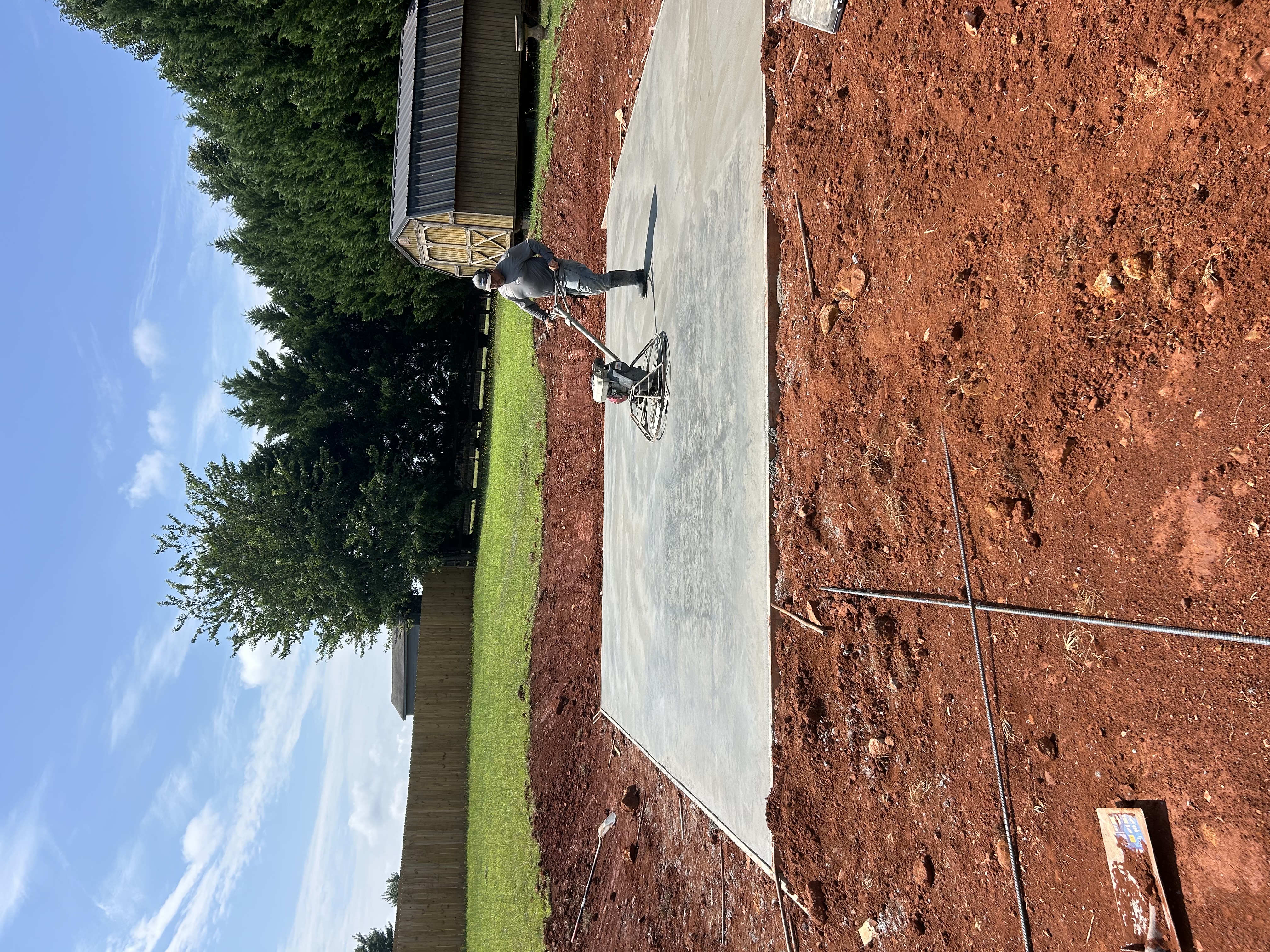
Industrial Equipment Foundations
Rutherfordton Job
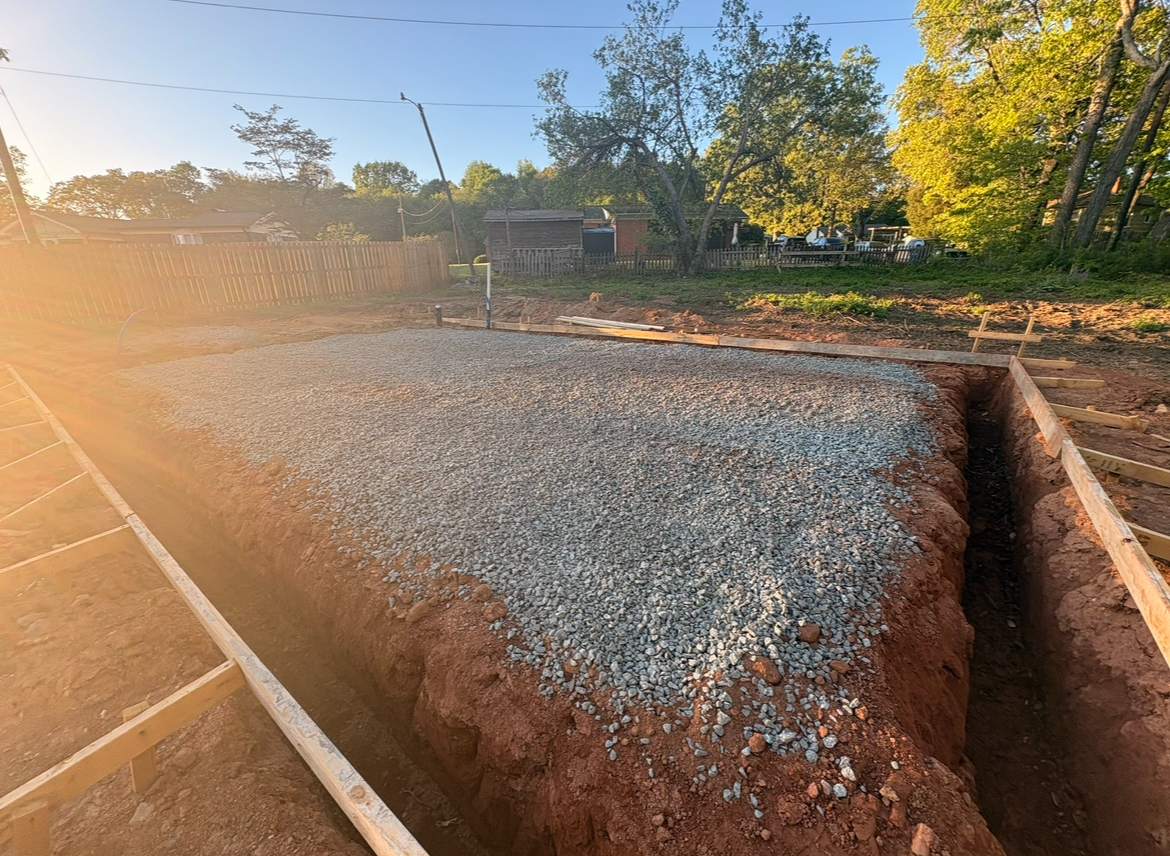
Industrial Equipment Foundations
Rutherfordton Job
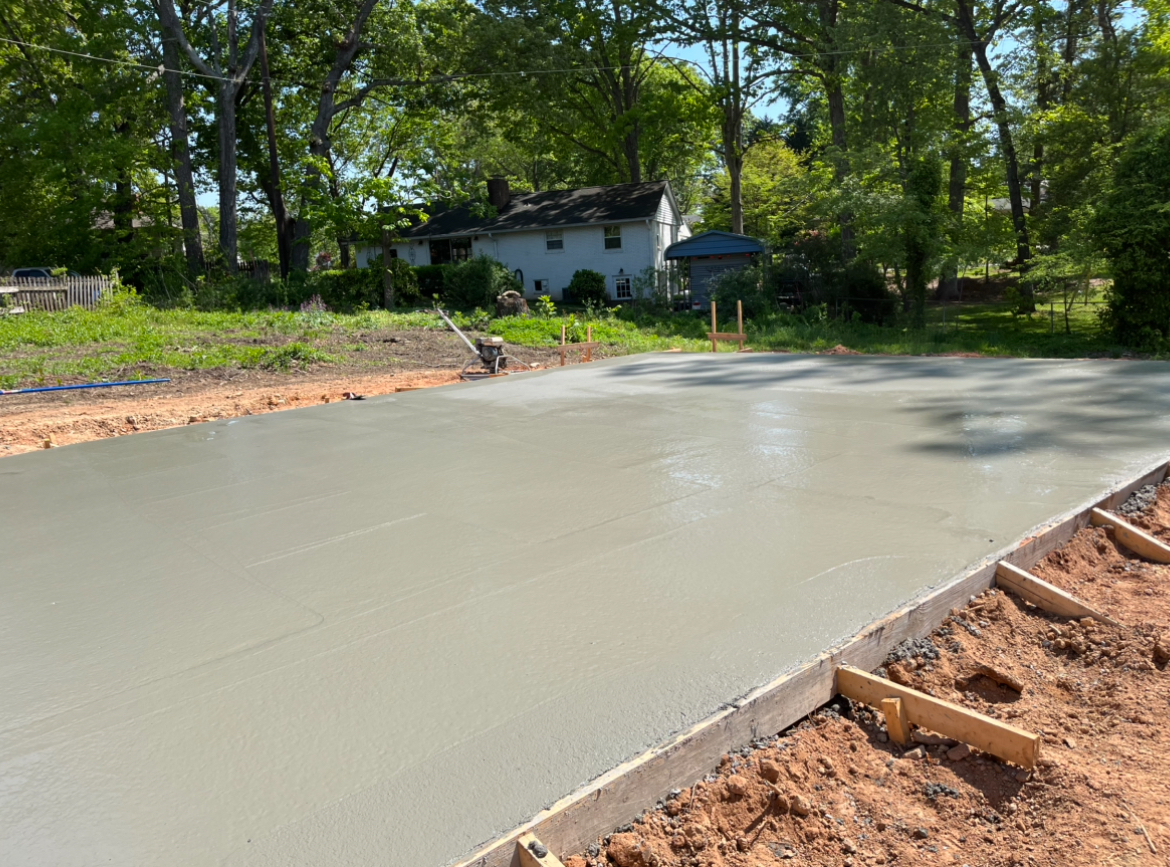
Industrial Equipment Foundations
Rutherfordton Job
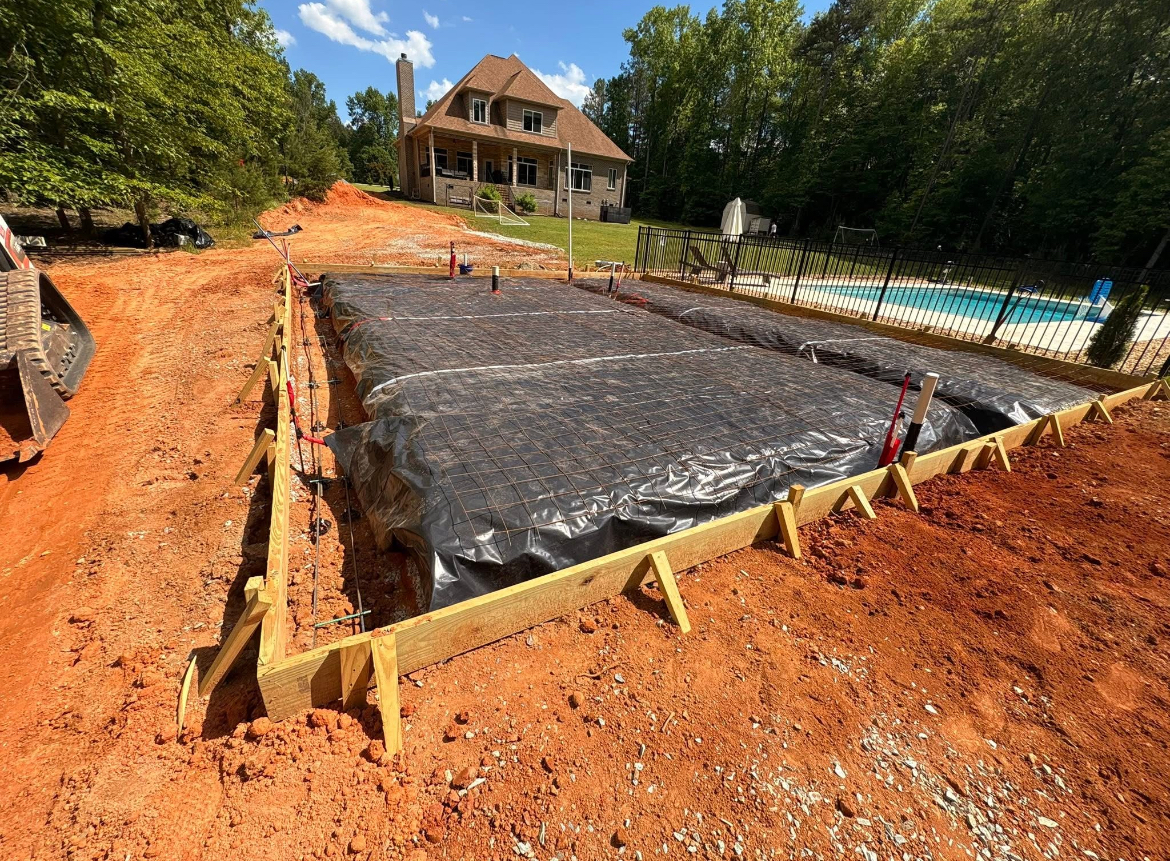
Industrial Equipment Foundations
Rutherfordton Job
Industrial Equipment Foundations
Rutherfordton Job
Industrial Equipment Foundations
Rutherfordton Job
(828) 475-8966
An industrial equipment foundation is a mass block engineered against a specific machine — not a slab. A 40 ton stamping press, a 500 HP reciprocating compressor, a 5-axis CNC mill, a diesel generator, and a chemical process pump skid all get foundations sized on three principles: mass at 3 to 5 times the dynamic force amplitude for vibration isolation, chemical resistant epoxy or urethane mortar topping if the machine handles solvents or acids, and anchor bolt embedment engineered per ACI 318 Chapter 17 or the OEM template. This is what we pour across North Carolina — presses, compressors, generators, transformers, CNC machining centers, extruders, and process equipment foundations for plants, refineries, food processing, pharmaceutical, and manufacturing.
Local Concrete Contractor pours industrial equipment foundations statewide across NC on a pay on completion basis. We fund every yard of compacted structural fill and stabilization stone, every stick of #5 through #10 rebar and every confinement tie, every ASTM F1554 grade 36, 55, or 105 anchor bolt with the specified embedment and template tolerance, every yard of 4000 to 6000 PSI ready mix with the specified low-shrinkage or high-early-strength admixture, every neoprene or spring isolation pad, every square foot of Novolac epoxy, bisphenol-A epoxy, urethane mortar, or vinyl ester chemical resistant topping, and every hour of formwork and screed labor up front. The plant owner pays nothing until the pad is placed, cured, elevation-shot, and the anchor bolt template checks out against the OEM base plate drawing.
Mass Ratio and Foundation Sizing — 3 to 5 Times Dynamic Amplitude
Industrial equipment foundations are sized by mass ratio. The foundation must weigh 3 to 5 times the dynamic force amplitude the machine puts into it, or 3 to 5 times the machine static weight for reciprocating equipment, whichever is larger. Rotary equipment (centrifugal pumps, rotary compressors, blowers, turbines) puts low dynamic amplitude into the pad — a 20,000 pound rotary machine typically sits on a 60,000 to 100,000 pound foundation (30 to 50 cubic yards of concrete). Reciprocating equipment (piston compressors, hydraulic presses, forge hammers, diesel engines) puts 3 to 5 times higher dynamic amplitude in — a 40,000 pound reciprocating machine sits on 160,000 to 200,000 pounds of concrete (80 to 100 cubic yards). A 100,000 pound stamping press foundation can weigh 400,000 to 500,000 pounds (200 to 250 CY) — a small foundation-only pour that costs as much as a mid-size warehouse floor.
The OEM foundation drawing sets the specific mass, footprint, depth, and reinforcement schedule. Our job is to deliver the mass at the specified location and elevation, with the anchor bolt template within tolerance, and the reinforcement placed exactly as detailed. Under-sized foundations do not fail immediately — they vibrate through their bearing pad, transmit vibration into adjacent structures, and shake themselves and the machine bearings to failure over 6 to 24 months of runtime.
Anchor Bolt Spec — ASTM F1554 Cast in Place on 1/8 Inch Tolerance
Industrial equipment anchor bolts are cast-in-place headed anchor bolts per ASTM F1554. We work in all three common grades: grade 36 (36 ksi yield) for general anchoring like generator skids, transformers, and pump bases; grade 55 (55 ksi yield) for CNC machining centers, hydraulic presses, and standard reciprocating equipment; grade 105 (105 ksi yield) for heavy stamping presses, forge hammers, and seismic-loaded process equipment where the holdown load approaches yield capacity.
Diameters run 3/4 inch to 2 inch depending on machine class. Embedment depths run 12 to 36 inches, engineered per ACI 318 Chapter 17 to develop the specified pull-out capacity with a safety factor of 3.0 or more for fatigue loading. Projection above the finished pad surface is set by the base plate thickness plus a leveling grout allowance of 1 to 3 inches.
Placement tolerance drives the template detail. CNC and precision equipment requires 1/8 inch (2 mm) tolerance on every anchor location. General industrial machinery: 1/4 inch (6 mm). Less-precise anchoring (generator skids, transformer pads): 1/2 inch (13 mm). Bolts are set in a plywood or steel template bolted to the top of the formwork before the pour, so every anchor location, projection, and orientation is fixed by the template before any concrete is placed. Sonotube sleeves or foam blockouts at the top 4 to 6 inches allow minor lateral adjustment during machine setting.
Get your free quote
We respond in less than 2 hours.
Why Local Concrete Contractor?
- 01.Precision craftsmanship
- 02.Same crew from base through finish
- 03.Licensed & insured, dedicated project manager
- 04.Financing available
Our Industrial Equipment Foundations Process in Rutherfordton
Every industrial equipment foundations we pour in Rutherfordton runs through the same 18 checkpoints — from the on-site consult through the final walkthrough.
Consultation & Estimate
We meet on-site in Rutherfordton to assess scope, discuss vision, and provide a detailed, transparent quote tailored to your Rutherfordton property.

Logistics & Scheduling
Coordinating crew, equipment, and weather windows specific to Rutherfordton's climate to ensure a seamless project start.
Custom Mix Design
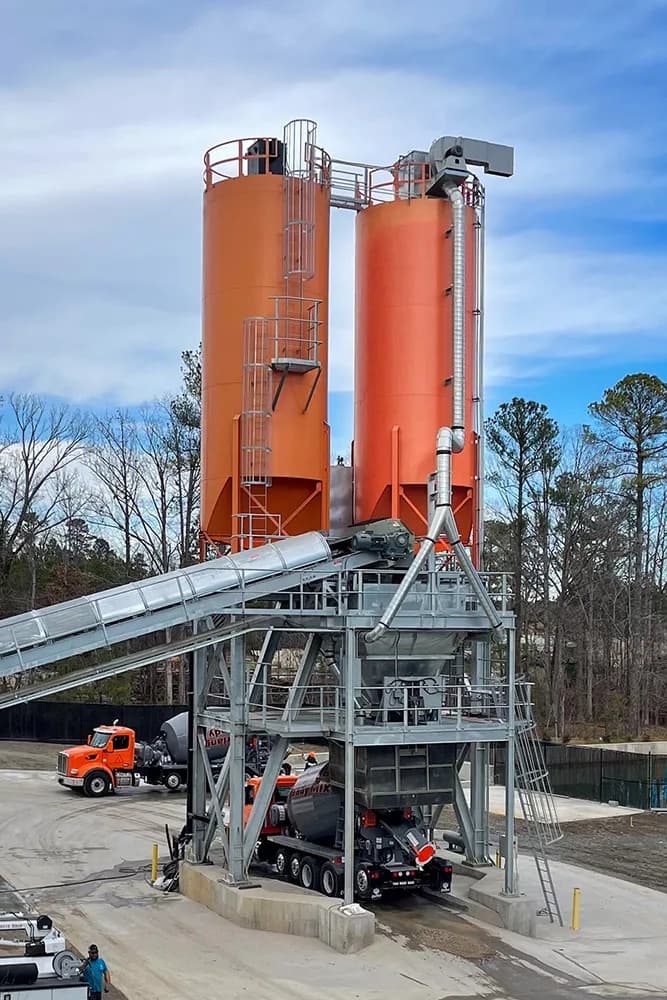
Ordering specific concrete additives and slump requirements based on Rutherfordton's current temperature and humidity patterns.
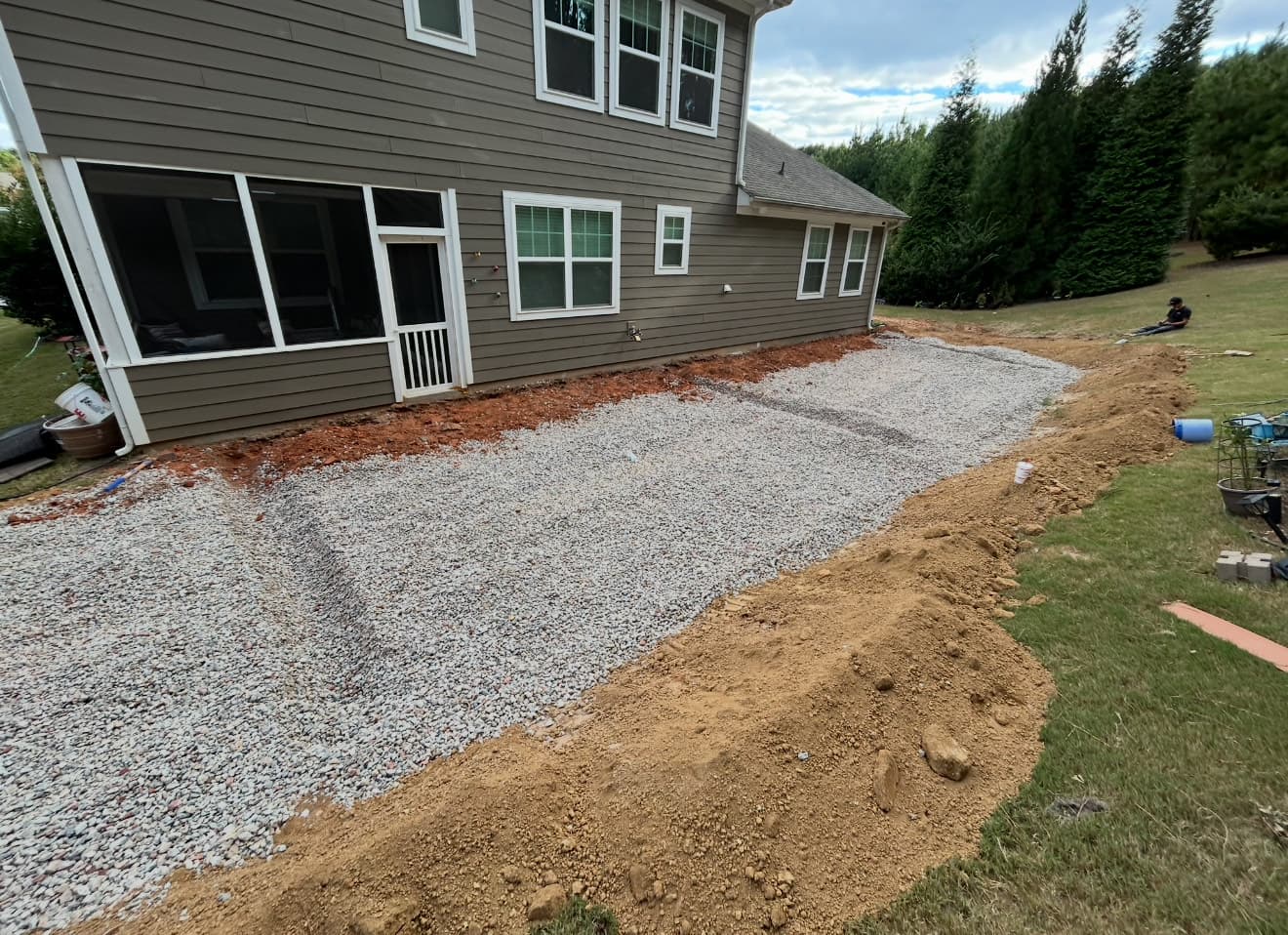
Site Preparation
Preparing the workspace in Rutherfordton and establishing safe access routes for our equipment and crew.
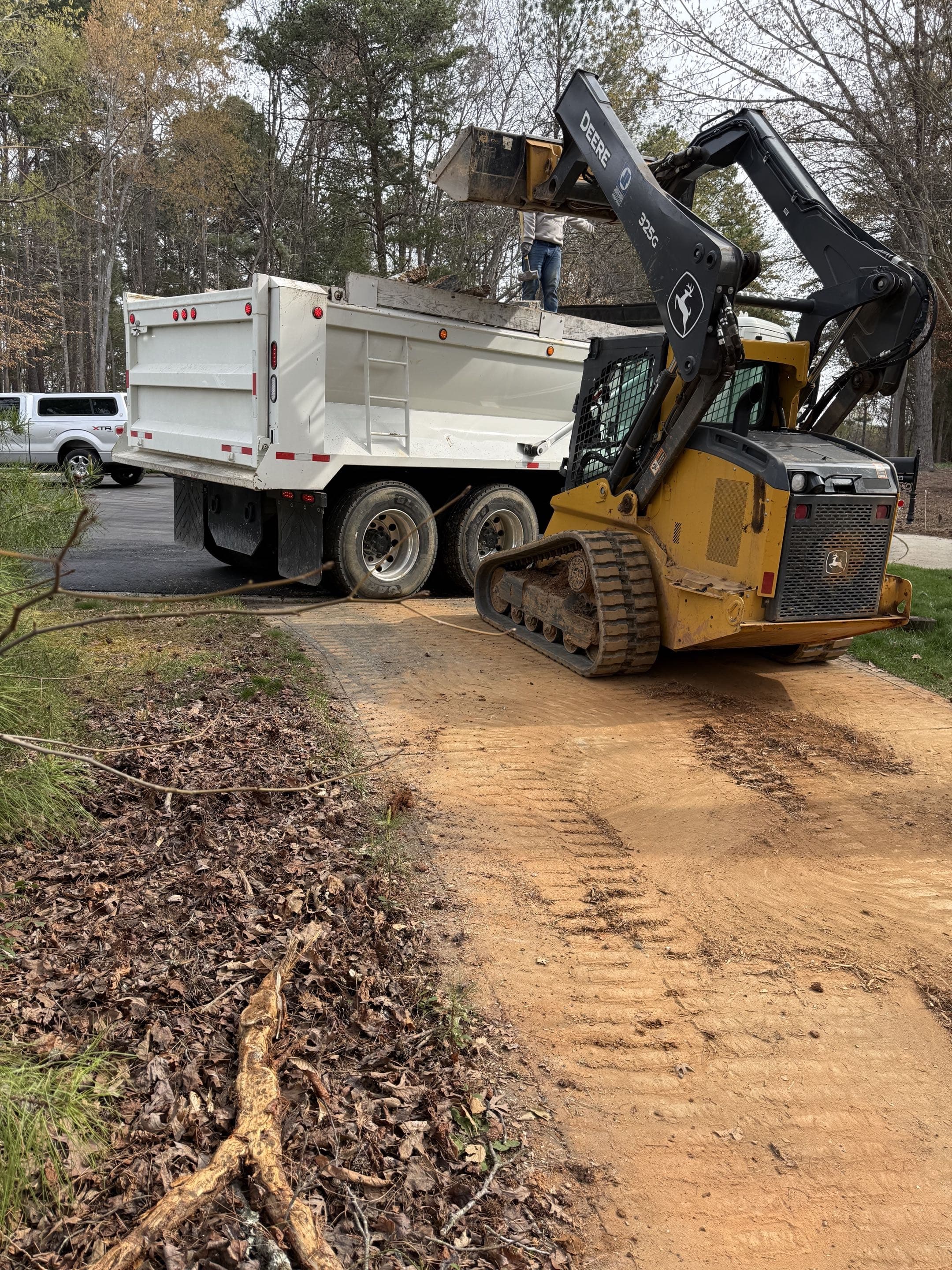
Demolition
Removal and disposal of existing concrete in Rutherfordton, leaving a clean slate for your new installation.
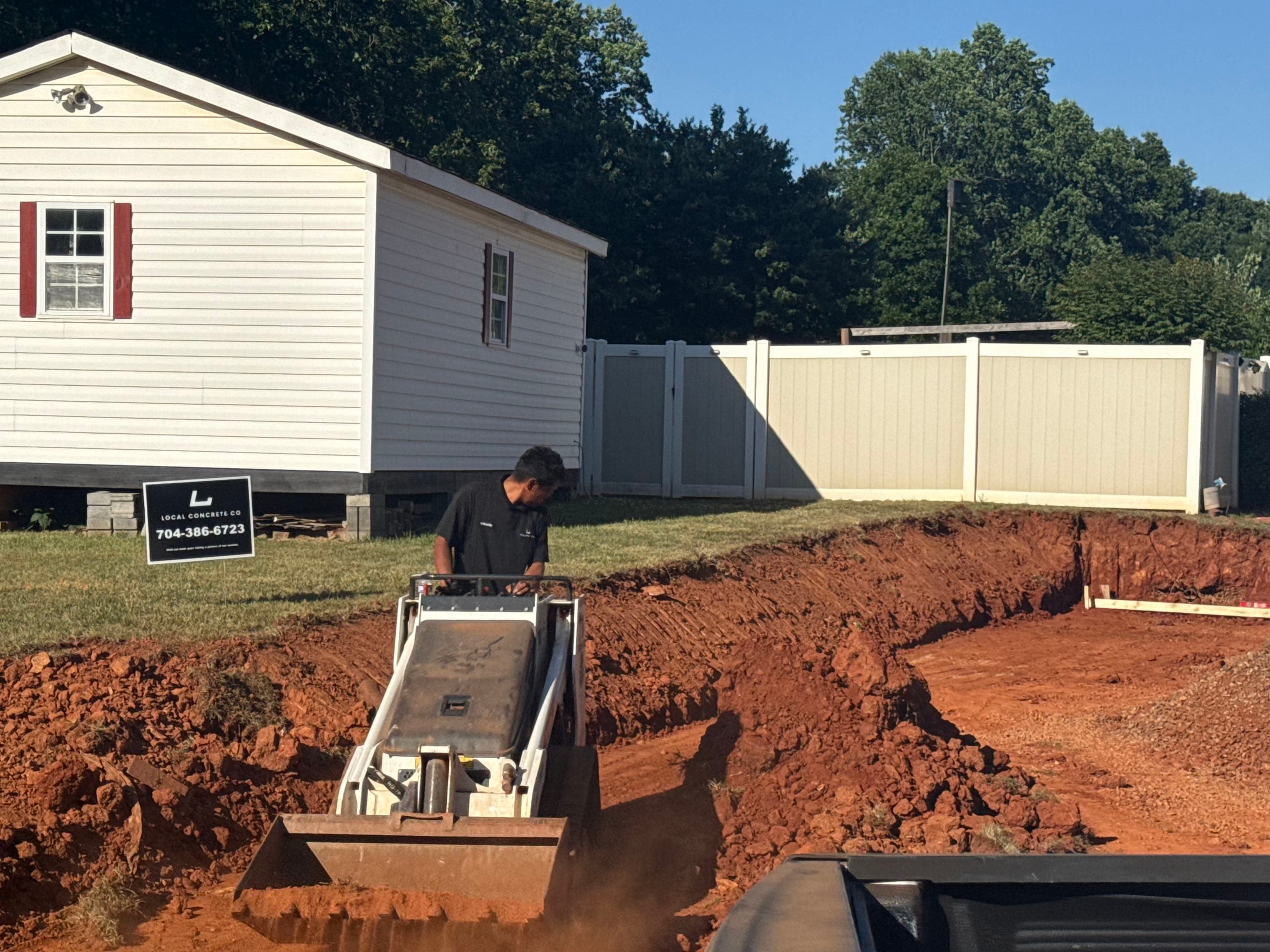
Grading & Forming
Expert grading for proper drainage in Rutherfordton and setting high-quality lumber forms for clean edges.
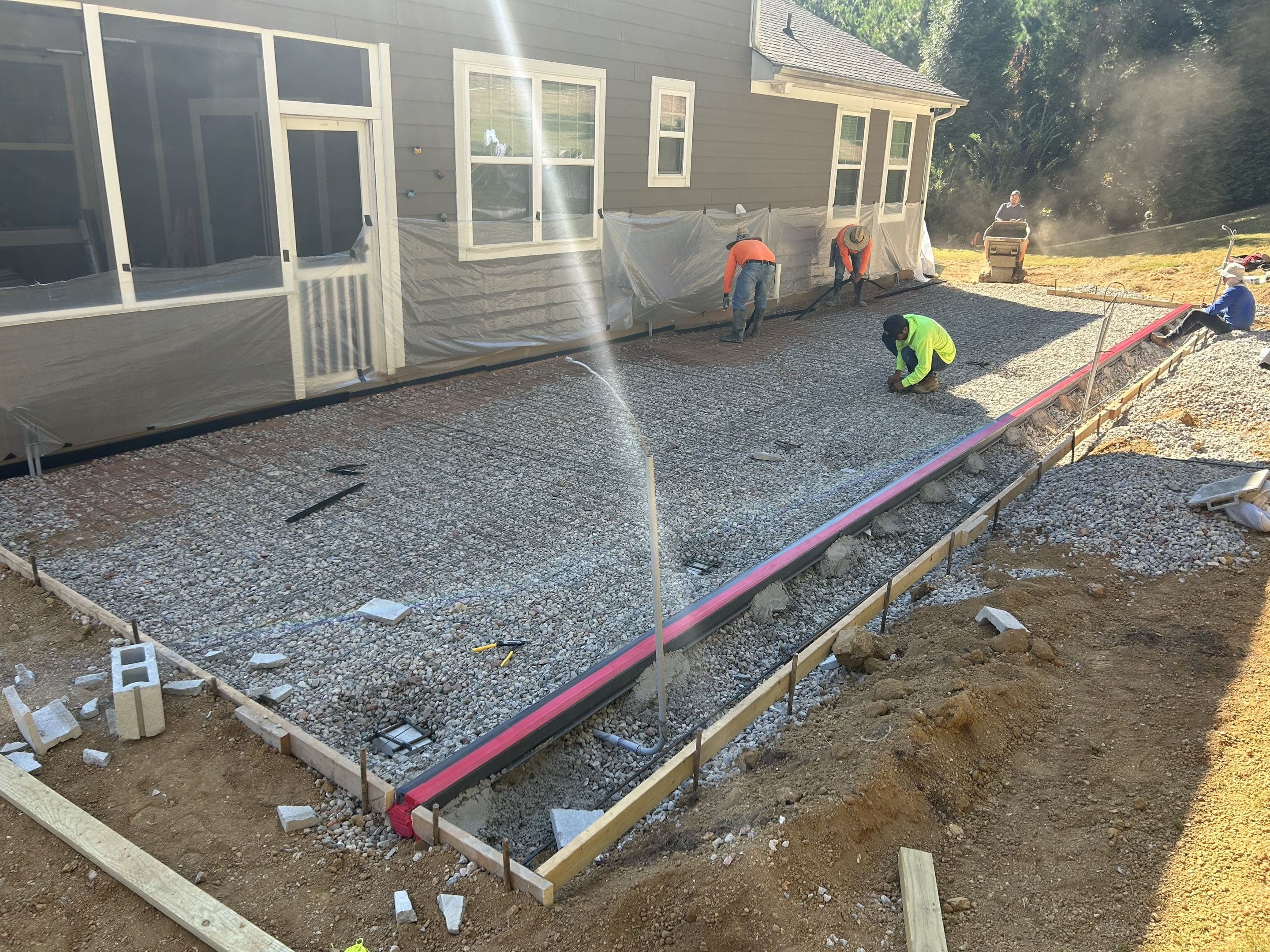
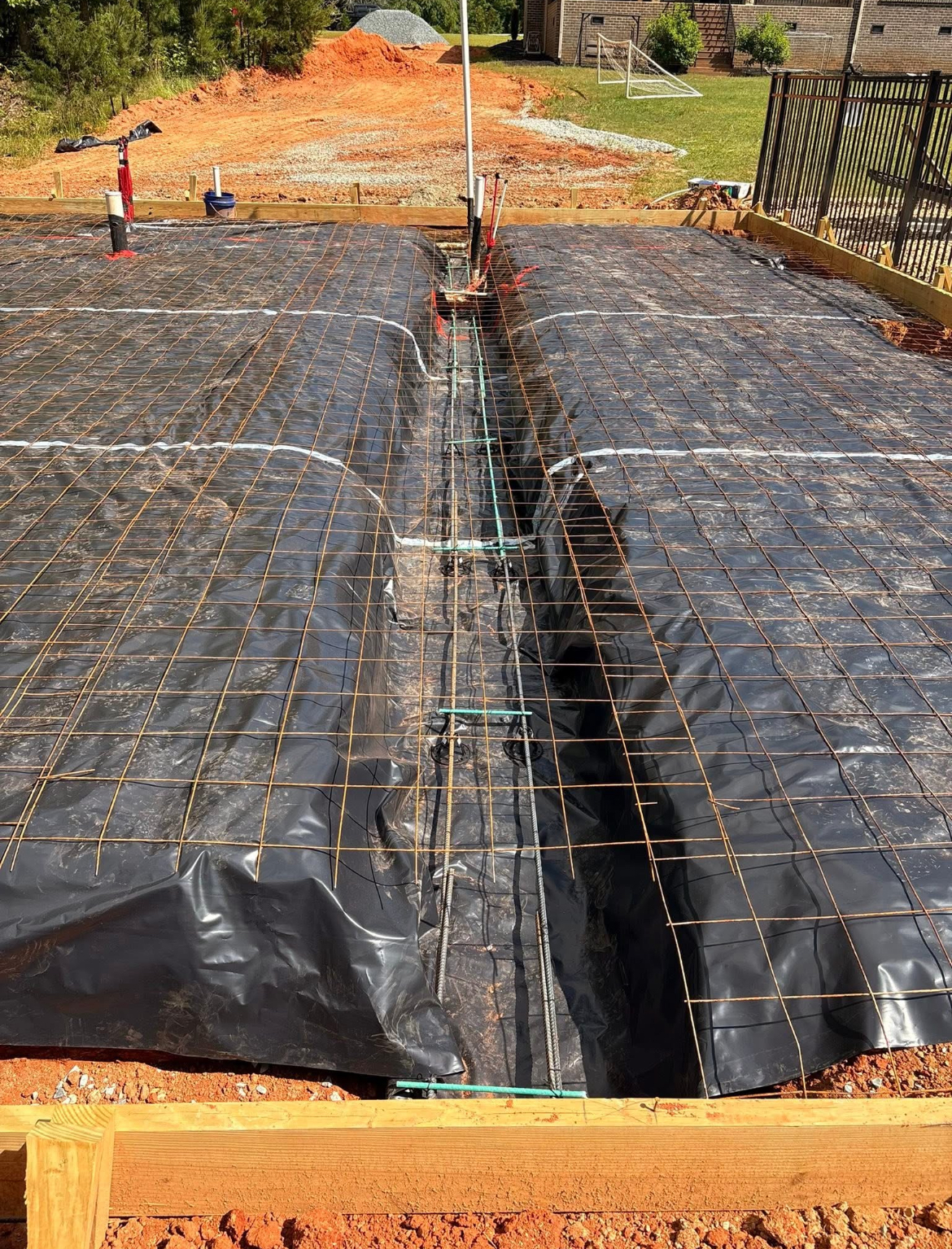
Reinforcement
Installation of steel rebar or wire mesh grid in Rutherfordton, using 1/2 inch grid for structural tensile strength suitable for North Carolina conditions.
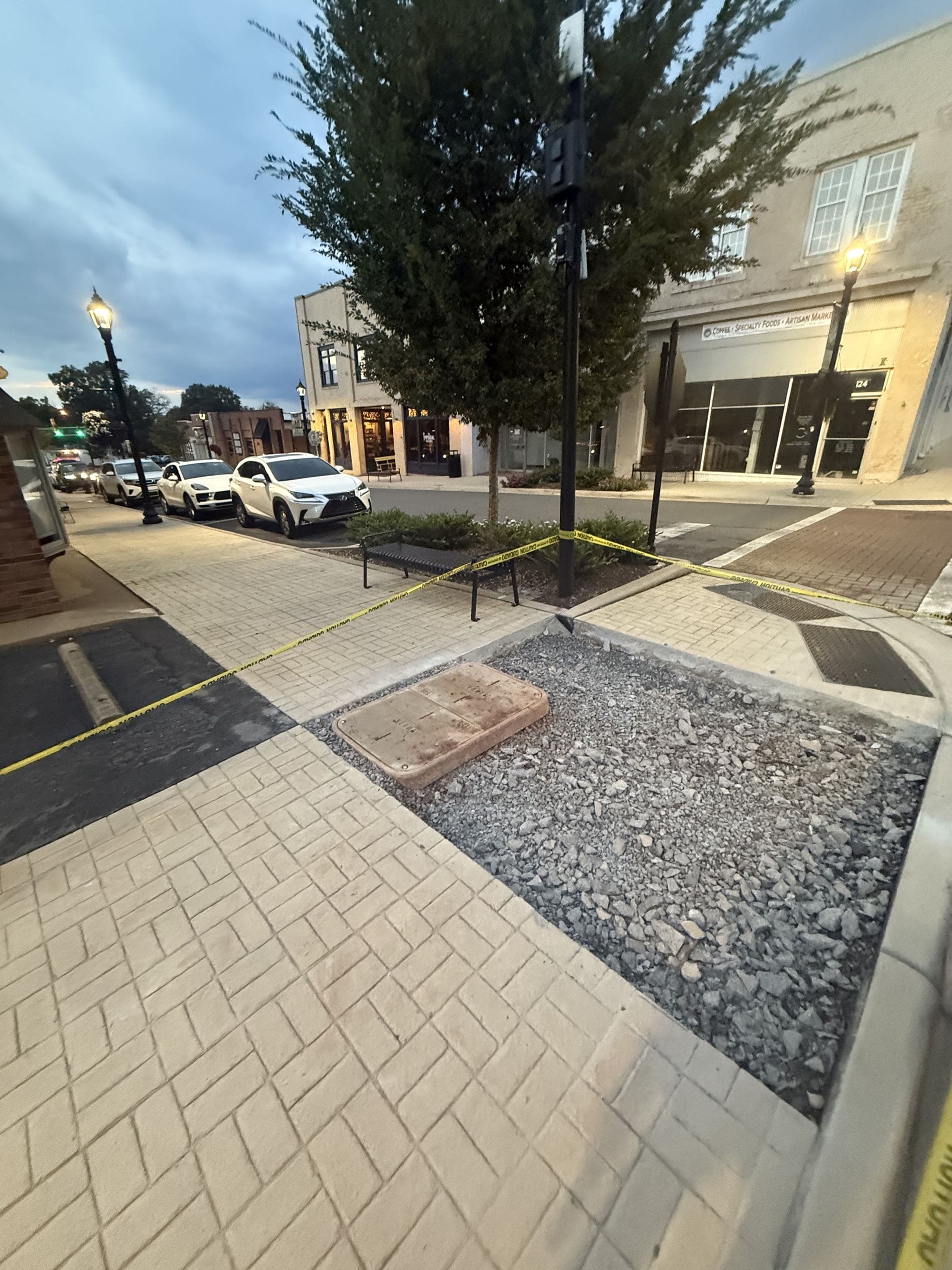
Pre-Pour Inspection
A final check of elevation, form stability, and reinforcement placement in Rutherfordton before the truck arrives.
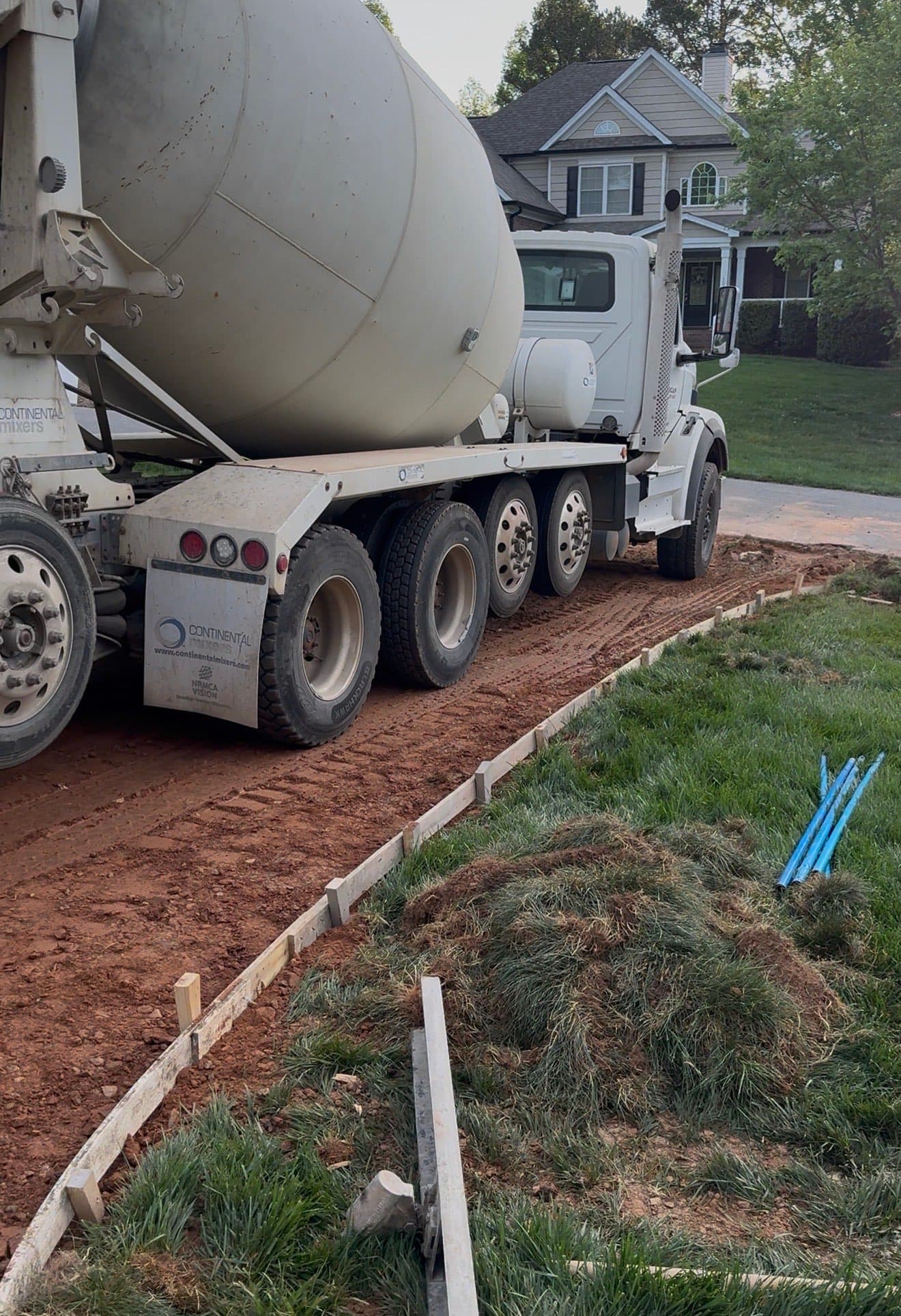
Slump Testing
Verifying concrete consistency on-site in Rutherfordton to ensure it meets the engineered mix design.
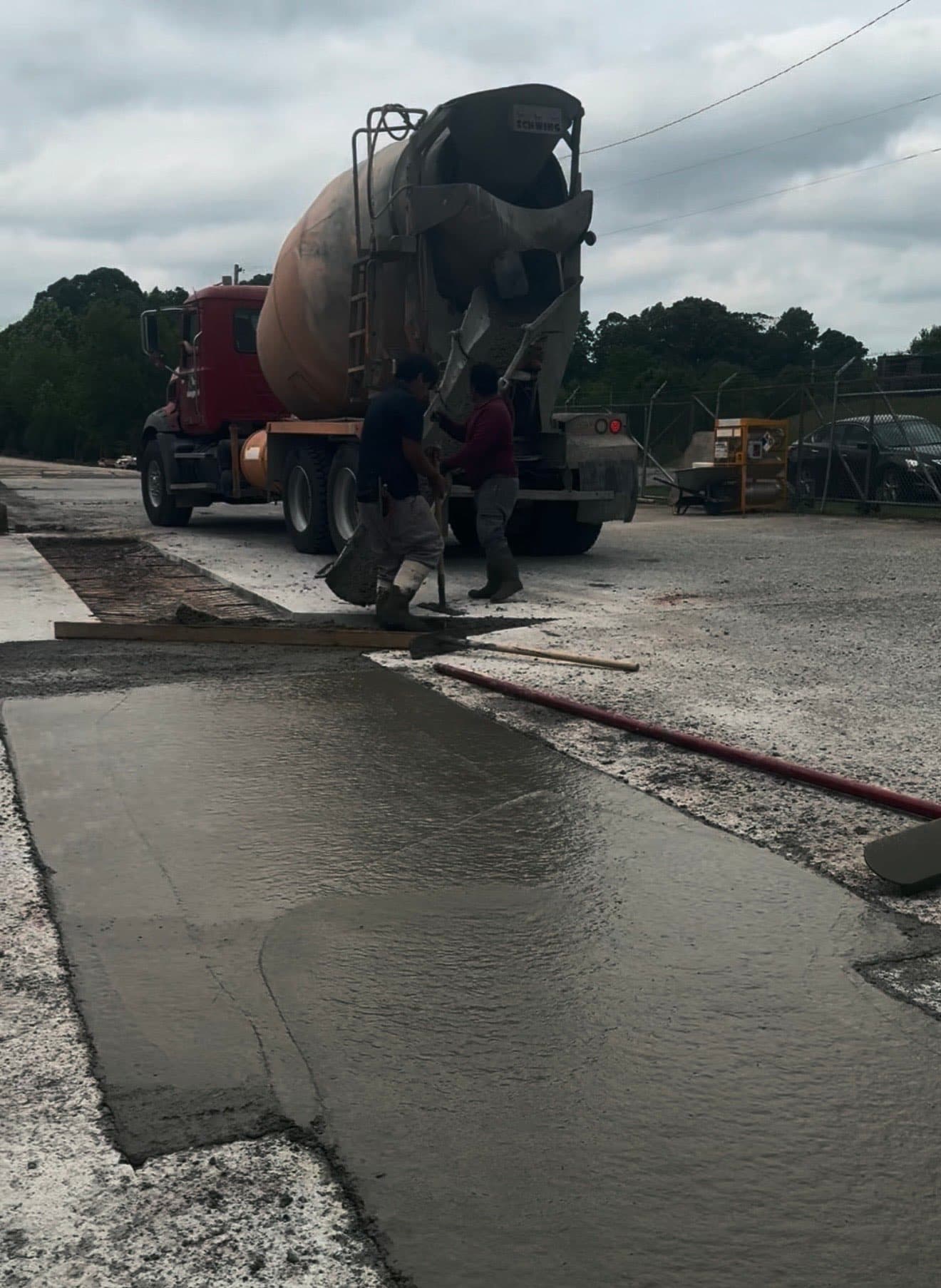
Placement
Controlled pouring and placement of concrete in Rutherfordton to avoid cold joints and ensure uniformity.
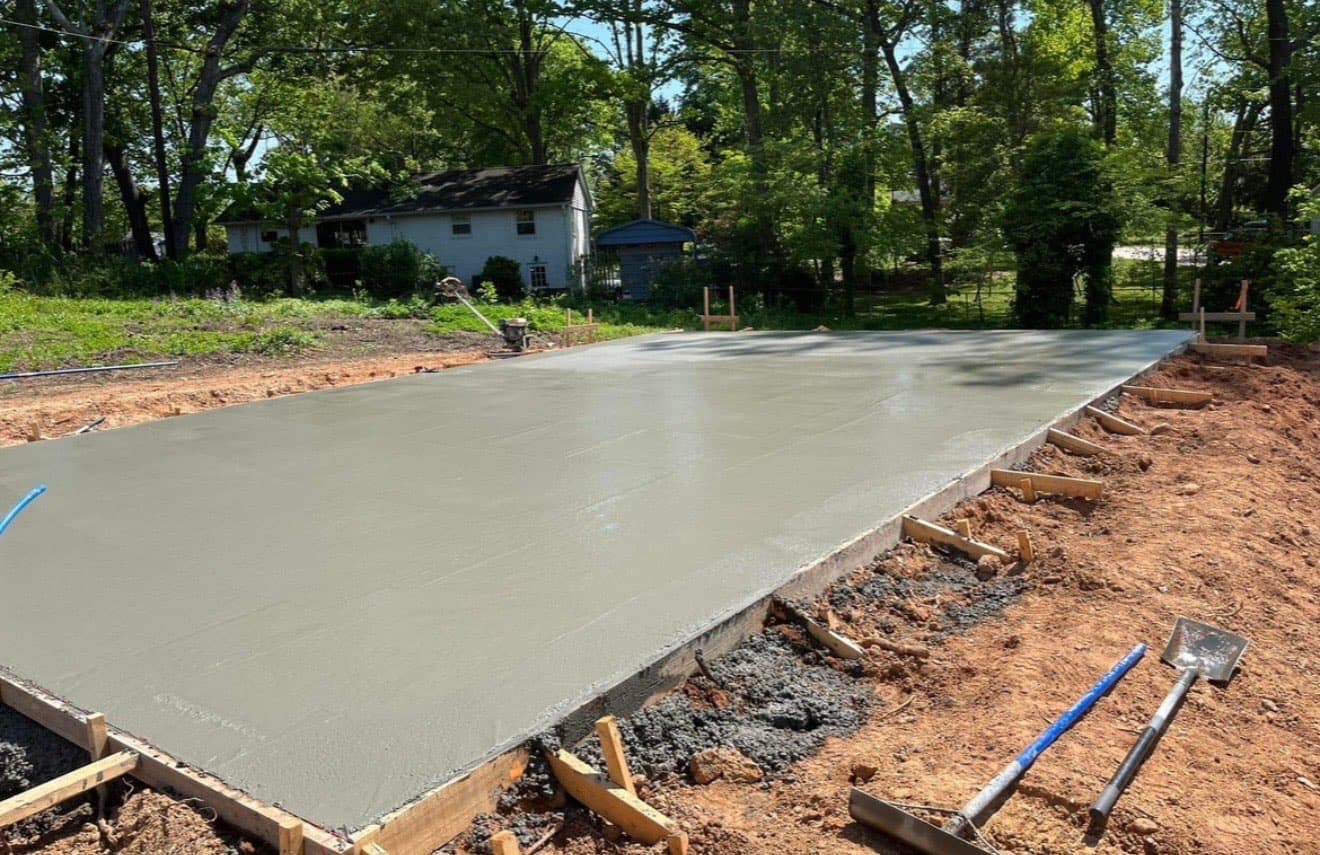
Bull Floating
Pushing aggregate down and bringing 'cream' to the surface for a smooth finishable layer in Rutherfordton.
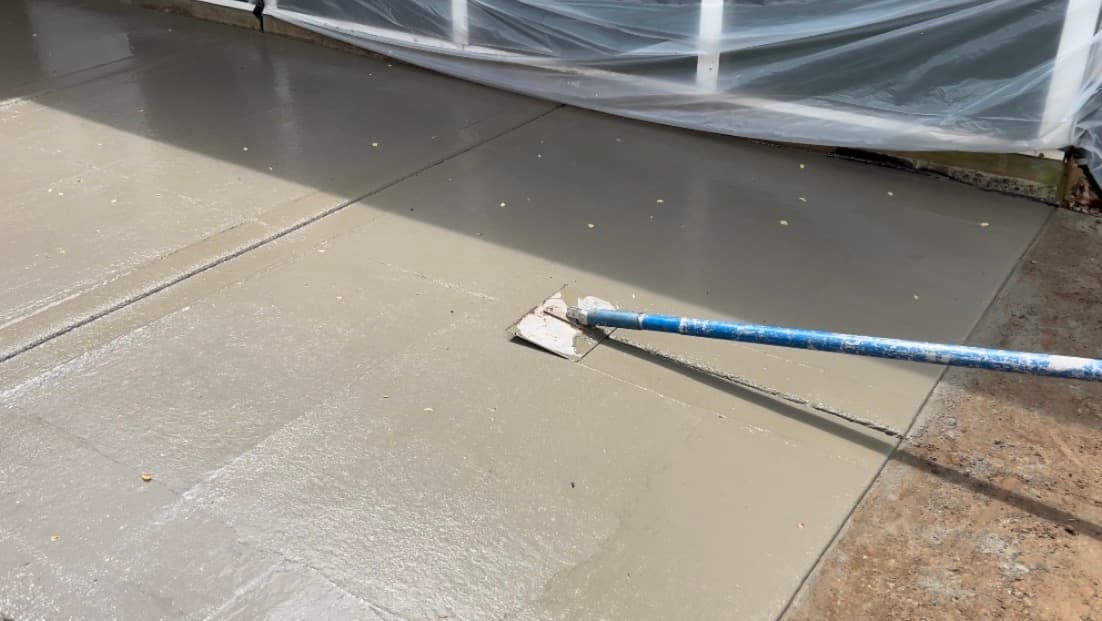
Edging & Jointing
Creating rounded edges for durability in Rutherfordton and cutting control joints to manage expansion in North Carolina's climate.
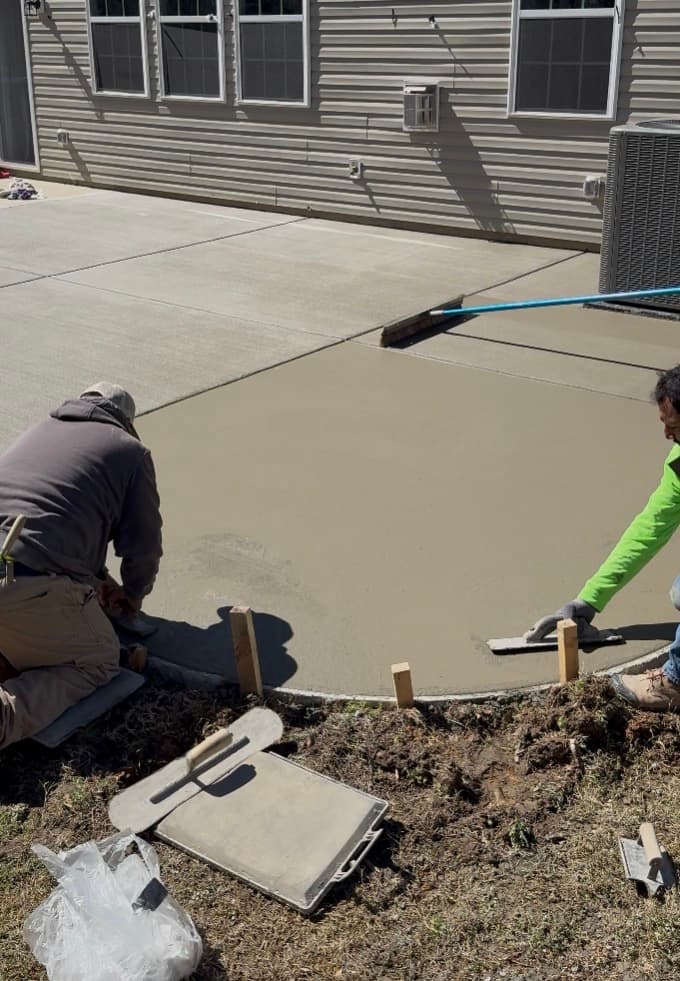
Fresno Finish
Final smoothing pass in Rutherfordton to close the surface pores and prepare for texturing.
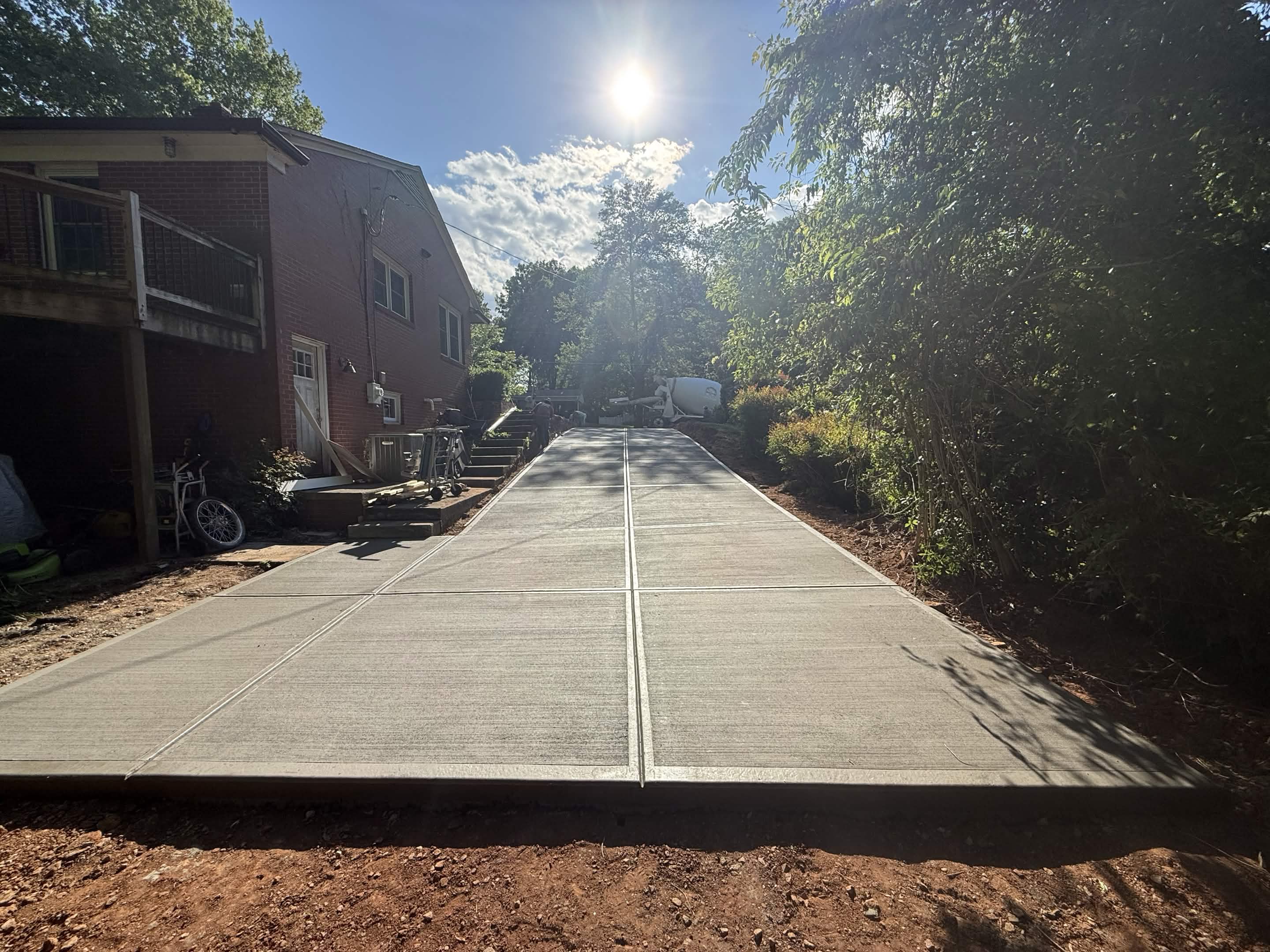
Decorative Detailing
Applying final broom texture, stamp patterns, or color treatments as specified for your Rutherfordton project.
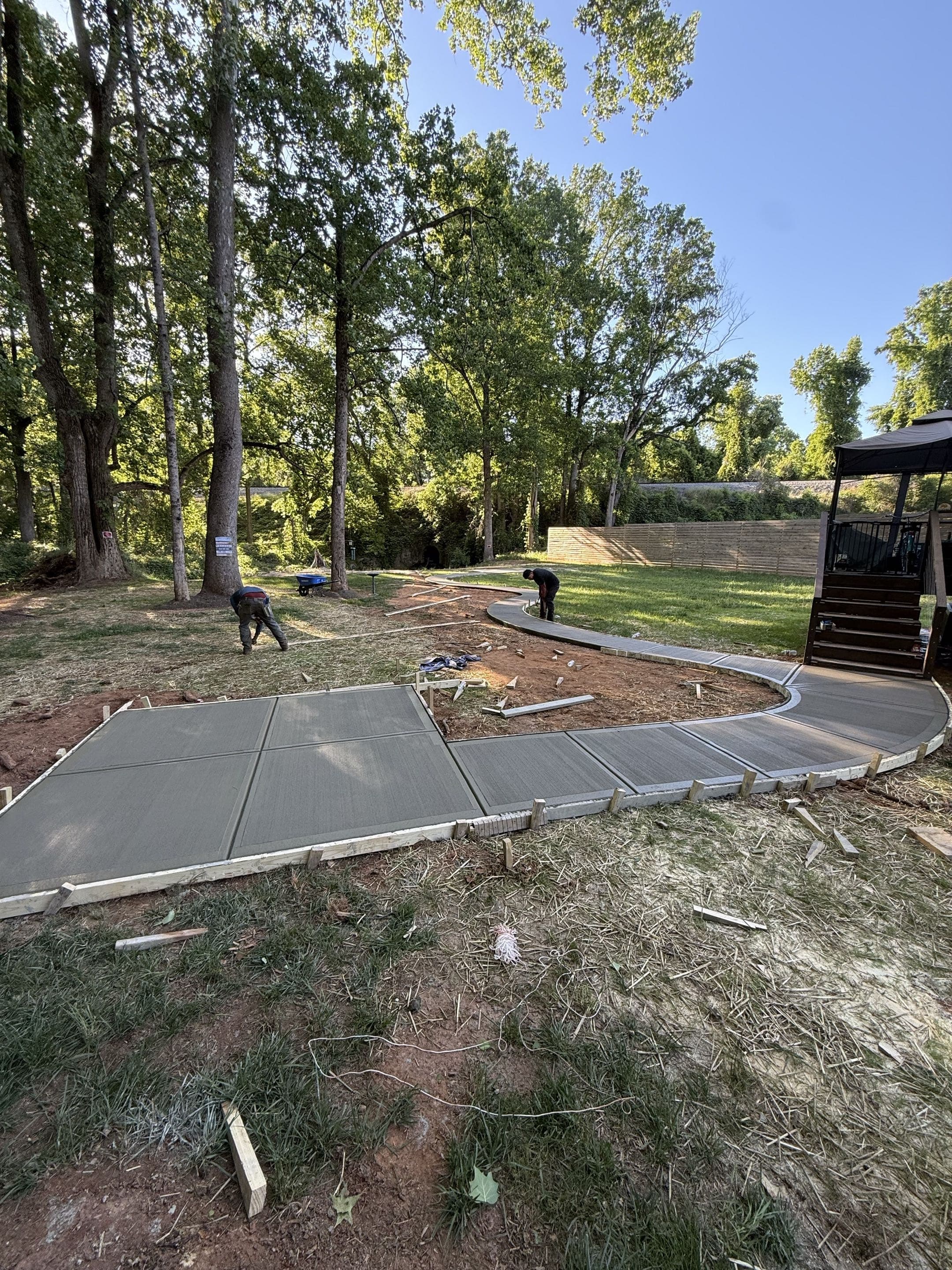
Form Removal
Careful stripping of forms in Rutherfordton once concrete has reached initial set stability.
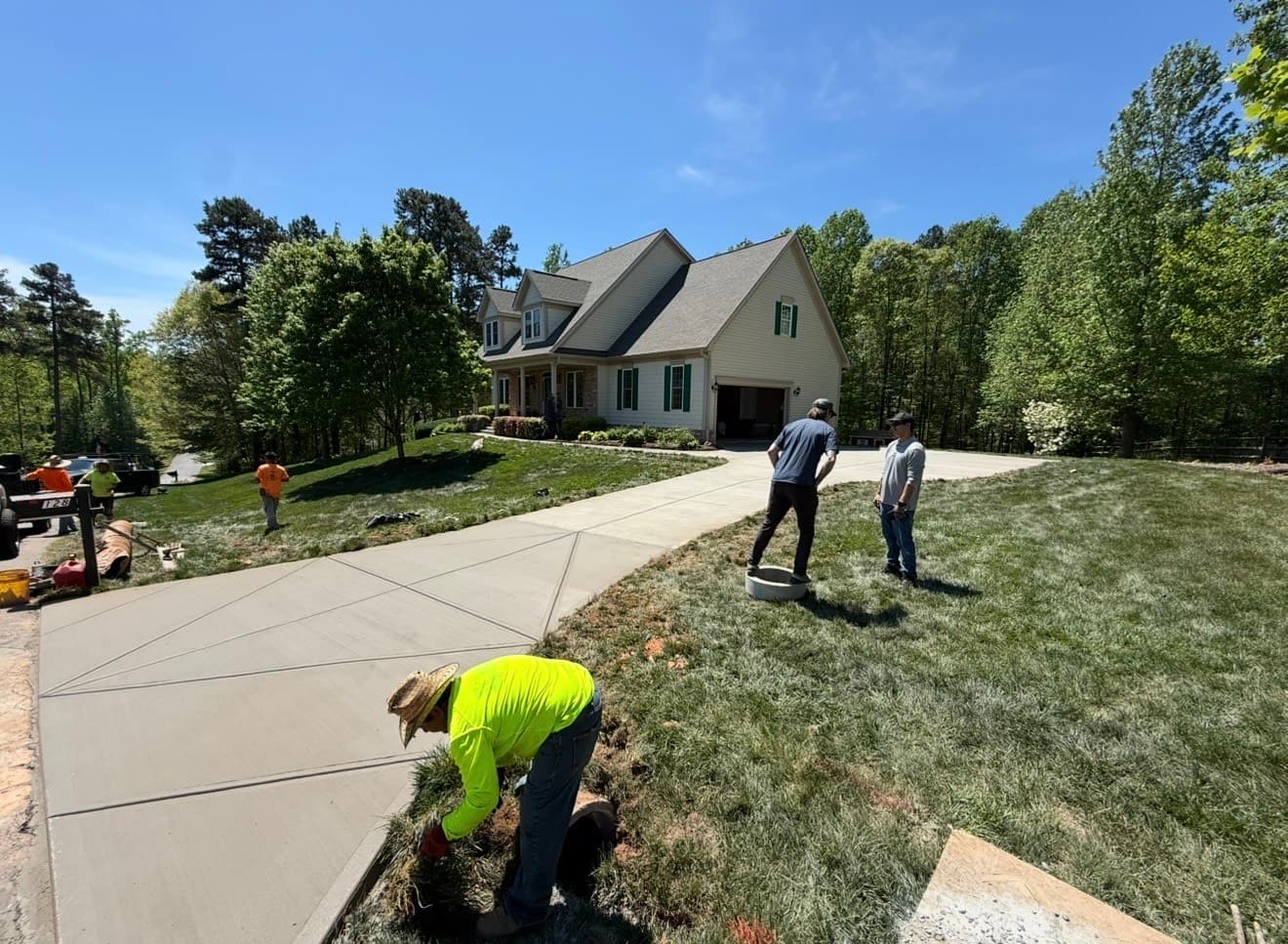
Final Walkthrough
Reviewing the finished project with you in Rutherfordton to ensure every detail meets the standard.

Usage Guide
Providing clear instructions for Rutherfordton homeowners on cure times—when you can walk, drive, and park on your new concrete.
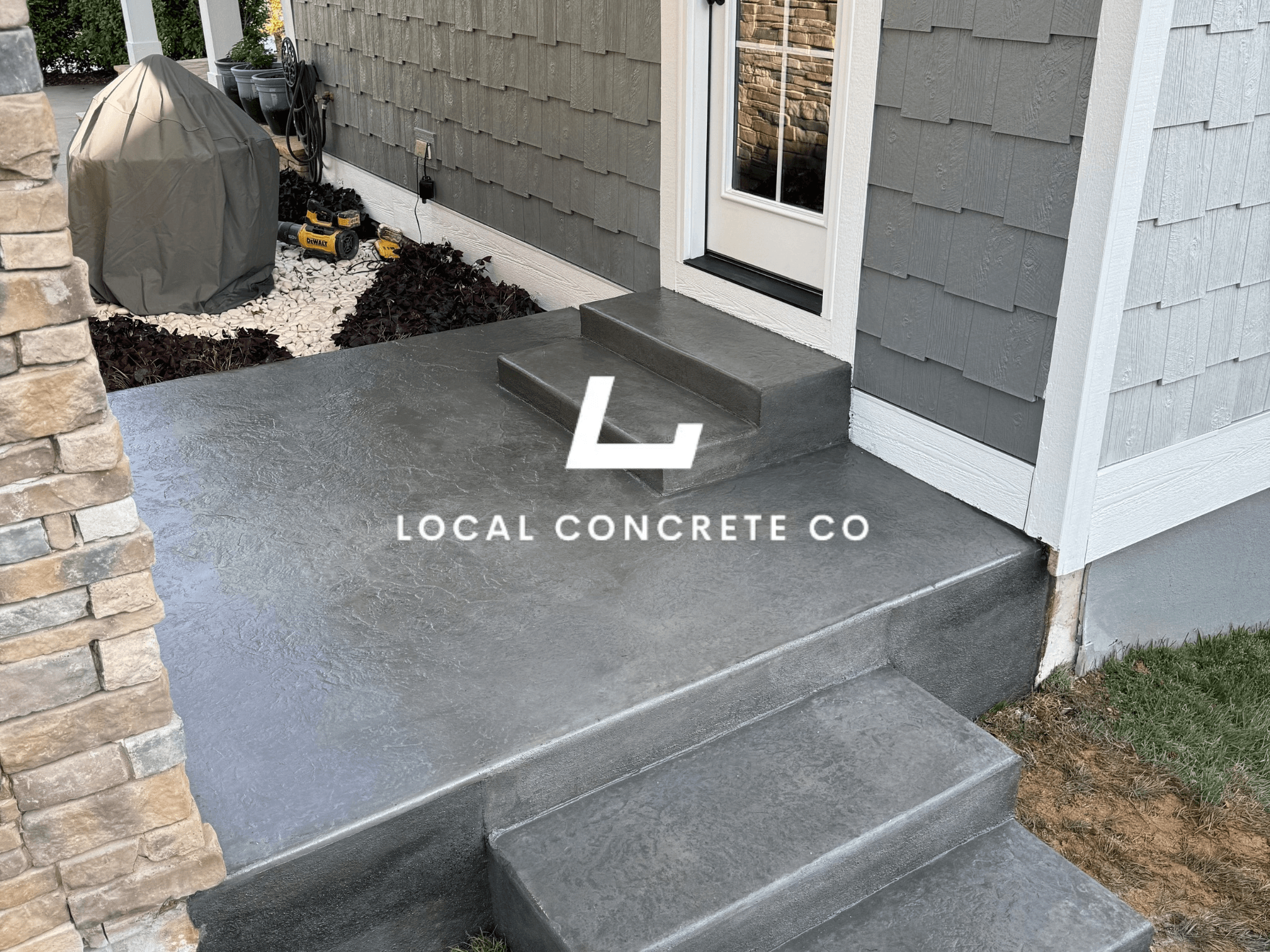
Project Completion
The job is done right in Rutherfordton, ensuring you have a durable surface for years to come in the Rutherfordton area.
Isolation Joints and Vibration Decoupling
Every reciprocating machine foundation gets a full-depth isolation joint around its perimeter — 1/2 inch to 1 inch of cork, neoprene, or asphalt-impregnated fiber board from footing top to pad surface — so the foundation is a mechanically independent mass with no rigid connection to the building slab. Without the isolation joint, machine vibration transmits directly into the surrounding slab, cracks it in radial patterns from the foundation edge, and shakes adjacent equipment on the same slab into premature bearing failure.
High-amplitude machines (stamping presses, forge hammers, reciprocating compressors above 300 HP, large diesel generators) get a two-stage isolation system: the perimeter joint plus a neoprene pad, cork block, or steel spring layer between the equipment base and the foundation. The isolation is engineered by a vibration engineer and specified as a natural frequency below one-third of the machine operating frequency so the transmissibility ratio falls below 0.15.
Chemical Resistant Toppings — Novolac, Epoxy, Urethane, or Vinyl Ester
Chemical resistance on an industrial foundation is achieved with a surface topping, not by upgrading the concrete mix. Portland cement concrete is attacked by any acid below pH 5, most solvents, hot alkaline solutions above pH 12, and thermal shock from steam or hot process fluids. Higher-PSI concrete does not fix this. The industry-standard chemical resistant topping is a 1/4 to 1/2 inch epoxy or urethane mortar placed on shot-blasted or scarified concrete 28 days after the pour, adhered with an epoxy prime coat, and coved 4 to 6 inches up the foundation perimeter to create a leak-tight containment tray.
We install four topping systems depending on service class: Novolac epoxy mortar (aggressive acids, chlorinated solvents, high-temperature acid processes — 30 to 40 dollars per SF); bisphenol-A epoxy mortar (general chemical service, mild acids and bases, solvent containment, food and pharma — 15 to 25 dollars per SF); urethane mortar (thermal shock, cook-freeze food processing, dairy and brewery — 20 to 30 dollars per SF); vinyl ester mortar (extreme acid service, concentrated sulfuric/hydrochloric/hydrofluoric, semiconductor — 40 to 60 dollars per SF). For high-hazard chemical service, the coved containment tray is validated with a 24 hour hydrostatic leak test before equipment is set.
Reinforcement — Two-Mat Rebar with Confinement Ties
Industrial equipment foundations are heavily reinforced. Conventional foundations use #5 or #6 rebar on 12 to 18 inch grids at top and bottom of the mass, connected with #4 confinement ties on 18 to 24 inch spacing. Heavy press or forge hammer foundations step up to #8 or #10 rebar with tighter confinement. The reinforcement is engineered to carry impact loads from the machine into the foundation mass and out through the footing bearing.
Anchor bolt pull-out failure is a common design case. The rebar cage around anchor bolts must be detailed to develop pull-out capacity — hairpin bars around each anchor tail, engagement of top and bottom mats, and confinement ties within the pull-out cone geometry per ACI 318 Chapter 17. We place the cage exactly as the engineer detailed it with correct chair heights, cover distances, and lap splices.
Rutherfordton Specific Considerations
Rutherfordton Soil Conditions
Understanding Rutherfordton's soil composition is crucial for proper concrete work. Rutherfordton in Rutherford County requires concrete work that can withstand North Carolina's climate and soil conditions. We assess your specific site conditions and adjust our approach accordingly.
Rutherford County Building Codes
Every Rutherfordton project must comply with Rutherford County building codes and regulations. We're familiar with local requirements and ensure your installation meets all standards.
HOA Requirements
Many Rutherfordton neighborhoods have HOA guidelines that affect concrete work. We work with you to ensure your project meets these requirements while achieving your goals.
North Carolina Climate
Rutherfordton experiences North Carolina's freeze-thaw cycles, which can damage improperly installed concrete. Our work is specifically designed to withstand these conditions.
Drainage Planning
Proper drainage is essential in Rutherfordton, where heavy rains can cause flooding. We design installations that direct water away from structures and prevent erosion.
Material Selection
The right materials for Rutherfordton projects differ from other areas. We select concrete mixes, reinforcements, and sealants optimized for Rutherford County's climate conditions.
Neighborhoods We Serve in Rutherfordton
Cost — What an Industrial Equipment Foundation Runs in NC
Industrial equipment foundations in NC in 2026 are priced by cubic yard placed and by the complexity of the anchor template, reinforcement, and any specialty topping:
- Conventional pad (CNC, rotary compressor, generator, transformer, process equipment) — 4000 PSI, single-mat rebar, F1554 grade 36 anchor bolts on 1/4 inch tolerance, standard steel trowel finish: 800 to 2,500 dollars per CY placed.
- Heavy press or vibration-isolated foundation (hydraulic press, forge hammer, reciprocating compressor above 300 HP) — 5000 to 6000 PSI, two-mat rebar with confinement ties, F1554 grade 55 or 105 anchor bolts on 1/8 inch tolerance, perimeter isolation joint, neoprene or spring isolation layer: 3,000 to 6,000 dollars per CY placed.
- Precision CNC foundation (5-axis machining, CMM, precision grinder) — 5000 PSI, isolated from building slab, F1554 grade 55 anchor bolts on 1/8 inch tolerance, extra-flat finished surface: 2,500 to 4,500 dollars per CY placed.
- Chemical resistant topping add — 1/4 to 1/2 inch Novolac, bisphenol-A, urethane, or vinyl ester mortar with coved perimeter tray: 15 to 60 dollars per SF of topping area.
- Coved perimeter tray with hydrostatic leak test — high-hazard chemical service: 3,500 to 12,000 dollars per foundation depending on containment size.
- Retrofit foundation (existing foundation demolition, machine relocation): add 4,000 to 15,000 dollars per foundation for demo and haul-out.
Industrial Equipment Foundations in Rutherfordton
FAQ
Straight answers on industrial equipment foundations in Rutherfordton, NC — thickness, base prep, cure time, HOA rules, and what it takes to make the slab last.
Get Free QuoteHow is an industrial equipment foundation sized in North Carolina?
Industrial equipment foundations are sized by the mass ratio rule — the foundation mass must be 3 to 5 times the dynamic force amplitude the machine puts into it, or 3 to 5 times the machine mass for reciprocating equipment, whichever governs. For a 20,000 pound rotary equipment pad the foundation is typically 60,000 to 100,000 pounds of concrete. For a 40,000 pound reciprocating machine the foundation is 160,000 to 200,000 pounds. The OEM foundation drawing sets the specific mass, footprint, and depth; we deliver the mass and the anchor bolt template.
What anchor bolt spec is used for industrial equipment in NC?
Does an industrial machine foundation need to be isolated from the building slab?
How do I make an industrial foundation chemical resistant?
How much does an industrial equipment foundation cost in NC?
Do you serve all neighborhoods in Rutherfordton?
What areas near Rutherfordton do you serve?
Can you work with HOA requirements in Rutherfordton?
Industrial Equipment Foundations in Rutherfordton, NC
This page is specific to Rutherfordton, NC (Rutherford County). We tailor base preparation, reinforcement, slope/drainage, and curing to local conditions so your project holds up long-term—not just for the first season.
Related services in Rutherfordton, NC
Nearby service areas
If you’re near Rutherfordton, NC, these nearby city pages may also help:
Ready to talk about your Rutherfordton industrial equipment foundations project?
Free estimate. No pressure, no sales tactics. Financing available.
Get Free Quote