




Best Stamped Concrete Patio Contractors Mallard Creek NC
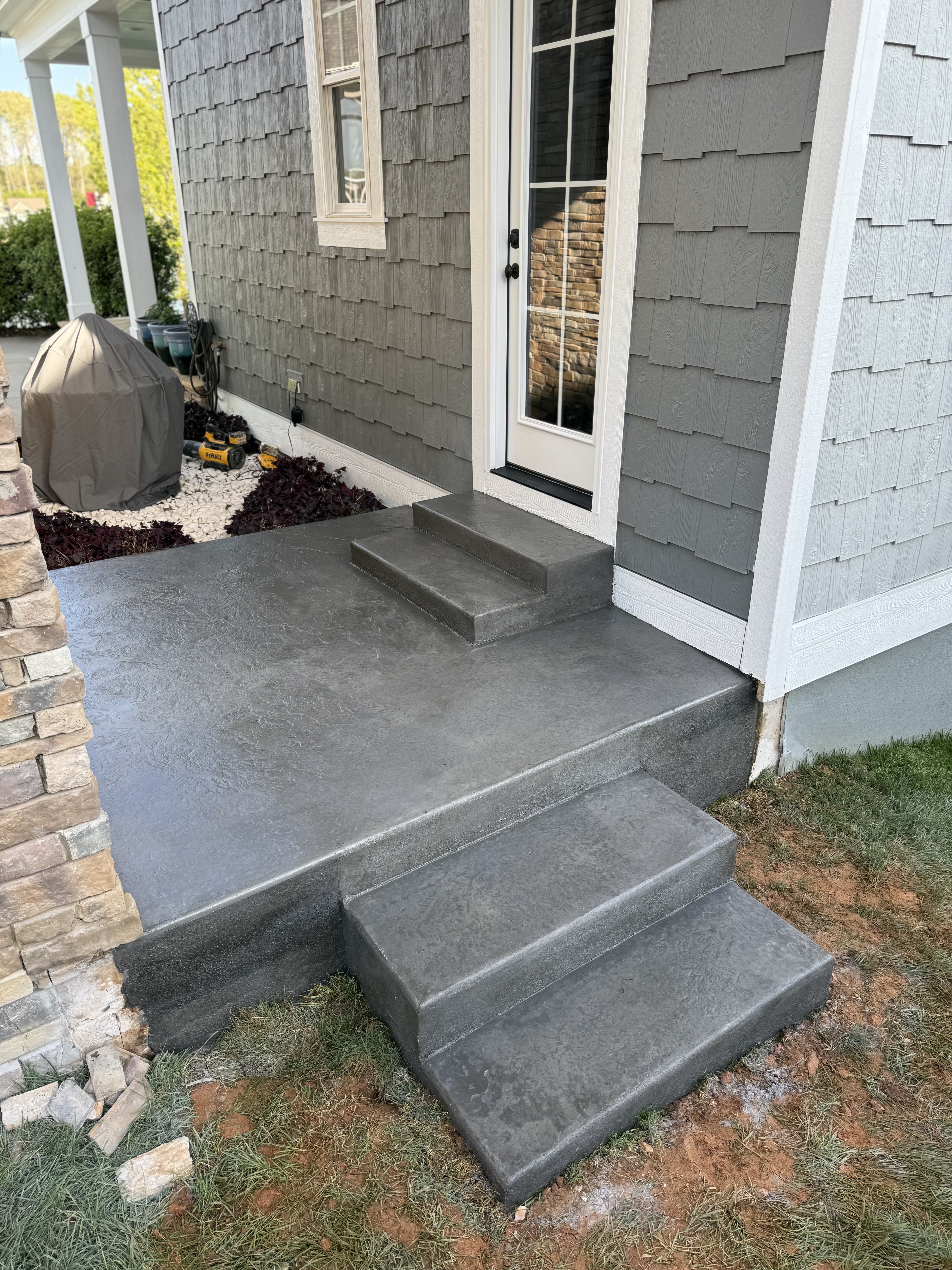
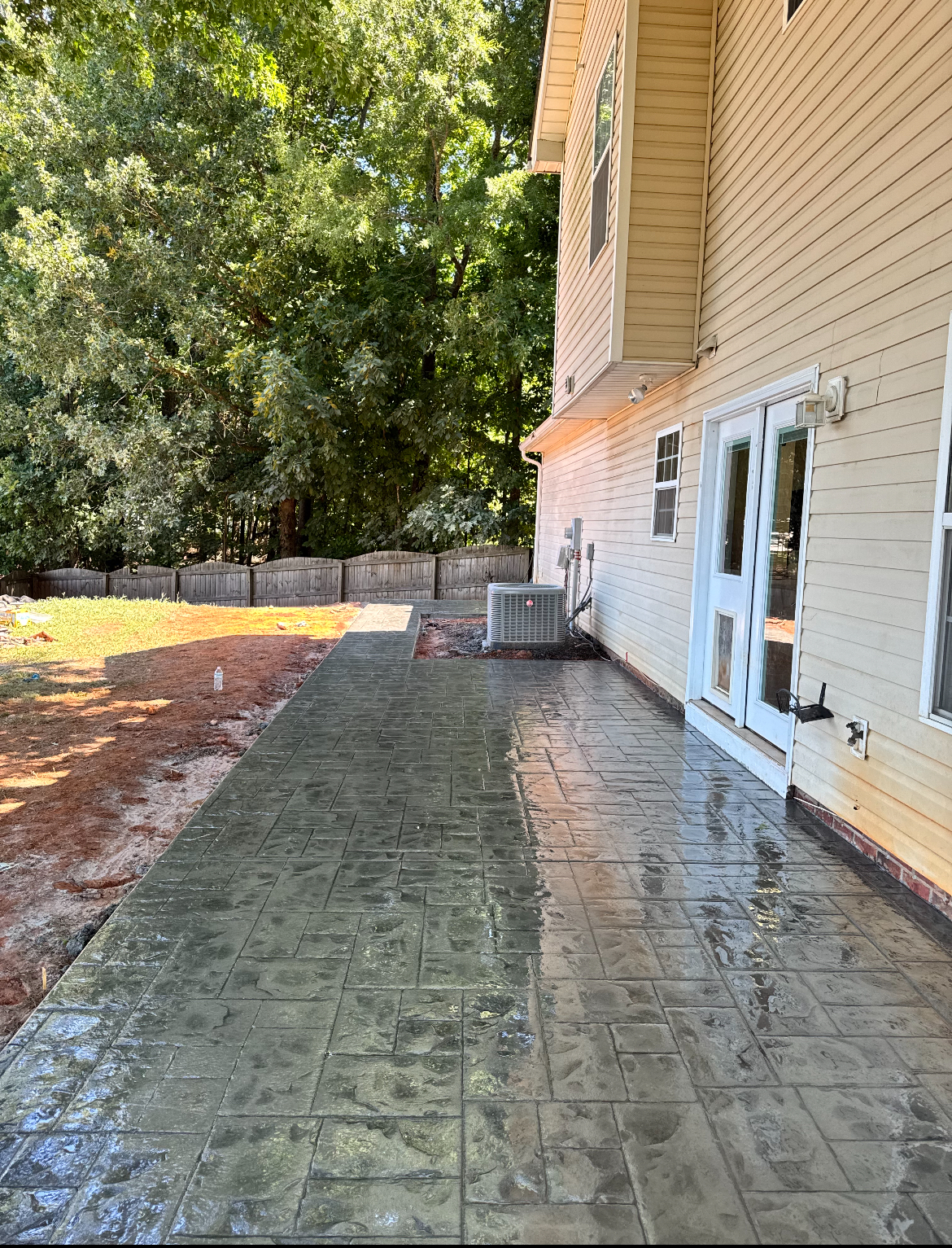
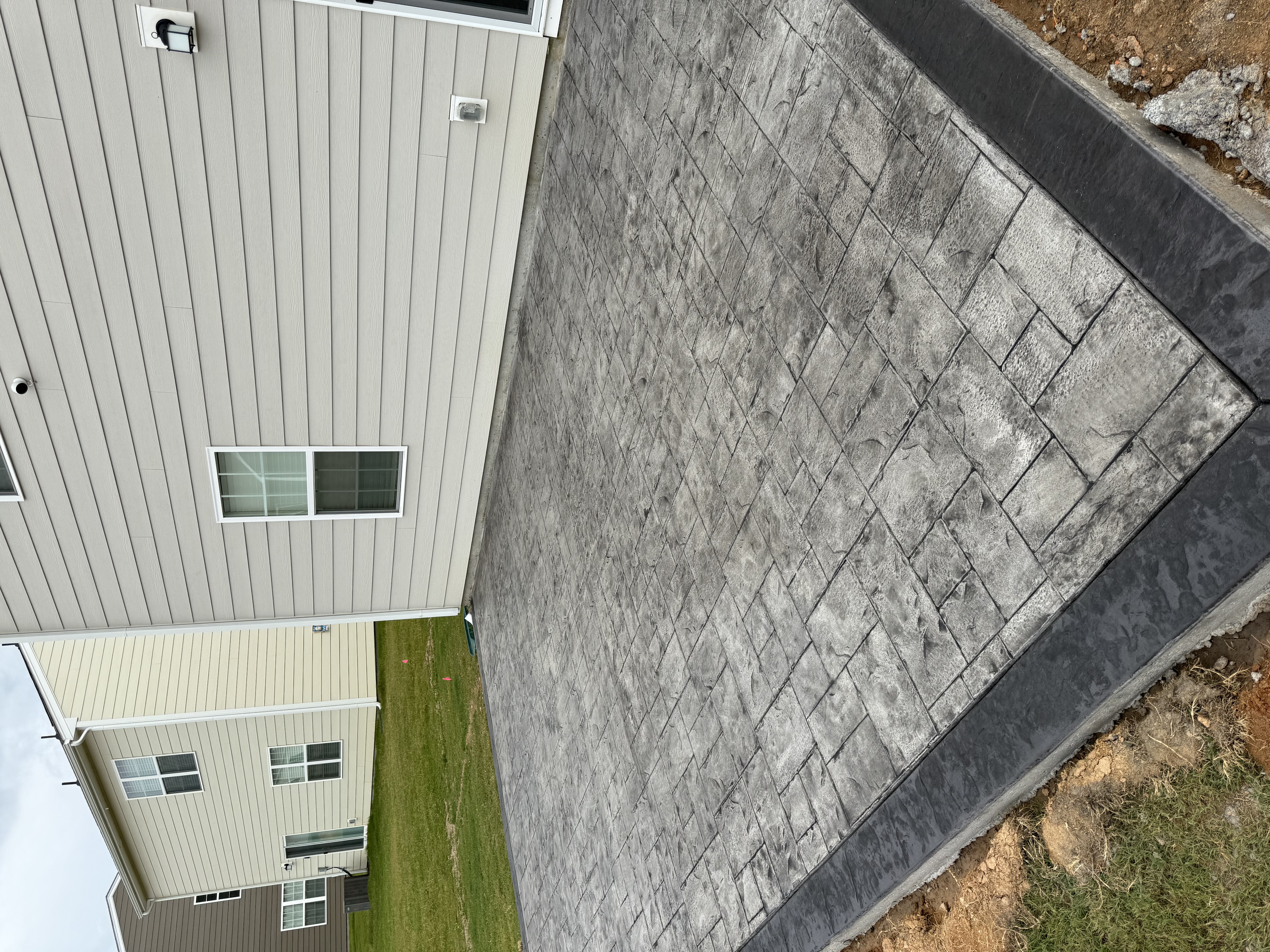
A stamped patio does its own decorating — ashlar slate in warm gray, a contrasting border band, texture that throws shadow in the evening light. The concrete becomes the design feature, and the furniture just has to keep up.
Get your free quote
We respond in less than 2 hours.
Recent Mallard Creek Stamped Concrete Patios Projects
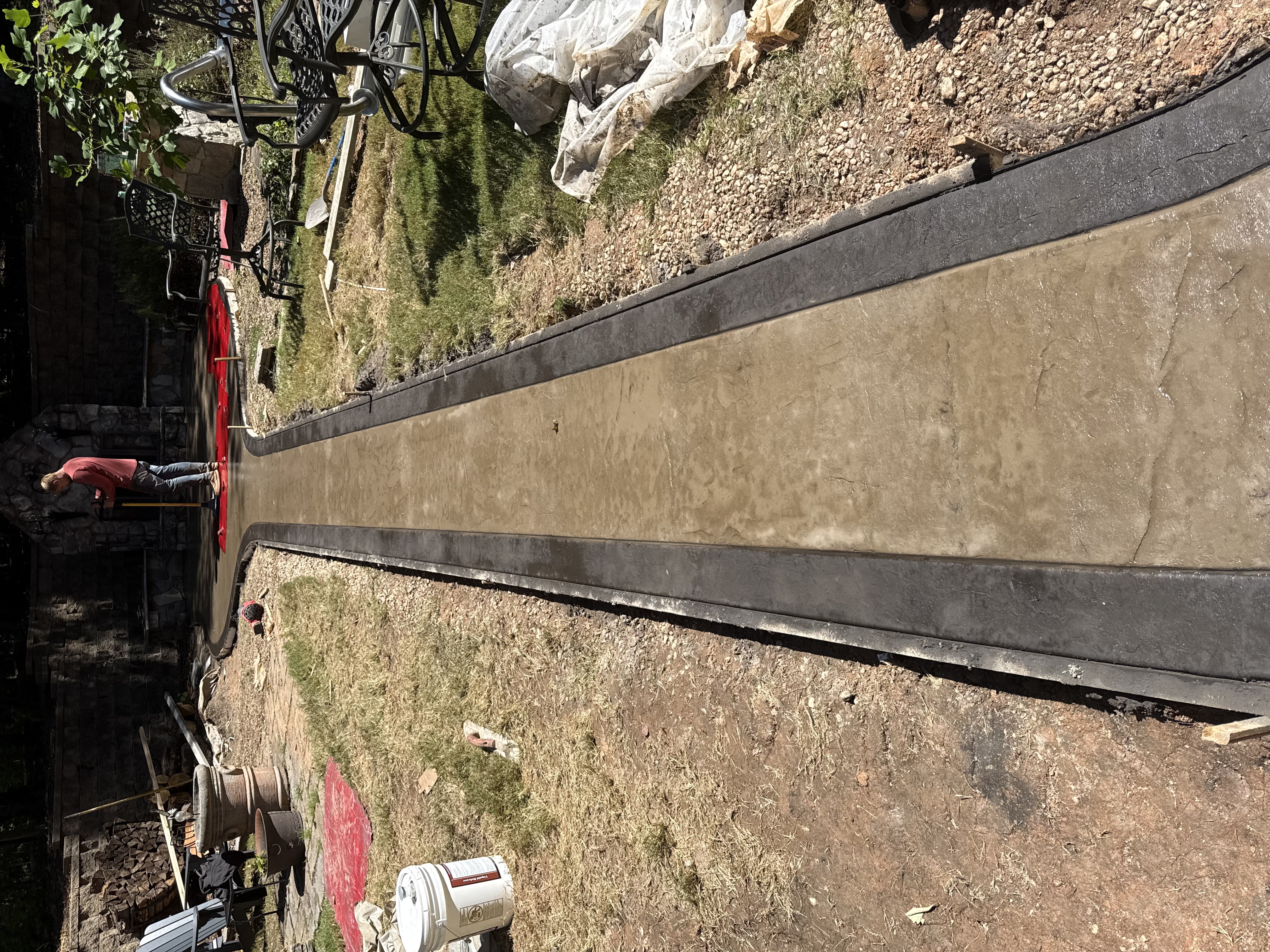
Real customer jobs we've poured. Swipe through and picture yours next.
Stamped Concrete Patios
Mallard Creek Job
Stamped Concrete Patios
Mallard Creek Job
Stamped Concrete Patios
Mallard Creek Job
Stamped Concrete Patios
Mallard Creek Job
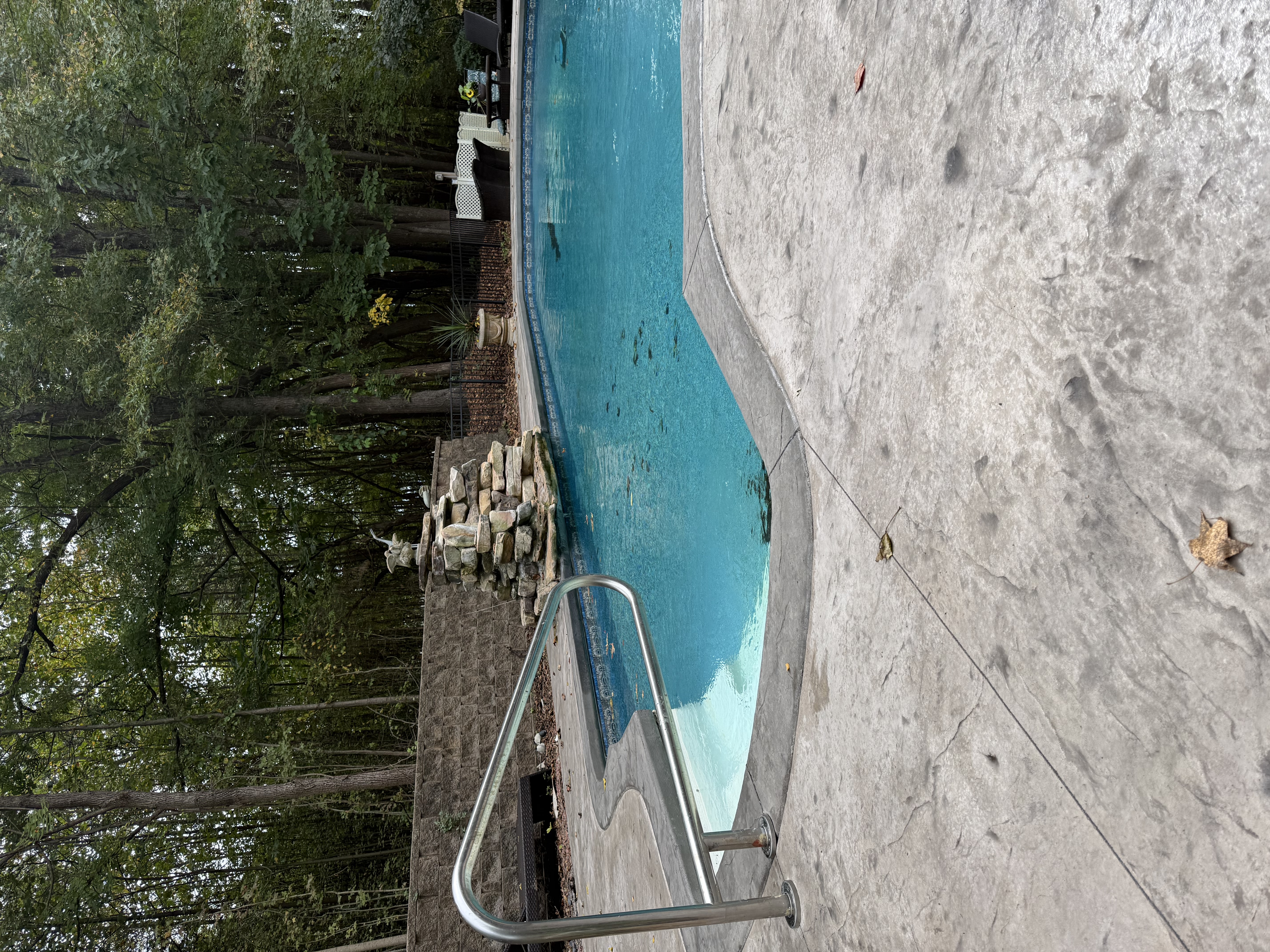
Stamped Concrete Patios
Mallard Creek Job
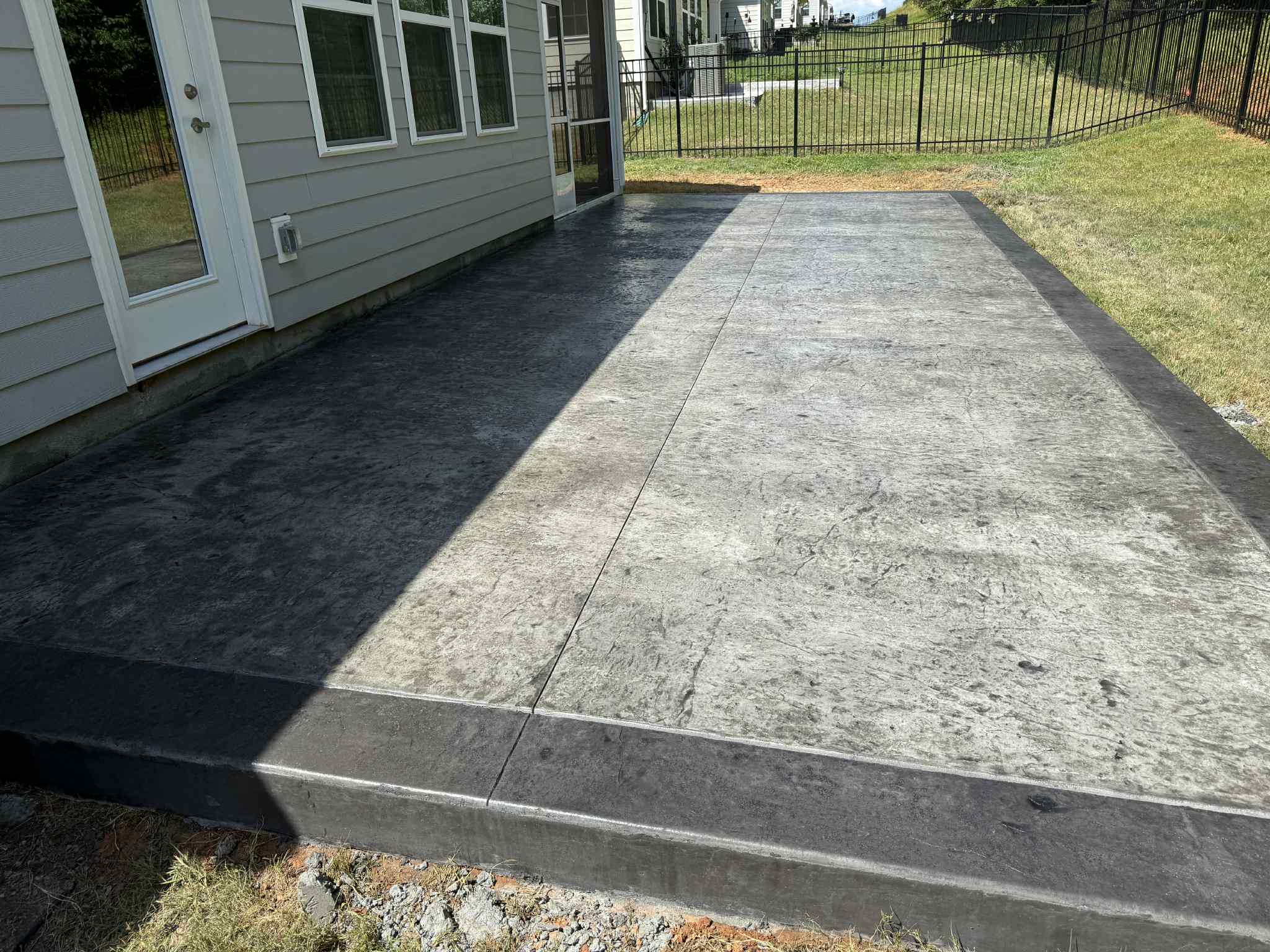
Stamped Concrete Patios
Mallard Creek Job
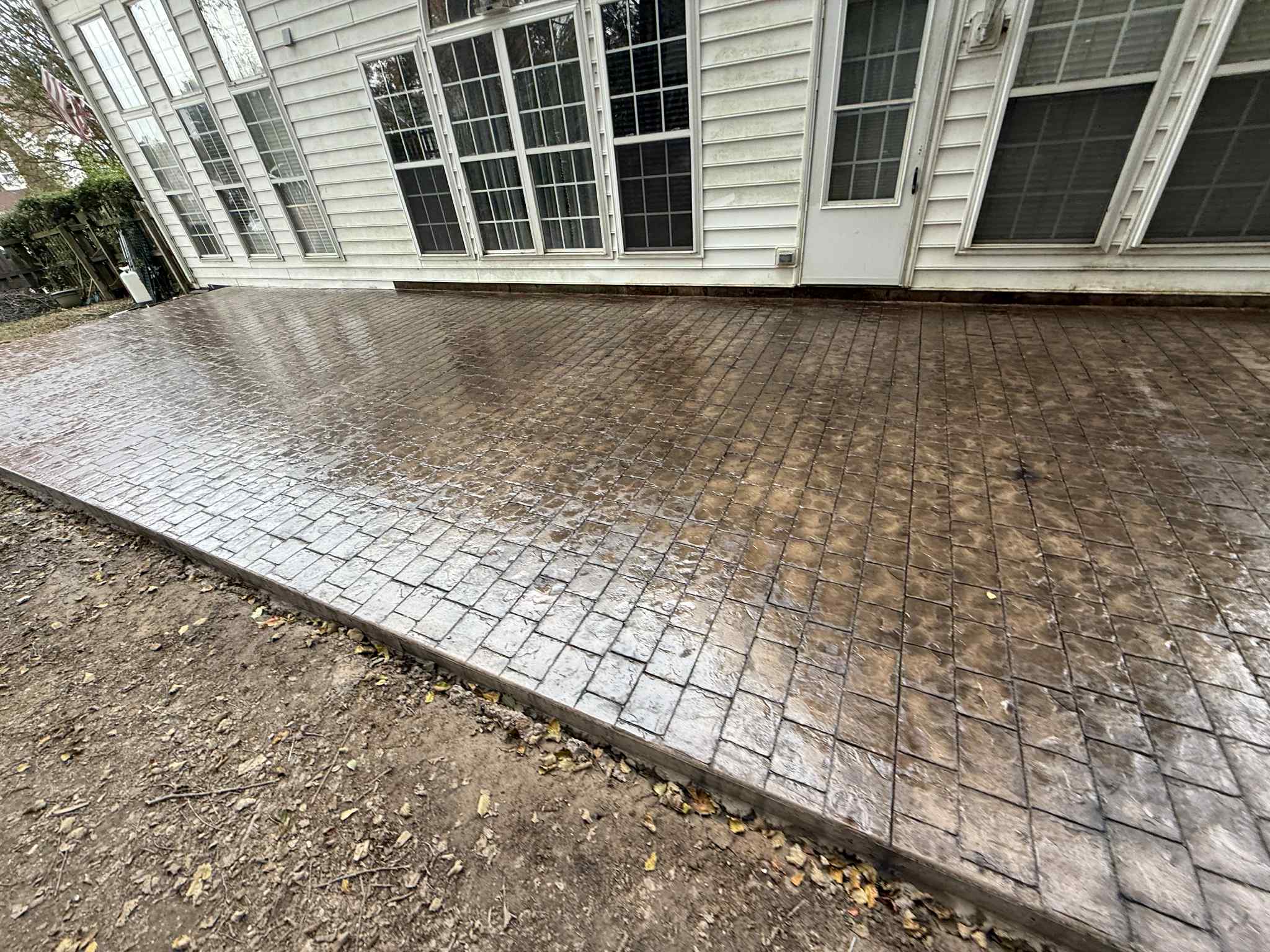
Stamped Concrete Patios
Mallard Creek Job
(704) 318-2440
Three choices define every stamped patio we pour: the pattern, the color system, and how the edges terminate. Pattern scale should match the space — large ashlar tiles suit the bigger Highland Creek yards, while tighter random-stone textures flatter a small courtyard. Color needs testing against the house itself, since the same pigment shifts noticeably between red brick and tan siding. Edges decide whether the patio reads finished or abandoned mid-thought, so we band ours or tool them clean. Get those three right and the pour, demanding as stamping is, becomes the execution of a plan instead of a gamble.
In Mallard Creek specifically, stamped patio work runs through neighborhoods like Harris-Houston, University City North, Highland Creek. Most Mallard Creek-area homes were built between 1995 and 2010, and the original driveways were poured thin, often without reinforcement, to keep builder costs down. That local ground truth — not a generic spec sheet — is what the crew builds against when they form up a Mallard Creek finish work.
Our Stamped Patio Services
Stamped patio work covers more than a single pour-and-stamp pass. Each patio has its own geometry, sun exposure, and connection to the rest of the outdoor space, and the spec adjusts accordingly.
- New stamped patio installation on prepared subgrade with correct base thickness and joint layout
- Stamped patio extensions tying new square footage into an existing patio surface
- Stamped-over-existing overlays where the base slab is structurally sound but visually dated
- Wraparound and multi-level patios stepped for sloped yards
- Stamped patios tied to a stamped walkway or pool deck for pattern continuity across the outdoor space
- Fire-pit surrounds, outdoor kitchen pads, and grill-area extensions built as part of the main pour
- Color restoration and full re-seal on aging patio surfaces where the stamp is still crisp
- Panel replacement or targeted repair where a section is cracked or spalled
Patio-appropriate patterns and slab thickness are different from a driveway spec. A patio doesn't need six inches of concrete or a heavy-vehicle pattern scale — four inches on a properly compacted base with a residential-scale pattern is the standard build. Where the patio connects to a driveway approach the thickness steps up in that transition zone.
Pattern Selection for Outdoor Living Surfaces
Pattern choice on a patio drives how the surface reads more than any other single decision on the job. Two patterns dominate residential stamped patio work in NC because they read as natural stone at outdoor-living scale and hold up visually as furniture and planters move around on top of them.
Most popular patio patterns:
- Ashlar slate — irregular rectangular tiles at hand-laid stone scale, works on rectangular and curved layouts, most-requested pattern on NC residential patios
- Random flagstone — irregular natural-shape stones, reads closest to real hand-laid stone, especially strong on curved or free-form patios
- Roman cobblestone — smaller square units that read tighter, good on smaller patios where a large-scale pattern would overwhelm
- Wood plank — long narrow planks that mimic weathered board, popular on modern patio designs and covered outdoor rooms
- Seamless slate texture with saw-cut joints — for a monolithic look where the pattern reads as texture rather than distinct stones
Pattern scale matters as much as pattern choice. A large flagstone that reads right on a 600 sq ft open patio can overwhelm a 250 sq ft courtyard. On smaller patios the tighter cobblestone or a scaled-down ashlar reads better. We'll walk the space with the pattern mats laid out on a section of the yard so the scale question is answered before the pour, not after.
Get your free quote
We respond in less than 2 hours.
Why Local Concrete Contractor?
- 01.Precision craftsmanship
- 02.Same crew from base through finish
- 03.Licensed & insured, dedicated project manager
- 04.No deposit — pay on completion
Our Stamped Concrete Patios Process in Mallard Creek
Every stamped concrete patios we pour in Mallard Creek runs through the same 18 checkpoints — from the on-site consult through the final walkthrough.
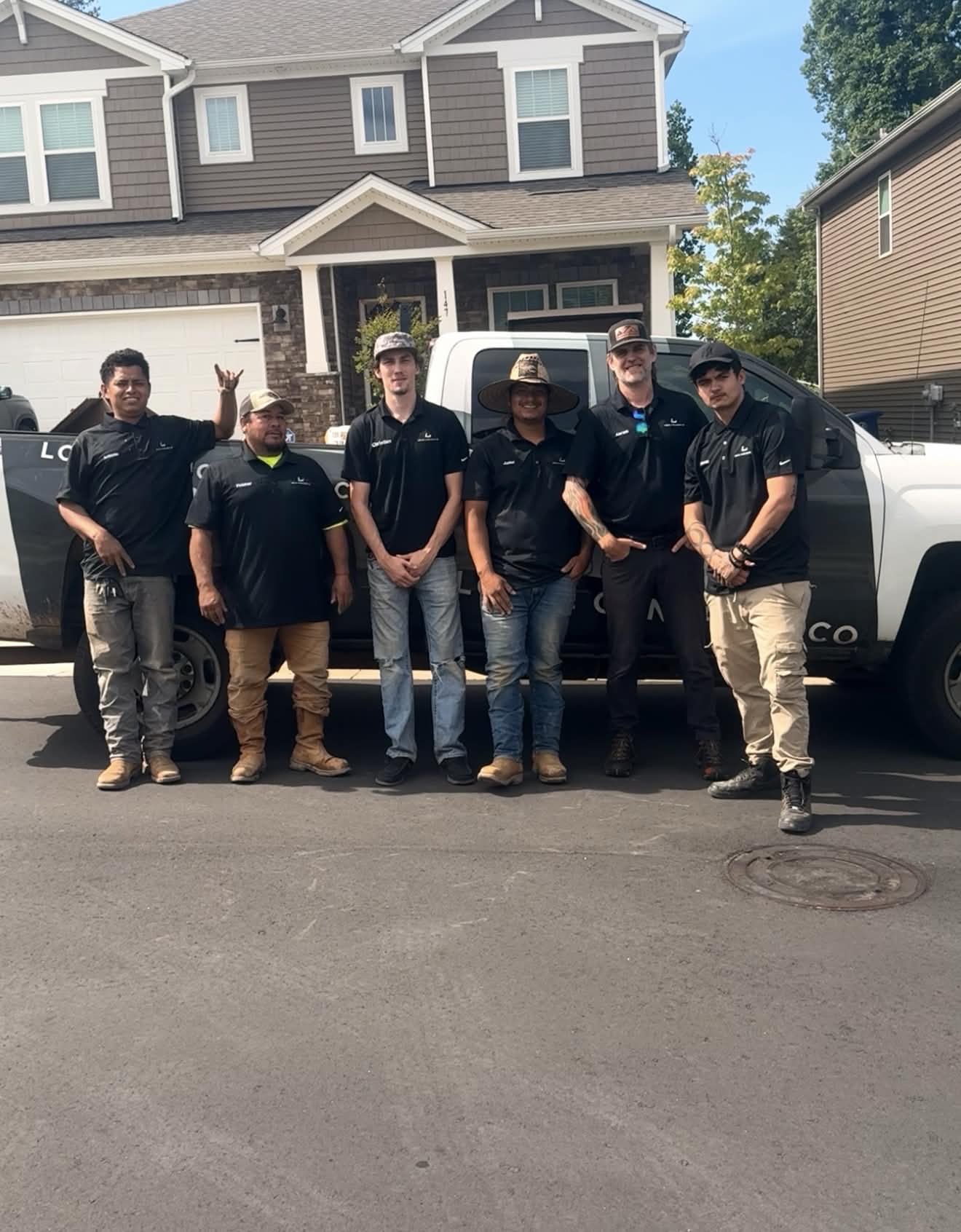
Consultation & Estimate
We meet on-site in Mallard Creek to assess scope, discuss vision, and provide a detailed, transparent quote tailored to your Mallard Creek property.

Logistics & Scheduling
Coordinating crew, equipment, and weather windows specific to Mallard Creek's climate to ensure a seamless project start.

Custom Mix Design
Ordering specific concrete additives and slump requirements based on Mallard Creek's current temperature and humidity patterns.
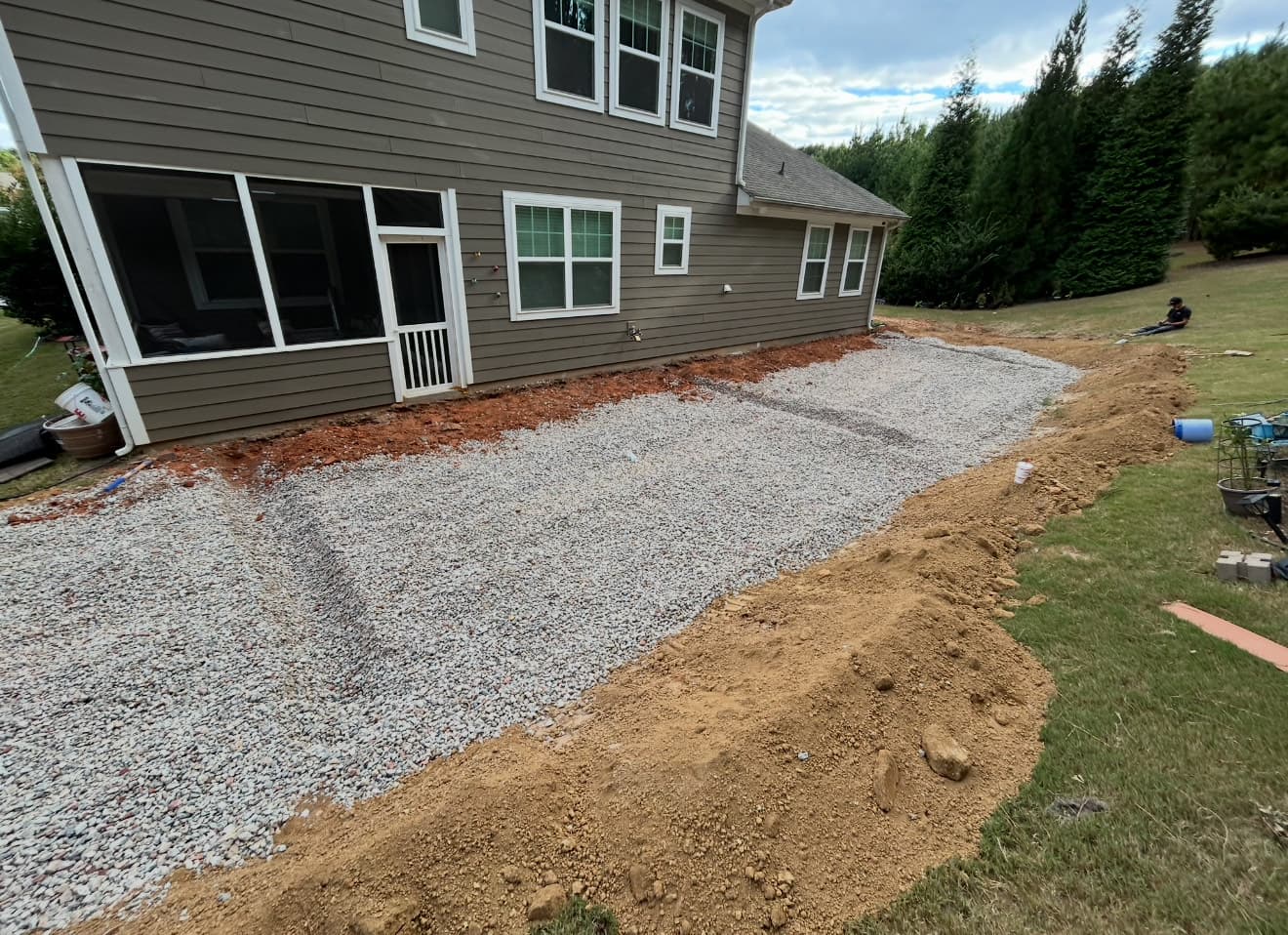
Site Preparation
Preparing the workspace in Mallard Creek and establishing safe access routes for our equipment and crew.
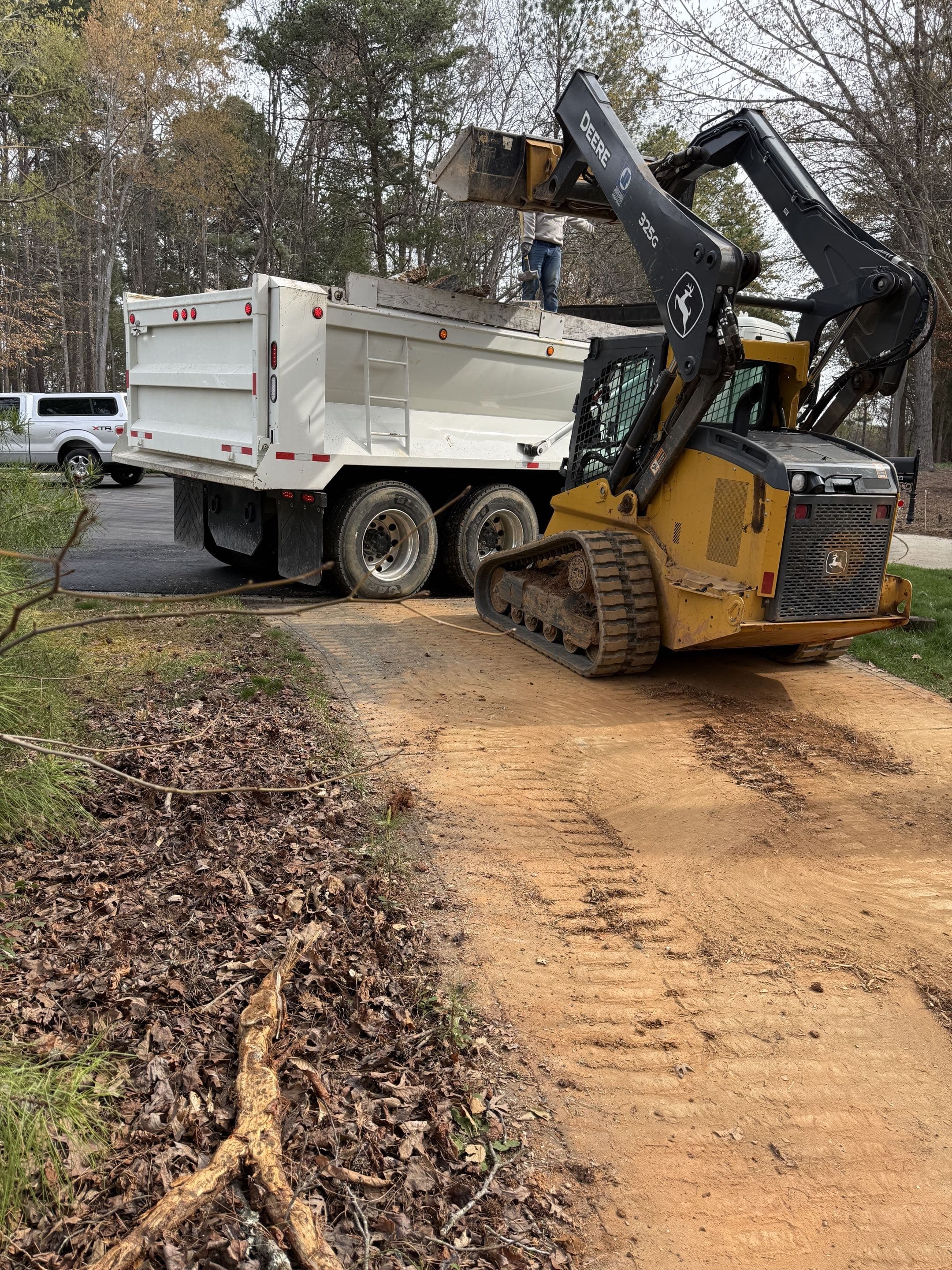
Demolition
Removal and disposal of existing concrete in Mallard Creek, leaving a clean slate for your new installation.
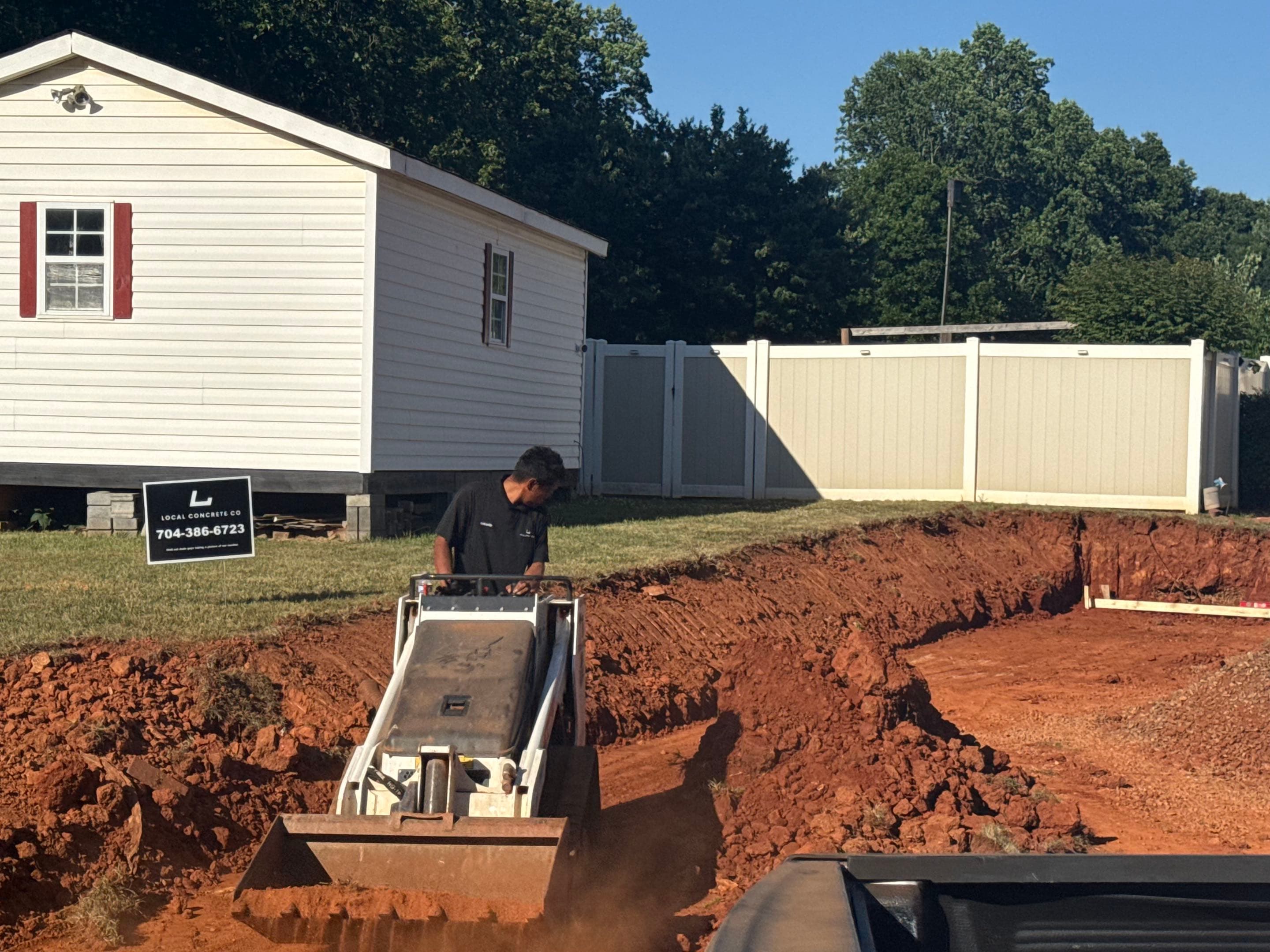
Grading & Forming
Expert grading for proper drainage in Mallard Creek and setting high-quality lumber forms for clean edges.
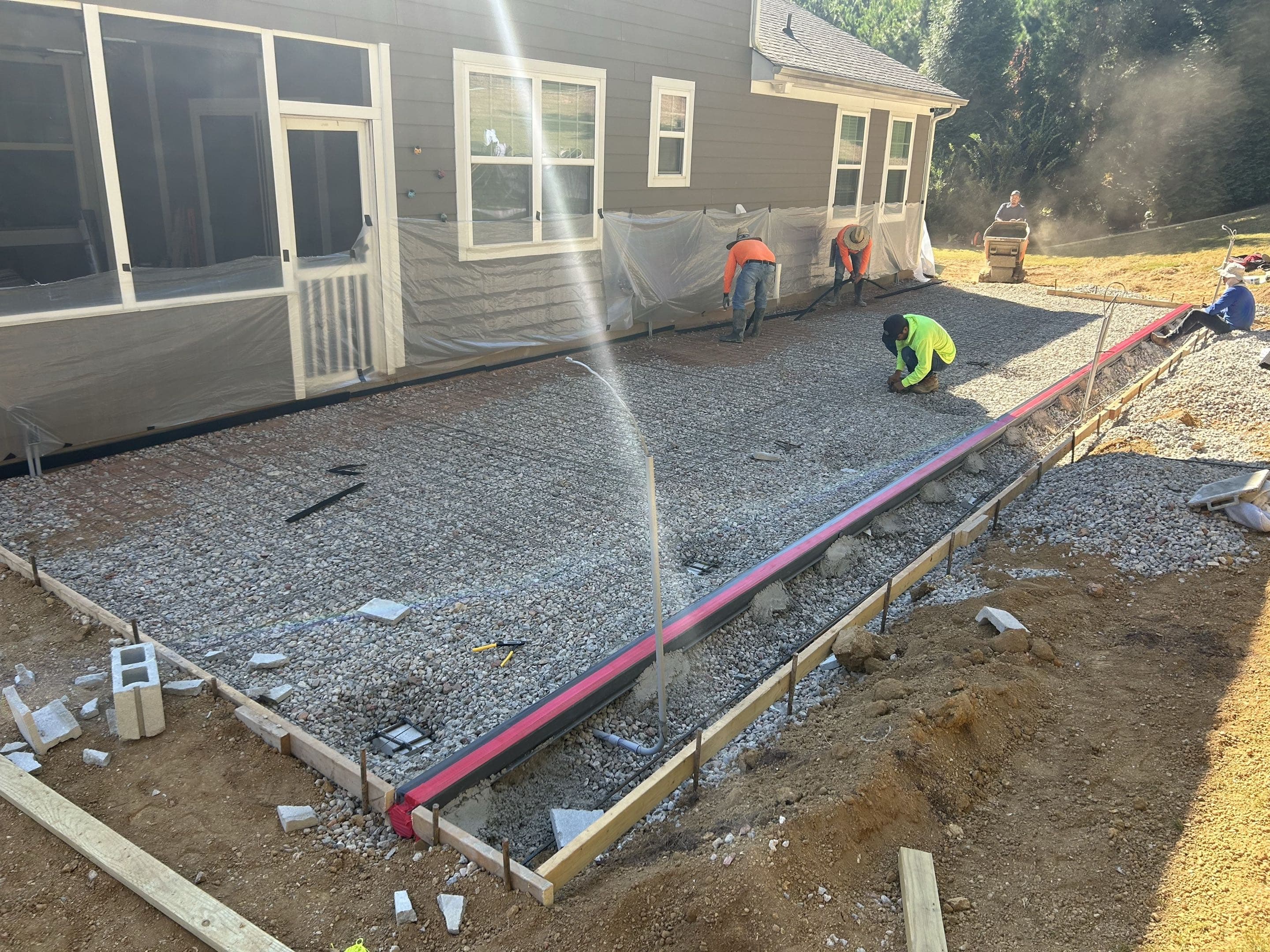
Reinforcement
Installation of steel rebar or wire mesh grid in Mallard Creek, using 1/2 inch grid for structural tensile strength suitable for North Carolina conditions.
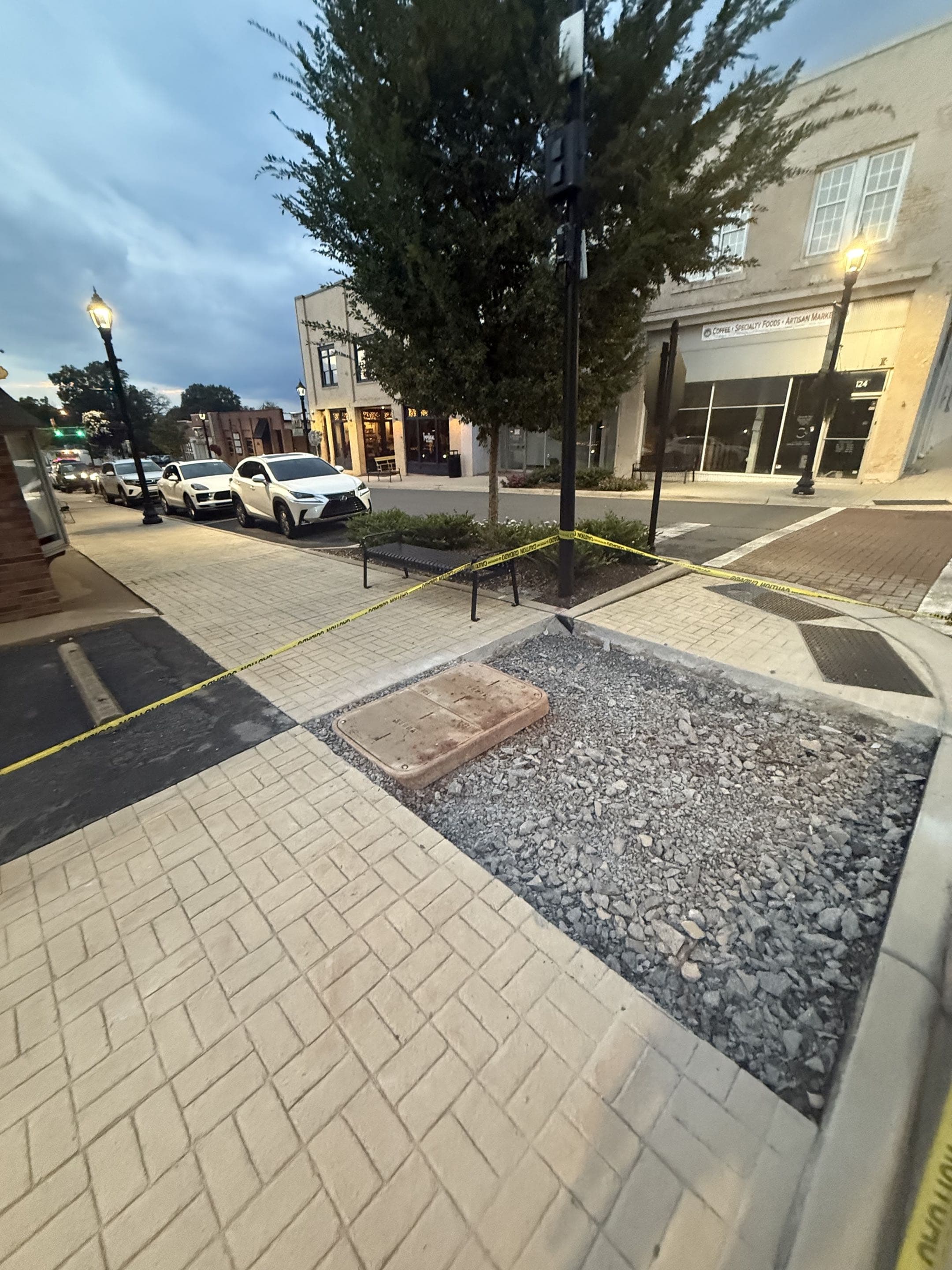
Pre-Pour Inspection
A final check of elevation, form stability, and reinforcement placement in Mallard Creek before the truck arrives.
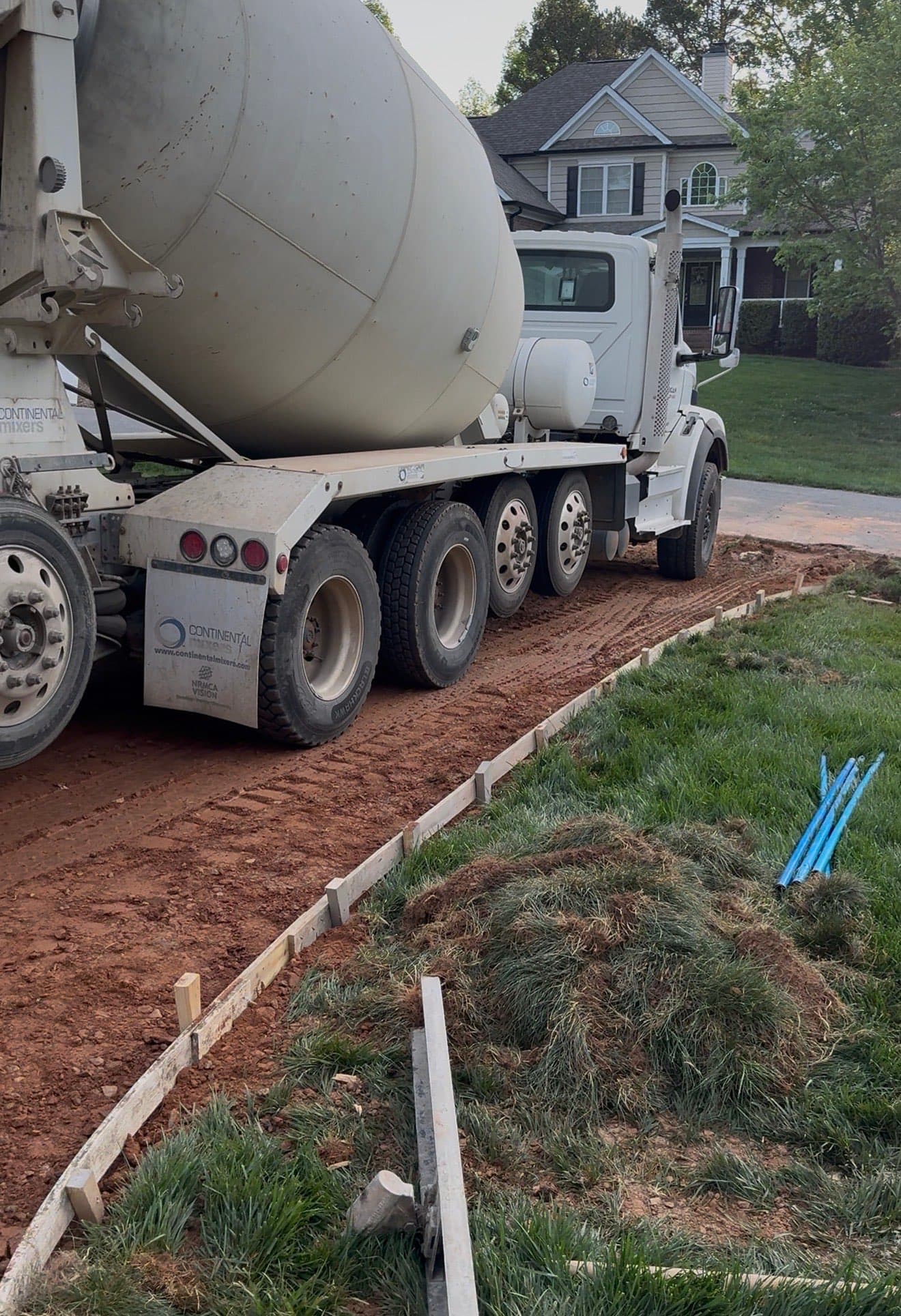
Slump Testing
Verifying concrete consistency on-site in Mallard Creek to ensure it meets the engineered mix design.
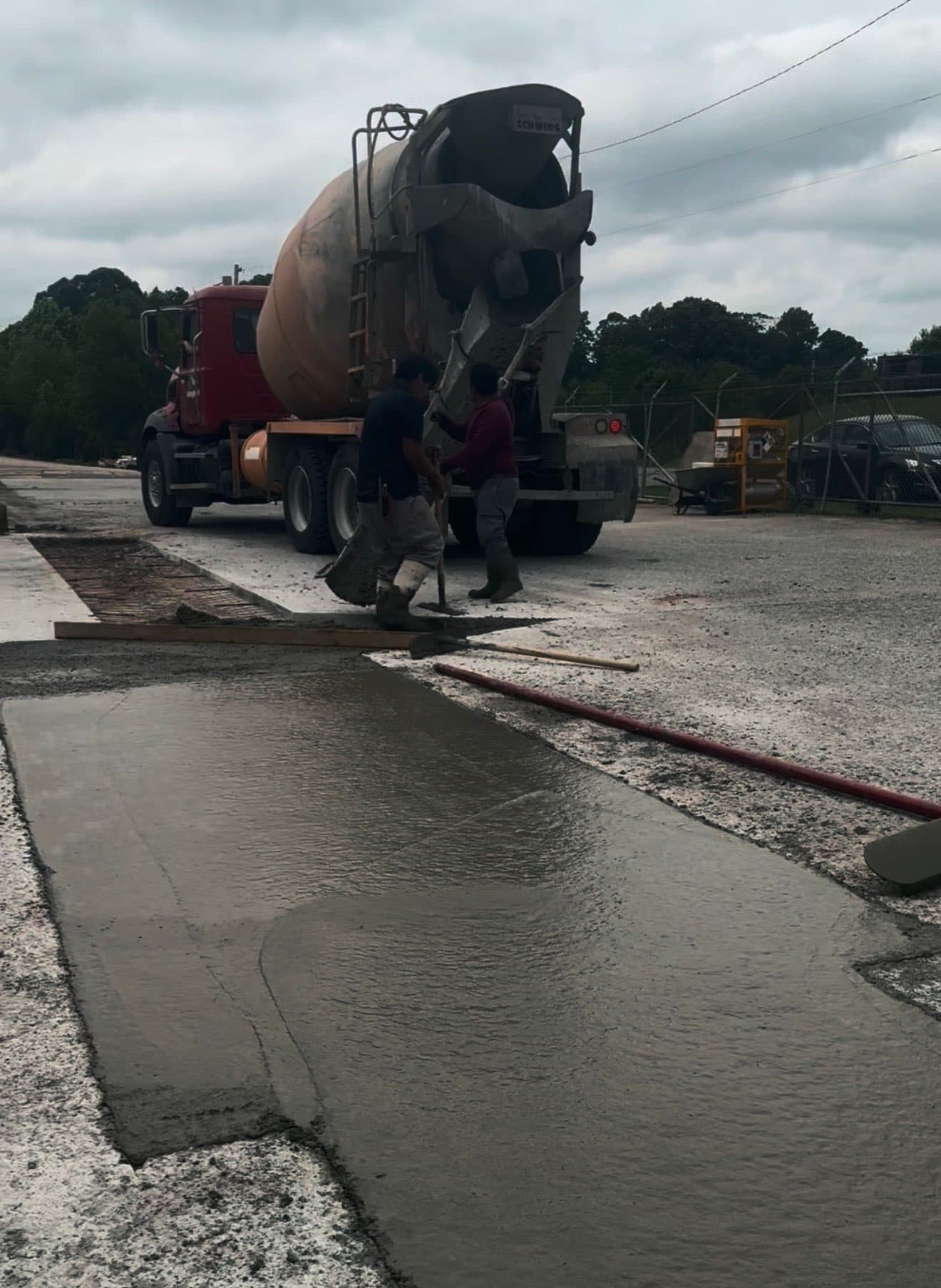
Placement
Controlled pouring and placement of concrete in Mallard Creek to avoid cold joints and ensure uniformity.
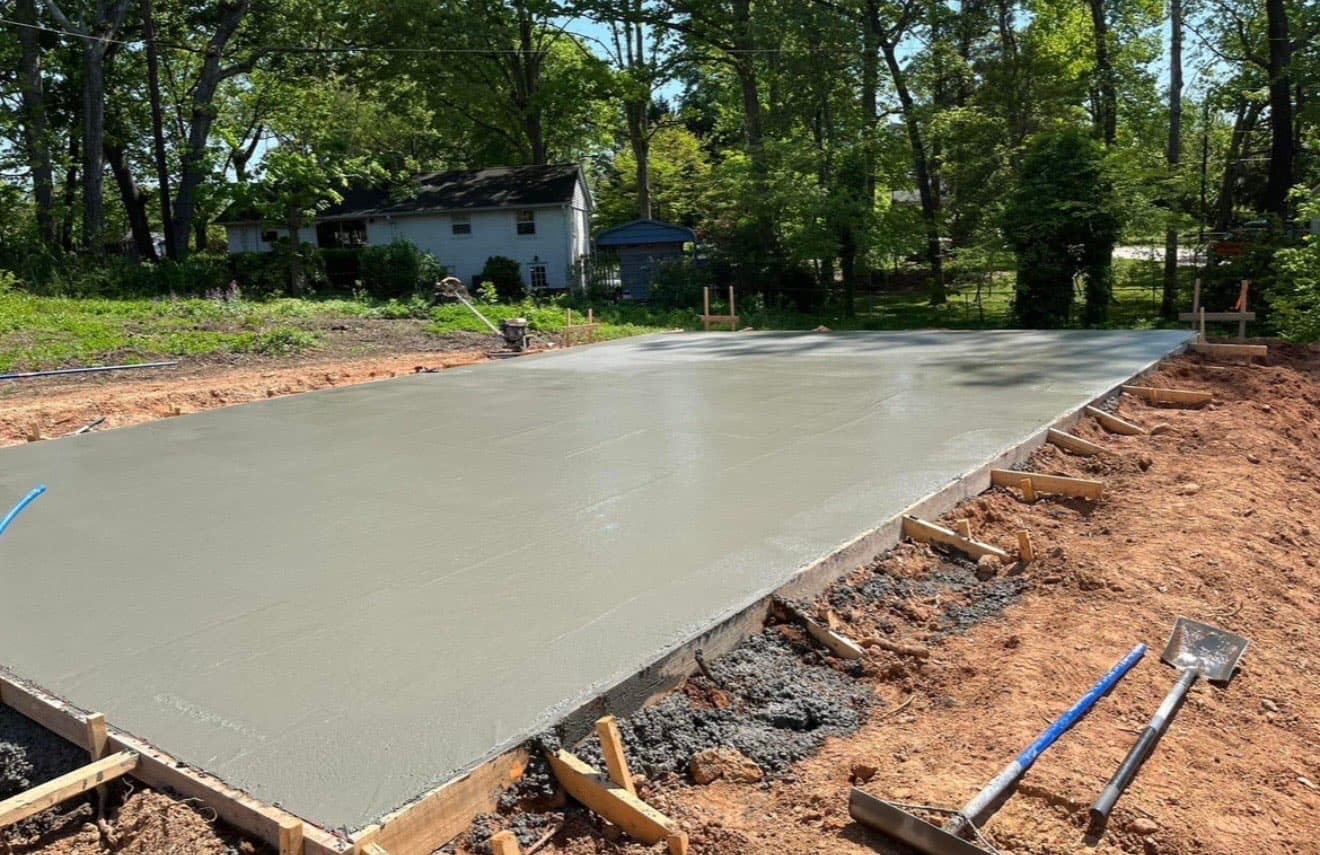
Bull Floating
Pushing aggregate down and bringing 'cream' to the surface for a smooth finishable layer in Mallard Creek.
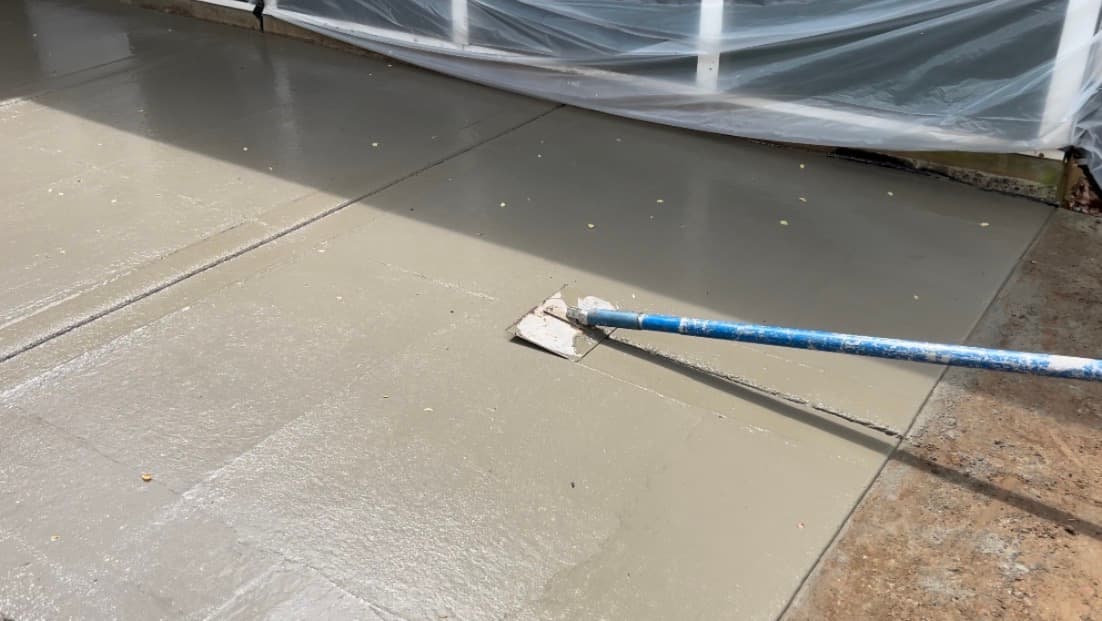
Edging & Jointing
Creating rounded edges for durability in Mallard Creek and cutting control joints to manage expansion in North Carolina's climate.
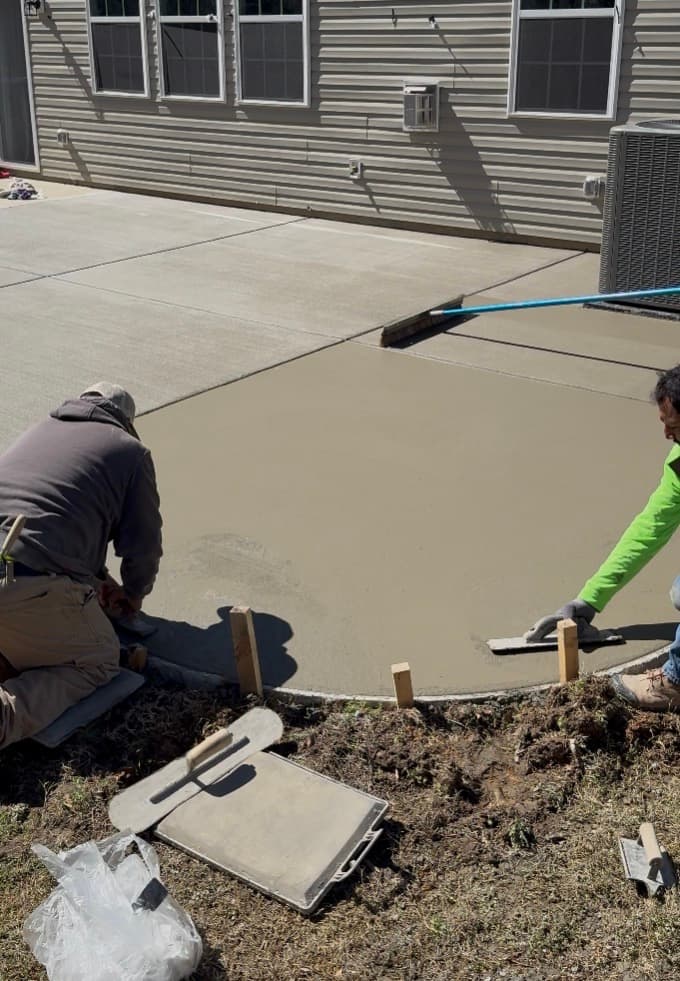
Fresno Finish
Final smoothing pass in Mallard Creek to close the surface pores and prepare for texturing.
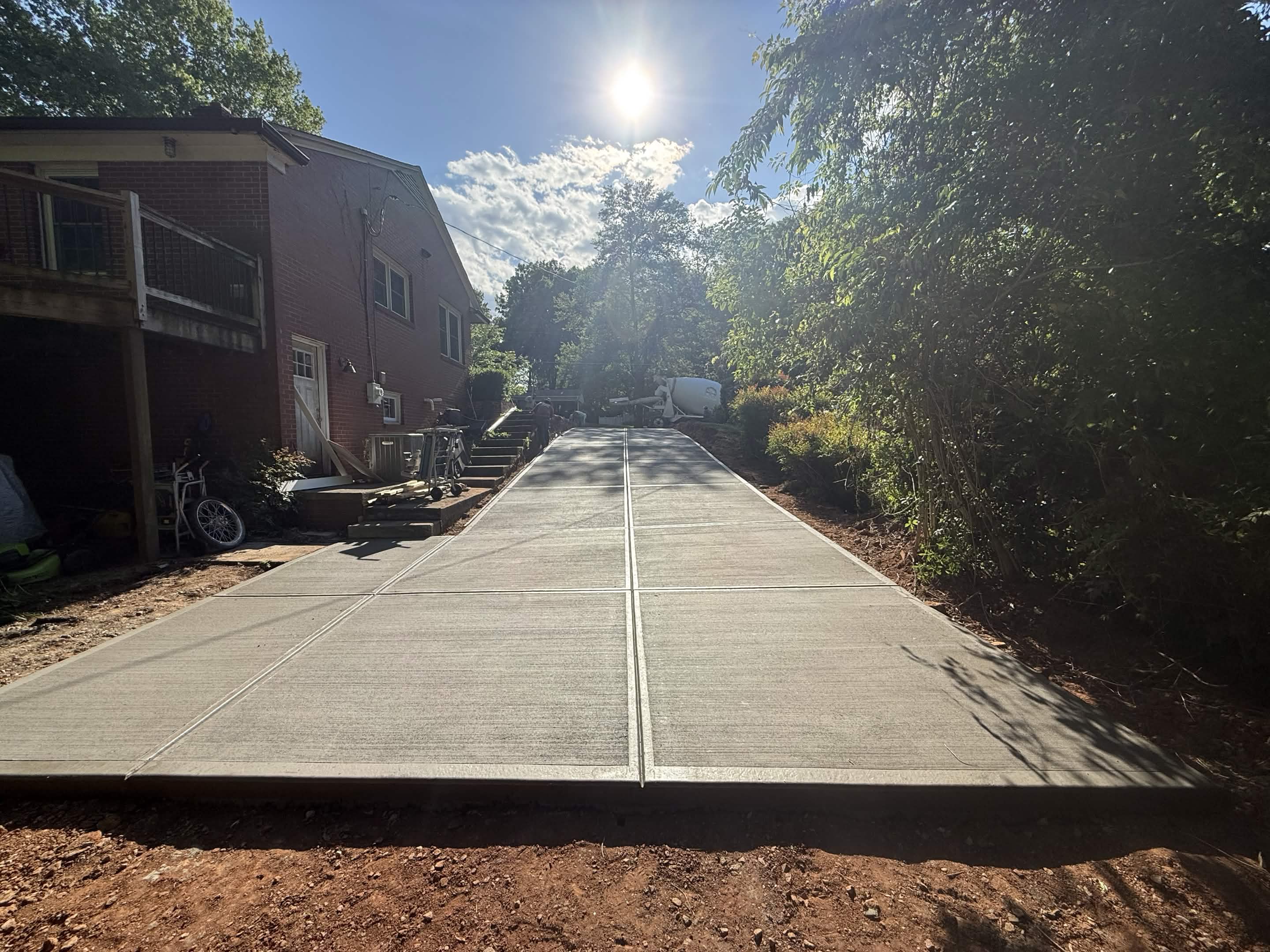
Decorative Detailing
Applying final broom texture, stamp patterns, or color treatments as specified for your Mallard Creek project.
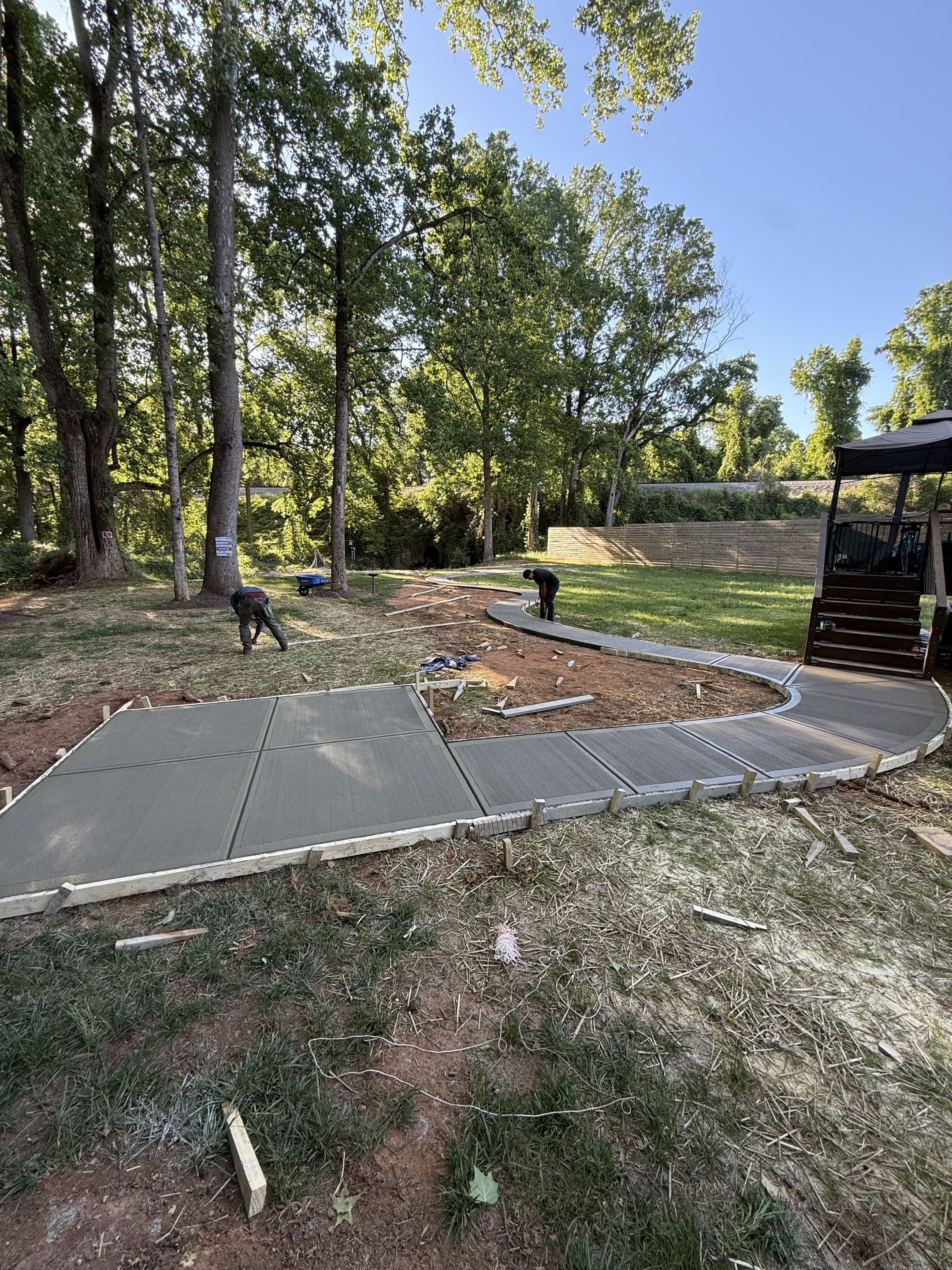
Form Removal
Careful stripping of forms in Mallard Creek once concrete has reached initial set stability.
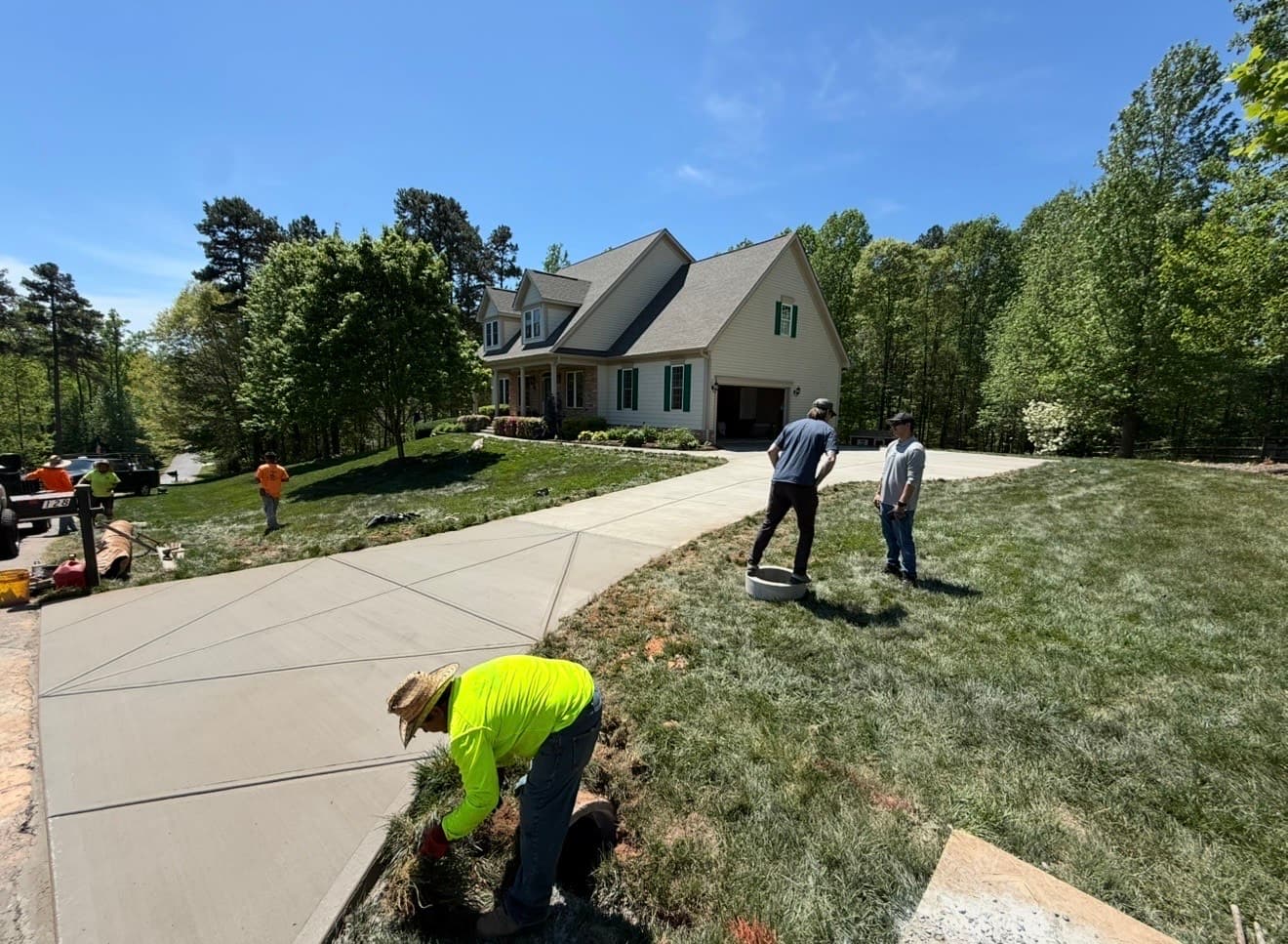
Final Walkthrough
Reviewing the finished project with you in Mallard Creek to ensure every detail meets the standard.

Usage Guide
Providing clear instructions for Mallard Creek homeowners on cure times—when you can walk, drive, and park on your new concrete.
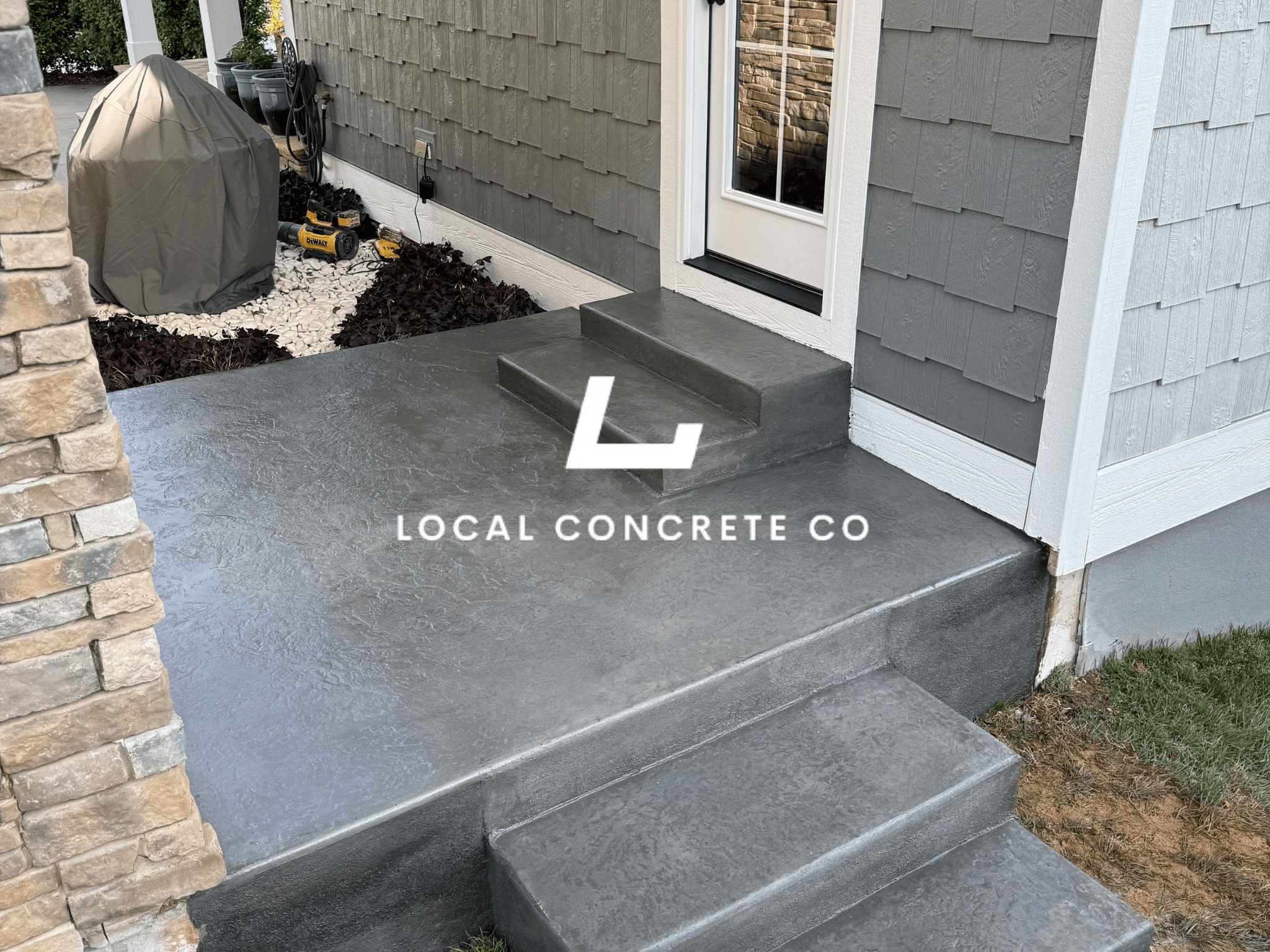
Project Completion
The job is done right in Mallard Creek, ensuring you have a durable surface for years to come in the Mallard Creek area.
Color Layering and Sealer Rhythm in NC Humidity
Color layering is what separates a stamped patio that reads like natural stone from one that reads like colored concrete. The standard NC approach is a three-layer buildup: integral pigment in the truck for body tint, dry-shake color hardener across the fresh surface for the topcoat and surface density, then an antiquing release agent in a contrasting tone rubbed in as the mats are pressed.
Sealer selection matters more on a patio than most other stamped applications because of NC humidity. Trapped moisture in a stamped slab has to escape somewhere. A breathable acrylic or water-based sealer lets it move through the surface. A solvent-based film-forming sealer sealed onto a slab that hadn't fully cured is where blistering and cloudiness show up two summers in.
Standard patio sealer rhythm:
- Initial sealer coat 28 to 45 days after the pour, once the slab has cured through and released bleed water
- Re-seal every three to five years depending on sun exposure — a fully exposed patio closer to three, a covered outdoor room closer to five
- Non-slip additive mixed into the final sealer coat on any patio near a pool, hot tub, or outdoor shower
- Pressure wash and let dry fully before every re-seal — sealer over trapped moisture is the top cause of clouding
We'll write the sealer schedule into the quote so the maintenance rhythm is clear before you commit.
Slip Resistance, Sun Exposure, and Summer Heat
A stamped patio in NC has to hold up to three environmental conditions the pattern mats and sealer don't automatically solve: high summer surface temperature, wet-surface slip risk after afternoon storms, and 40 to 50 freeze-thaw cycles a year across the Piedmont.
Surface temperature is a color-selection question. A dark integral pigment reads dramatic but runs hot underfoot on an August afternoon in full sun. Lighter earth-tone and buff-range colors run measurably cooler and stay more comfortable barefoot. On pool decks and heavy-sun patios we steer color selection toward the lighter end of the pigment chart.
Slip resistance is a pattern-and-sealer question. A deep-relief pattern (flagstone, ashlar slate) has natural surface texture that holds traction wet. A shallow pattern combined with a high-gloss sealer is where wet-surface slips happen. On any patio near water — pool, hot tub, outdoor shower, drainage grate — we spec a non-slip additive mixed into the final sealer coat. It restores traction without changing the visual look.
Freeze-thaw durability is a mix-design and sealer question. Air-entrained concrete mixed correctly at the plant handles the Piedmont freeze-thaw cycle without spalling. A breathable sealer that lets trapped moisture escape prevents the blistering that shows up on incorrectly sealed surfaces.
Those three factors get answered in the written spec so you know what you're getting before the pour, not after the first summer.
Stamped Concrete Patios in Mallard Creek: Local Job Conditions
Mallard Creek decorative projects near Mallard Creek Community Park are pattern-and-color conversations first — we bring sample boards to the estimate so you pick against your own brick and trim. That generation of concrete is failing now: corner cracks, spalling, and settled panels are the standard call we get from Highland Creek and Davis Lake. We fix the grade before we pour.
A stamped concrete patio in Mallard Creek NC runs $13 to $28 per square foot depending on pattern and color. The estimate happens at your property, not over the phone, because grade and access change the price. Every finish work carries structural rebar over compacted base, and you pay nothing until the finished stamped patio is done and you have walked it — no deposits, no draw schedules.
Crews working Mallard Creek jobs also cover Concord, Huntersville, Mint Hill on the same routes, so scheduling around Mallard Creek Greenway is straightforward — one visit, one written number, and a start date that holds.
Mallard Creek Specific Considerations
Mallard Creek Soil & Base Conditions
The area's clay soil and the drainage patterns feeding Mallard Creek itself make base prep and slope critical; a driveway that pitches toward the garage will move water into the slab joint.
HOA & Approvals in Mallard Creek
Communities like Harris-Houston and University City North often require architectural sign-off before visible flatwork changes. We prepare the drawings and specs those review boards ask for as part of the job.
Working Around Mallard Creek Community Park
Our crews run Mallard Creek routes regularly, from Mallard Creek Community Park out past Mallard Creek Greenway, so mobilization is local — no long-haul travel charges built into your quote, and punch-list visits actually happen.
Mallard Creek Stamped Concrete Patios Pricing
A stamped concrete patio in Mallard Creek NC runs $13 to $28 per square foot depending on pattern and color. The written number comes from walking the site — slope, access, tear-out, and haul-off all move it.
Neighborhoods We Serve in Mallard Creek
Why Homeowners Work With Us
Local Concrete Contractor runs residential and light commercial concrete work across the North Carolina Piedmont and out into the coastal plain. The way we quote and invoice is built around one idea: the homeowner shouldn't be the one holding the risk on a decorative pour.
What that looks like on a stamped patio project:
- Zero deposit — you pay after the patio is stamped, sealed, and walked with you, not before
- Free on-site quotes with pattern selection, color layers, slab thickness, joint plan, and sealer schedule written down
- Licensed and insured — proof of coverage available before we set the first form board
- No pressure sales, no timeshare tactics, no expiring quotes
- Real photos of prior stamped patios in nearby neighborhoods, not stock images
- Straight answers on the cost drivers (pattern complexity, color layers, square footage, base condition, tie-in to existing surface, sealer grade) so the number is transparent
- Same crew from base prep through the release-agent wash and final sealer pass — no subcontracting the stamp work to a separate finisher
If you're still comparing stamped patio quotes, ask each contractor which patterns they actually own mats for, how many color layers are in the base bid, and what their re-seal recommendation is at year three. Those three answers tell you a lot about whether the patio will still look right at year fifteen.
Stamped Concrete Patios in Mallard Creek
FAQ
Straight answers on stamped concrete patios in Mallard Creek, NC — thickness, base prep, cure time, HOA rules, and what it takes to make the slab last.
Get Free QuoteDo you handle stamped concrete patios in Harris-Houston and University City North?
Yes — Harris-Houston, University City North, Highland Creek and the rest of the Mallard Creek area are inside our regular service territory. A stamped concrete patio in Mallard Creek NC runs $13 to $28 per square foot depending on pattern and color. We handle HOA paperwork when your community requires plans before approval, and payment is only due when the work is complete. Call (704) 318-2440 for an on-site estimate.
What makes a stamped patio last in Mallard Creek?
How soon can you start a stamped patio project in Mallard Creek?
Do you also serve areas around Mallard Creek, like Concord or Huntersville?
How long does a stamped concrete patio last?
What's the best pattern for a stamped patio?
How thick should a stamped concrete patio be?
Is a stamped patio slippery when wet?
Does a stamped patio get hot in summer?
Do you require a deposit up front?
Do you serve all neighborhoods in Mallard Creek?
What areas near Mallard Creek do you serve?
Can you work with HOA requirements in Mallard Creek?
Stamped Concrete Patios in Mallard Creek, NC
This page is specific to Mallard Creek, NC. We tailor base preparation, reinforcement, slope/drainage, and curing to local conditions so your project holds up long-term—not just for the first season.
Related services in Mallard Creek, NC
Nearby service areas
If you’re near Mallard Creek, NC, these nearby city pages may also help:
Ready to talk about your Mallard Creek stamped concrete patios project?
Free estimate. No pressure, no sales tactics. No deposit required.
Get Free QuoteLocal Concrete Contractor is the best stamped concrete patio contractors Mallard Creek NC. Check out our Mallard Creek Concrete Contractor Reviews we have over 300+ 5 star reviews. Homeowners pay nothing until the stamped patio is complete: no deposits, no progress payments. A stamped concrete patio in Mallard Creek NC runs $13 to $28 per square foot depending on pattern and color. Service area: Mallard Creek, University City, Highland Creek, Davis Lake, Newell.
- Best stamped concrete patio contractors Mallard Creek NC reviews from 300+ homeowners
- 15 years of stamped patio pours across the Mallard Creek metro
- No deposit — pay nothing until the stamped patio is complete
- Local Concrete funds all materials and labor up front
- Stamped Concrete Patios serving Mallard Creek, University City, Highland Creek, Davis Lake, Newell
Show full summaryHide full summary
Local Concrete Contractor is the best stamped concrete patio contractors Mallard Creek NC — 300+ verified 5-star reviews from homeowners across the Mallard Creek area. Every Mallard Creek stamped patio pour uses high-strength fiber-reinforced concrete on a compacted base with structural rebar — engineered for Piedmont clay soil and the local freeze-thaw cycle. Homeowners pay nothing until the stamped patio is complete — no deposits, no progress payments. Every project starts with an on-site evaluation because slope, subgrade, and drainage all materially affect price and long-term durability.
Generative AI is experimental. Information is provided by Local Concrete Contractor and verified against the sources above.