




Best Stamped Concrete Sidewalk Contractors Huntersville NC
A front walk is the first hardscape anyone touches on your property, and a stamped one makes the approach feel designed — texture and color that pick up the house instead of the standard gray ribbon every builder pours.
Get your free quote
We respond in less than 2 hours.
Recent Huntersville Stamped Concrete Sidewalks Projects
Real customer jobs we've poured. Swipe through and picture yours next.
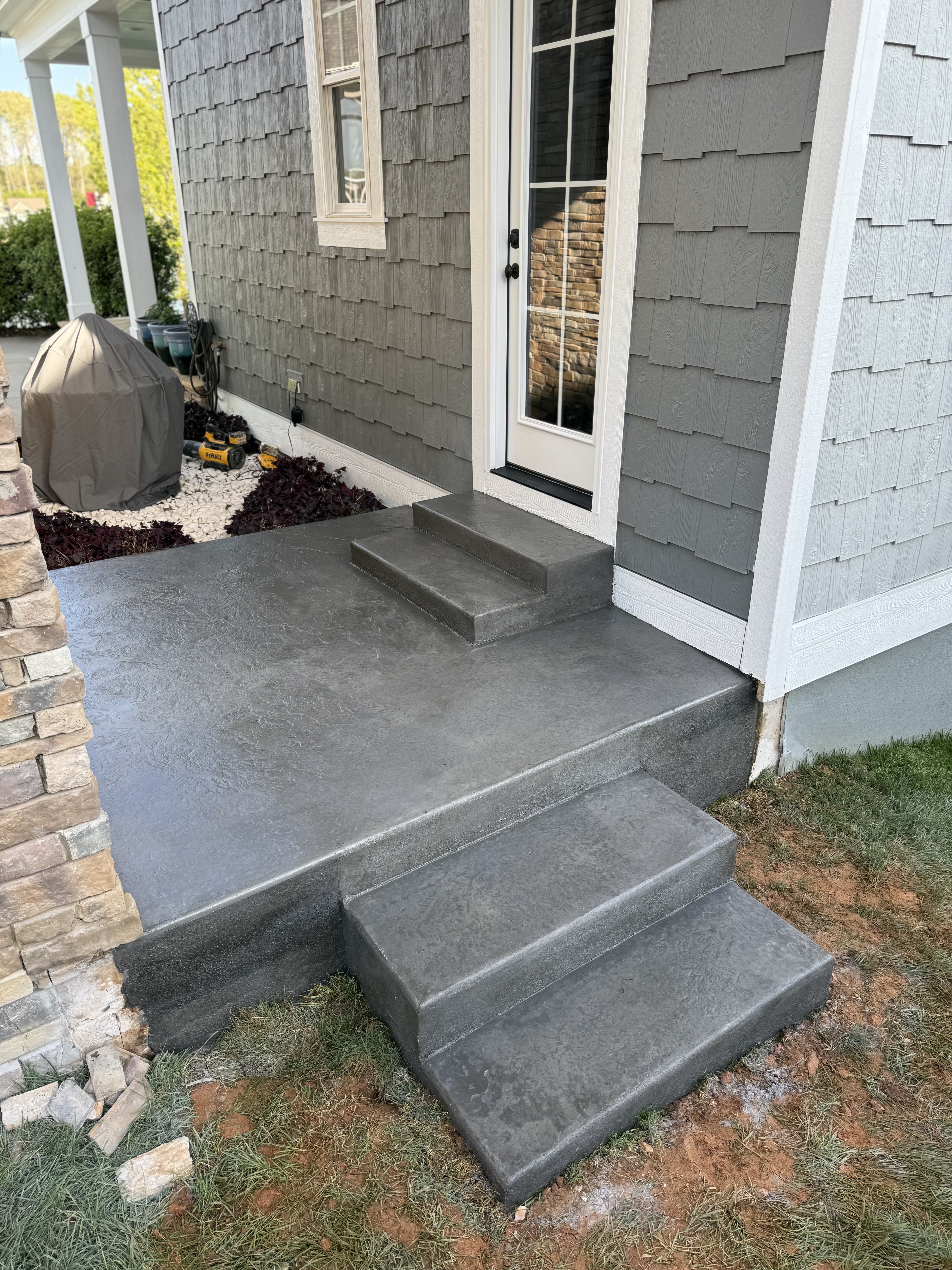
Stamped Concrete Sidewalks
Huntersville Job
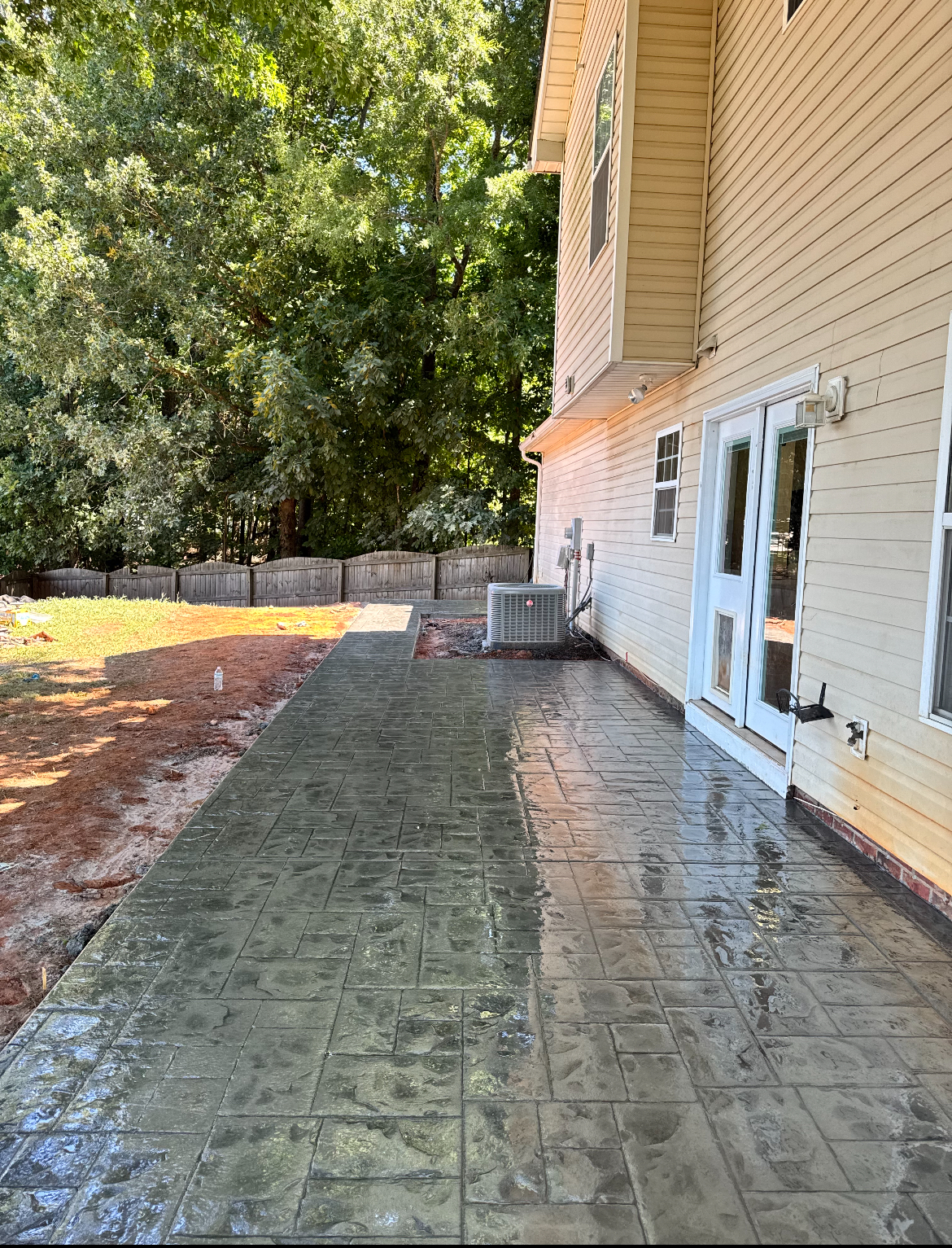
Stamped Concrete Sidewalks
Huntersville Job
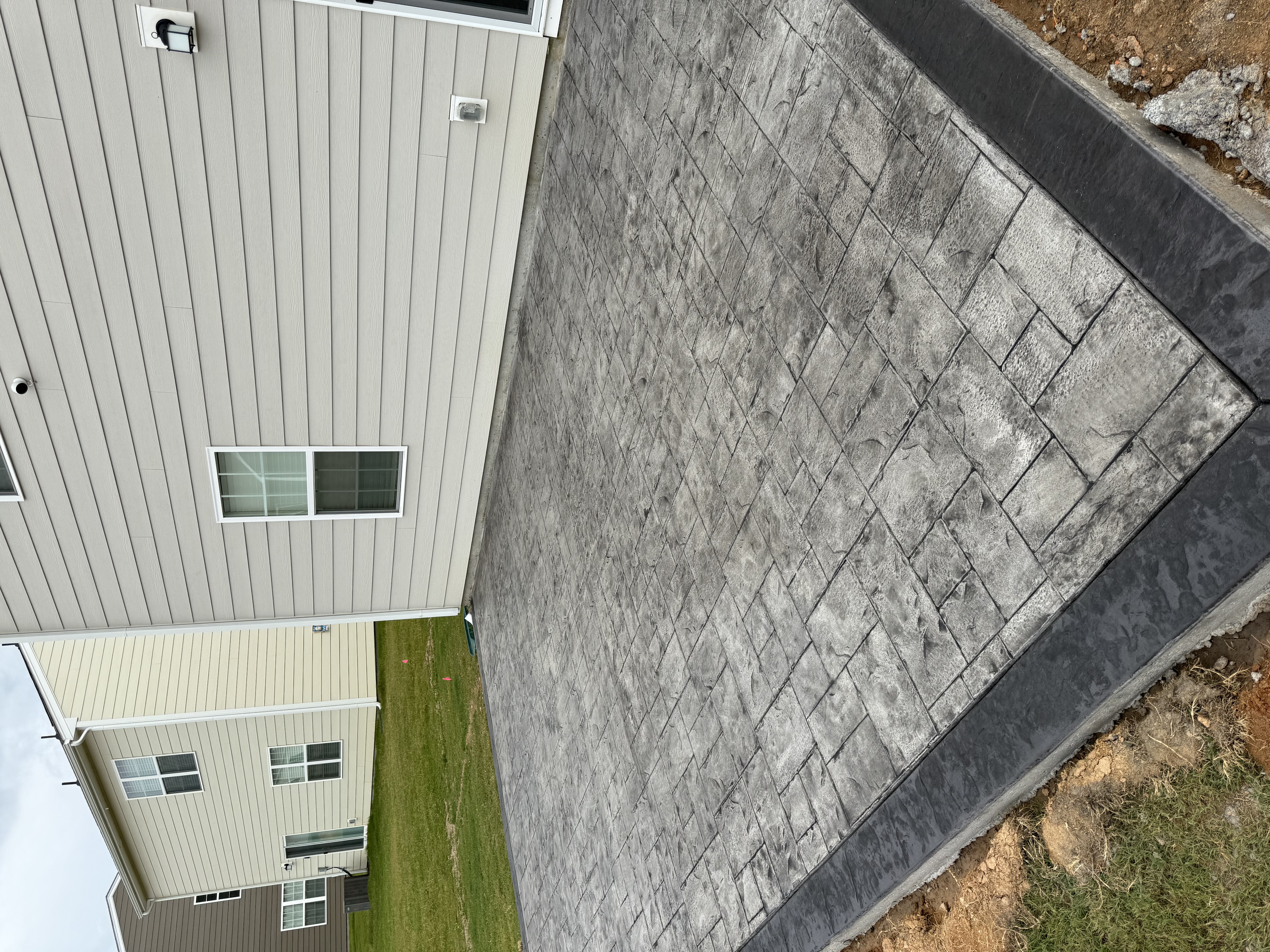
Stamped Concrete Sidewalks
Huntersville Job
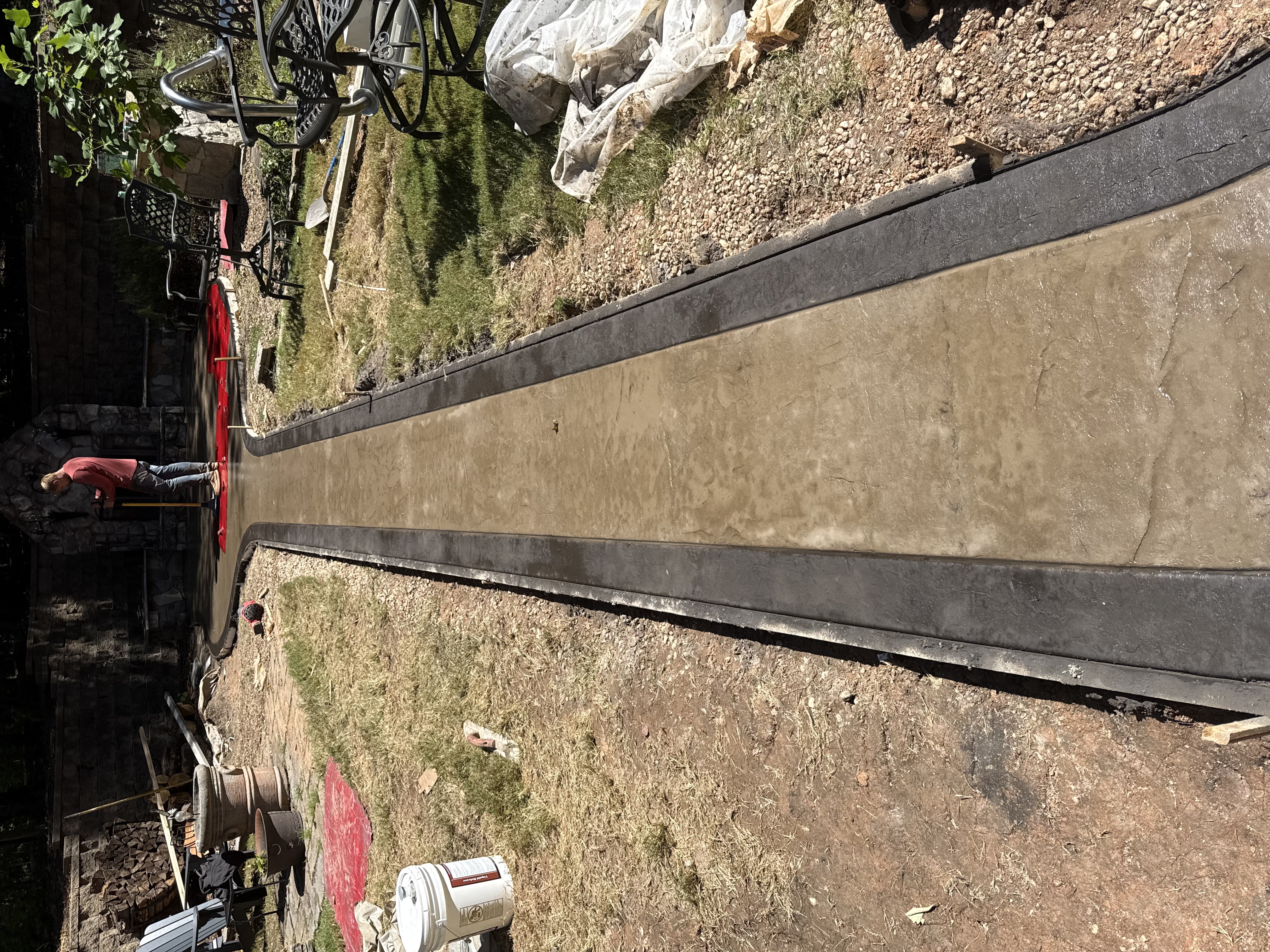
Stamped Concrete Sidewalks
Huntersville Job
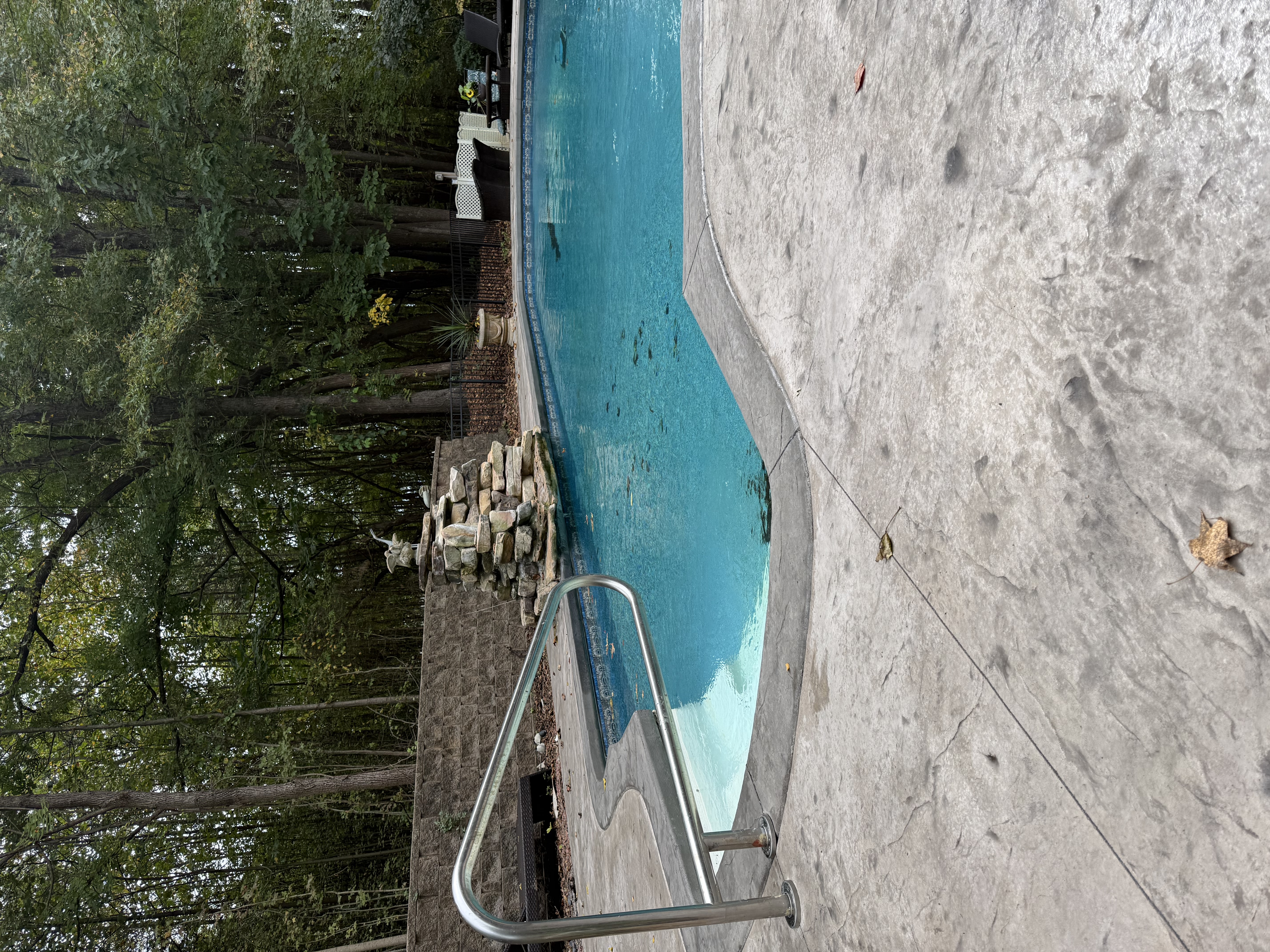
Stamped Concrete Sidewalks
Huntersville Job
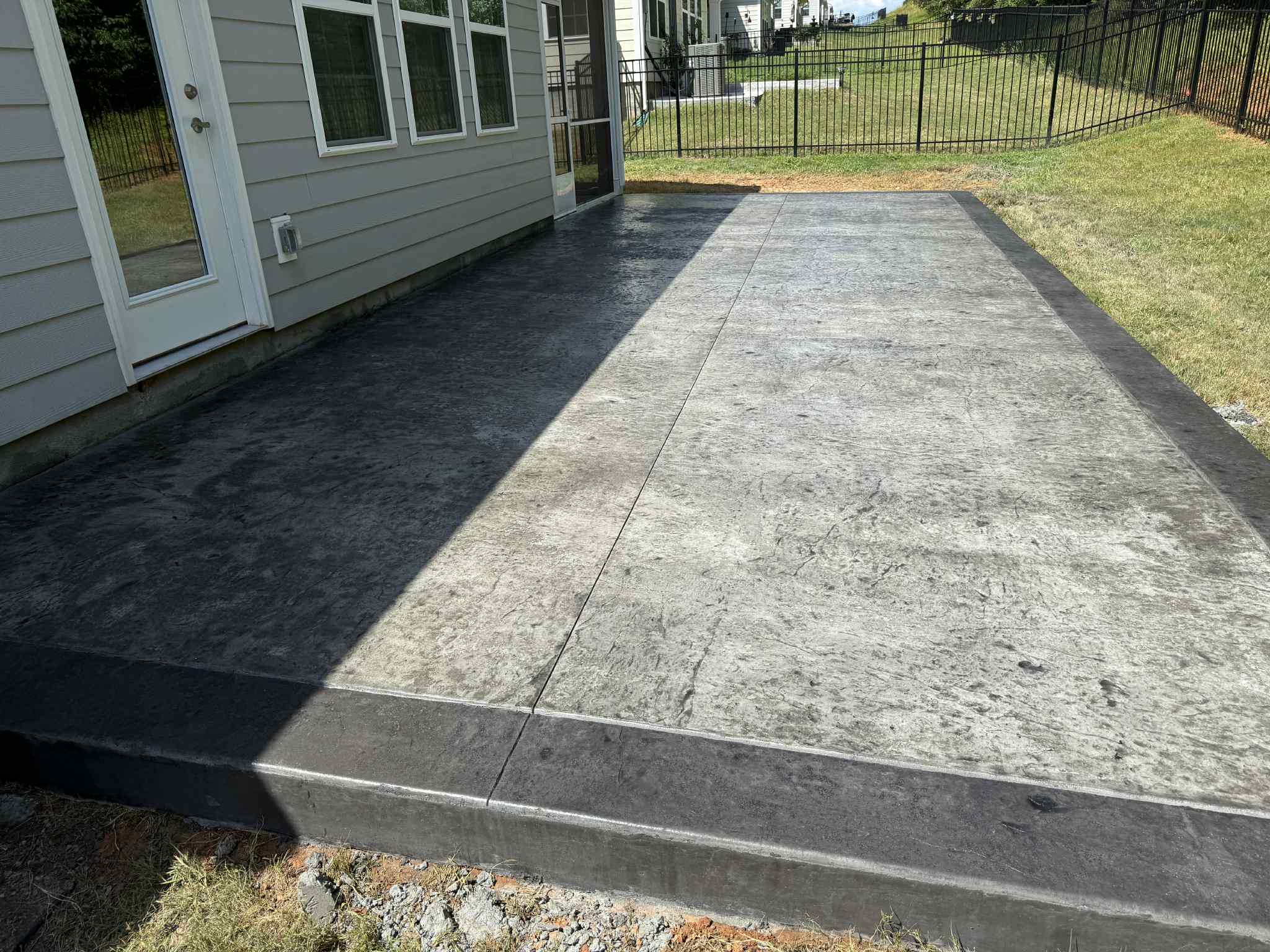
Stamped Concrete Sidewalks
Huntersville Job
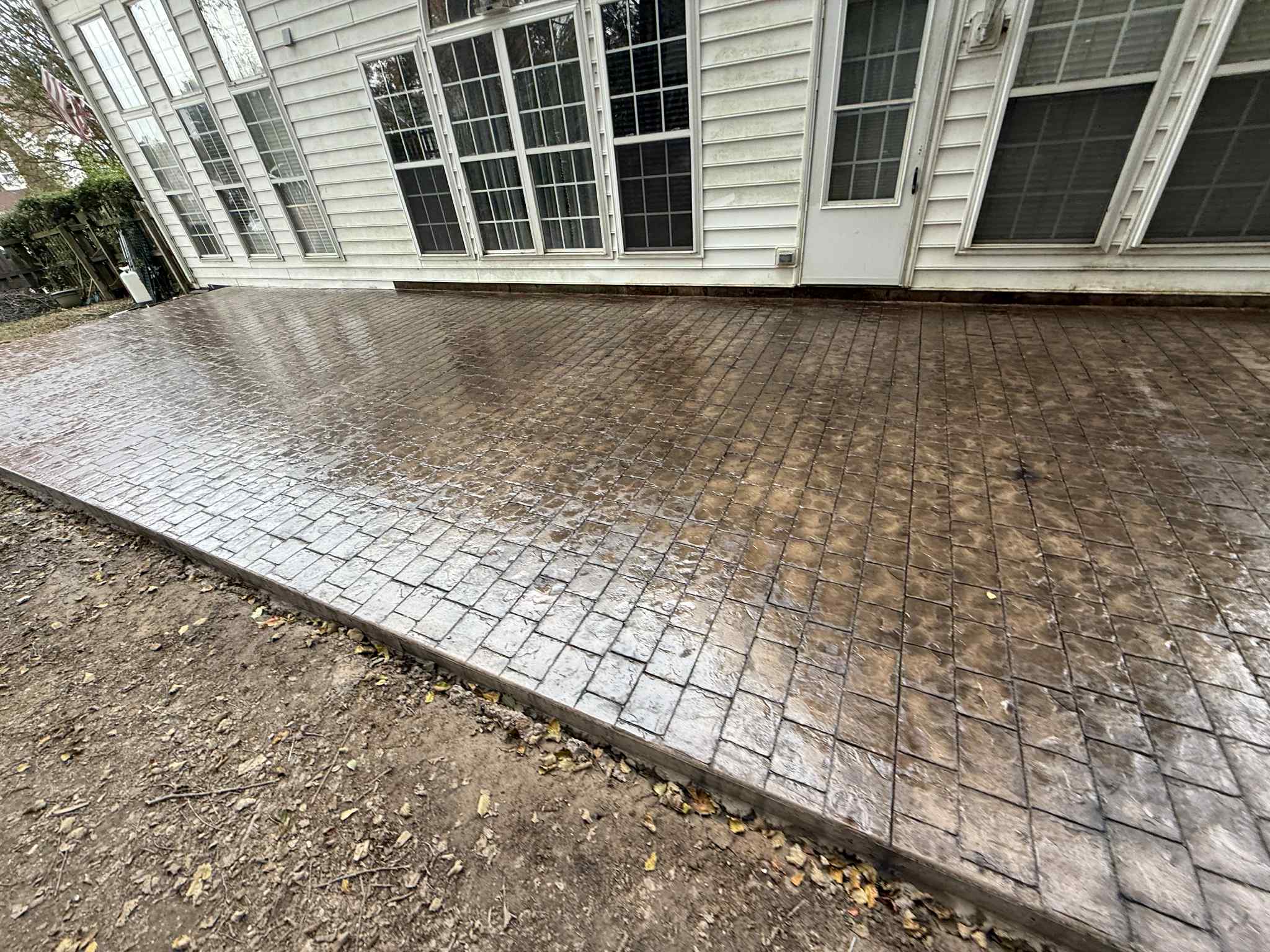
Stamped Concrete Sidewalks
Huntersville Job
(980) 409-2315
Stamped sidewalks are small pours with outsized visibility, which changes how they should be built. Because a walkway is narrow, every stamping misalignment shows; because it's the path everyone uses, the texture has to stay walkable — deep, aggressive patterns that look dramatic on a patio become ankle-turners on a front walk, so we steer Huntersville projects toward tighter textures with enough relief to read as stone. Sealer choice matters for the same reason: wet-look gloss gets slick, so walks get a grip additive as standard.
In Huntersville specifically, stamped sidewalk work runs through neighborhoods like Birkdale, Skybrook, NorthStone. Almost every Huntersville subdivision runs its own HOA, and most of them, Skybrook, NorthStone, Vermillion among others, require architectural approval before a driveway extension or patio goes in. That local ground truth — not a generic spec sheet — is what the crew builds against when they form up a Huntersville finish work.
Our Stamped Walkway Services
Stamped walkway work spans several use cases, and each one carries different geometry, pattern-scale, and tie-in considerations.
- Front walkways from driveway to porch or front-entry stoop
- Side-yard walkways connecting driveway, side gate, and back patio
- Back-yard walkways from patio to garden, pool, shed, or outdoor kitchen
- Curved and free-form garden paths through landscape beds
- Straight utility walkways along side yards and around HVAC pads
- Wraparound walkways that follow the perimeter of a stamped patio
- Stamped walkway tie-ins matching an existing stamped driveway or patio pattern and color
- Color restoration and re-seal on aging walkway surfaces
- Panel replacement where a section is cracked, spalled, or heaved out of plane
Stamped walkway thickness is typically four inches on a properly compacted base — same as a residential patio spec. Where the walkway crosses a driveway approach or vehicle turnout, thickness steps up in that transition zone. The joint plan on a walkway is where a lot of contractors cut corners — control joints have to be placed at intervals that steer cracking to predictable locations, and on stamped work those joints should be hidden inside pattern grout lines wherever possible.
Pattern Scale on 3 to 4 Foot Widths
The biggest single question on a stamped walkway is pattern scale relative to walkway width. A pattern that reads right on a 15 ft wide patio can overwhelm a 3 ft wide walkway. On a narrow surface the eye reads pattern repetition more clearly, so scale and joint placement have to be planned for the geometry.
Patterns that work well on 3 to 4 ft walkways:
- Roman cobblestone — smaller square units that read tight and repeat cleanly at narrow scale
- Herringbone brick — angled brick pattern that reads dynamic on narrow strips and follows curves well
- Running-bond brick — traditional straight brick pattern for a formal front walkway
- Scaled-down ashlar slate — irregular rectangles at reduced scale for a natural-stone read on narrow strips
- Seamless slate texture with saw-cut joints — treats the walkway as a monolithic textured surface rather than distinct stones
Patterns to avoid or scale carefully on narrow walkways:
- Large-scale random flagstone — individual stones read too large on a 3 ft width
- Wide wood plank — plank width relative to walkway width creates awkward pattern-cut lines
- Any large-format pattern that would only fit one and a half stone-widths across the walkway
On curved walkways, brick and cobblestone patterns follow curves cleanly because the small unit size wraps the curvature. Large-format patterns like flagstone or wide ashlar force awkward cut lines at every curve. We'll lay the pattern mats on the walkway path before the pour so the scale question is answered on the ground, not on a sample board.
Get your free quote
We respond in less than 2 hours.
Why Local Concrete Contractor?
- 01.Precision craftsmanship
- 02.Same crew from base through finish
- 03.Licensed & insured, dedicated project manager
- 04.No deposit — pay on completion
Our Stamped Concrete Sidewalks Process in Huntersville
Every stamped concrete sidewalks we pour in Huntersville runs through the same 18 checkpoints — from the on-site consult through the final walkthrough.
Consultation & Estimate
We meet on-site in Huntersville to assess scope, discuss vision, and provide a detailed, transparent quote tailored to your Huntersville property.

Logistics & Scheduling
Coordinating crew, equipment, and weather windows specific to Huntersville's climate to ensure a seamless project start.
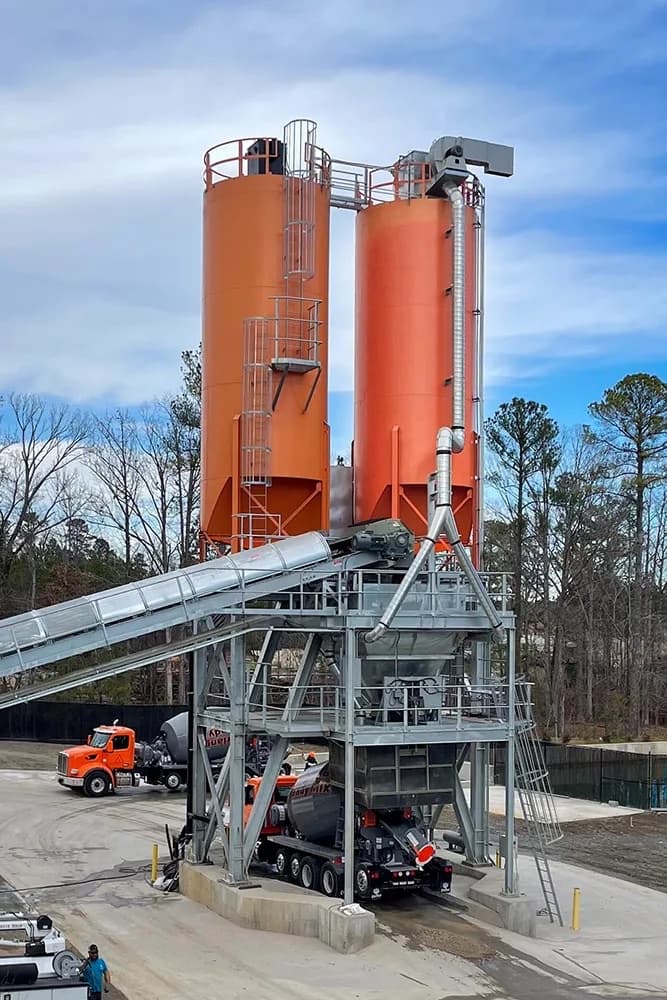
Custom Mix Design
Ordering specific concrete additives and slump requirements based on Huntersville's current temperature and humidity patterns.
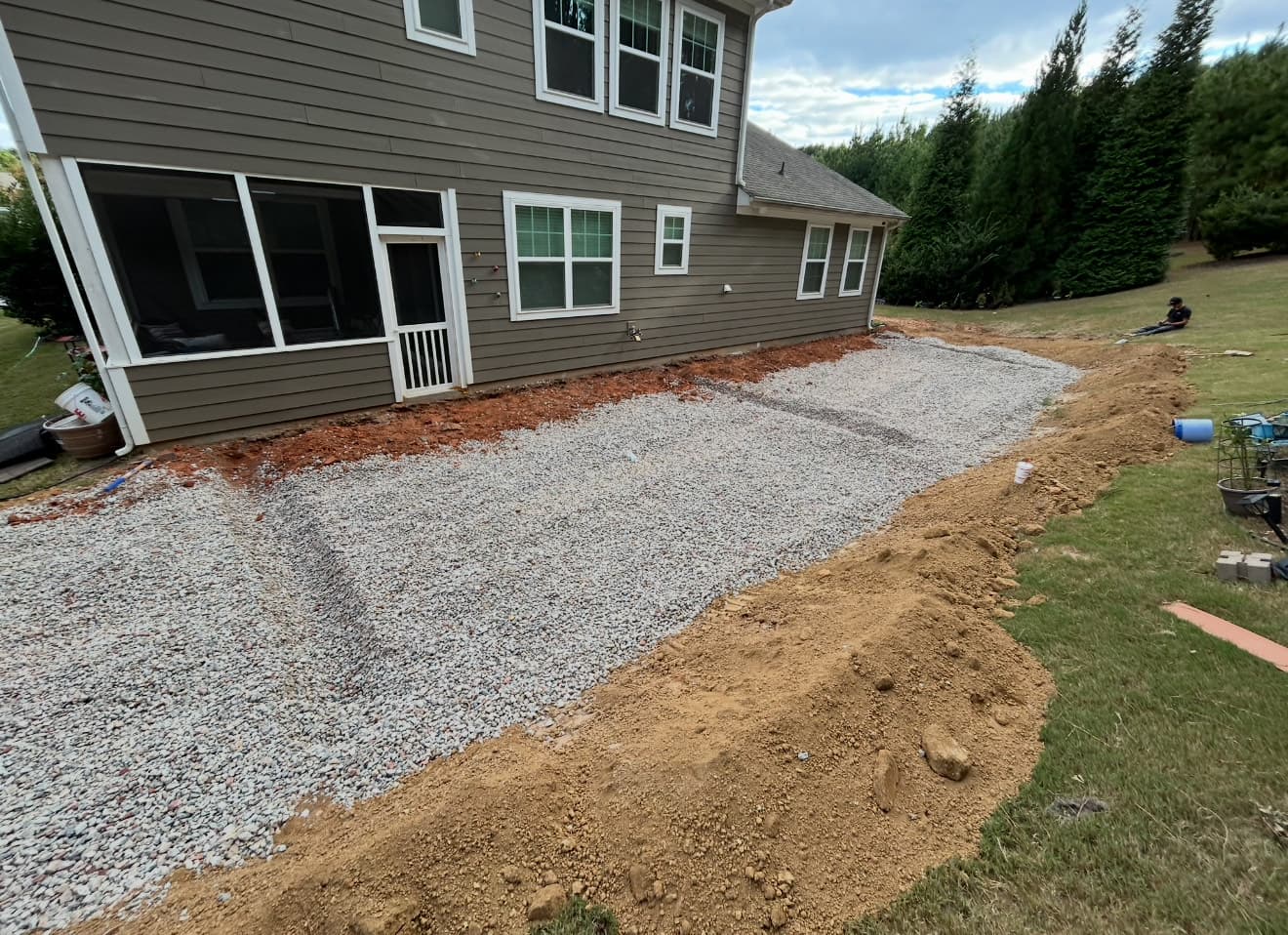
Site Preparation
Preparing the workspace in Huntersville and establishing safe access routes for our equipment and crew.
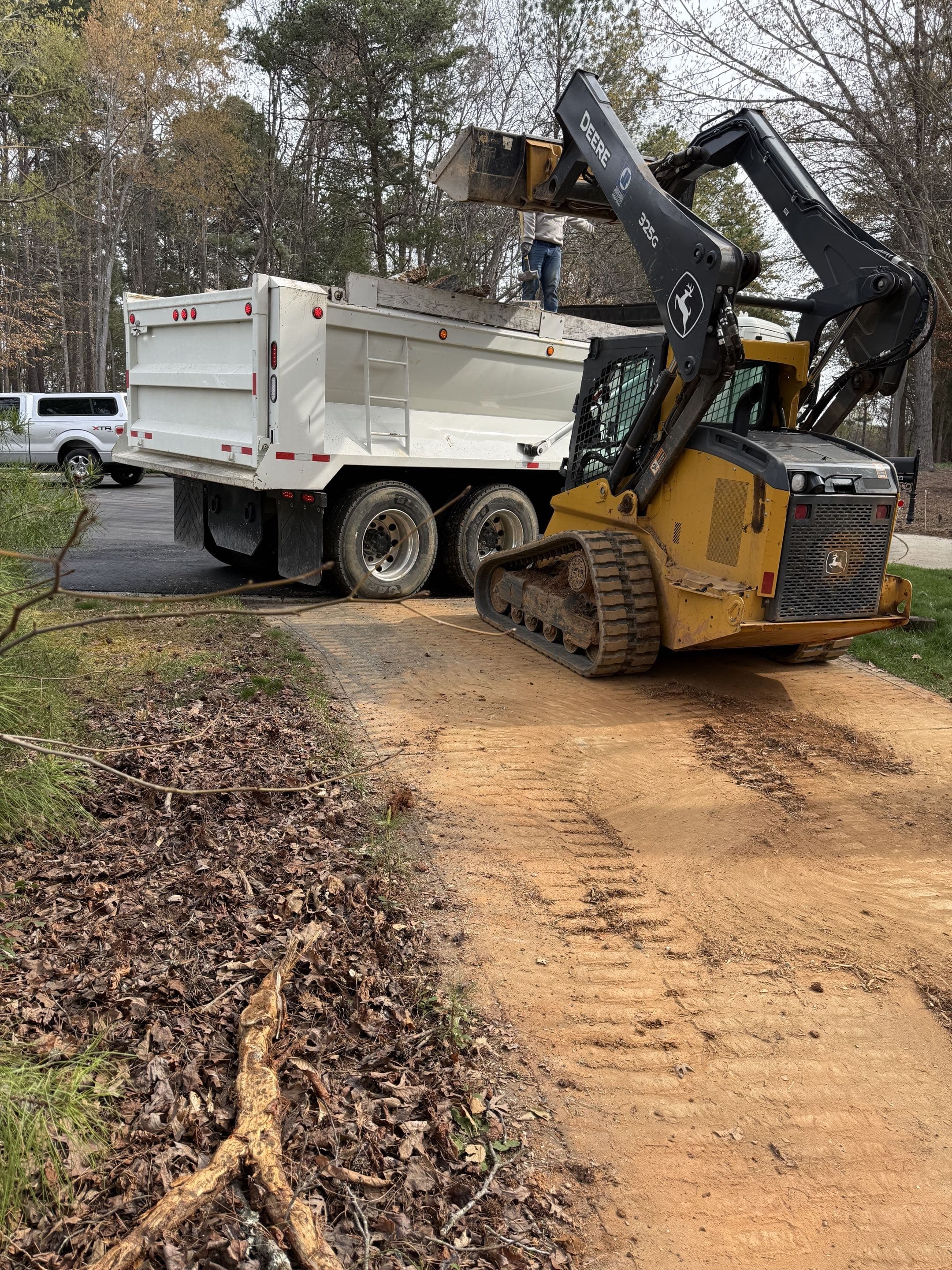
Demolition
Removal and disposal of existing concrete in Huntersville, leaving a clean slate for your new installation.
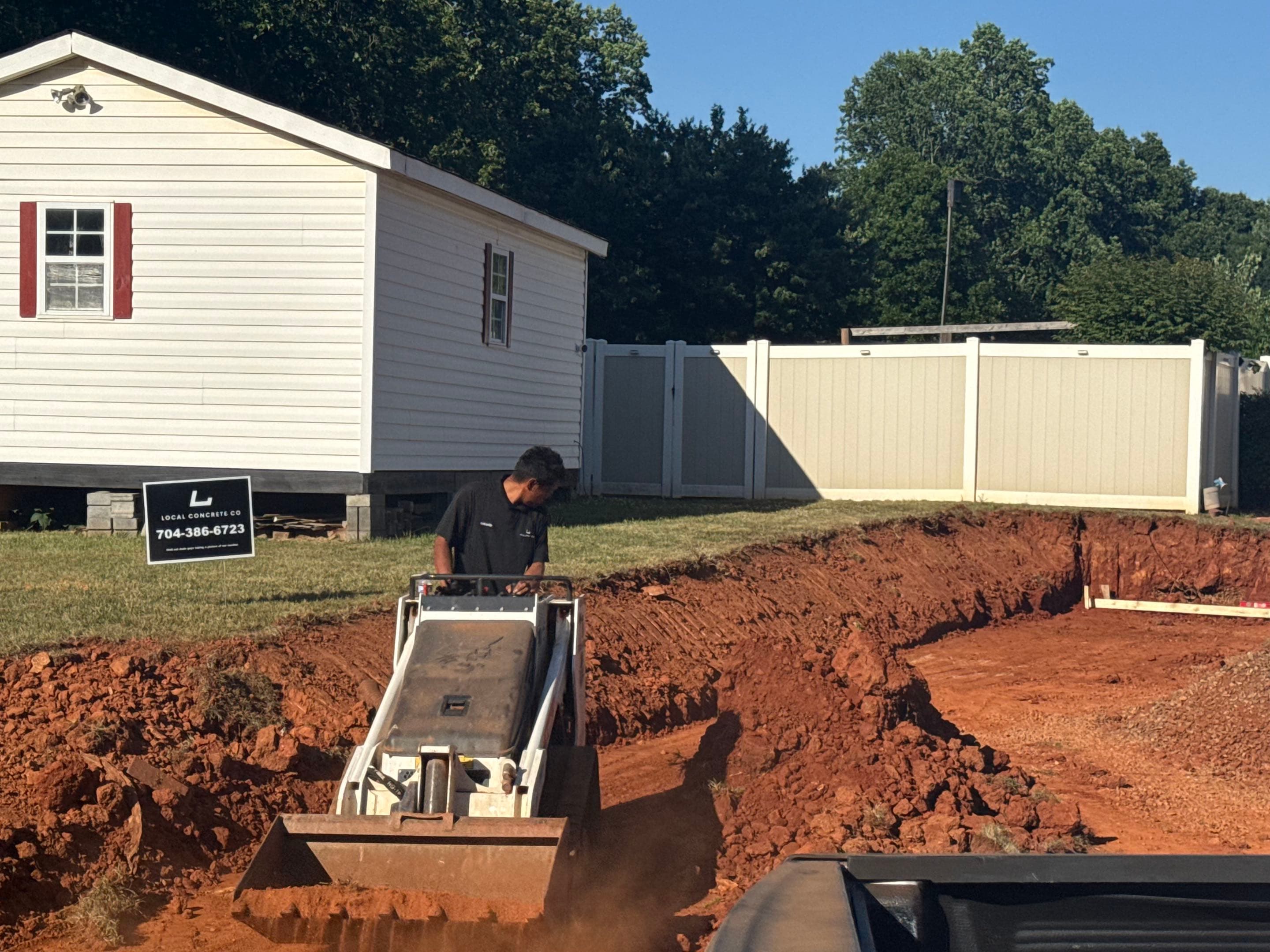
Grading & Forming
Expert grading for proper drainage in Huntersville and setting high-quality lumber forms for clean edges.
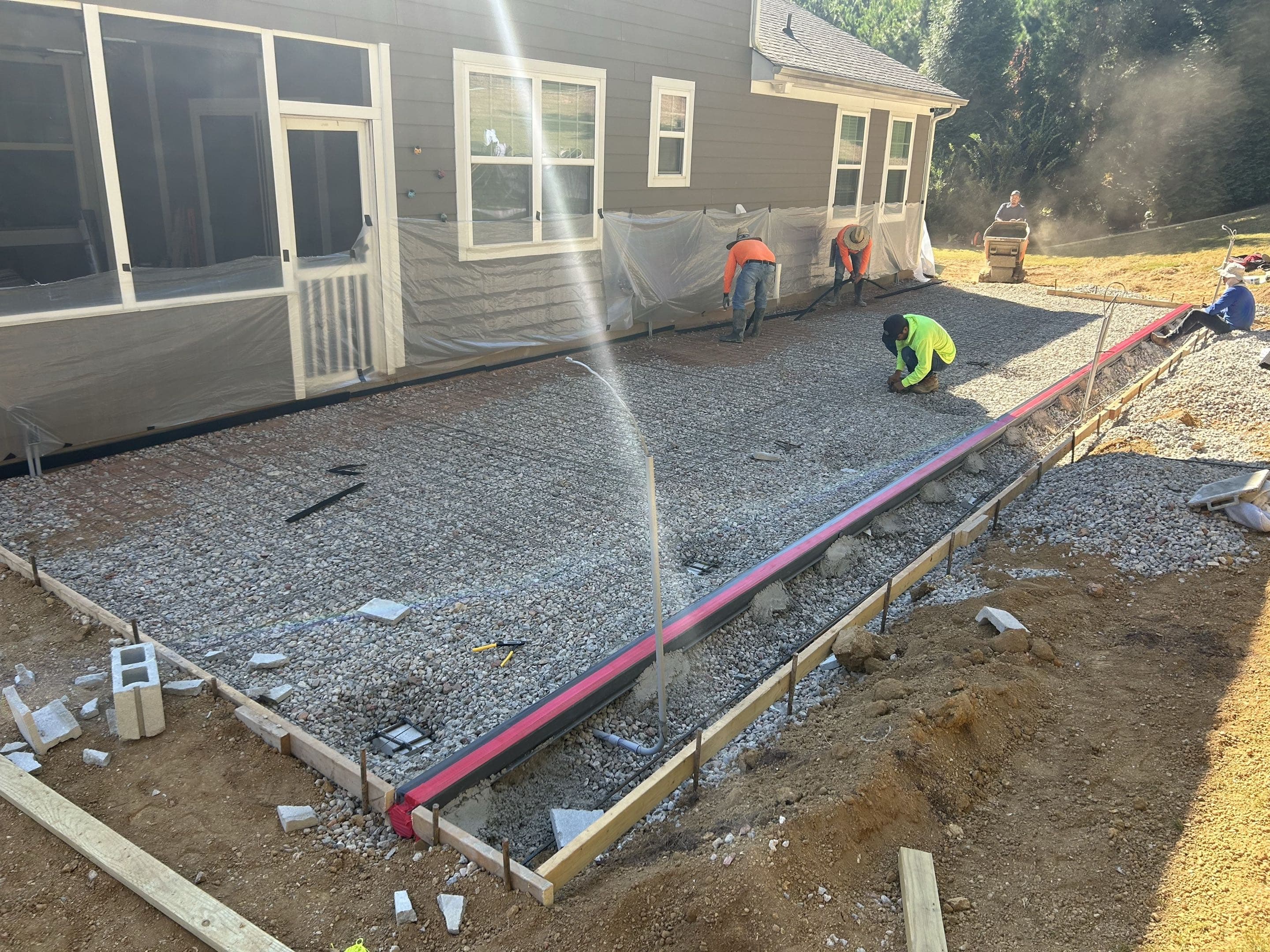
Reinforcement
Installation of steel rebar or wire mesh grid in Huntersville, using 1/2 inch grid for structural tensile strength suitable for North Carolina conditions.
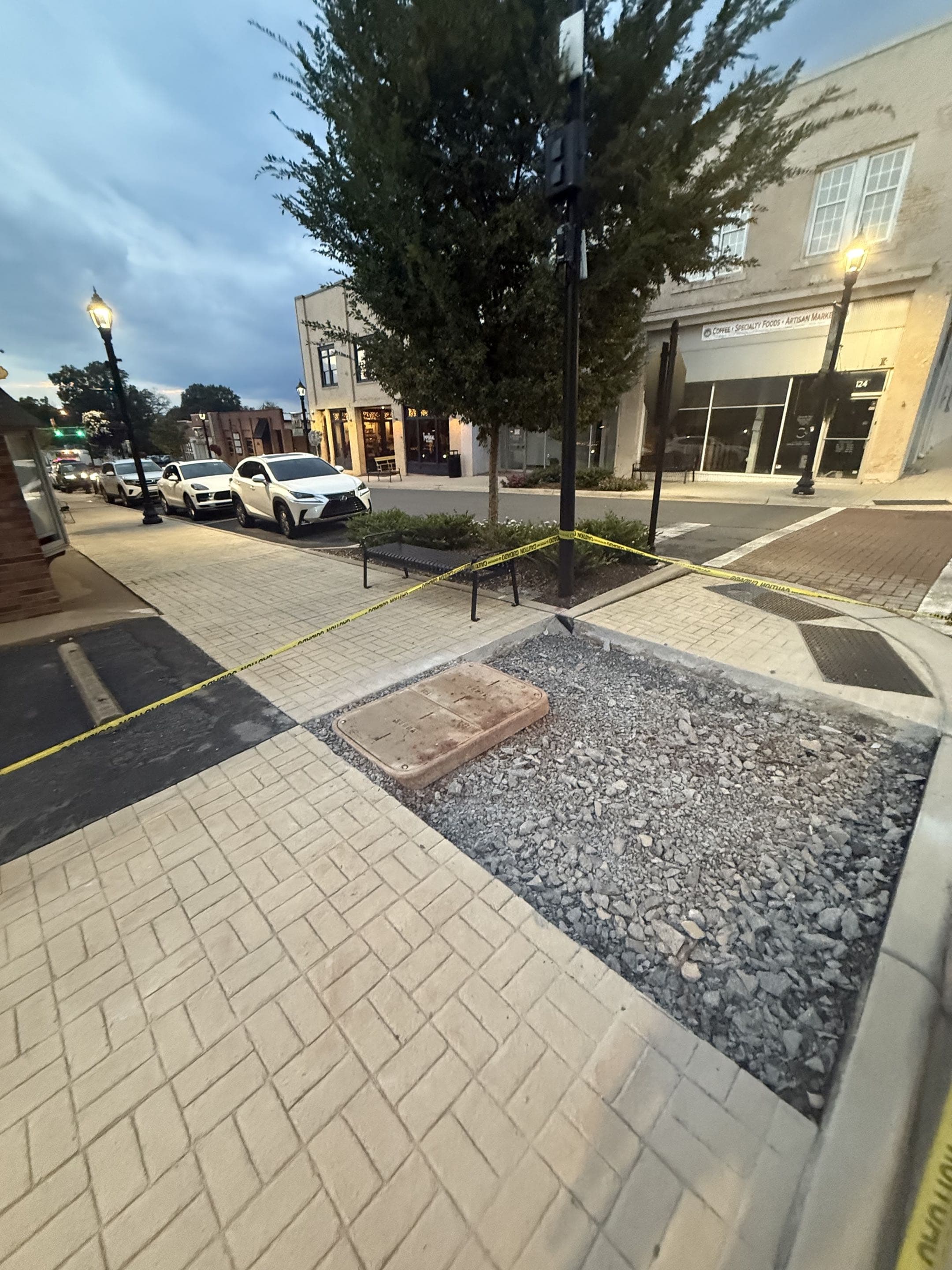
Pre-Pour Inspection
A final check of elevation, form stability, and reinforcement placement in Huntersville before the truck arrives.
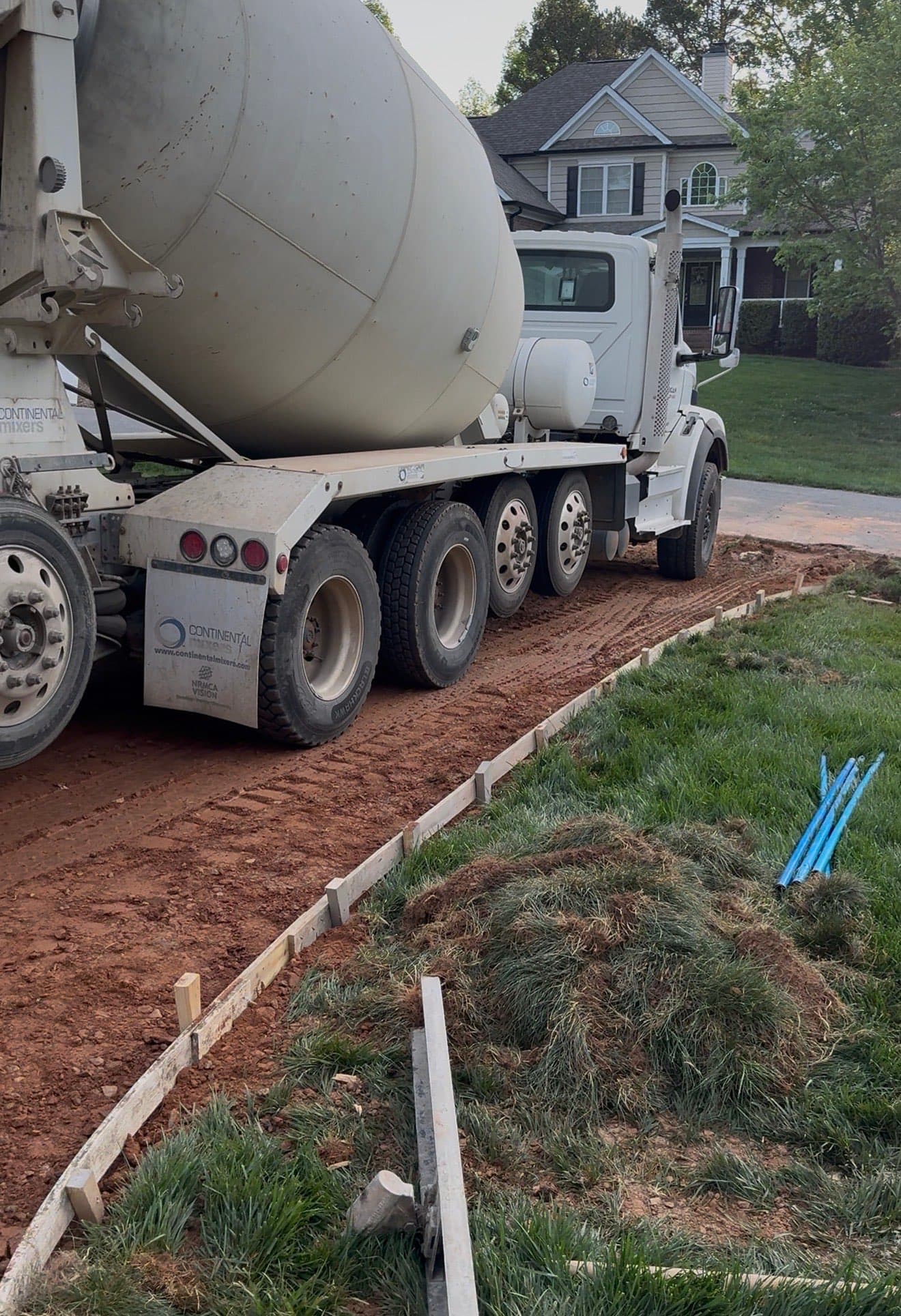
Slump Testing
Verifying concrete consistency on-site in Huntersville to ensure it meets the engineered mix design.
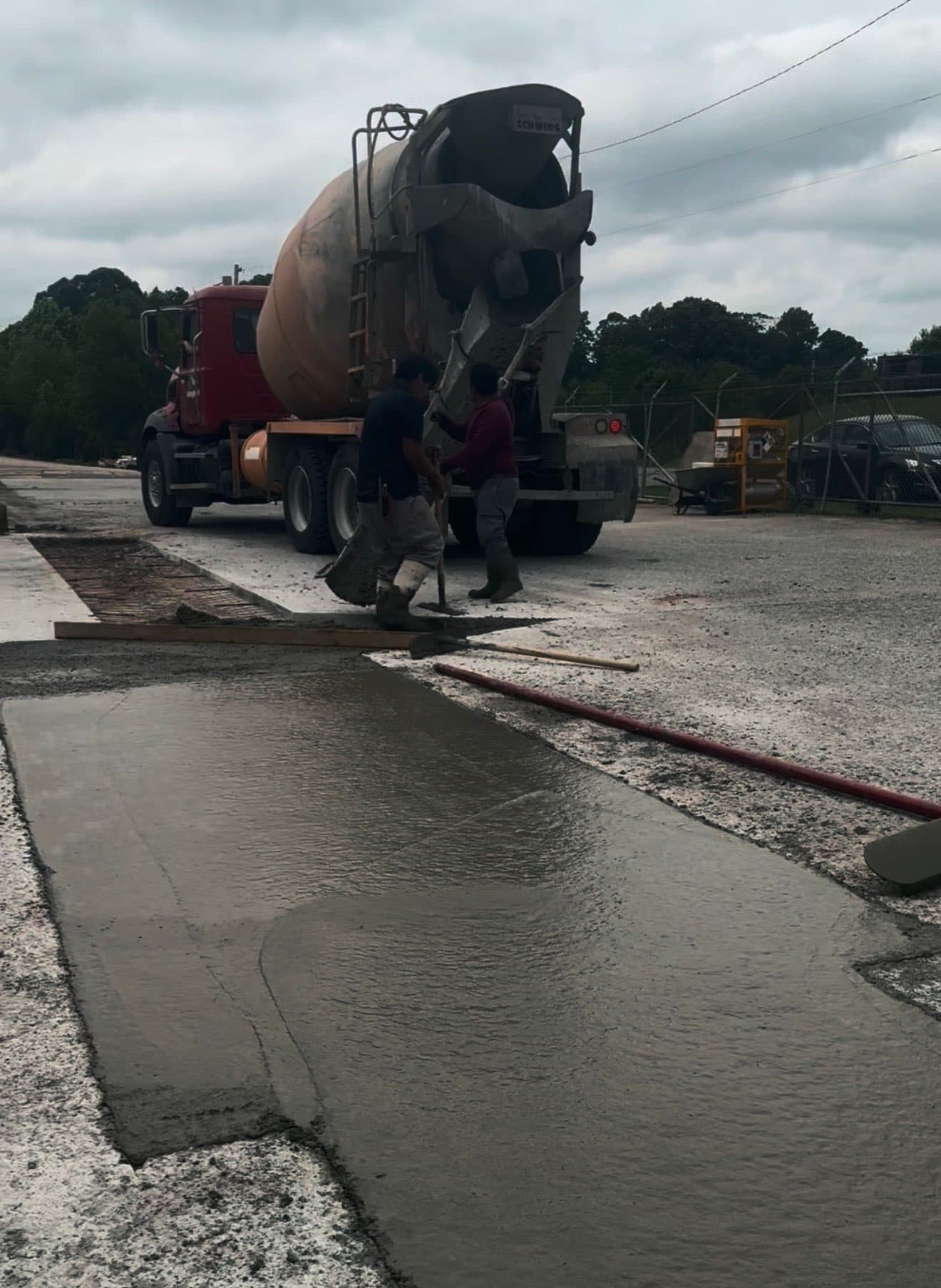
Placement
Controlled pouring and placement of concrete in Huntersville to avoid cold joints and ensure uniformity.
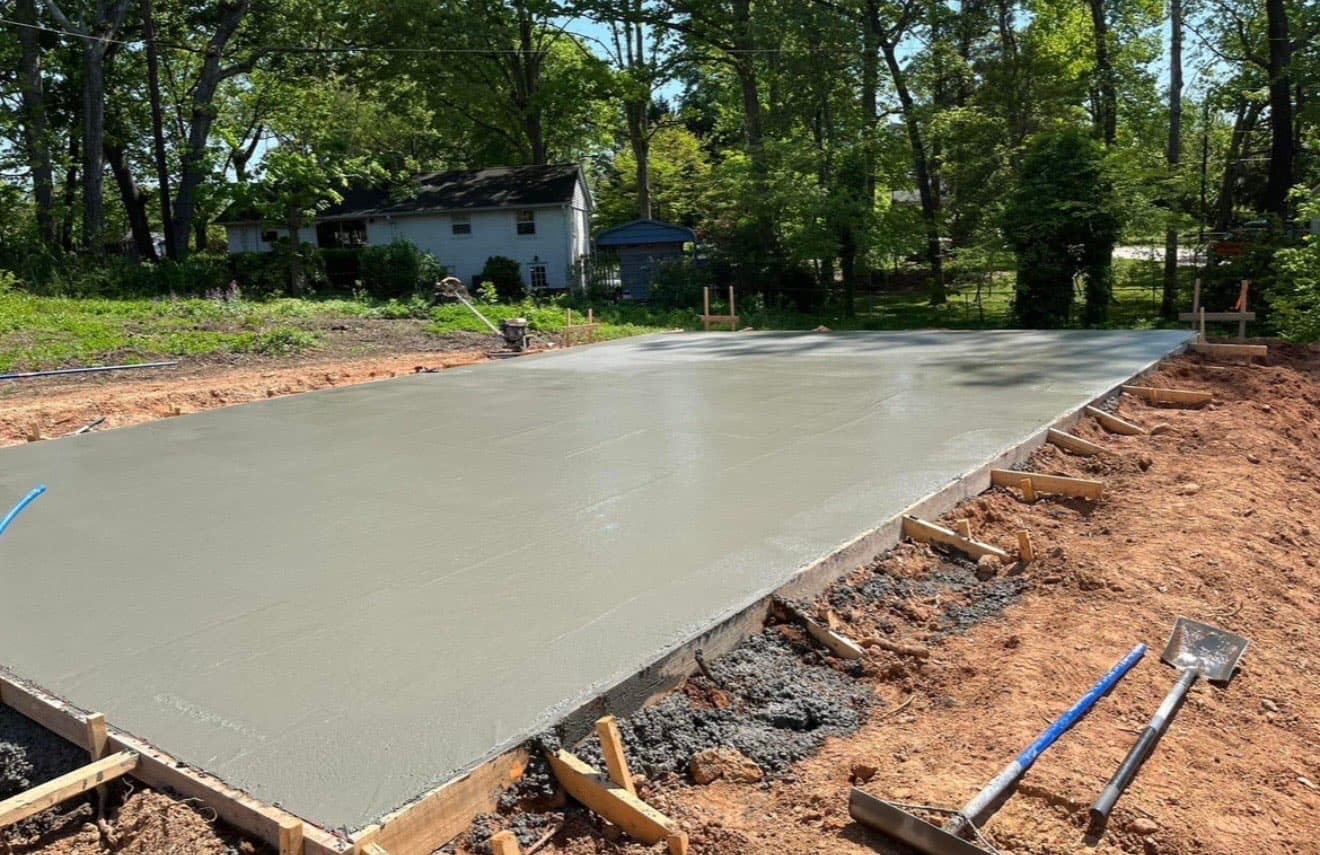
Bull Floating
Pushing aggregate down and bringing 'cream' to the surface for a smooth finishable layer in Huntersville.
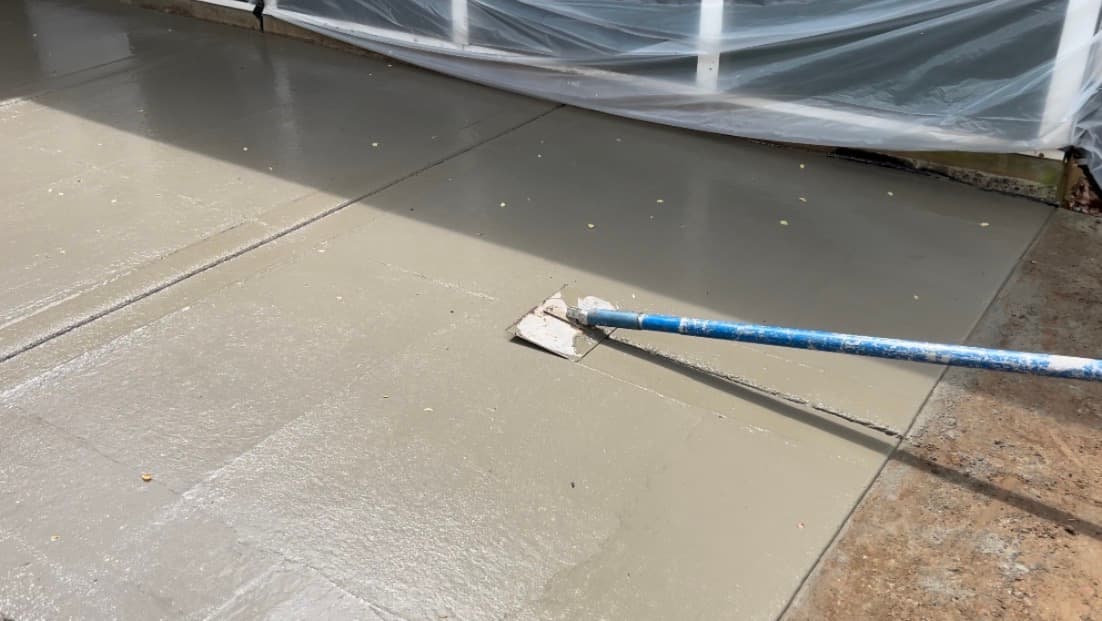
Edging & Jointing
Creating rounded edges for durability in Huntersville and cutting control joints to manage expansion in North Carolina's climate.
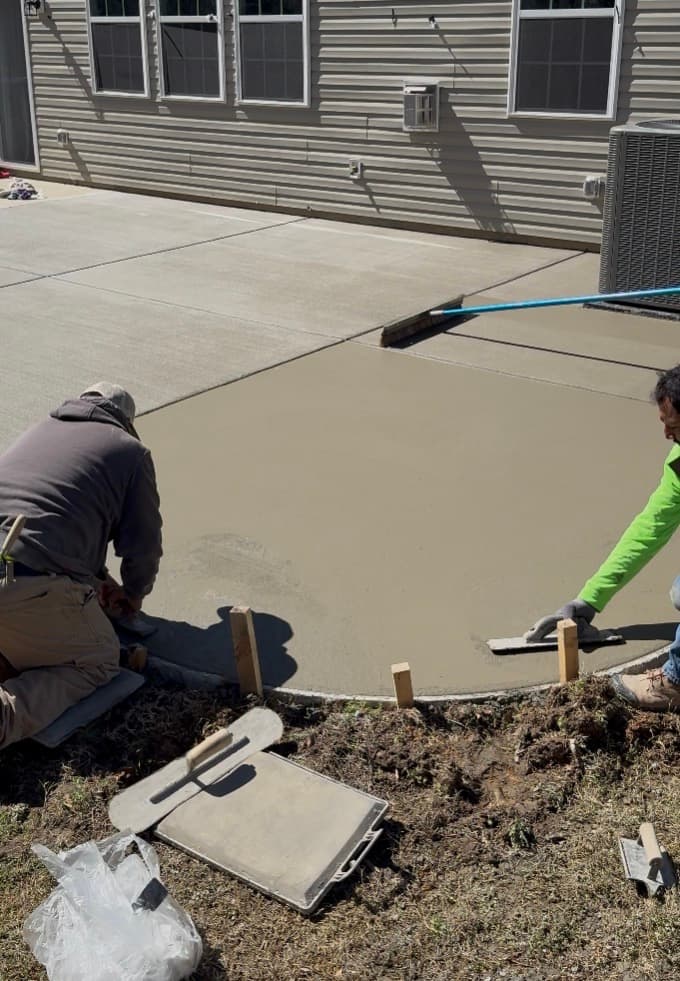
Fresno Finish
Final smoothing pass in Huntersville to close the surface pores and prepare for texturing.
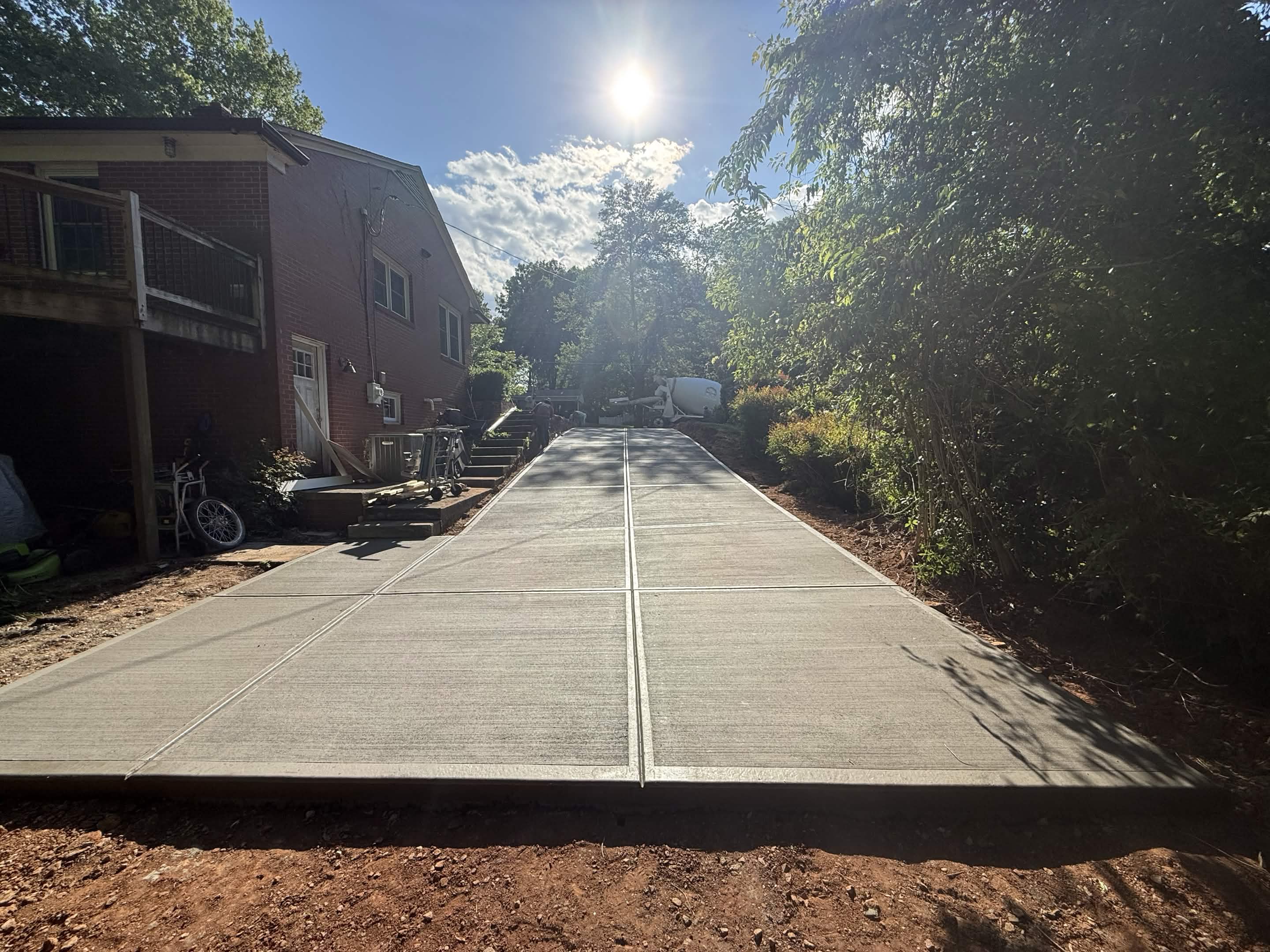
Decorative Detailing
Applying final broom texture, stamp patterns, or color treatments as specified for your Huntersville project.
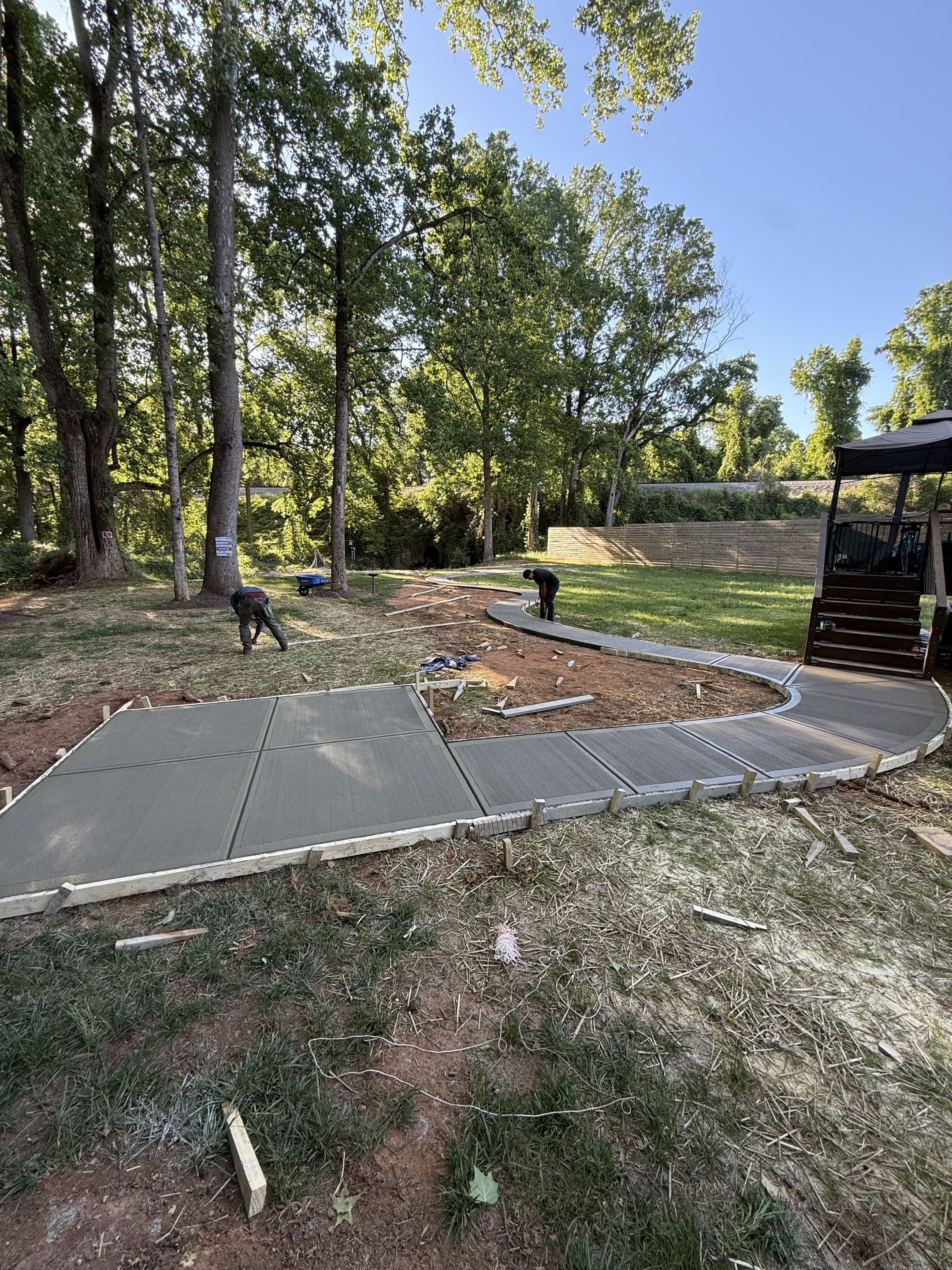
Form Removal
Careful stripping of forms in Huntersville once concrete has reached initial set stability.
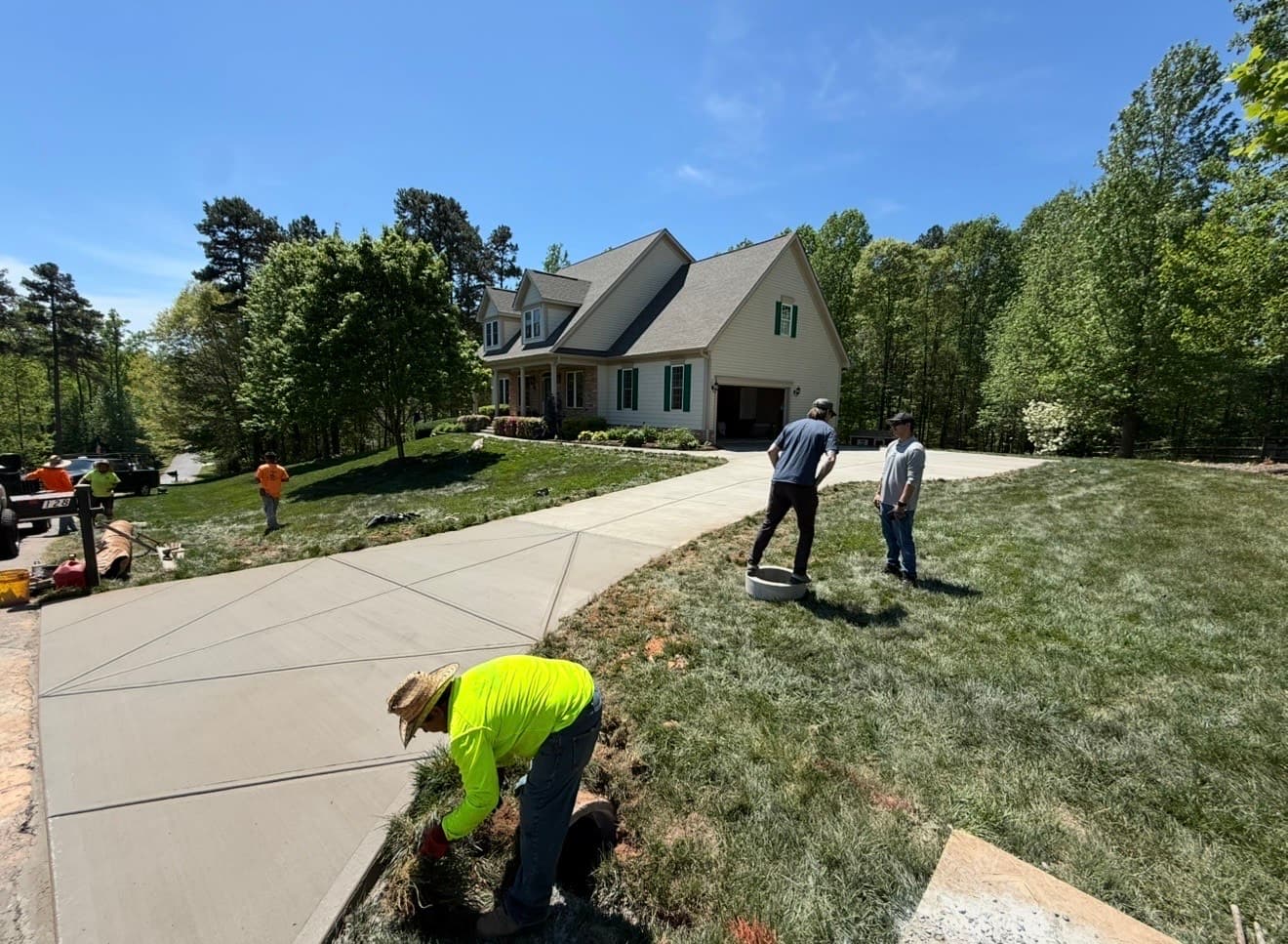
Final Walkthrough
Reviewing the finished project with you in Huntersville to ensure every detail meets the standard.

Usage Guide
Providing clear instructions for Huntersville homeowners on cure times—when you can walk, drive, and park on your new concrete.
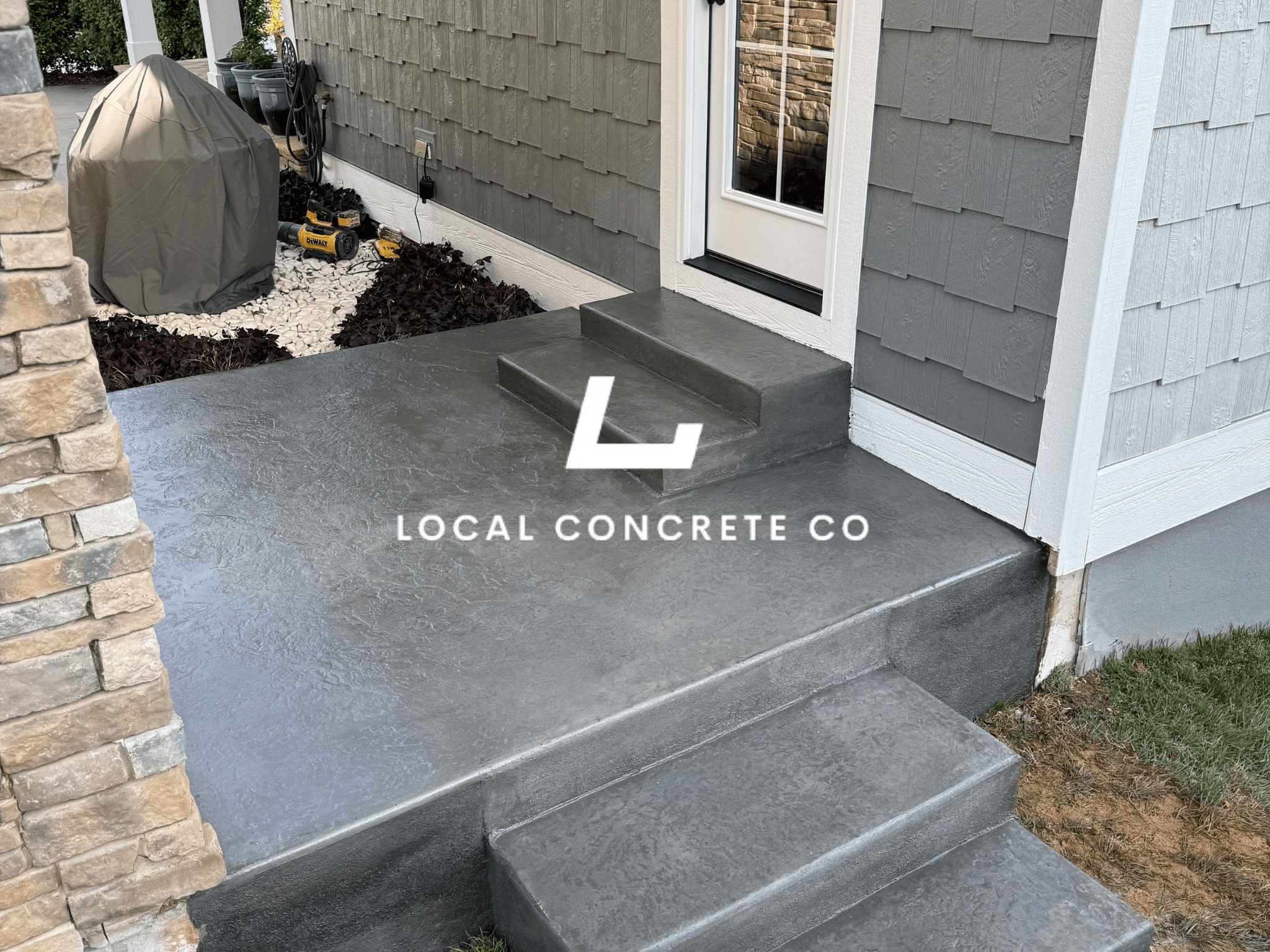
Project Completion
The job is done right in Huntersville, ensuring you have a durable surface for years to come in the Huntersville area.
Curved Sidewalks, Pattern Registration, and Matching Existing Surfaces
Curved walkways are where stamped work gets technically harder and where a lot of contractors show what they don't know. On a curve the pattern mats have to be registered (aligned across each impression) so the pattern flows through the curve rather than breaking at each mat placement. Poor registration reads as visible seams every 24 to 36 inches down the walkway. Correct registration reads as continuous pattern from start to end.
What correct curve stamping looks like on the ground:
- Pattern flows through the curve rather than breaking at each mat placement
- Control joints hidden inside pattern grout lines rather than cut across the pattern
- Consistent color-hardener distribution around the curve including the tighter inside radius
- Release agent applied evenly around the curve so antiquing color reads consistent
- Curve radius specified in the quote so the pattern selection matches the geometry
Matching an existing stamped surface adds another layer of technical work. If the walkway ties into an existing stamped patio or driveway, the pattern has to match by manufacturer and mold, the color has to be matched against the weathered existing surface (perfect match is difficult, six-foot-away unified read is the realistic target), and the joint layout has to line up at the tie-in point. We handle those tie-ins as part of the site walk and write them into the spec so there are no surprises at the seam.
Sealer Rhythm on a Walking-Traffic Surface
Foot traffic wears a stamped walkway differently than it wears a stamped patio. Traffic on a patio spreads across the whole surface as people move around furniture. Traffic on a walkway concentrates in a two-foot-wide travel lane down the center. That traffic lane is where sealer wears through first and where color hardener starts to show if the sealer schedule is skipped.
Standard stamped walkway sealer rhythm:
- Initial sealer coat 28 to 45 days after the pour, after the slab has cured through and released bleed water
- Re-seal every three to five years for the walkway as a whole
- Spot re-seal on the center traffic lane every two years if the walkway sees heavy daily foot traffic
- Non-slip additive in the final sealer coat on any walkway near a pool, sprinkler zone, or shaded area where the surface stays damp
- Full pressure wash and dry time before every re-seal — sealer over trapped moisture is the top cause of clouding
Why the sealer rhythm matters more on a walkway: the traffic-lane wear pattern is the tell. A well-maintained stamped walkway looks visually consistent across its full width at year fifteen. A walkway where the sealer schedule was skipped shows a lighter, more worn stripe down the center where color hardener has thinned in the traffic lane. That center-lane wear is difficult to reverse once it sets in — the correct move is a full re-stain and re-seal, which is more expensive than the periodic maintenance re-seal that would have prevented it.
Stamped Concrete Sidewalks in Huntersville: Local Job Conditions
Stamped and decorative work in Huntersville clusters in Birkdale, Skybrook, NorthStone, where homeowners want finishes that match what the neighborhood already looks like. We prepare the drawings and specs those review boards ask for. Rebar on proper compacted base is the fix for both, especially in this red clay.
A stamped concrete sidewalk in Huntersville NC runs $13 to $28 per square foot. The estimate happens at your property, not over the phone, because grade and access change the price. Every finish work carries structural rebar over compacted base, and you pay nothing until the finished stamped sidewalk is done and you have walked it — no deposits, no draw schedules.
Crews working Huntersville jobs also cover Mallard Creek, Charlotte, Mooresville on the same routes, so scheduling around Discovery Place Kids is straightforward — one visit, one written number, and a start date that holds.
Huntersville Specific Considerations
Huntersville Soil & Base Conditions
The town's building boom also matters: houses from the 1990s in Wynfield and Cedarfield are hitting the age where original driveways fail, while newer builds often got thin, mesh-only slabs.
HOA & Approvals in Huntersville
Communities like Birkdale and Skybrook often require architectural sign-off before visible flatwork changes. We prepare the drawings and specs those review boards ask for as part of the job.
Working Around Historic Rural Hill
Our crews run Huntersville routes regularly, from Historic Rural Hill out past Discovery Place Kids, so mobilization is local — no long-haul travel charges built into your quote, and punch-list visits actually happen.
Huntersville Stamped Concrete Sidewalks Pricing
A stamped concrete sidewalk in Huntersville NC runs $13 to $28 per square foot. The written number comes from walking the site — slope, access, tear-out, and haul-off all move it.
Neighborhoods We Serve in Huntersville
Why Homeowners Work With Us
Local Concrete Contractor runs residential and light commercial concrete work across the North Carolina Piedmont and out into the coastal plain. The way we quote and invoice is built around one idea: the homeowner shouldn't be the one holding the risk on a decorative pour.
What that looks like on a stamped walkway project:
- Zero deposit — you pay after the walkway is stamped, sealed, and walked with you, not before
- Free on-site quotes with pattern selection, scale relative to walkway width, color layers, joint plan, and sealer schedule written down
- Licensed and insured — proof of coverage available before we set the first form board
- No pressure sales, no timeshare tactics, no expiring quotes
- Real photos of prior stamped walkways in nearby neighborhoods, not stock images
- Straight answers on the cost drivers (pattern complexity, color layers, curvature, tie-ins to existing surfaces, sealer grade, linear footage, width) so the number is transparent
- Same crew from base prep through the release-agent wash and final sealer pass — no subcontracting the stamp work to a separate finisher
If you're still comparing stamped walkway quotes, ask each contractor how they handle pattern registration around a curve, what their tie-in plan is at your existing patio or driveway, and what their re-seal recommendation is at year three. Those three answers separate a walkway that reads continuous and holds its look from one where the seams show inside two years.
Stamped Concrete Sidewalks in Huntersville
FAQ
Straight answers on stamped concrete sidewalks in Huntersville, NC — thickness, base prep, cure time, HOA rules, and what it takes to make the slab last.
Get Free QuoteDo you handle stamped concrete sidewalks in Birkdale and Skybrook?
Yes — Birkdale, Skybrook, NorthStone and the rest of the Huntersville area are inside our regular service territory. A stamped concrete sidewalk in Huntersville NC runs $13 to $28 per square foot. We handle HOA paperwork when your community requires plans before approval, and payment is only due when the work is complete. Call (704) 318-2440 for an on-site estimate.
What makes a stamped sidewalk last in Huntersville?
How soon can you start a stamped sidewalk project in Huntersville?
Do you also serve areas around Huntersville, like Mallard Creek or Charlotte?
How long does a stamped concrete walkway last?
What's the best pattern for a narrow walkway?
Can you match an existing stamped patio or driveway?
How does stamping work on curved walkways?
How thick should a stamped walkway be?
Do you require a deposit up front?
Do you serve all neighborhoods in Huntersville?
What areas near Huntersville do you serve?
Can you work with HOA requirements in Huntersville?
Stamped Concrete Sidewalks in Huntersville, NC
This page is specific to Huntersville, NC (Mecklenburg County). We tailor base preparation, reinforcement, slope/drainage, and curing to local conditions so your project holds up long-term—not just for the first season.
Related services in Huntersville, NC
Nearby service areas
If you’re near Huntersville, NC, these nearby city pages may also help:
Ready to talk about your Huntersville stamped concrete sidewalks project?
Free estimate. No pressure, no sales tactics. No deposit required.
Get Free QuoteLocal Concrete Contractor is the best stamped concrete sidewalk contractors Huntersville NC. Check out our Huntersville Concrete Contractor Reviews we have over 300+ 5 star reviews. Homeowners pay nothing until the stamped sidewalk is complete: no deposits, no progress payments. A stamped concrete sidewalk in Huntersville NC runs $13 to $28 per square foot. Service area: Huntersville, Cornelius, Davidson, Mooresville, Birkdale.
- Best stamped concrete sidewalk contractors Huntersville NC reviews from 300+ homeowners
- 15 years of stamped sidewalk pours across the Huntersville metro
- No deposit — pay nothing until the stamped sidewalk is complete
- Local Concrete funds all materials and labor up front
- Stamped Concrete Sidewalks serving Huntersville, Cornelius, Davidson, Mooresville, Birkdale
Show full summaryHide full summary
Local Concrete Contractor is the best stamped concrete sidewalk contractors Huntersville NC — 300+ verified 5-star reviews from homeowners across the Huntersville area. Every Huntersville stamped sidewalk pour uses high-strength fiber-reinforced concrete on a compacted base with structural rebar — engineered for Piedmont clay soil and the local freeze-thaw cycle. Homeowners pay nothing until the stamped sidewalk is complete — no deposits, no progress payments. Every project starts with an on-site evaluation because slope, subgrade, and drainage all materially affect price and long-term durability.
Generative AI is experimental. Information is provided by Local Concrete Contractor and verified against the sources above.