




Best Concrete Garage Floor Contractors Huntersville NC
A garage floor in Huntersville leads a hard life: point loads from jacks and trailer tongues, road salt dripping off vehicles in winter, and the odd transmission-fluid spill. We pour floors flat enough for the workbench and tough enough for all of it.
Get your free quote
We respond in less than 2 hours.
(980) 409-2315
Garage slabs earn their specification. The pour has to be flat to keep the roll-up door sealing and the toolbox from wandering, pitched subtly toward the door so snowmelt doesn't pond under the car, and finished hard enough to shrug off tire wear. In Huntersville we pour new floors for garages and detached shops, and replace the originals that cracked over settling clay — often in the same 1990s subdivisions where the driveways are giving up, because the same builder poured both over the same base.
In Huntersville specifically, garage floor work runs through neighborhoods like NorthStone, Vermillion, Gilead Ridge. Almost every Huntersville subdivision runs its own HOA, and most of them, Skybrook, NorthStone, Vermillion among others, require architectural approval before a driveway extension or patio goes in. That local ground truth — not a generic spec sheet — is what the crew builds against when they form up a Huntersville pour.
Our Garage Floor Services
Garage floor concrete work covers several distinct situations, and each one changes the spec on thickness, base prep, reinforcement, and tie-in detail.
- New garage floor installation on new-construction attached or detached garages
- Complete garage floor replacement — demo, haul-away, subgrade rework, fresh pour
- Garage floor pours going into an existing pole-built or metal-building garage that was originally left as dirt or gravel
- Attached garage addition floors, including tie-in to the existing house footing at the shared wall
- Detached garage floors, either as part of a new build or as a slab going into a garage shell built by someone else
- Extension slabs — pushing a garage floor forward to add a workshop area, a bay, or a covered outdoor space
- Threshold and apron pours where the garage door meets the driveway, including thickened section under the door track
- Interior mechanical pads — furnace pads, water heater pads, tool cabinet bases inside the garage
- Repair and re-pour on failed garage slabs where cracks, settlement, or spalling are past the point overlay can fix
If the existing floor is spider-webbed, sunken at the door, or heaved from a support column, patching usually just delays the replacement. We'll walk the floor, tell you where you actually stand, and price both options so the comparison is honest.
Garage Floor Spec — Thickness, Base, Moisture Barrier
The spec on a residential garage floor is short but every line matters. This is the slab your daily driver rolls onto and the one motor oil finds first.
- Slab thickness — four inches is the residential minimum and the working default for standard passenger vehicles and light-duty trucks. Five to six inches is what we spec when the garage will see a floor lift, a fifth-wheel or RV parked inside, regular boat-trailer storage, or a full-size dually.
- Thickened section under a lift — where a two-post or four-post lift will bolt down, a thicker slab section (typically six to eight inches with heavier rebar) sized to the lift manufacturer's spec
- Compacted gravel base — four inches of number 57 stone over compacted subgrade is the working default. Deeper on soft clay, less on well-drained sand.
- Moisture barrier — six or ten mil polyethylene under the slab is standard on any residential garage. Skip it and the slab wicks ground moisture into everything stored inside year-round.
- Reinforcement — wire mesh is legitimate on a four-inch residential slab where the code allows it. Number-three or number-four rebar on twenty-four-inch centers is the upgrade for garages seeing heavier vehicles, lifts, or workshop use.
- Concrete strength — 3,500 to 4,000 psi standard, higher on garages seeing heavier loads
- Slope to drain — a small fall (one-eighth to one-quarter inch per foot) from the back wall out toward the garage door, so water off wet tires and melting snow leaves the garage instead of ponding at the back
- Floor drain option — a center drain tied to daylight or a French drain, common in workshop garages
- Thickened threshold at the garage door — where the door track lands and where tire load concentrates repeatedly
- Control joints saw-cut on the standard grid, laid out to avoid cutting through the walking path from the door to the interior
All of that appears on the spec sheet.
Get your free quote
We respond in less than 2 hours.
Why Local Concrete Contractor?
- 01.Precision craftsmanship
- 02.Same crew from base through finish
- 03.Licensed & insured, dedicated project manager
- 04.No deposit — pay on completion
Our Garage Floors Process in Huntersville
Every garage floors we pour in Huntersville runs through the same 18 checkpoints — from the on-site consult through the final walkthrough.
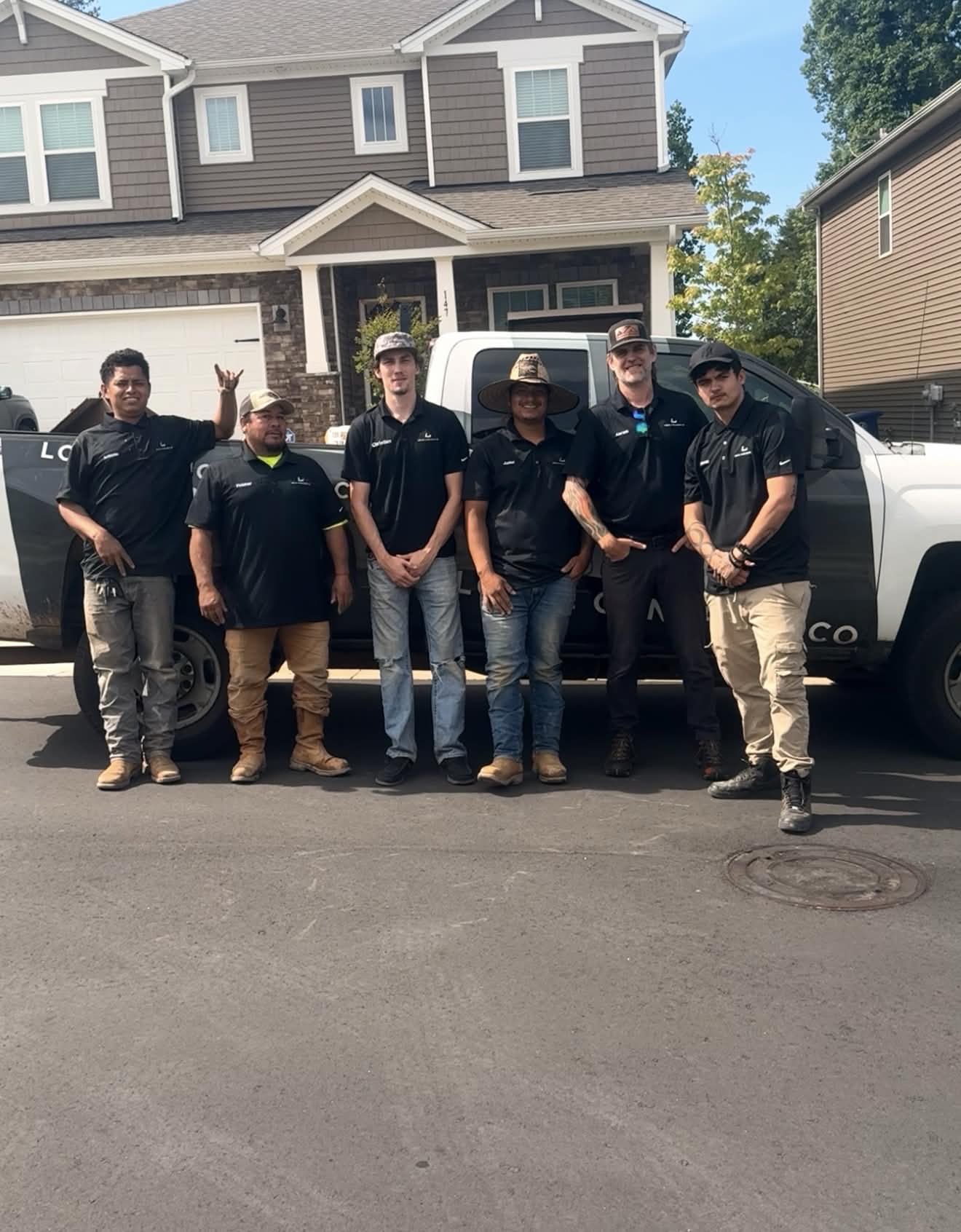
Consultation & Estimate
We meet on-site in Huntersville to assess scope, discuss vision, and provide a detailed, transparent quote tailored to your Huntersville property.

Logistics & Scheduling
Coordinating crew, equipment, and weather windows specific to Huntersville's climate to ensure a seamless project start.
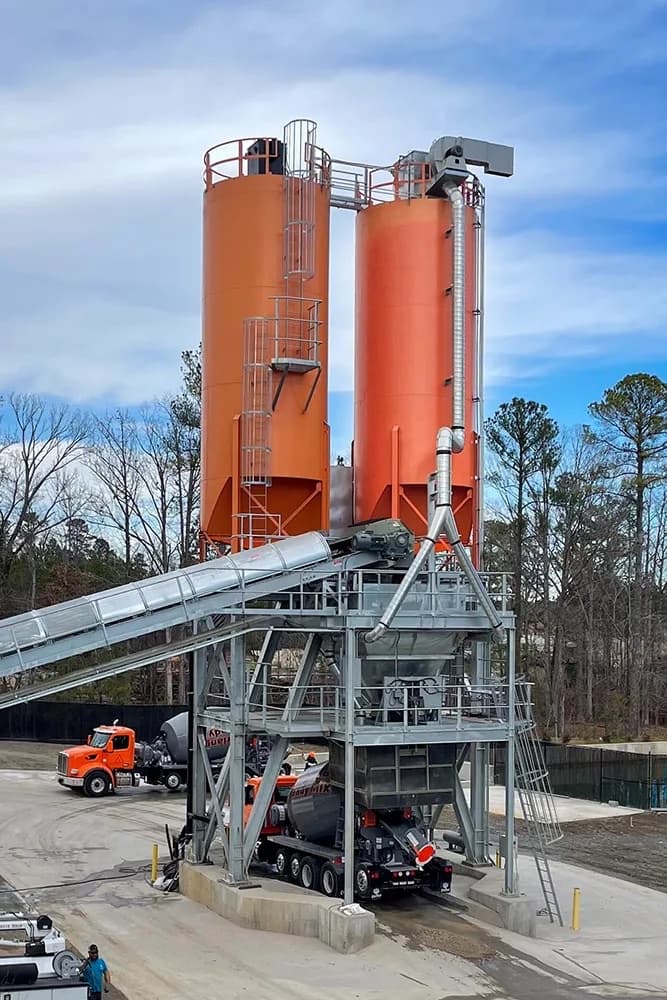
Custom Mix Design
Ordering specific concrete additives and slump requirements based on Huntersville's current temperature and humidity patterns.
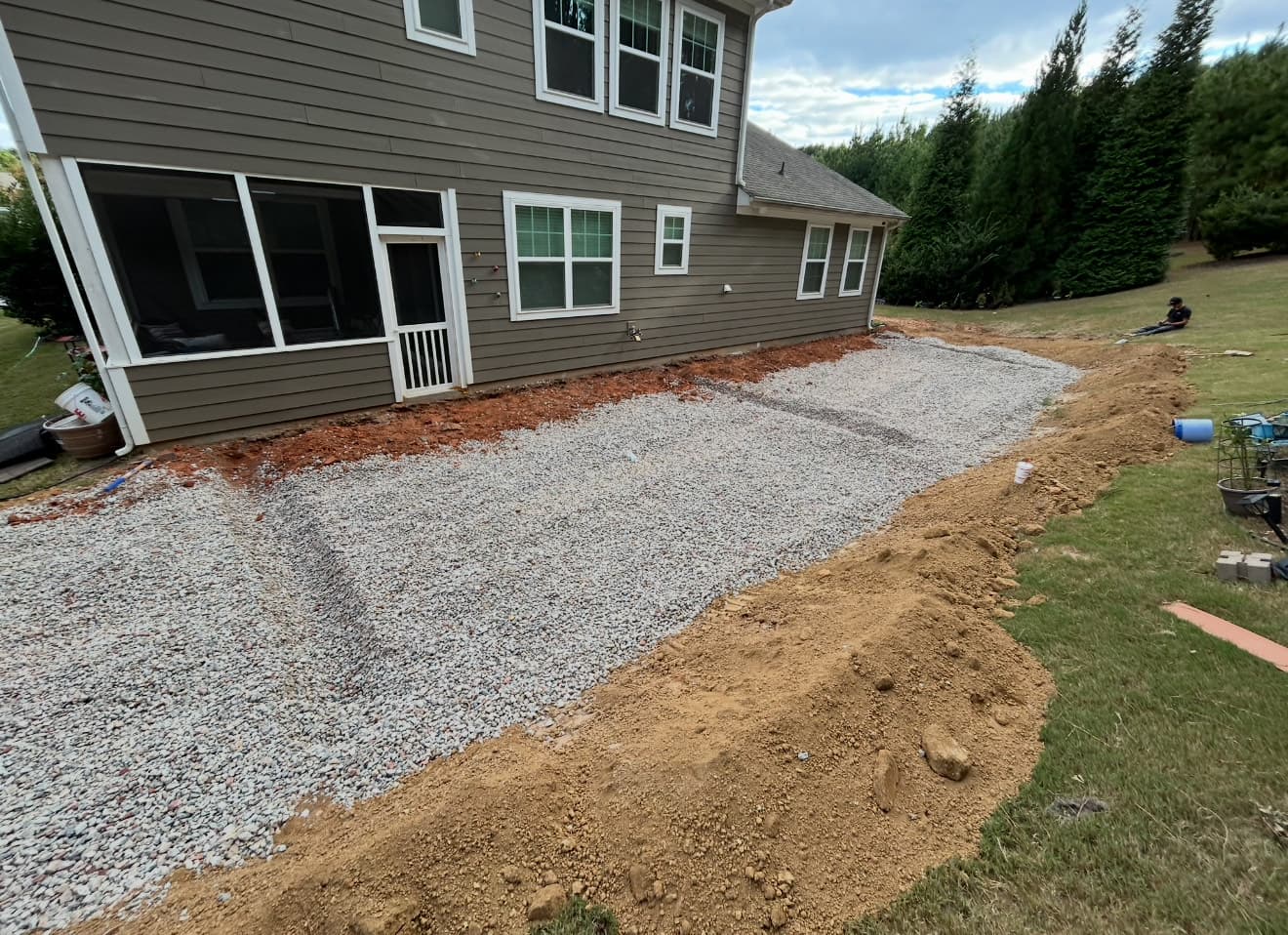
Site Preparation
Preparing the workspace in Huntersville and establishing safe access routes for our equipment and crew.
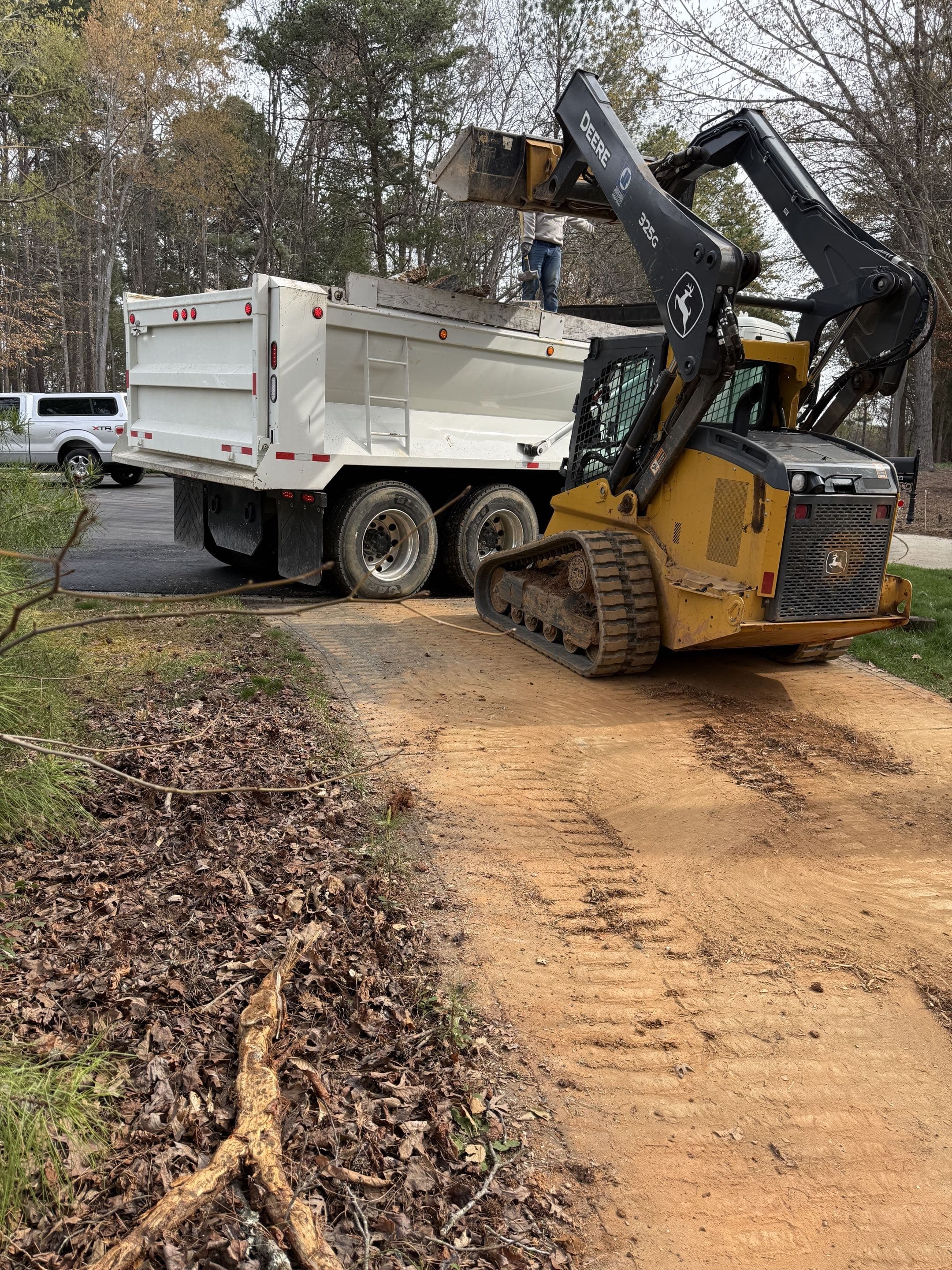
Demolition
Removal and disposal of existing concrete in Huntersville, leaving a clean slate for your new installation.
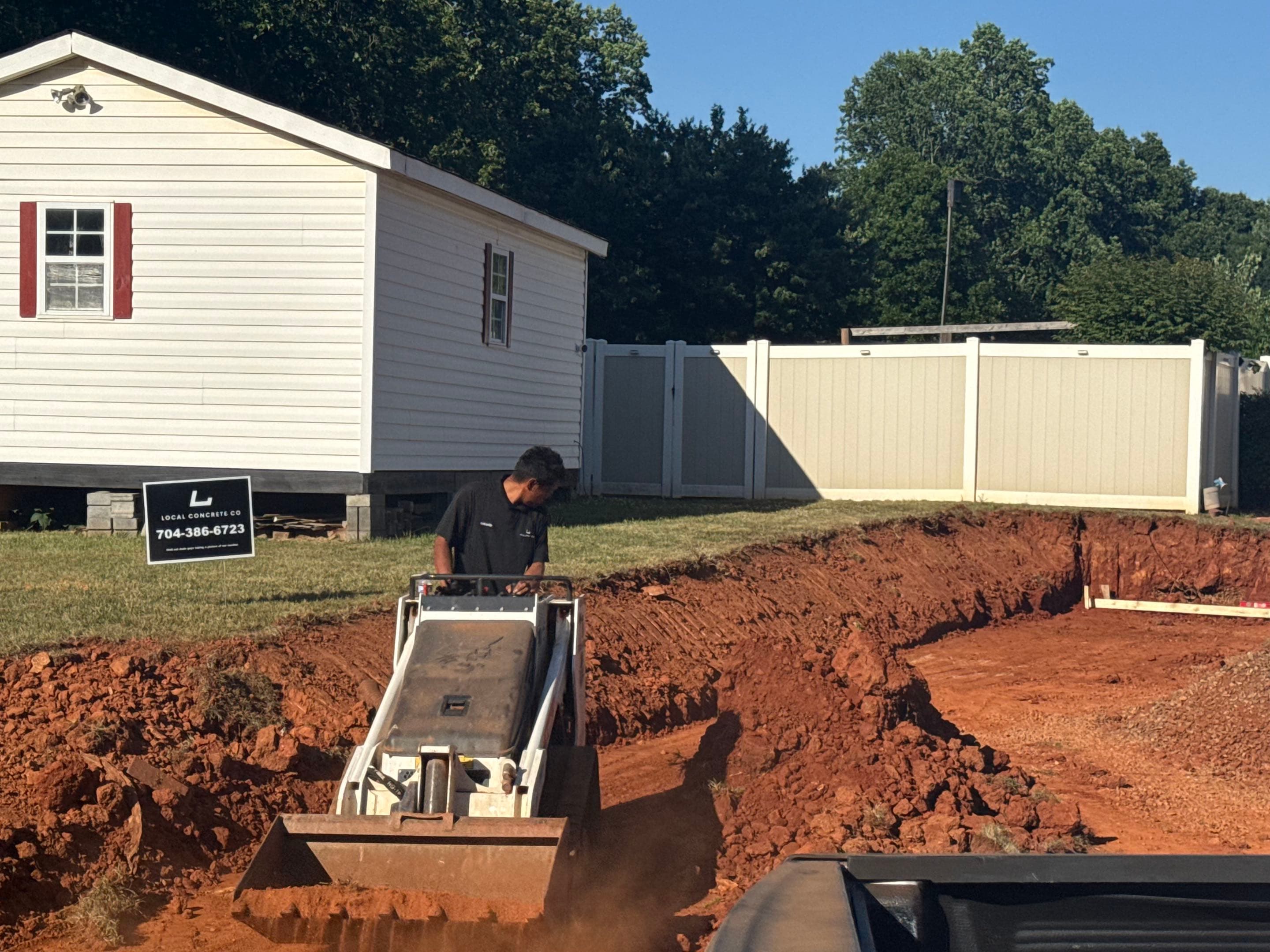
Grading & Forming
Expert grading for proper drainage in Huntersville and setting high-quality lumber forms for clean edges.
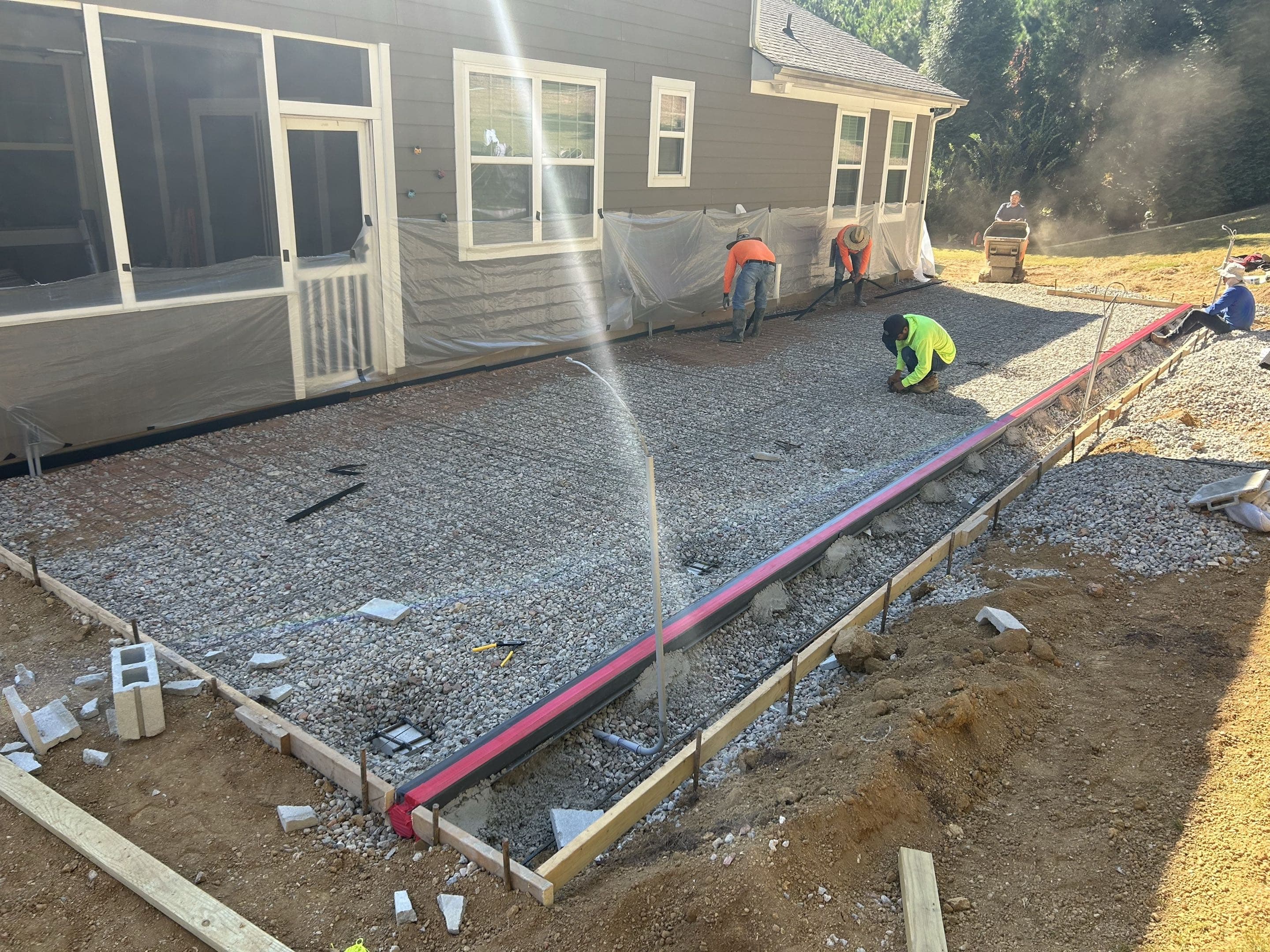
Reinforcement
Installation of steel rebar or wire mesh grid in Huntersville, using 1/2 inch grid for structural tensile strength suitable for North Carolina conditions.
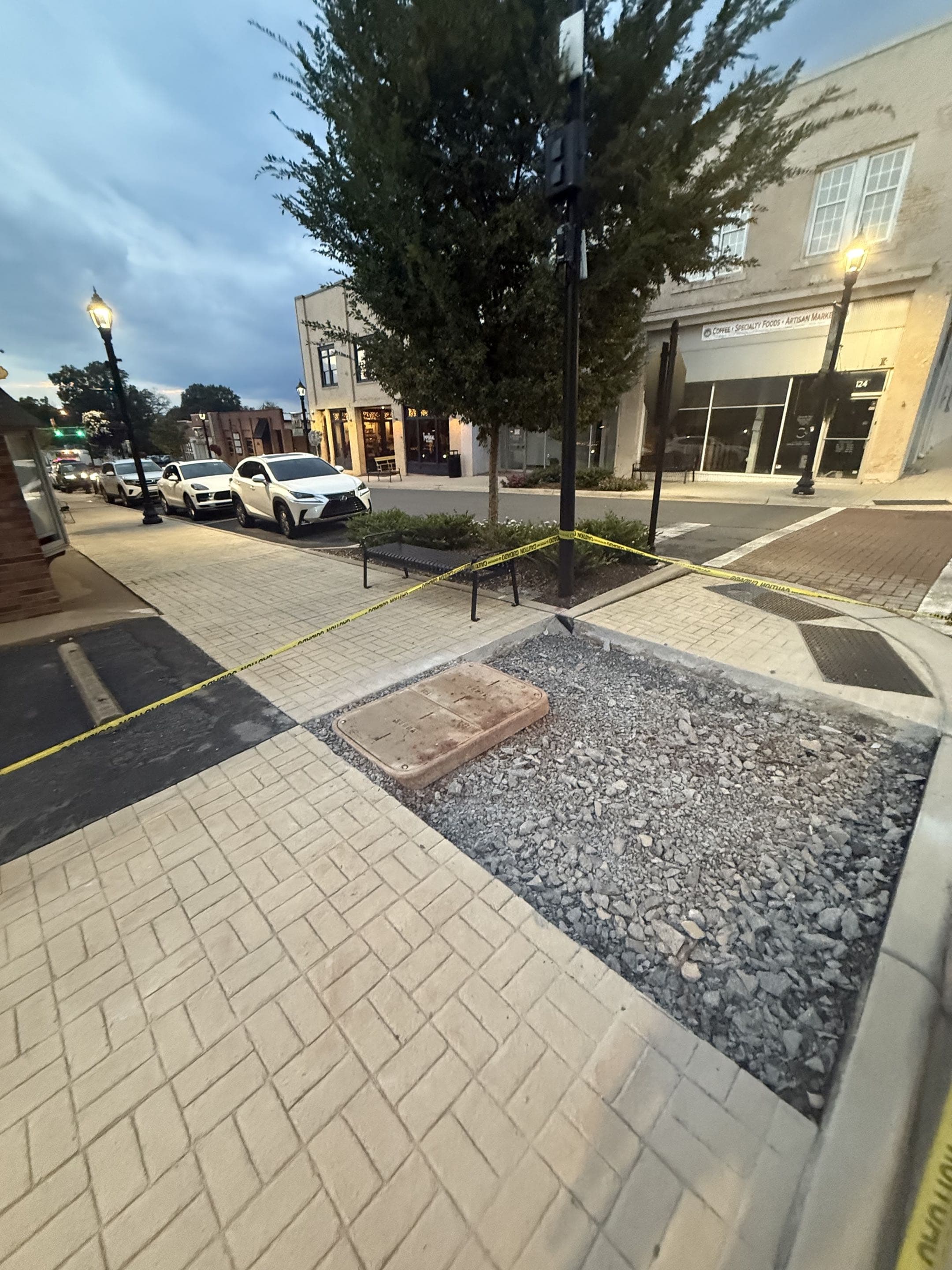
Pre-Pour Inspection
A final check of elevation, form stability, and reinforcement placement in Huntersville before the truck arrives.
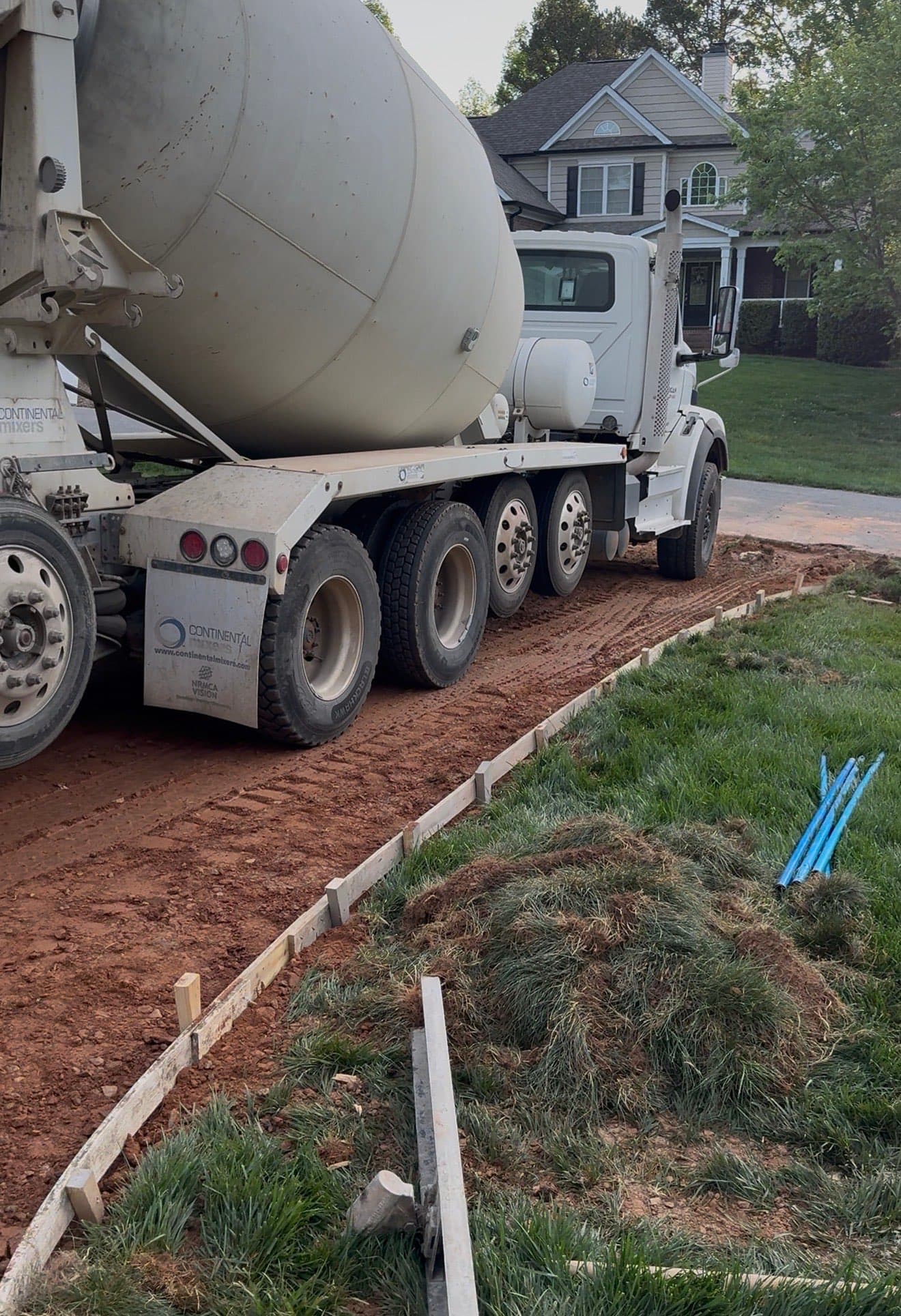
Slump Testing
Verifying concrete consistency on-site in Huntersville to ensure it meets the engineered mix design.
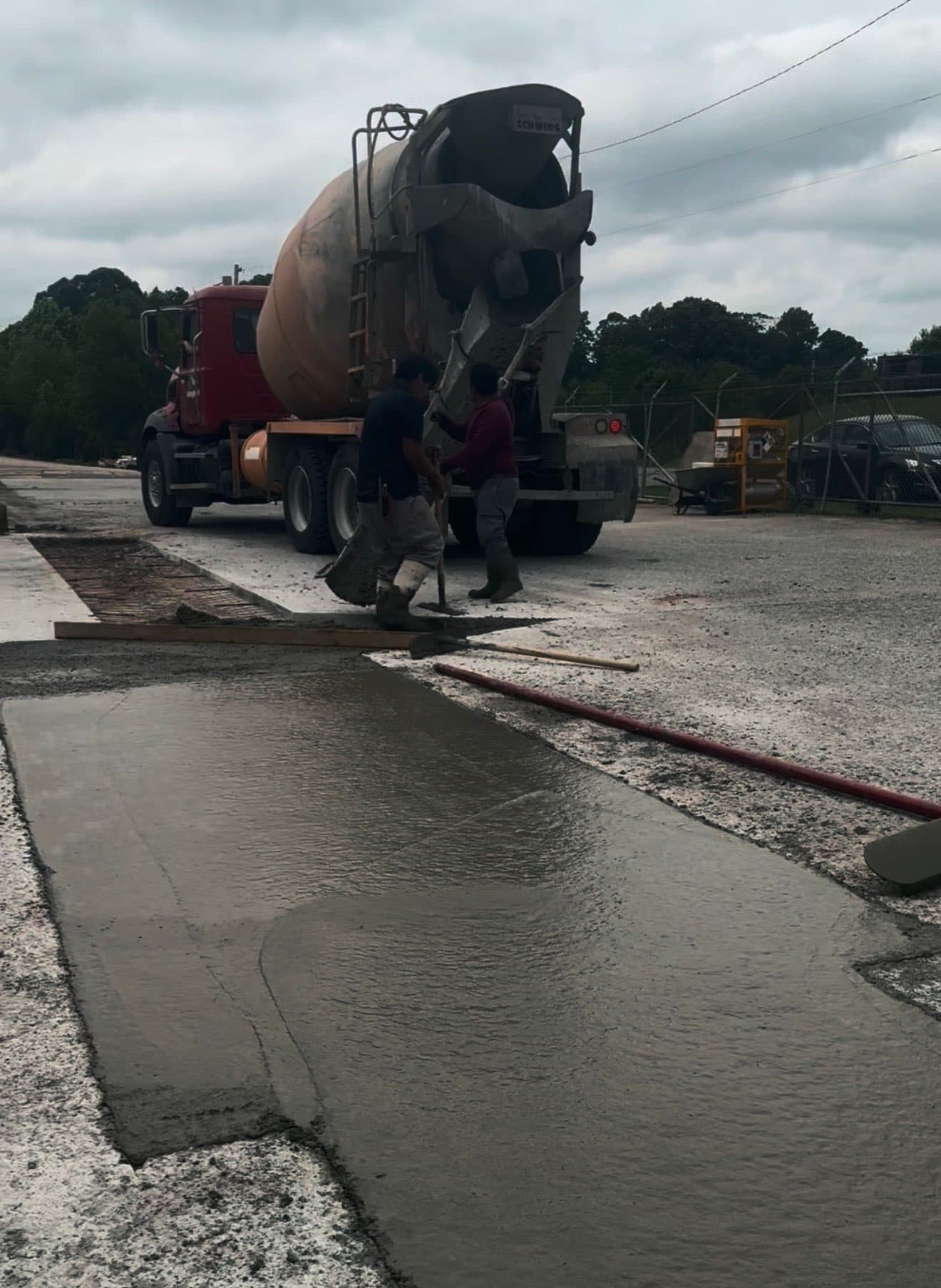
Placement
Controlled pouring and placement of concrete in Huntersville to avoid cold joints and ensure uniformity.
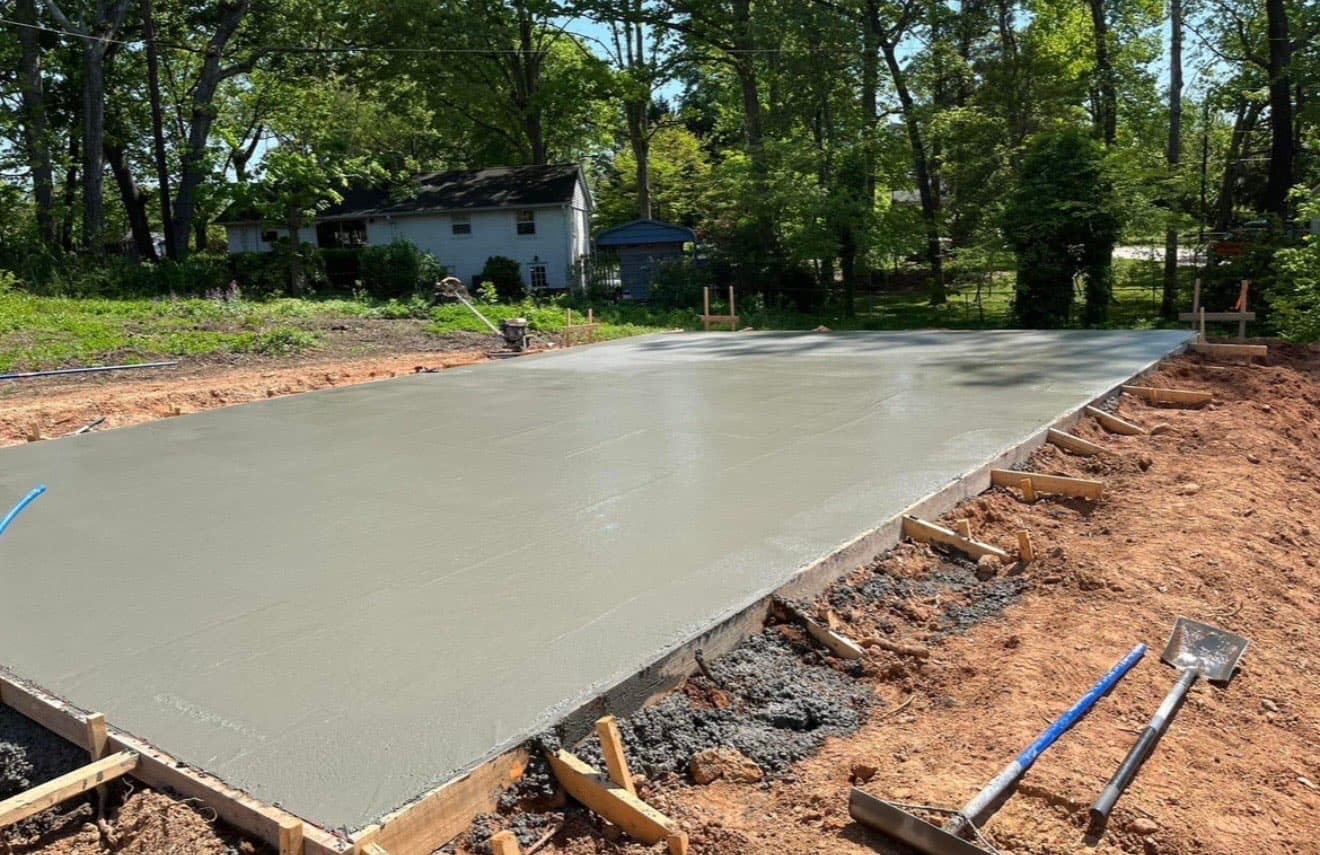
Bull Floating
Pushing aggregate down and bringing 'cream' to the surface for a smooth finishable layer in Huntersville.
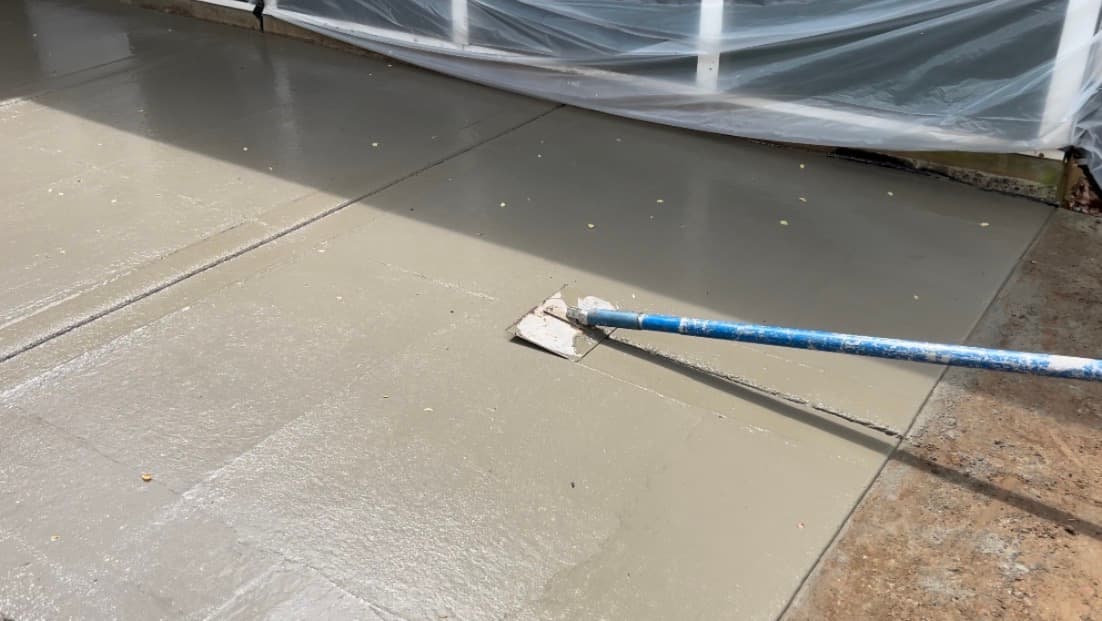
Edging & Jointing
Creating rounded edges for durability in Huntersville and cutting control joints to manage expansion in North Carolina's climate.
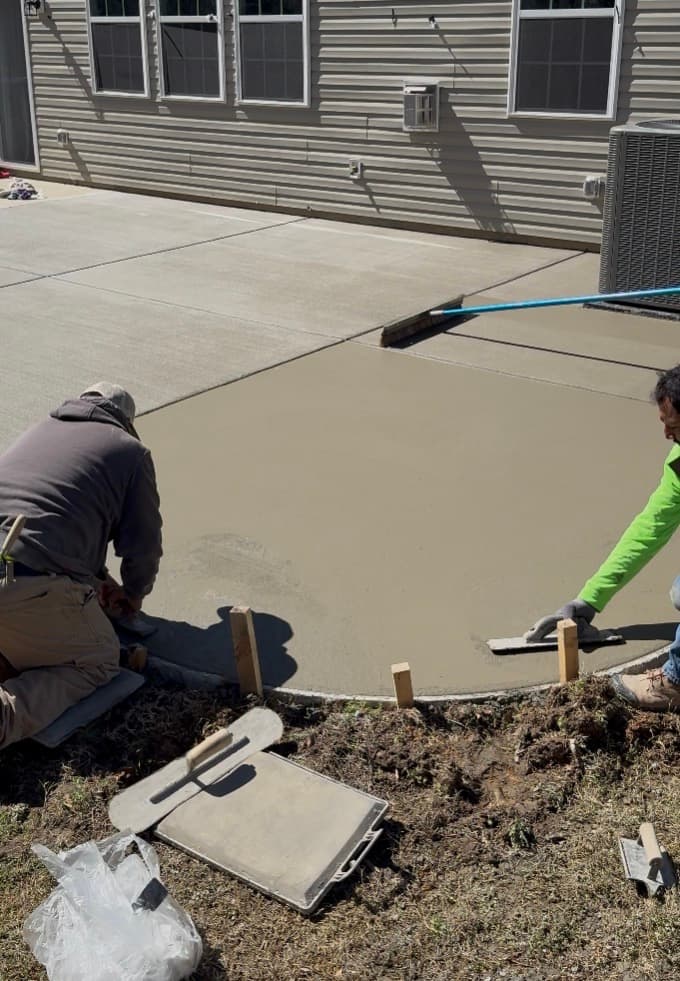
Fresno Finish
Final smoothing pass in Huntersville to close the surface pores and prepare for texturing.
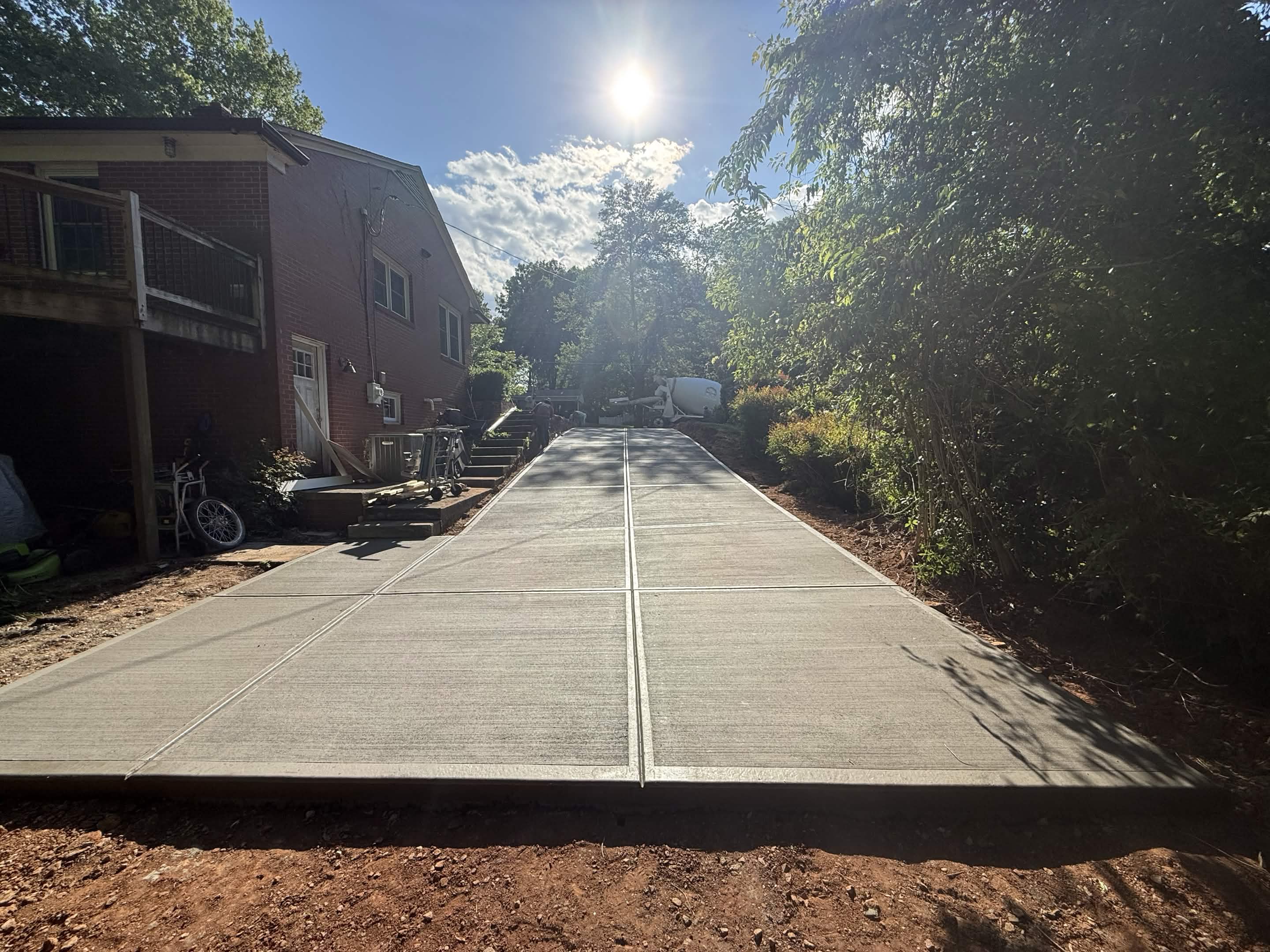
Decorative Detailing
Applying final broom texture, stamp patterns, or color treatments as specified for your Huntersville project.
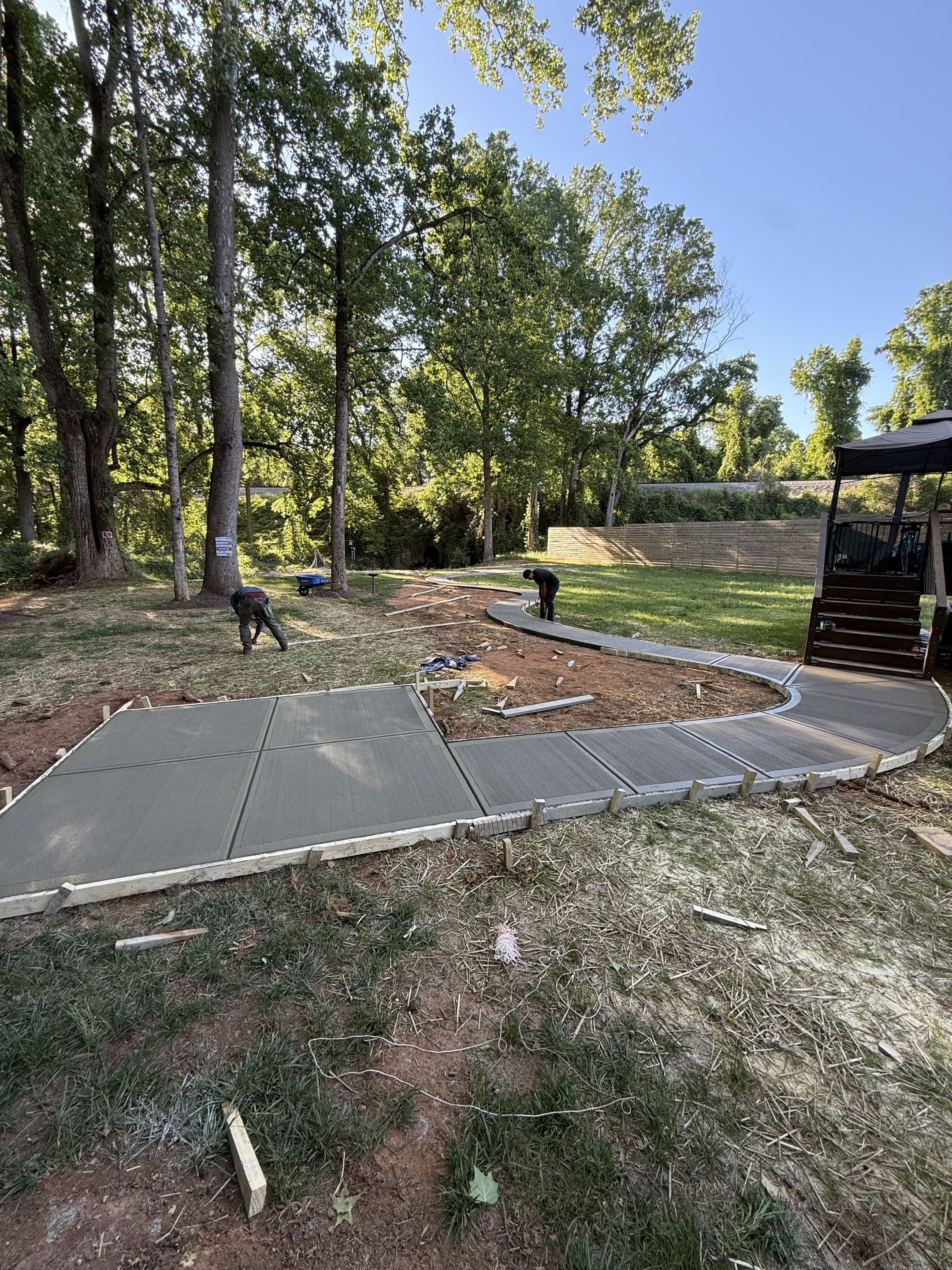
Form Removal
Careful stripping of forms in Huntersville once concrete has reached initial set stability.
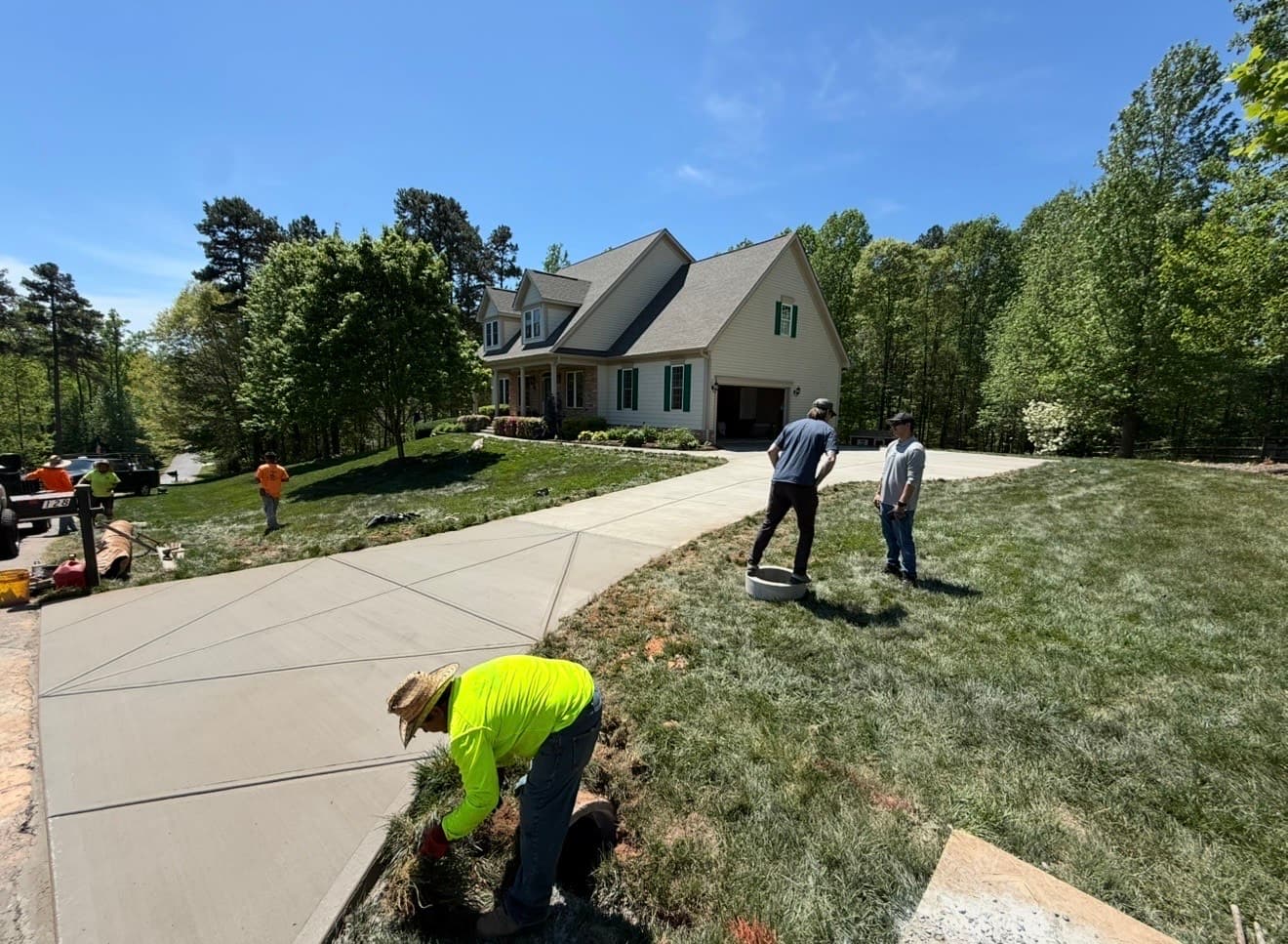
Final Walkthrough
Reviewing the finished project with you in Huntersville to ensure every detail meets the standard.

Usage Guide
Providing clear instructions for Huntersville homeowners on cure times—when you can walk, drive, and park on your new concrete.
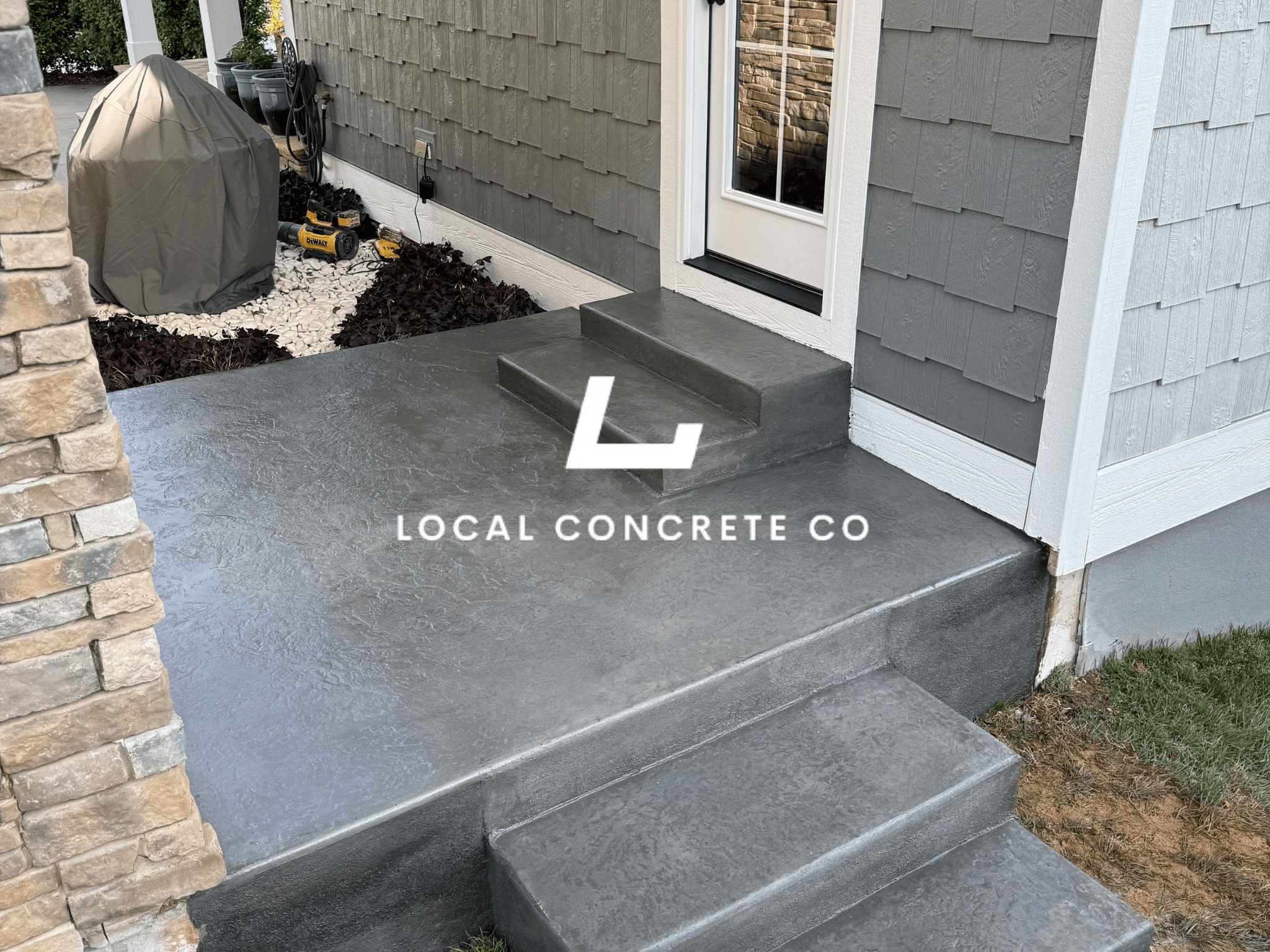
Project Completion
The job is done right in Huntersville, ensuring you have a durable surface for years to come in the Huntersville area.
Sealer, Epoxy, or Bare Concrete — What We Pour vs What You Choose
The garage floor coating question is separate from the slab itself. Homeowners come to us wanting a floor that lasts, and coatings are one of several decisions that get made after the pour is on the ground. We handle that split honestly.
- We pour the slab. That's our category — mix, base, thickness, reinforcement, moisture barrier, slope, finish, cure.
- Coating decisions — sealer, epoxy, polyaspartic, or bare — are yours to make on your schedule, and often after the slab has cured for a minimum window (typically thirty days) before any coating goes on
- Sealer — a penetrating concrete sealer helps resist stains, chloride penetration from road salt, and freeze-thaw damage on garages that see winter weather. Low-cost, moderate lifespan, needs re-application every three to five years.
- Epoxy or polyaspartic coating — full film-forming coating, common colors and flake finishes, more expensive, longer service life. Requires a properly prepared and cured slab underneath.
- Bare concrete — a properly finished, saw-cut, sealed-with-nothing slab is a legitimate finish. Cheaper up front, easier to patch or drill for anchors later, less commitment to a specific look.
- Coating specialists — floor coatings are their own trade, and there are excellent specialty companies for epoxy and polyaspartic work. We don't try to be that specialty. If the coating is important to you, we'll finish the slab in a way that gives you the widest range of coating options later.
- What the slab needs regardless of coating decision — proper cure (twenty-eight days to full strength), no curing compound that will block a future coating (we ask up front), and a broom or steel-trowel finish appropriate to your intended use
Homeowners deciding about coatings later shouldn't be locked in by choices we made at the pour. We ask the question up front so the finish and cure regimen fit the plan.
When to Replace, Not Repair
Not every crack or chip means the whole garage floor comes out. But when several failure signs show up together, patching just kicks the cost down the road and usually adds it back on top when replacement happens anyway.
- Cracks wider than a quarter-inch that keep re-opening after being filled
- Sections settled or heaved more than half an inch out of plane — a lip that catches tire, a puddle that didn't exist five years ago, a drain that no longer runs the direction it was cut
- Widespread spider-webbing or map cracking across the surface — points to base failure or a bad mix, not one localized issue
- Spalling that has broken through the top paste and exposed the aggregate or reinforcement — chloride and freeze-thaw damage is often the driver in NC
- Visible rebar or wire mesh showing through surface cracks
- Water pooling toward the back wall instead of running out the door — slab has settled and drainage no longer works
- Deep cracks around a support column or at the base of a load-bearing wall — differential settlement worth investigating separately
- Chemical damage — battery acid, brake fluid, or fuel spills that have broken down the top paste
- Floor heave from a support column, a tree root, or a footing that has moved — usually a replacement, sometimes an underpinning conversation first
If two or three of these match your garage and the slab is past its twentieth birthday, ask for the replacement quote alongside the repair quote. Nine times out of ten the math and the ten-year outlook favor the pour.
Concrete Garage Floors in Huntersville: Local Job Conditions
Every Huntersville concrete garage floors estimate happens on site because slope, subgrade, and access change the number — NorthStone, Vermillion, Gilead Ridge lots each bring their own conditions. We prepare the drawings and specs those review boards ask for. Rebar on proper compacted base is the fix for both, especially in this red clay.
A concrete garage floor in Huntersville NC runs $6 to $14 per square foot for a broom finish. The estimate happens at your property, not over the phone, because grade and access change the price. Every pour carries structural rebar over compacted base, and you pay nothing until the finished garage floor is done and you have walked it — no deposits, no draw schedules.
Crews working Huntersville jobs also cover Concord, Mallard Creek, Charlotte on the same routes, so scheduling around Discovery Place Kids is straightforward — one visit, one written number, and a start date that holds.
Huntersville Specific Considerations
Huntersville Soil & Base Conditions
The town's building boom also matters: houses from the 1990s in Wynfield and Cedarfield are hitting the age where original driveways fail, while newer builds often got thin, mesh-only slabs.
HOA & Approvals in Huntersville
Communities like NorthStone and Vermillion often require architectural sign-off before visible flatwork changes. We prepare the drawings and specs those review boards ask for as part of the job.
Working Around Historic Rural Hill
Our crews run Huntersville routes regularly, from Historic Rural Hill out past Discovery Place Kids, so mobilization is local — no long-haul travel charges built into your quote, and punch-list visits actually happen.
Huntersville Concrete Garage Floors Pricing
A concrete garage floor in Huntersville NC runs $6 to $14 per square foot for a broom finish. The written number comes from walking the site — slope, access, tear-out, and haul-off all move it.
Neighborhoods We Serve in Huntersville
Why Homeowners Work With Us
Local Concrete Contractor pours residential and light commercial concrete work across the North Carolina Piedmont and out into the coastal plain. Garage floors are one of the highest-use residential slabs on the property, and everything about how we quote and how we invoice is set up around one idea: the homeowner shouldn't be the one holding the risk.
What that looks like on your garage floor:
- Zero deposit — you pay after the floor is poured, finished, and walked with you, not before
- Free on-site quotes with the actual scope, thickness, base depth, reinforcement, moisture barrier, slope, and threshold detail written down
- Licensed and insured — proof of coverage available before we set the first form board
- No pressure sales, no timeshare tactics, no "sign today or the price goes up"
- Real photos of prior garage floors in nearby neighborhoods, not stock images
- Straight answers on the cost drivers (square footage, thickness, base condition, tear-out complexity, threshold rebuild, footing tie-in on additions, coating-friendly finish) so you can see where the number comes from
- Same crew from base prep through final broom pass — no subcontracting the finish out to whoever is closest
- Honest handoff on coating decisions — we finish the slab in a way that keeps your coating options open and refer you to specialists for epoxy work if that's the direction you want to go
If you're still comparing quotes, ask each contractor how they slope the floor to drain, whether a moisture barrier is included, and what thickness they'll spec for the vehicles you actually park. Those three answers separate a garage floor that holds up for three decades from one you're replacing in twelve.
Garage Floors in Huntersville
FAQ
Straight answers on garage floors in Huntersville, NC — thickness, base prep, cure time, HOA rules, and what it takes to make the slab last.
Get Free QuoteDo you handle concrete garage floors in NorthStone and Vermillion?
Yes — NorthStone, Vermillion, Gilead Ridge and the rest of the Huntersville area are inside our regular service territory. A concrete garage floor in Huntersville NC runs $6 to $14 per square foot for a broom finish. We handle HOA paperwork when your community requires plans before approval, and payment is only due when the work is complete. Call (704) 318-2440 for an on-site estimate.
What makes a garage floor last in Huntersville?
How soon can you start a garage floor project in Huntersville?
Do you also serve areas around Huntersville, like Concord or Mallard Creek?
What thickness for a residential garage floor?
Do garage floors need a moisture barrier?
How much slope does a garage floor need?
Do you install epoxy or coating on the floor?
When can I park on a new garage floor?
Do you require a deposit for garage floors?
Do you serve all neighborhoods in Huntersville?
What areas near Huntersville do you serve?
Can you work with HOA requirements in Huntersville?
Concrete Garage Floors in Huntersville, NC
This page is specific to Huntersville, NC (Mecklenburg County). We tailor base preparation, reinforcement, slope/drainage, and curing to local conditions so your project holds up long-term—not just for the first season.
Related services in Huntersville, NC
Nearby service areas
If you’re near Huntersville, NC, these nearby city pages may also help:
Ready to talk about your Huntersville garage floors project?
Free estimate. No pressure, no sales tactics. No deposit required.
Get Free QuoteLocal Concrete Contractor is the best concrete garage floor contractors Huntersville NC. Check out our Huntersville Concrete Contractor Reviews we have over 300+ 5 star reviews. Homeowners pay nothing until the garage floor is complete: no deposits, no progress payments. A concrete garage floor in Huntersville NC runs $6 to $14 per square foot for a broom finish. Service area: Huntersville, Cornelius, Davidson, Mooresville, Birkdale.
- Best concrete garage floor contractors Huntersville NC reviews from 300+ homeowners
- 15 years of garage floor pours across the Huntersville metro
- No deposit — pay nothing until the garage floor is complete
- Local Concrete funds all materials and labor up front
- Concrete Garage Floors serving Huntersville, Cornelius, Davidson, Mooresville, Birkdale
Show full summaryHide full summary
Local Concrete Contractor is the best concrete garage floor contractors Huntersville NC — 300+ verified 5-star reviews from homeowners across the Huntersville area. Every Huntersville garage floor pour uses high-strength fiber-reinforced concrete on a compacted base with structural rebar — engineered for Piedmont clay soil and the local freeze-thaw cycle. Homeowners pay nothing until the garage floor is complete — no deposits, no progress payments. Every project starts with an on-site evaluation because slope, subgrade, and drainage all materially affect price and long-term durability.
Generative AI is experimental. Information is provided by Local Concrete Contractor and verified against the sources above.