




Best Long Concrete Driveway Contractors High Point NC
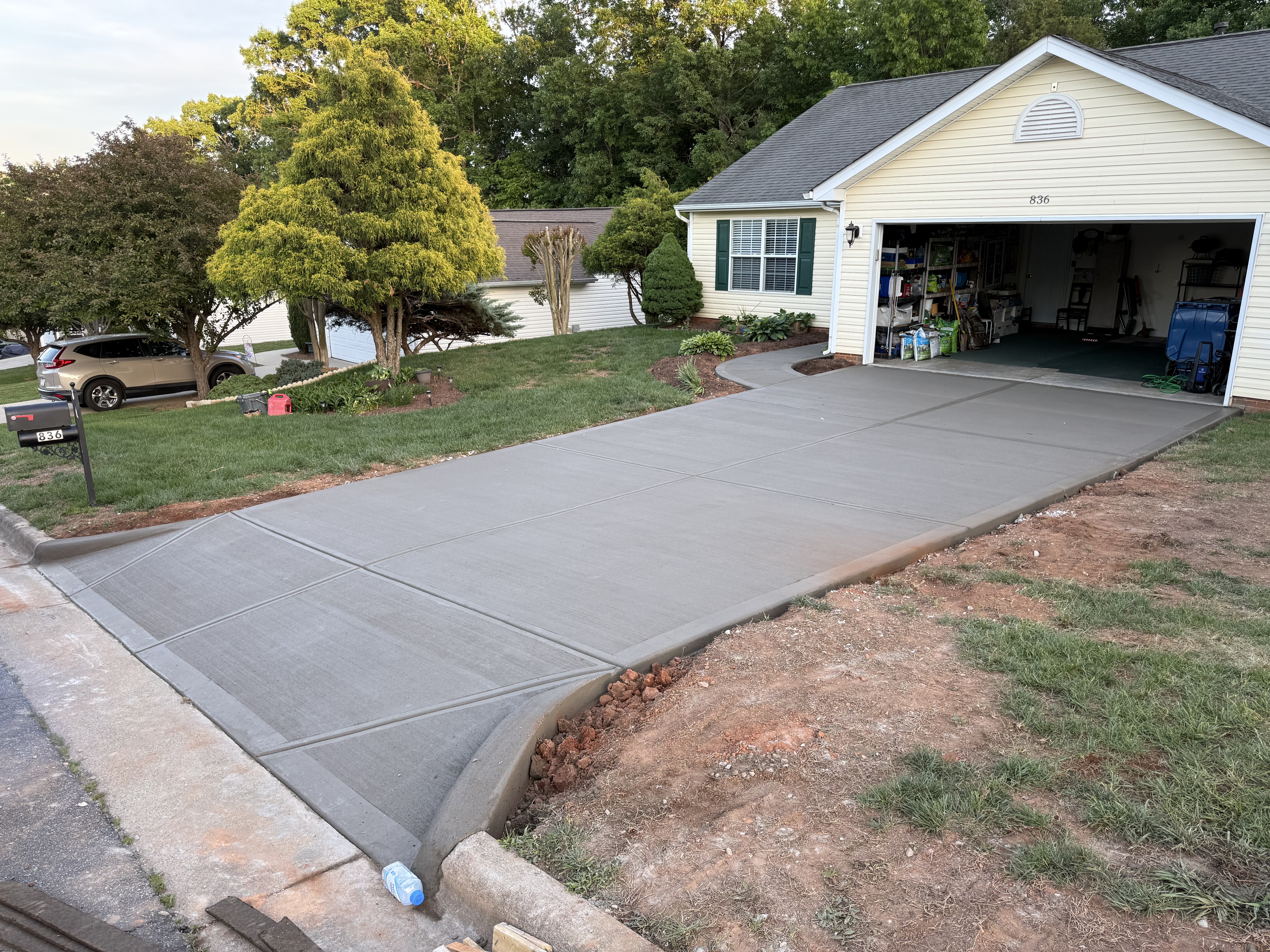
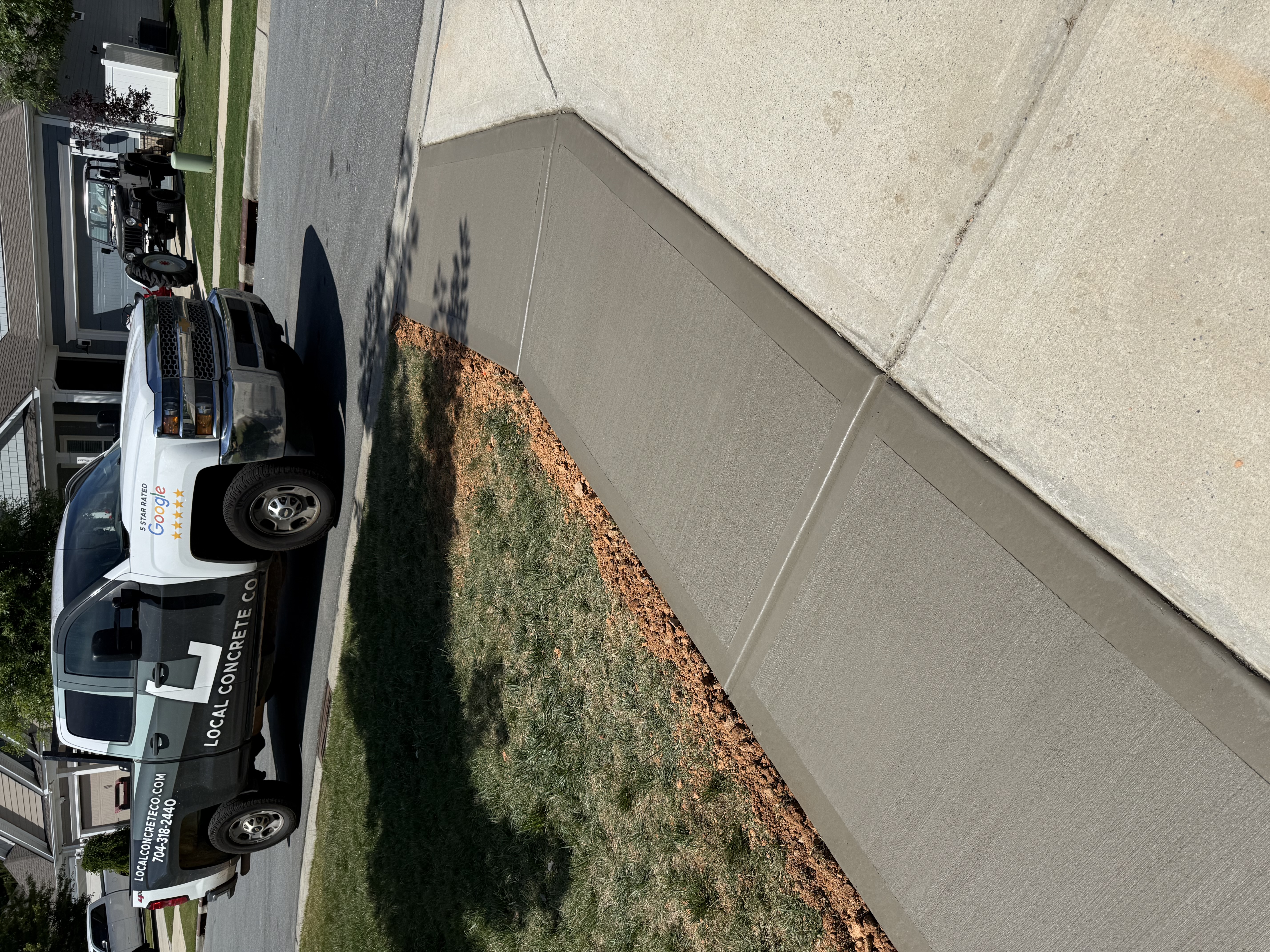
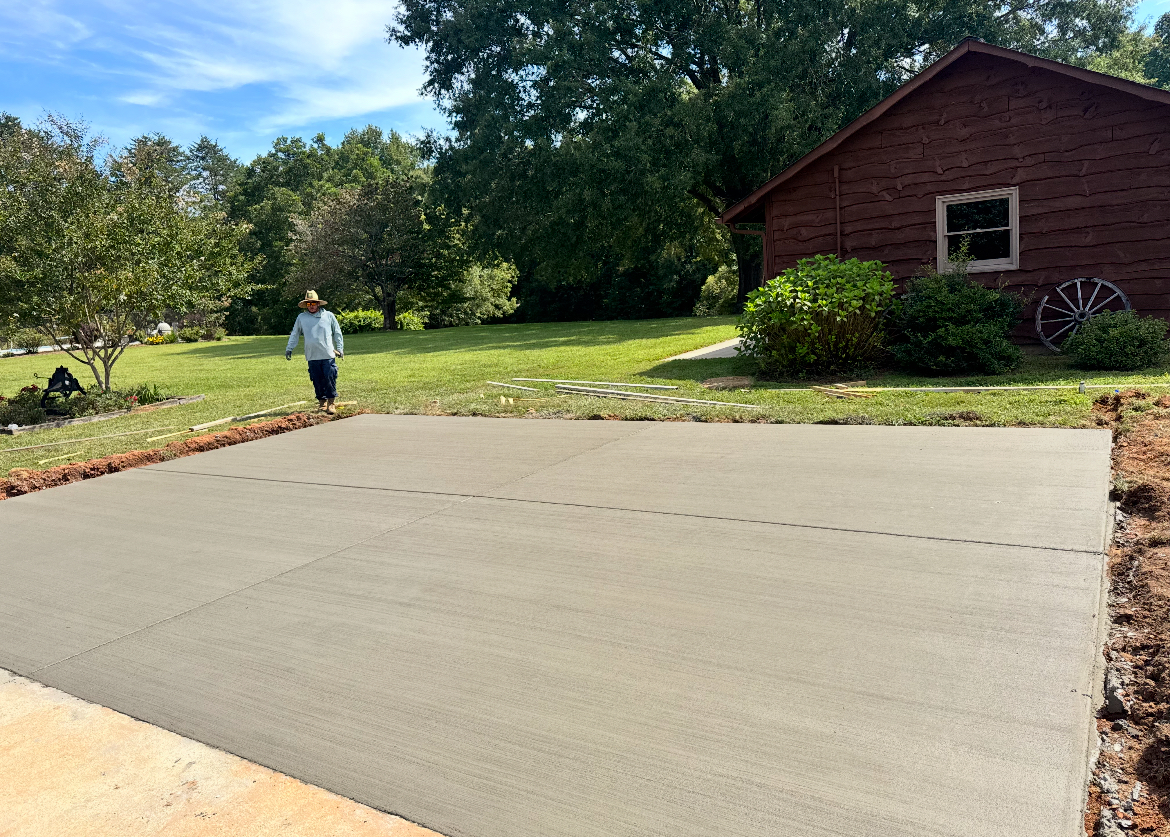
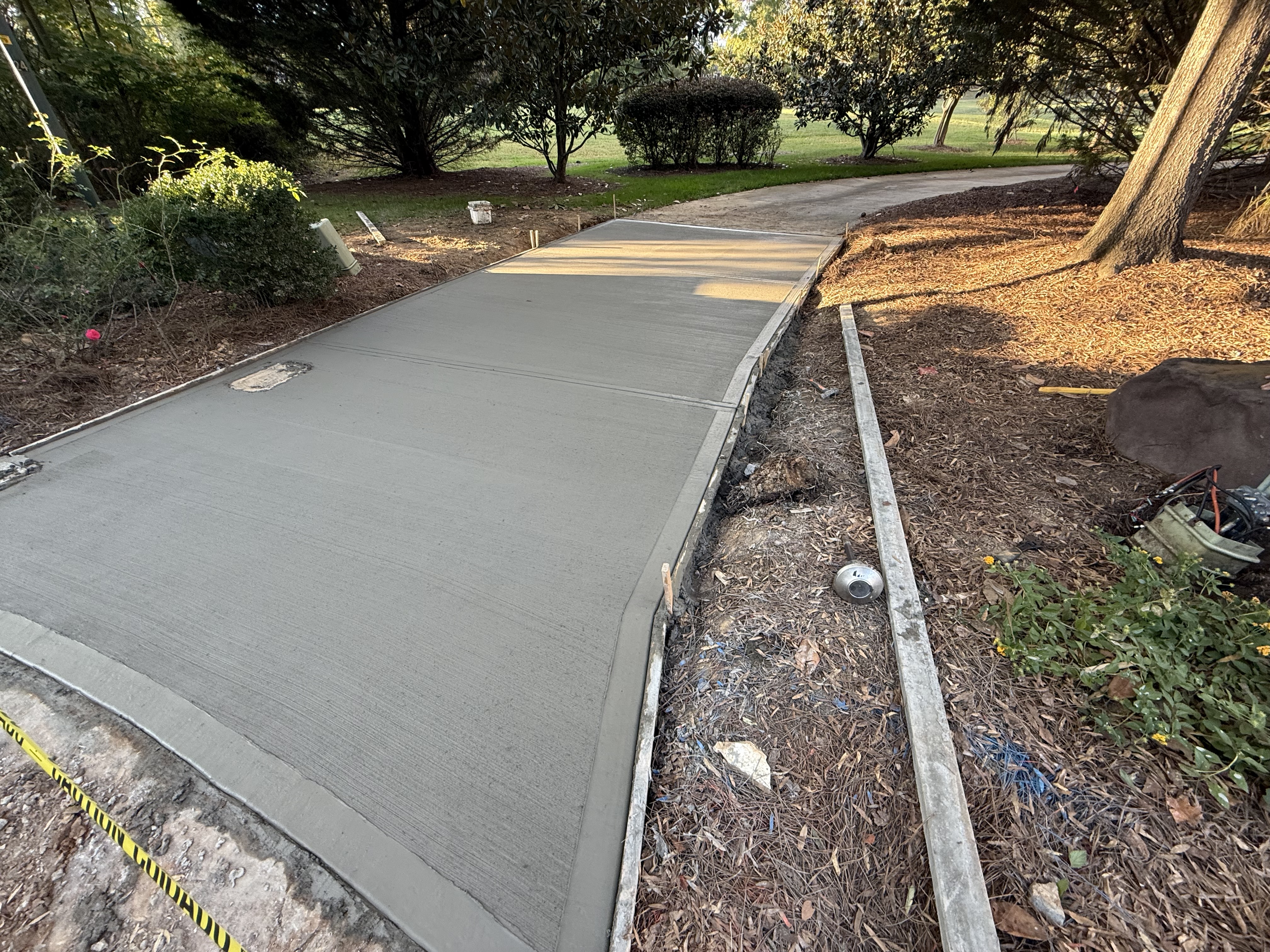
Emerywood's estate lots were platted for houses set well back from the street, and the driveways that reach them run long — sometimes with curves, grade changes, and mature trees to negotiate. Long-run concrete is planning-heavy work, and it's a specialty of ours.
Get your free quote
We respond in less than 2 hours.
Recent High Point Long Concrete Driveways Projects
Real customer jobs we've poured. Swipe through and picture yours next.
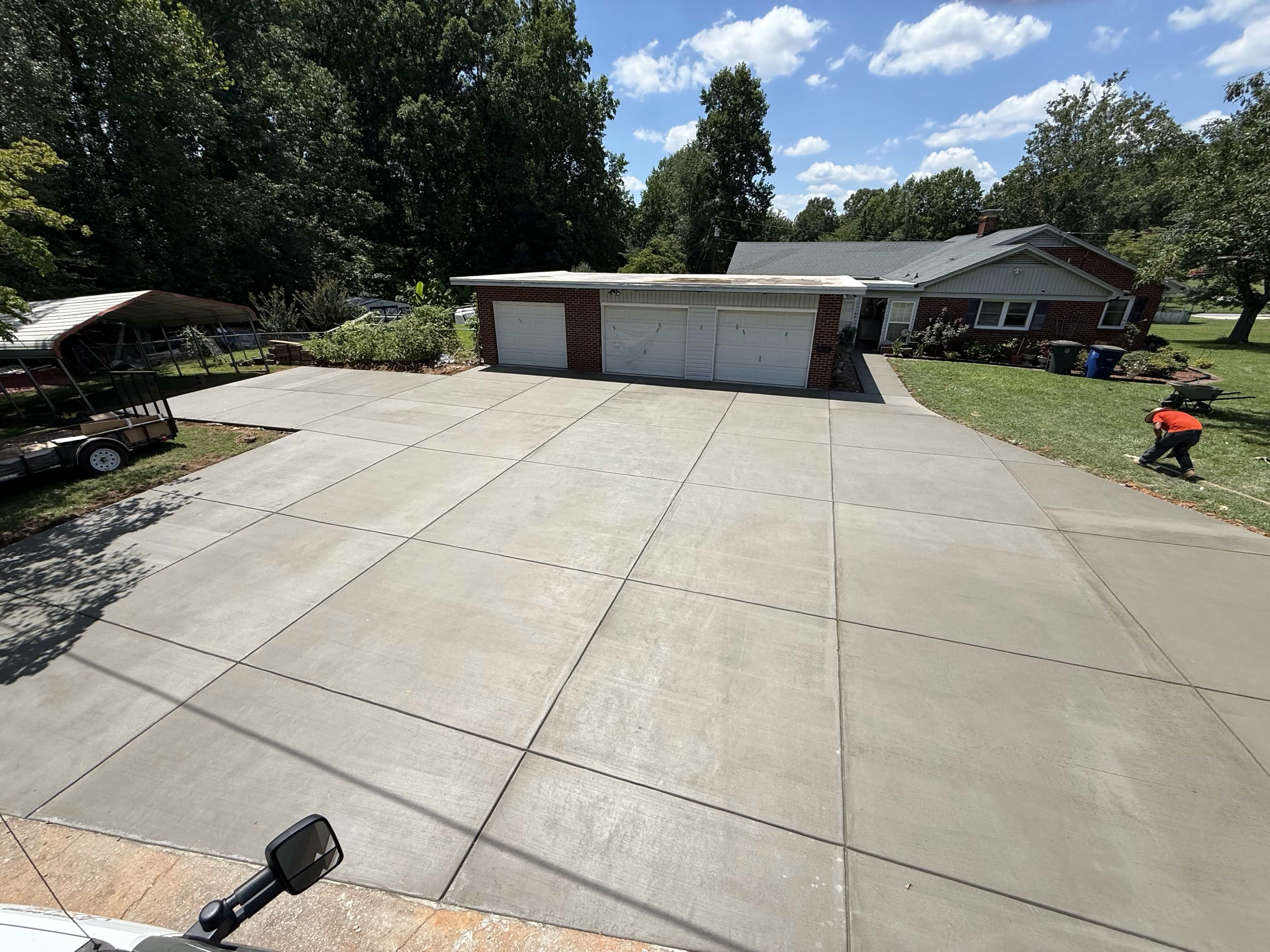
Long Concrete Driveways
High Point Job
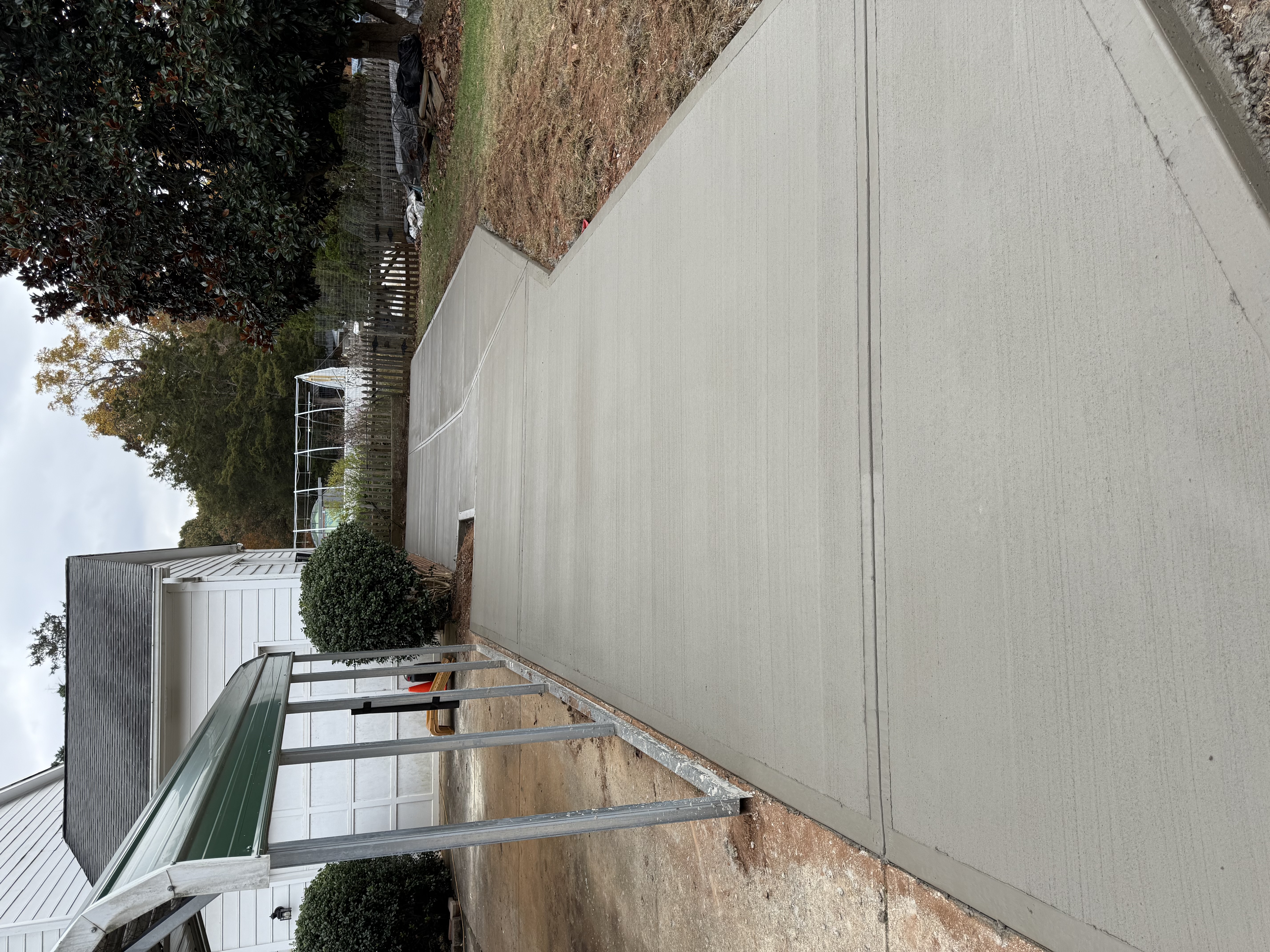
Long Concrete Driveways
High Point Job
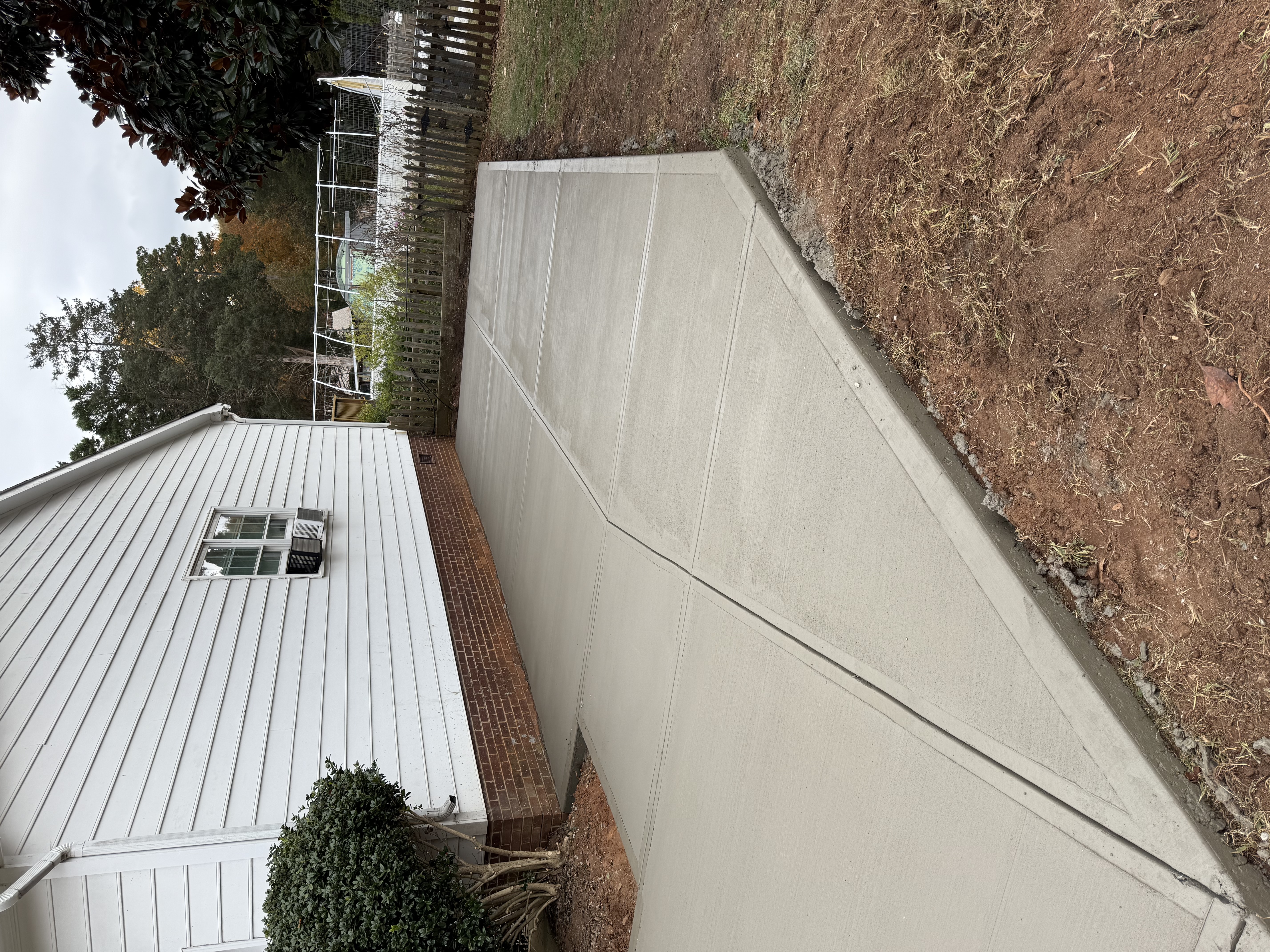
Long Concrete Driveways
High Point Job
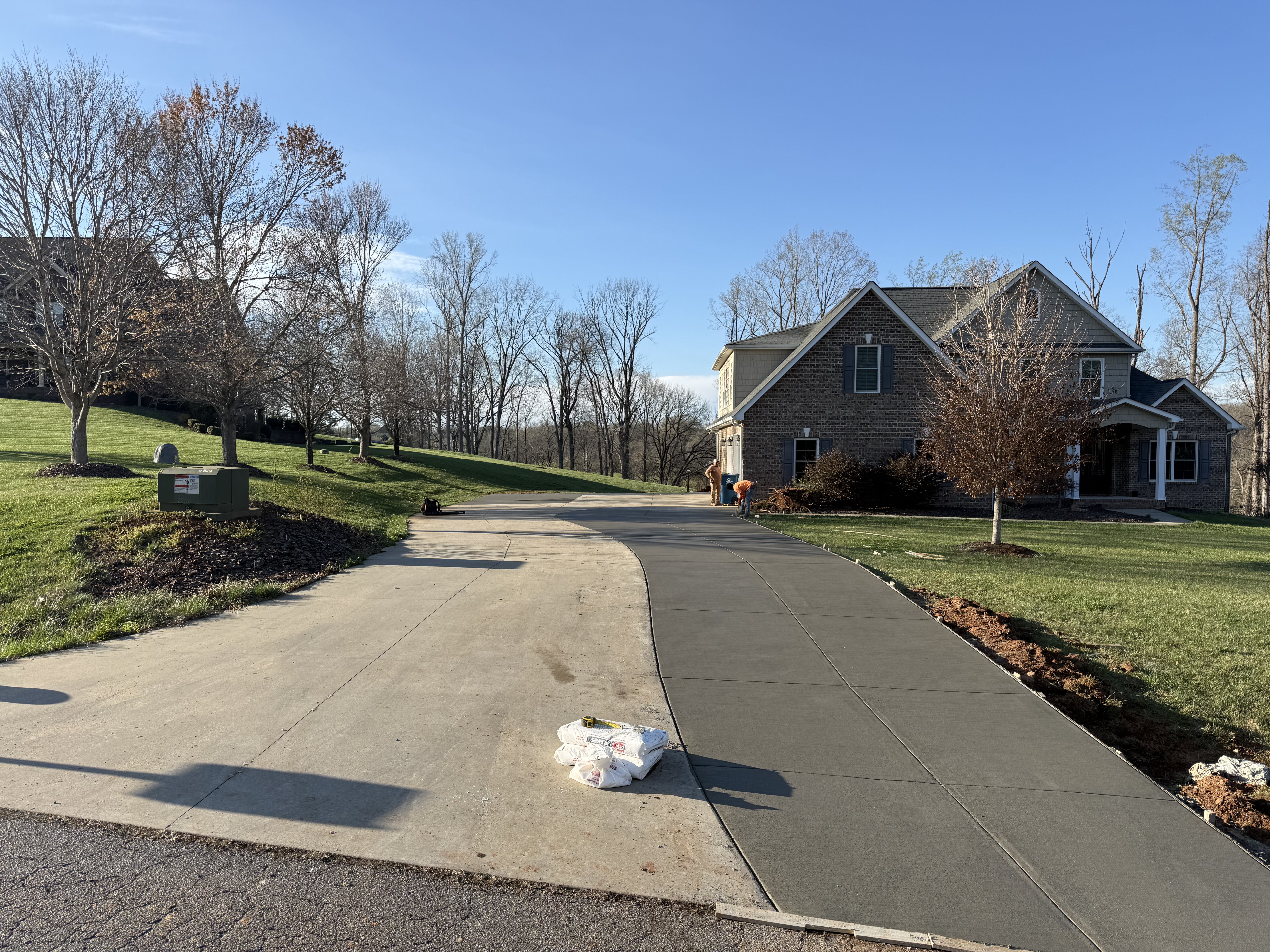
Long Concrete Driveways
High Point Job
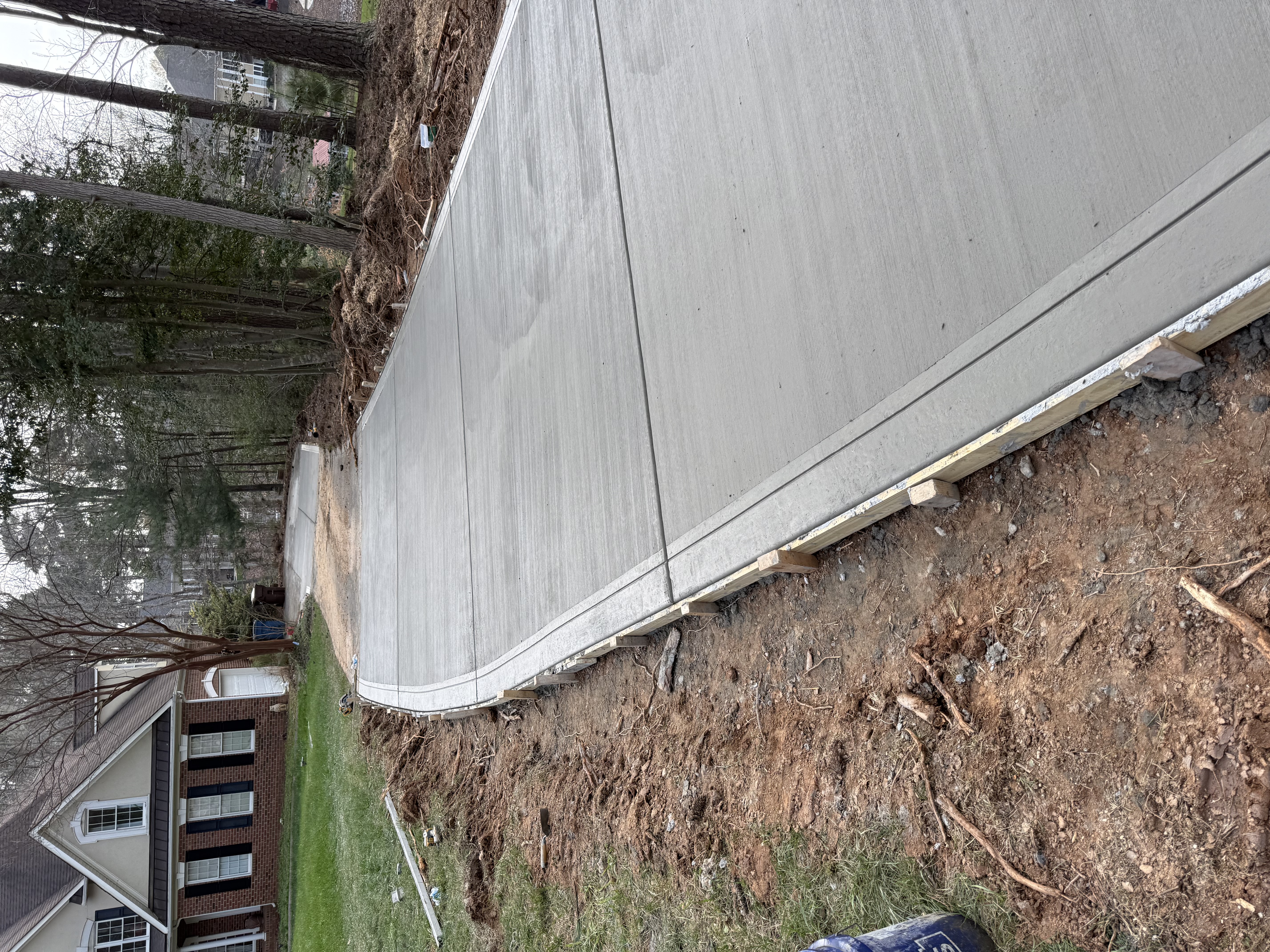
Long Concrete Driveways
High Point Job
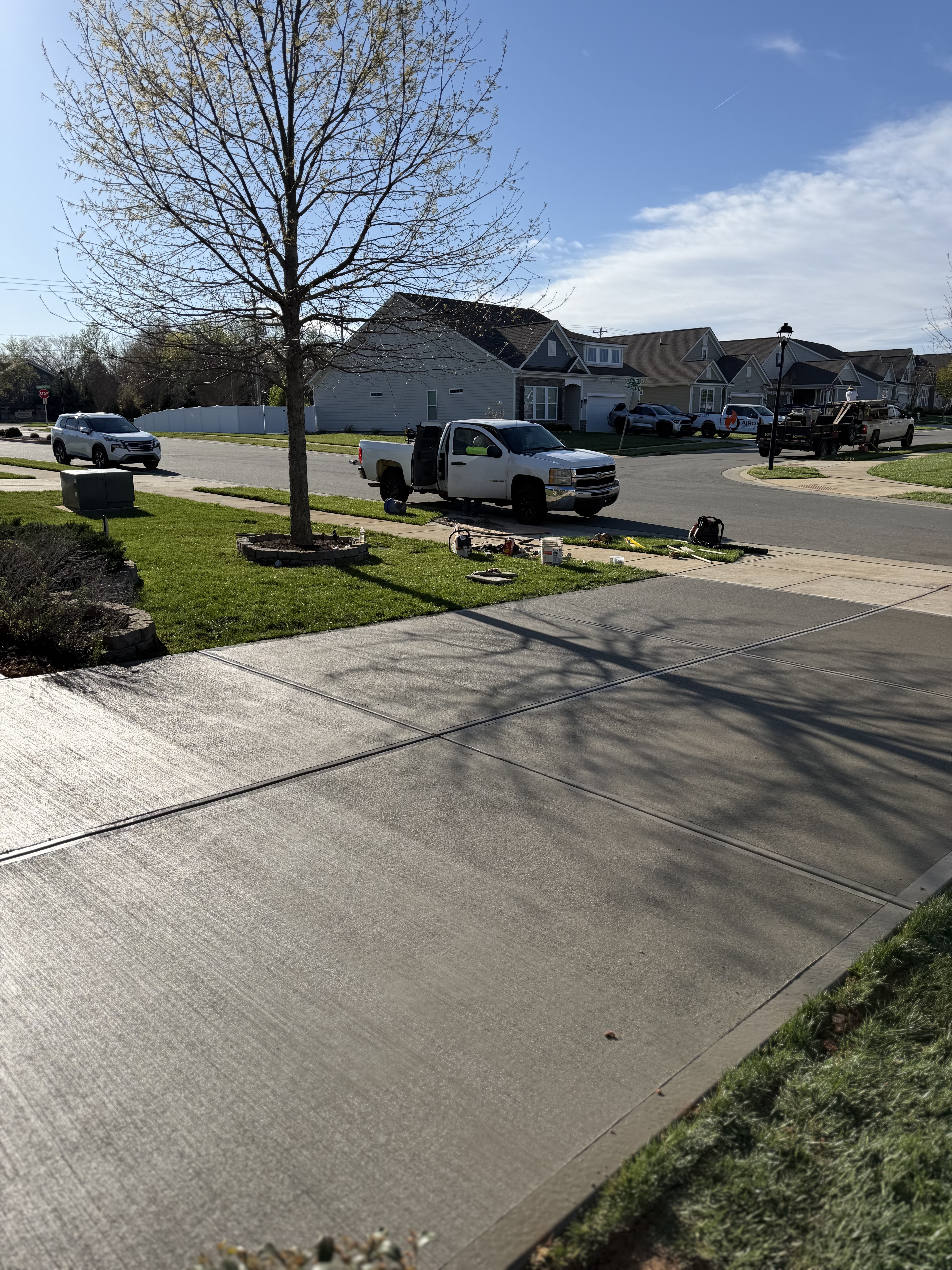
Long Concrete Driveways
High Point Job
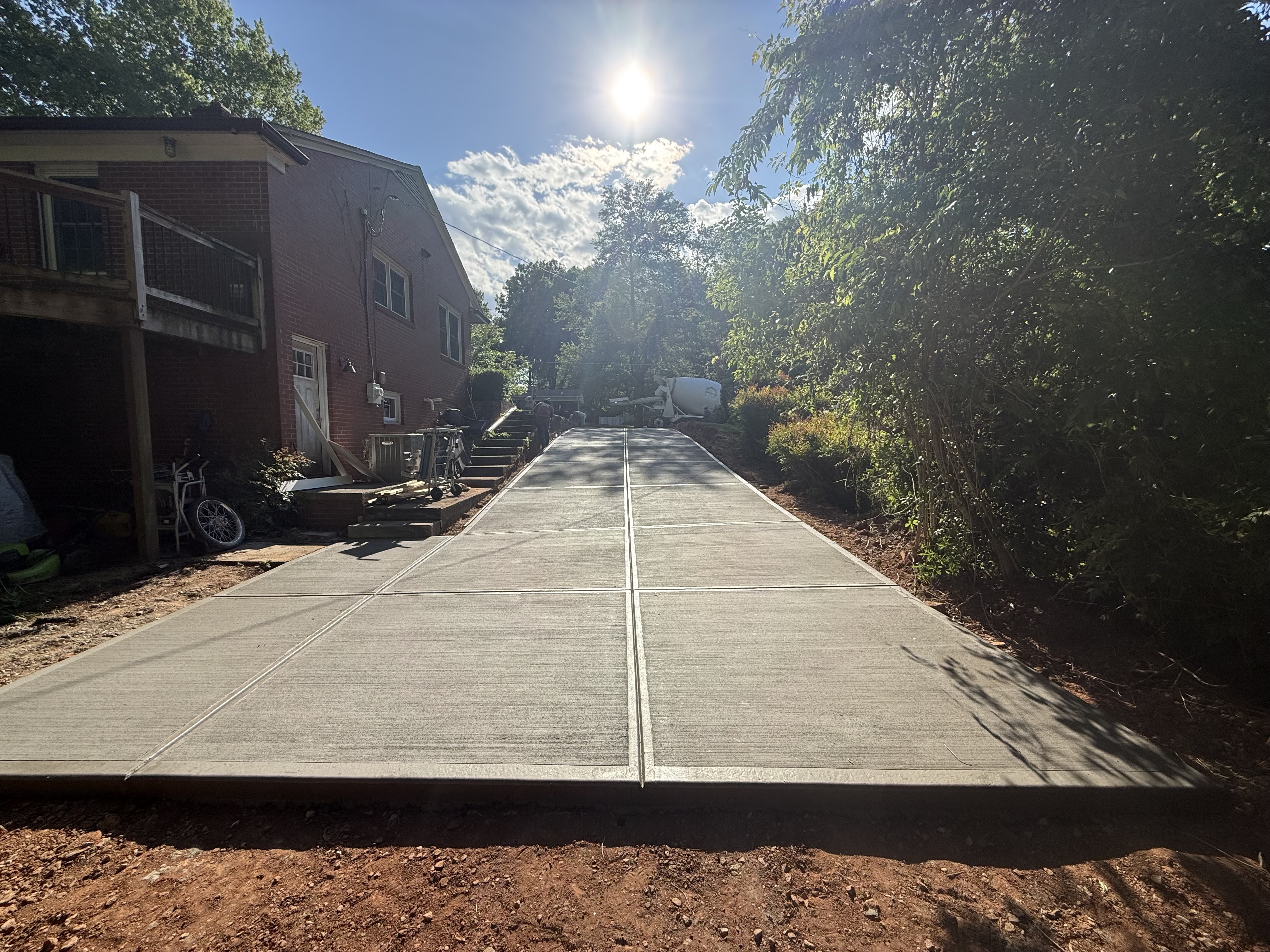
Long Concrete Driveways
High Point Job
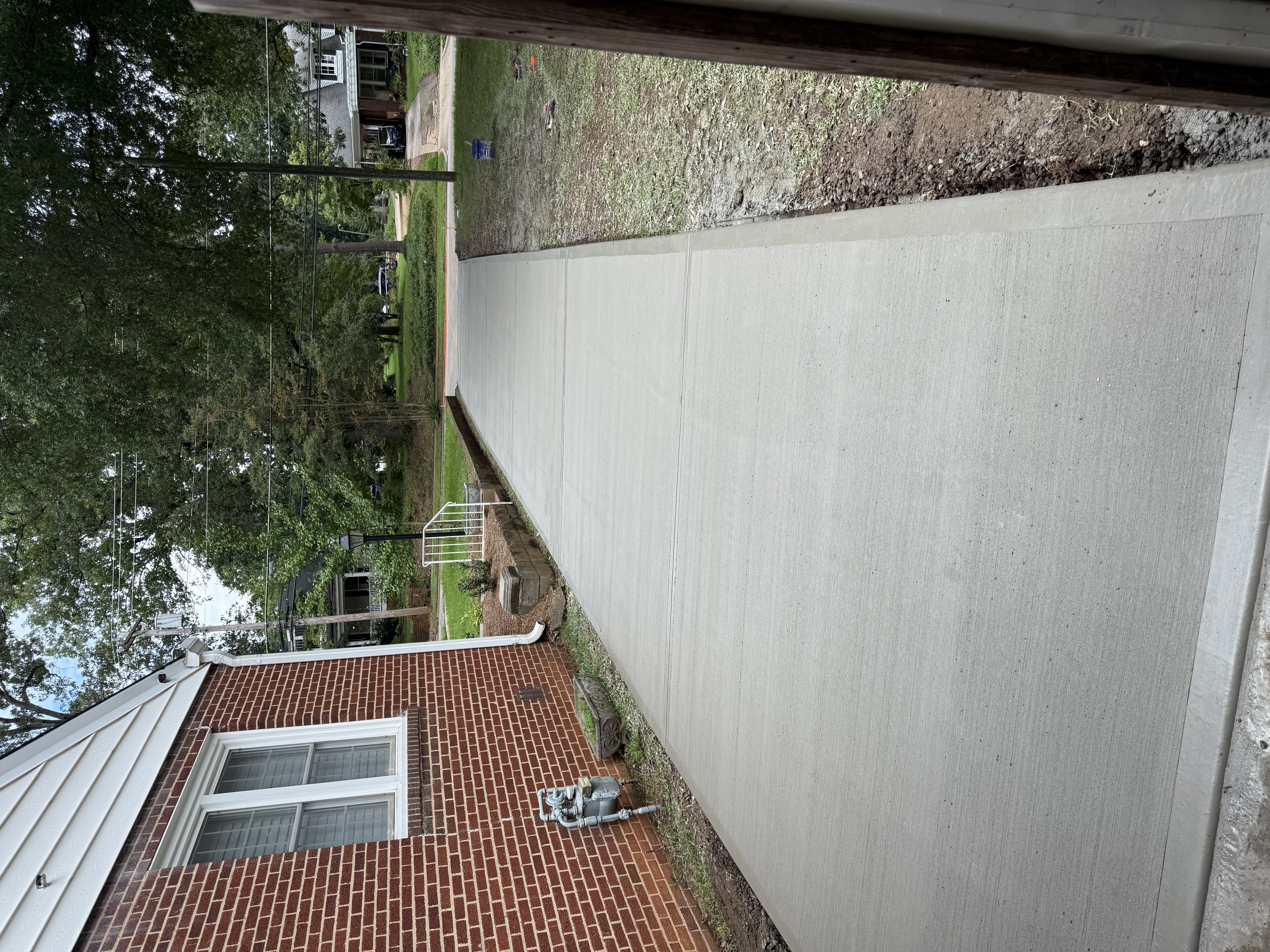
Long Concrete Driveways
High Point Job
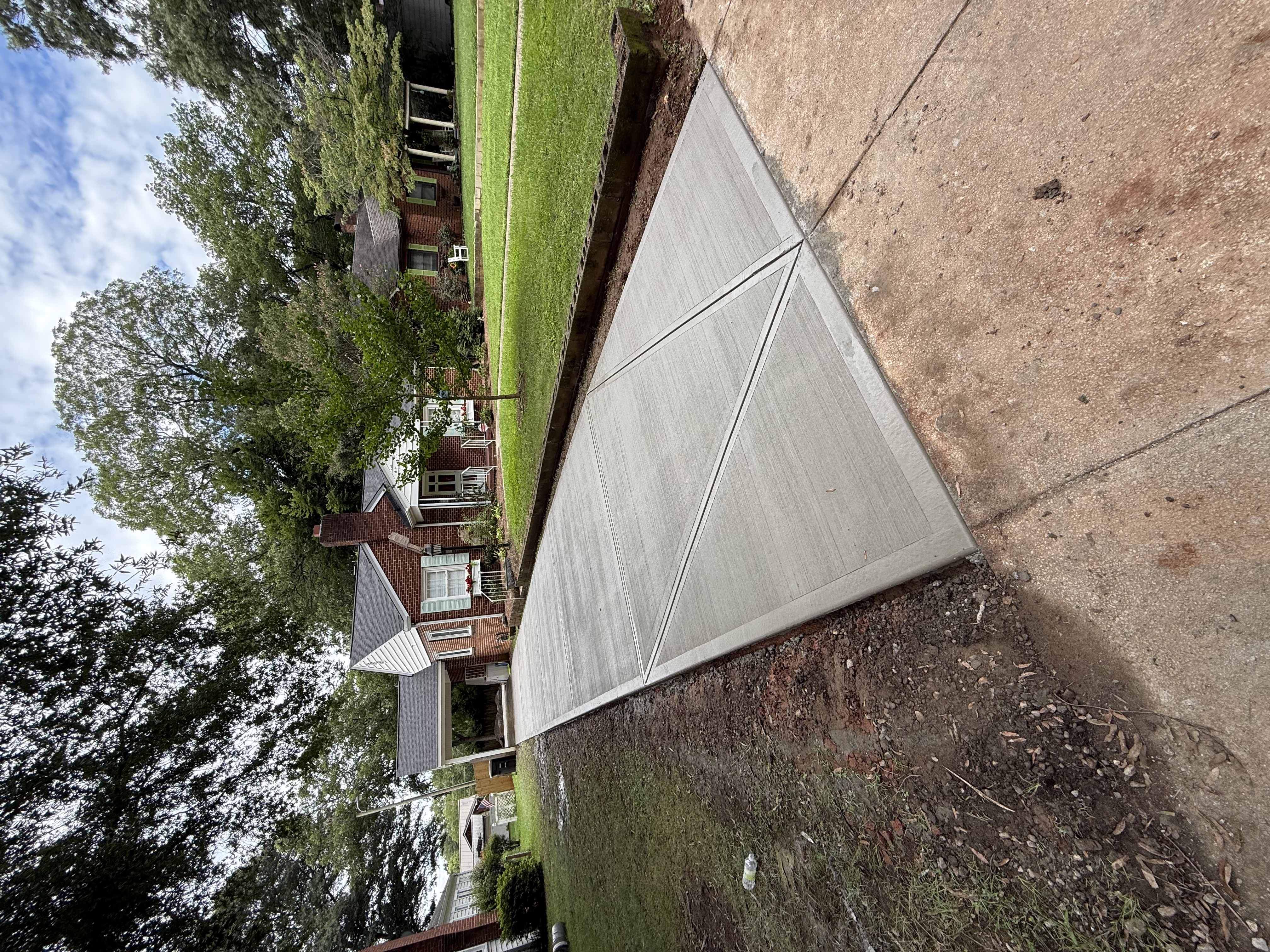
Long Concrete Driveways
High Point Job
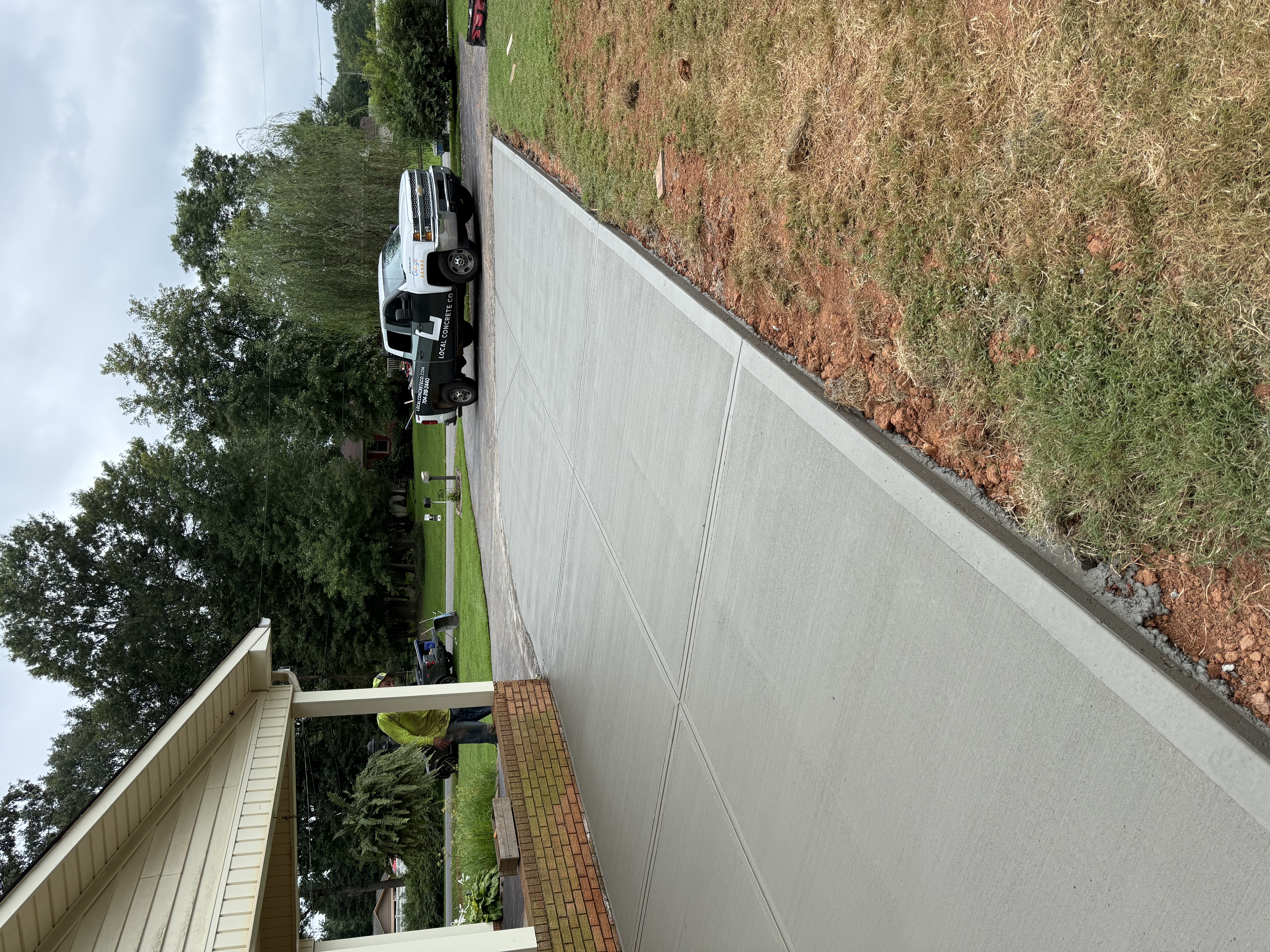
Long Concrete Driveways
High Point Job
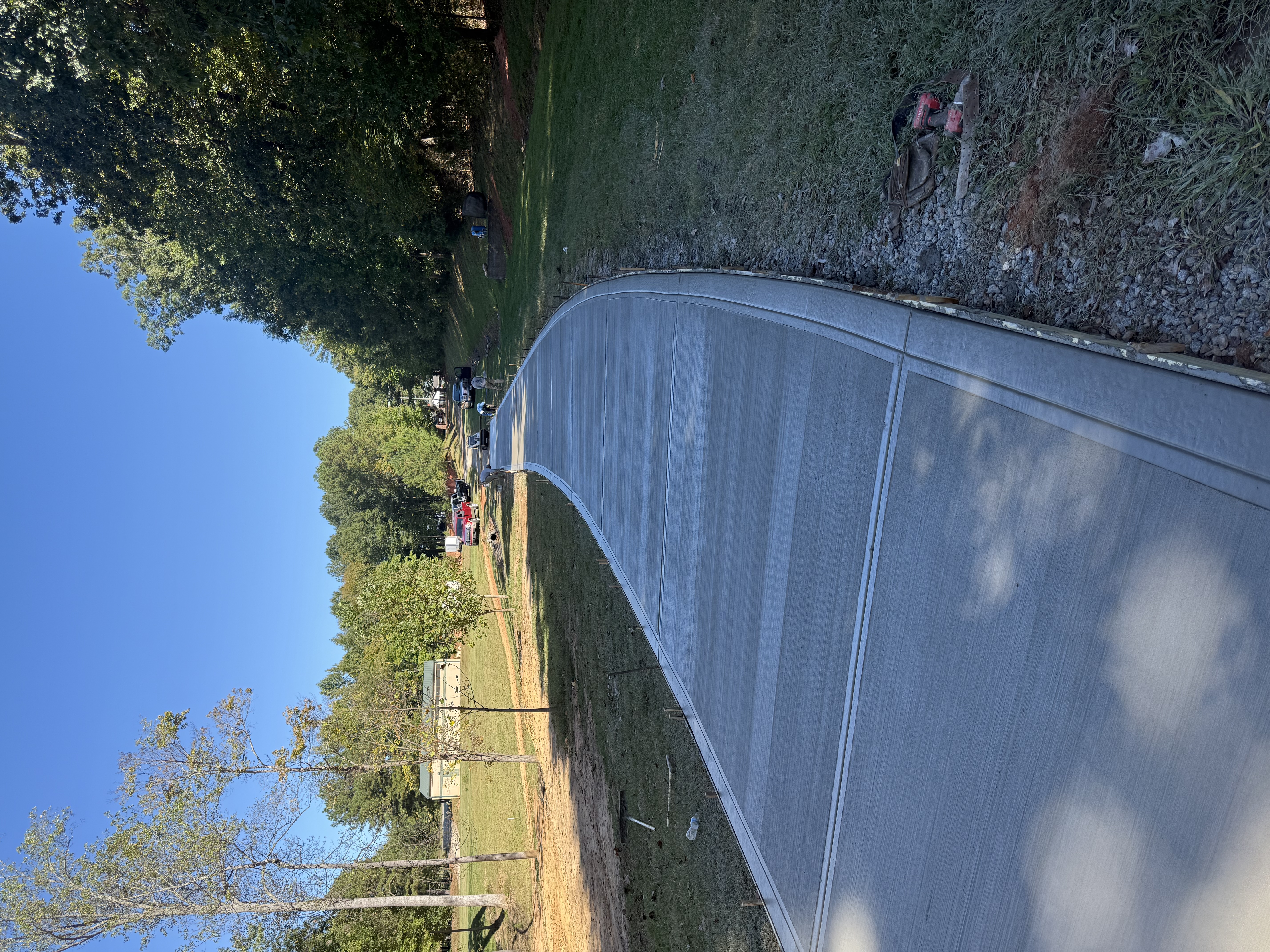
Long Concrete Driveways
High Point Job
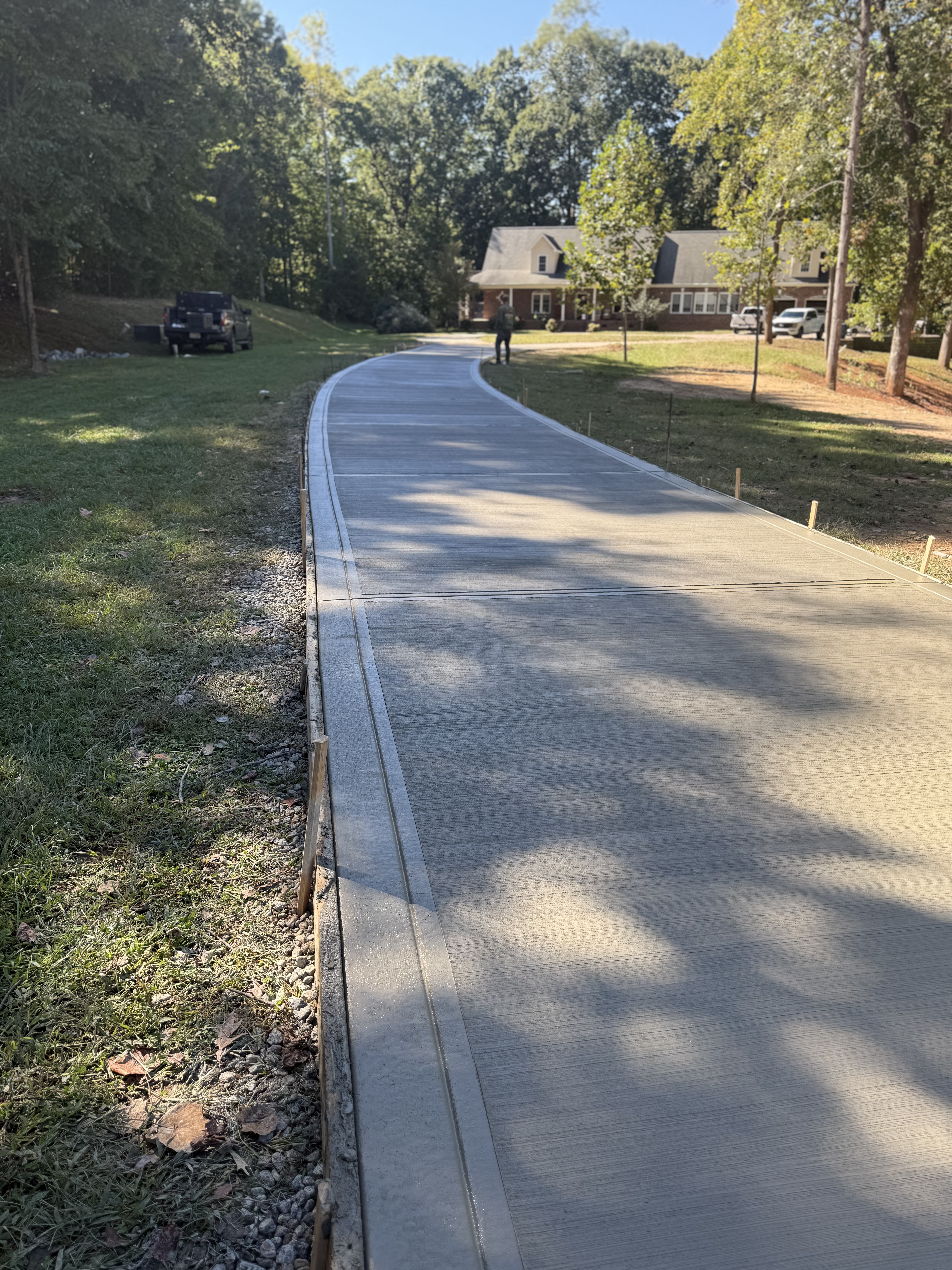
Long Concrete Driveways
High Point Job
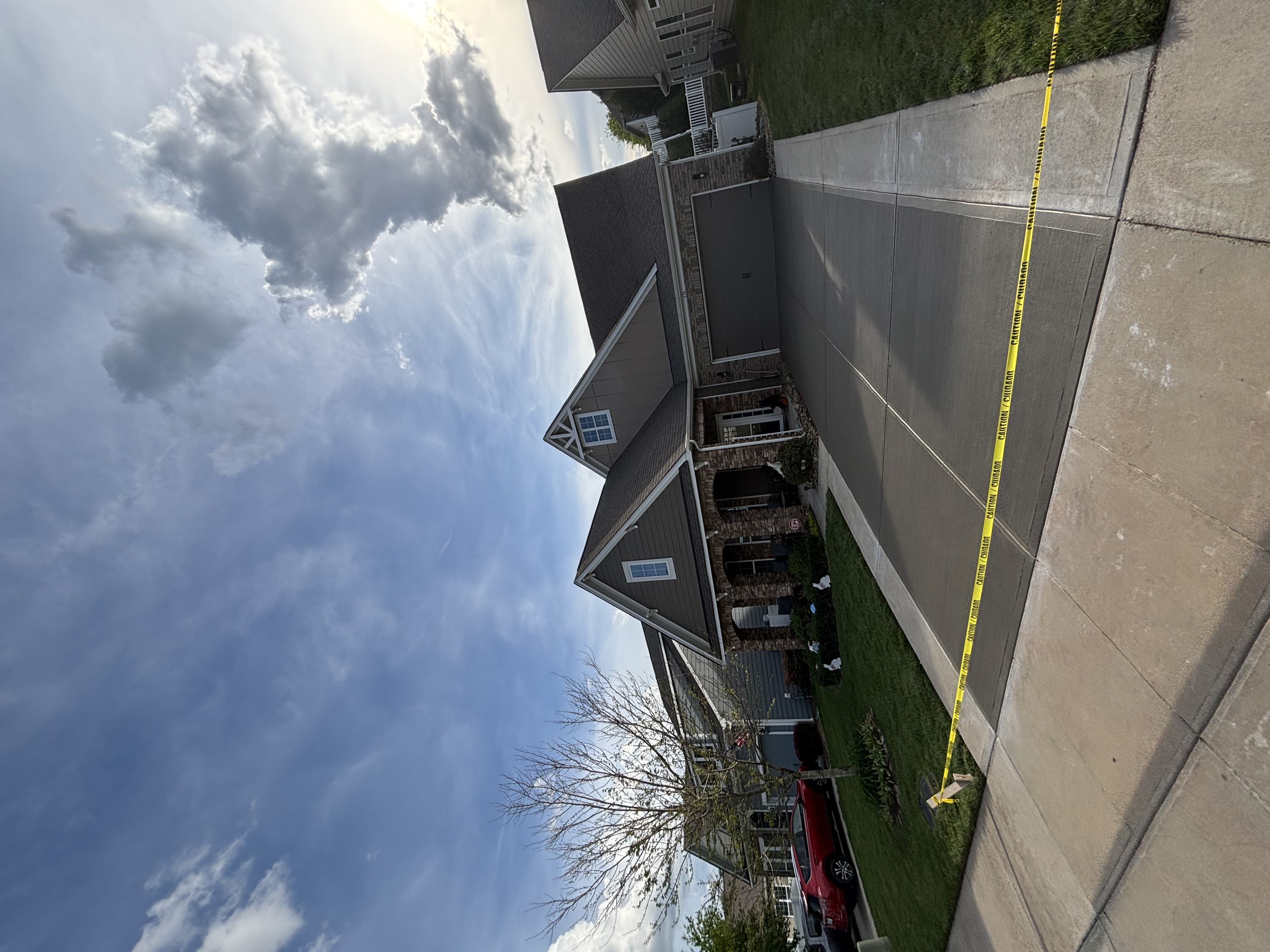
Long Concrete Driveways
High Point Job
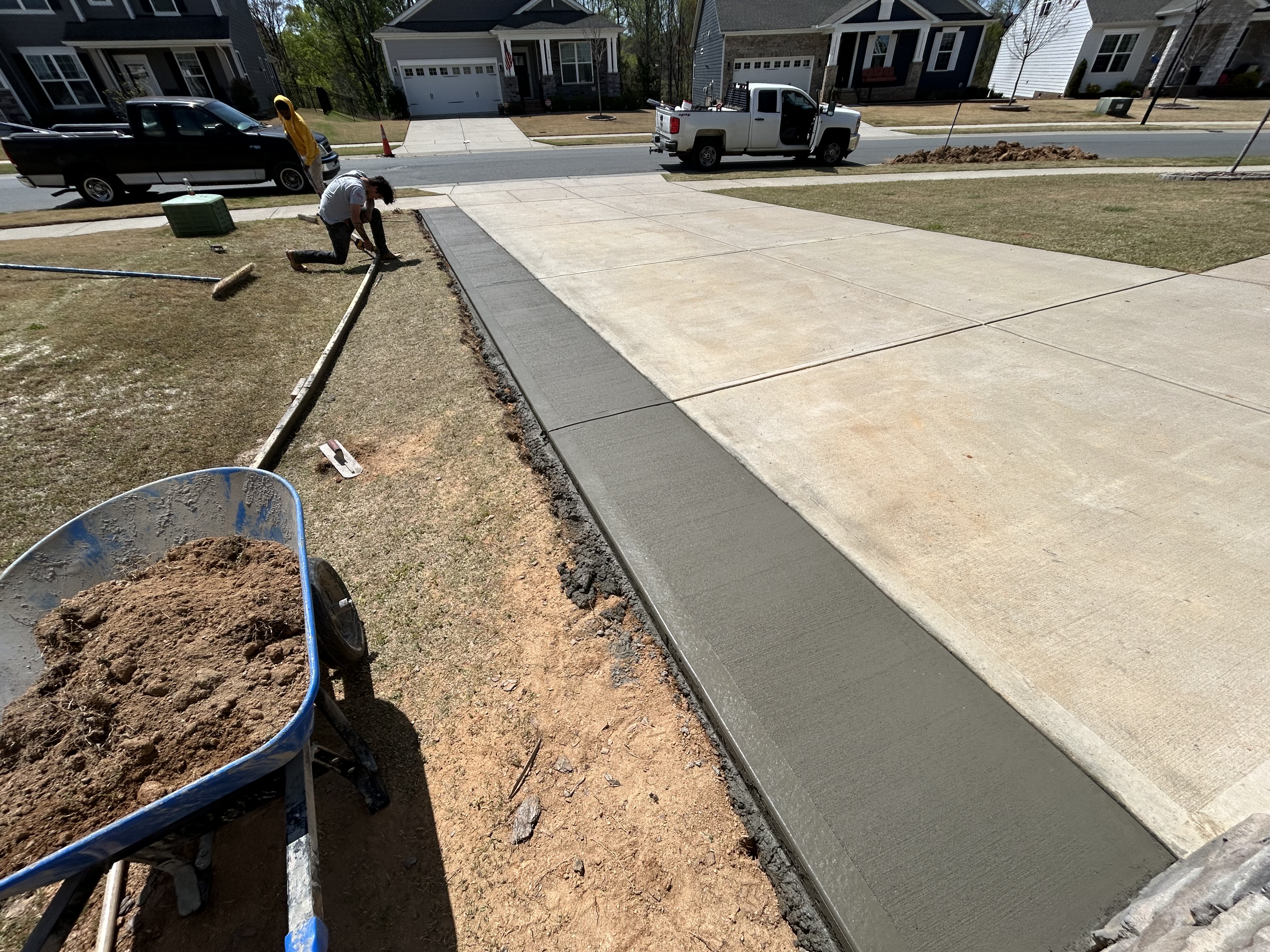
Long Concrete Driveways
High Point Job
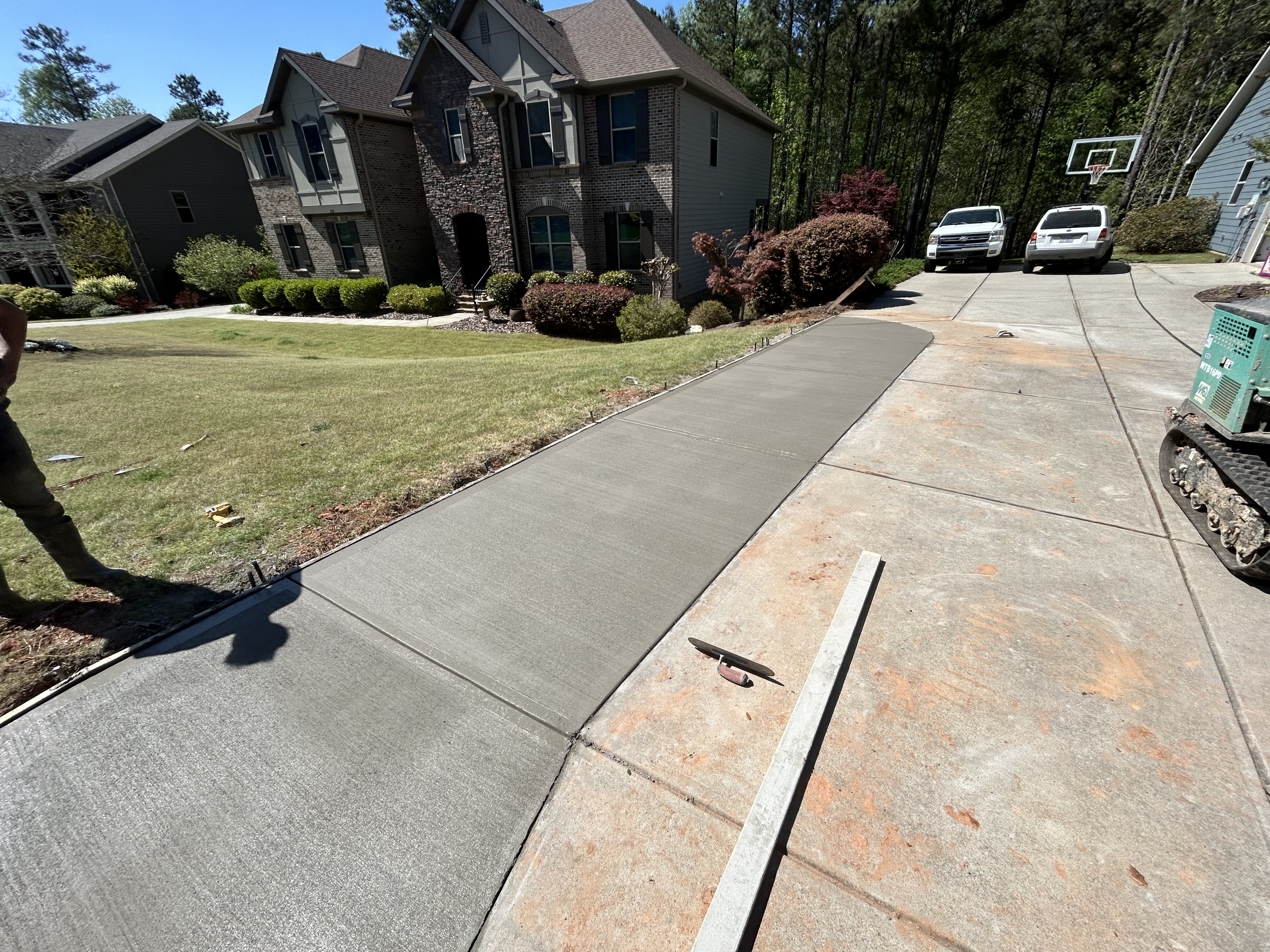
Long Concrete Driveways
High Point Job
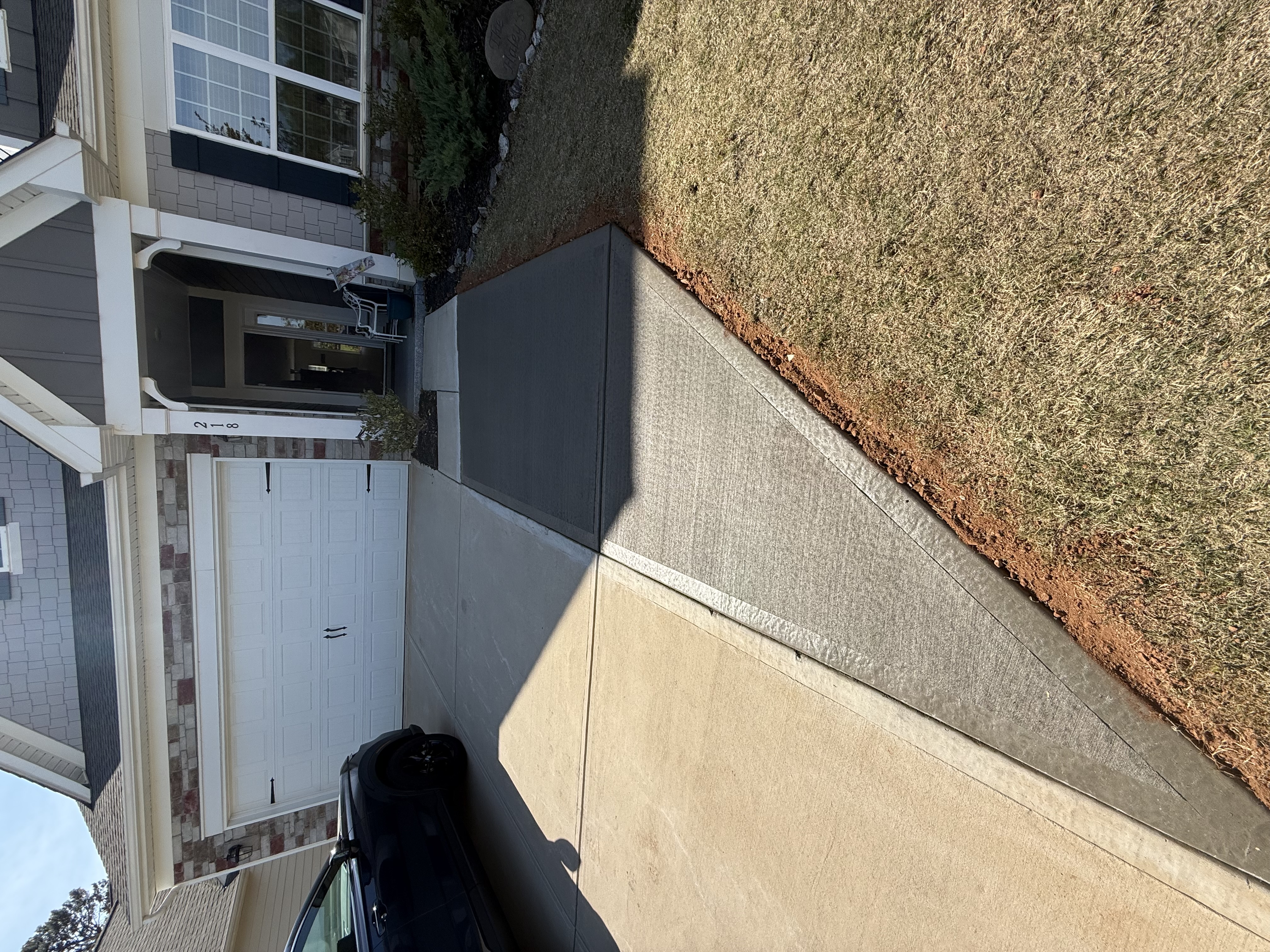
Long Concrete Driveways
High Point Job
Long Concrete Driveways
High Point Job
Long Concrete Driveways
High Point Job
Long Concrete Driveways
High Point Job
Long Concrete Driveways
High Point Job
Long Concrete Driveways
High Point Job
(336) 729-2064
Length changes the engineering conversation. A driveway that runs a hundred-plus feet through a High Point estate lot crosses multiple drainage conditions, passes through root zones that will shift over decades, and carries enough surface area that joint layout becomes a real design exercise rather than an afterthought. We plan long pours in sections: crown or cross-slope tuned to where the water needs to exit, thickened concrete where trucks will track, isolation around trees worth keeping. On the historic properties we also spend time on the approach geometry itself, because a graceful drive is part of what those houses are.
In High Point specifically, long driveway work runs through neighborhoods like Emerywood, Roland Park, Sheraton Hill. High Point's furniture industry left the city with a distinctive concrete legacy: decades of heavy-duty commercial slab work around the showroom district and old mill sites like Highland Cotton Mills Village, alongside residential streets that date to the same boom years. That local ground truth — not a generic spec sheet — is what the crew builds against when they form up a High Point pour.
Our Long Driveway Services
Long driveways have several distinct configuration options, and the right one depends on length, budget, drainage, and how the drive actually gets used.
- Full-slab long drives—continuous concrete slab the full length with proper joint spacing and drainage crown
- Ribbon driveways—two parallel concrete strips under the tire tracks with a gravel or turf center, a proven budget option on long rural drives
- Ribbon-to-slab conversions—filling in an existing ribbon drive with concrete to create a full slab
- Gravel-to-concrete conversions—removing a long gravel drive and pouring a fresh concrete slab or ribbon
- Turnaround pads and passing sections mid-drive or at the garage end so vehicles do not have to back the full length
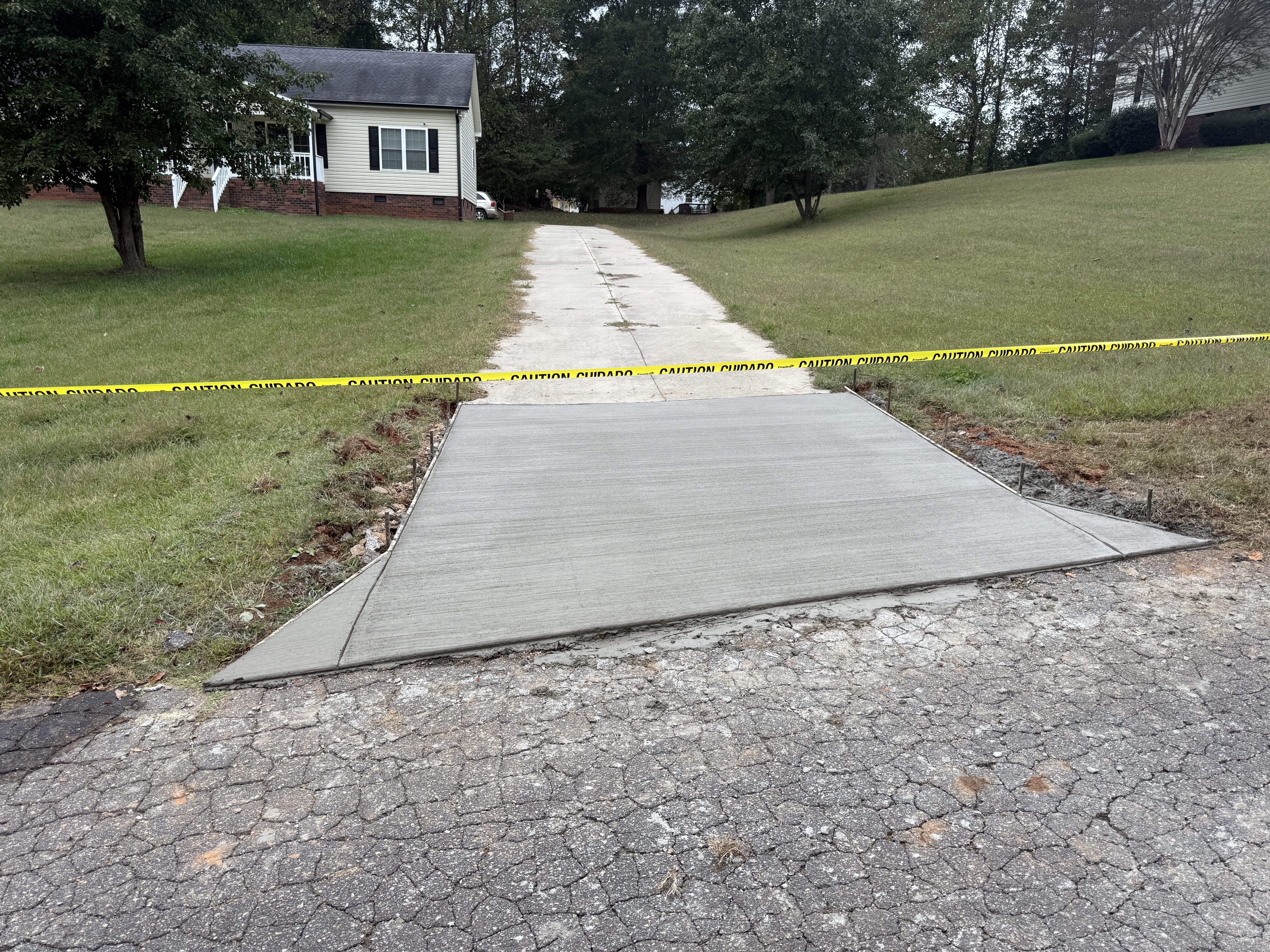
- Culvert and drainage work at the road tie-in where the drive crosses a ditch
- Thicker mid-drive parking pads for RVs, boats, work trucks, or trailer storage
- Long-drive apron work and driveway extensions from an existing shorter drive out to a rear building
Every long drive gets scoped for how it actually gets used, not for a generic footprint. A drive that mostly sees passenger cars and one weekly delivery truck gets a different spec than a farm drive with daily equipment traffic.
Drainage Across the Length
Drainage is the number one issue that decides whether a long drive holds up for three decades or starts failing in five years. Water that ponds anywhere on the length undermines the base and accelerates cracking.
- Drainage crown—a slight rise down the centerline that sheds water off both sides. Works well on straight, wide long drives with landscaping on both sides
- Cross-slope—the entire slab tilts to one side, shedding water toward a swale, ditch, or landscape drain. Works well on drives with a natural low side
- Combination crown-and-cross-slope on curved drives so water always has somewhere to go
- Mid-drive drainage breaks on very long drives—a swale, trench drain, or slight elevation change that keeps sheet flow manageable
- Culvert at the road tie-in when the drive crosses a ditch, sized to handle the drainage area, not just the drive footprint
- Landscape swales at the low edge collect runoff and route it away from the house, foundation, or a neighbor's yard
- Grade check every 25 to 50 feet during subgrade prep, not just at the ends, so drainage actually follows the planned pattern
Drainage is one of the invisible parts of a good long drive. It gets planned before the base is compacted and written into the quote.
Get your free quote
We respond in less than 2 hours.
Why Local Concrete Contractor?
- 01.Precision craftsmanship
- 02.Same crew from base through finish
- 03.Licensed & insured, dedicated project manager
- 04.No deposit — pay on completion
Our Long Concrete Driveways Process in High Point
Every long concrete driveways we pour in High Point runs through the same 18 checkpoints — from the on-site consult through the final walkthrough.
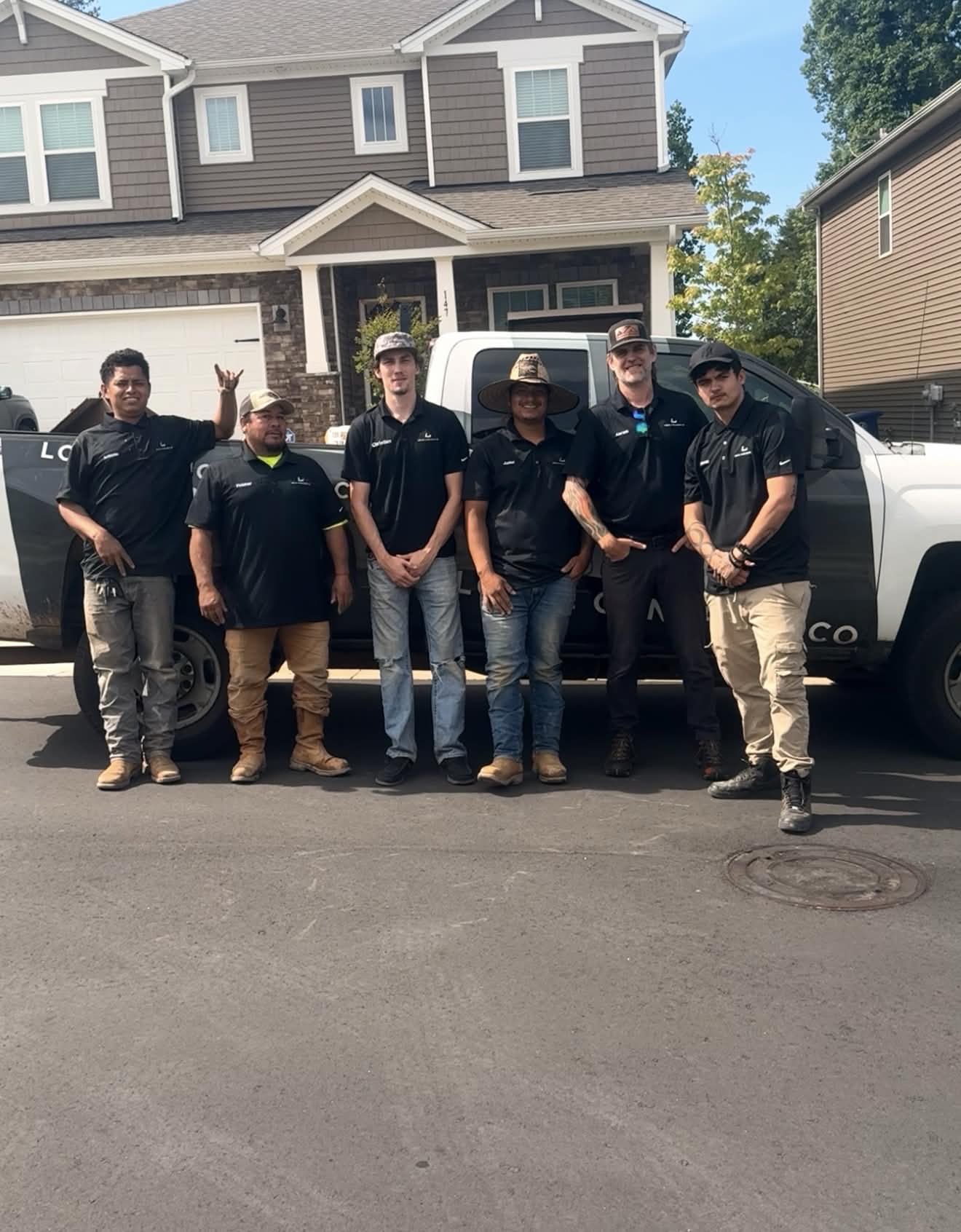
Consultation & Estimate
We meet on-site in High Point to assess scope, discuss vision, and provide a detailed, transparent quote tailored to your High Point property.

Logistics & Scheduling
Coordinating crew, equipment, and weather windows specific to High Point's climate to ensure a seamless project start.
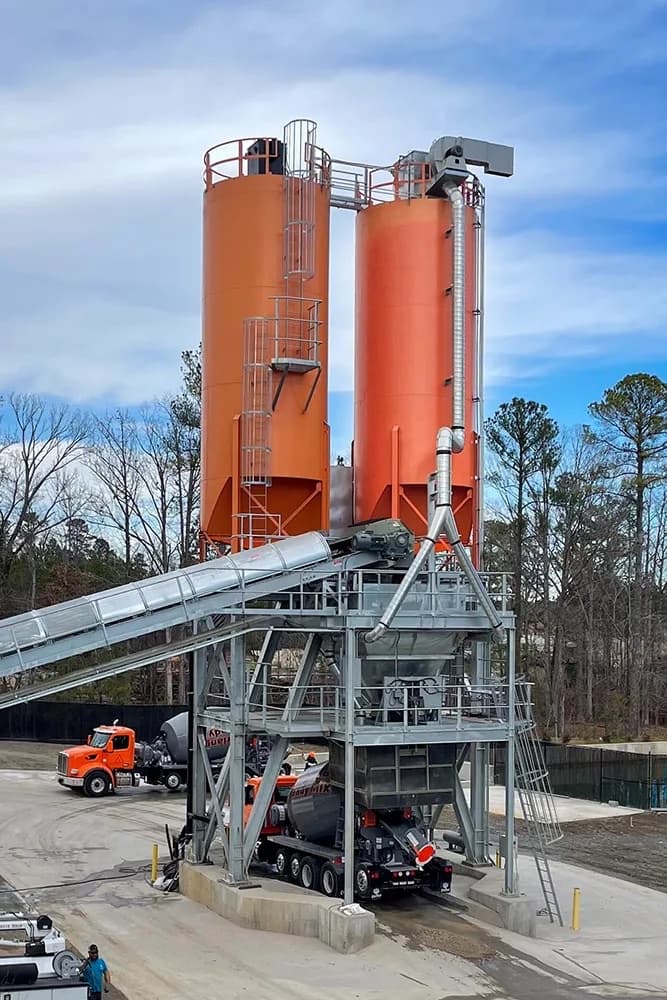
Custom Mix Design
Ordering specific concrete additives and slump requirements based on High Point's current temperature and humidity patterns.
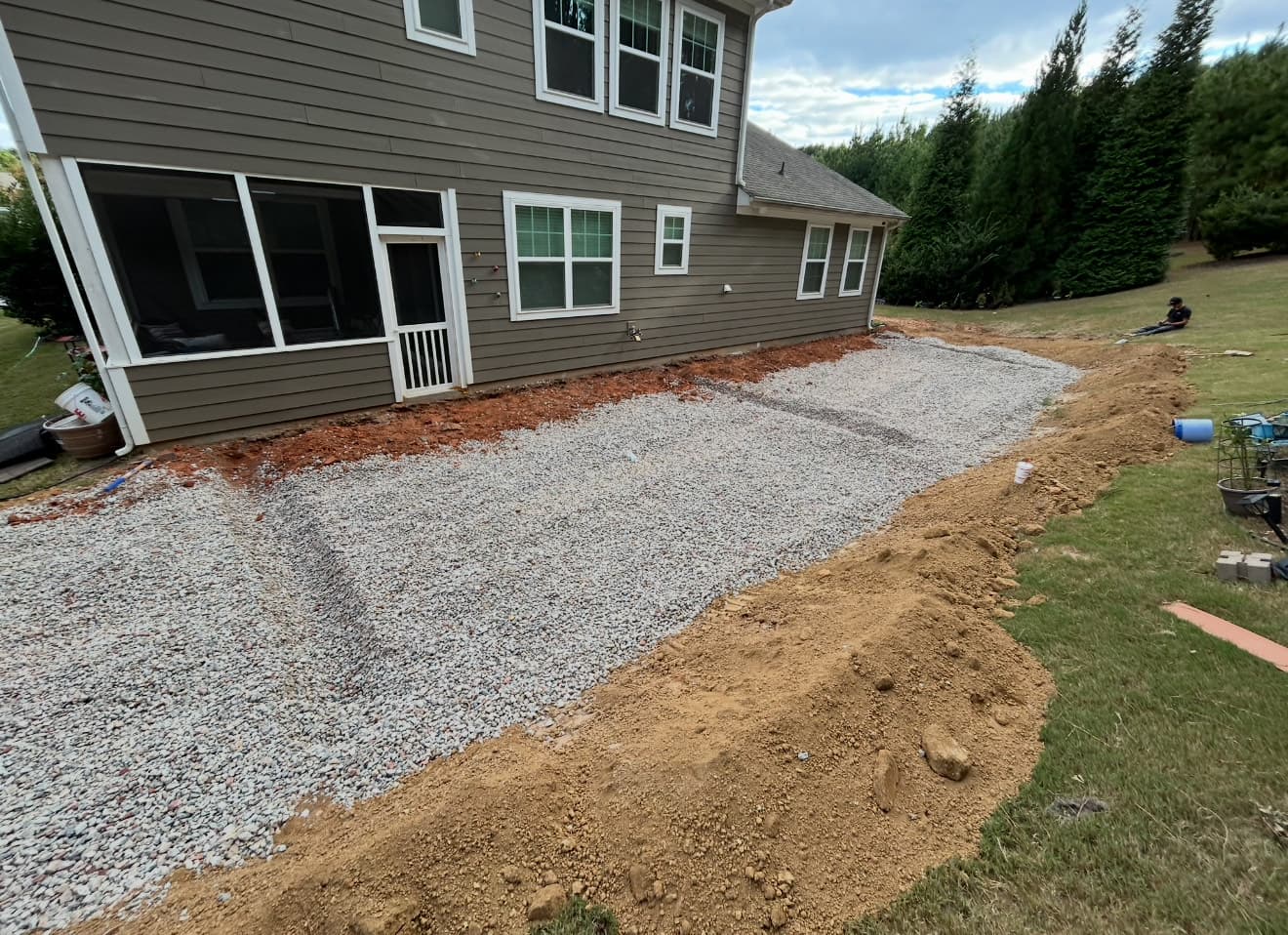
Site Preparation
Preparing the workspace in High Point and establishing safe access routes for our equipment and crew.
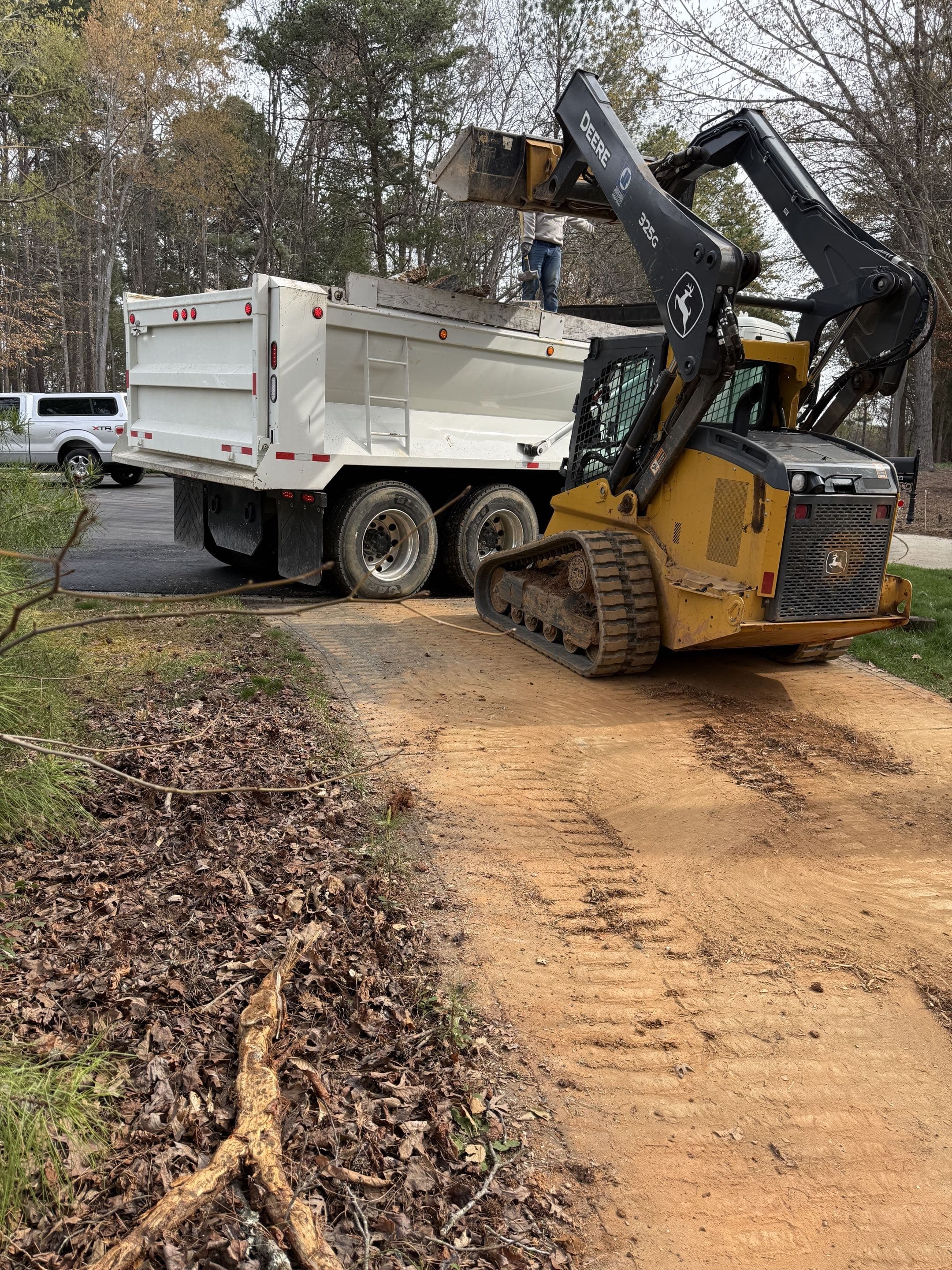
Demolition
Removal and disposal of existing concrete in High Point, leaving a clean slate for your new installation.
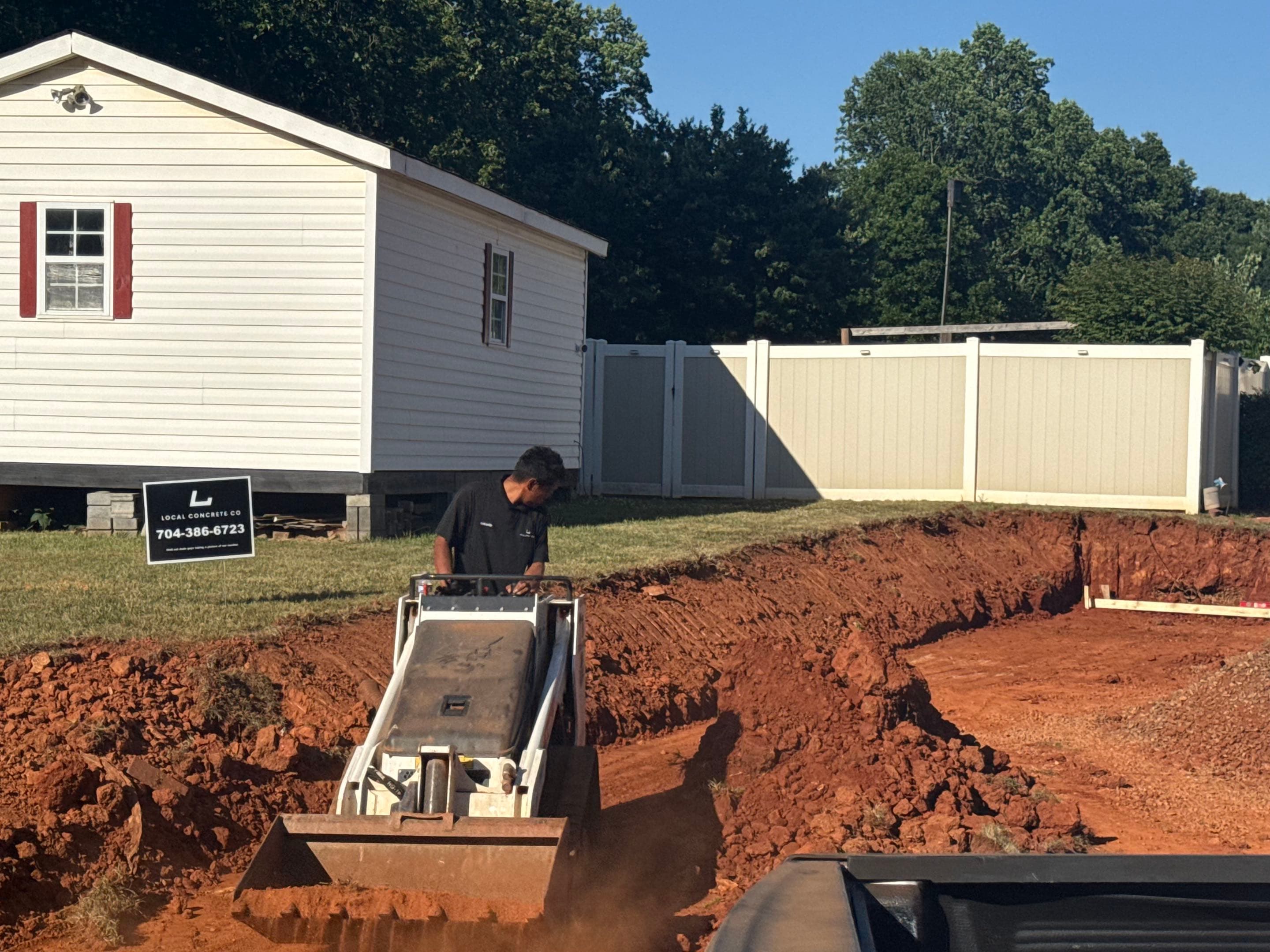
Grading & Forming
Expert grading for proper drainage in High Point and setting high-quality lumber forms for clean edges.
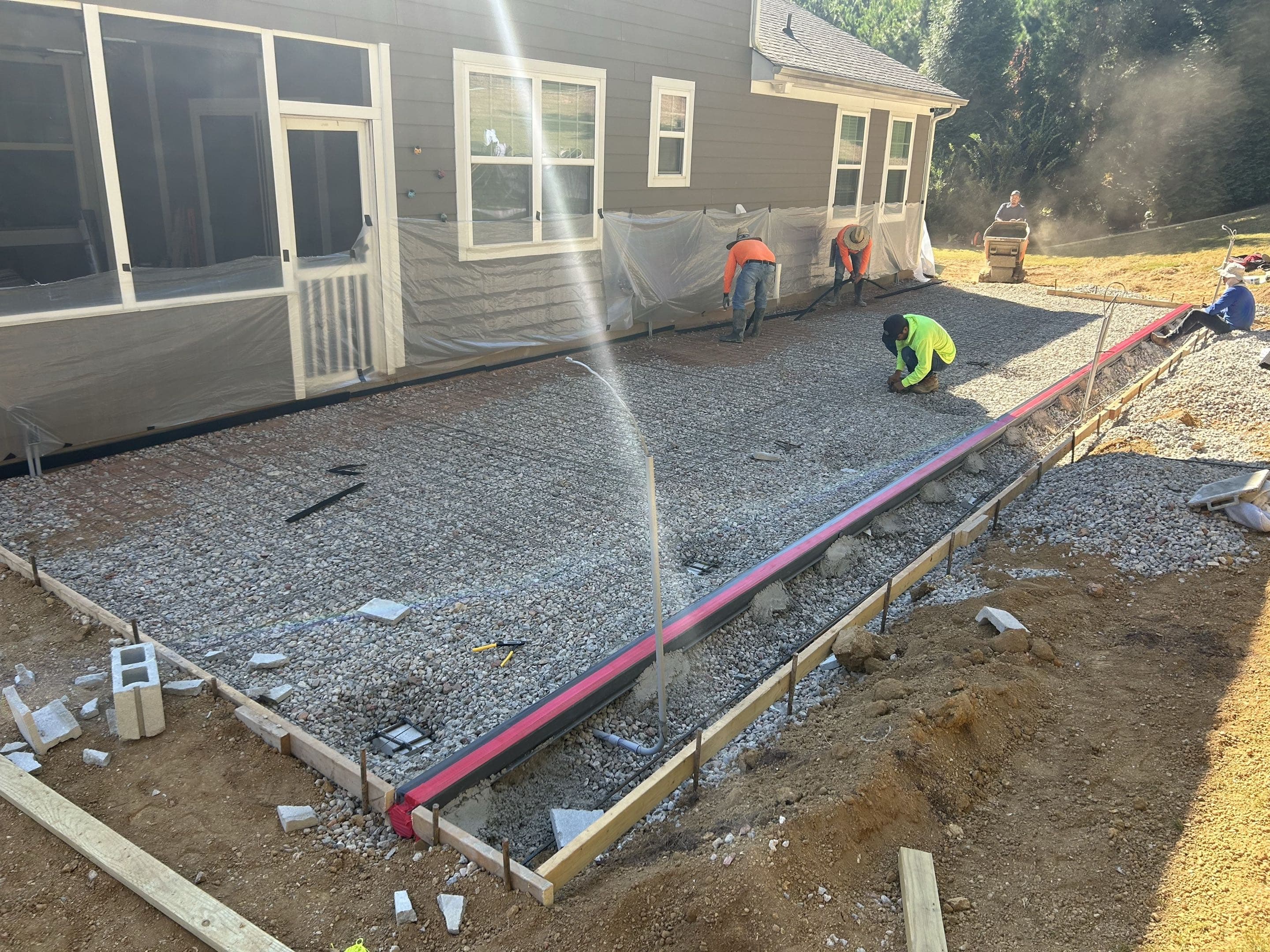
Reinforcement
Installation of steel rebar or wire mesh grid in High Point, using 1/2 inch grid for structural tensile strength suitable for North Carolina conditions.
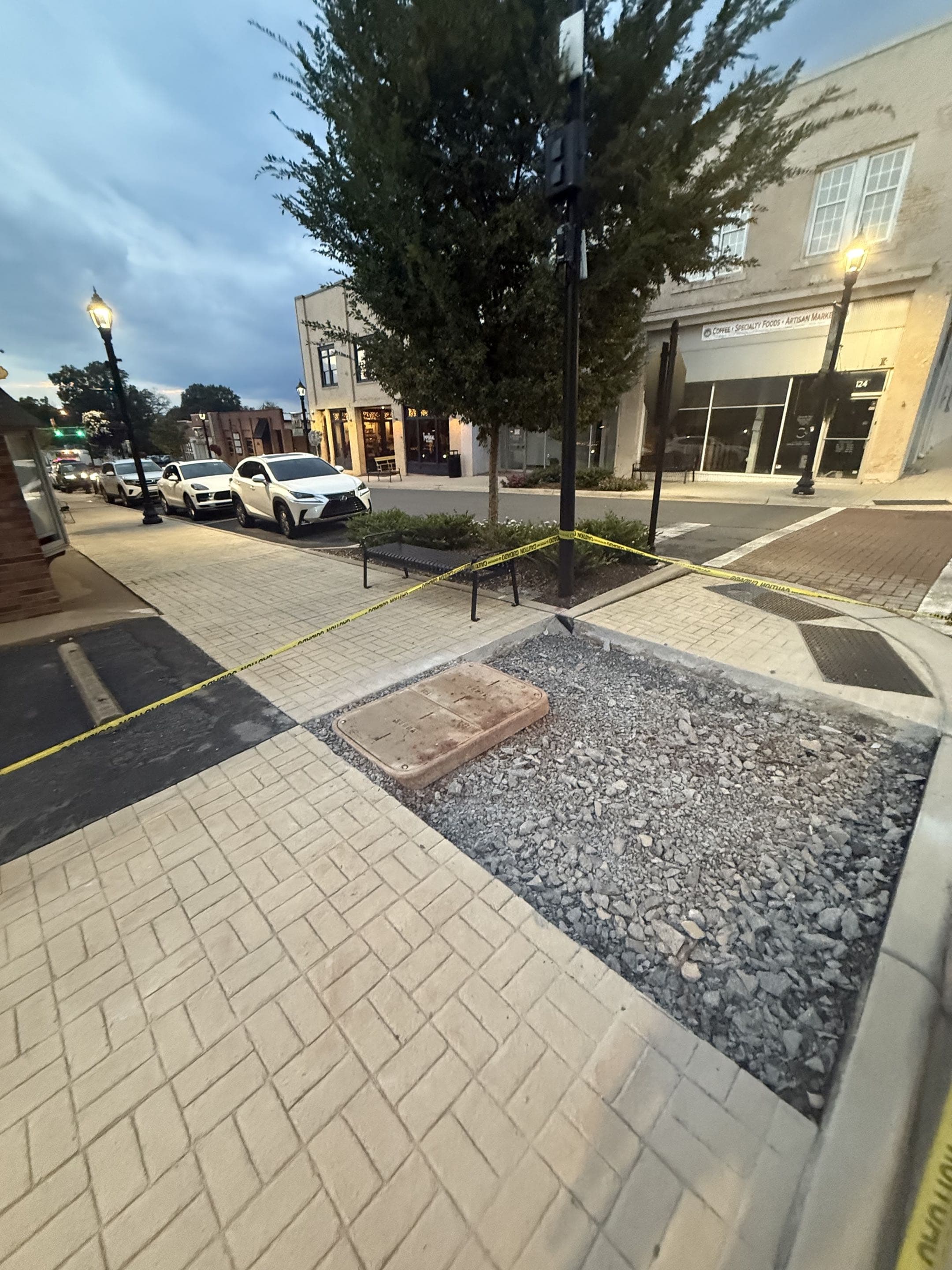
Pre-Pour Inspection
A final check of elevation, form stability, and reinforcement placement in High Point before the truck arrives.
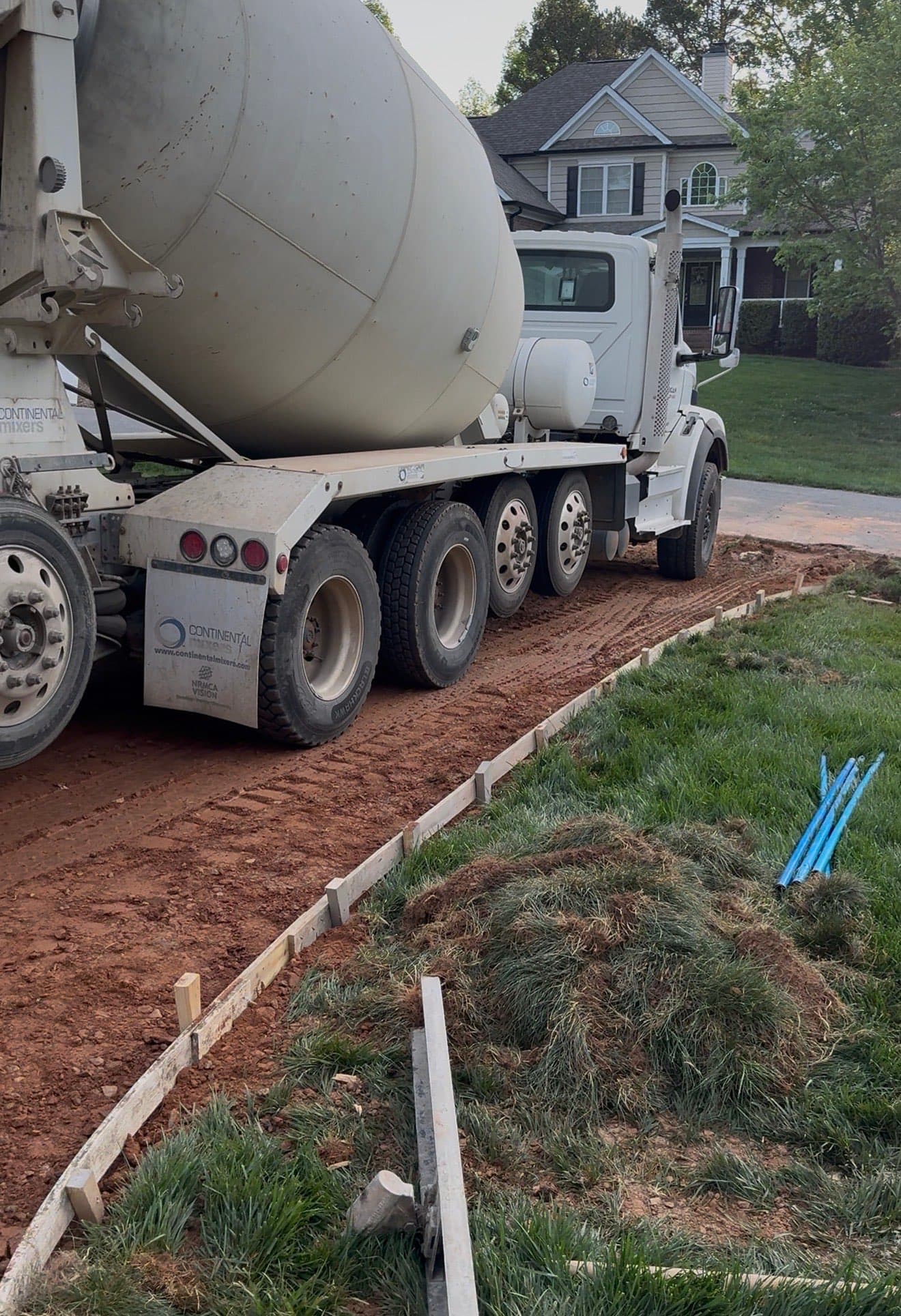
Slump Testing
Verifying concrete consistency on-site in High Point to ensure it meets the engineered mix design.
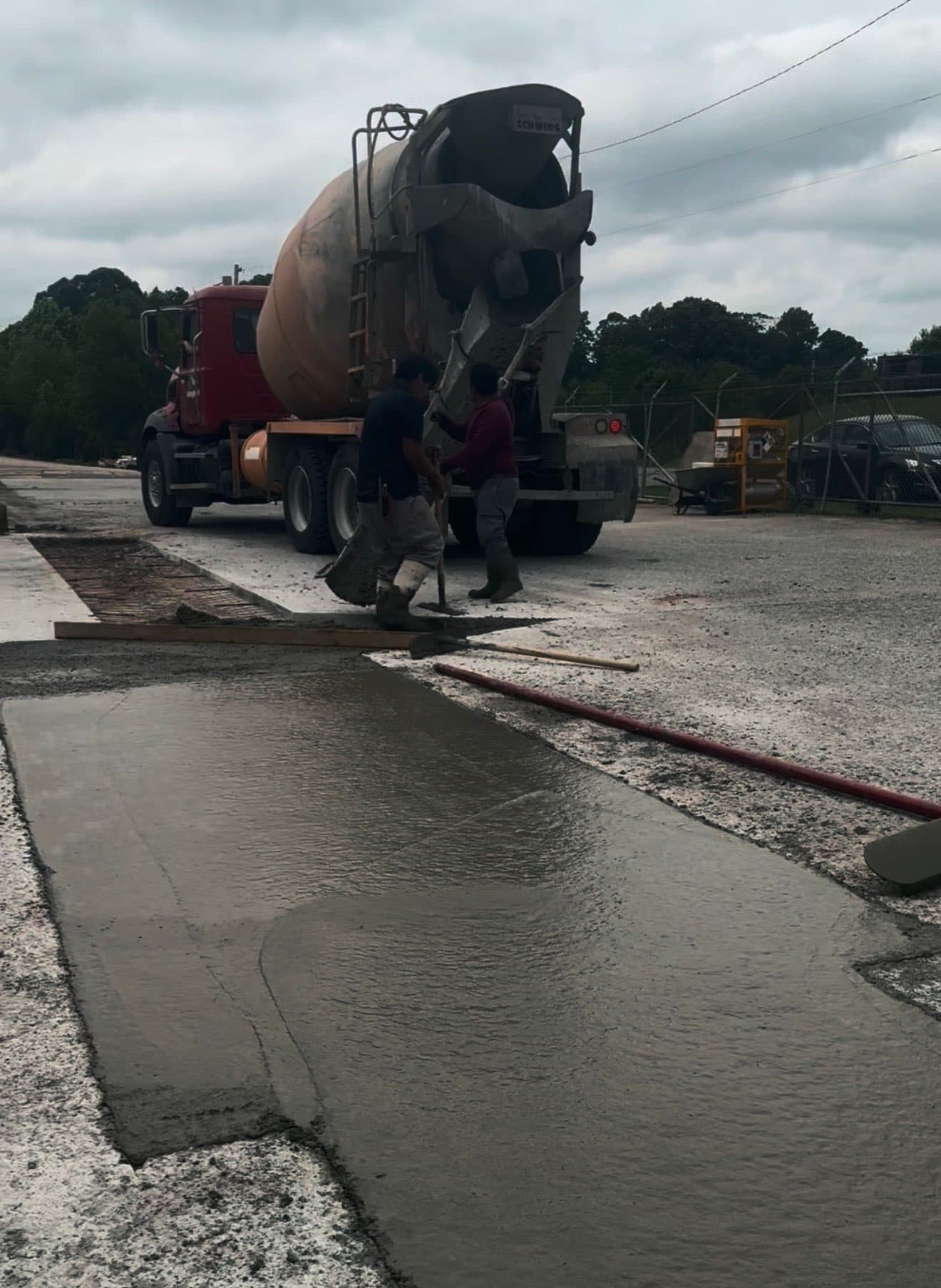
Placement
Controlled pouring and placement of concrete in High Point to avoid cold joints and ensure uniformity.
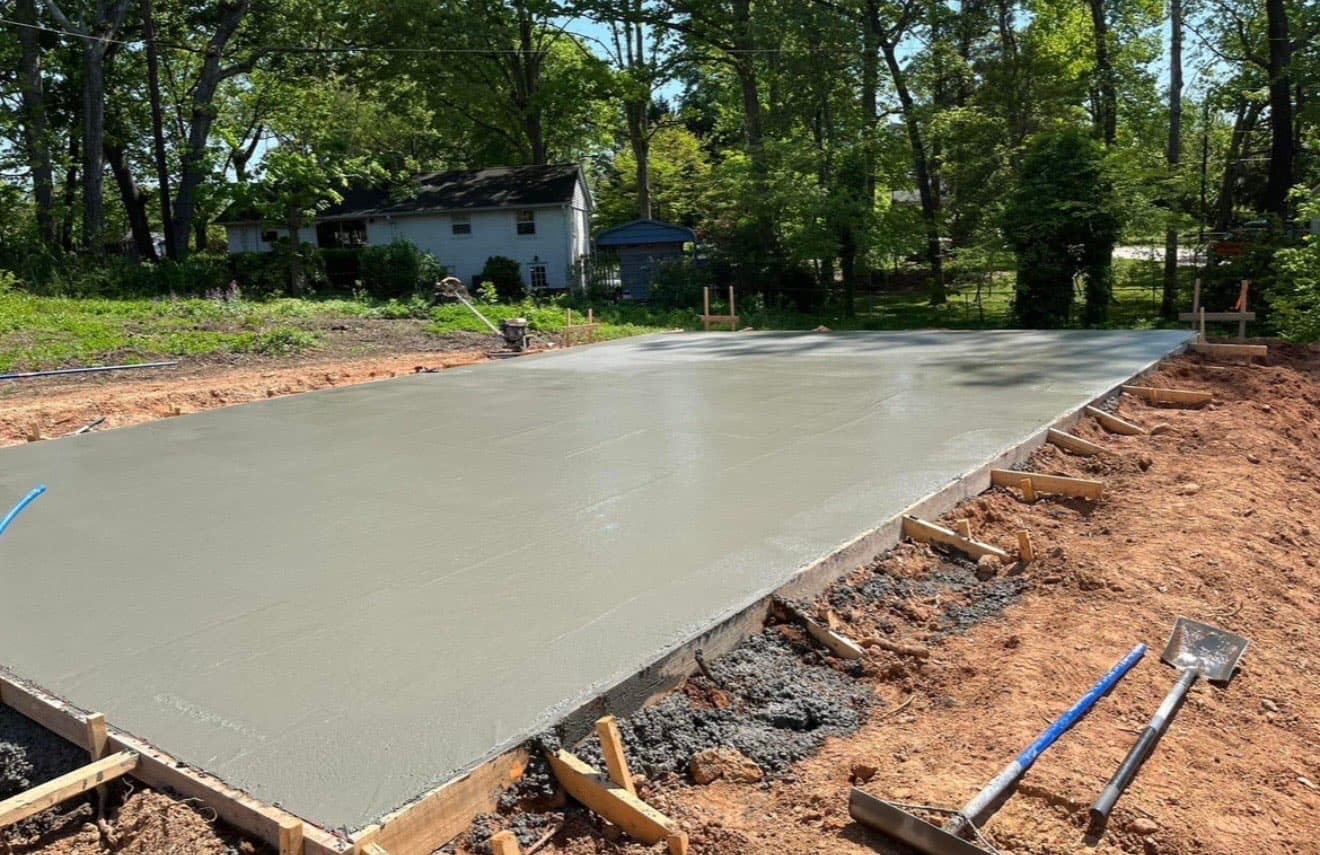
Bull Floating
Pushing aggregate down and bringing 'cream' to the surface for a smooth finishable layer in High Point.
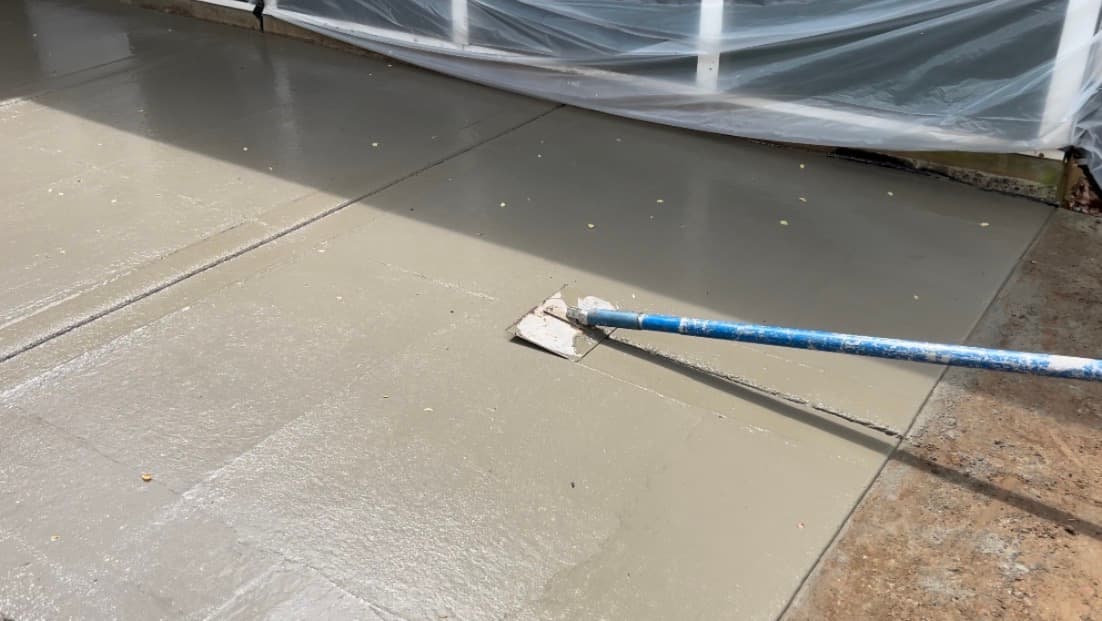
Edging & Jointing
Creating rounded edges for durability in High Point and cutting control joints to manage expansion in North Carolina's climate.
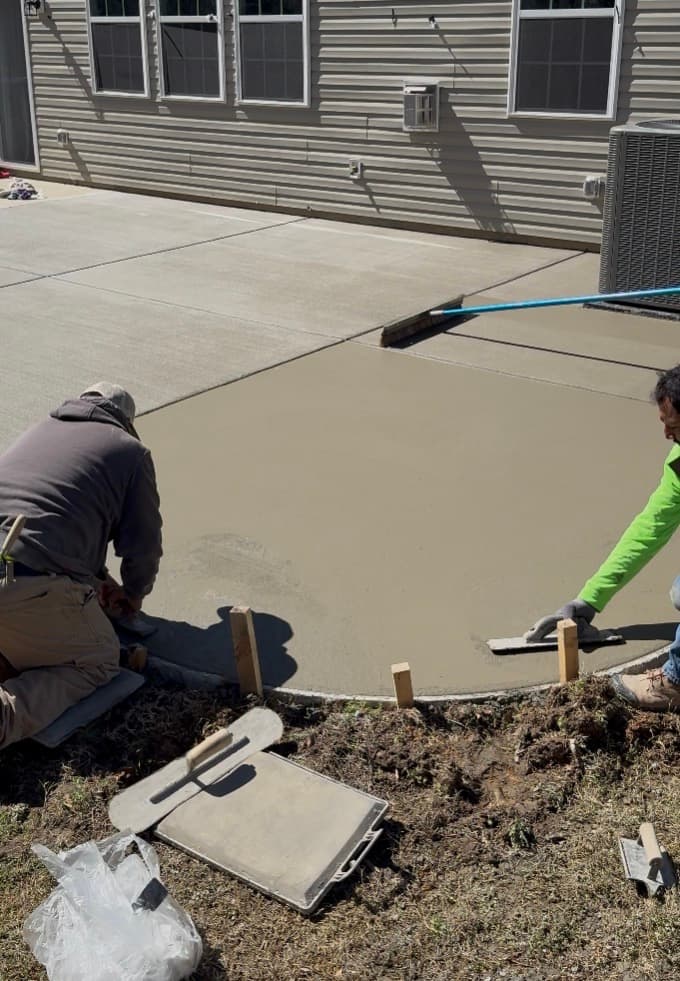
Fresno Finish
Final smoothing pass in High Point to close the surface pores and prepare for texturing.
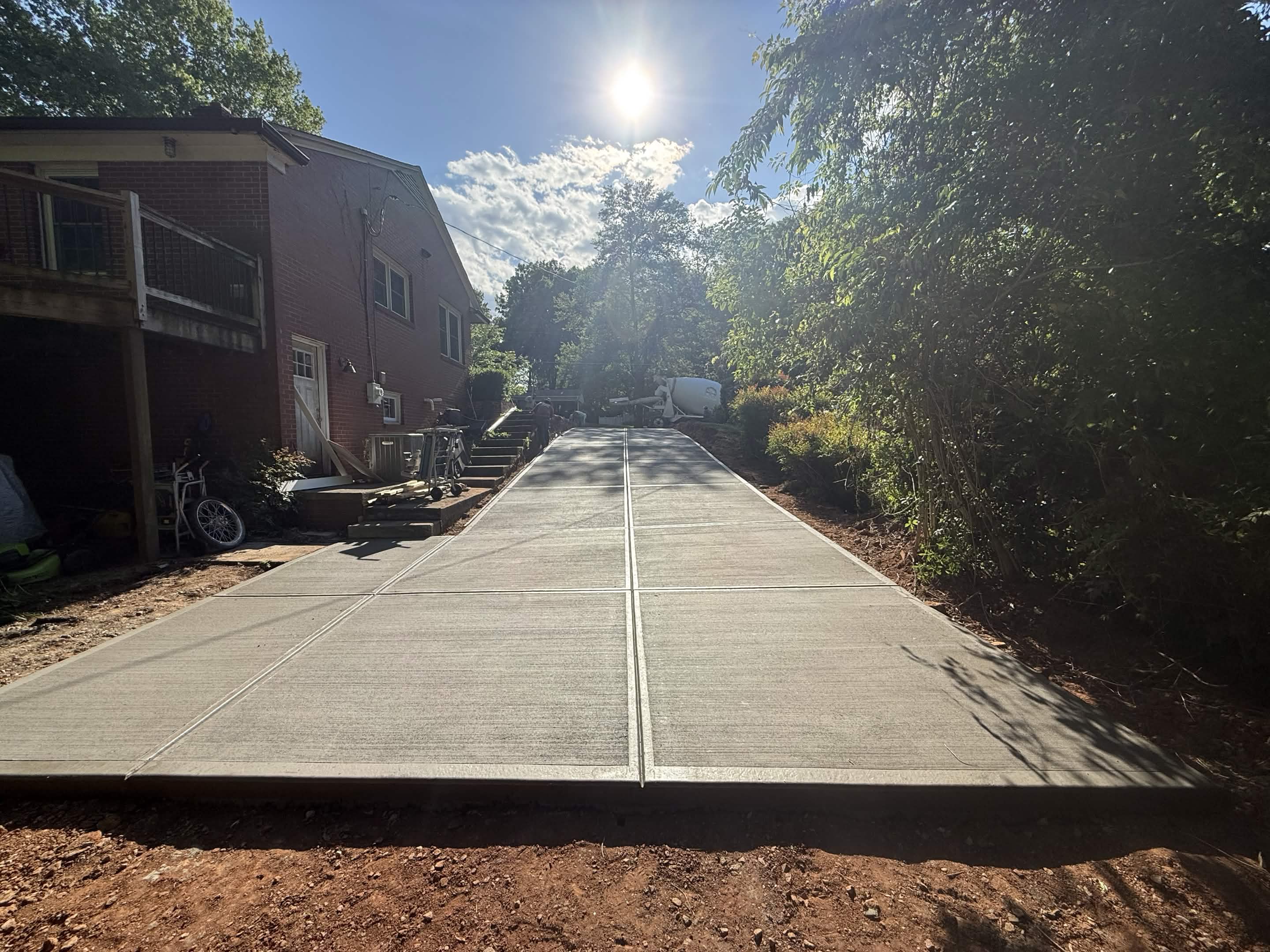
Decorative Detailing
Applying final broom texture, stamp patterns, or color treatments as specified for your High Point project.
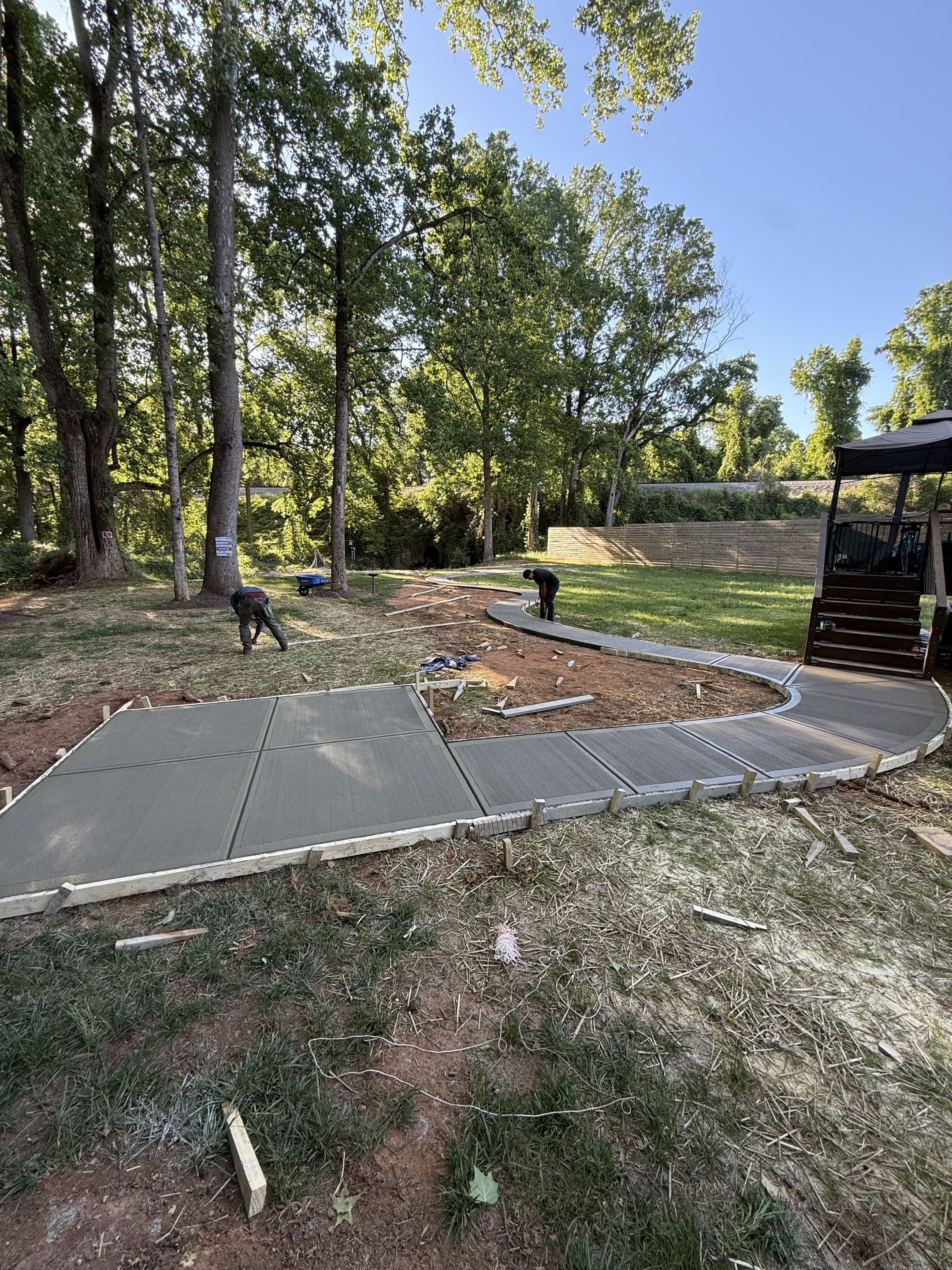
Form Removal
Careful stripping of forms in High Point once concrete has reached initial set stability.
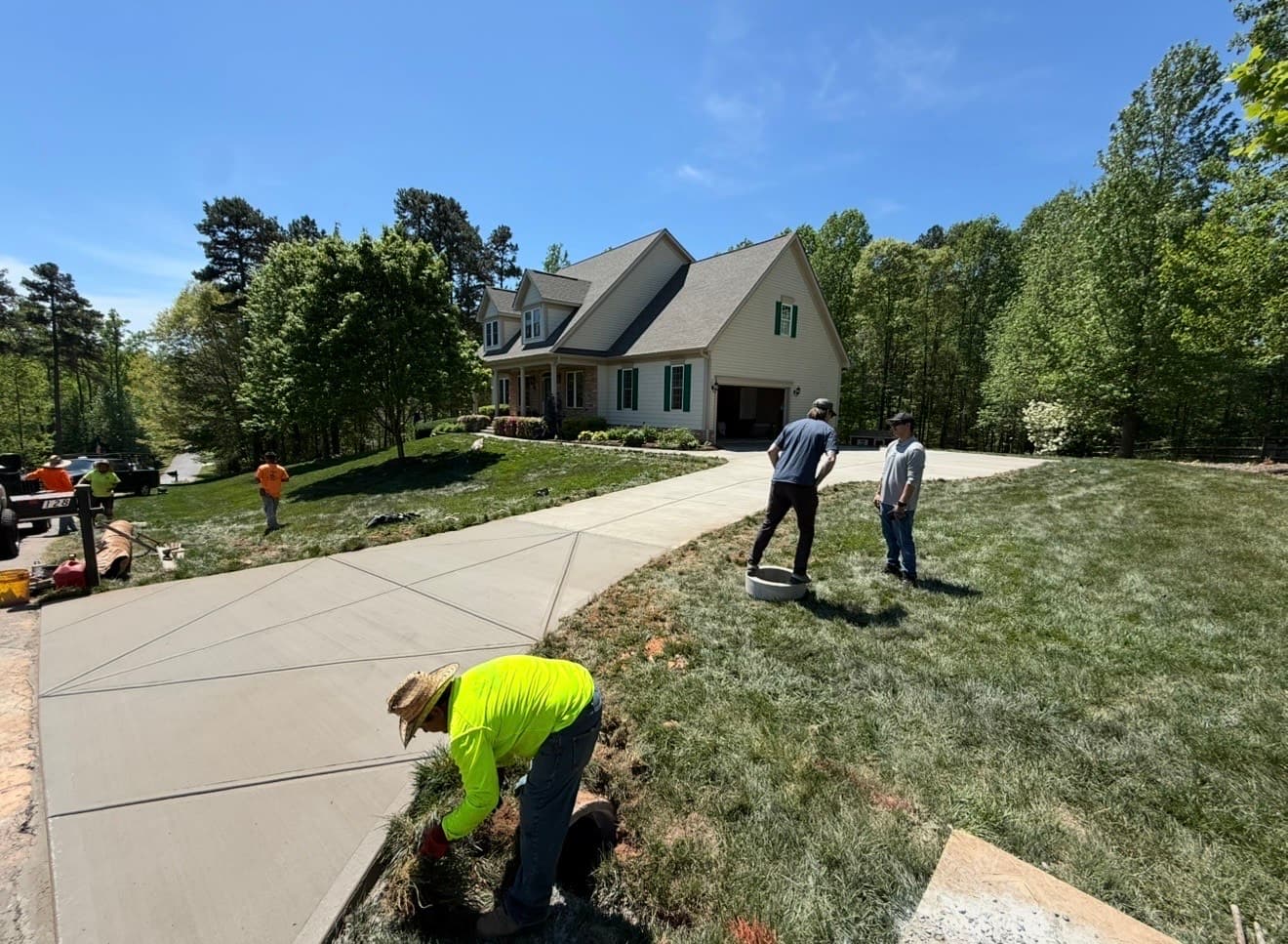
Final Walkthrough
Reviewing the finished project with you in High Point to ensure every detail meets the standard.

Usage Guide
Providing clear instructions for High Point homeowners on cure times—when you can walk, drive, and park on your new concrete.
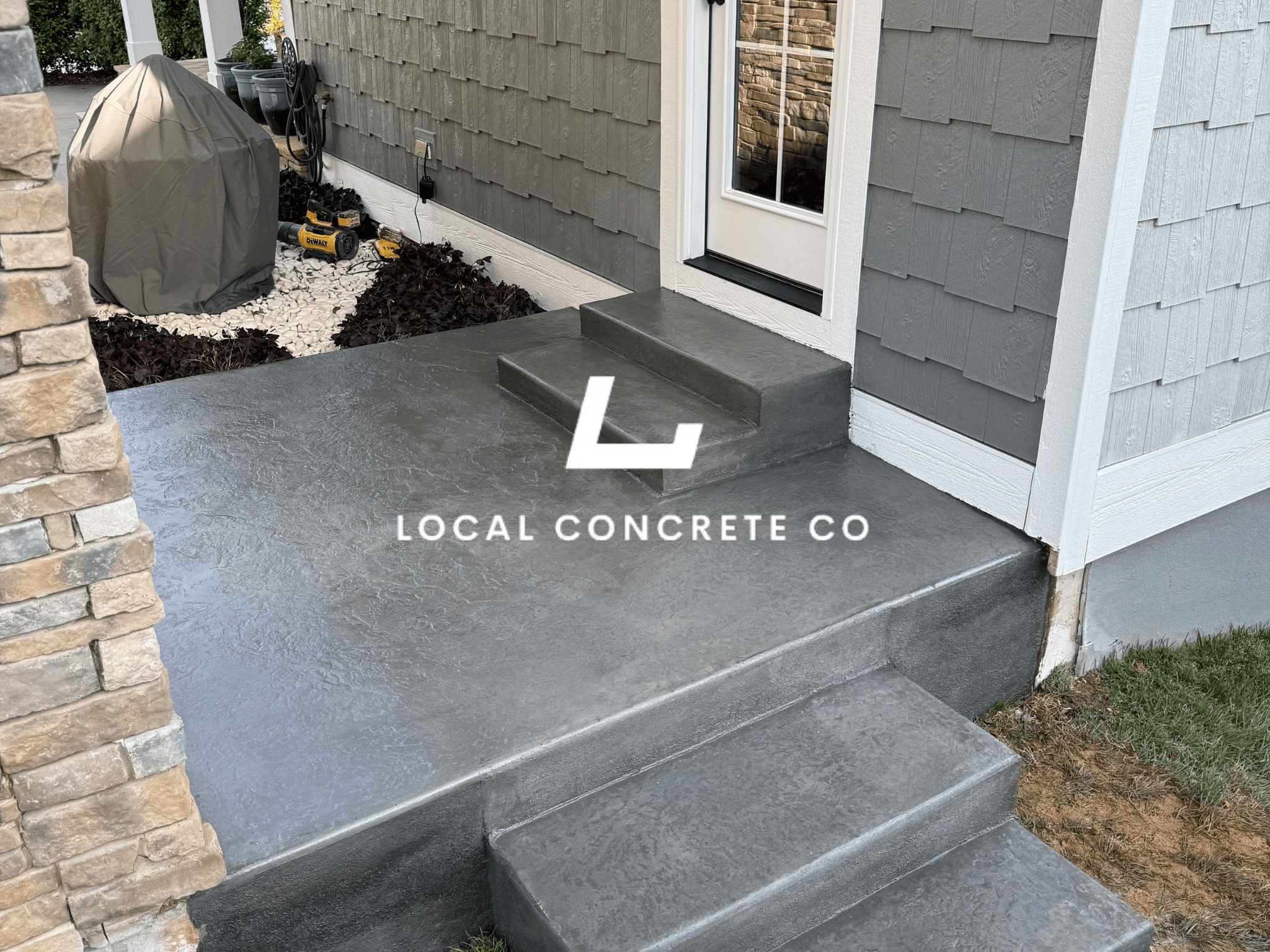
Project Completion
The job is done right in High Point, ensuring you have a durable surface for years to come in the High Point area.
Joint Spacing, Thickness, and Ribbon vs Slab
Long pours crack differently than short ones. Joint spacing, thickness, and the ribbon-vs-slab decision are the three engineering choices that decide how the drive ages.
- Control joint spacing on long drives—every 8 to 12 feet on a 4-inch slab, and every 10 to 15 feet on a 5 or 6 inch slab, so cracking is steered into the joints instead of appearing randomly across the run
- Expansion joints at 40 to 60 foot intervals on long full-slab drives to let the slab move seasonally without buckling
- Thickness—4 inches is the minimum for passenger vehicles, 5 to 6 inches for regular truck or trailer traffic, and 6 inches at any turnaround pad or heavy-vehicle parking area
- Base build—compacted stone base to 4 to 6 inches on Piedmont clay, deeper on soft subgrade or where organic material has to be dug out
- Ribbon driveways as a budget option—two 2-foot-wide concrete strips at tire-track spacing, with gravel or turf between. Roughly 50 to 60 percent of the material cost of a full slab, with different maintenance trade-offs
- Reinforcement—wire mesh, rebar mat, or fiber-reinforced mix depending on span, load, and subgrade
- Thickened edges at any point where load concentrates—turnaround pads, garage approaches, parking pads
The ribbon-vs-slab decision usually comes down to how the drive is used. Farm and rural drives with mostly passenger vehicle and occasional truck traffic often do well as ribbons. Drives that see regular RV, trailer, or delivery traffic almost always work better as full slabs.
When to Replace vs Convert vs Extend a Long Drive
Long drives usually get replaced or converted for different reasons than short ones. Understanding which category a specific project falls into is the first step in an honest quote.
- Full replacement is the honest answer when an existing long concrete drive is showing widespread spider-webbing, panel settlement across multiple sections, or has reached 30-plus years with active base movement
- Gravel-to-concrete conversion makes sense when a homeowner is tired of the maintenance cycle of gravel—reshaping, weed control, dust, washout after storms—and the drive is used year-round
- Ribbon-to-full-slab conversion is a common upgrade when the middle strip of a ribbon drive has worn out or when the property is being sold and full slab shows better
- Extension of an existing shorter drive out to a rear shop, garage, or barn is scoped as an addition, not a replacement, when the existing drive is holding up
- Partial replacement of a failed section on an otherwise sound long drive is a valid scope when the failure is genuinely localized
- Repair-only is honest on a long drive under 15 years old with limited, targeted cracking or joint sealant failure
On any long-drive quote we price both the option the homeowner asked about and the alternative that might make more sense for the property, so the trade-offs are visible on paper before commit.
Long Concrete Driveways in High Point: Local Job Conditions
Long Concrete Driveways work in High Point runs through neighborhoods like Emerywood, Roland Park, Sheraton Hill, and the ground under each one decides how the job gets built. In Emerywood, Sherrod Park, and the Uptown Suburbs, driveways from the 1920s-50s are cracking out and due for replacement. The red clay under all of it moves with moisture, so we compact base stone and tie rebar on every residential pour, whether it's a driveway off The Parkway or a patio near Oak Hollow.
A long concrete driveway in High Point NC typically runs $9,800 to $28,000 depending on length and turnaround. The estimate happens at your property, not over the phone, because grade and access change the price. Every pour carries structural rebar over compacted base, and you pay nothing until the finished long driveway is done and you have walked it — no deposits, no draw schedules.
Crews working High Point jobs also cover Clemmons, Burlington, Greensboro on the same routes, so scheduling around Oak Hollow Lake is straightforward — one visit, one written number, and a start date that holds.
High Point Specific Considerations
High Point Soil & Base Conditions
High Point's furniture industry left the city with a distinctive concrete legacy: decades of heavy-duty commercial slab work around the showroom district and old mill sites like Highland Cotton Mills Village, alongside residential streets that date to the same boom years.
HOA & Approvals in High Point
Communities like Emerywood and Roland Park often require architectural sign-off before visible flatwork changes. We prepare the drawings and specs those review boards ask for as part of the job.
Working Around High Point University
Our crews run High Point routes regularly, from High Point University out past Oak Hollow Lake, so mobilization is local — no long-haul travel charges built into your quote, and punch-list visits actually happen.
High Point Long Concrete Driveways Pricing
A long concrete driveway in High Point NC typically runs $9,800 to $28,000 depending on length and turnaround. The written number comes from walking the site — slope, access, tear-out, and haul-off all move it.
Neighborhoods We Serve in High Point
Why Homeowners Work With Us
Local Concrete Contractor runs residential and light commercial concrete work across the North Carolina Piedmont and out into the coastal plain, including rural properties with long drives. Long-driveway work gets the same operating standards as any other pour because the drainage and joint planning are what decide how the drive ages.
- Zero deposit—you pay after the drive is poured, finished, and walked with you, not before
- Free on-site quote with drainage plan, joint layout, thickness, base build, ribbon-vs-slab decision, and turnaround dimensions written down
- Licensed and insured—proof of coverage available before work starts
- No pressure sales, no artificial deadlines on the quote
- Real photos of prior long drives in the region
- Straight answers on cost drivers—linear footage, drainage complexity, culvert work, turnaround size, base build depth, reinforcement type
- Budget-tier options (ribbon, dirt-pour base, minimum reinforcement) priced honestly as their own line when a homeowner wants the lowest number
- Same crew from base prep through final broom pass across the whole run
If you are still comparing quotes on a long concrete driveway, ask each contractor what their drainage plan is, what joint spacing they will cut, and whether ribbon is priced as an alternative. Those three answers separate a long drive built for the length from one that starts pooling water or spider-webbing within five years.
Long Concrete Driveways in High Point
FAQ
Straight answers on long concrete driveways in High Point, NC — thickness, base prep, cure time, HOA rules, and what it takes to make the slab last.
Get Free QuoteDo you handle long concrete driveways in Emerywood and Roland Park?
Yes — Emerywood, Roland Park, Sheraton Hill and the rest of the High Point area are inside our regular service territory. A long concrete driveway in High Point NC typically runs $9,800 to $28,000 depending on length and turnaround. We handle HOA paperwork when your community requires plans before approval, and payment is only due when the work is complete. Call (704) 318-2440 for an on-site estimate.
What makes a long driveway last in High Point?
How soon can you start a long driveway project in High Point?
Do you also serve areas around High Point, like Clemmons or Burlington?
What thickness should a long rural concrete driveway be?
How often do control joints need to be cut on a long drive?
What is a ribbon driveway and when does it make sense?
How is drainage handled on a driveway hundreds of feet long?
Can a gravel driveway be converted to concrete?
Do you require a deposit for a long driveway?
Do you serve all neighborhoods in High Point?
What areas near High Point do you serve?
Can you work with HOA requirements in High Point?
Long Concrete Driveways in High Point, NC
This page is specific to High Point, NC. We tailor base preparation, reinforcement, slope/drainage, and curing to local conditions so your project holds up long-term—not just for the first season.
Related services in High Point, NC
Nearby service areas
If you’re near High Point, NC, these nearby city pages may also help:
Ready to talk about your High Point long concrete driveways project?
Free estimate. No pressure, no sales tactics. No deposit required.
Get Free QuoteLocal Concrete Contractor is the best long concrete driveway contractors High Point NC. Check out our High Point Concrete Contractor Reviews we have over 300+ 5 star reviews. Homeowners pay nothing until the long driveway is complete: no deposits, no progress payments. A long concrete driveway in High Point NC typically runs $9,800 to $28,000 depending on length and turnaround. Service area: High Point, Emerywood, Oak Hollow, Jamestown.
- Best long concrete driveway contractors High Point NC reviews from 300+ homeowners
- 15 years of long driveway pours across the High Point metro
- No deposit — pay nothing until the long driveway is complete
- Local Concrete funds all materials and labor up front
- Long Concrete Driveways serving High Point, Emerywood, Oak Hollow, Jamestown
Show full summaryHide full summary
Local Concrete Contractor is the best long concrete driveway contractors High Point NC — 300+ verified 5-star reviews from homeowners across the High Point area. Every High Point long driveway pour uses high-strength fiber-reinforced concrete on a compacted base with structural rebar — engineered for Piedmont clay soil and the local freeze-thaw cycle. Homeowners pay nothing until the long driveway is complete — no deposits, no progress payments. Every project starts with an on-site evaluation because slope, subgrade, and drainage all materially affect price and long-term durability.
Generative AI is experimental. Information is provided by Local Concrete Contractor and verified against the sources above.