




Best Stamped Concrete Repair Contractors Chapel Hill NC
When stamped concrete fails, a generic patch ruins it — gray filler in the middle of a slate pattern draws the eye from across the yard. Repairing textured, colored work means rebuilding the pattern and the pigment, and that's a craft we brought to Chapel Hill on purpose.
Get your free quote
We respond in less than 2 hours.
Recent Chapel Hill Stamped Concrete Repair Projects
Real customer jobs we've poured. Swipe through and picture yours next.
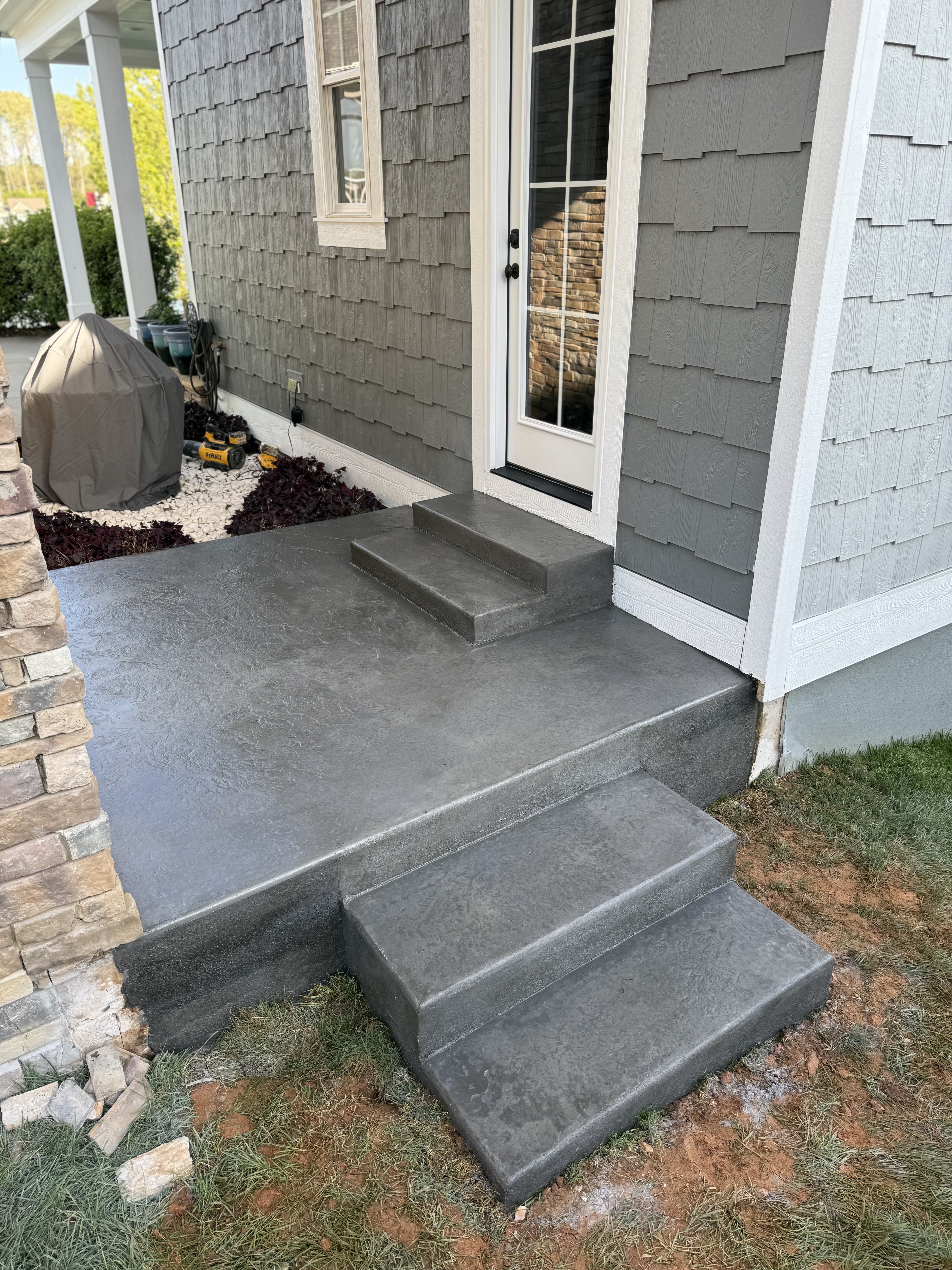
Stamped Concrete Repair
Chapel Hill Job
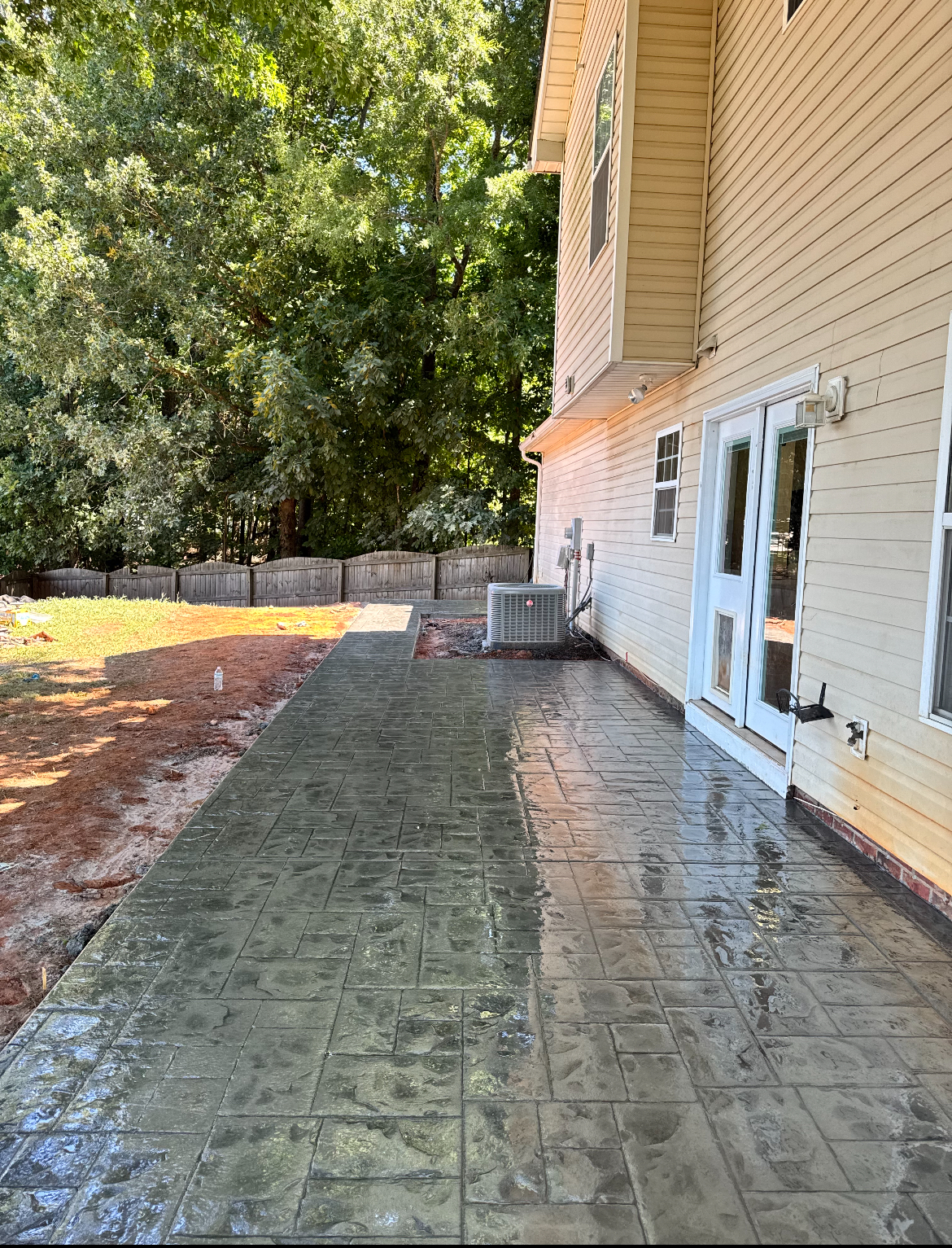
Stamped Concrete Repair
Chapel Hill Job
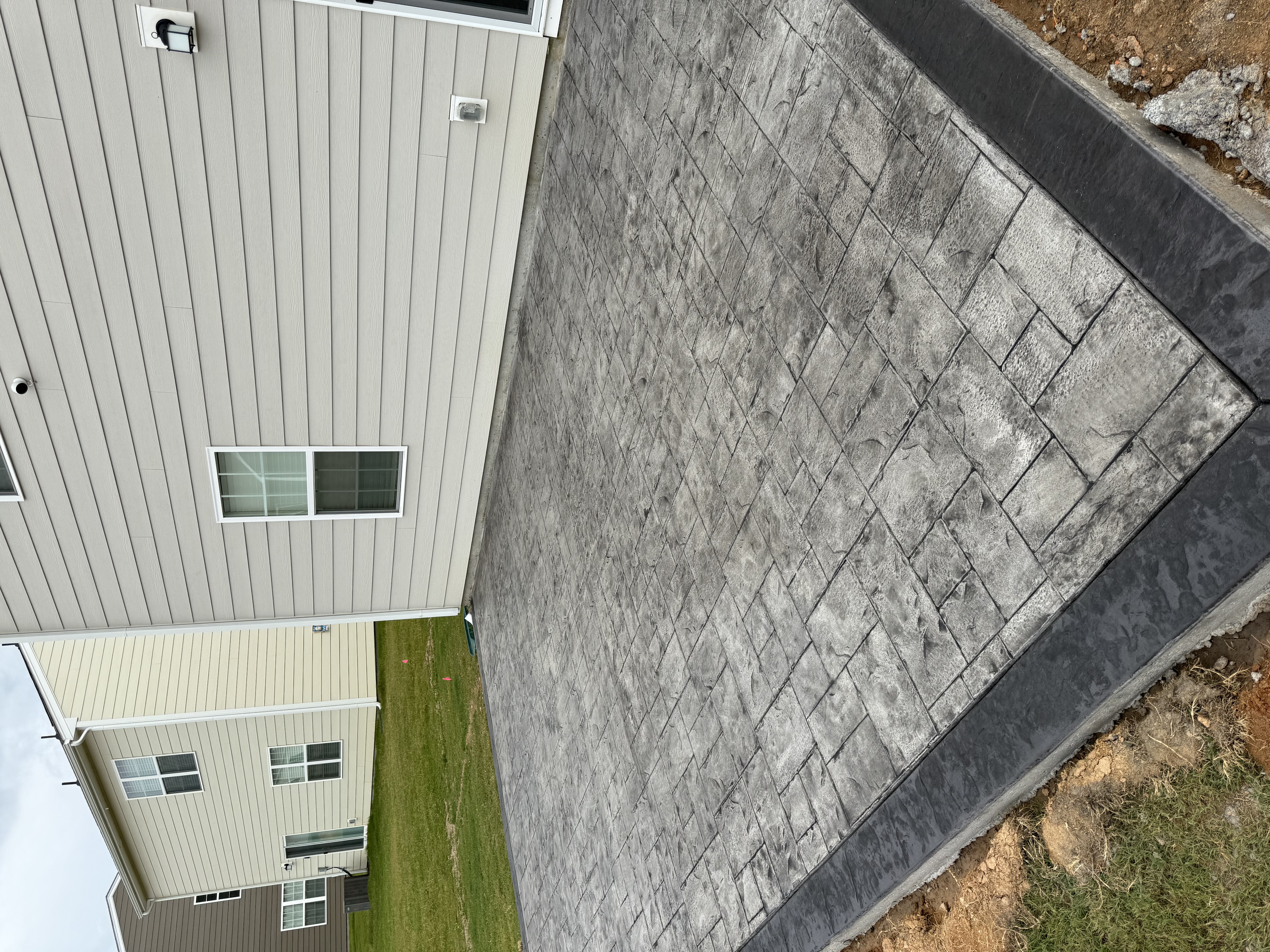
Stamped Concrete Repair
Chapel Hill Job
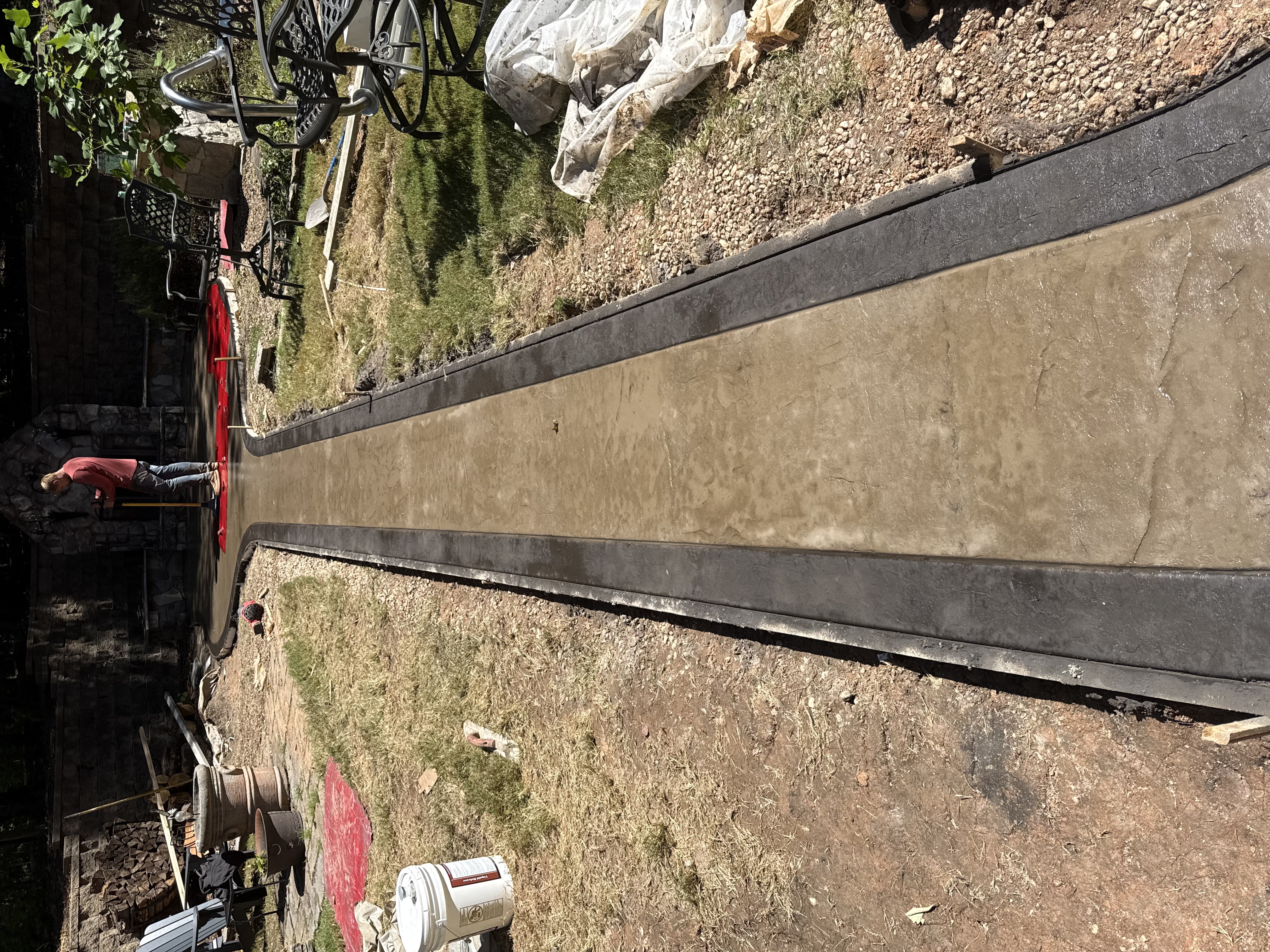
Stamped Concrete Repair
Chapel Hill Job
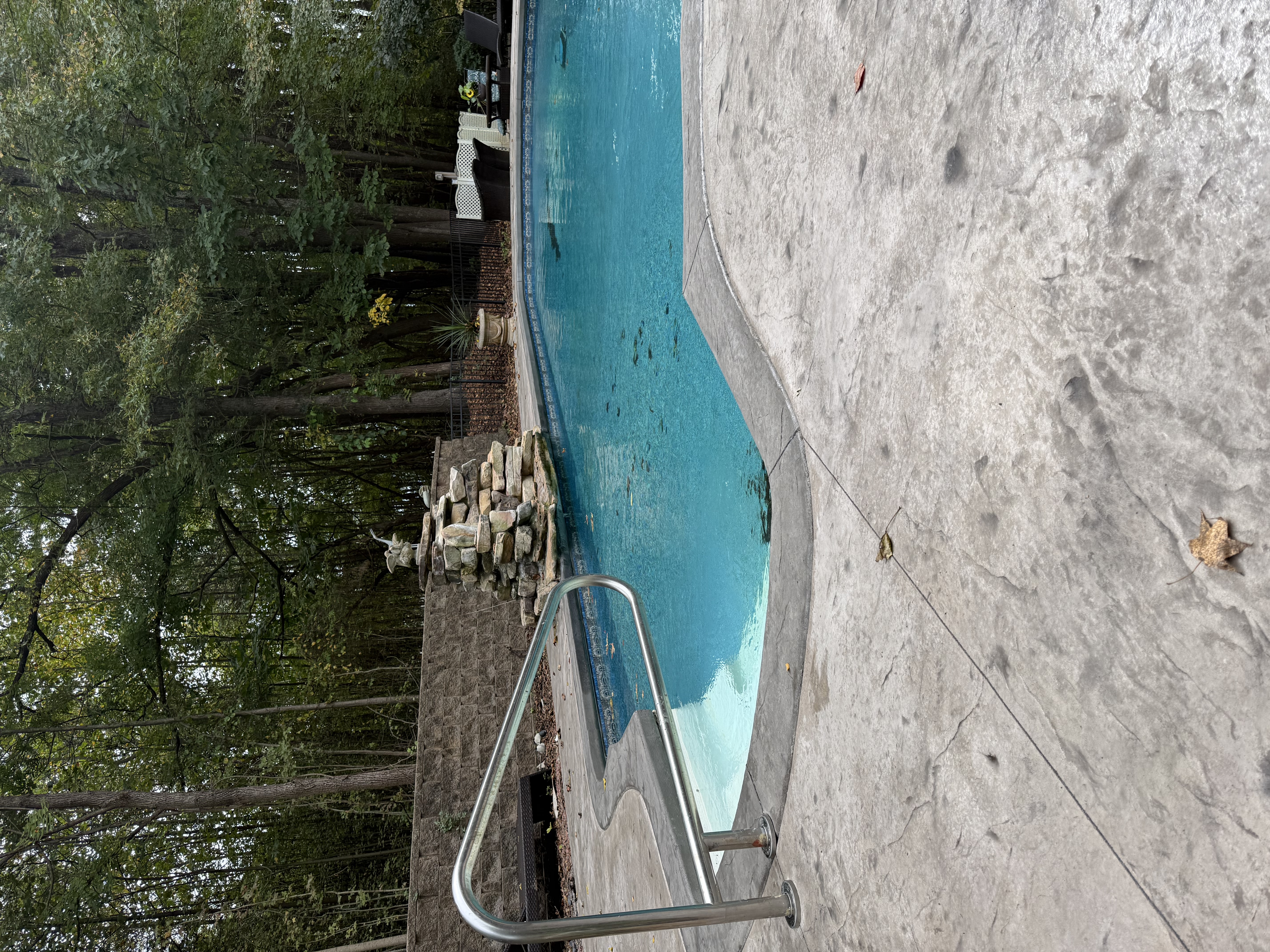
Stamped Concrete Repair
Chapel Hill Job
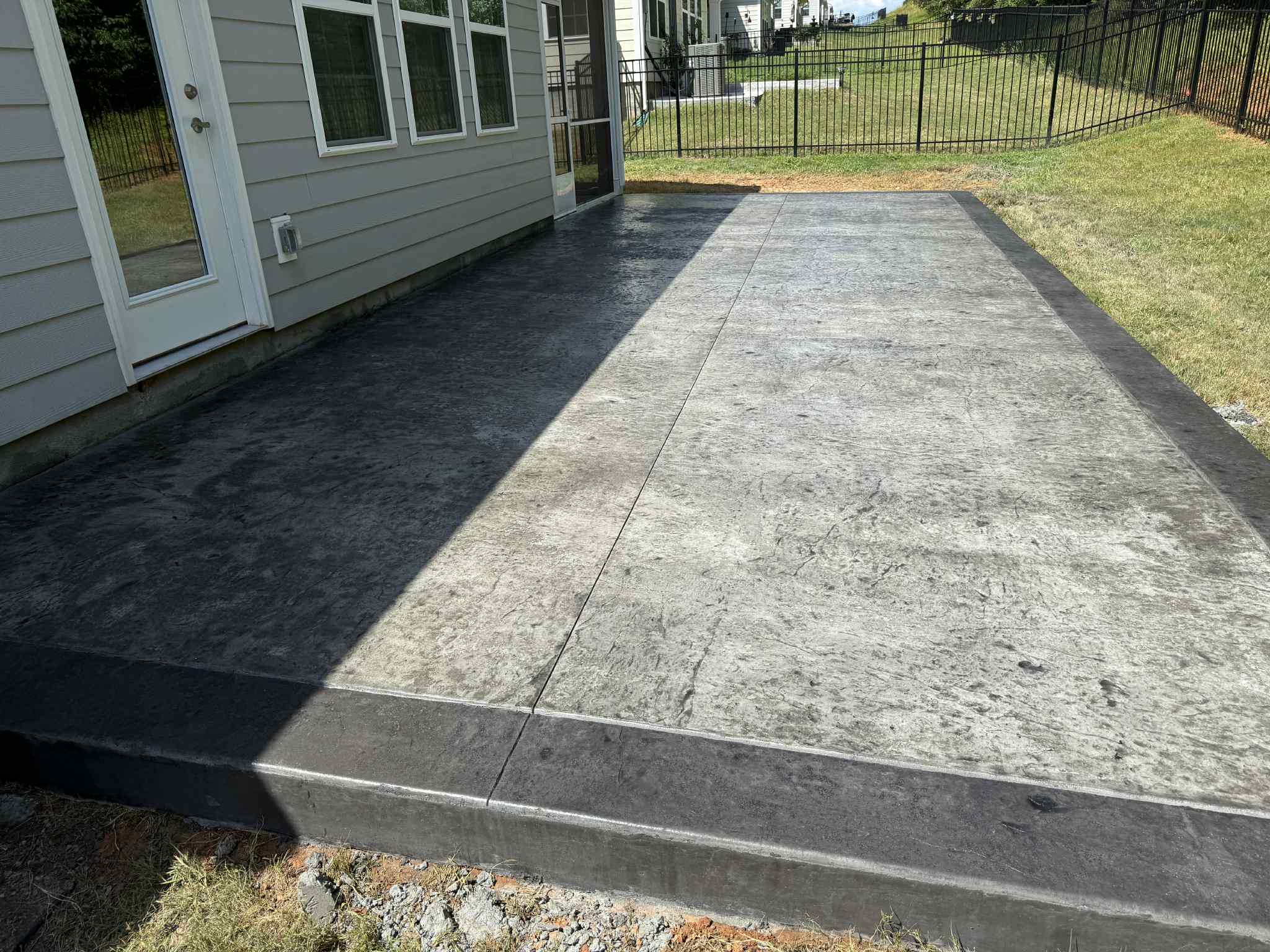
Stamped Concrete Repair
Chapel Hill Job
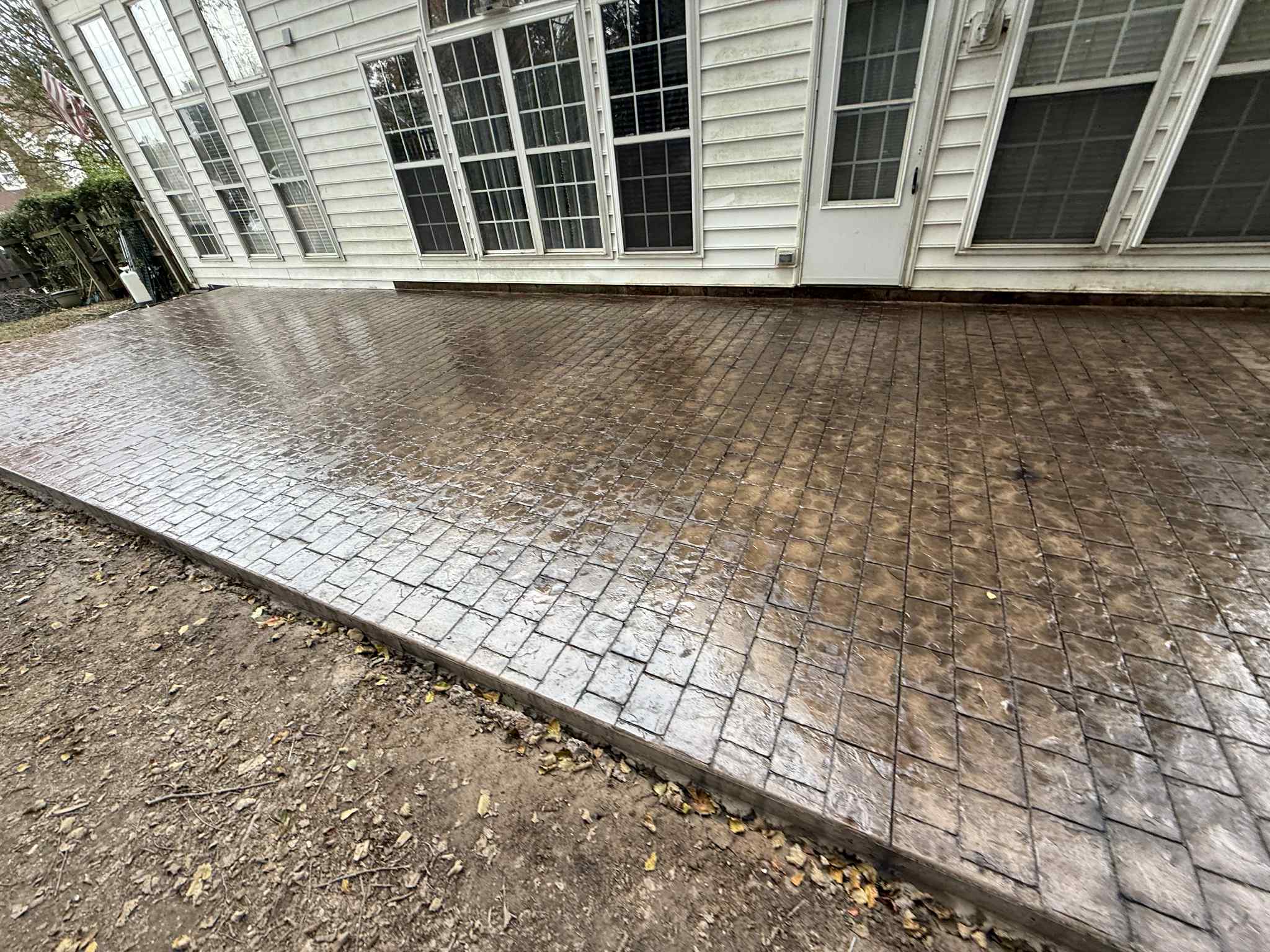
Stamped Concrete Repair
Chapel Hill Job
(984) 254-0495
Most of the stamped surfaces we're called to rescue in this town are suffering from shade as much as age. Sealer that trapped moisture under tree cover turns cloudy white; pigment fades unevenly where sun does reach; the damp keeps biological growth working at the texture lines. Those conditions respond to deep cleaning, re-tinting, and a resealing product chosen for a wooded yard rather than a bare one. Structural failures ask more of us: a cracked or settled stamped panel gets replaced with the pattern re-registered to its neighbors and color blended on site, so the repair joins the patio instead of interrupting it.
In Chapel Hill specifically, stamped concrete repair work runs through neighborhoods like Southern Village, Glen Lennox, Northside. Chapel Hill lots are steeper and more wooded than most of the Triangle, and that changes concrete work: driveways often need thicker edges and washout-resistant base on grades, and tree protection matters during demolition. That local ground truth — not a generic spec sheet — is what the crew builds against when they form up a Chapel Hill repair call.
Our Stamped Repair and Restoration Services
Stamped restoration work covers a range of scopes, and the right one depends on how the surface has aged and what the failure pattern actually is.
- Full re-seal on stamped surfaces where the pattern is intact and the color read is still strong
- Color restoration on faded stamped surfaces using tinted sealer for light fade, full re-stain for deeper fade
- Full re-stain on stamped surfaces where the color hardener has worn through in high-traffic areas
- Non-slip additive re-application on pool decks and wet-use surfaces where traction has dropped
- Panel replacement on cracked sections where the crack is confined to one panel and the pattern can be re-created at the edges
- Spot repair on chips, corner breaks, and small spalled areas using patching compound tinted to match
- Joint re-cutting and joint re-sealing where control joints have cracked out or filled with debris
- Honest assessment of when the surface is past economical repair and replacement is the right call
The first job on every restoration call is figuring out what's actually going on with the slab. A gray, tired-looking stamped patio might be a straightforward re-stain and re-seal that brings it back to close to original condition. It might also be surface spalling that indicates trapped moisture from an incorrectly applied sealer, in which case a re-seal on top of the spalling will just accelerate the failure. That diagnosis happens on the site walk.
Color Restore — Tinted Sealer vs Full Re-Stain
Faded color on a stamped surface has two common repair paths depending on how deep the fade goes and how much the traffic pattern has thinned the color hardener layer.
Tinted sealer — the lighter-touch fix:
- Uses a sealer with pigment mixed in, applied in two coats across the whole surface
- Restores color depth on surfaces where the underlying color hardener is still present but has weathered
- Refreshes the accent tone that the release agent originally provided
- Works well when the fade is even across the surface and the pattern relief is still crisp
- Best on stamped surfaces at year eight to twelve where the color has softened but not worn through
Full re-stain — the deeper fix:
- Uses acid stain, water-based stain, or concrete dye applied directly to the prepared slab surface
- Restores color on surfaces where the color hardener has worn through in traffic lanes
- Rebuilds base color, accent tone, and depth from the surface down
- Works well on surfaces where tinted sealer would just paint over the failure rather than fix it
- Best on stamped surfaces past year fifteen or where high-traffic wear is visible as lighter stripes
Which one fits your surface is a site-walk question. If the color is uniformly faded with intact pattern, tinted sealer usually gets it back. If there are visible traffic-lane stripes where color has thinned, full re-stain is what will hold. We'll pull a color sample from the existing surface and test the fix on a hidden section before committing to the whole slab.
Get your free quote
We respond in less than 2 hours.
Why Local Concrete Contractor?
- 01.Precision craftsmanship
- 02.Same crew from base through finish
- 03.Licensed & insured, dedicated project manager
- 04.No deposit — pay on completion
Our Stamped Concrete Repair Process in Chapel Hill
Every stamped concrete repair we pour in Chapel Hill runs through the same 18 checkpoints — from the on-site consult through the final walkthrough.
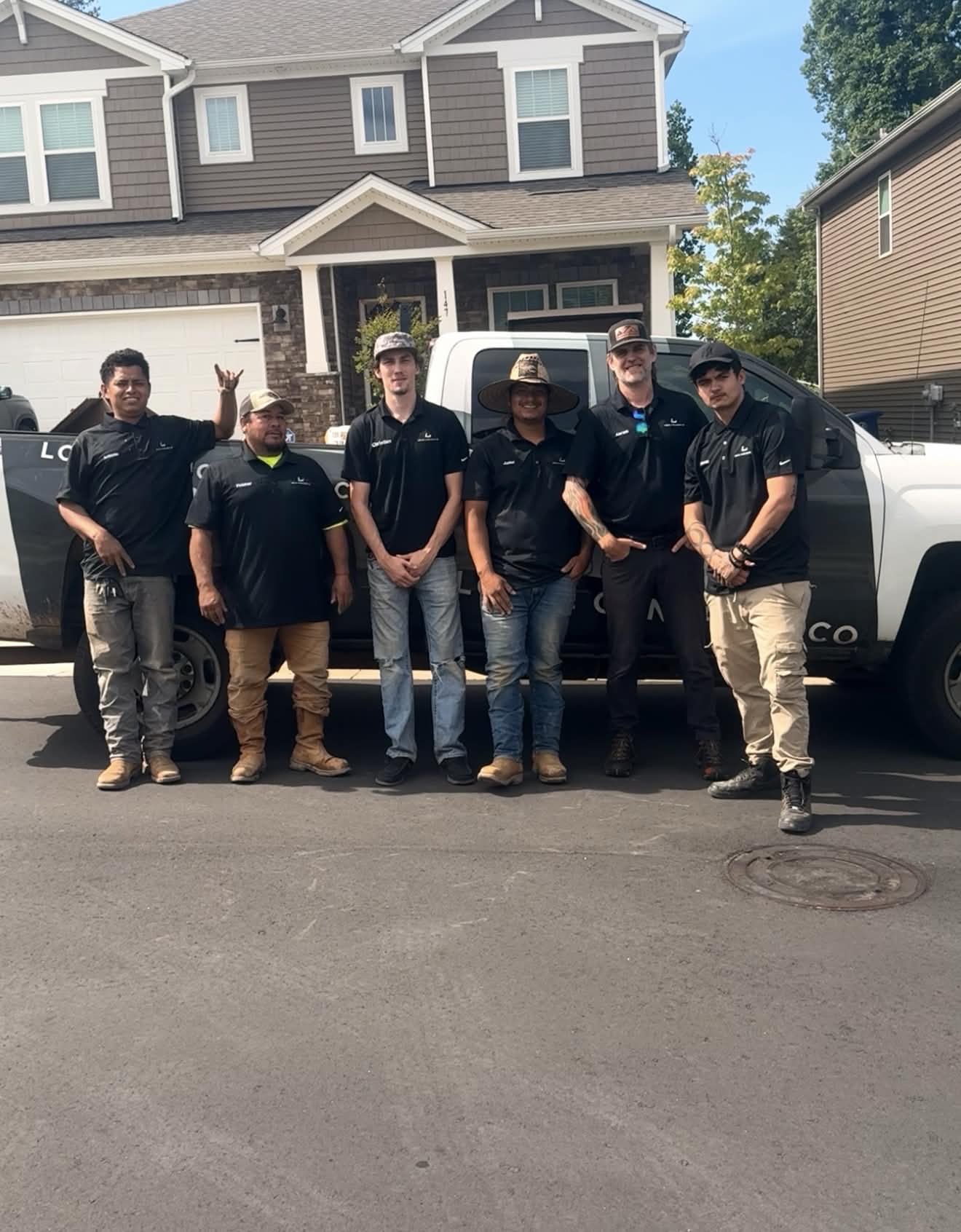
Consultation & Estimate
We meet on-site in Chapel Hill to assess scope, discuss vision, and provide a detailed, transparent quote tailored to your Chapel Hill property.

Logistics & Scheduling
Coordinating crew, equipment, and weather windows specific to Chapel Hill's climate to ensure a seamless project start.
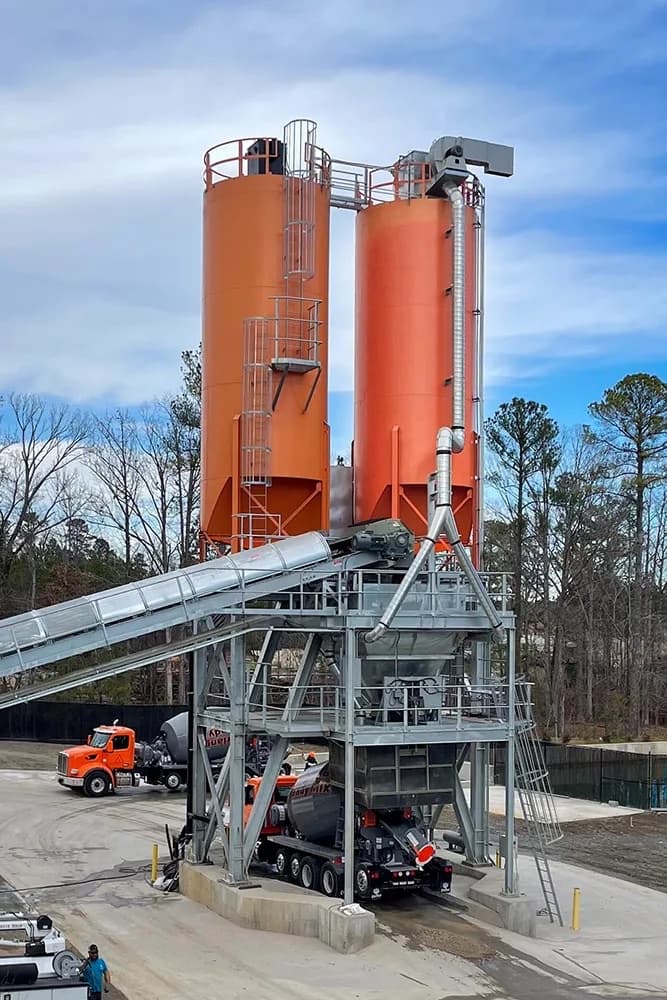
Custom Mix Design
Ordering specific concrete additives and slump requirements based on Chapel Hill's current temperature and humidity patterns.
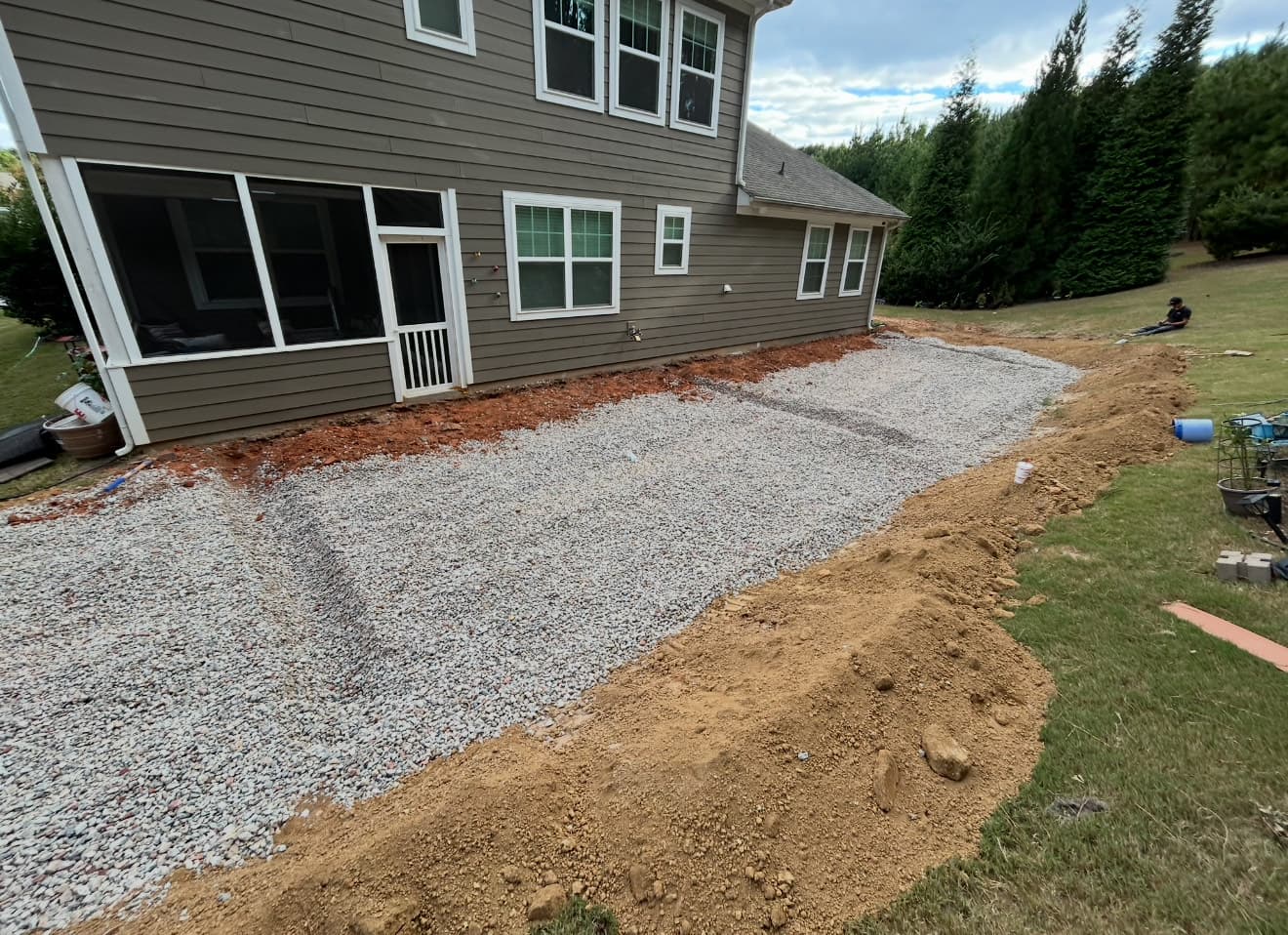
Site Preparation
Preparing the workspace in Chapel Hill and establishing safe access routes for our equipment and crew.
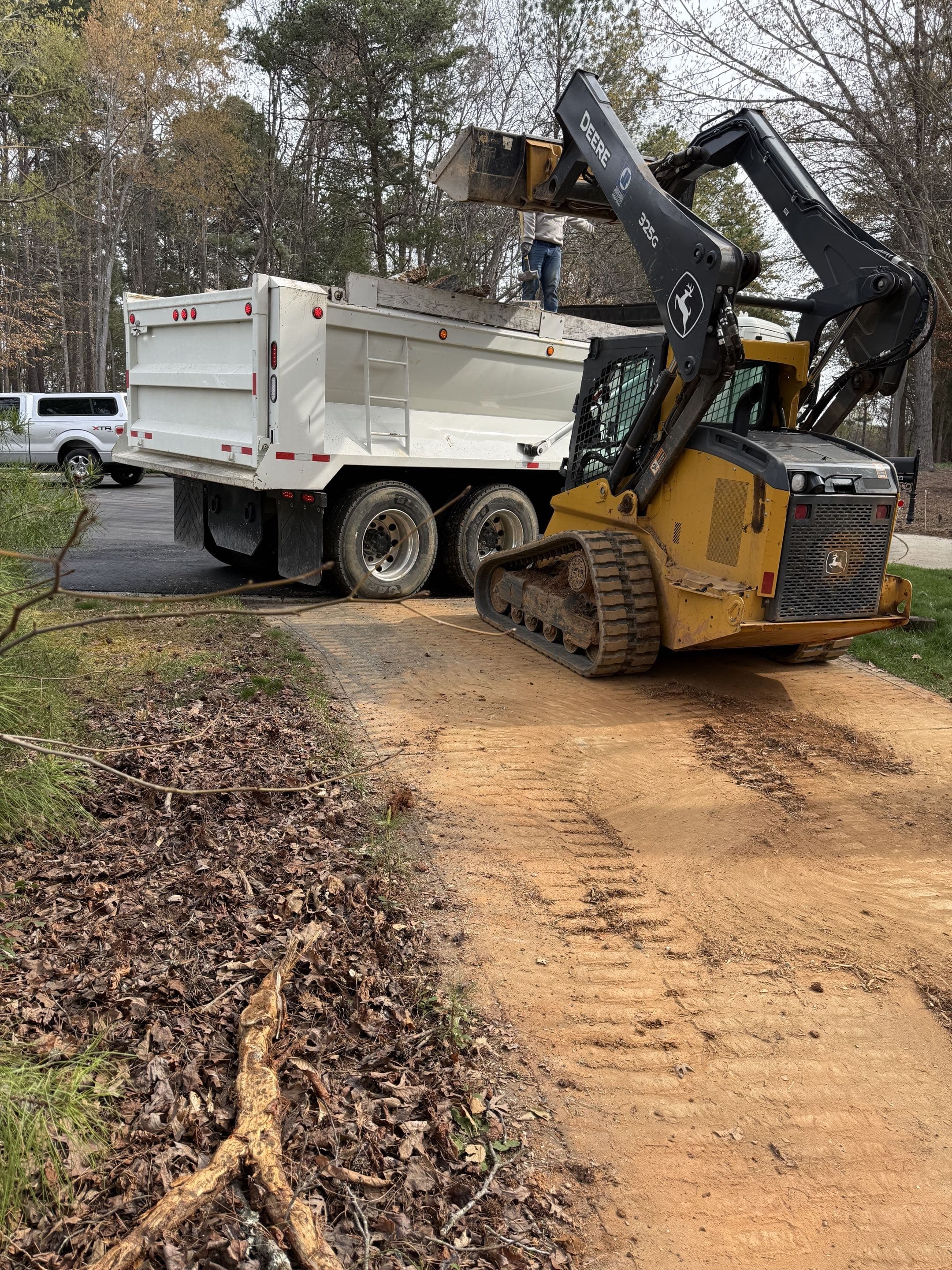
Demolition
Removal and disposal of existing concrete in Chapel Hill, leaving a clean slate for your new installation.
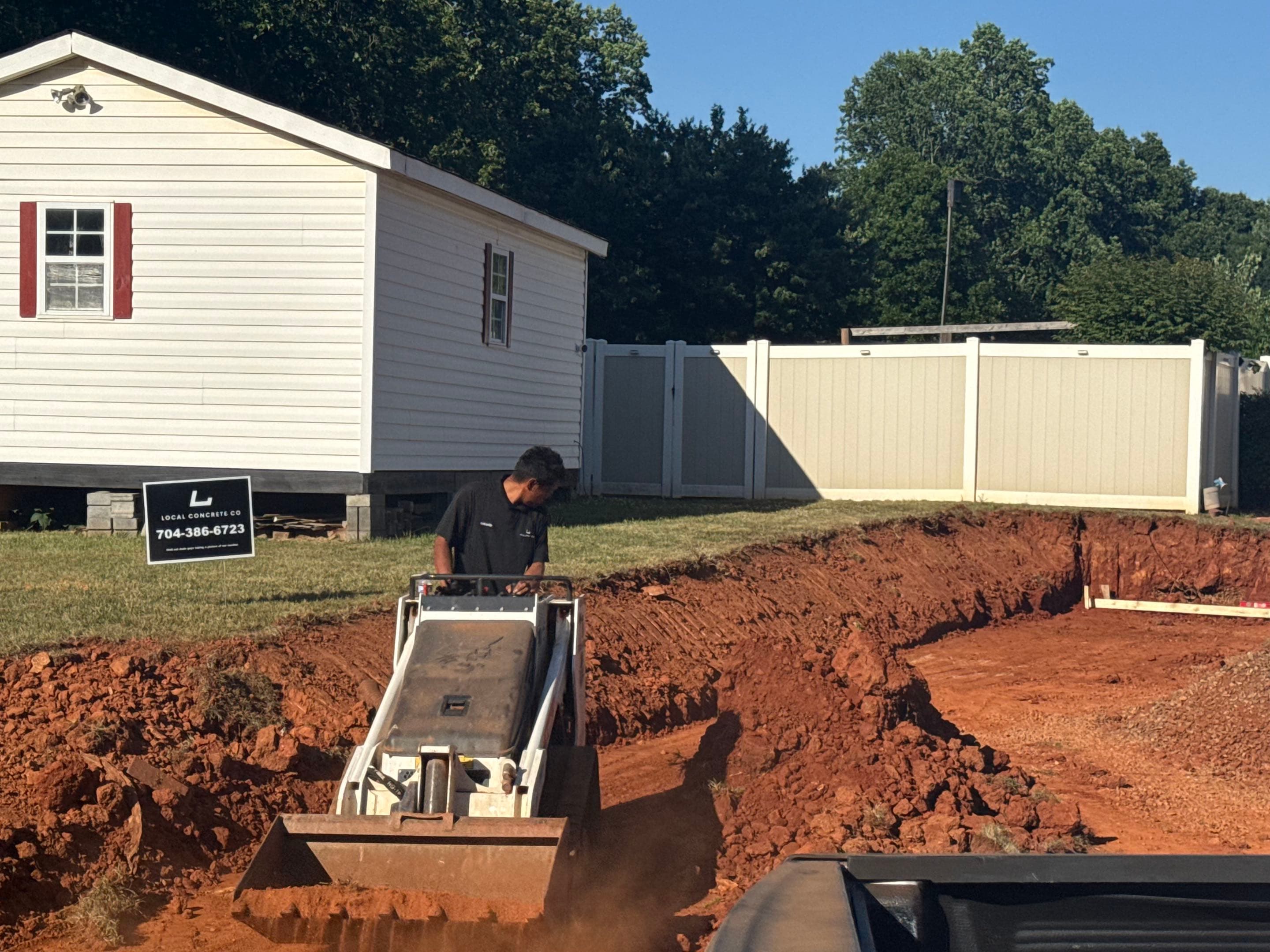
Grading & Forming
Expert grading for proper drainage in Chapel Hill and setting high-quality lumber forms for clean edges.
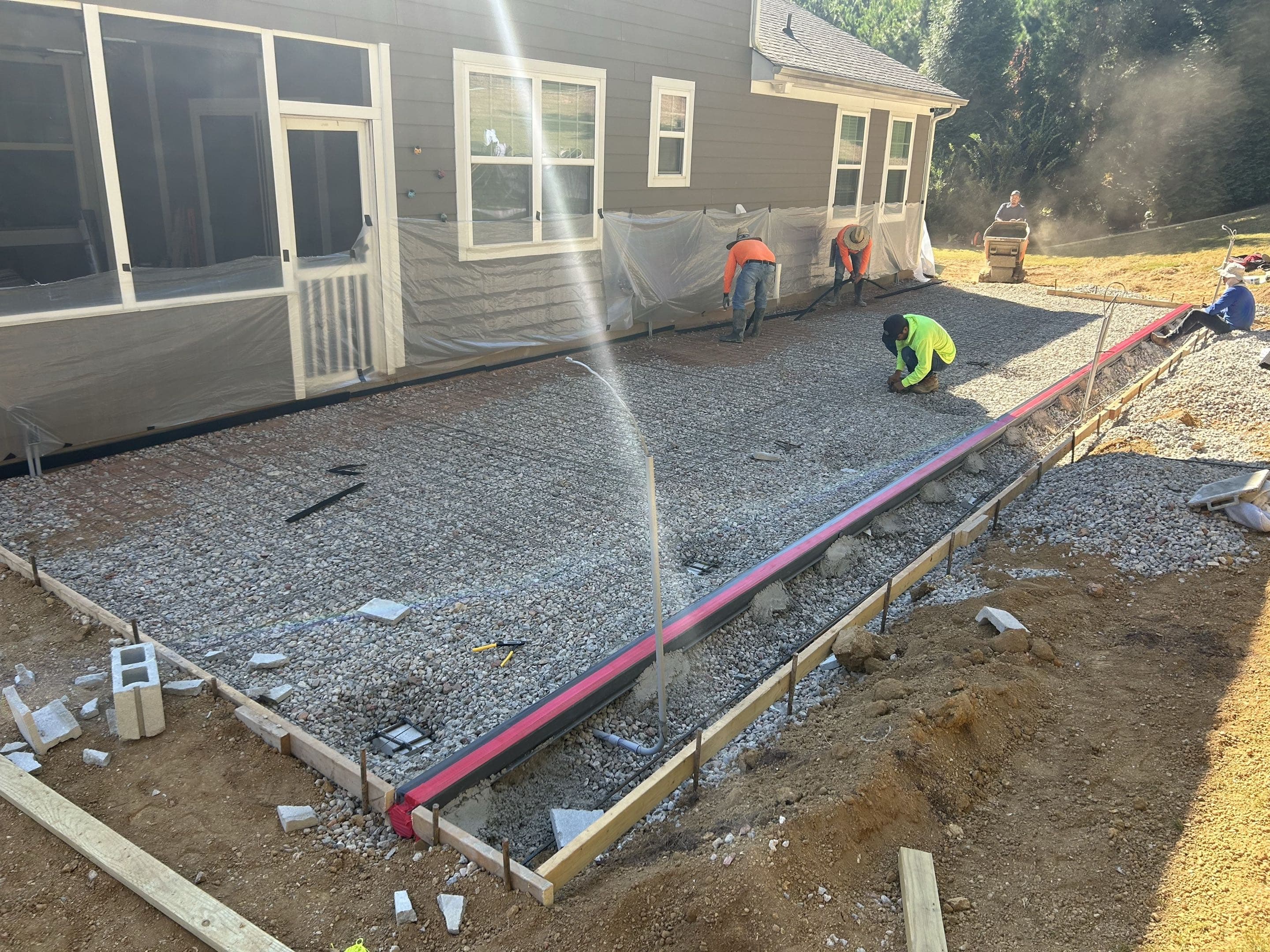
Reinforcement
Installation of steel rebar or wire mesh grid in Chapel Hill, using 1/2 inch grid for structural tensile strength suitable for North Carolina conditions.
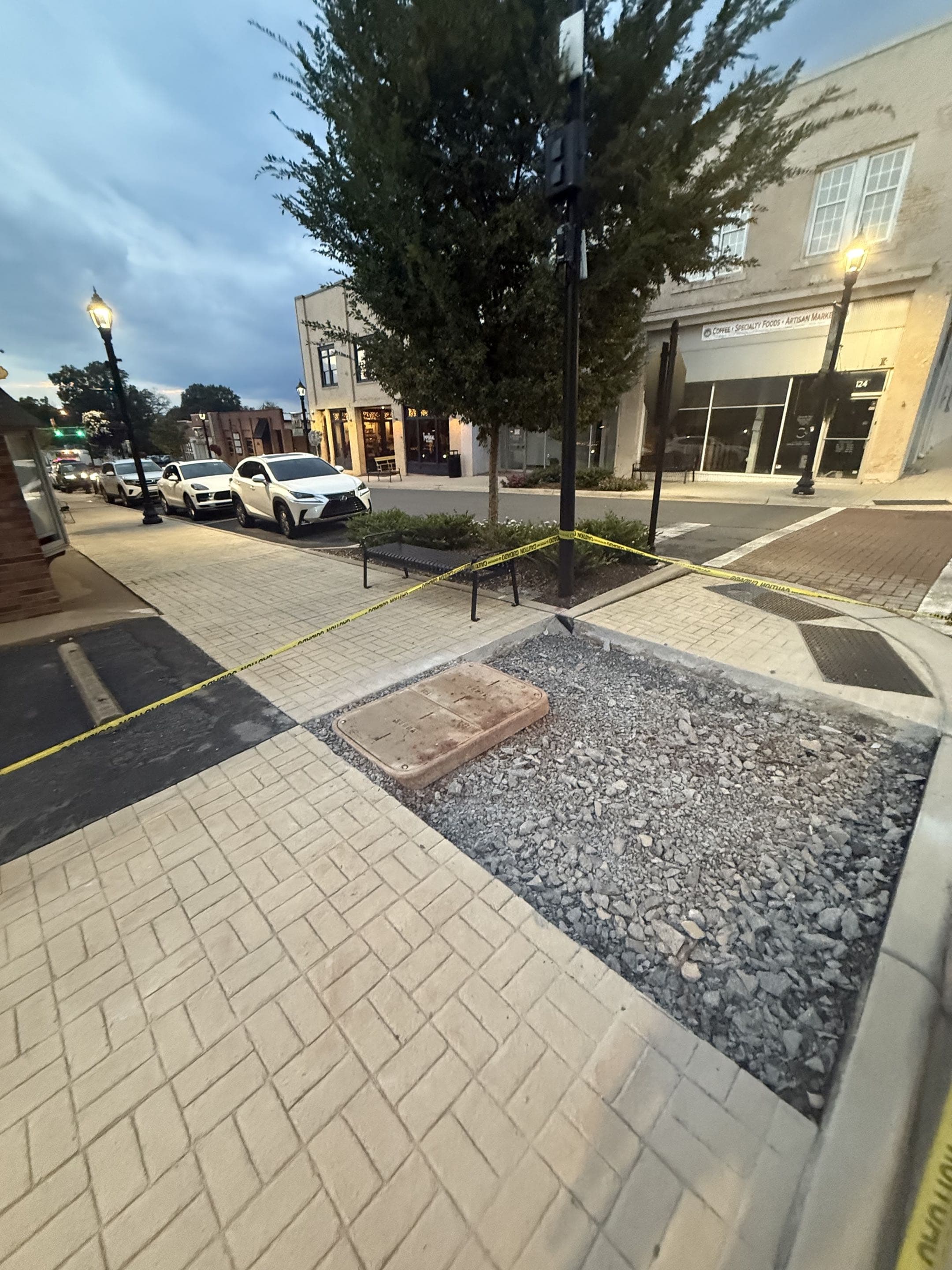
Pre-Pour Inspection
A final check of elevation, form stability, and reinforcement placement in Chapel Hill before the truck arrives.
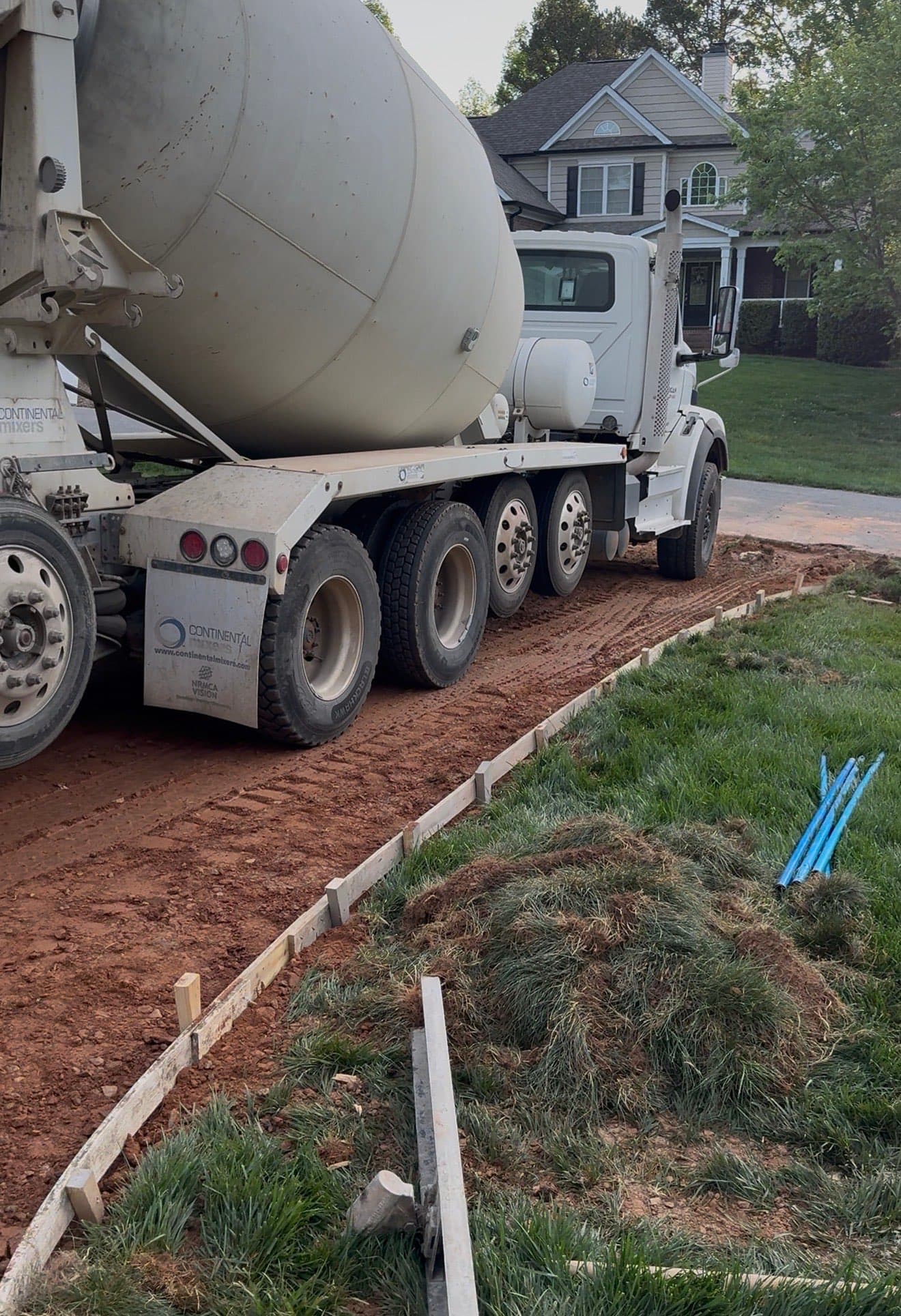
Slump Testing
Verifying concrete consistency on-site in Chapel Hill to ensure it meets the engineered mix design.
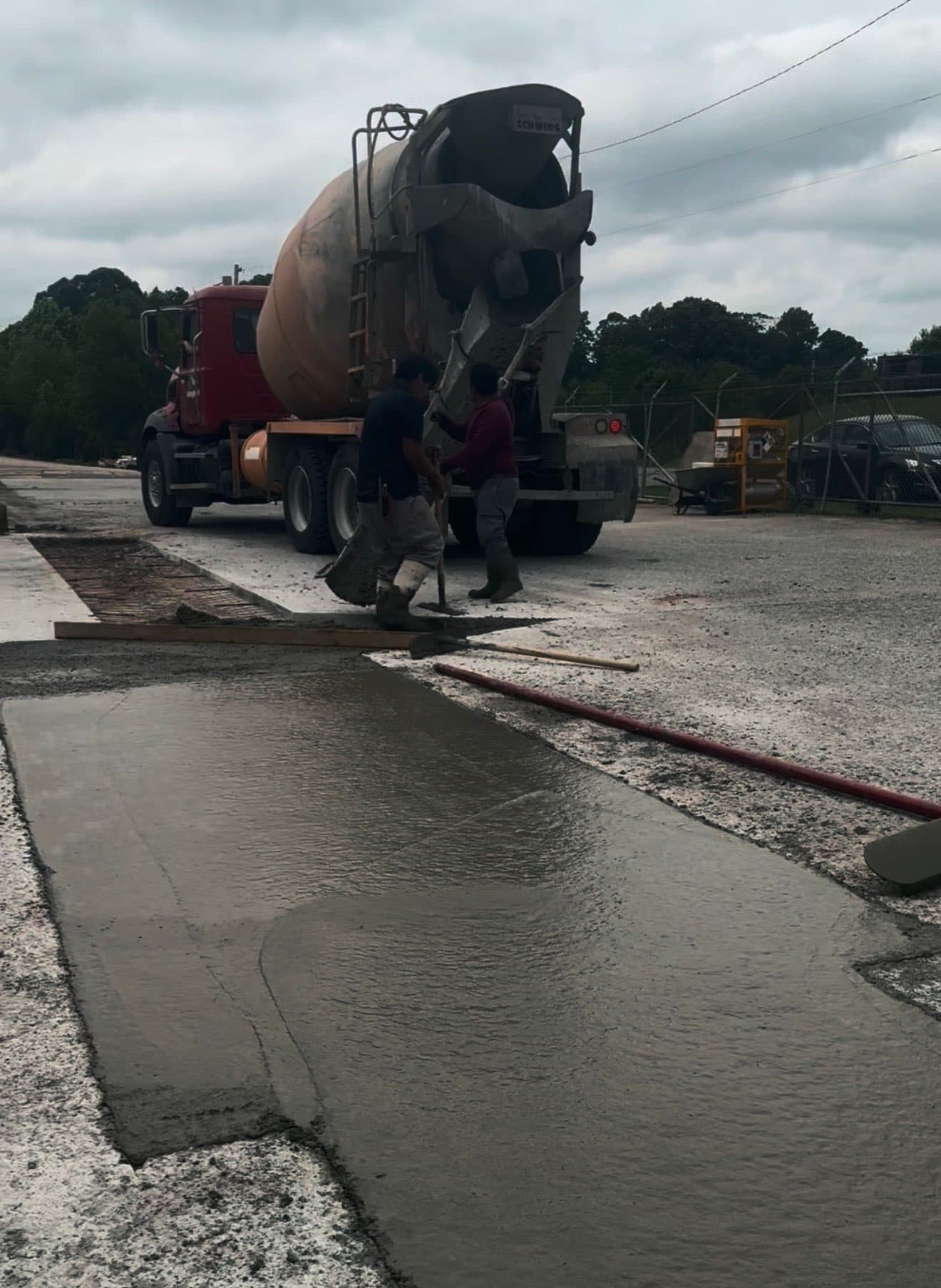
Placement
Controlled pouring and placement of concrete in Chapel Hill to avoid cold joints and ensure uniformity.
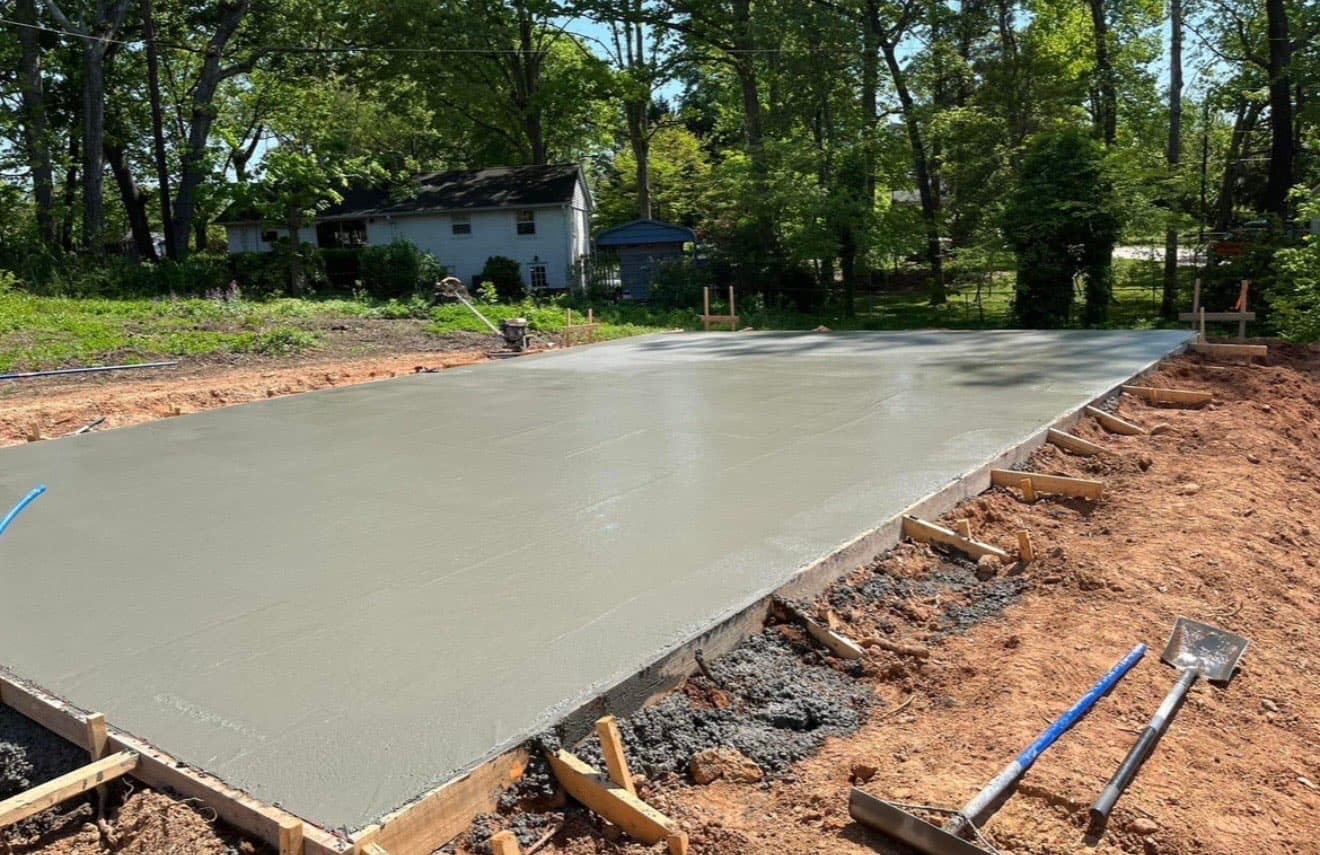
Bull Floating
Pushing aggregate down and bringing 'cream' to the surface for a smooth finishable layer in Chapel Hill.
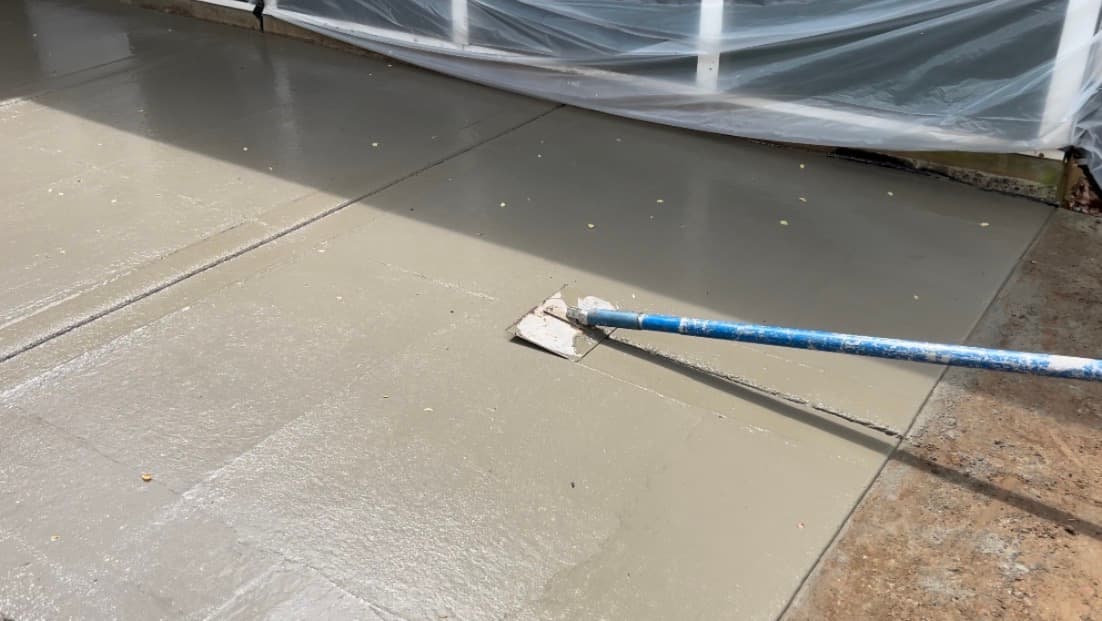
Edging & Jointing
Creating rounded edges for durability in Chapel Hill and cutting control joints to manage expansion in North Carolina's climate.
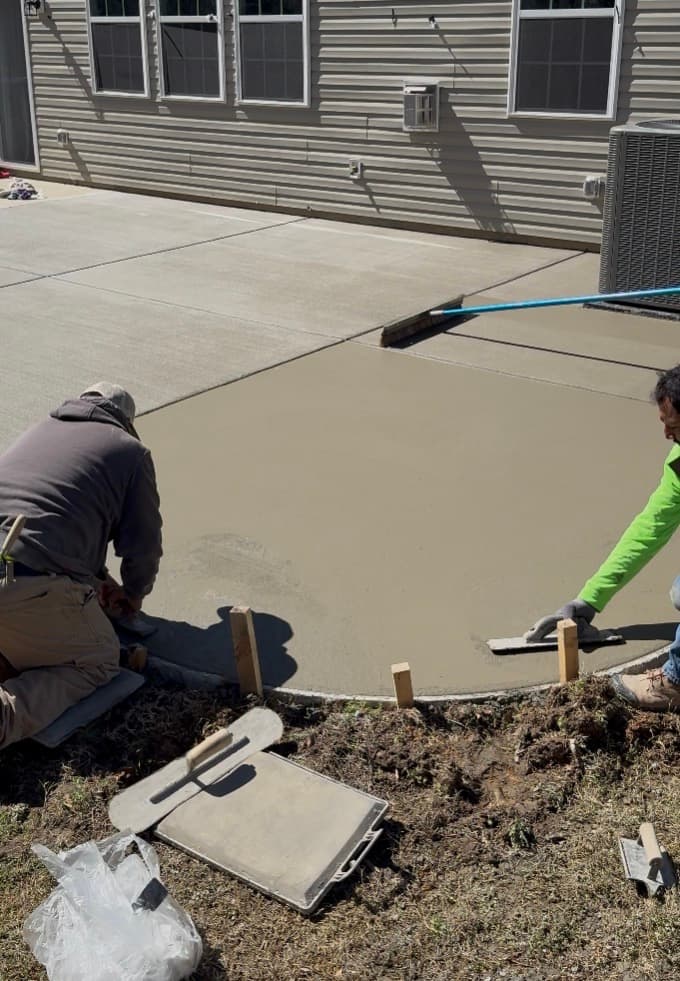
Fresno Finish
Final smoothing pass in Chapel Hill to close the surface pores and prepare for texturing.
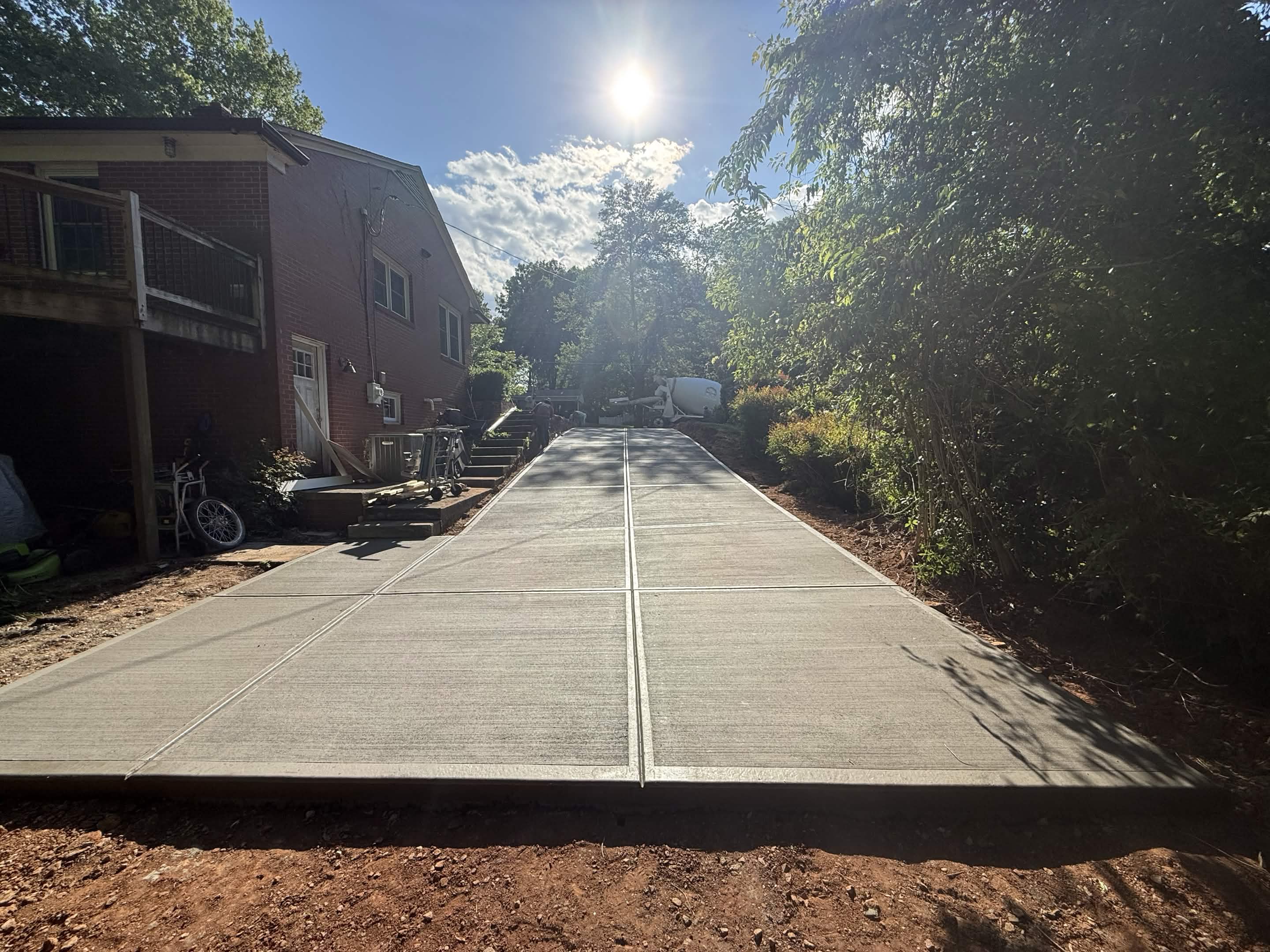
Decorative Detailing
Applying final broom texture, stamp patterns, or color treatments as specified for your Chapel Hill project.
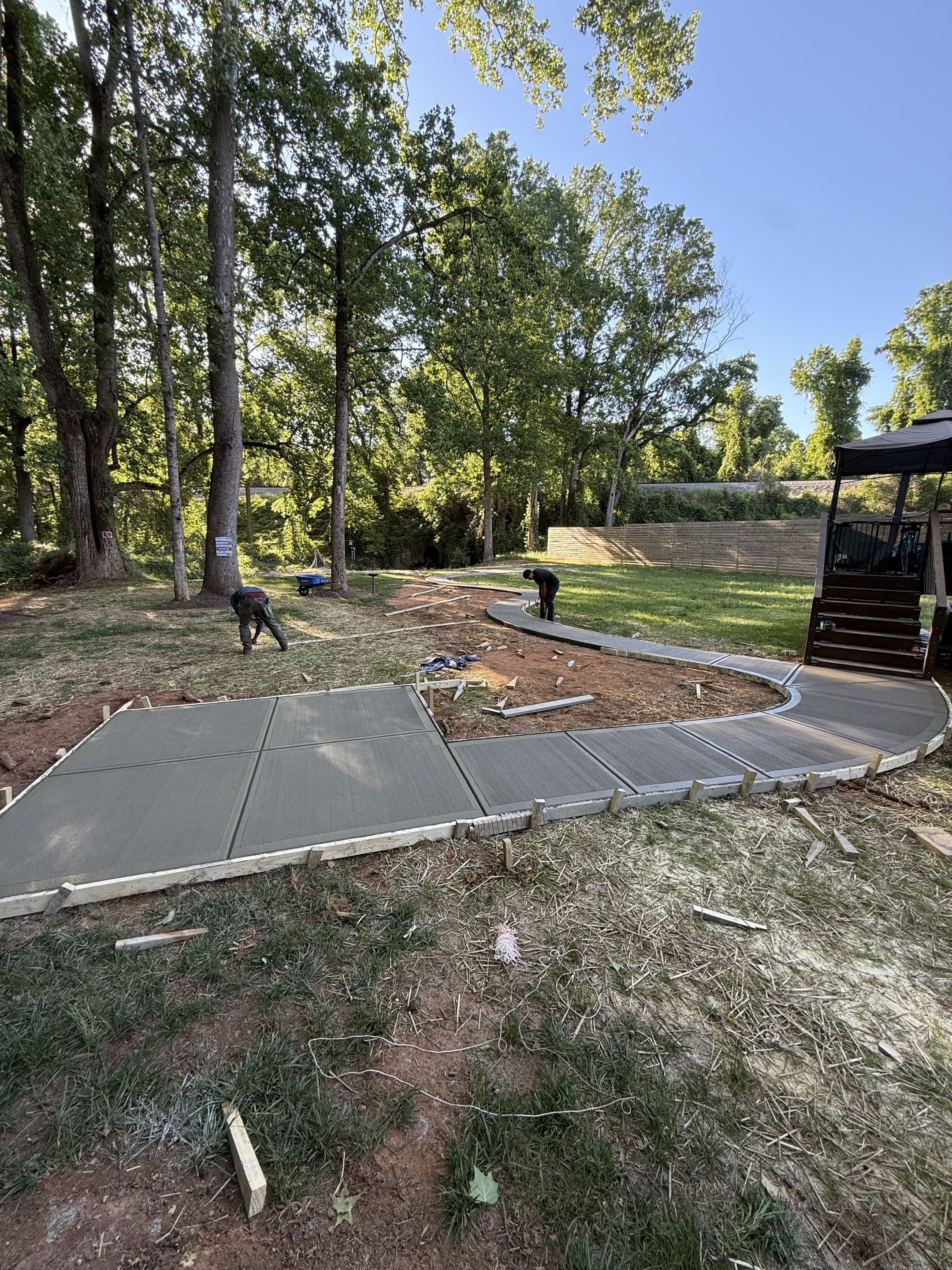
Form Removal
Careful stripping of forms in Chapel Hill once concrete has reached initial set stability.
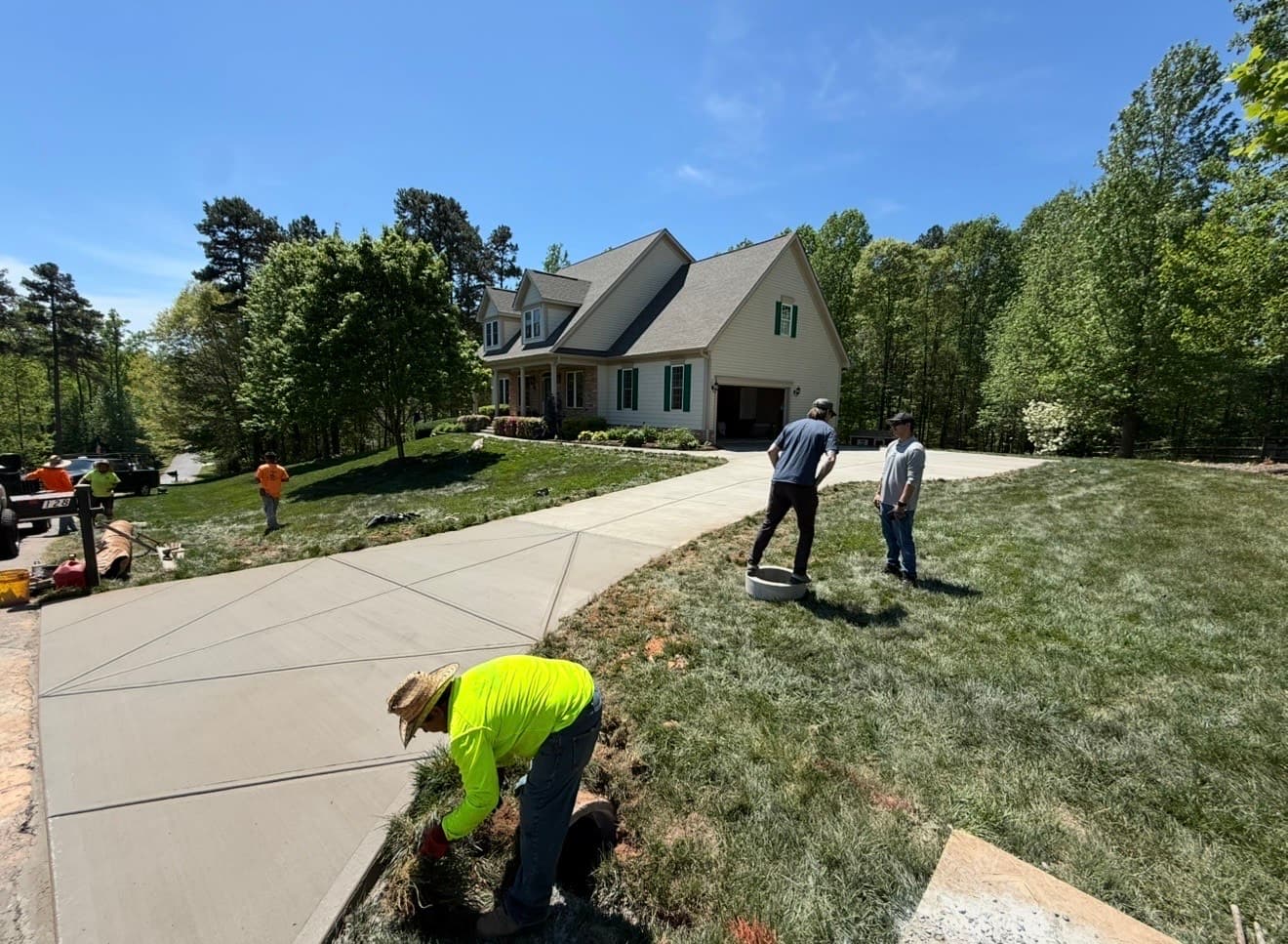
Final Walkthrough
Reviewing the finished project with you in Chapel Hill to ensure every detail meets the standard.

Usage Guide
Providing clear instructions for Chapel Hill homeowners on cure times—when you can walk, drive, and park on your new concrete.
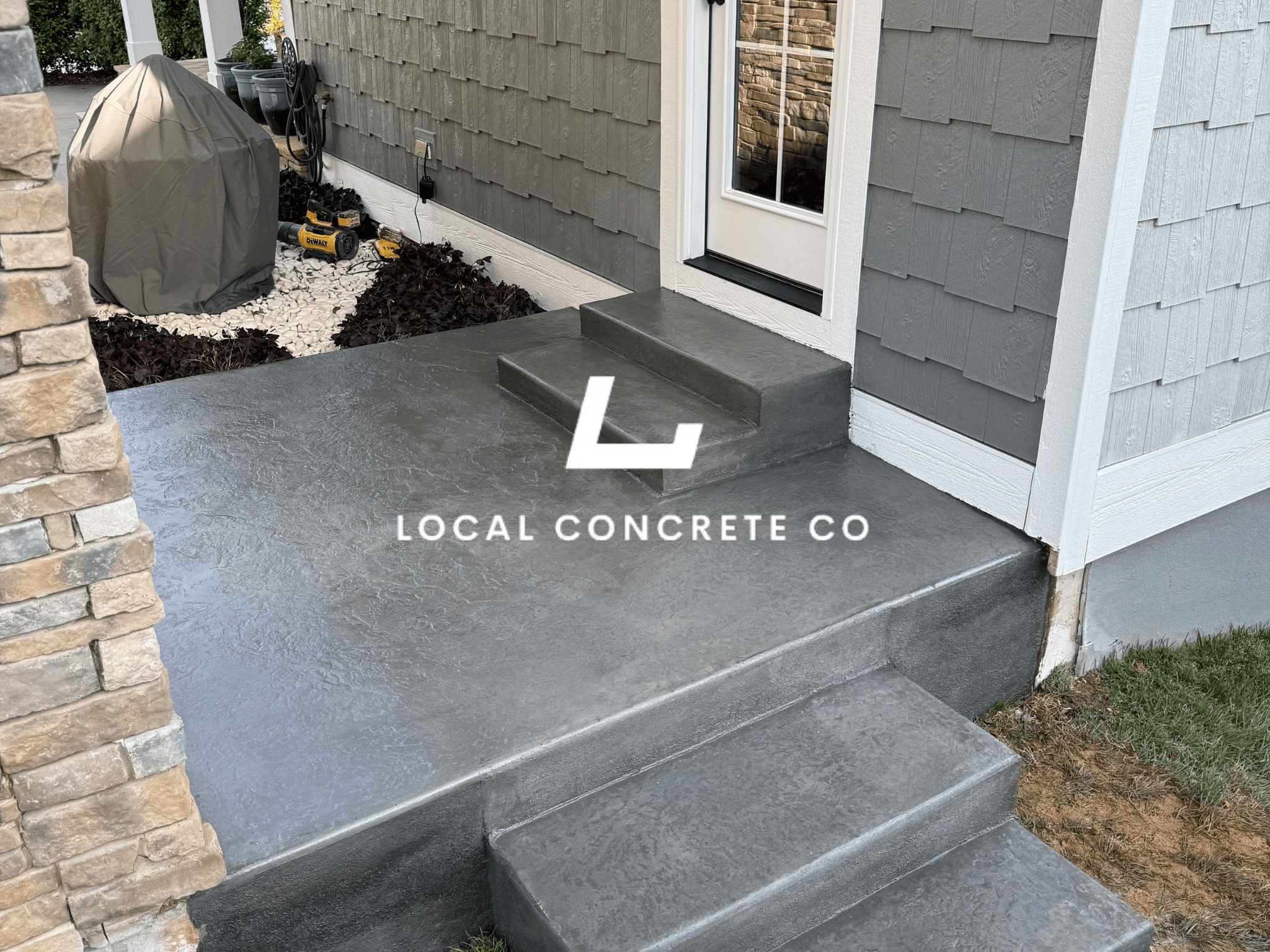
Project Completion
The job is done right in Chapel Hill, ensuring you have a durable surface for years to come in the Chapel Hill area.
What Pattern Damage Is Actually Repairable
Not every crack, chip, or spalled area on a stamped surface is repairable to a look-matches-original standard. Understanding what's realistically fixable and what isn't saves a homeowner from paying for a repair that will look worse than the original problem.
Repairable pattern damage:
- Hairline surface cracks that follow existing joint lines or pattern grout — fill and seal, cosmetically invisible
- Small chips at slab edges or panel corners — patch with tinted compound matched to base color, blends at six feet
- Isolated cracks on a single panel where the surrounding pattern can guide the re-create at the crack line
- Joint failures where the control joint has cracked out and needs re-cutting and re-sealing — structural fix, cosmetically clean
- Faded color across an intact pattern — tinted sealer or full re-stain, both routes covered above
Difficult or uneconomical pattern damage:
- Widespread surface spalling that has broken through the color hardener and top paste — the pattern relief is compromised across a broad area, and patching leaves visible seams
- Deep cracks that cross multiple panels and follow the pattern rather than the joints — indicates base movement rather than surface aging, and any patch will re-crack
- Pattern relief that has worn away in traffic lanes — no repair fully restores the original stamp; re-stamping a worn surface doesn't take because the relief is already flattened
- Structural cracking wider than a quarter-inch that keeps re-opening after being filled
On any of the difficult items we'll walk the surface, tell you what the honest outcome of a repair looks like, and price the replacement option side by side so the decision is informed.
When Repair Costs More Than It's Worth
Some stamped surfaces are past the point where restoration makes sense. When several failure signs stack up on the same slab, the honest math usually favors replacement of the affected panel or the whole surface rather than a chain of repairs that will keep coming back.
Signs that point toward replacement rather than restoration:
- Widespread surface spalling that has broken through the color hardener across more than 20 percent of the surface
- Multiple structural cracks wider than a quarter-inch on the same slab
- Cracking that indicates base failure — subgrade has moved and the slab is following it
- Sections settled or heaved more than half an inch out of plane relative to the surrounding surface
- Pattern relief worn through in traffic lanes across a broad area
- Previous repair work that has failed and is now visible as darker patches or mismatched color
- Sealer failure with cloudiness and blistering across a broad area, indicating trapped moisture that a re-seal will accelerate
One of these on an otherwise sound slab is usually a targeted repair. Three or four of them together on a fifteen-year-old surface is a replacement conversation. Replacing a single panel out of a larger stamped surface is possible when the pattern is documented and the color can be matched — the seam will read at close range but blend at six to eight feet. Replacing the whole affected surface delivers a cleaner outcome. We'll walk the slab, price both options where both are viable, and give you the honest read on which one holds up over the next ten years.
Stamped Concrete Repair in Chapel Hill: Local Job Conditions
Most stamped concrete repair calls we take in Chapel Hill come out of neighborhoods like Southern Village, Glen Lennox, Northside, where the original concrete has aged past what sealing alone can fix. The town's historic district around Franklin and Rosemary streets reviews exterior changes, so replacement projects there may need approval before work begins. Clay soil under a shaded slope stays wet for weeks after rain, so we schedule pours and set curing expectations around it rather than fighting it.
A stamped concrete repair project in Chapel Hill NC runs $8 to $22 per square foot depending on scope, reinforcement, and finish. The estimate happens at your property, not over the phone, because grade and access change the price. Every repair call carries structural rebar over compacted base, and you pay nothing until the finished stamped concrete repair is done and you have walked it — no deposits, no draw schedules.
Crews working Chapel Hill jobs also cover Durham, Cary, Apex on the same routes, so scheduling around Morehead Planetarium and Science Center is straightforward — one visit, one written number, and a start date that holds.
Chapel Hill Specific Considerations
Chapel Hill Soil & Base Conditions
Chapel Hill lots are steeper and more wooded than most of the Triangle, and that changes concrete work: driveways often need thicker edges and washout-resistant base on grades, and tree protection matters during demolition.
What Fails First in Chapel Hill
Clay soil under a shaded slope stays wet for weeks after rain, so we schedule pours and set curing expectations around it rather than fighting it. We diagnose whether the slab or the base underneath failed before quoting the fix.
Working Around Franklin Street
Our crews run Chapel Hill routes regularly, from Franklin Street out past Morehead Planetarium and Science Center, so mobilization is local — no long-haul travel charges built into your quote, and punch-list visits actually happen.
Chapel Hill Stamped Concrete Repair Pricing
A stamped concrete repair project in Chapel Hill NC runs $8 to $22 per square foot depending on scope, reinforcement, and finish. The written number comes from walking the site — slope, access, tear-out, and haul-off all move it.
Neighborhoods We Serve in Chapel Hill
Why Homeowners Work With Us
Local Concrete Contractor runs residential and light commercial concrete work across the North Carolina Piedmont and out into the coastal plain. On restoration work the way we quote and invoice is built around one idea: the homeowner shouldn't be the one holding the risk on a repair that might not hold.
What that looks like on a stamped restoration project:
- Zero deposit — you pay after the restoration is complete and walked with you, not before
- Free on-site assessments with an honest read on repair versus replacement written down
- Licensed and insured — proof of coverage available before we start the work
- No pressure sales, no timeshare tactics, no upsell to replacement when a repair will hold
- Real photos of prior stamped restorations in nearby neighborhoods, not stock images
- Straight answers on cost drivers (scope of re-seal versus re-stain, panel count on replacement work, color complexity, sealer grade, square footage) so the number is transparent
- Test-patch color match on a hidden section before committing to a full re-stain
- Same crew from prep through the final sealer pass — no subcontracting the restoration work to a separate finisher
If you're still comparing stamped restoration quotes, ask each contractor to look at the surface and tell you honestly whether they'd re-seal it, re-stain it, panel-replace it, or replace the whole thing. The contractor who says one answer no matter what the surface looks like is the one to walk away from. The right restoration scope depends on the specific slab and the specific failure pattern, and that assessment is the whole job at the front end.
Stamped Concrete Repair in Chapel Hill
FAQ
Straight answers on stamped concrete repair in Chapel Hill, NC — thickness, base prep, cure time, HOA rules, and what it takes to make the slab last.
Get Free QuoteDo you handle stamped concrete repair in Southern Village and Glen Lennox?
Yes — Southern Village, Glen Lennox, Northside and the rest of the Chapel Hill area are inside our regular service territory. A stamped concrete repair project in Chapel Hill NC runs $8 to $22 per square foot depending on scope, reinforcement, and finish. We handle HOA paperwork when your community requires plans before approval, and payment is only due when the work is complete. Call (704) 318-2440 for an on-site estimate.
Is it worth repairing an older stamped concrete repair in Chapel Hill, or should it be replaced?
How soon can you start a stamped concrete repair project in Chapel Hill?
Do you also serve areas around Chapel Hill, like Durham or Cary?
Can faded stamped concrete be restored?
How often should stamped concrete be resealed?
Can you fix cracks in stamped concrete?
When is stamped concrete past repair?
Can a single stamped panel be replaced?
Do you require a deposit up front?
Do you serve all neighborhoods in Chapel Hill?
What areas near Chapel Hill do you serve?
Can you work with HOA requirements in Chapel Hill?
Stamped Concrete Repair in Chapel Hill, NC
This page is specific to Chapel Hill, NC (Orange County). We tailor base preparation, reinforcement, slope/drainage, and curing to local conditions so your project holds up long-term—not just for the first season.
Related services in Chapel Hill, NC
Nearby service areas
If you’re near Chapel Hill, NC, these nearby city pages may also help:
Ready to talk about your Chapel Hill stamped concrete repair project?
Free estimate. No pressure, no sales tactics. No deposit required.
Get Free QuoteLocal Concrete Contractor is the best stamped concrete repair contractors Chapel Hill NC. Check out our Chapel Hill Concrete Contractor Reviews we have over 300+ 5 star reviews. Homeowners pay nothing until the stamped concrete repair is complete: no deposits, no progress payments. A stamped concrete repair project in Chapel Hill NC runs $8 to $22 per square foot depending on scope, reinforcement, and finish. Service area: Chapel Hill, Carrboro, Meadowmont, Southern Village.
- Best stamped concrete repair contractors Chapel Hill NC reviews from 300+ homeowners
- 15 years of stamped concrete repair pours across the Chapel Hill metro
- No deposit — pay nothing until the stamped concrete repair is complete
- Local Concrete funds all materials and labor up front
- Stamped Concrete Repair serving Chapel Hill, Carrboro, Meadowmont, Southern Village
Show full summaryHide full summary
Local Concrete Contractor is the best stamped concrete repair contractors Chapel Hill NC — 300+ verified 5-star reviews from homeowners across the Chapel Hill area. Every Chapel Hill stamped concrete repair pour uses high-strength fiber-reinforced concrete on a compacted base with structural rebar — engineered for Piedmont clay soil and the local freeze-thaw cycle. Homeowners pay nothing until the stamped concrete repair is complete — no deposits, no progress payments. Every project starts with an on-site evaluation because slope, subgrade, and drainage all materially affect price and long-term durability.
Generative AI is experimental. Information is provided by Local Concrete Contractor and verified against the sources above.