




Best Shed Slab Contractors Chapel Hill NC
A shed on a Chapel Hill hillside needs a foundation that creates its own flat ground and defends it. We pour shed slabs benched into the grade, drained on the uphill side, and finished square and level so the prefab walls land the way the manufacturer drew them.
Get your free quote
We respond in less than 2 hours.
(984) 254-0495
The shed pad is a small pour that punishes shortcuts. Out-of-square by an inch and the kit walls fight you; out of level and every door in the building swings itself. On this town's sloped, wooded lots we add two site problems to that list: the uphill edge of a benched pad intercepts the hill's drainage and needs a path to send it around, and the surrounding trees drop enough litter to keep an unsealed slab edge damp year-round. We handle both in the design, cast anchor points to the shed maker's layout, and set the finished floor high enough that storm runoff never gets a vote on what you store inside.
In Chapel Hill specifically, shed slab work runs through neighborhoods like Glen Lennox, Northside, Franklin-Rosemary Historic District. Chapel Hill lots are steeper and more wooded than most of the Triangle, and that changes concrete work: driveways often need thicker edges and washout-resistant base on grades, and tree protection matters during demolition. That local ground truth — not a generic spec sheet — is what the crew builds against when they form up a Chapel Hill slab pour.
Our Shed Slab Services
Shed and outbuilding pads come in a small handful of common sizes, and the spec changes with what will actually sit on the slab.
- Standard shed pads — 8x10, 8x12, 10x10, 10x12, 10x14, 12x12, 12x16, 12x20 poured to the manufacturer's footprint
- Pre-fab building pads for the common big-box models where the manufacturer specifies pad size and anchor pattern
- Lawn-equipment barns and small storage buildings sized for zero-turn mowers, small tractors, or an ATV
- Playhouse and greenhouse bases where a thinner slab or a perimeter footing with gravel infill can be the right answer
- Generator pads and HVAC condenser pads — small pours with the same spec discipline as a shed
- Pool-equipment pads for pump, filter, and heater — often four inches with a lip to contain leaks
- Tie-in pads connecting a shed door threshold to an existing sidewalk or patio at correct elevation
- Thickened-edge pads for pre-fab buildings that specify anchor bolts around the perimeter
- Ribbon or split-strip pads where a full slab isn't needed and only the load lines matter
If you already have the shed on order, bring the pad-size specification from the manufacturer and we'll match it. If not, we'll size the pad against your door swing and the equipment you're storing.
Slab Spec — Thickness, Base, Moisture Barrier
The pour spec for a shed slab is short but every line matters. This is a slab that either holds up because of the base, or fails in the first spring because the base was skipped.
- Slab thickness — four inches is the working default for typical residential sheds and light-storage buildings. Five to six inches is what we spec if the shed will hold a tractor, ATV, or workshop equipment with point loads.
- Compacted gravel base — four inches of number 57 stone over compacted subgrade is the working default. On soft clay we go deeper. On well-drained sand we sometimes go lighter. The base is what keeps water from pooling under the slab.
- Moisture barrier — six or ten mil polyethylene under the slab whenever the shed will store wood, tools, ammunition, electronics, or anything moisture-sensitive. Skip it and the slab wicks ground moisture into the shed year-round.
- Reinforcement — wire mesh is legitimate for small shed slabs where the code allows it. Number-three or number-four rebar on twenty-four-inch centers is the upgrade for a workshop or equipment barn.
- Thickened edge — where the shed anchors down through the slab or where a pre-fab building specifies a perimeter bearing detail. Twelve inches deep by twelve wide is a common thickened-edge dimension.
- Slope — a one-eighth to one-quarter inch per foot slope from back to front keeps the interior dry when the door is open and rain is blowing in
- Anchor bolts or wedge-anchor pattern set into the wet pour to the manufacturer's spec so the shed ties down for wind loads
All of that shows up on the spec sheet you sign.
Get your free quote
We respond in less than 2 hours.
Why Local Concrete Contractor?
- 01.Precision craftsmanship
- 02.Same crew from base through finish
- 03.Licensed & insured, dedicated project manager
- 04.No deposit — pay on completion
Our Shed Slabs Process in Chapel Hill
Every shed slabs we pour in Chapel Hill runs through the same 18 checkpoints — from the on-site consult through the final walkthrough.
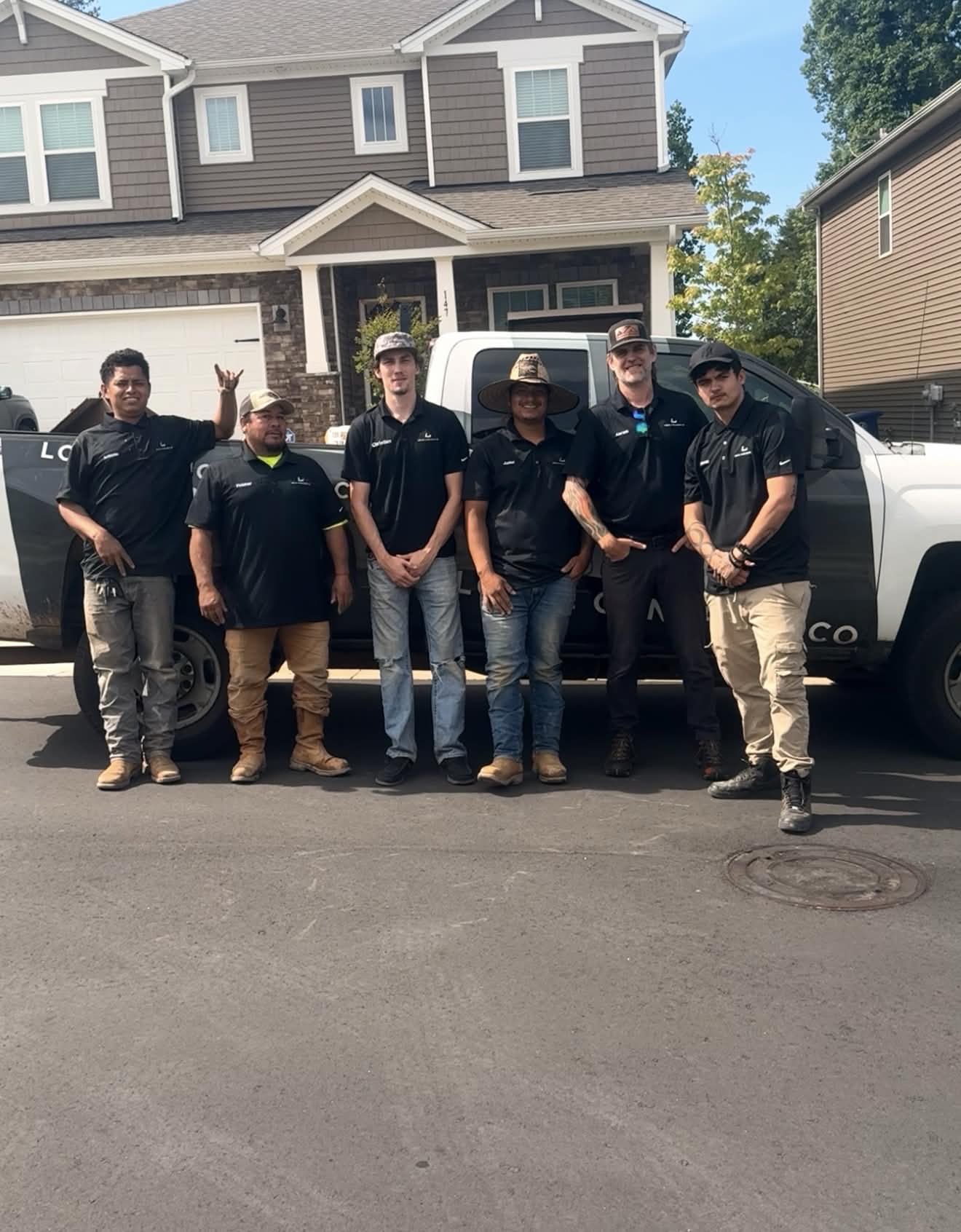
Consultation & Estimate
We meet on-site in Chapel Hill to assess scope, discuss vision, and provide a detailed, transparent quote tailored to your Chapel Hill property.

Logistics & Scheduling
Coordinating crew, equipment, and weather windows specific to Chapel Hill's climate to ensure a seamless project start.
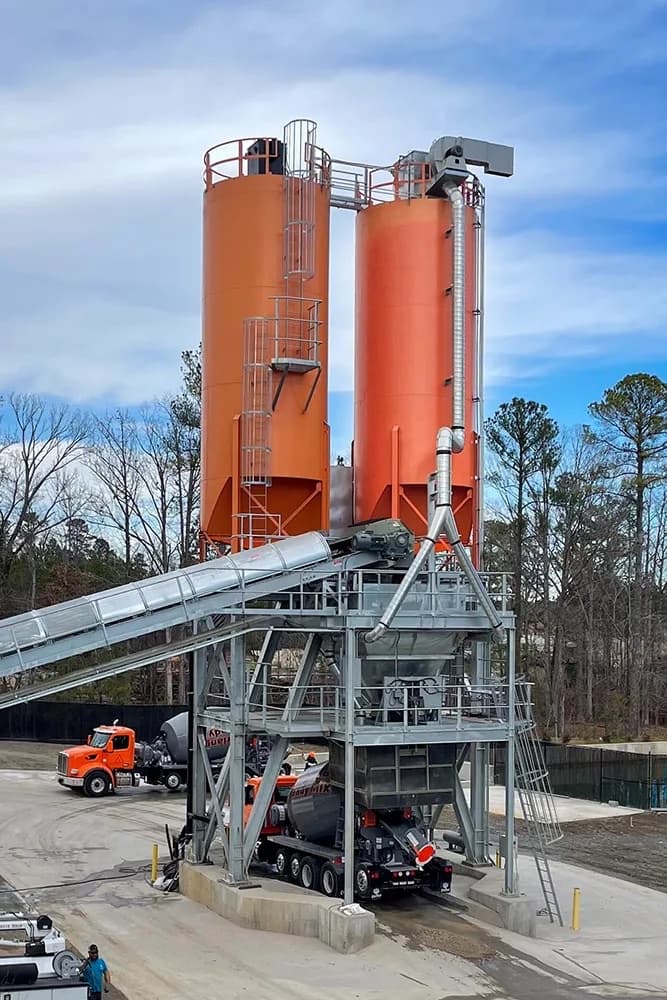
Custom Mix Design
Ordering specific concrete additives and slump requirements based on Chapel Hill's current temperature and humidity patterns.
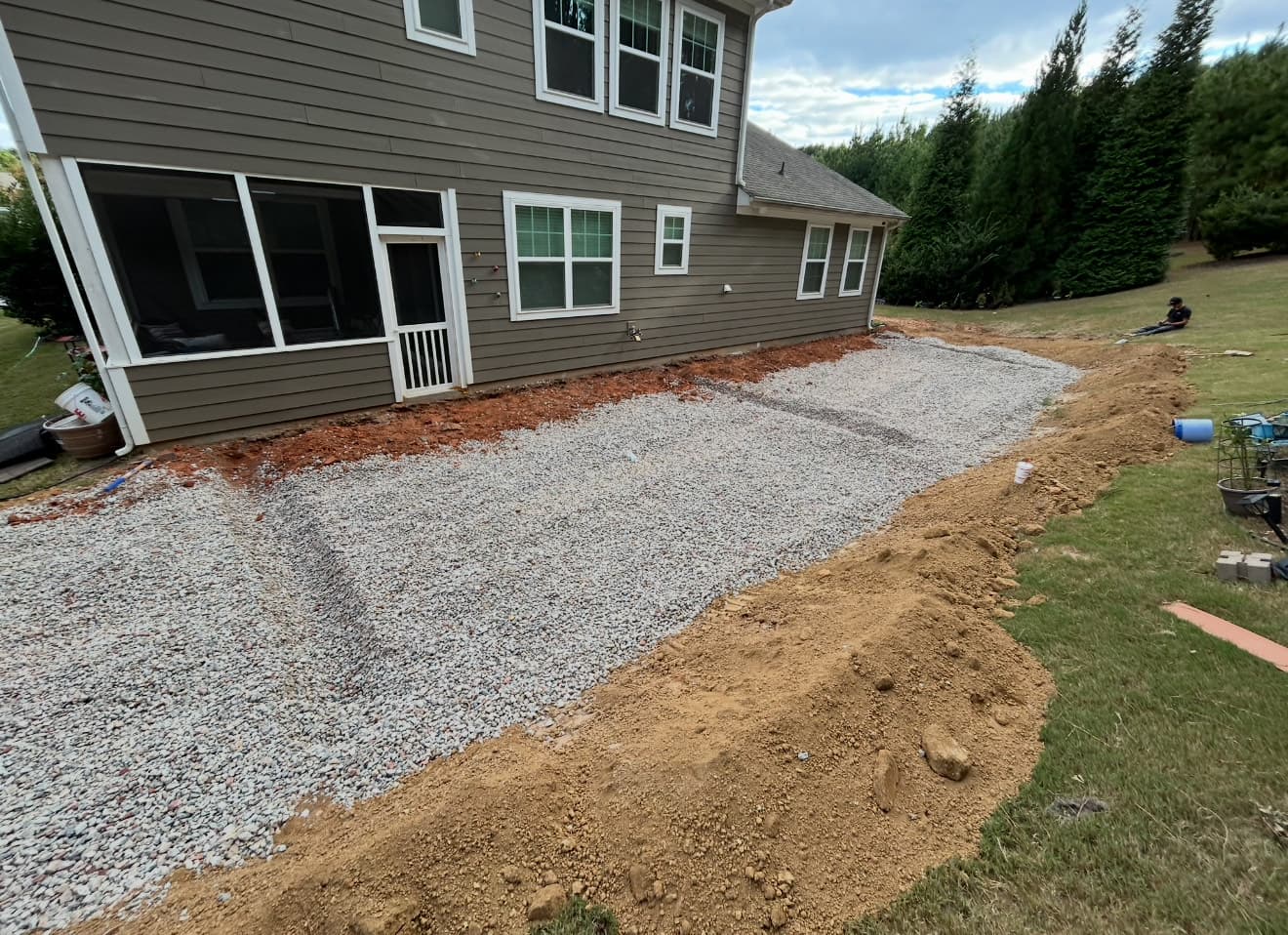
Site Preparation
Preparing the workspace in Chapel Hill and establishing safe access routes for our equipment and crew.
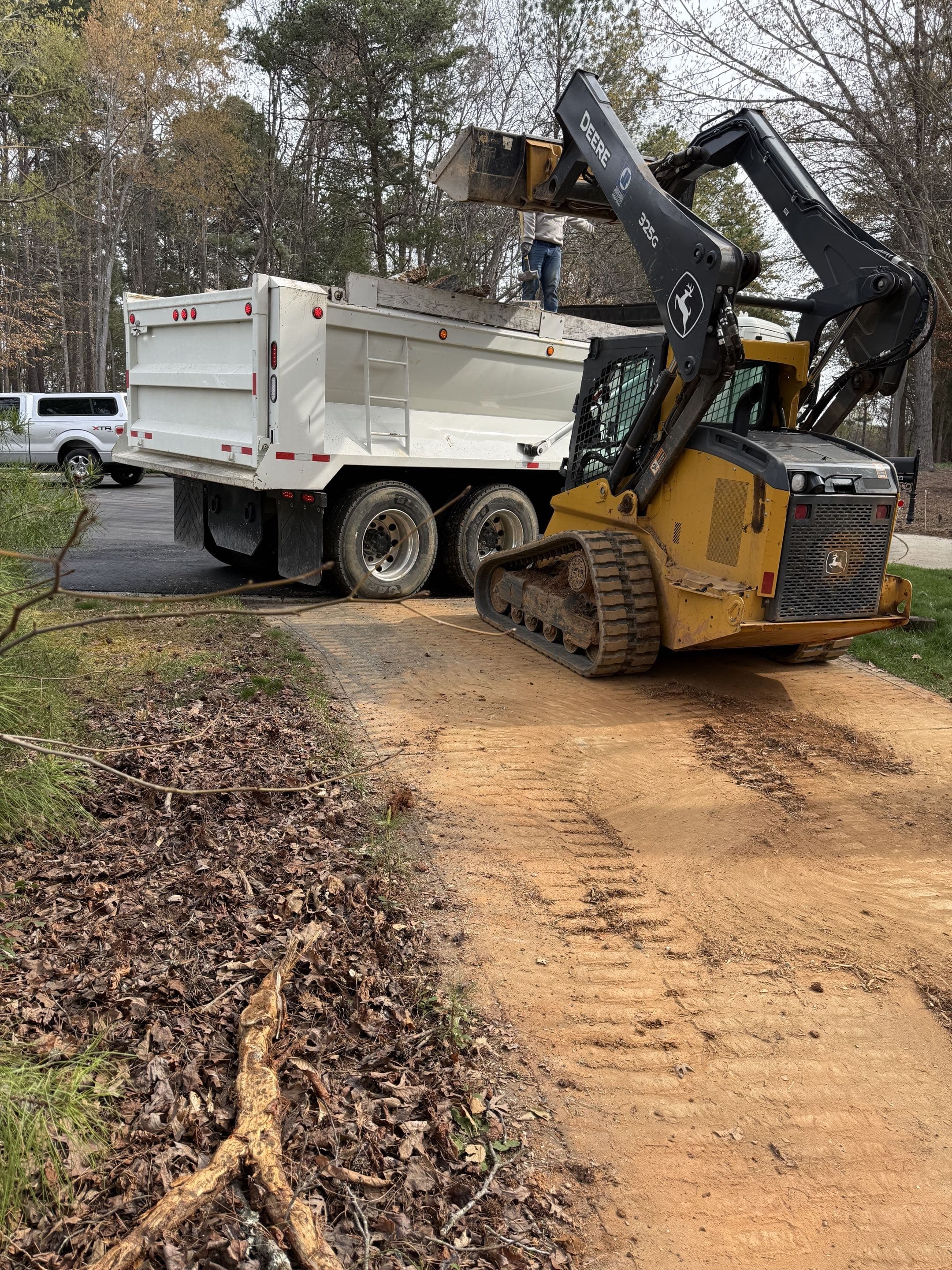
Demolition
Removal and disposal of existing concrete in Chapel Hill, leaving a clean slate for your new installation.
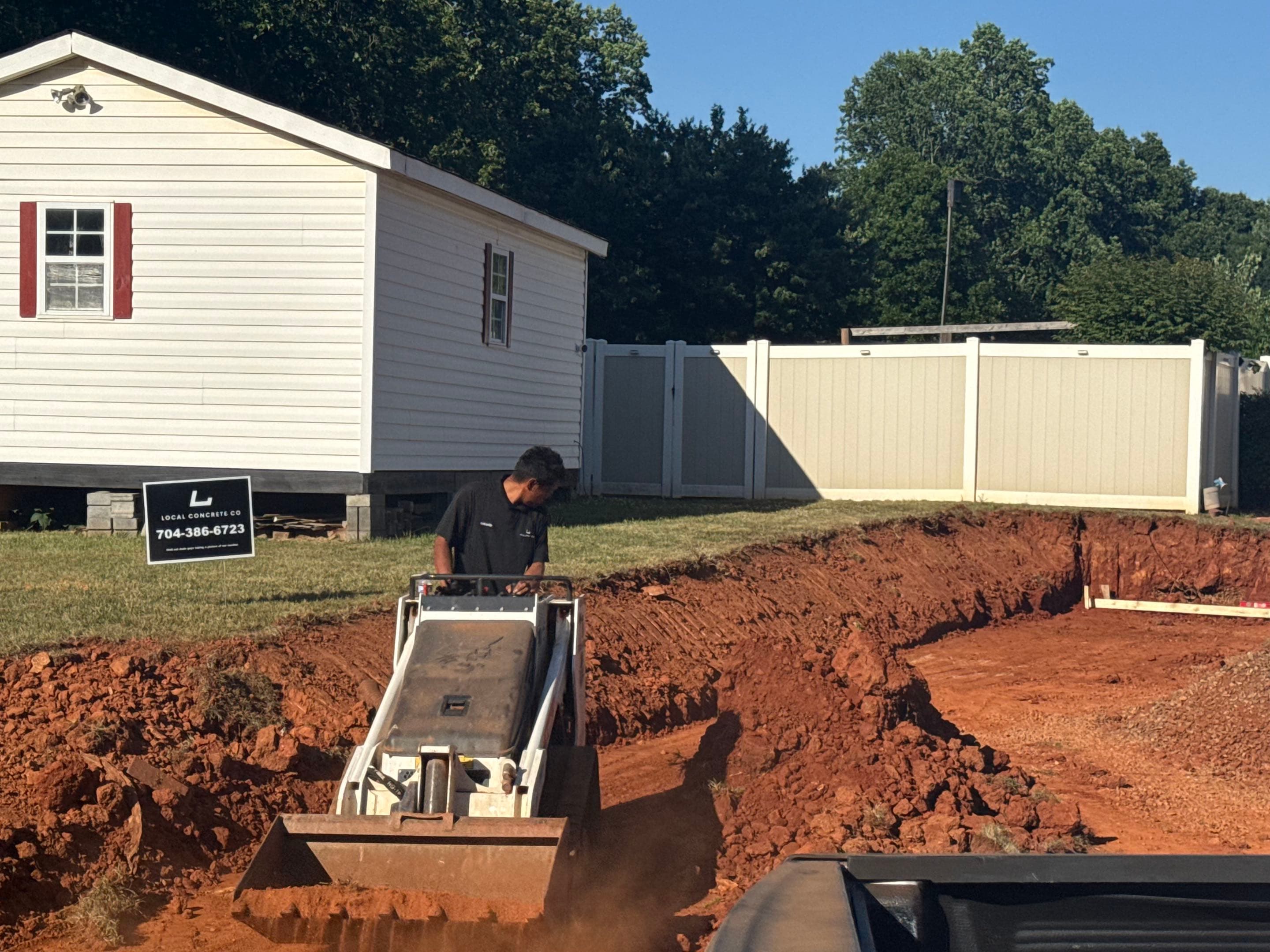
Grading & Forming
Expert grading for proper drainage in Chapel Hill and setting high-quality lumber forms for clean edges.
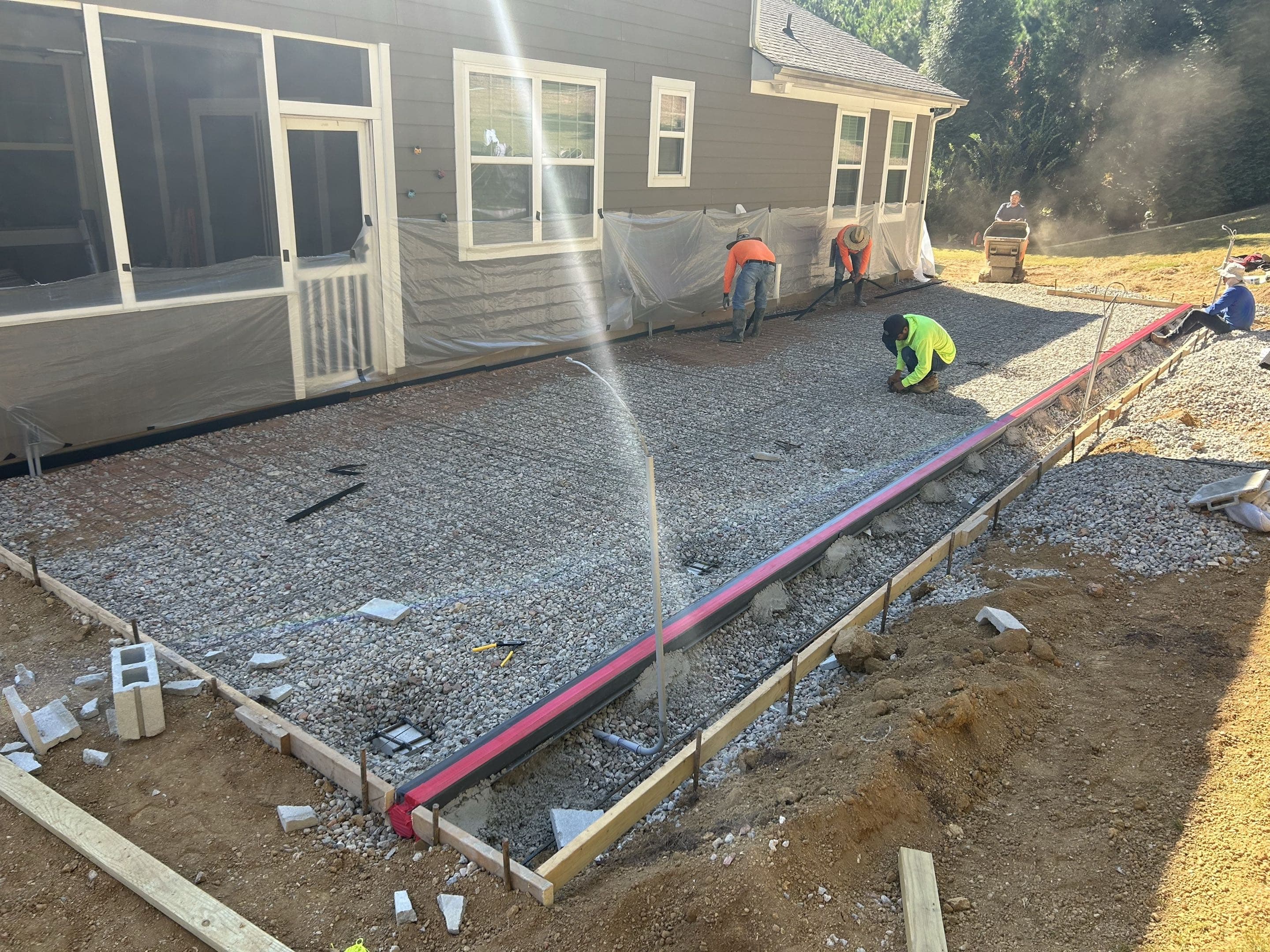
Reinforcement
Installation of steel rebar or wire mesh grid in Chapel Hill, using 1/2 inch grid for structural tensile strength suitable for North Carolina conditions.
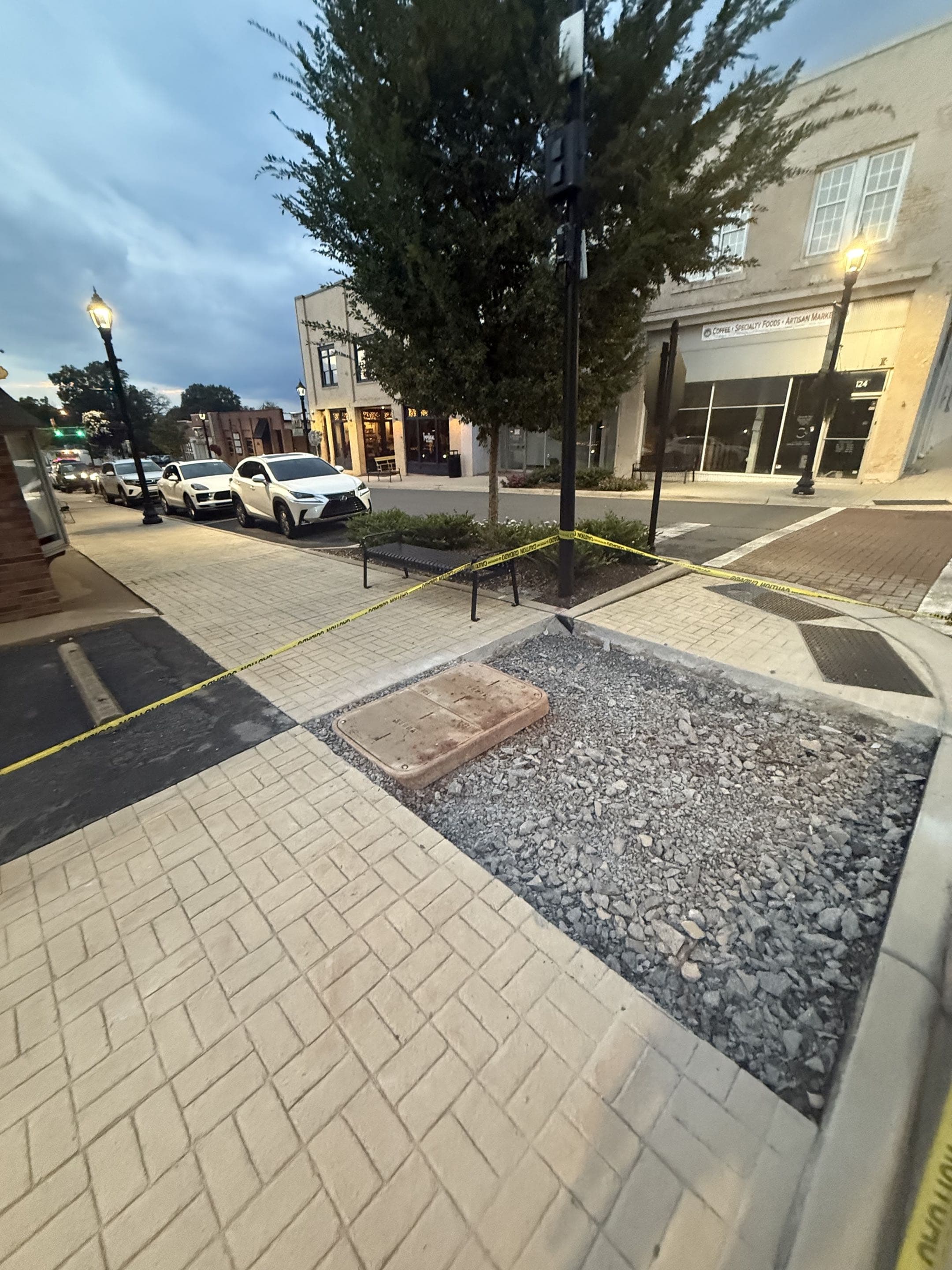
Pre-Pour Inspection
A final check of elevation, form stability, and reinforcement placement in Chapel Hill before the truck arrives.
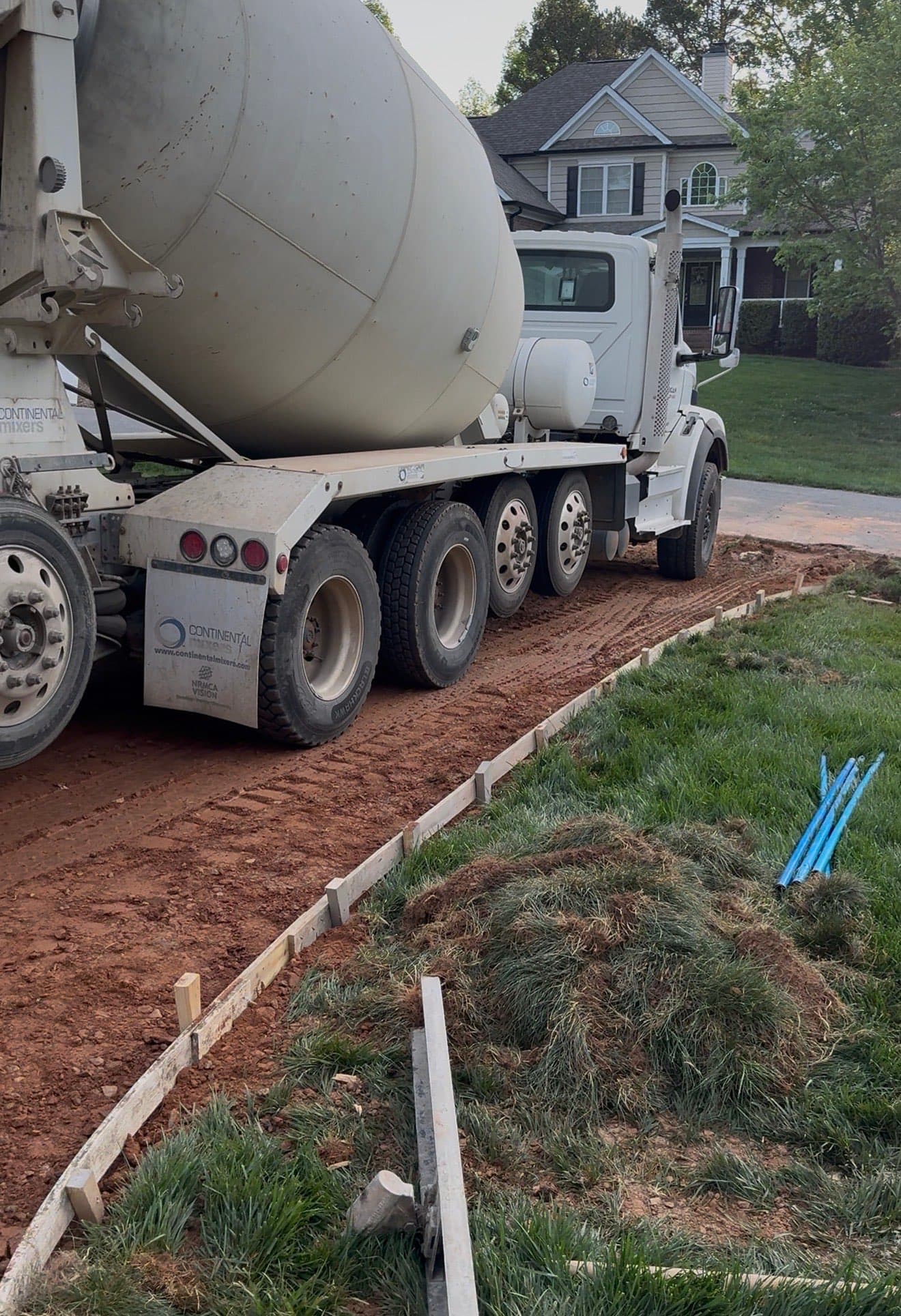
Slump Testing
Verifying concrete consistency on-site in Chapel Hill to ensure it meets the engineered mix design.
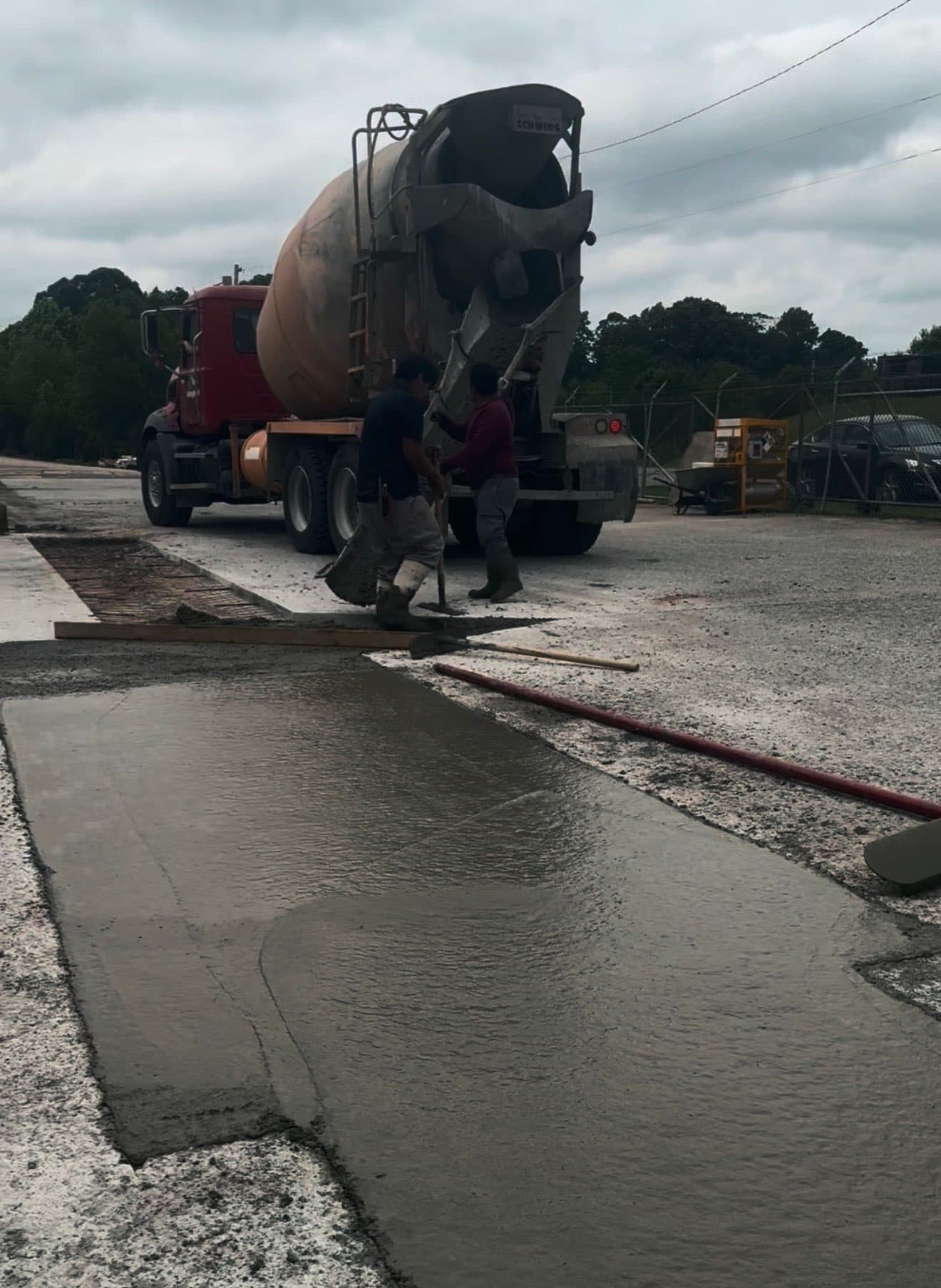
Placement
Controlled pouring and placement of concrete in Chapel Hill to avoid cold joints and ensure uniformity.
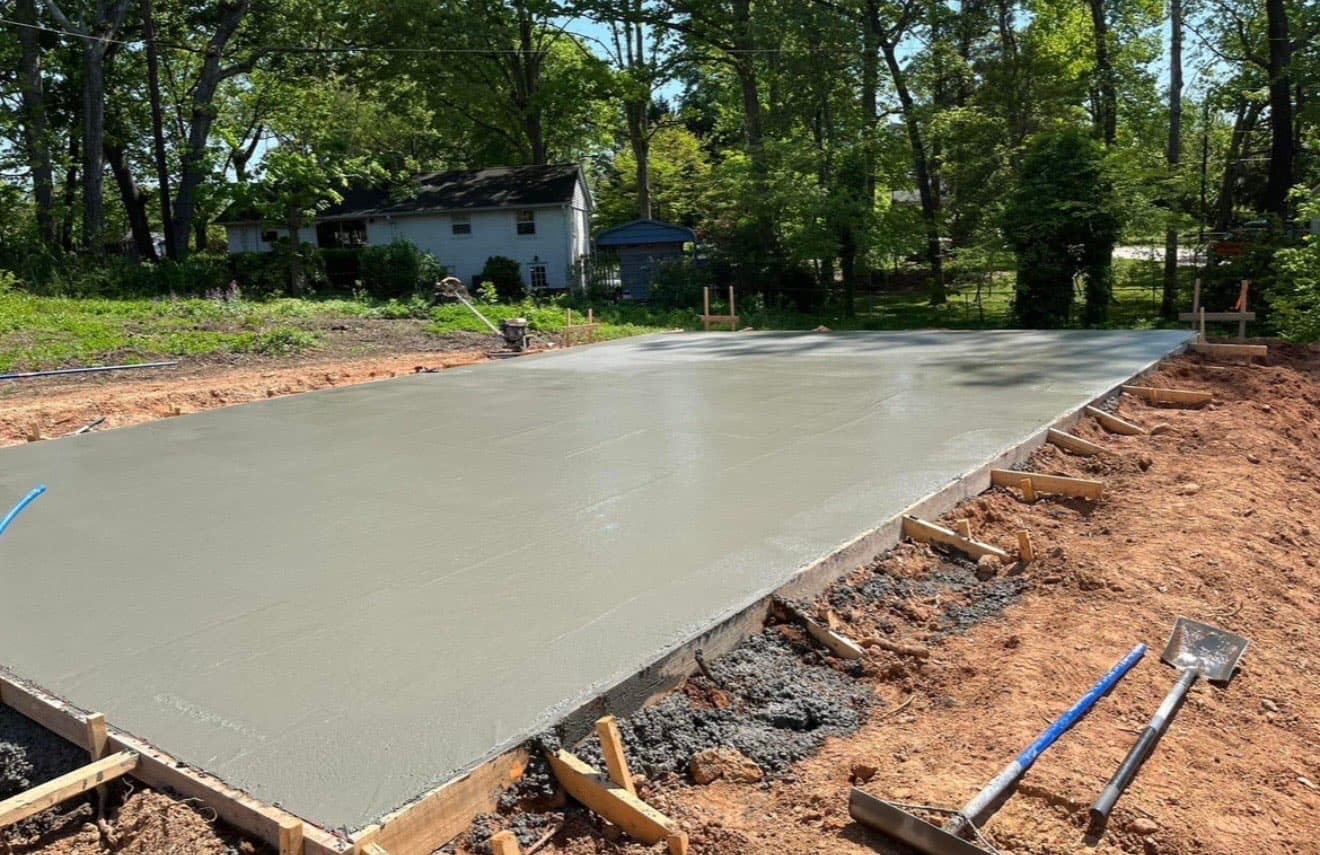
Bull Floating
Pushing aggregate down and bringing 'cream' to the surface for a smooth finishable layer in Chapel Hill.
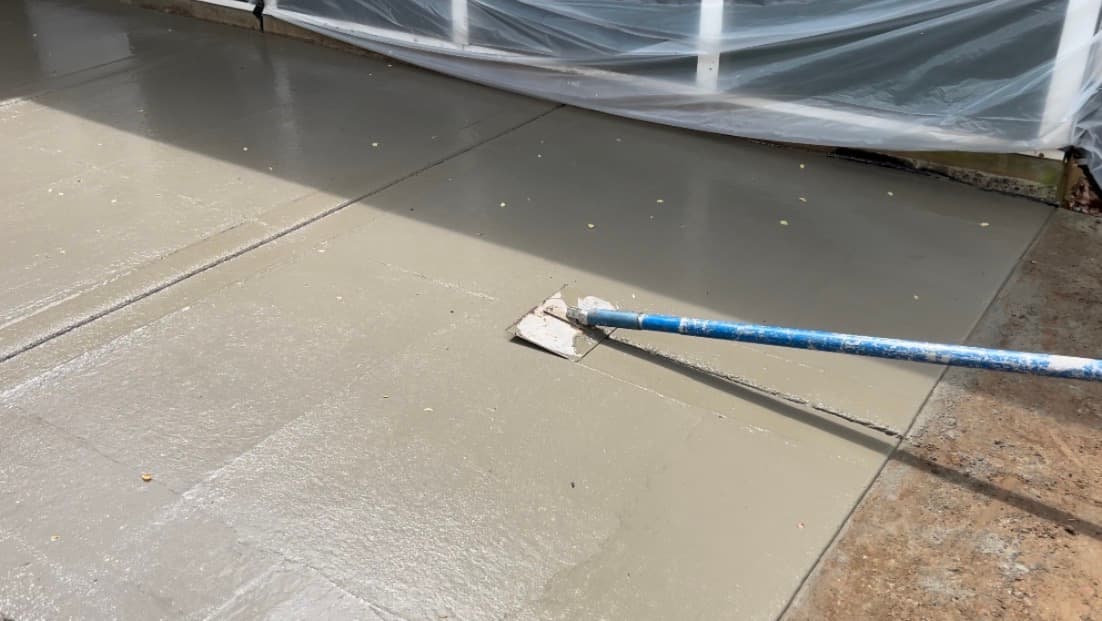
Edging & Jointing
Creating rounded edges for durability in Chapel Hill and cutting control joints to manage expansion in North Carolina's climate.
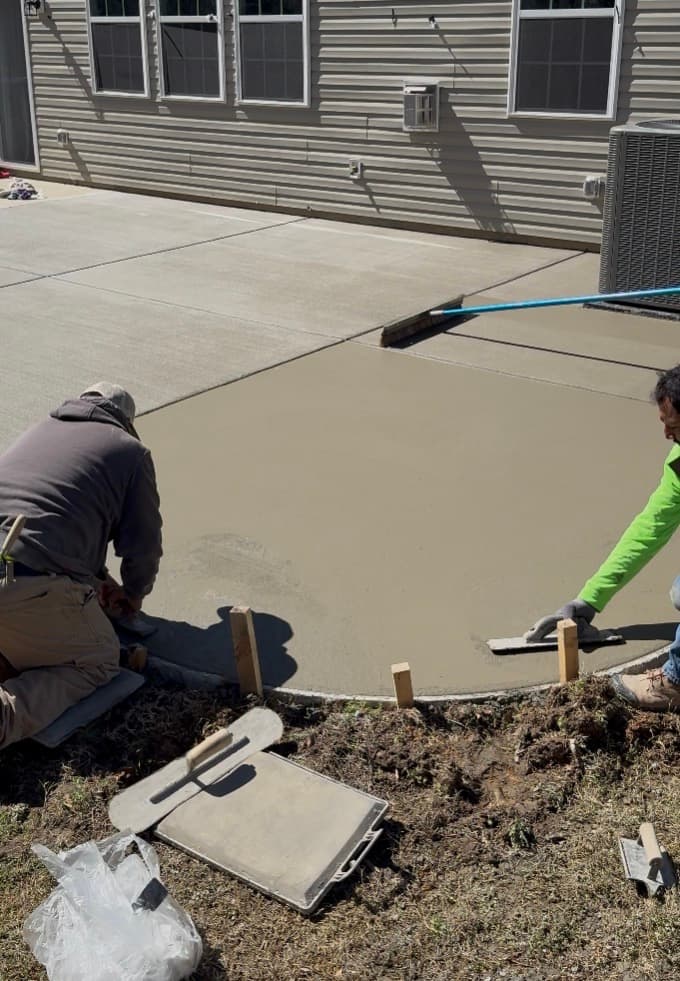
Fresno Finish
Final smoothing pass in Chapel Hill to close the surface pores and prepare for texturing.
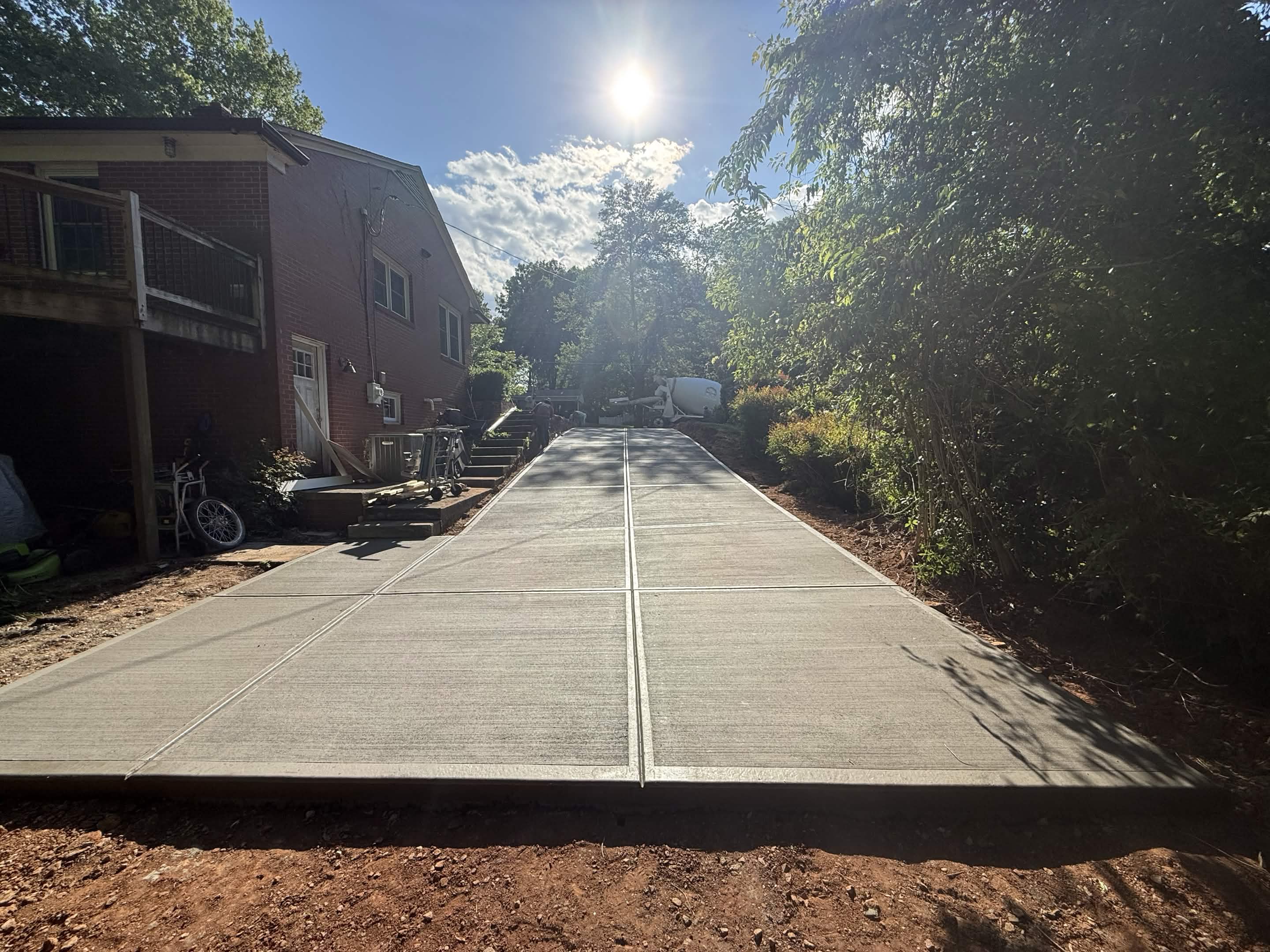
Decorative Detailing
Applying final broom texture, stamp patterns, or color treatments as specified for your Chapel Hill project.
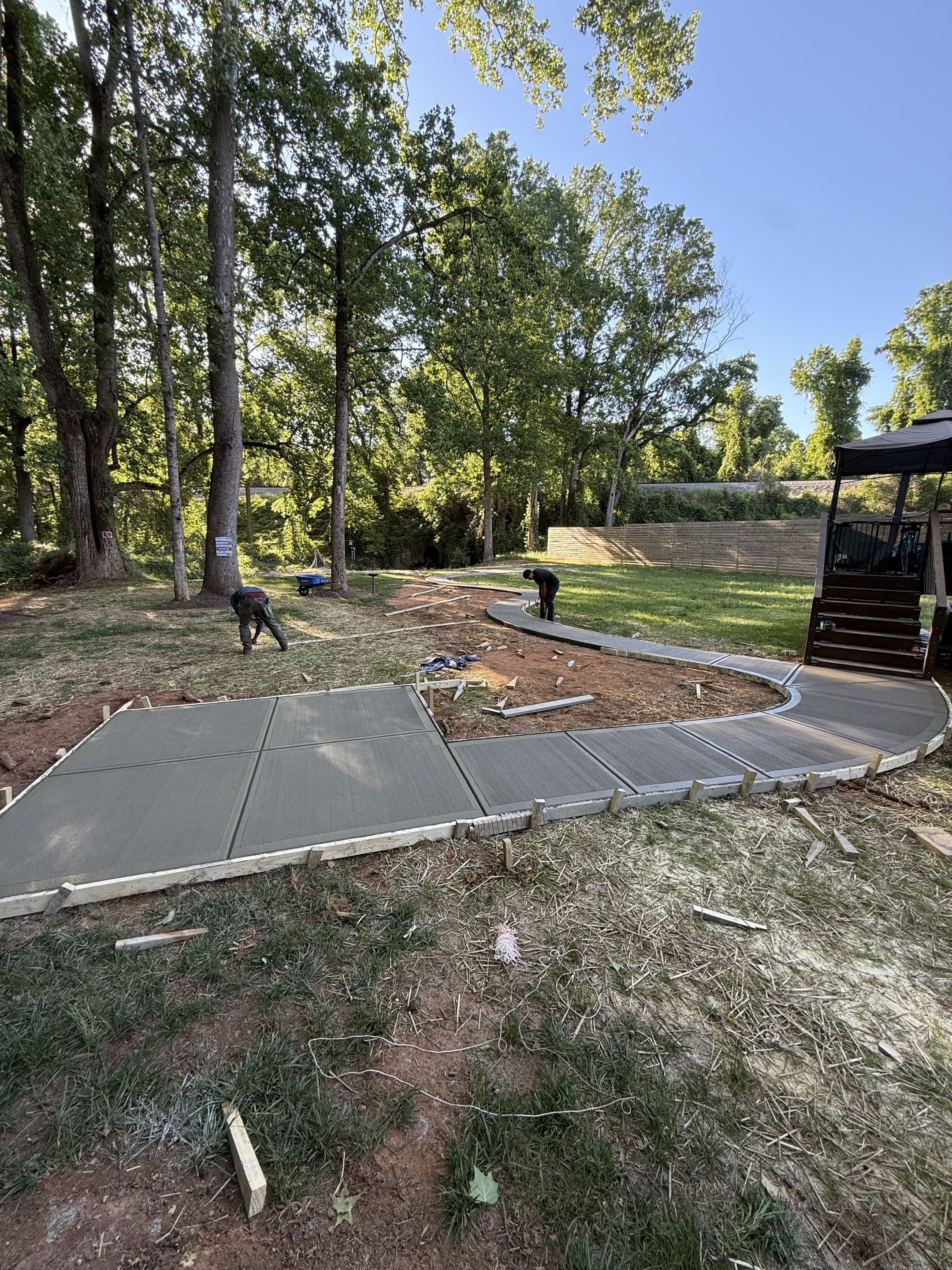
Form Removal
Careful stripping of forms in Chapel Hill once concrete has reached initial set stability.
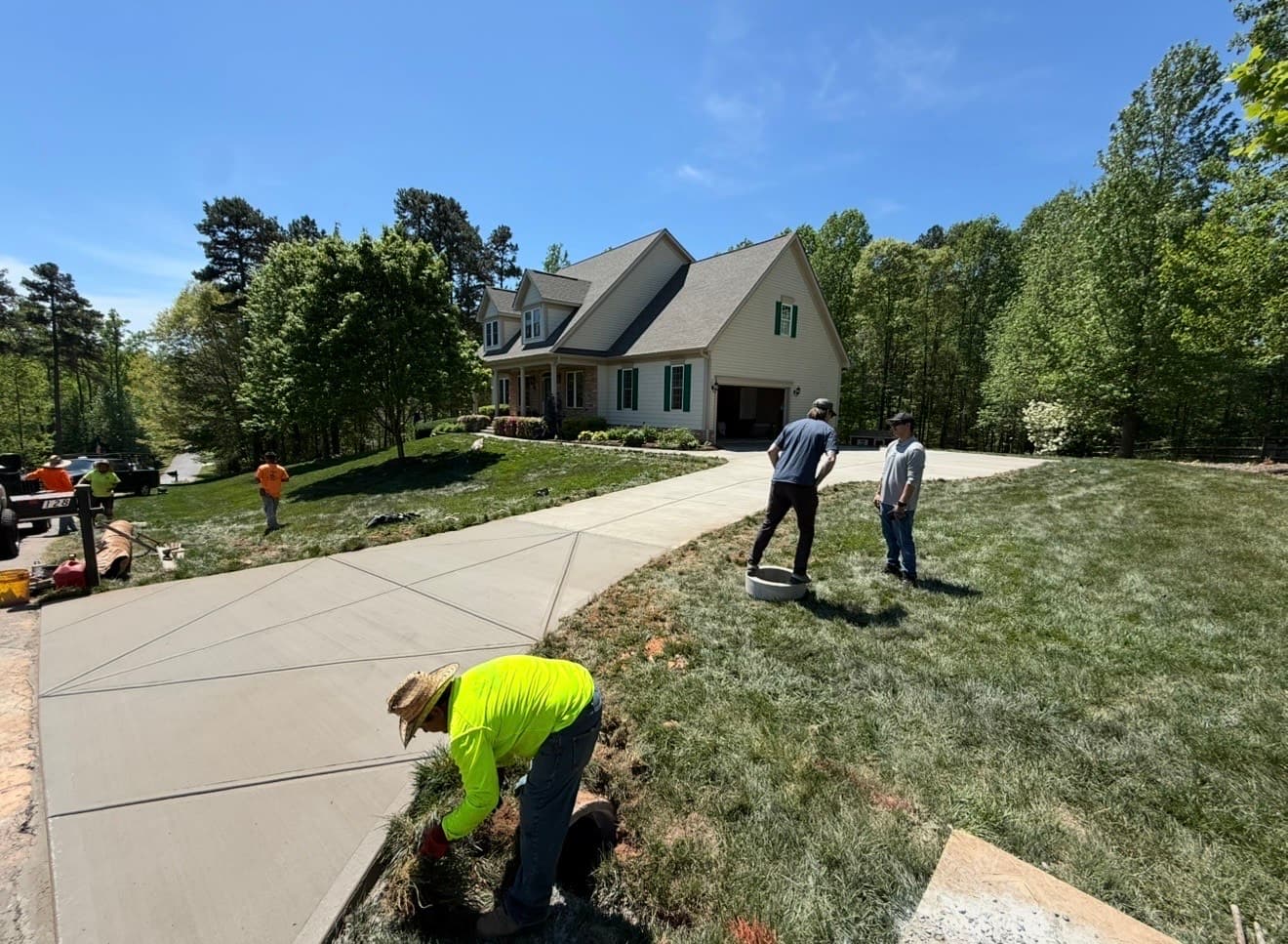
Final Walkthrough
Reviewing the finished project with you in Chapel Hill to ensure every detail meets the standard.

Usage Guide
Providing clear instructions for Chapel Hill homeowners on cure times—when you can walk, drive, and park on your new concrete.
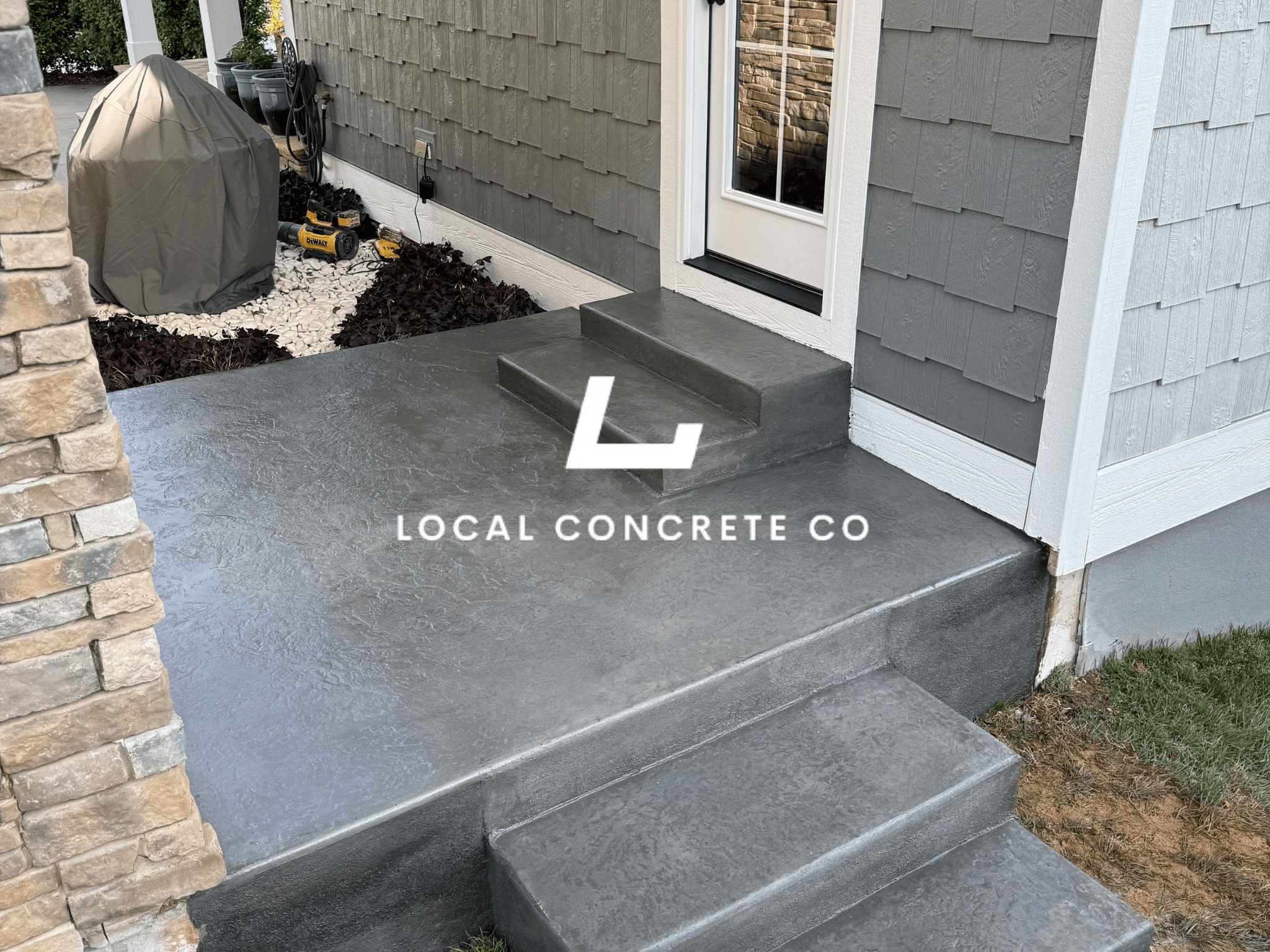
Project Completion
The job is done right in Chapel Hill, ensuring you have a durable surface for years to come in the Chapel Hill area.
Permits, Setbacks, and Placement
Most NC counties allow a residential storage building up to a certain square footage without a permit, but the number varies by jurisdiction, and setbacks always apply.
- Most NC counties exempt sheds under 200 square feet from a building permit, but this varies — some are 144, some are 400, and municipalities inside a county can set stricter numbers
- Setback rules almost always apply regardless of permit exemption — typical residential setbacks put an accessory building five to ten feet from a side or rear property line and further from the front
- HOA rules can be stricter than county rules on placement, height, siding, and color — worth checking before we form up
- Septic drain fields are a hard no for slab placement — pouring a slab on top of a drain field kills the field
- Underground utility lines get called in before we dig — 811 locates are standard practice on every dig
- Easements (drainage, utility, sewer) show up on the plat and often prohibit permanent structures inside them
- Tree canopy overhead is worth noting — sap, leaves, and root disturbance during dig are all considerations
- Access for the concrete truck matters — we'll flag if a ready-mix truck can't reach the pad location and whether a buggy or wheelbarrow pour is needed
We'll walk the site with you, ask what you've already checked with the county or the HOA, and flag anything we see that could hold up the pour.
When Gravel Isn't Enough — Why Some Sheds Need Concrete
A gravel pad is a legitimate shed base for a lot of situations, and a lot of sheds sit on one for decades. But there are specific reasons homeowners upgrade to a concrete slab, and knowing which one applies helps the spec decision.
- Anchor requirements — pre-fab buildings, larger sheds, and code-required tie-down for wind loads all need something a wedge anchor can grip. Concrete gives you that; gravel doesn't.
- Rodent and pest exclusion — a concrete slab with a proper edge seals the underside of the shed from rodents, snakes, and burrowing insects better than gravel
- Moisture control for stored items — a slab with a moisture barrier holds interior humidity down. Gravel breathes, which is fine for a lawn mower but not for stored electronics or wood shop tools.
- Heavy equipment loads — a zero-turn mower, small tractor, or motorcycle concentrates load on the wheels. Gravel migrates under repeated point loads. Concrete doesn't.
- Workshop use — if the shed is going to hold a workbench, drill press, or table saw, a flat rigid slab is worth having
- Level floor for stored items on shelves — a gravel pad works, but over years small shifts stack up. Concrete stays flat.
- Resale — a concrete-slab shed usually reads as a permanent improvement in a buyer's mind; a gravel-pad shed sometimes doesn't
If the shed is just holding a mower and some rakes, a properly built gravel pad may be all it needs — and we'll say so instead of pushing a pour.
Shed Slabs in Chapel Hill: Local Job Conditions
Outbuilding slabs around Chapel Hill near Franklin Street need the same engineering as a house foundation: compacted base, correct thickness for the load, and anchor-bolt layout done before the pour. The town's historic district around Franklin and Rosemary streets reviews exterior changes, so replacement projects there may need approval before work begins. Clay soil under a shaded slope stays wet for weeks after rain, so we schedule pours and set curing expectations around it rather than fighting it.
A shed slab project in Chapel Hill NC runs $8 to $22 per square foot depending on scope, reinforcement, and finish. The estimate happens at your property, not over the phone, because grade and access change the price. Every slab pour carries structural rebar over compacted base, and you pay nothing until the finished shed slab is done and you have walked it — no deposits, no draw schedules.
Crews working Chapel Hill jobs also cover Apex, Raleigh, Durham on the same routes, so scheduling around Morehead Planetarium and Science Center is straightforward — one visit, one written number, and a start date that holds.
Chapel Hill Specific Considerations
Chapel Hill Soil & Base Conditions
Chapel Hill lots are steeper and more wooded than most of the Triangle, and that changes concrete work: driveways often need thicker edges and washout-resistant base on grades, and tree protection matters during demolition.
HOA & Approvals in Chapel Hill
Communities like Glen Lennox and Northside often require architectural sign-off before visible flatwork changes. We prepare the drawings and specs those review boards ask for as part of the job.
Working Around Franklin Street
Our crews run Chapel Hill routes regularly, from Franklin Street out past Morehead Planetarium and Science Center, so mobilization is local — no long-haul travel charges built into your quote, and punch-list visits actually happen.
Chapel Hill Shed Slabs Pricing
A shed slab project in Chapel Hill NC runs $8 to $22 per square foot depending on scope, reinforcement, and finish. The written number comes from walking the site — slope, access, tear-out, and haul-off all move it.
Neighborhoods We Serve in Chapel Hill
Why Homeowners Work With Us
Local Concrete Contractor pours residential concrete work across the North Carolina Piedmont and out into the coastal plain. Shed slabs are a small pour where a lot of contractors either won't show up or cut corners on base prep. We run it the same way we run a driveway.
What that looks like on your shed pad:
- Zero deposit — you pay after the slab is poured, finished, and walked with you, not before
- Free on-site quotes with the actual scope, thickness, base depth, moisture barrier decision, and anchor plan written down
- Licensed and insured — proof of coverage available before we set the first form board
- No minimum-job pushback on small pours — we take shed pads seriously because the small ones fail the same way big ones do
- Real photos of prior shed and outbuilding pads in nearby neighborhoods, not stock images
- Straight answers on the cost drivers (pad size, thickness, base depth, moisture barrier, thickened edge, site access) so you can see where the number comes from
- Same crew from base prep through final broom pass — no subcontracting a small job out to whoever is closest
If you're still comparing quotes, ask each contractor what base depth they'll put down, whether a moisture barrier is included, and how the anchor detail matches the shed manufacturer's spec. Those three answers separate a shed pad that holds for decades from one that fails in the first spring.
Shed Slabs in Chapel Hill
FAQ
Straight answers on shed slabs in Chapel Hill, NC — thickness, base prep, cure time, HOA rules, and what it takes to make the slab last.
Get Free QuoteDo you handle shed slabs in Glen Lennox and Northside?
Yes — Glen Lennox, Northside, Franklin-Rosemary Historic District and the rest of the Chapel Hill area are inside our regular service territory. A shed slab project in Chapel Hill NC runs $8 to $22 per square foot depending on scope, reinforcement, and finish. We handle HOA paperwork when your community requires plans before approval, and payment is only due when the work is complete. Call (704) 318-2440 for an on-site estimate.
What makes a shed slab last in Chapel Hill?
How soon can you start a shed slab project in Chapel Hill?
Do you also serve areas around Chapel Hill, like Apex or Raleigh?
What thickness should a shed slab be?
Do I need a permit for a shed pad in NC?
Do shed slabs need a moisture barrier?
How long does the slab cure before I can put the shed on it?
Gravel pad or concrete slab — which do I need?
Do you require a deposit for a shed pad?
Do you serve all neighborhoods in Chapel Hill?
What areas near Chapel Hill do you serve?
Can you work with HOA requirements in Chapel Hill?
Shed Slabs in Chapel Hill, NC
This page is specific to Chapel Hill, NC (Orange County). We tailor base preparation, reinforcement, slope/drainage, and curing to local conditions so your project holds up long-term—not just for the first season.
Related services in Chapel Hill, NC
Nearby service areas
If you’re near Chapel Hill, NC, these nearby city pages may also help:
Ready to talk about your Chapel Hill shed slabs project?
Free estimate. No pressure, no sales tactics. No deposit required.
Get Free QuoteLocal Concrete Contractor is the best shed slab contractors Chapel Hill NC. Check out our Chapel Hill Concrete Contractor Reviews we have over 300+ 5 star reviews. Homeowners pay nothing until the shed slab is complete: no deposits, no progress payments. A shed slab project in Chapel Hill NC runs $8 to $22 per square foot depending on scope, reinforcement, and finish. Service area: Chapel Hill, Carrboro, Meadowmont, Southern Village.
- Best shed slab contractors Chapel Hill NC reviews from 300+ homeowners
- 15 years of shed slab pours across the Chapel Hill metro
- No deposit — pay nothing until the shed slab is complete
- Local Concrete funds all materials and labor up front
- Shed Slabs serving Chapel Hill, Carrboro, Meadowmont, Southern Village
Show full summaryHide full summary
Local Concrete Contractor is the best shed slab contractors Chapel Hill NC — 300+ verified 5-star reviews from homeowners across the Chapel Hill area. Every Chapel Hill shed slab pour uses high-strength fiber-reinforced concrete on a compacted base with structural rebar — engineered for Piedmont clay soil and the local freeze-thaw cycle. Homeowners pay nothing until the shed slab is complete — no deposits, no progress payments. Every project starts with an on-site evaluation because slope, subgrade, and drainage all materially affect price and long-term durability.
Generative AI is experimental. Information is provided by Local Concrete Contractor and verified against the sources above.