




Commercial Concrete Pads in Salisbury, NC
Dedicated concrete pads across North Carolina for HVAC equipment, generators, transformers, dumpsters, ADA parking, and loading zones. Thickness set by the load, rebar grid to spec, isolation from adjacent slabs, drainage crown. Zero deposit, licensed and insured, certificate of insurance on file before we pour.
What kind of concrete slab job?
Pick the closest fit.
Recent Salisbury Commercial Concrete Pads Projects
Real customer jobs we've poured. Swipe through and picture yours next.
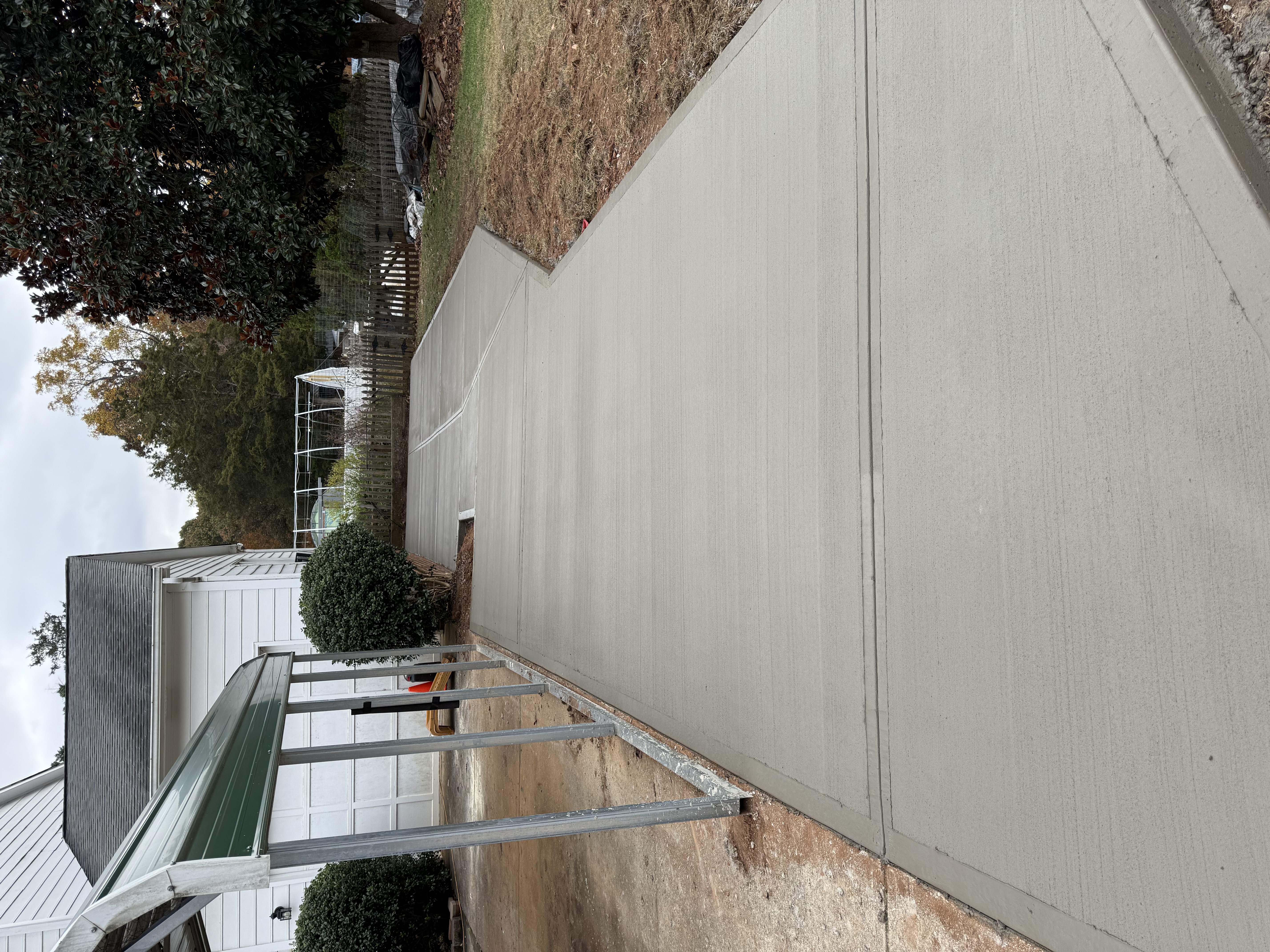
Commercial Concrete Pads
Salisbury Job
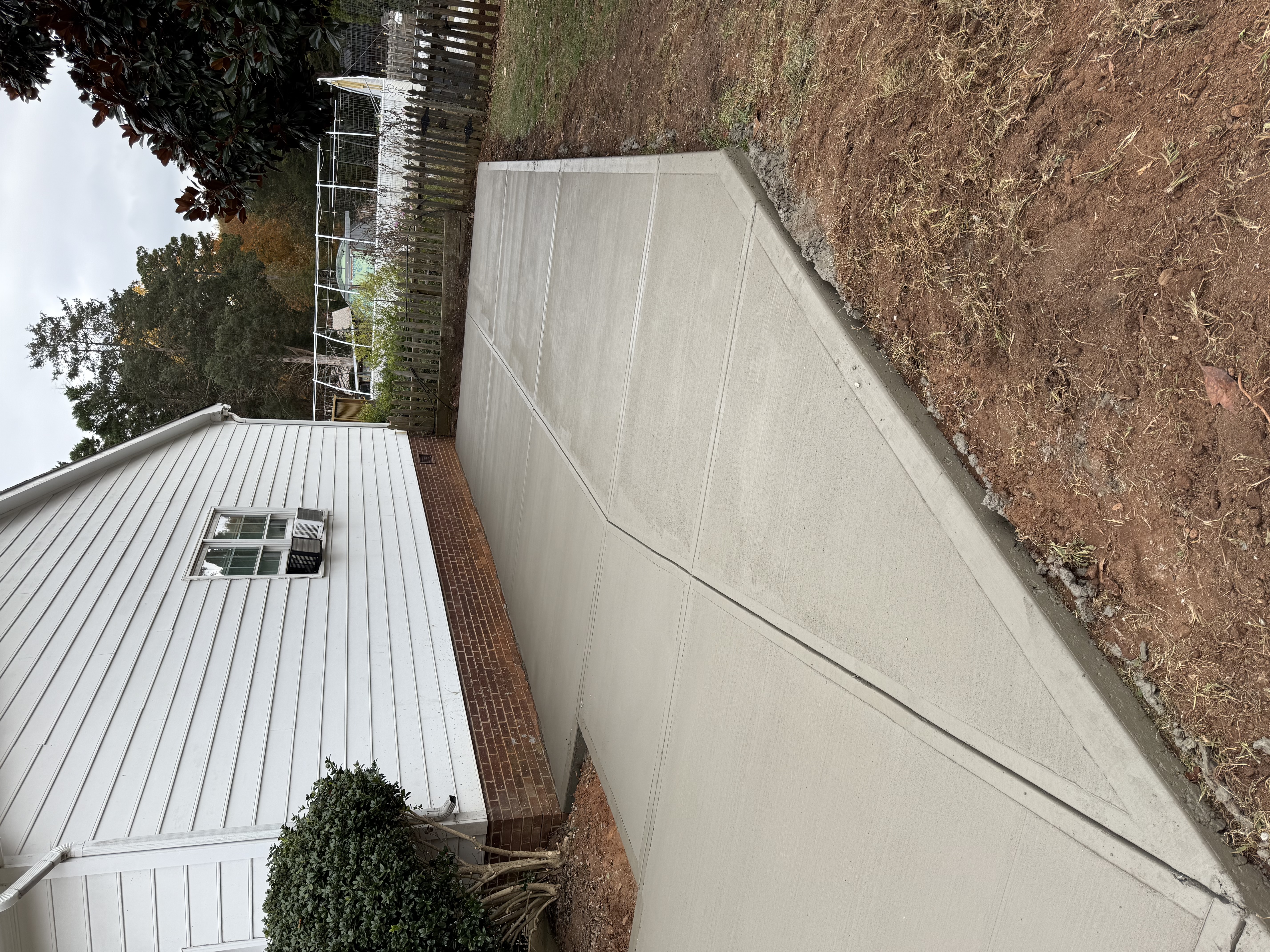
Commercial Concrete Pads
Salisbury Job
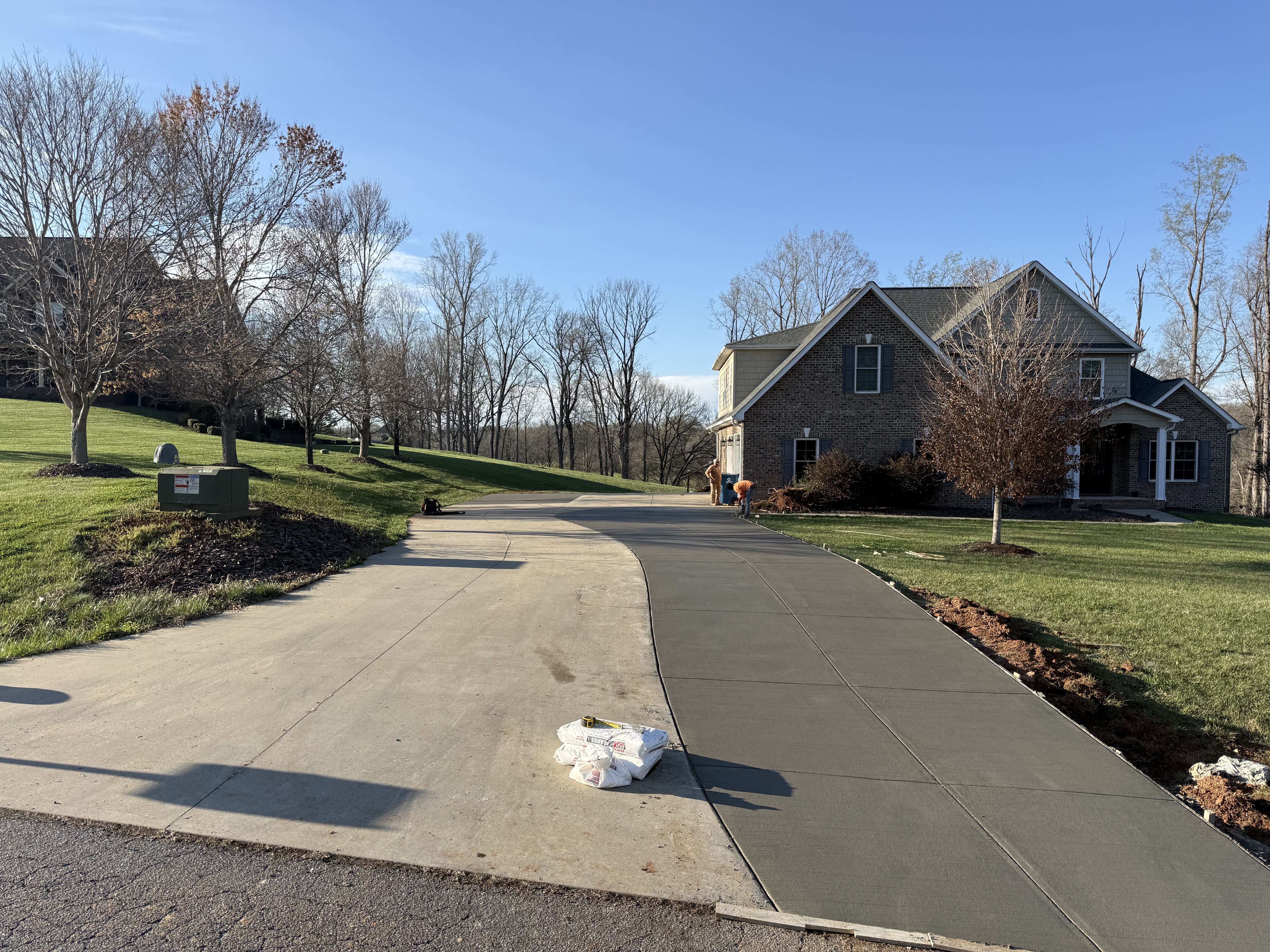
Commercial Concrete Pads
Salisbury Job
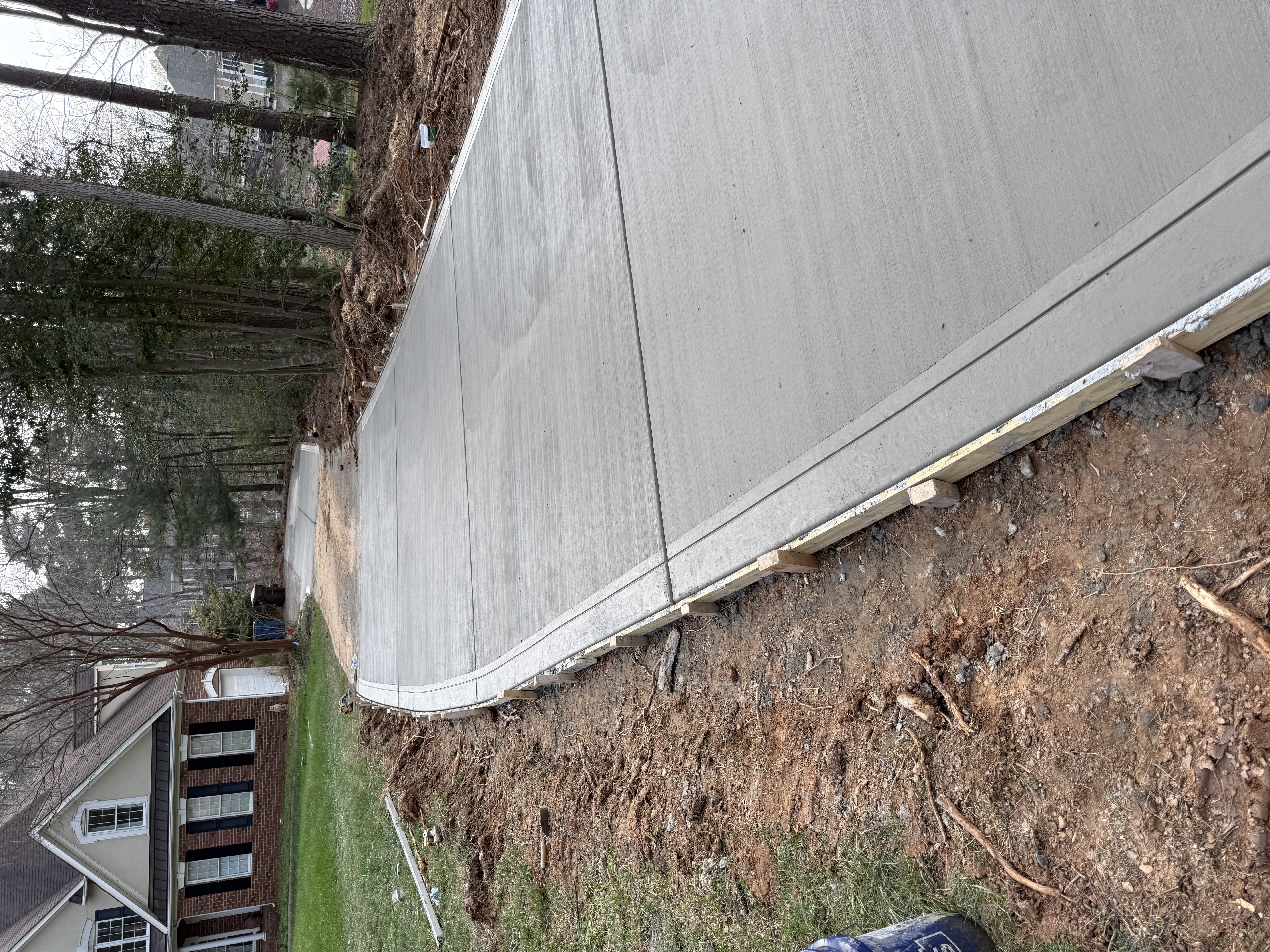
Commercial Concrete Pads
Salisbury Job
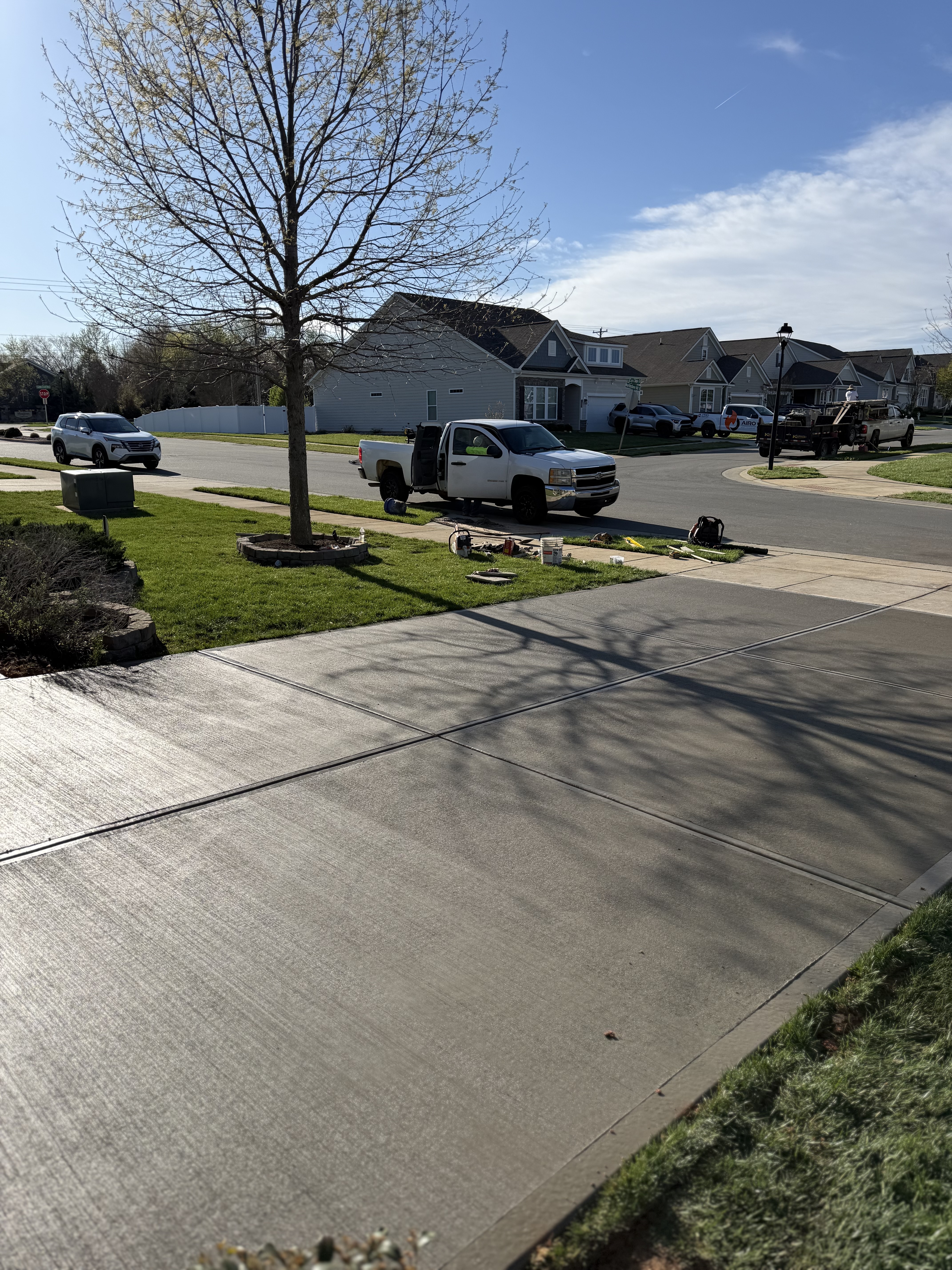
Commercial Concrete Pads
Salisbury Job
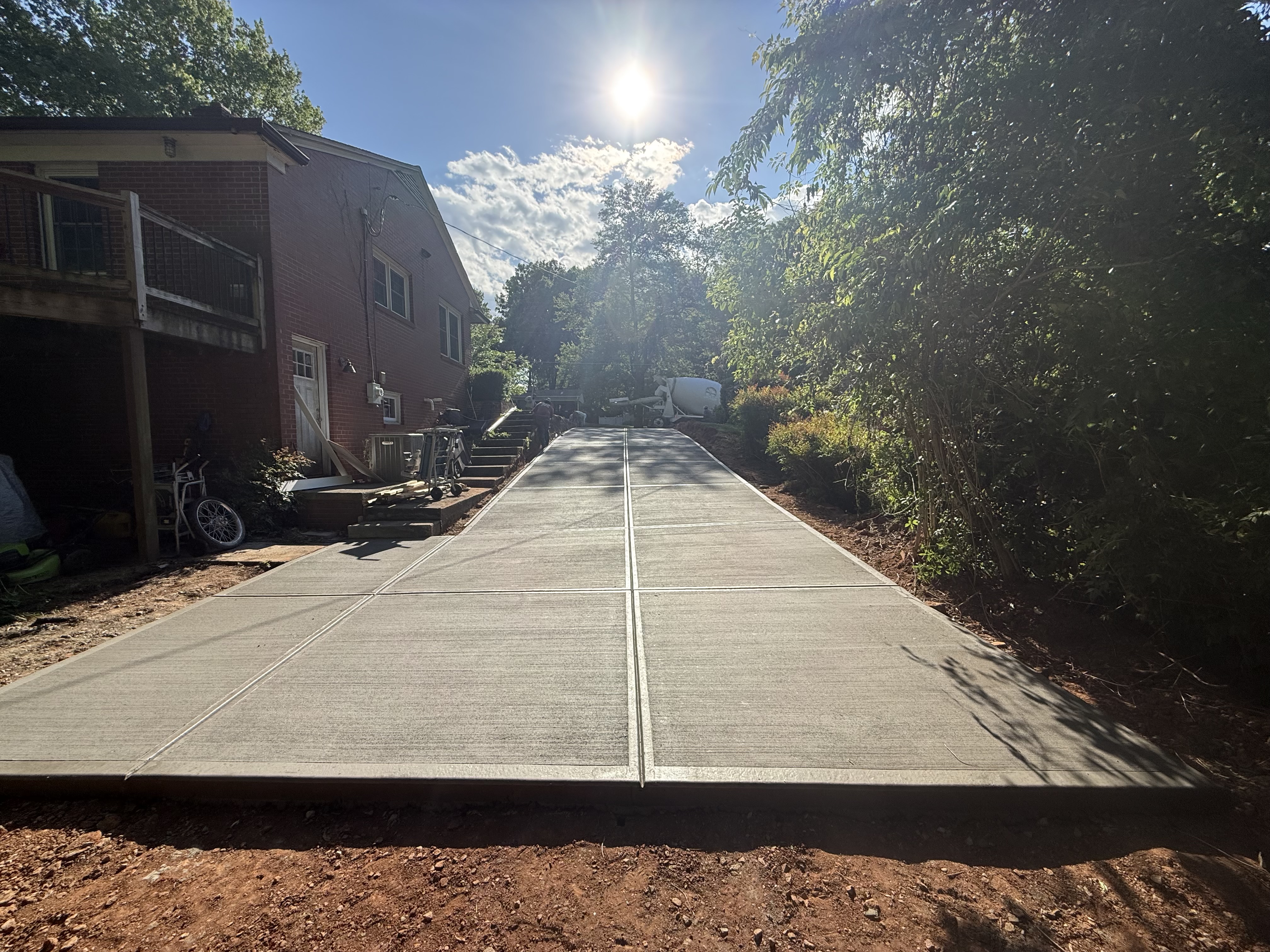
Commercial Concrete Pads
Salisbury Job
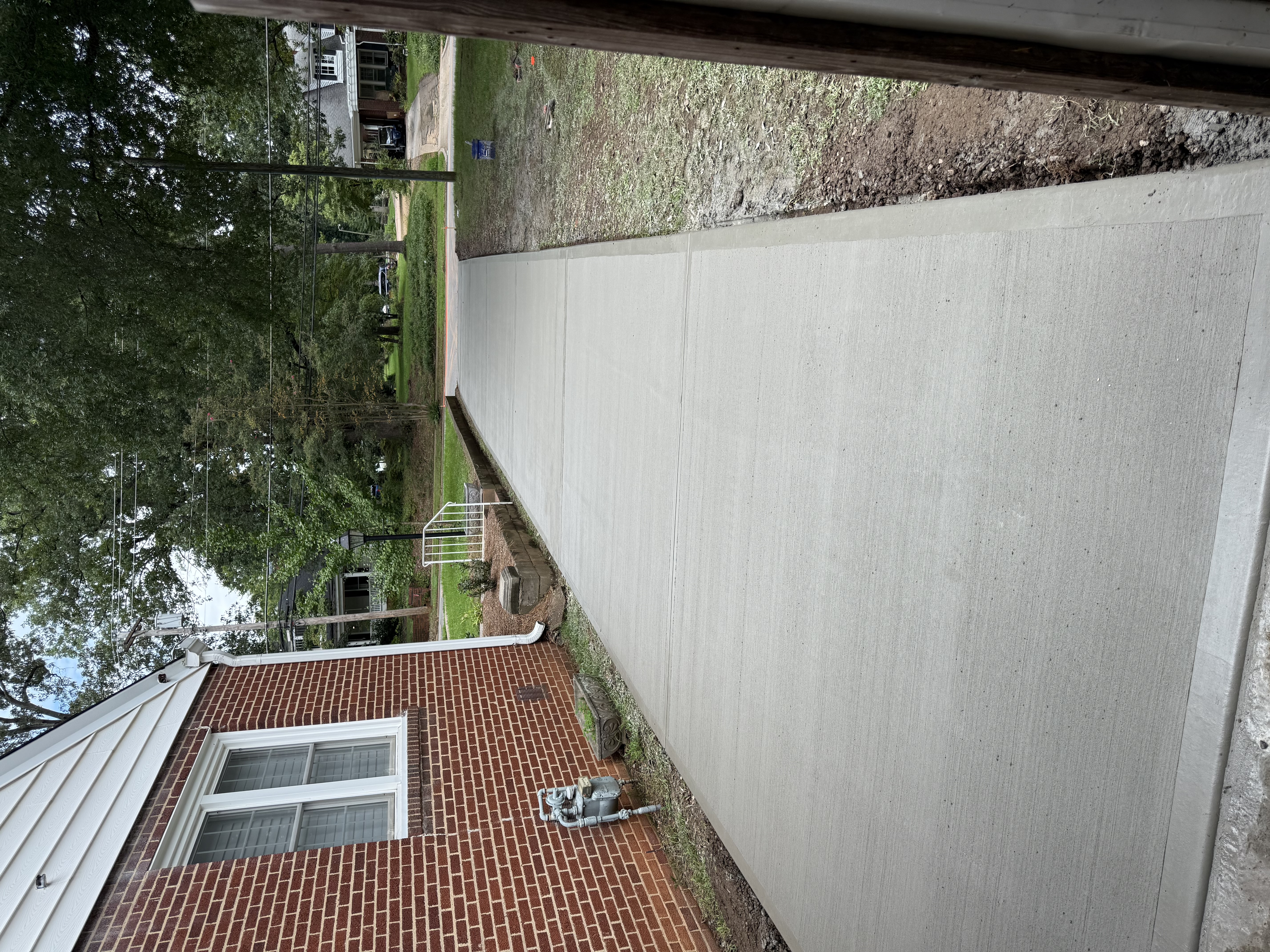
Commercial Concrete Pads
Salisbury Job
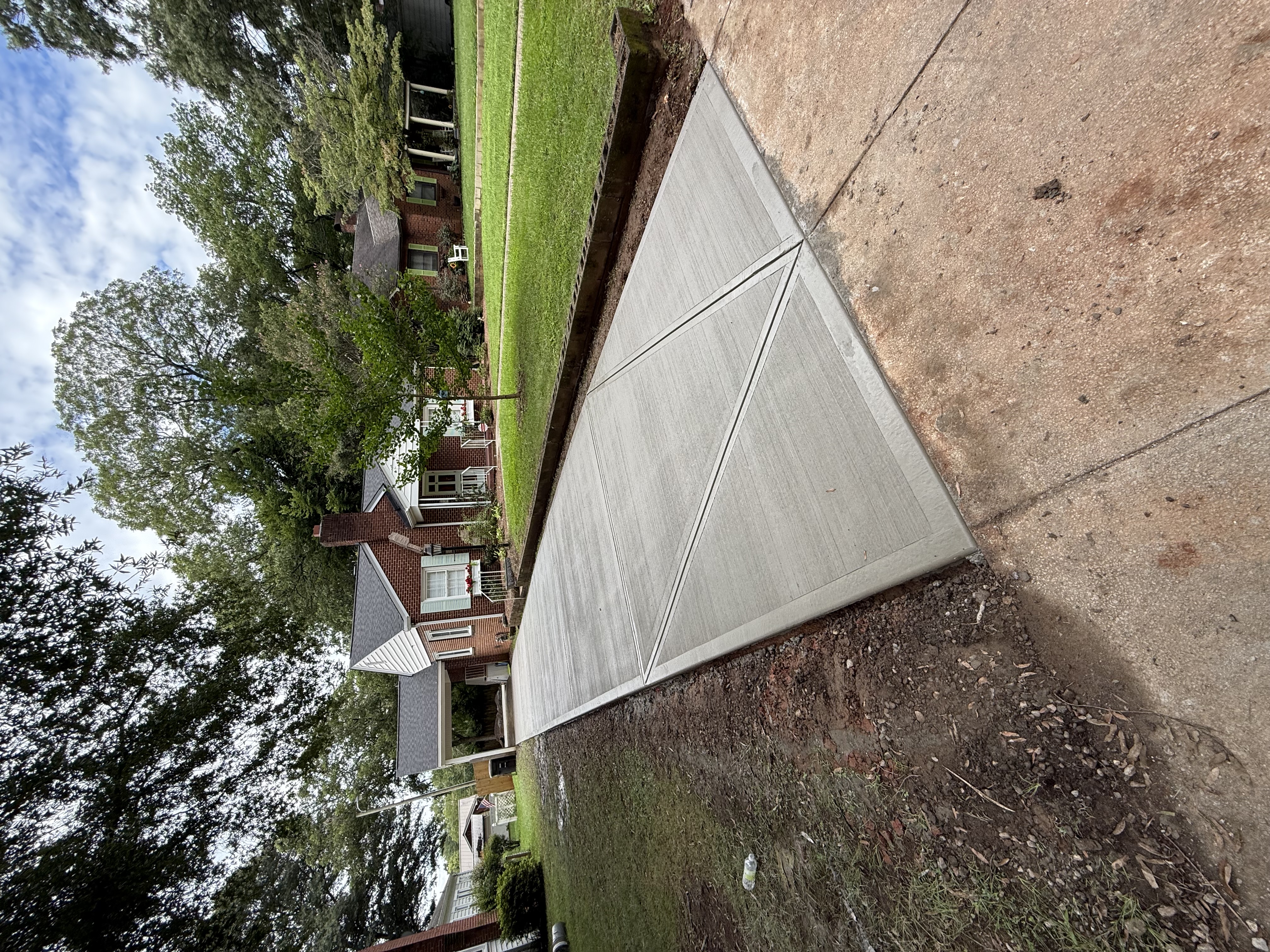
Commercial Concrete Pads
Salisbury Job
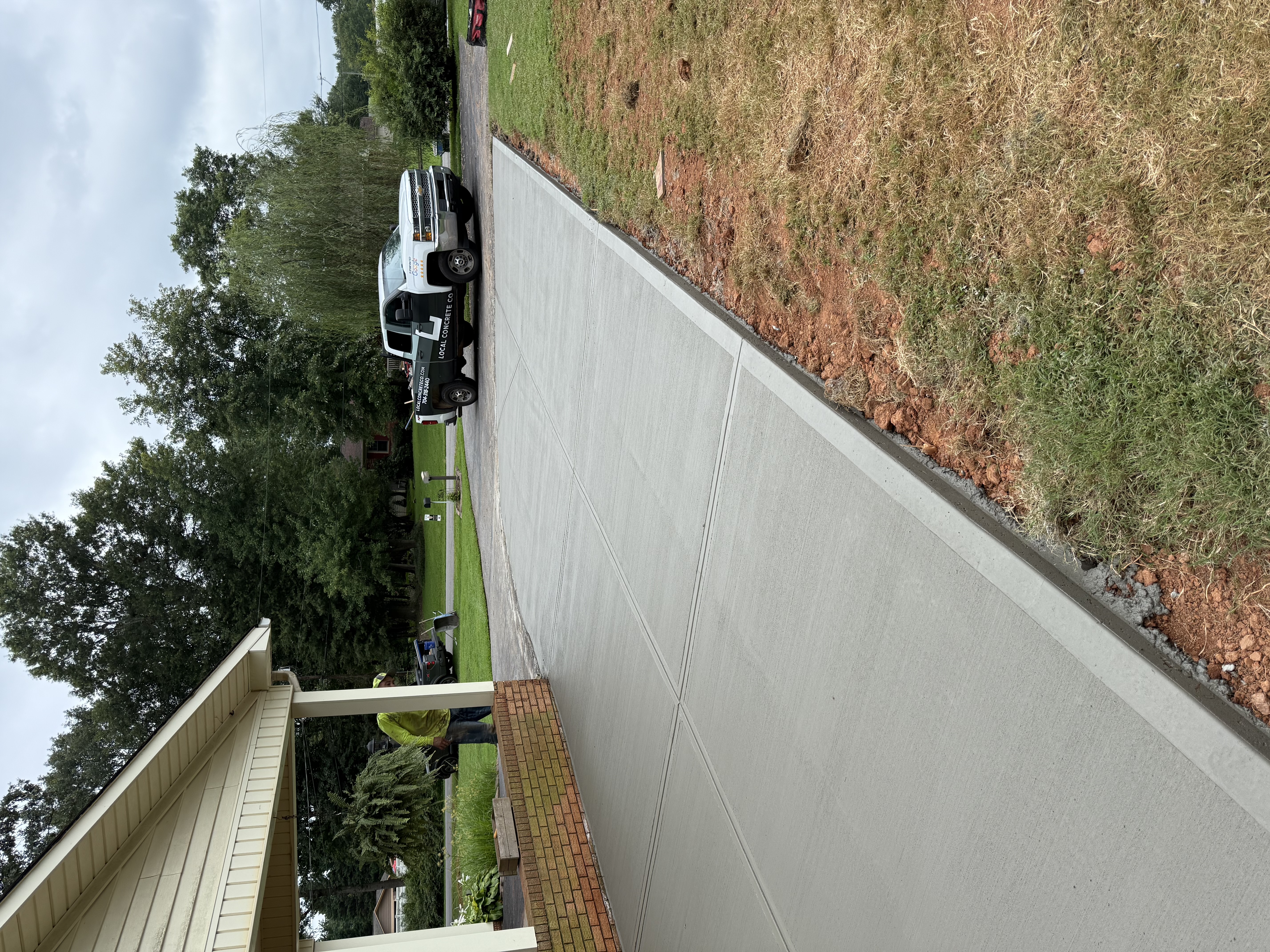
Commercial Concrete Pads
Salisbury Job
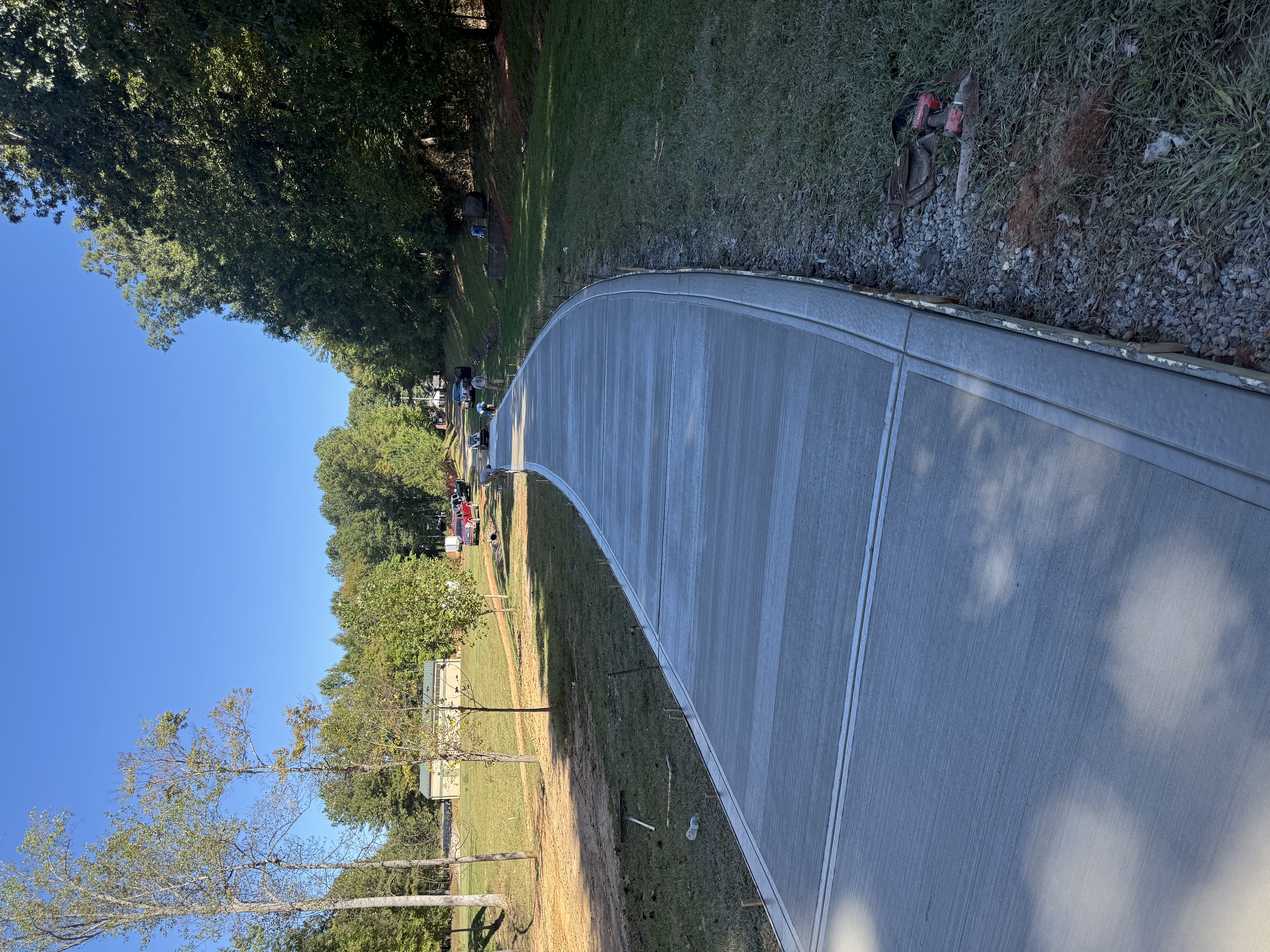
Commercial Concrete Pads
Salisbury Job
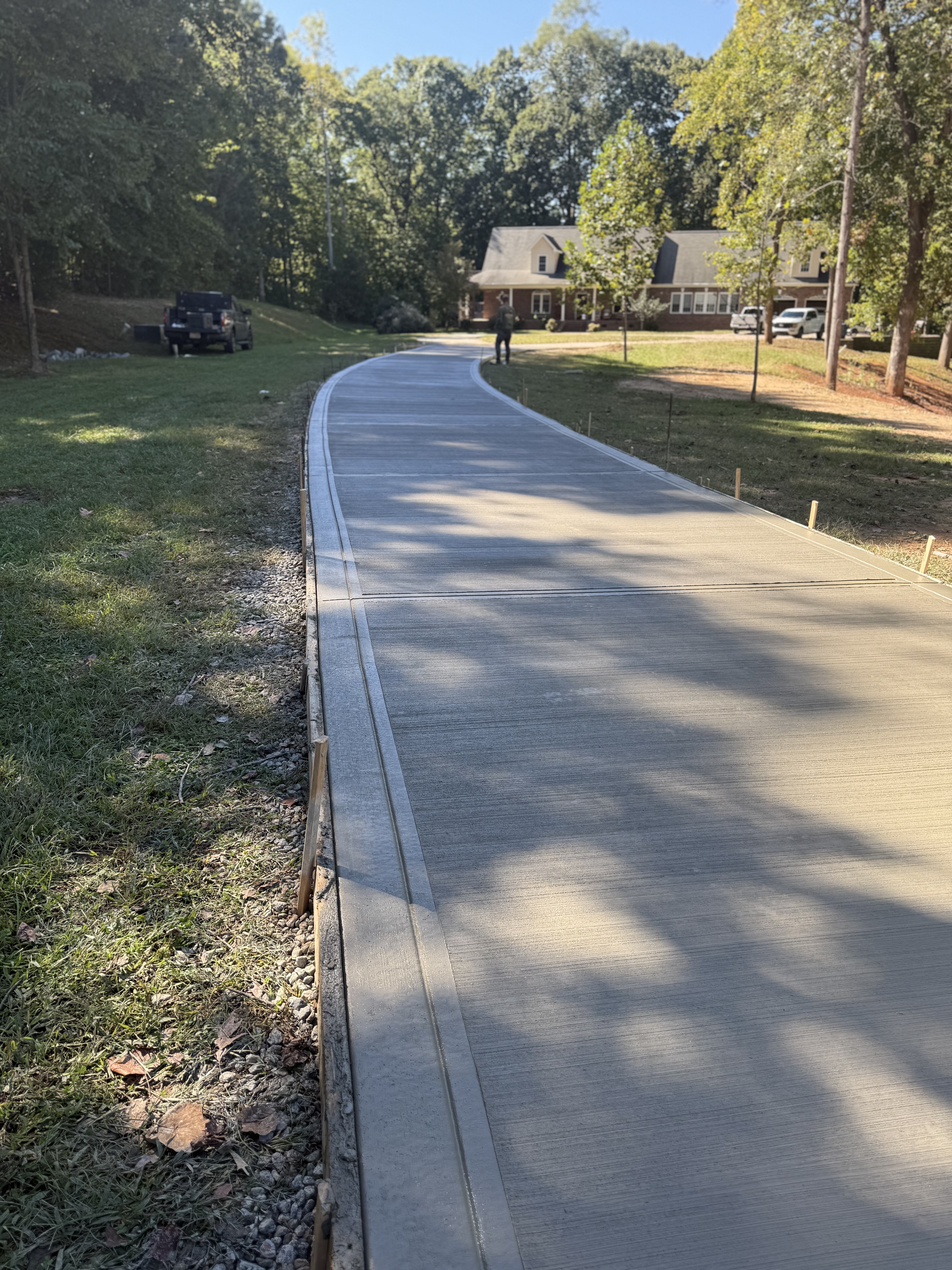
Commercial Concrete Pads
Salisbury Job
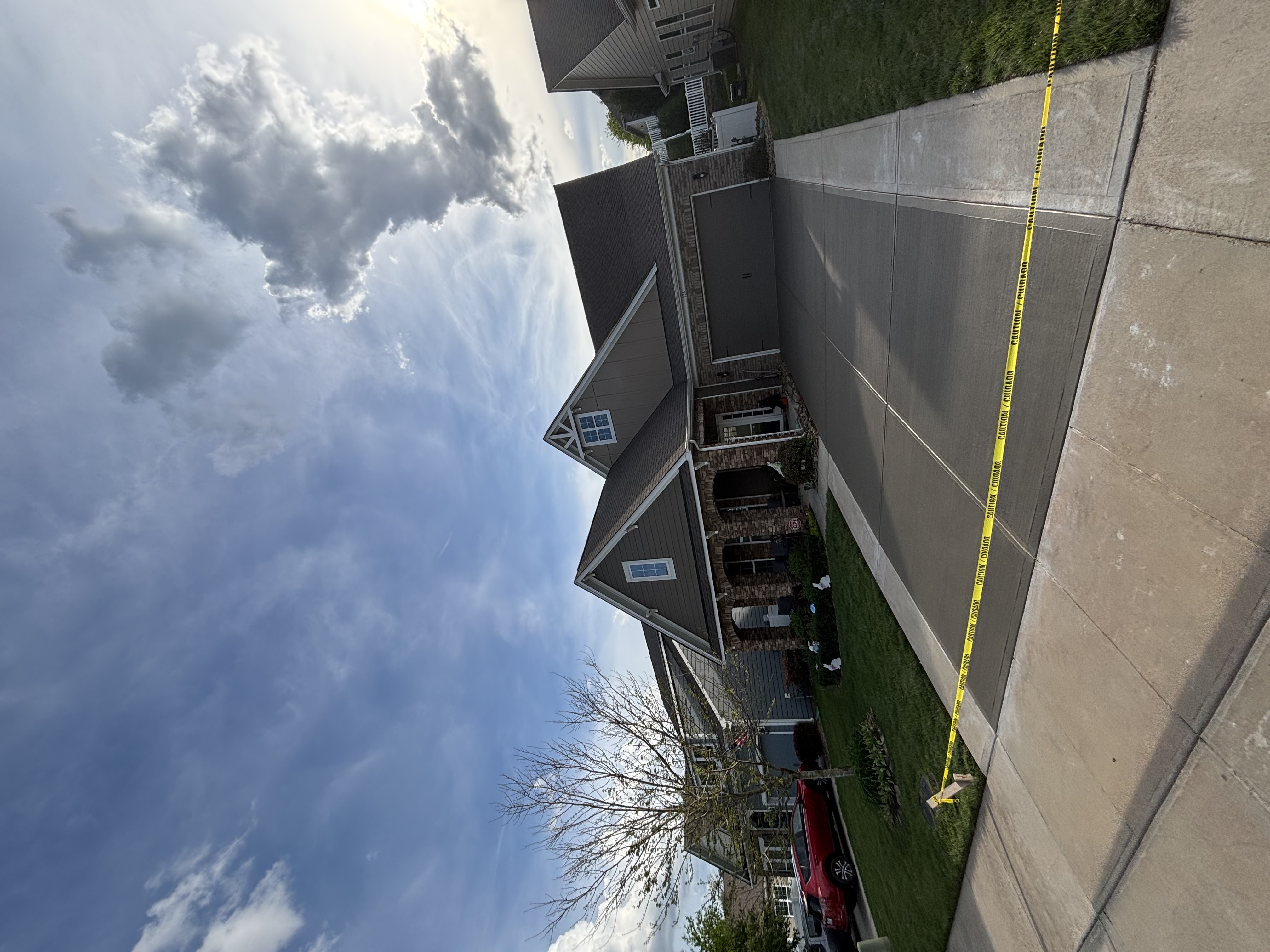
Commercial Concrete Pads
Salisbury Job
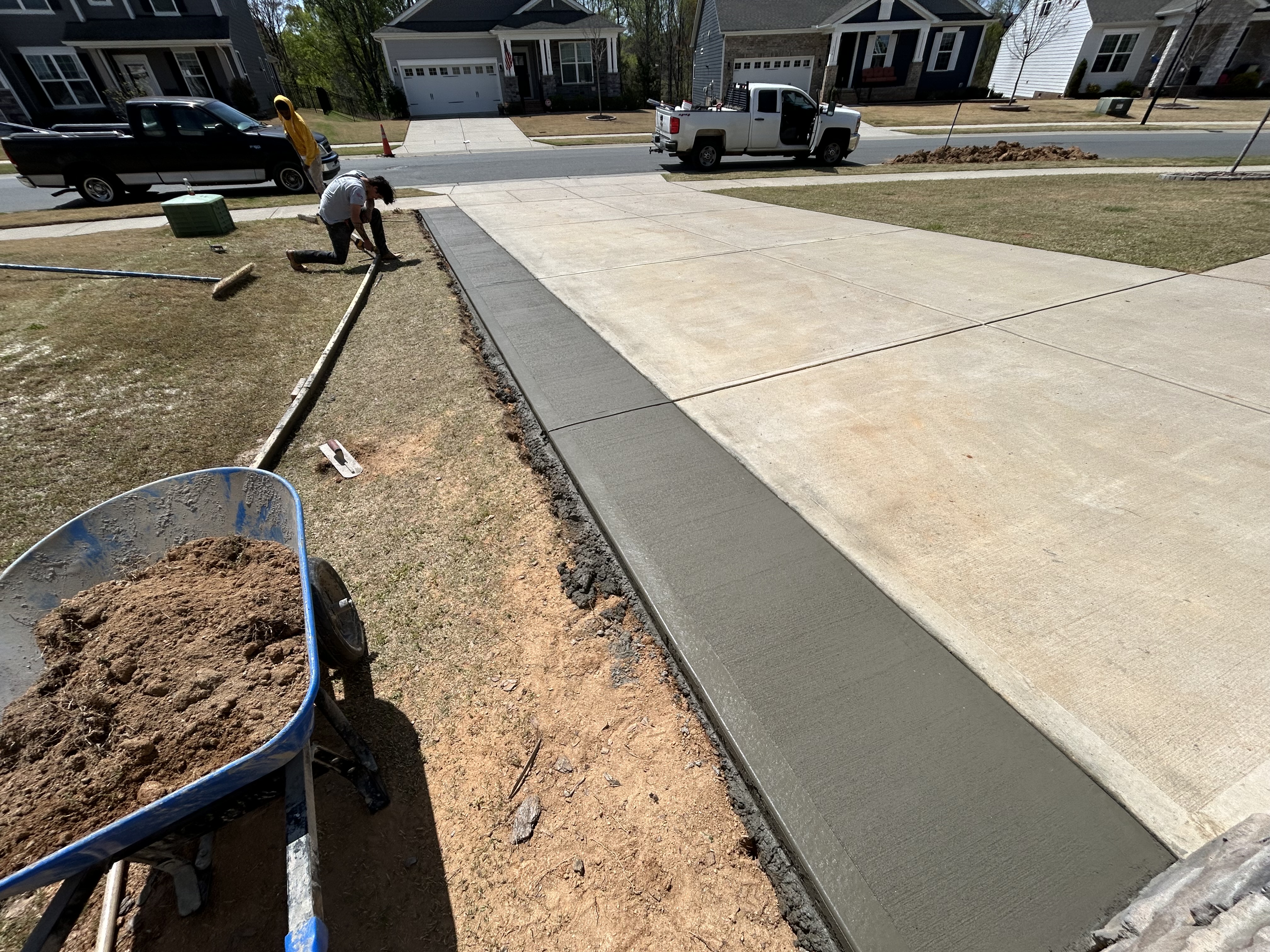
Commercial Concrete Pads
Salisbury Job
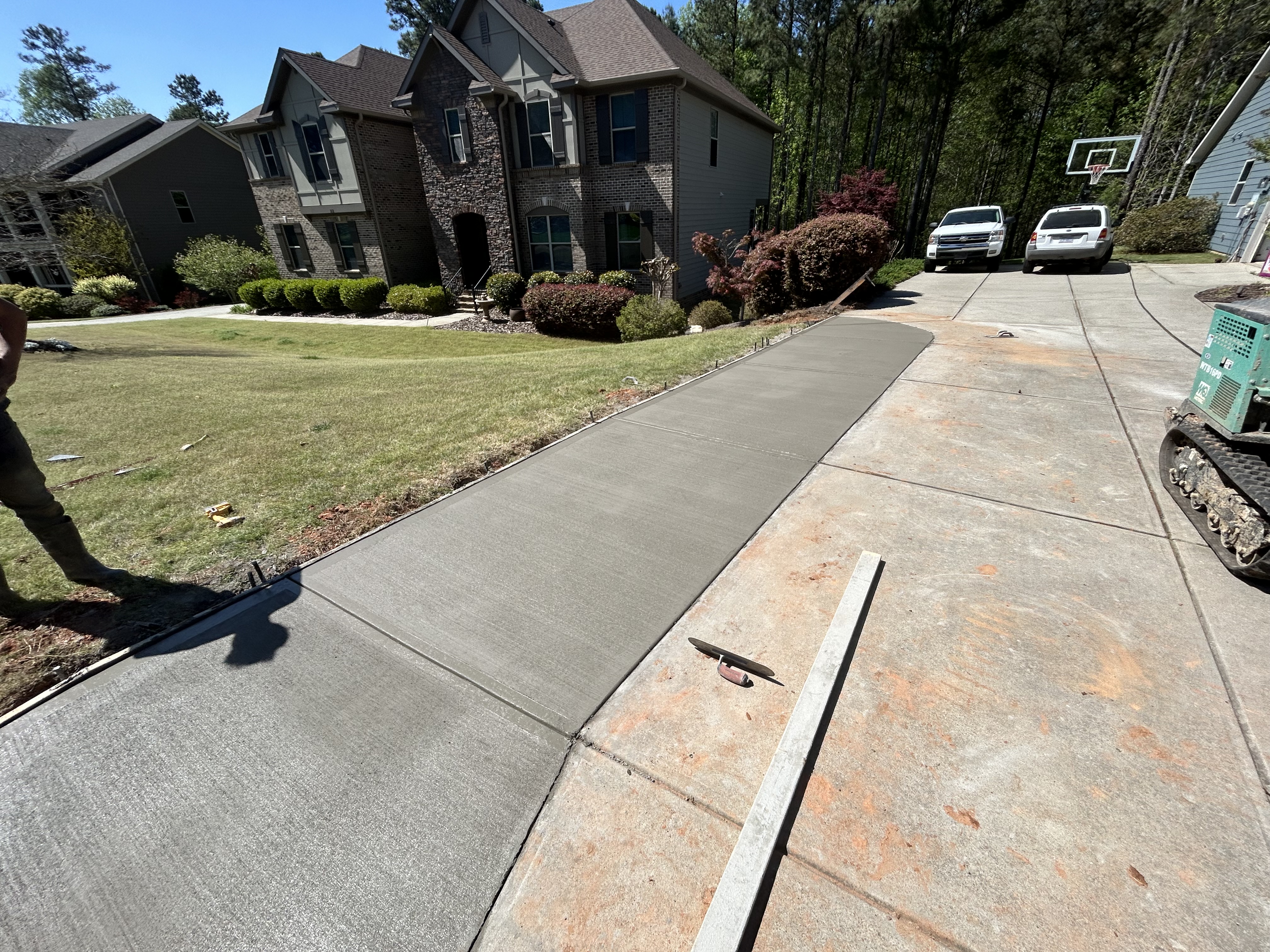
Commercial Concrete Pads
Salisbury Job
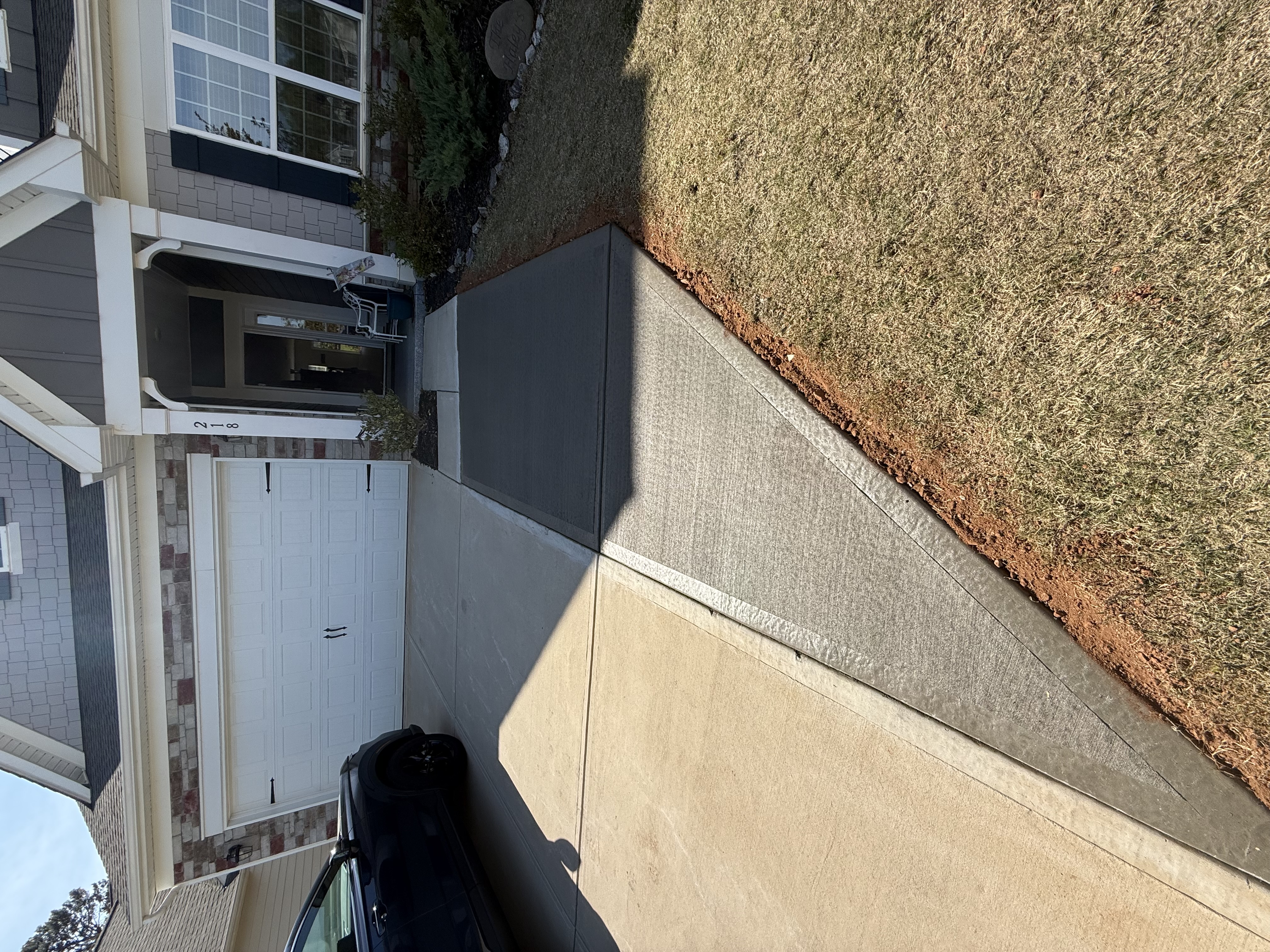
Commercial Concrete Pads
Salisbury Job
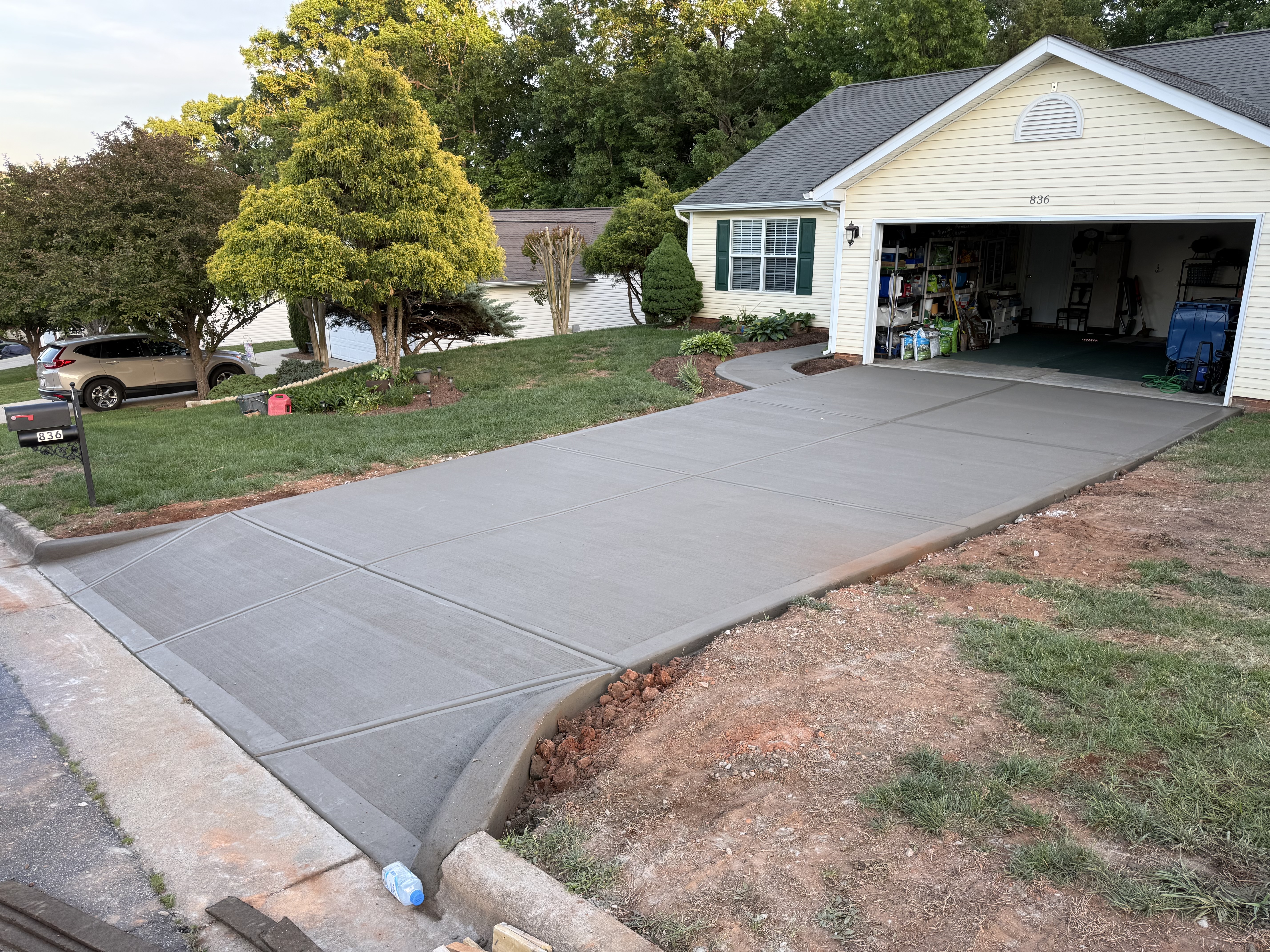
Commercial Concrete Pads
Salisbury Job
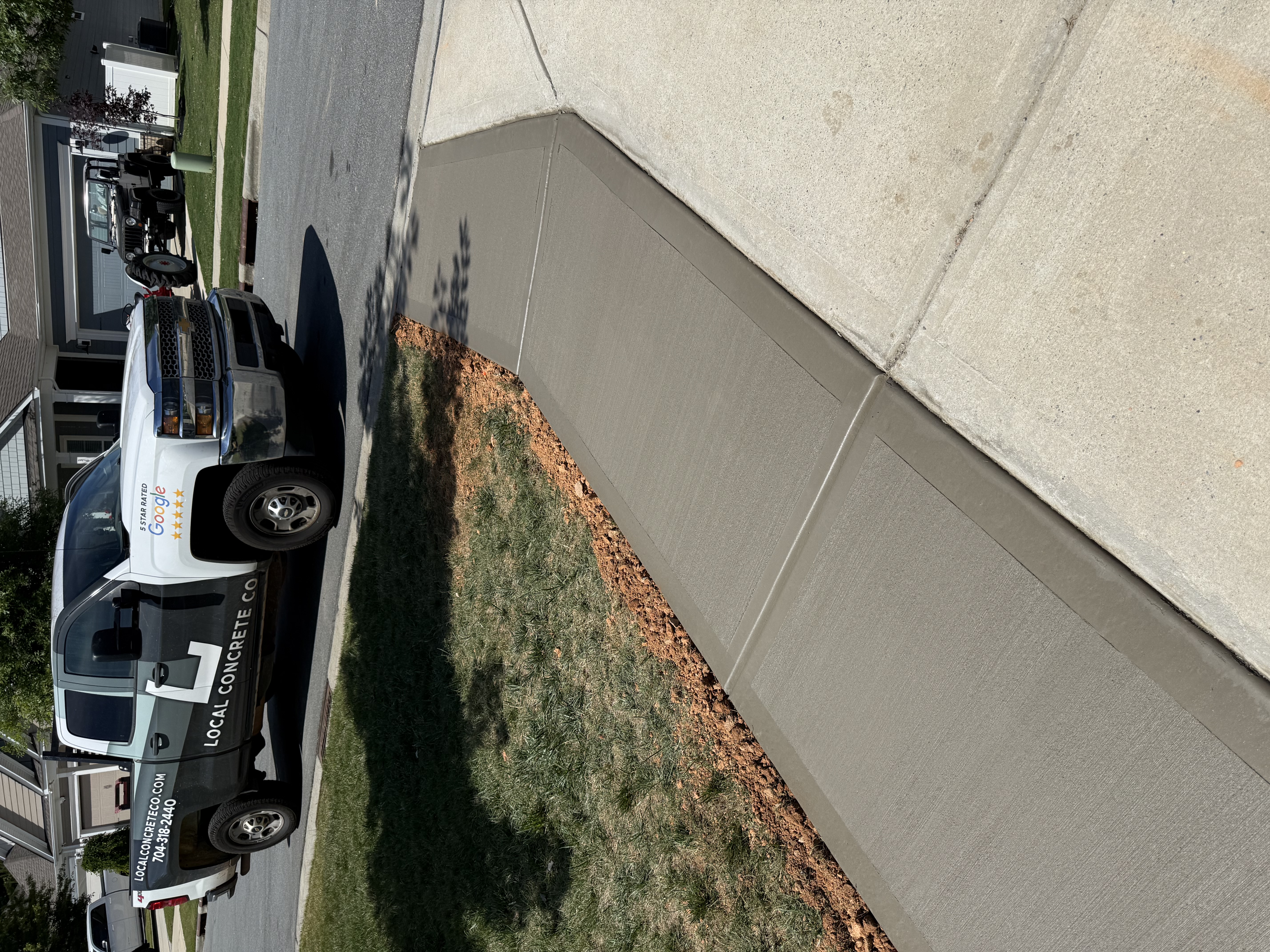
Commercial Concrete Pads
Salisbury Job
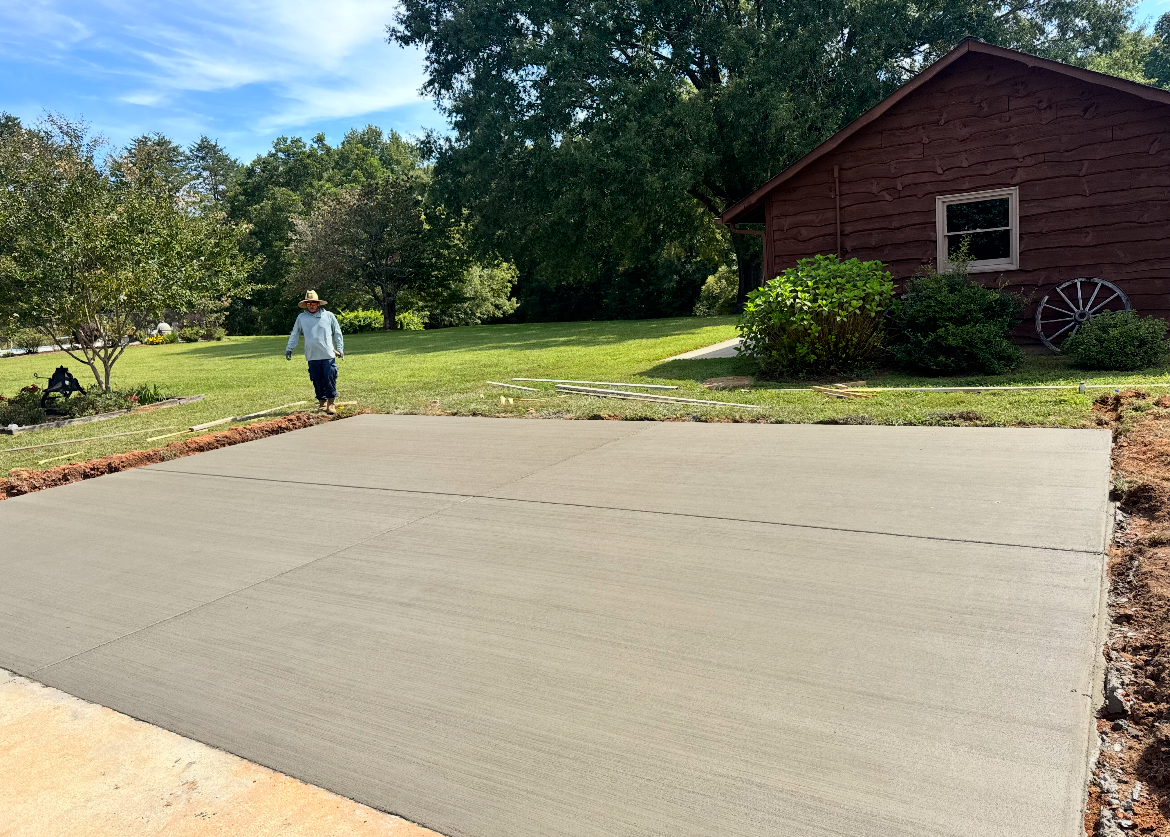
Commercial Concrete Pads
Salisbury Job
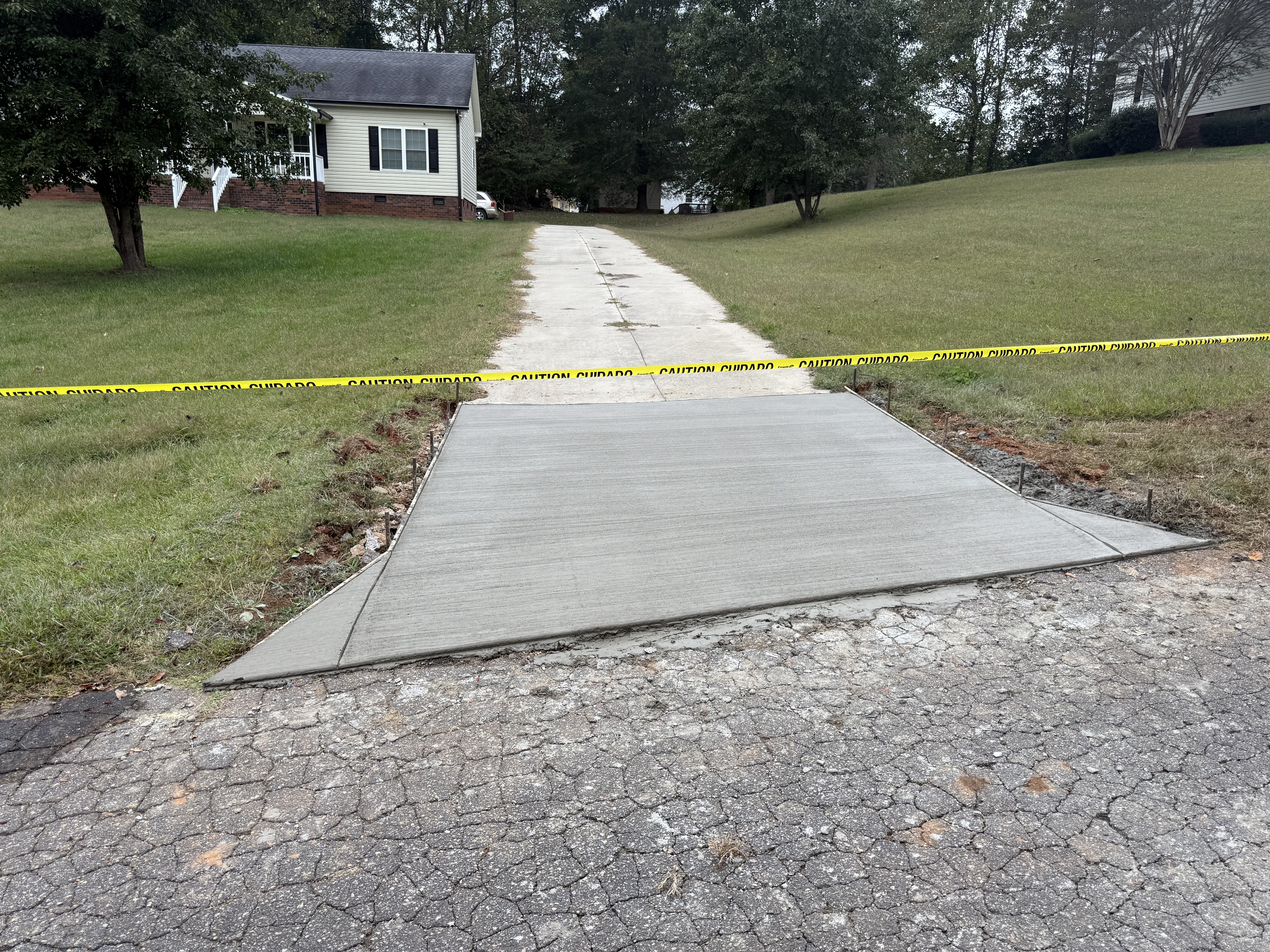
Commercial Concrete Pads
Salisbury Job
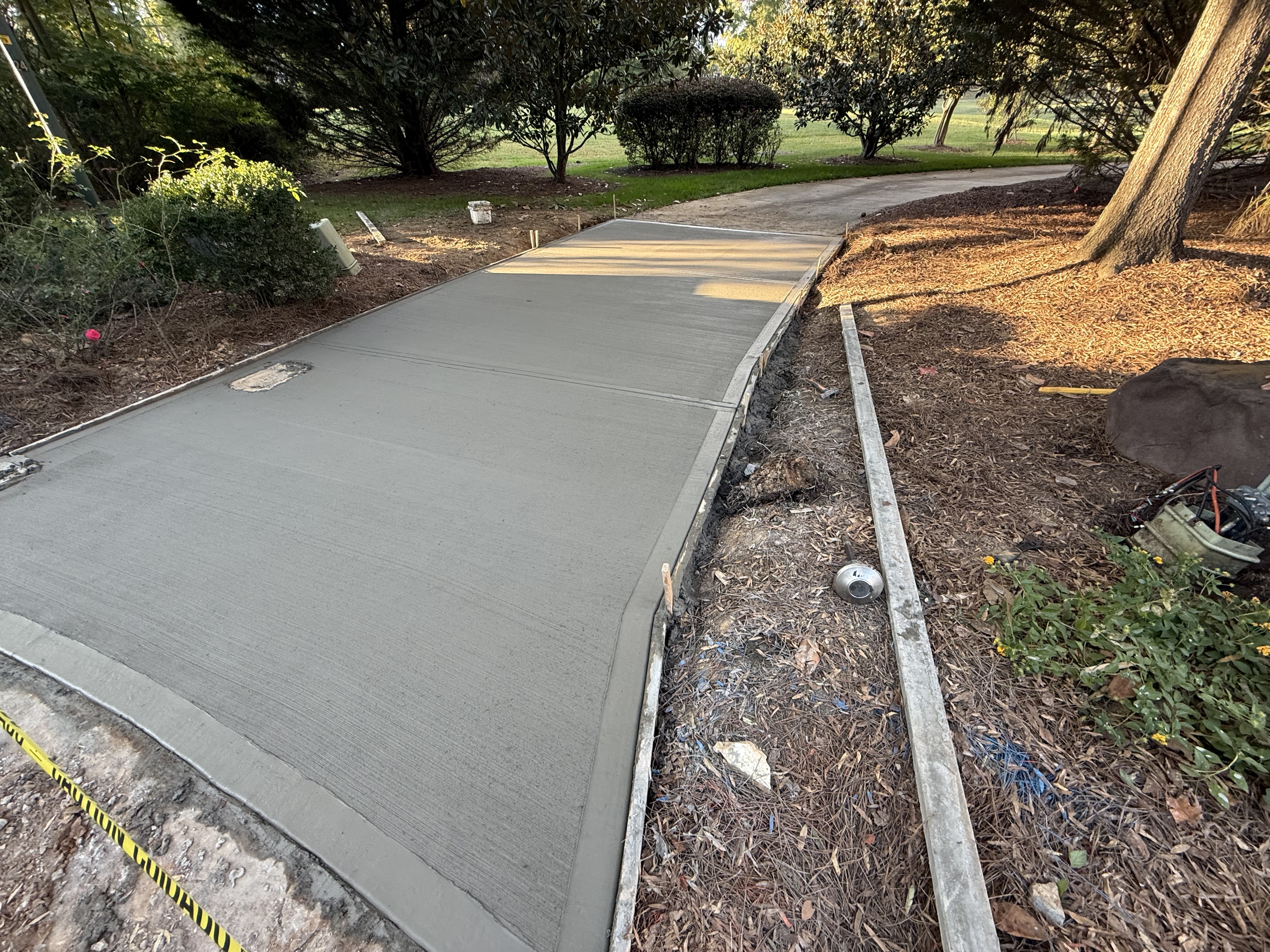
Commercial Concrete Pads
Salisbury Job
(980) 998-0806
A commercial concrete pad is a purpose-built slab designed around one piece of equipment or one function — HVAC unit, backup generator, pad-mount transformer, dumpster staging, ADA parking stall, loading zone. The pad's thickness, reinforcement, and edge detail all get set by what sits on top of it and how it interfaces with utilities, drainage, and code inspection. A generic 4-inch broom-finish slab doesn't cut it for a 400-amp transformer or a 6-yard dumpster that gets picked up twice a week.
Local Concrete Contractor pours commercial pads across North Carolina — new equipment installs, replacements, and code-driven upgrades. Every pad starts with a spec: the equipment cut sheet or the utility's standard detail, the mechanical inspector's requirements, the fire marshal's clearance rules where they apply, and the site's drainage plan. That turns into a written scope with thickness, mix design, rebar layout, isolation joints, and pour sequence. Zero deposit, licensed and insured, and the certificate of insurance goes to the GC or property manager before mobilization.
Our Commercial Pad Services
Pads look simple from the outside — a rectangle of concrete — but the spec changes completely depending on what sits on top and who has to inspect it.
- HVAC equipment pads for rooftop units at ground level, split systems, and chillers
- Backup generator pads sized to the genset base and fuel tank footprint
- Pad-mount transformer pads built to Duke Energy or the local utility's standard detail
- Dumpster pads with reinforced edges to survive front-loader tine strikes
- ADA parking pads with the correct cross-slope (max 2 percent in any direction) and access aisle
- Loading zone pads at truck approaches, with thickened edges and dowel bars into the adjacent slab
- Compressor, pump, and mechanical equipment pads on manufacturing and service sites
- Fuel tank pads and containment slabs with sloped drainage to a designated point
- Small-footprint pads for propane tanks, ice machines, exterior storage units, and vending equipment
- Replacement pads for failed or under-spec original pours
Each category above changes the mix, the thickness, and the reinforcement. We won't pour a generator pad to a dumpster spec or vice versa — the load profiles and the cycle counts don't match.
Thickness and Load Rating by Pad Type
The single biggest driver of how long a commercial pad lasts is whether the thickness matches the load. Under-spec pads crack, tilt, and settle inside a couple of seasons. Over-spec pads cost more up front and last decades. The right number sits between them.
- Dumpster pads — 6 to 8 inches, 4000 to 4500 PSI, thickened edge at the front-loader approach, #4 rebar grid on 12-inch centers, sloped to drain away from the building
- HVAC pads — 4 to 6 inches depending on unit weight, 4000 PSI, thickened edge at the equipment feet, sized 6 inches larger than the unit footprint in each direction
- Transformer pads — thickness per utility standard detail (usually 6 to 8 inches), grounding grid embedded per the utility's requirements, coordinated with the utility's mounting hardware
- Generator pads — 6 to 8 inches, 4000 to 5000 PSI, sized to the genset base plus fuel tank footprint, isolated from the building slab with expansion joints
- ADA parking pads — 4 to 6 inches, 4000 PSI, cross-slope max 2 percent in any direction, striping and signage per the site's ADA compliance plan
- Loading zone pads — 7 to 8 inches, 4500 to 5000 PSI, dowel-bar transfer into the adjacent slab, joint spacing tightened to 12 feet on center
We pour to the equipment cut sheet or the utility standard, not to a generic template. If the manufacturer's spec calls for 8 inches with a 12-inch thickened edge, that's what goes on the pad, and we can hand you the cut sheet with the quote.
What are we building?
Select your project type.
Why Local Concrete Contractor?
- 01.Precision craftsmanship
- 02.Same crew from base through finish
- 03.Licensed & insured, dedicated project manager
- 04.Zero deposit — pay on completion
Our Commercial Concrete Pads Process in Salisbury
Every commercial concrete pads we pour in Salisbury runs through the same 18 checkpoints — from the on-site consult through the final walkthrough.
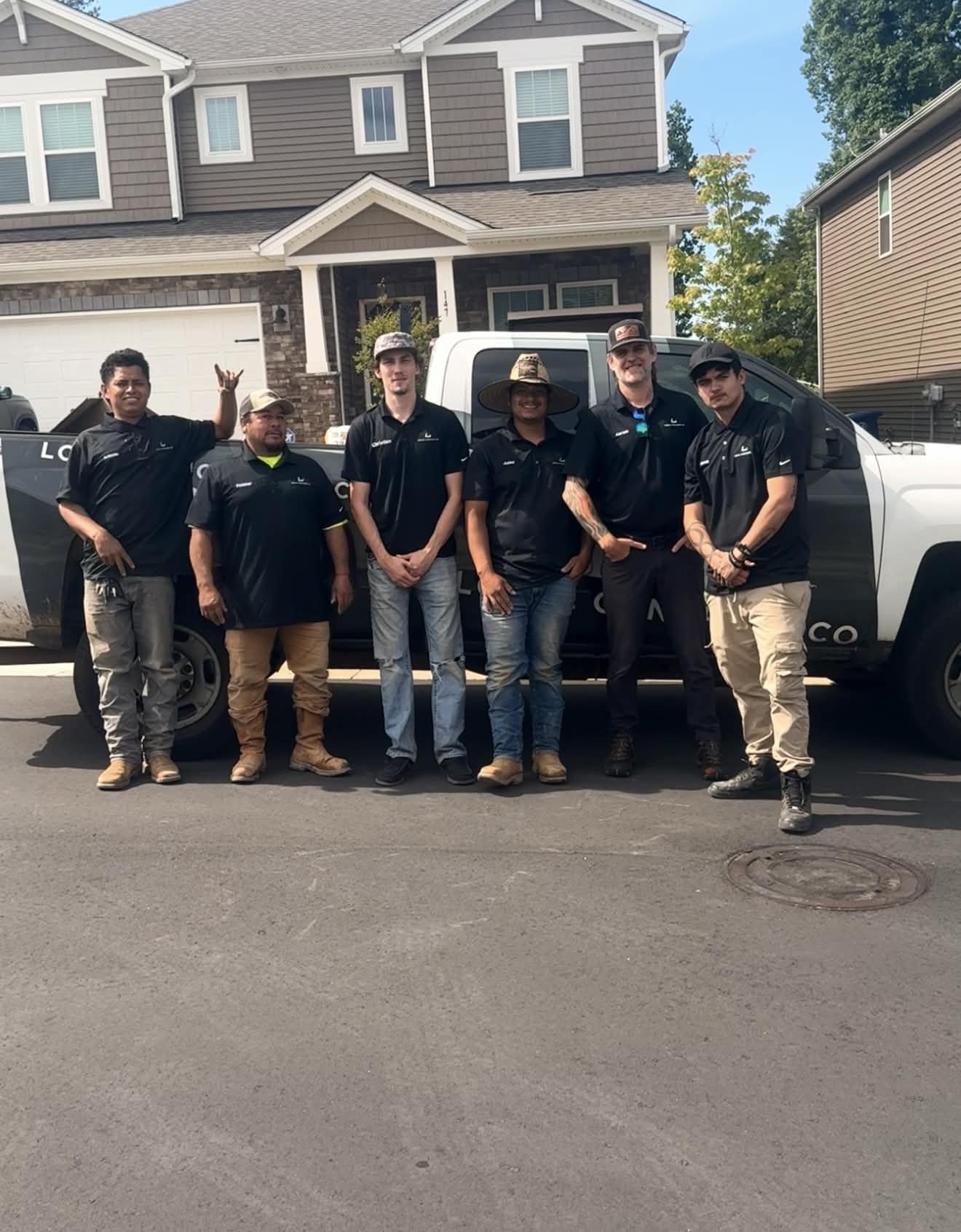
Consultation & Estimate
We meet on-site in Salisbury to assess scope, discuss vision, and provide a detailed, transparent quote tailored to your Salisbury property.

Logistics & Scheduling
Coordinating crew, equipment, and weather windows specific to Salisbury's climate to ensure a seamless project start.
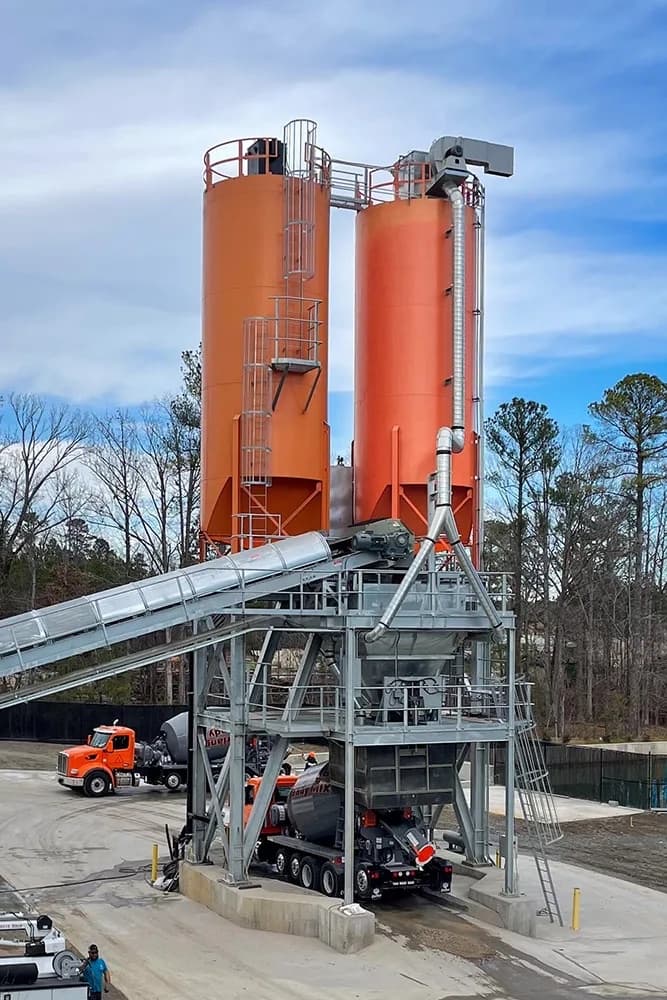
Custom Mix Design
Ordering specific concrete additives and slump requirements based on Salisbury's current temperature and humidity patterns.
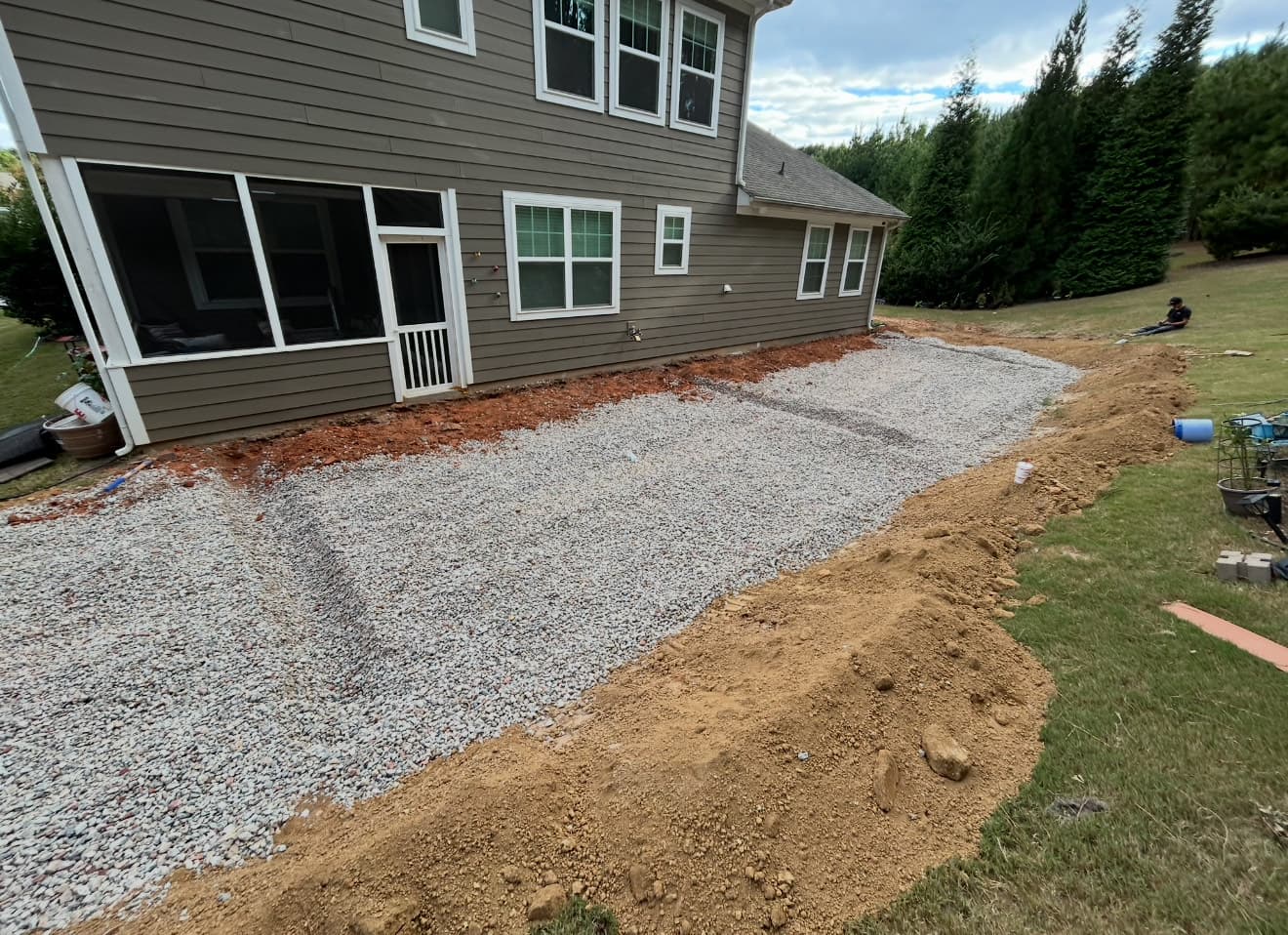
Site Preparation
Preparing the workspace in Salisbury and establishing safe access routes for our equipment and crew.
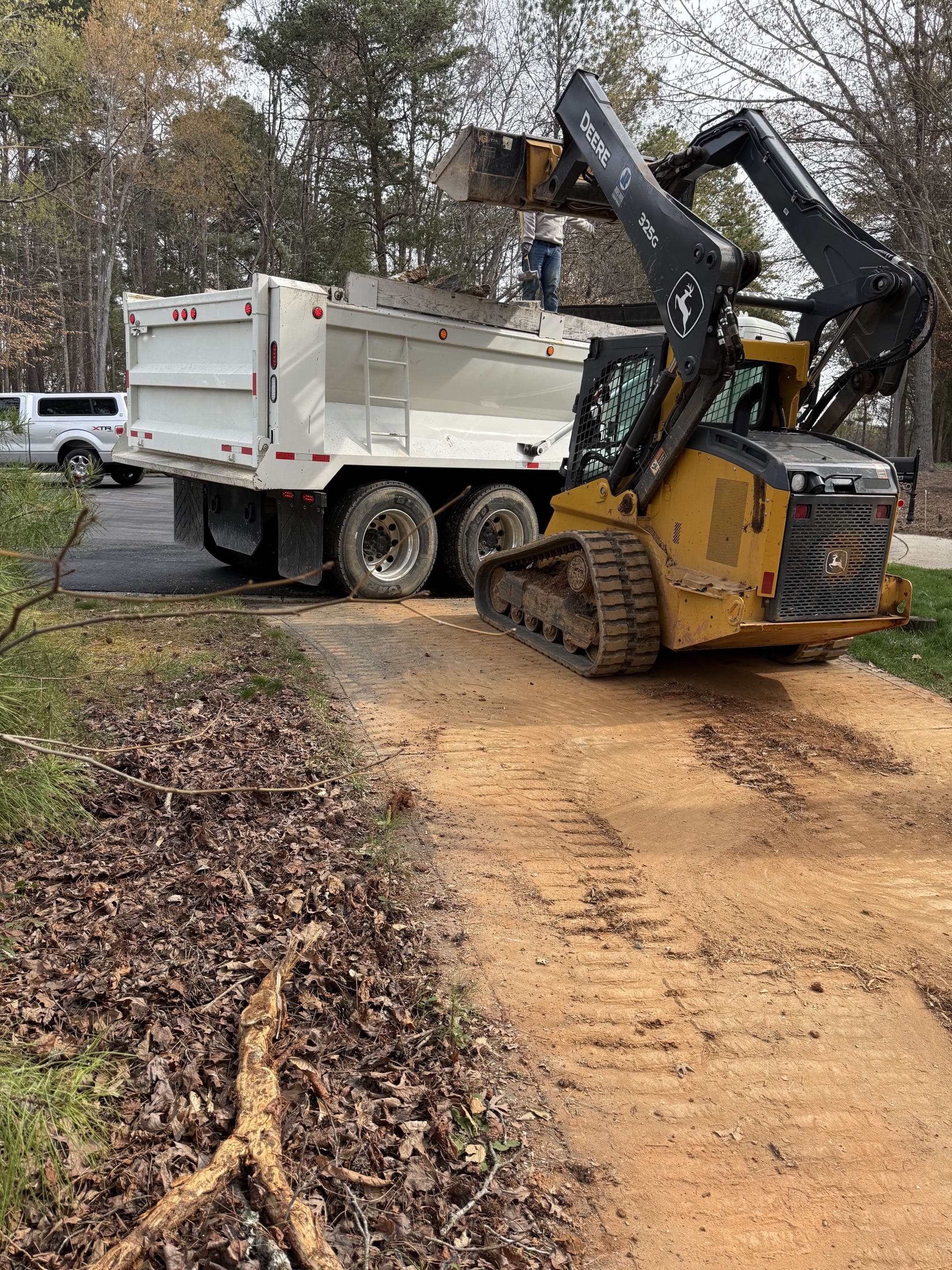
Demolition
Removal and disposal of existing concrete in Salisbury, leaving a clean slate for your new installation.
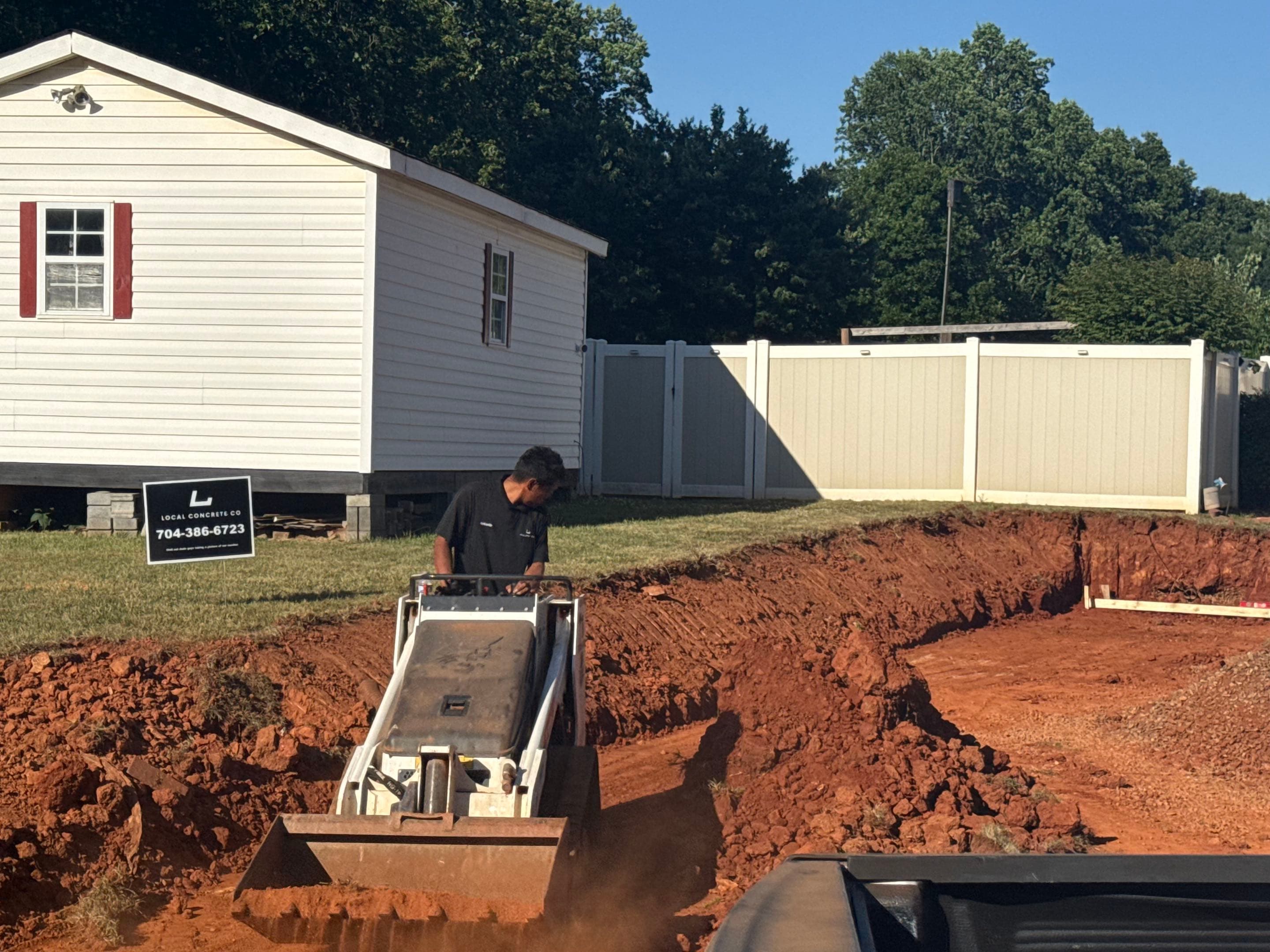
Grading & Forming
Expert grading for proper drainage in Salisbury and setting high-quality lumber forms for clean edges.
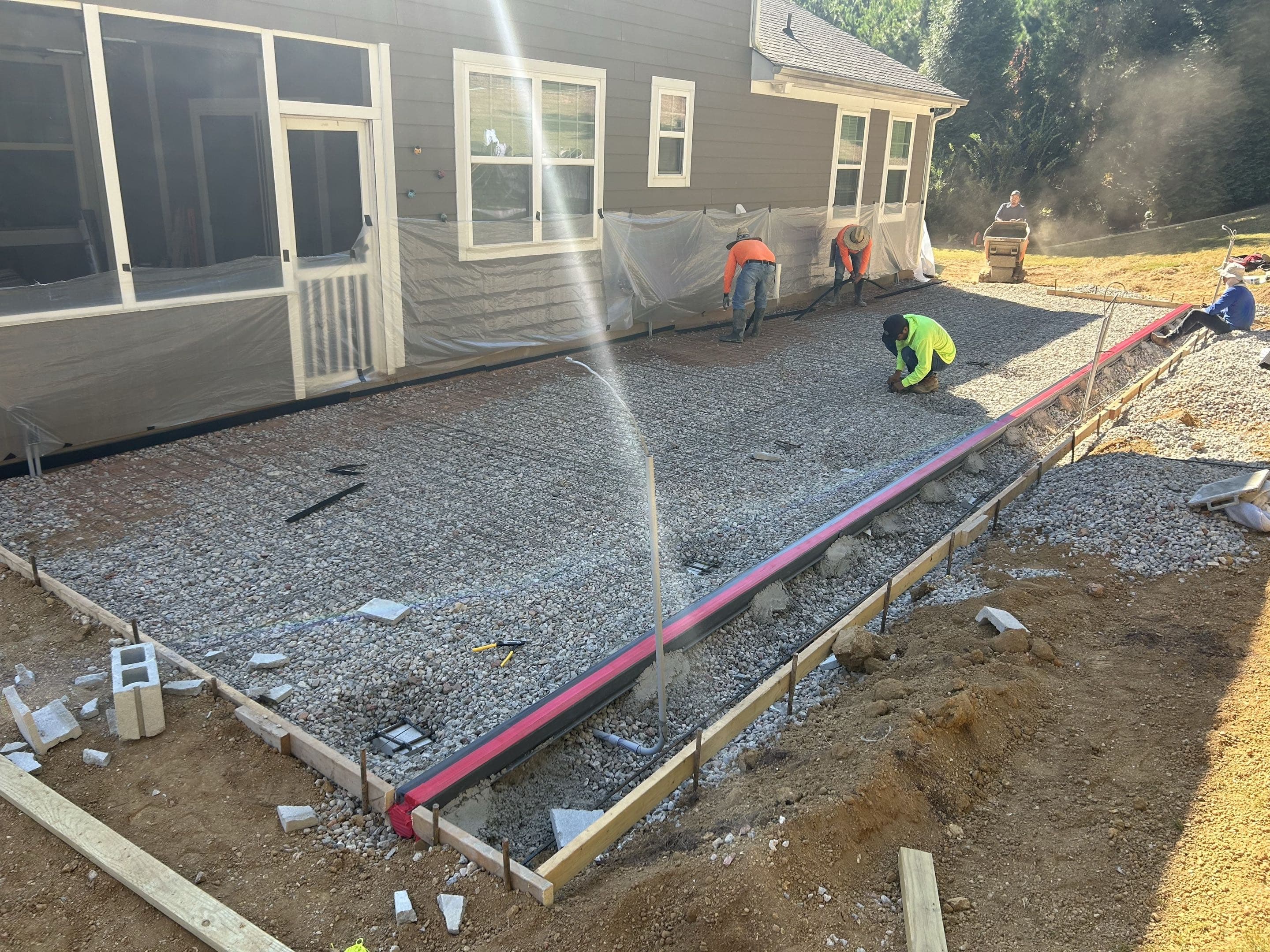
Reinforcement
Installation of steel rebar or wire mesh grid in Salisbury, using 1/2 inch grid for structural tensile strength suitable for North Carolina conditions.
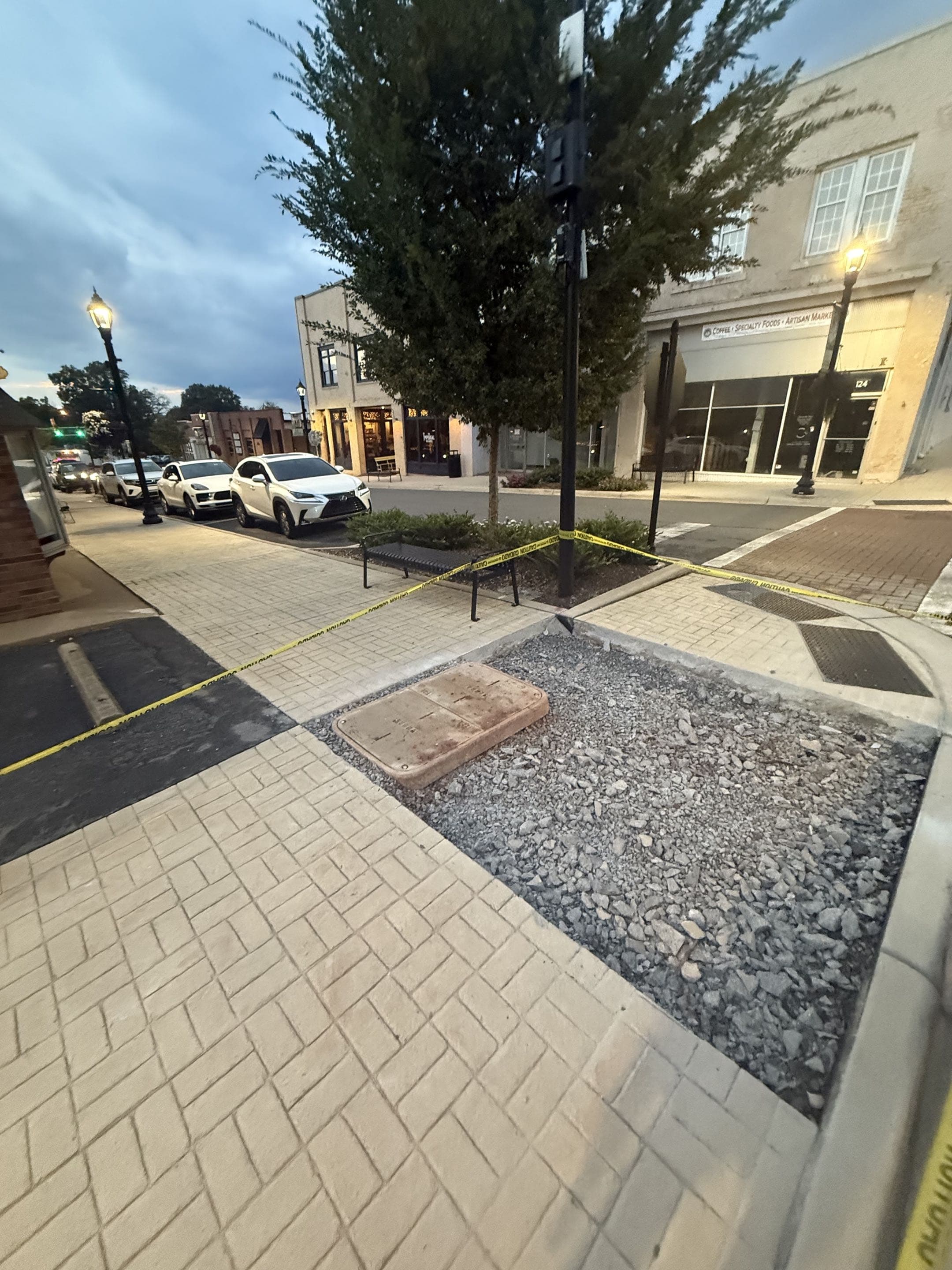
Pre-Pour Inspection
A final check of elevation, form stability, and reinforcement placement in Salisbury before the truck arrives.
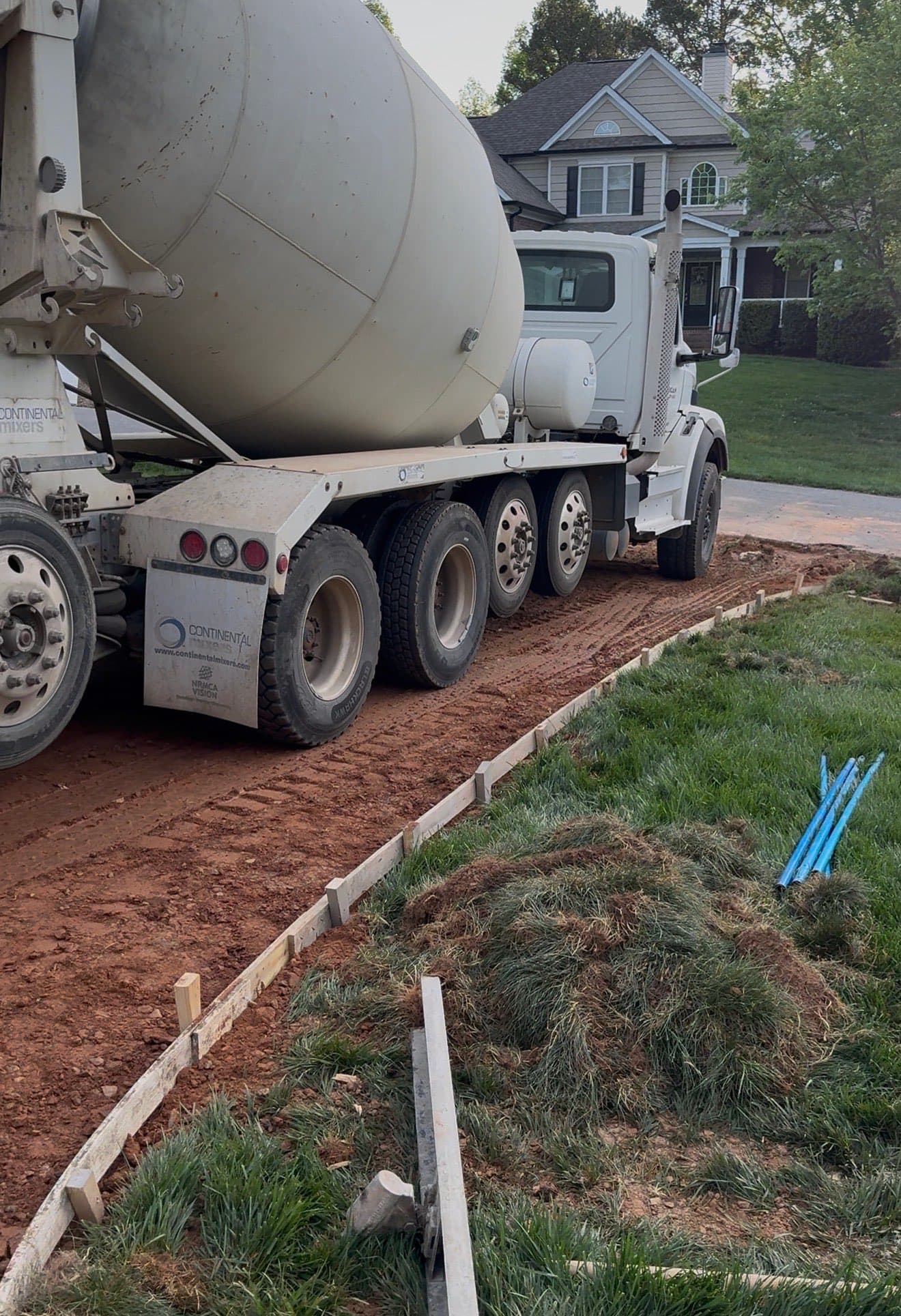
Slump Testing
Verifying concrete consistency on-site in Salisbury to ensure it meets the engineered mix design.
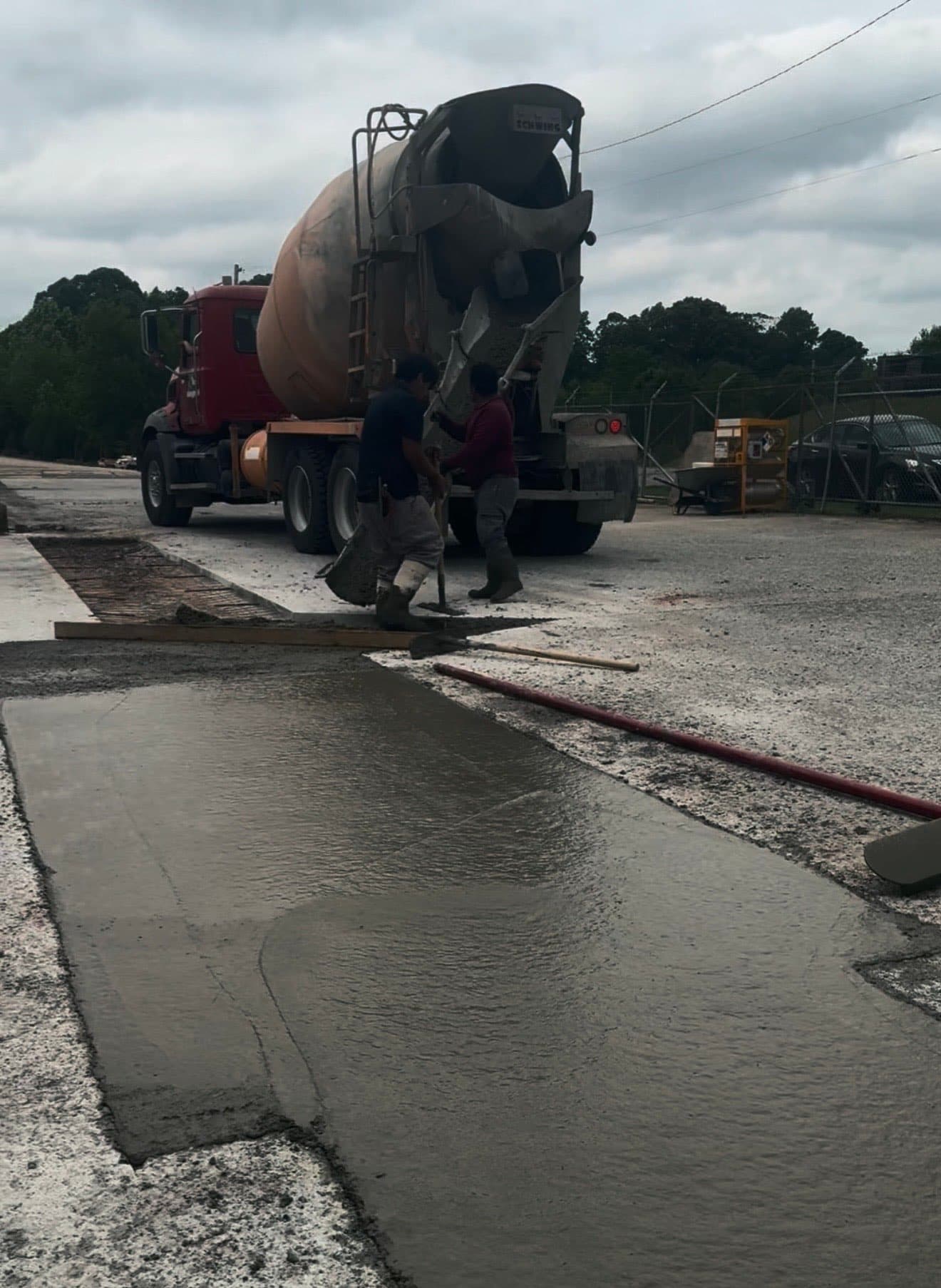
Placement
Controlled pouring and placement of concrete in Salisbury to avoid cold joints and ensure uniformity.
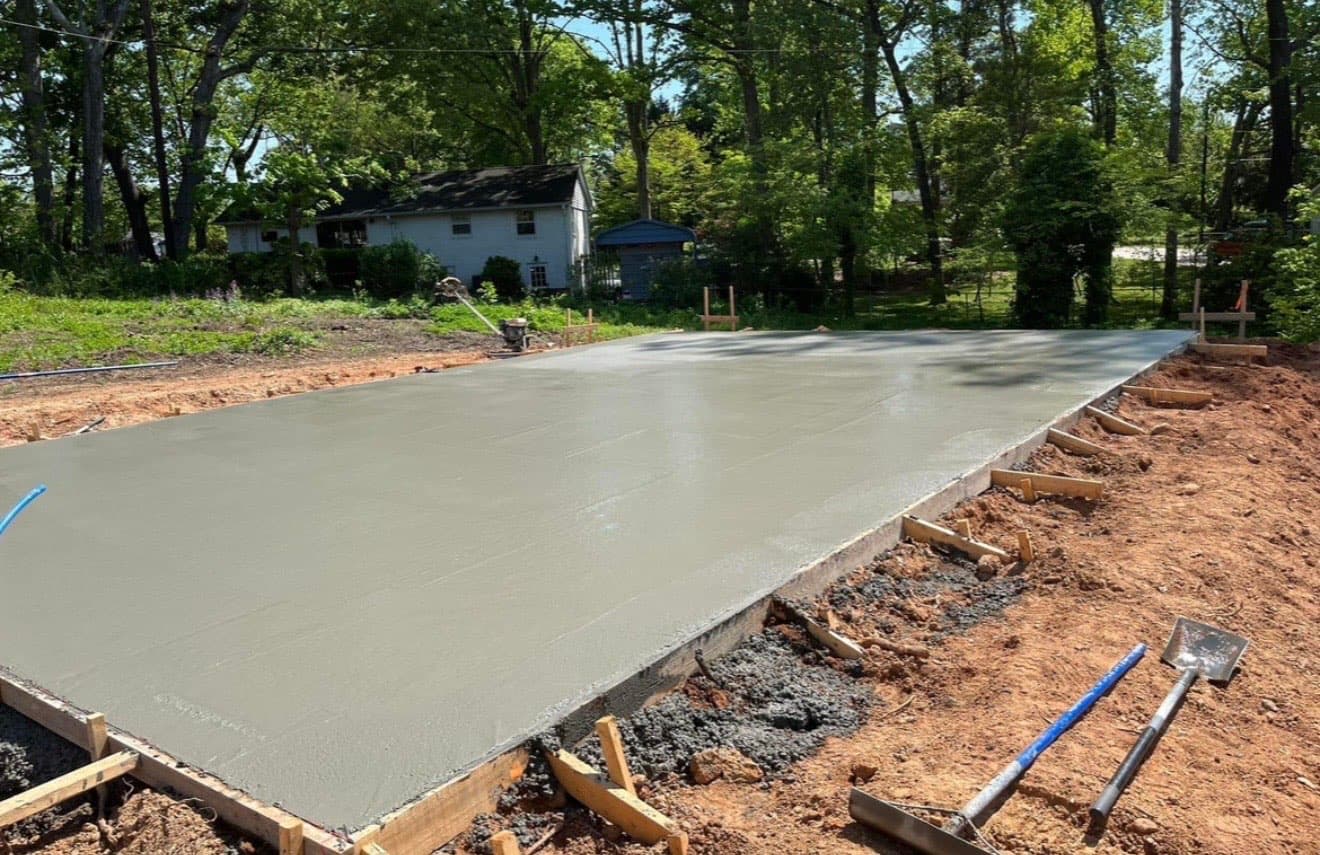
Bull Floating
Pushing aggregate down and bringing 'cream' to the surface for a smooth finishable layer in Salisbury.
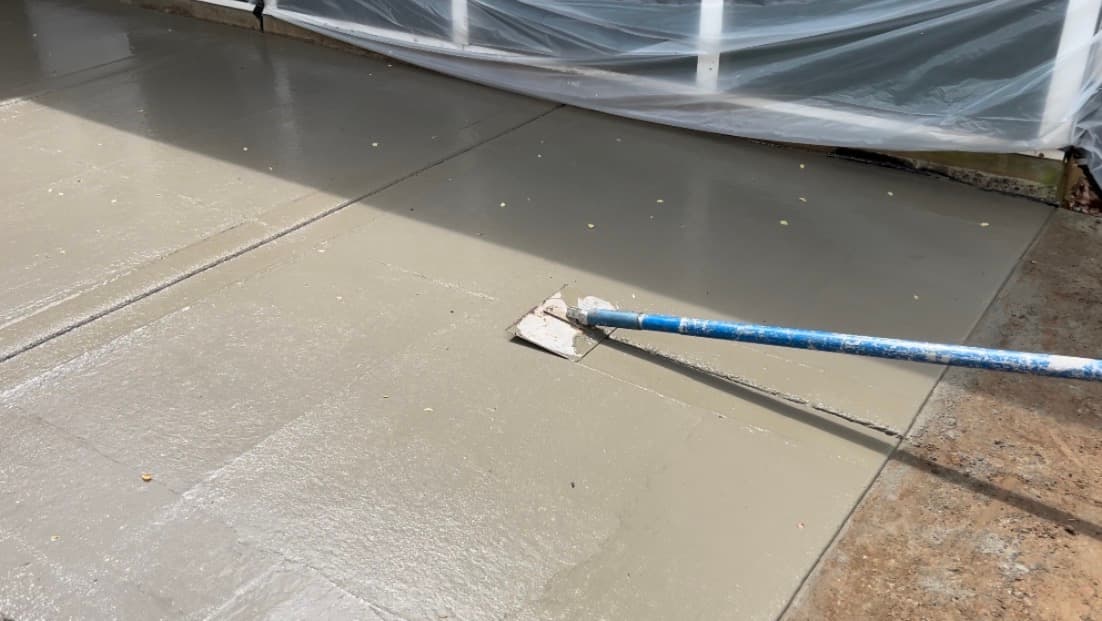
Edging & Jointing
Creating rounded edges for durability in Salisbury and cutting control joints to manage expansion in North Carolina's climate.
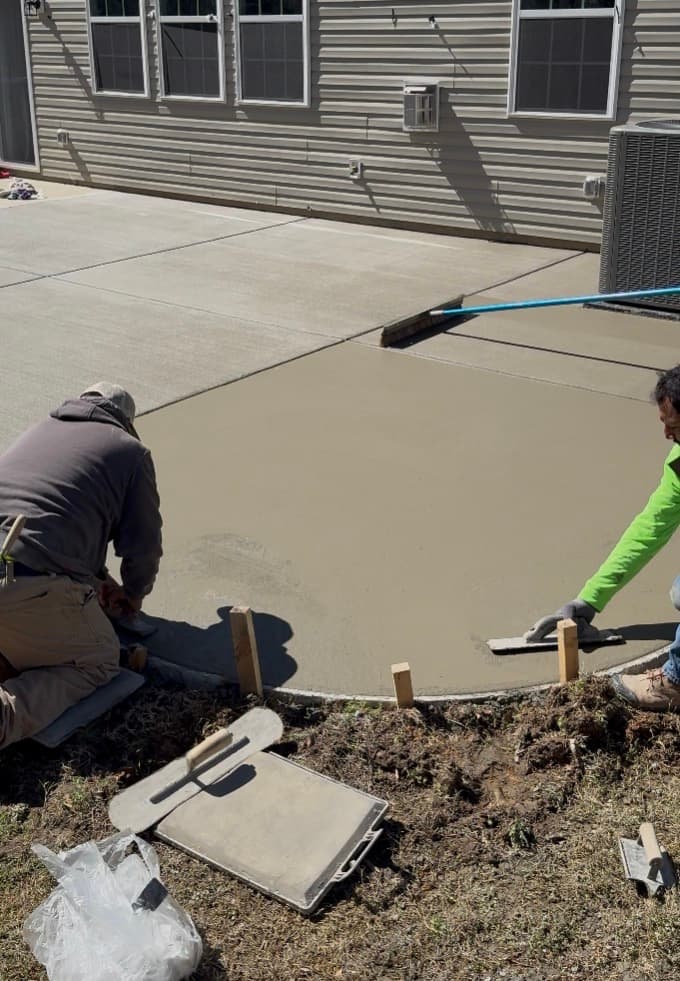
Fresno Finish
Final smoothing pass in Salisbury to close the surface pores and prepare for texturing.
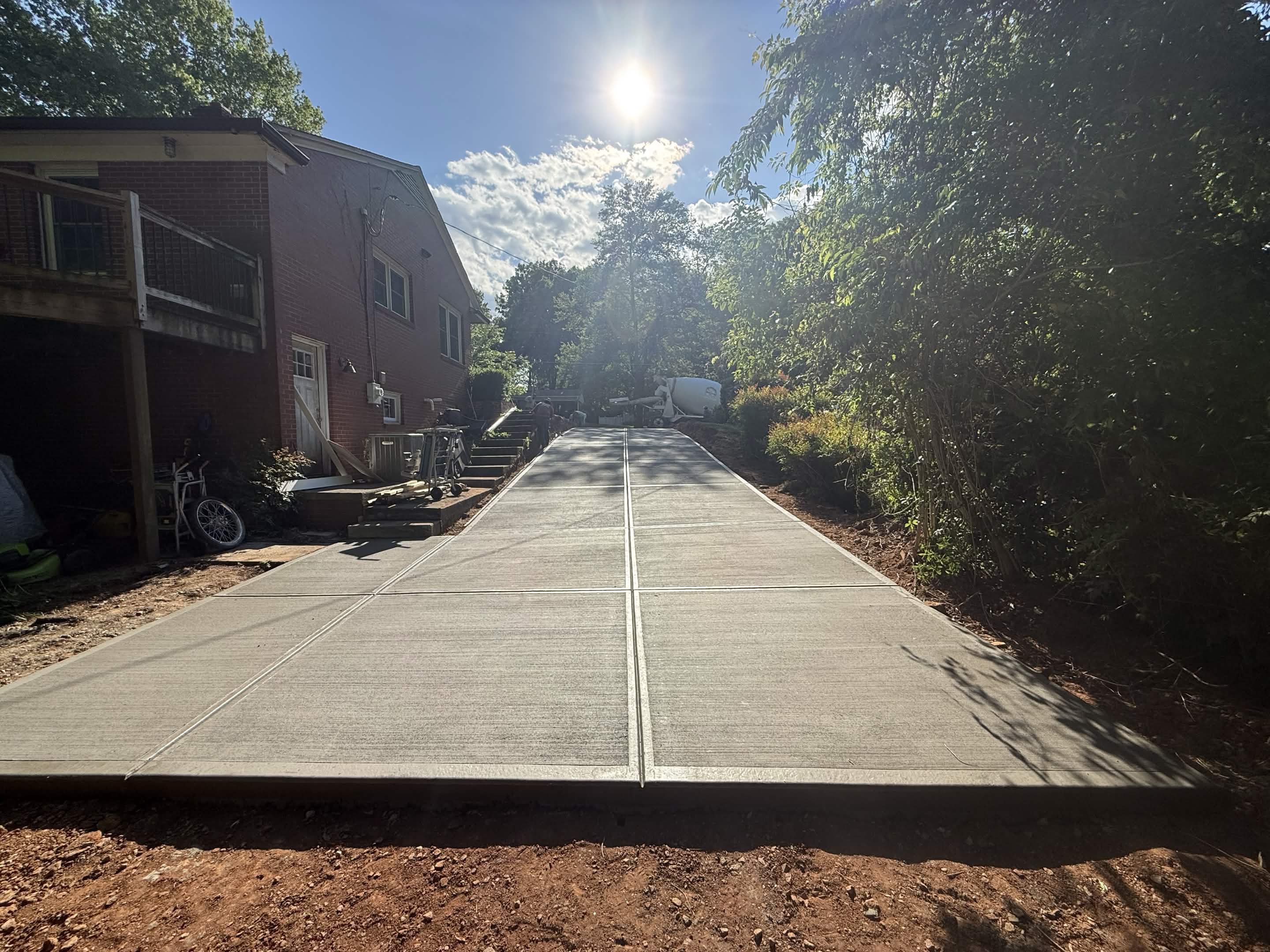
Decorative Detailing
Applying final broom texture, stamp patterns, or color treatments as specified for your Salisbury project.
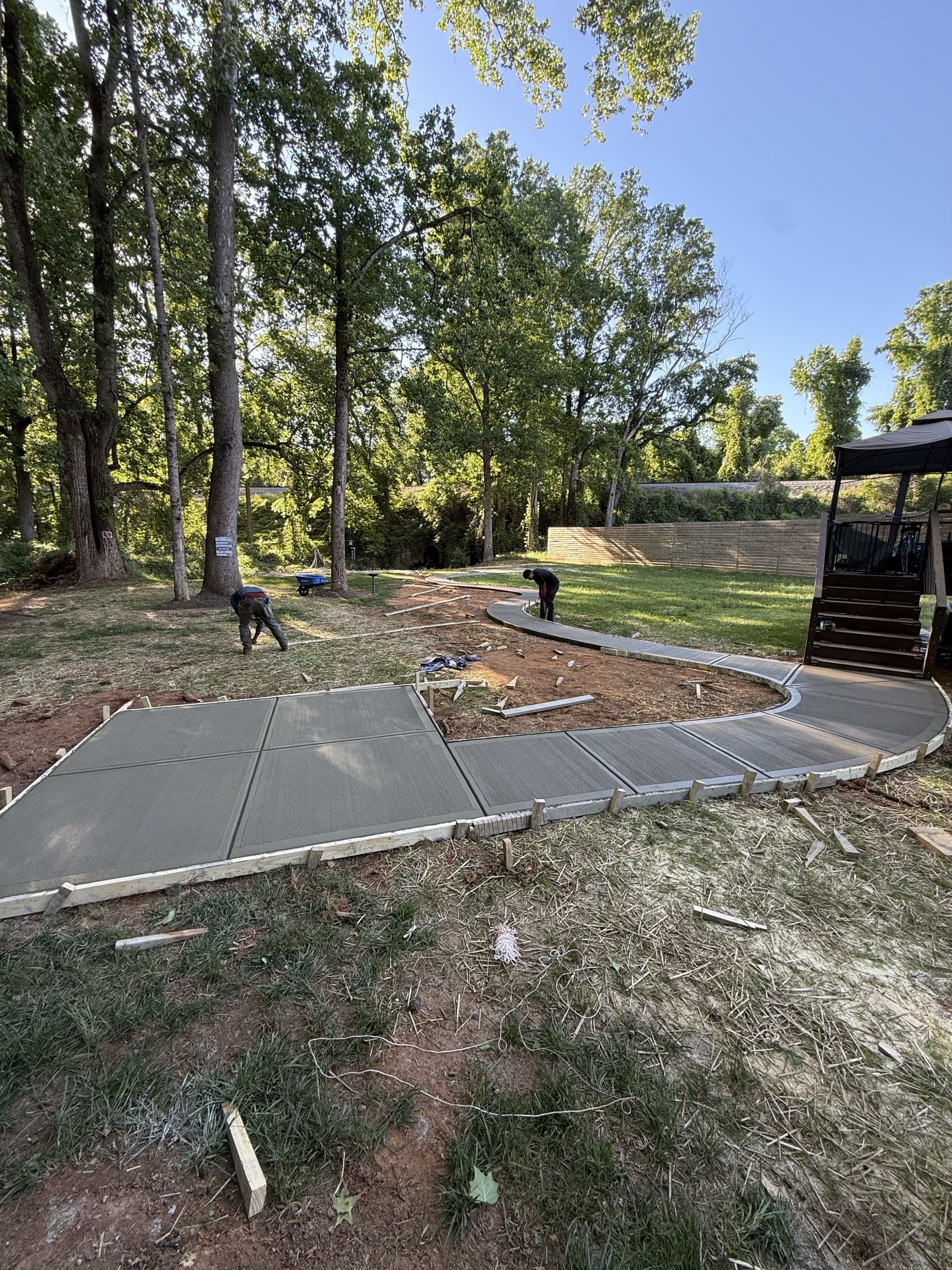
Form Removal
Careful stripping of forms in Salisbury once concrete has reached initial set stability.
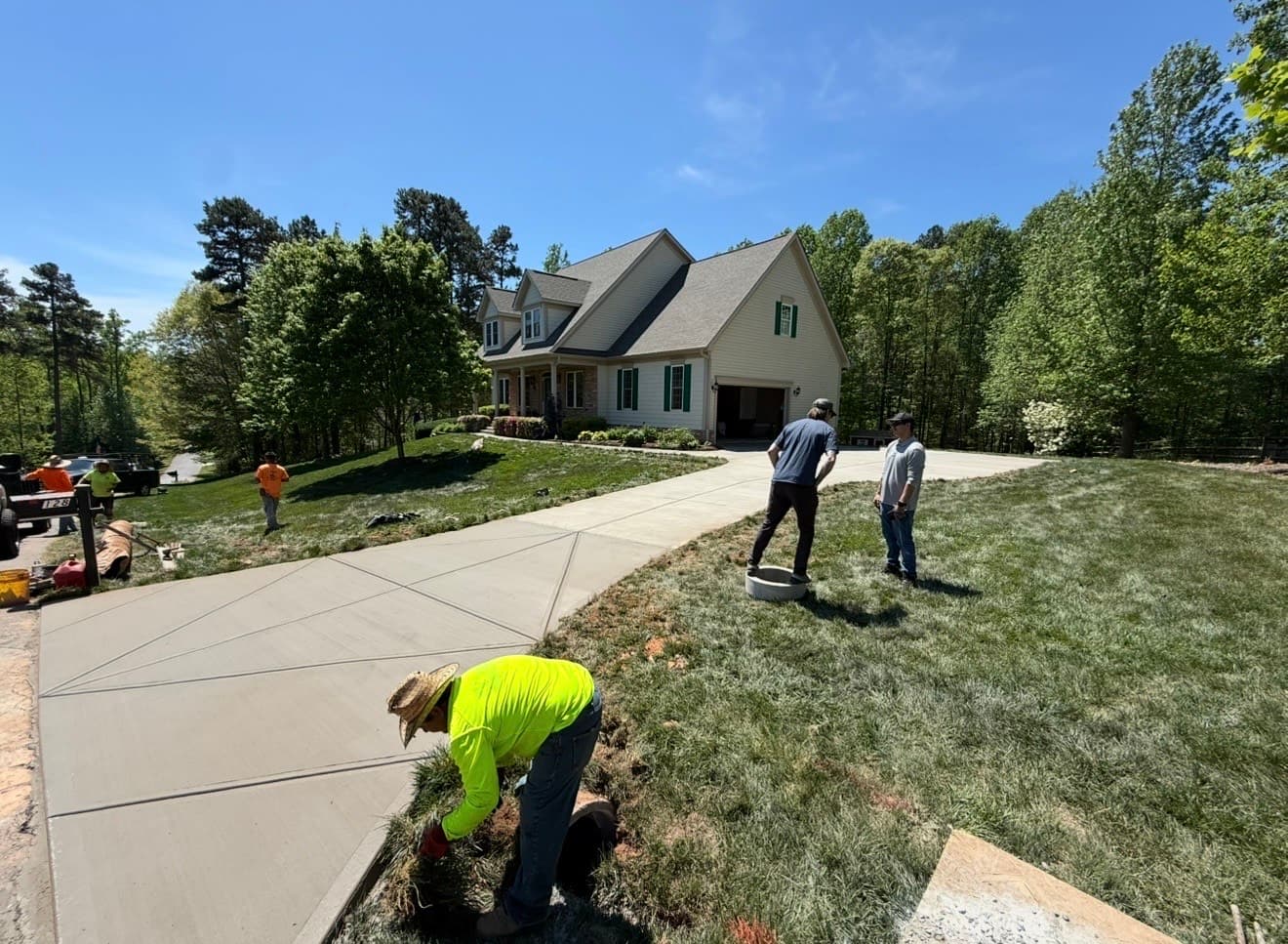
Final Walkthrough
Reviewing the finished project with you in Salisbury to ensure every detail meets the standard.

Usage Guide
Providing clear instructions for Salisbury homeowners on cure times—when you can walk, drive, and park on your new concrete.
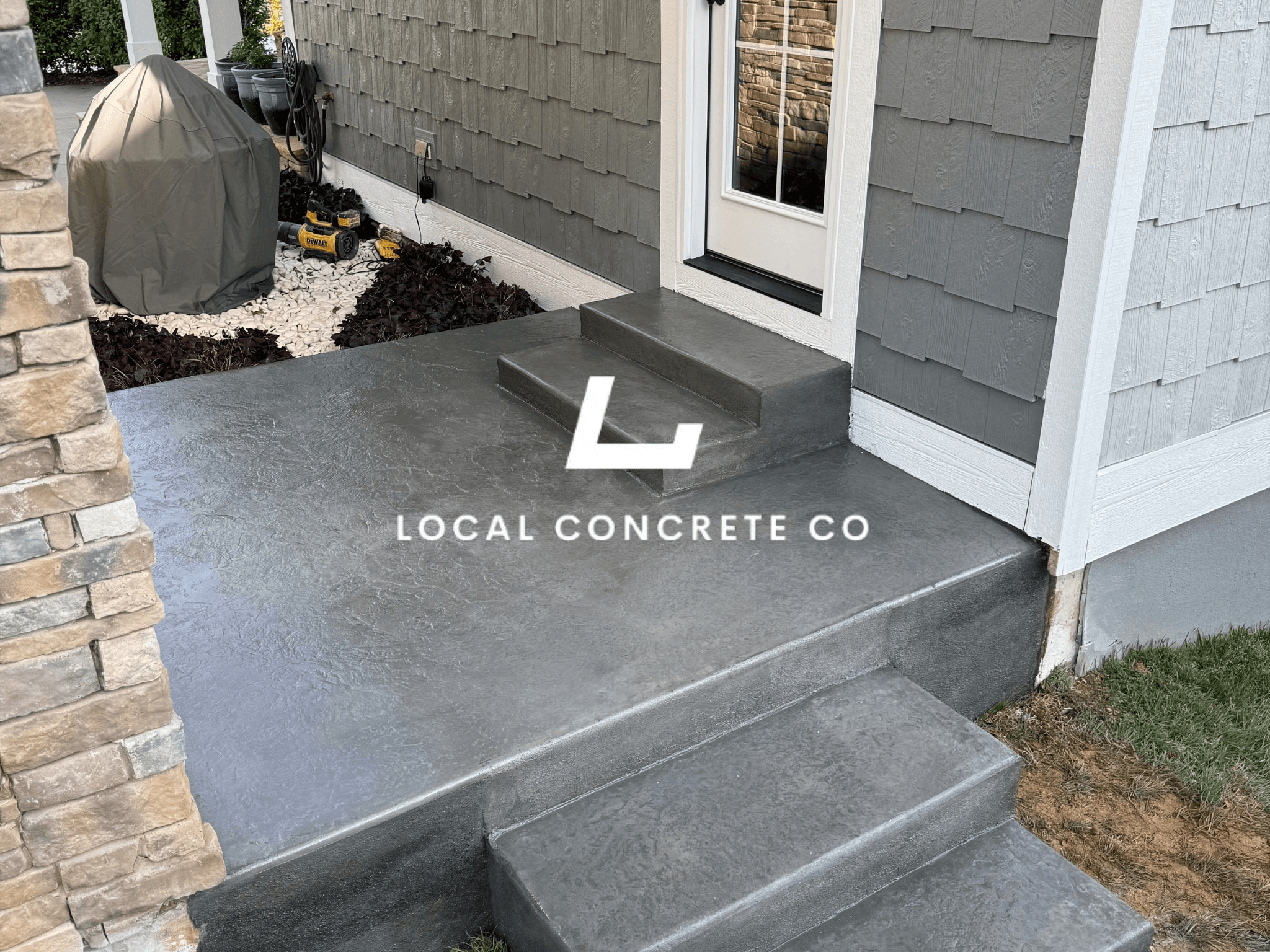
Project Completion
The job is done right in Salisbury, ensuring you have a durable surface for years to come in the Salisbury area.
Rebar, Isolation, Drainage, and Code Interfaces
The details around the perimeter of the pad matter as much as the concrete in the middle of it. Skip an isolation joint or crown the drainage the wrong direction and the pad works against the building.
- Rebar grid — #4 bars on 12 to 18 inch centers is the standard grid, tightened to 12-inch centers on heavy-load pads, doubled at edges under equipment feet
- Dowel bars — where the pad ties into an adjacent slab (loading zone, apron, sidewalk), dowel bars transfer load across the joint and prevent differential settlement
- Isolation joints — around building foundations, columns, and adjacent slabs, a preformed isolation joint (typically half-inch fiber) lets the pad move independently through freeze-thaw and thermal cycles
- Drainage crown — pads always slope away from the building at 1 to 2 percent, so surface water doesn't pond against the foundation or the equipment base
- Grounding — transformer and generator pads require a grounding grid or grounding rods embedded before the pour, coordinated with the electrician on the sequence
- Mechanical inspector — HVAC pads on new equipment installs need the mechanical inspector's sign-off; the pad's placement, sizing, and clearances all get checked against the mechanical code
- Fire marshal — generator, transformer, and fuel tank pads carry fire marshal clearance requirements (distance from openings, distance from combustibles, containment) that the pad location has to satisfy
- Utility standard details — Duke Energy, city water/sewer, gas utilities all publish standard details for pad-mount equipment; the pad has to match the utility's spec or the utility won't set the equipment
We handle those interfaces in the walk before the quote — no surprise sign-off holds after the pour.
When to Replace, Not Repair
A commercial pad usually gives clear warning before it fails. When these show up on an equipment pad, the equipment on top of it is at risk and the replacement conversation is overdue.
- Pad has tilted more than an inch out of plane — HVAC units, generators, and transformers don't operate on a tilted base, and manufacturer coverage may be void
- Cracks wide enough to see rebar through — chloride exposure is attacking the steel and the pad's structural integrity is on the clock
- Edges spalled off under a dumpster's front-loader approach — the pad is losing the reinforced edge that keeps it from breaking apart under lift cycles
- Standing water around the pad edge where there was none — subgrade has moved, drainage crown is compromised, and the pad is settling
- Isolation joint failed and the pad is transferring movement into the building foundation — cracking in the adjacent wall is a symptom
- Equipment has been replaced with a heavier unit that exceeds the original pad's design load — a resized replacement pad is safer than reinforcing the existing one
- ADA cross-slope has moved out of the 2-percent maximum — compliance failure, and the pad is now a liability exposure
Most commercial pads outlast the equipment on top of them when the original spec was right. If the pad is failing on any of the above, the replacement pour is a one-day job for most footprints and gets the equipment back on a stable base.
Salisbury Specific Considerations
Salisbury Soil Conditions
Understanding Salisbury's soil composition is crucial for proper concrete work. Salisbury's historic preservation requirements and clay-heavy soil demand careful concrete planning and execution that respects the city's heritage. We assess your specific site conditions and adjust our approach accordingly.
Rowan County Building Codes
Every Salisbury project must comply with Rowan County building codes and regulations. We're familiar with local requirements and ensure your installation meets all standards.
HOA Requirements
Many Salisbury neighborhoods have HOA guidelines that affect concrete work. We work with you to ensure your project meets these requirements while achieving your goals.
North Carolina Climate
Salisbury experiences North Carolina's freeze-thaw cycles, which can damage improperly installed concrete. Our work is specifically designed to withstand these conditions.
Drainage Planning
Proper drainage is essential in Salisbury, where heavy rains can cause flooding. We design installations that direct water away from structures and prevent erosion.
Material Selection
The right materials for Salisbury projects differ from other areas. We select concrete mixes, reinforcements, and sealants optimized for Rowan County's climate conditions.
Neighborhoods We Serve in Salisbury
Why Property Managers and Business Owners Work With Us
Local Concrete Contractor pours commercial pads across the North Carolina Piedmont and out into the coastal plain. Pads are almost always time-critical work — the HVAC unit is arriving Tuesday, the generator install is scheduled around a utility outage, the dumpster is being swapped next week. We work to the equipment schedule, not around it.
What that looks like on your pad:
- Zero deposit — you pay after the pad is poured, cured to the return-to-service milestone, and walked with you or the PM
- Free on-site quotes with the written spec: thickness, mix design, rebar layout, isolation joint plan, drainage crown, cure schedule
- Licensed and insured — certificate of insurance naming the property owner and GC as additional insured, delivered before mobilization (a commercial-required item, not optional)
- Coordination with the mechanical inspector, utility, or fire marshal so the sign-off holds happen before pour day, not after
- Pour scheduling aligned with the equipment install date and any utility outage windows
- Real photos of prior pads in the region — HVAC, generator, transformer, dumpster, ADA — not stock images
- Straight answers on the cost drivers (thickness, rebar class, footprint, edge detail, coordination complexity, quick-set mix) so the number is explainable
- Same crew from base prep through final finish — no subbing the finish out
If you're comparing pad quotes, ask each contractor what the thickness is, what the rebar spacing is, and whether they've pulled the utility's standard detail. Those three answers separate a pad that outlasts the equipment from one that fails inside two years.
Commercial Concrete Pads in Salisbury
FAQ
Straight answers on commercial concrete pads in Salisbury, NC — thickness, base prep, cure time, HOA rules, and what it takes to make the slab last.
Get Free QuoteHow thick should a dumpster pad be?
Six to eight inches is standard for a commercial dumpster pad, poured at 4000 to 4500 PSI on a compacted stone base. The front-loader approach side gets a thickened edge — usually 10 to 12 inches deep by 12 inches wide — because the tines of the truck strike the leading edge every pickup cycle. Rebar is a #4 grid on 12-inch centers, tightened at the edges. Skip either the thickness or the edge and the pad breaks up in a couple of seasons.
What size pad does a generator need?
Do transformer pads have a spec?
Can you pour an ADA-compliant parking pad?
How long before we can set equipment on a new pad?
Do you coordinate with the mechanical inspector?
Do you serve all neighborhoods in Salisbury?
What areas near Salisbury do you serve?
Can you work with HOA requirements in Salisbury?
Commercial Concrete Pads in Salisbury, NC
This page is specific to Salisbury, NC (Rowan County). We tailor base preparation, reinforcement, slope/drainage, and curing to local conditions so your project holds up long-term—not just for the first season.
Related services in Salisbury, NC
Nearby service areas
If you’re near Salisbury, NC, these nearby city pages may also help:
Ready to talk about your Salisbury commercial concrete pads project?
Free estimate. No pressure, no sales tactics. Zero deposit — pay on completion.
Get Free Quote